
Data Analysis in the Wild: Benchmarking Large Language Models Against Real-World Data Complexities
Source: arXiv:2607.06482 · Published 2026-07-07 · By So Hasegawa, Shailaja Keyur Sampat, Lei Liu, Wei-Peng Chen
TL;DR
This paper addresses a key weakness in current benchmarks for evaluating Large Language Models (LLMs) on data analysis tasks: their failure to capture real-world complexity. Existing benchmarks typically use small tables and focus on fact retrieval, omitting challenges such as large multi-tabular datasets, the use of metadata and external knowledge, and open-ended exploratory insight generation. To bridge this gap, the authors introduce DataGovBench, a novel benchmark derived from government open data portals featuring 178 datasets averaging 210K rows and 18 columns, with some tables reaching nearly 12 million rows and 213 columns. DataGovBench evaluates two complementary tasks: Table QA, involving complex decomposable questions answered with text or visualizations, and Table Insight, requiring models to generate expert-level findings without explicit queries. Through comprehensive empirical evaluation of state-of-the-art closed- and open-source LLMs and agentic frameworks, the authors identify large performance gaps. Top closed-source models achieve under 40% accuracy on complex QA and below 50% quality on insight generation, revealing limitations in current LLM methodologies. Detailed error analyses highlight frequent failures on condition filtering, data transformation, visualization, and reasoning over multi-table metadata. The work provides an important real-world benchmark and analysis to guide future research toward more capable LLM-based data analytics systems.
Key findings
- DataGovBench contains 178 datasets with an average 210K rows and 18 columns; the largest table has 11.9M rows and 213 columns.
- 211 high-quality QA pairs include 116 decomposable questions totaling 414 sub-questions; over 55% of QA pairs have multiple sub-questions.
- Top-performing closed-source LLM Gemini 2.5 Flash with Answer Agent achieves 39.3% accuracy on the Table QA Whole setting, a 27% relative improvement over baseline.
- Open-source LLM Qwen3-30B achieves 13.4% accuracy on Table QA Whole setting, significantly lower than closed-source models.
- Table Insight best agent (Insight Agent with Claude Sonnet 4.6) achieves 0.338 insight-level and 0.453 summary-level LLaMA-3-Eval scores, showing task difficulty.
- Error analysis shows 32.4% of incorrect Table QA answers stem from condition filter errors; 23.2% from data transformation errors; 13.0% from output format issues.
- Insight generation agents score well on topic relevance but poorly on narrative alignment and quantitative details, indicating gaps in reasoning and fact retrieval.
- Ablation shows feature type-specific table serialization and reflection modules in Answer Agent substantially improve Table QA accuracy by 8.3 percentage points.
Threat model
The paper does not focus on adversarial threat modeling in a security sense; rather it treats challenges as arising from large, heterogeneous, multi-table datasets with rich metadata and external knowledge that pose realistic complexities. The 'adversary' is effectively the set of failure cases due to model limitations in data reasoning and integration, rather than active malicious actors.
Methodology — deep read
The authors first define a threat model assuming real-world open data scenarios with large, complex, multi-tabular government datasets, where adversaries here correspond to model limitations rather than malicious agents. They systematically collect 178 datasets from 53 English-language government open-data portals. Datasets typically have multiple tables averaging 210,000 rows each, with associated metadata and external knowledge such as data dictionaries in multiple formats (PDF, XLSX, etc.).
To create the Table QA task, they generate over 1,800 candidate questions per dataset using an ensemble of four high-performance LLMs prompted on feature type-specific serialized table summaries. Question types cover simple and complex decomposable analytical queries, guided by eight predefined categories. Automated scoring by the same LLM ensemble ranks questions on relevance, novelty, insight potential, and clarity. Low-difficulty questions (indicated by answer consensus) are filtered out. Human annotators then verify, clarify, debug, and refine Python code solutions and answers, resulting in 211 verified QA pairs with 414 constituent sub-questions.
Table Insight ground-truth is constructed by extracting and standardizing key findings from expert-authored official reports accompanying six selected datasets. These findings are manually curated and summarized using LLMs such as Gemini 2.5 Flash.
The benchmark’s core algorithmic module is an Answer Agent that processes serialized tables representing each column compactly by data type (unique categories for categorical columns, summary statistics for numerics, etc.). Given a natural-language question, the agent generates Python code to compute answers. It automatically executes and self-corrects the code up to three times, with reflection modules analyzing output correctness including visualization content using multimodal LLMs or vision-language models. This structured agentic design contrasts with direct prompt-based LLM answers.
Evaluation metrics include Exact Match accuracy for text answers, a novel MLLM (multimodal LLM) consensus protocol for visualization correctness, and GPT-4o-based semantic scoring (LLaMA-3-Eval replacement) for insight generation at both summary and individual insight levels. The authors perform extensive quantitative evaluation of multiple open-source LLMs (LLaMA 3.1, Qwen3, Devstral, TableGPT2) and closed-source models (GPT-4o, GPT-5.1, Claude Sonnet 4.6, Gemini 2.5 Flash), each tested with and without the Answer Agent framework.
They also conduct qualitative error analysis of the common failure modes on Table QA (e.g., condition filter errors, data transformation errors, visualization errors) and fine-grained examination of insight generation failure modes using GPT-4o ratings on topic relevance, narrative alignment, qualitative details, and quantitative details. Ablation tests measure contribution of the agent’s components such as table schema inclusion, serialization, reflection, and self-correction.
Overall, the methodology involves building a realistic, multi-modal benchmark stressing challenges beyond fact retrieval, designing an agentic system with table serialization and code self-correction, and robustly evaluating against human-verified gold standards to highlight current LLM limitations for complex data reasoning tasks.
Technical innovations
- Introduction of feature type-specific table serialization that compresses large tabular data into compact, informative textual summaries tailored by data type.
- An agentic Answer Agent framework combining Python code generation, automatic code execution with up to 3 self-correction attempts, and reflection modules using visual and textual LLM feedback loops for robust table QA.
- A new open benchmark, DataGovBench, with government open data featuring large multi-table, multi-million row datasets with metadata and external knowledge integration for both Table QA and open-ended Table Insight tasks.
- A multi-LLM ensemble scoring strategy to select high-quality decomposable QA pairs for benchmarking, combined with human-in-the-loop refinement and verification.
Datasets
- DataGovBench — 178 datasets averaging 210K rows and 18 columns — sourced from 53 English government open data portals such as Data.gov, Data.gov.uk
- 6 datasets with expert-authored reports for insight generation ground truth included in DataGovBench
Baselines vs proposed
- Gemini 2.5 Flash w/o Answer Agent: Table QA Whole = 31.0% vs with Answer Agent: 39.3%
- GPT-4o w/o Answer Agent: Table QA Whole = 24.2% vs with Answer Agent: 27.0%
- Qwen3-30B w/o Answer Agent: Table QA Whole = 13.4% (no agentic comparison)
- Claude Sonnet 4.6 AgentPoirot Insight-level score = 0.338 vs Insight Agent Insight-level score = 0.359
- Claude Sonnet 4.6 AgentPoirot Summary-level = 0.323 vs Insight Agent Summary-level = 0.453
- TableGPT2-7B with Answer Agent: Table QA Whole = 6.6%, underperforming general LLMs
Figures from the paper
Figures are reproduced from the source paper for academic discussion. Original copyright: the paper authors. See arXiv:2607.06482.
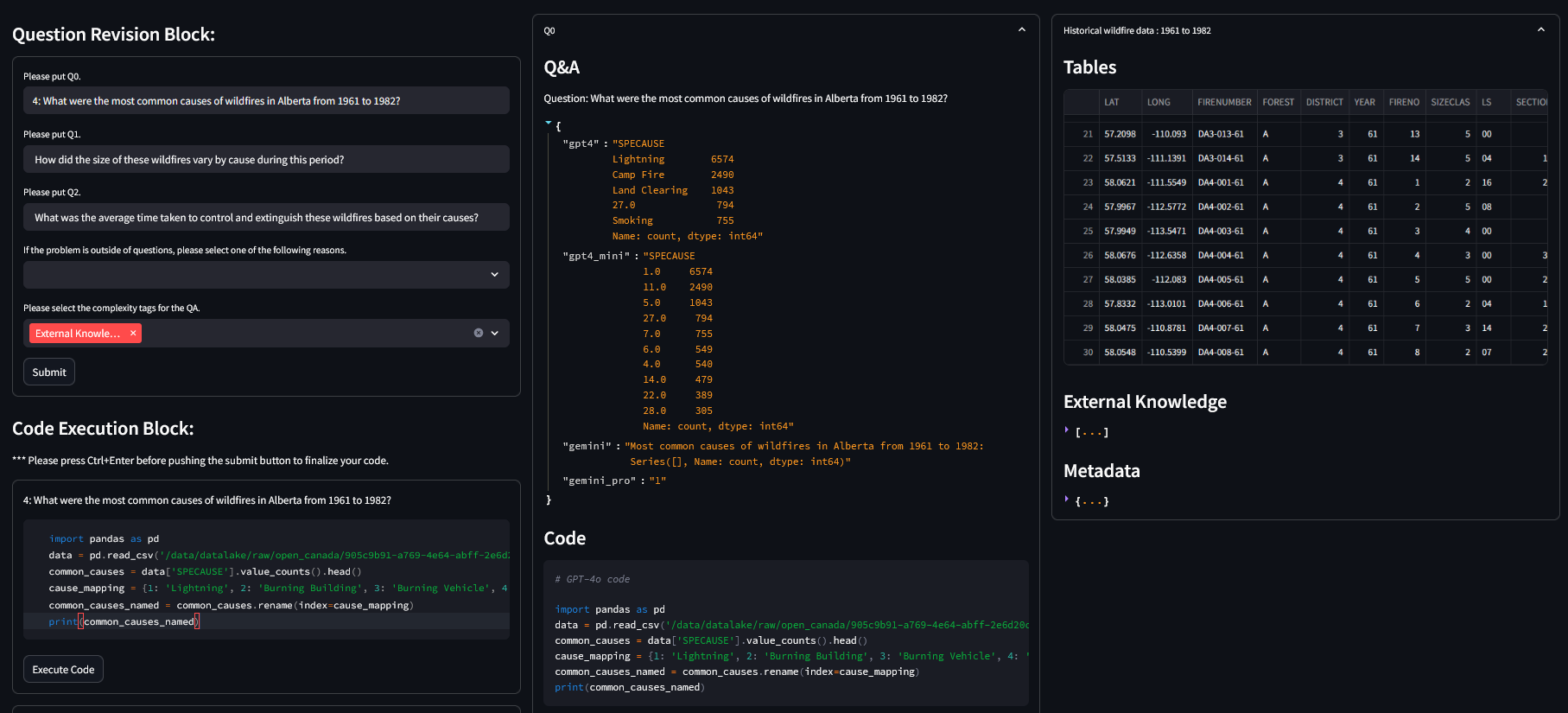
Fig 7: Annotation GUI for revising questions and answers
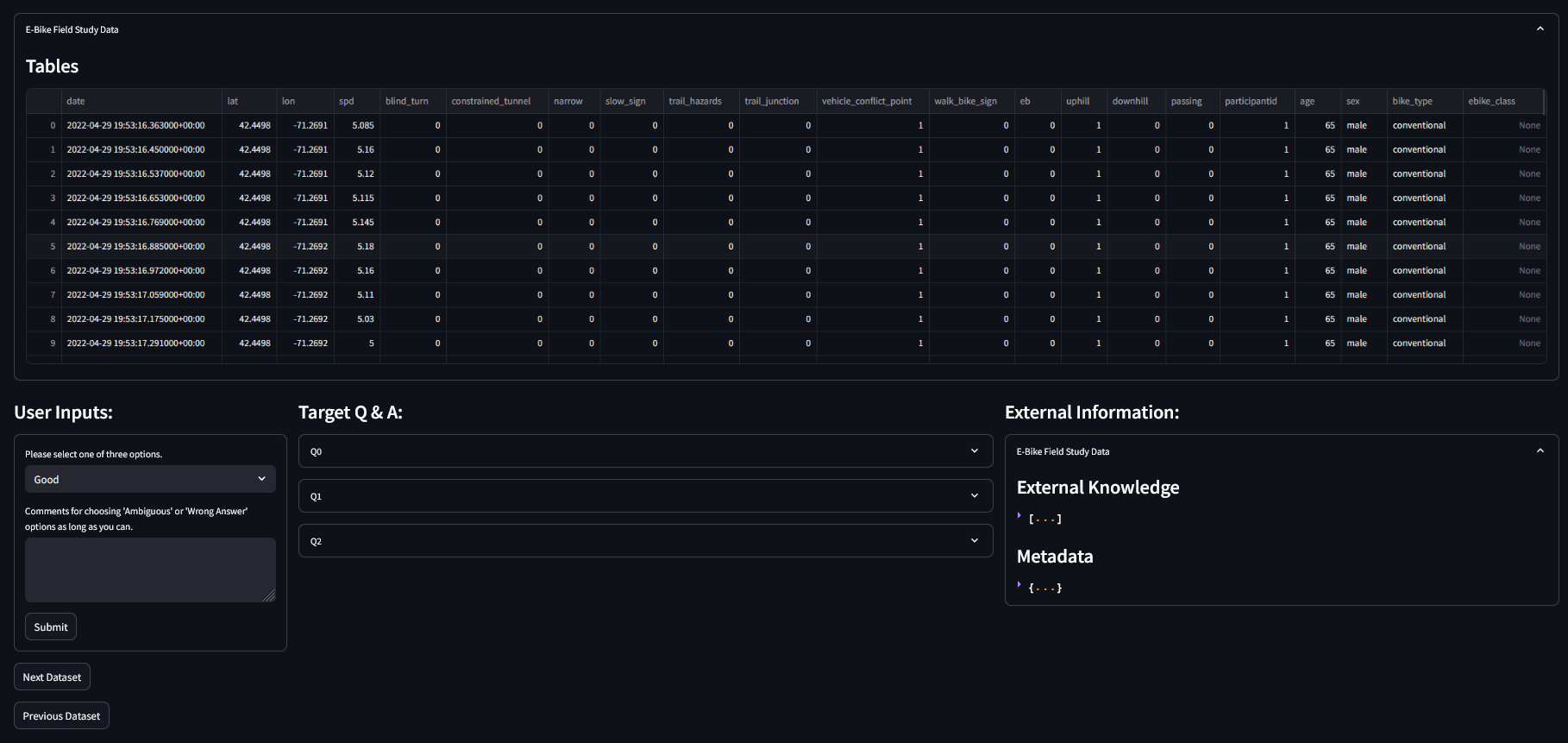
Fig 8: Annotation GUI for checking the revised QA pairs
Limitations
- The insight generation ground truth is limited to 6 datasets with professional reports, a small subset of the full benchmark.
- The benchmark does not evaluate robustness under adversarial or distribution-shifted data conditions.
- Open-source LLM baselines remain weak, hindering ablation of agent modules on these models.
- LLM-generated questions are filtered to exclude low-complexity queries, possibly biasing difficulty.
- The evaluation relies on LLM-based judges for visualization equivalence and insight scoring, which may introduce bias or uncertainty.
- External knowledge sources vary in format and availability, complicating uniform assessment.
Open questions / follow-ons
- How to design unified representations compact enough to scale to multi-million-row tables while preserving critical analytic details for LLM reasoning?
- What agentic frameworks or reasoning architectures can close the gap in narrative-level reasoning and quantitative fact retrieval from complex tables?
- How can insight generation be extended and normalized across more datasets lacking expert reports to allow broader evaluation?
- How to robustly incorporate and reason over diverse external knowledge formats (PDFs, XLSX, XML) within LLM workflows?
Why it matters for bot defense
DataGovBench highlights that current LLMs struggle with complex, multi-table, large-scale tabular data and open-ended insight generation—tasks crucial to realistic bot defense and automated data analysis. Bot-defense practitioners aiming to use LLMs for behavioral analysis or anomaly detection on large stateful datasets should consider integrating agentic frameworks with code-generation and execution capabilities combined with context-aware table serialization. The error analyses underscore frequent pitfalls like implicit condition filtering failure and external knowledge misinterpretation, suggesting the need for robust semantic and schema-aware methods in production environments. Additionally, the benchmark’s focus on multi-modal output evaluation (text and visualization) aligns with requirements to assess automated system responses beyond mere text, informing CAPTCHA or bot challenge designs requiring advanced reasoning. The observed gaps in narrative reasoning and accurate number handling highlight caution in deploying LLM-based analytics without human oversight in security-critical use cases.
Cite
@article{arxiv2607_06482,
  title={ Data Analysis in the Wild: Benchmarking Large Language Models Against Real-World Data Complexities },
  author={ So Hasegawa and Shailaja Keyur Sampat and Lei Liu and Wei-Peng Chen },
  journal={arXiv preprint arXiv:2607.06482},
  year={ 2026 },
  url={https://arxiv.org/abs/2607.06482}
}