
Evaluating and Understanding Model Editing for Medical Vision Language Models
Source: arXiv:2607.05310 · Published 2026-07-06 · By Guli Zhu, Chenwei Wu, Liyue Shen
TL;DR
This paper addresses the challenge of post-deployment model editing for medical vision-language models (VLMs). Deployed medical VLMs often make errors due to shifts in clinical data, imaging protocols, and disease presentations, yet fully retraining large multimodal models is computationally prohibitive. Model editing offers a lightweight targeted fix by modifying a small subset of parameters or using memory-based modules. However, existing multimodal editing benchmarks focus on general-domain tasks that lack clinical complexity and variability, limiting real-world applicability. To this end, the authors propose M3Bench, a new benchmark with 16,276 clinically grounded questions spanning diverse anatomy, modalities, and specialties. M3Bench evaluates editing across 10 tasks that capture image and text variability, modality shifts, clinical composition, and temporal progression. This work extensively evaluates four representative editing methods (two gradient-based, two memory-based) on six medical and general VLMs.
The key findings reveal that gradient-based editors like LoRA deliver strong reliability and generalization but suffer from catastrophic locality failures, i.e., edits unintentionally change unrelated concepts. In contrast, memory-based editors like BalancEdit preserve locality and produce more stable edits but exhibit lower compositional generality and are highly sensitive to hyperparameters and backbone model geometry. The authors attribute these limitations to the intrinsic geometry of medical VLM latent spaces, which form tight cones causing high inter-concept overlap and limiting localized edits. M3Bench establishes a rigorous, clinically relevant evaluation suite and provides actionable analysis linking performance tradeoffs to representation geometry, guiding safer post-deployment adaptation for medical VLMs.
Key findings
- M3Bench comprises 16,276 clinically grounded questions covering 9 anatomical sites and 4 imaging modalities.
- Gradient-based editors (LoRA, MEND) achieve best reliability (up to 0.98 accuracy) and high generality (up to 0.95 on image generality, Table 1) but extremely poor locality (e.g., T-locality scores as low as 0.03), causing unintended edits.
- Memory-based editors (BalancEdit, GRACE) yield better locality (e.g., I-locality above 0.7) and more stable temporal consistency but lower generality and compositional transfer, with C-generality below 0.4.
- Temporal consistency and clinical composition are the most challenging editing dimensions for all methods.
- Medical VLM latent spaces exhibit a strong anisotropic 'cone effect' where 1.5M embeddings have average cosine similarity ~0.8 and mean resultant length ~0.9, severely limiting concept separability.
- LoRA editing causes global latent space distortions shifting all concept centroids, whereas BalancEdit restricts edits narrowly to local key-activation regions (Fig. 5).
- Memory-based editors struggle with multi-label clinical composition since single-finding edits fail to generalize; latent clusters of single- vs multi-finding overlap heavily (Fig. 6).
- Editing performance and optimal hyperparameters vary substantially with VLM backbone due to differences in latent geometry.
Threat model
The threat model is that post-deployment medical VLMs encounter erroneous predictions due to evolving clinical data distributions, imaging protocols, and patient variability. The adversary is effectively the data shift or mistake that must be edited out quickly. The system assumes access to the original model and the identified error instance (image, question, desired correct answer) but does not perform full or expensive retraining. The goal is to modify model knowledge locally without corrupting unrelated functionality or reducing generalization to related clinical variants. Malicious adversarial attacks are not the focus.
Methodology — deep read
Threat model & assumptions: The threat model involves clinical end-users identifying post-deployment errors in medical VLM outputs (image-question-answer triplets). The adversary is not explicitly a malicious attacker but represents data distribution shifts or erroneous knowledge that must be corrected efficiently without full retraining. Editing aims to precisely modify targeted knowledge (defined by an edit request of an image-question-answer triple) while preserving unrelated knowledge and ensuring knowledge transfer across clinically similar cases and temporal progression.
Data: M3Bench is constructed by aggregating public medical vision-language datasets (e.g., VQA-RAD, PMC-VQA, PadChest-GR, SLAKE). The authors use large language models as expert annotators to distill structured clinical attributes (conditions, anatomy, modalities, acquisition protocols, progression status) from raw clinical QA pairs. Programmatic isolation of clinical variables creates evaluation slices reflecting realistic clinical deployment conditions. The final benchmark contains 16,276 questions spanning 9 anatomical sites and 4 imaging modalities, supporting single and sequential edits.
Architecture/algorithm: Six VLMs are evaluated including four medical domain models (LLaVA-Med, HuatuoGPT 7B and 34B, BioMed-Qwen) and two general VLM backbones (Qwen3.5-2B, Janus-Pro-7B). All use encoder-projector-LLM pipelines coupling vision encoders (like CLIP) to large language models via a projector layer producing multimodal sequences. Four model editing methods are selected: gradient-based MEND and LoRA; and memory-based GRACE and BalancEdit. Gradient-based methods update model weights by low-rank or meta-learned gradient-based adjustments to achieve efficient localized weight changes. Memory-based methods cache key-value edits applied selectively at inference by similarity-based query activation, preserving original weights outside edit scopes. The authors also design a hybrid method BELoRA combining memory gating with LoRA parameter updates.
Training regime: All editing experiments are performed on a single NVIDIA A100 GPU with 80GB VRAM. Batch size is uniformly set to 1 to match sequential editing protocols. Hyperparameters for each method, such as low-rank dimensions or trigger radii, are tuned per backbone for optimal results. No teacher forcing is used during evaluation to avoid inflating performance.
Evaluation protocol: M3Bench defines 10 clinically motivated editing tasks covering reliability (target correction), locality (non-target preservation), generality (transfer across related clinical variants), and temporality (longitudinal consistency). Metrics include accuracy and error breakage rates measured on controlled slices of the benchmark designed to isolate image, text, modality, compositional, and temporal variations. Sequential edits test stability under multiple iterative corrections. Performance is reported via harmonic means across tasks to penalize extreme failures. Baselines are four editing methods across six VLMs.
Reproducibility: M3Bench benchmark, code, and evaluation pipelines are publicly released at https://github.com/BioMed-AI-Lab-U-Michgan/M3Bench. Model weights are not frozen but standard popular medical VLMs are used, enabling follow-up research. Certain backbone models are proprietary or closed but the benchmark is dataset-agnostic. Implementation details, hyperparameter settings, and ablation studies are presented in the appendix. The paper does not report random seed variability but multiple runs are performed for stability measures.
Concrete example: For editing, a clinician issues an edit request correcting a misdiagnosed disease label for a chest X-ray image-question pair. For example, a request might correct the answer to "No pneumothorax". Applying LoRA edits yields reliable correction on that instance and closely related images and paraphrases, but also corrupts unrelated findings (locality failure). In contrast, BalancEdit updates memory keys specific to that disease concept, preserving correctness on other questions and modalities but failing to generalize well to multi-lesion cases or temporal follow-ups. Analysis of embeddings before and after edits shows LoRA induces broad shifts in the latent space moving all disease centroids, while BalancEdit activates edits only within tight spherical neighborhoods preserving other concepts.
Technical innovations
- M3Bench: a clinically grounded multimodal model editing benchmark with 16,276 questions and 10 evaluation tasks that reflect realistic clinical image/text variations, modality shifts, composition, and temporal consistency.
- Systematic taxonomy and empirical evaluation of four representative gradient- and memory-based model editing methods on six medical and general VLMs exposing distinct trade-offs in locality, generality, and temporal consistency.
- Geometric analyses revealing that medical VLM latent spaces concentrate in tight anisotropic cones limiting concept separability and contributing to editing failures.
- Hybrid editing design BELoRA combining memory-based gating with LoRA parameter updates allowing more flexible intervention depth and explicit locality control.
Datasets
- M3Bench — 16,276 questions across 9 anatomical sites and 4 imaging modalities — constructed via aggregation and distillation from public datasets: VQA-RAD, PMC-VQA, PadChest-GR, SLAKE
Baselines vs proposed
- LoRA: reliability = up to 0.98 vs BalancEdit: reliability = up to 0.72
- LoRA: image locality (I-locality) = as low as 0.03 (poor) vs BalancEdit: I-locality = 0.42 to 0.71
- LoRA: image generality (I-generality) = 0.69 to 0.98 vs BalancEdit: 0.37 to 0.63
- BalancEdit: temporality = up to 0.60 vs LoRA: temporality ~0.47-0.62
- BalancEdit: compositional locality (C-locality) up to 0.47 vs LoRA: C-locality up to 0.35
- BalancEdit: compositional generality (C-generality) up to 0.51 vs LoRA: up to 0.68 but with locality breakage
Figures from the paper
Figures are reproduced from the source paper for academic discussion. Original copyright: the paper authors. See arXiv:2607.05310.
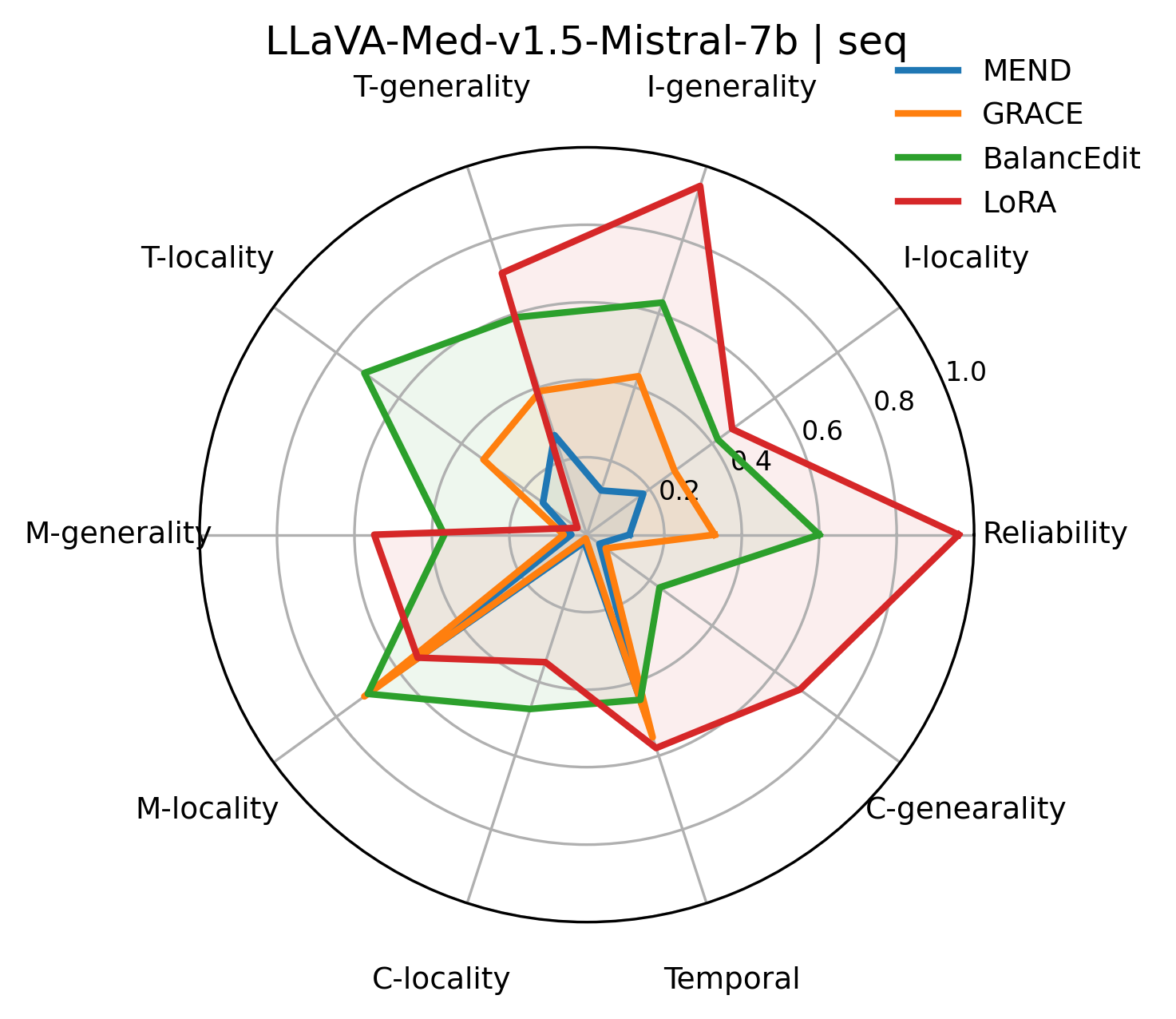
Fig 1: Post-deployment workflow and model editing performance. (a) Post-
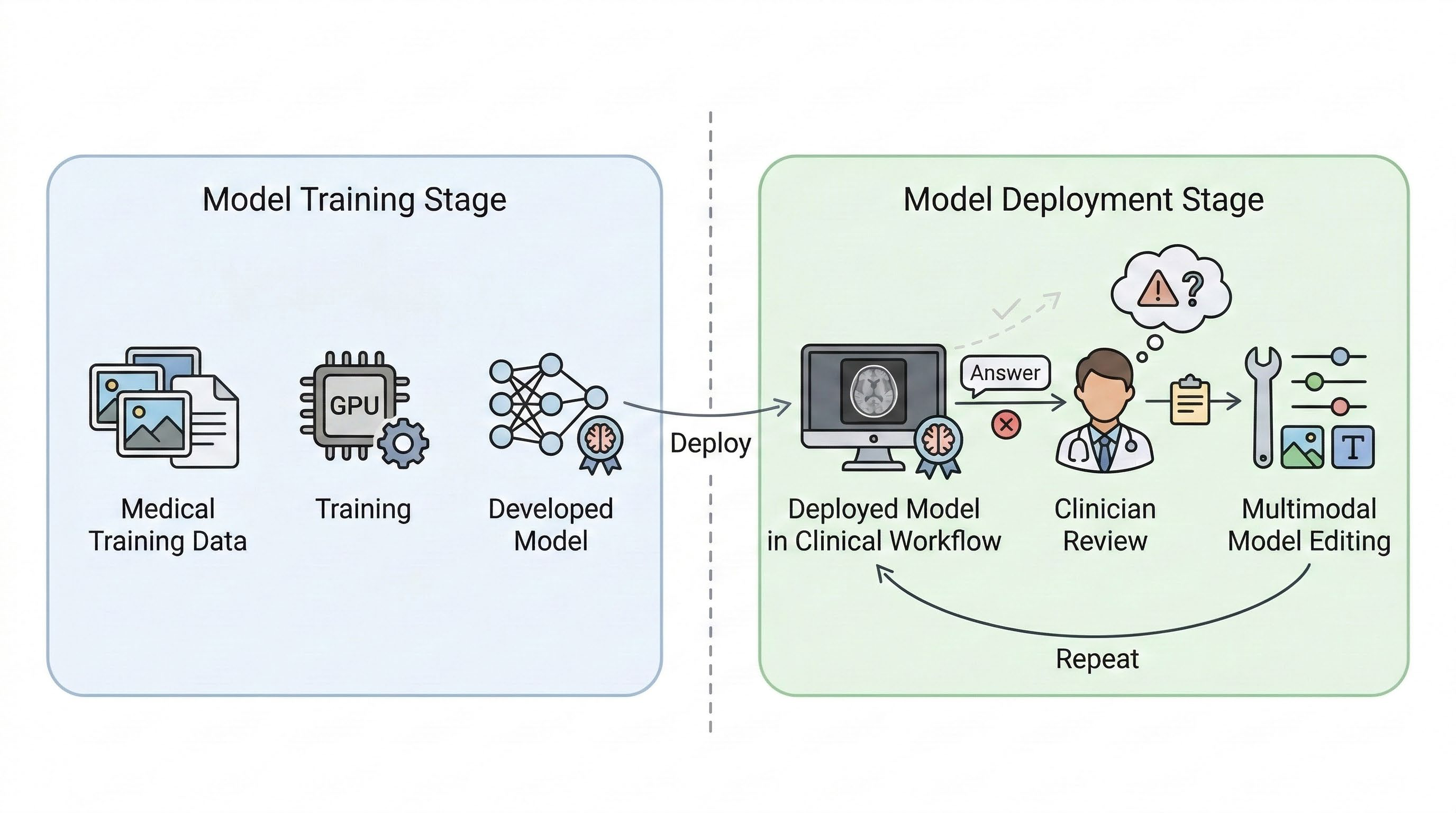
Fig 2 (page 2).

Fig 2: Construction pipeline of our proposed Multimodal Medical Model
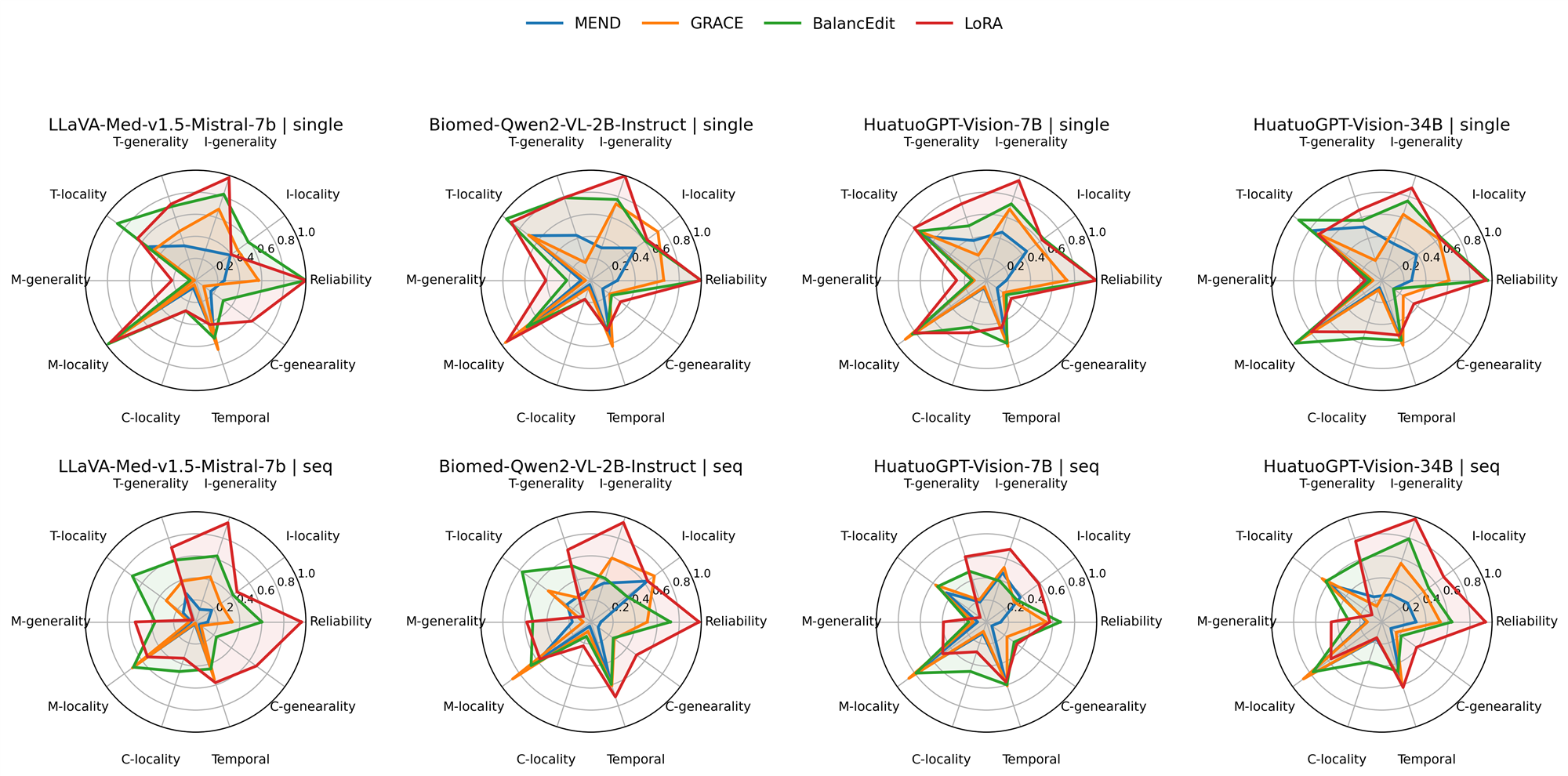
Fig 3: Radar plot summarizing single and sequential editing performance across
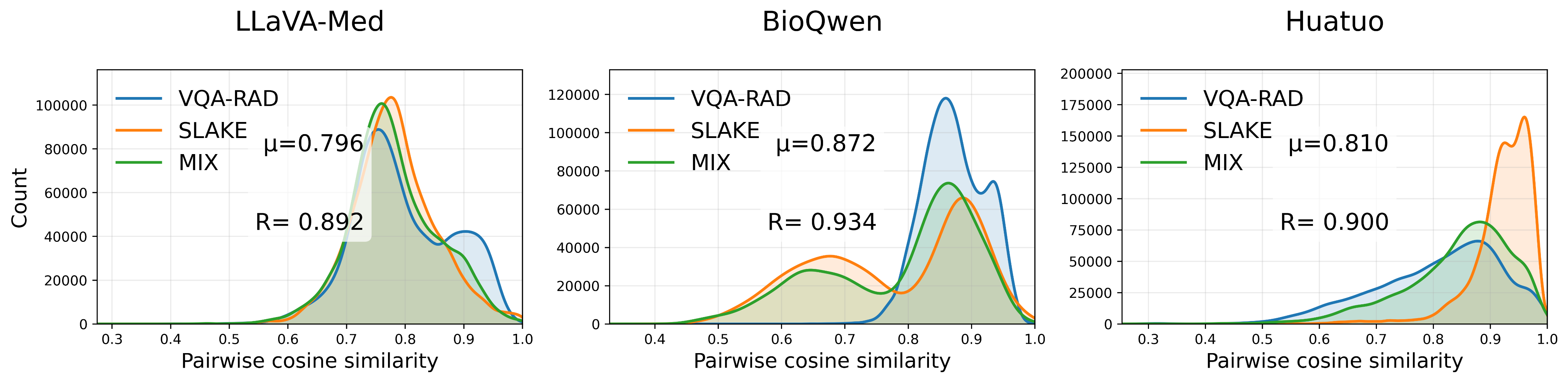
Fig 4: (a) Histograms of the cosine similarity between 1.5M pairs of embeddings
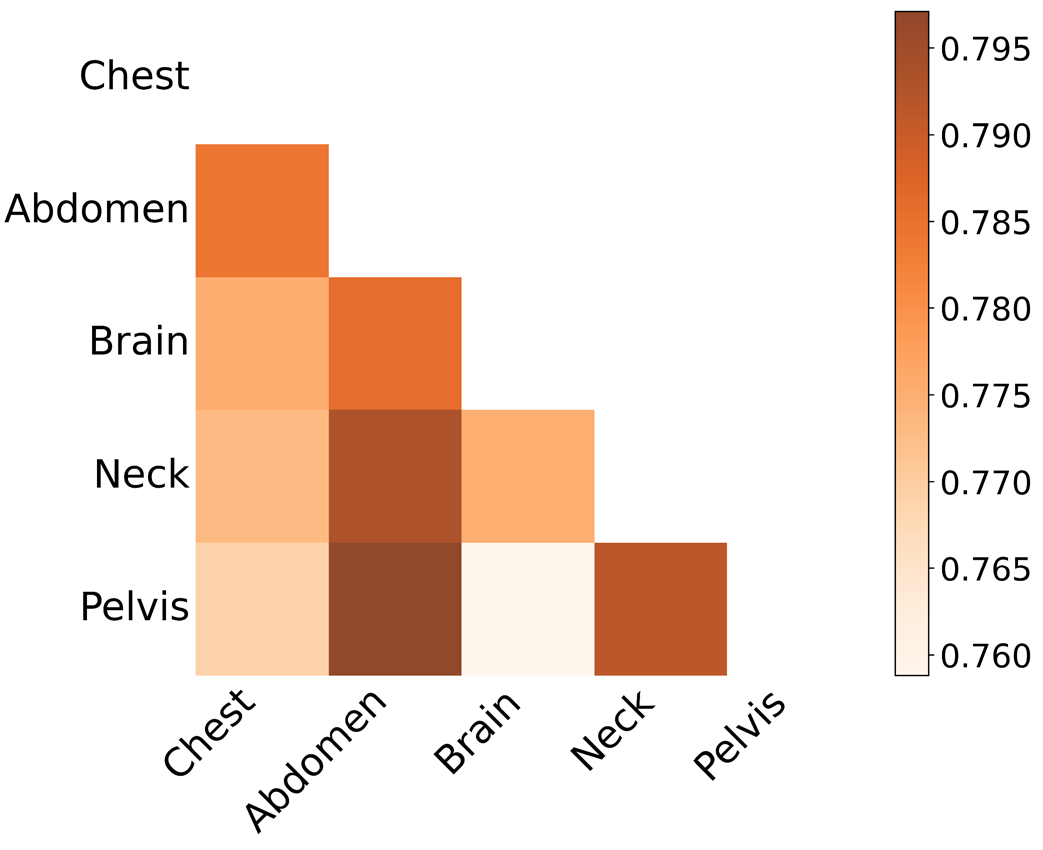
Fig 5: Left: LoRA edits move all topic centroids of intended (Brain and Lung) and
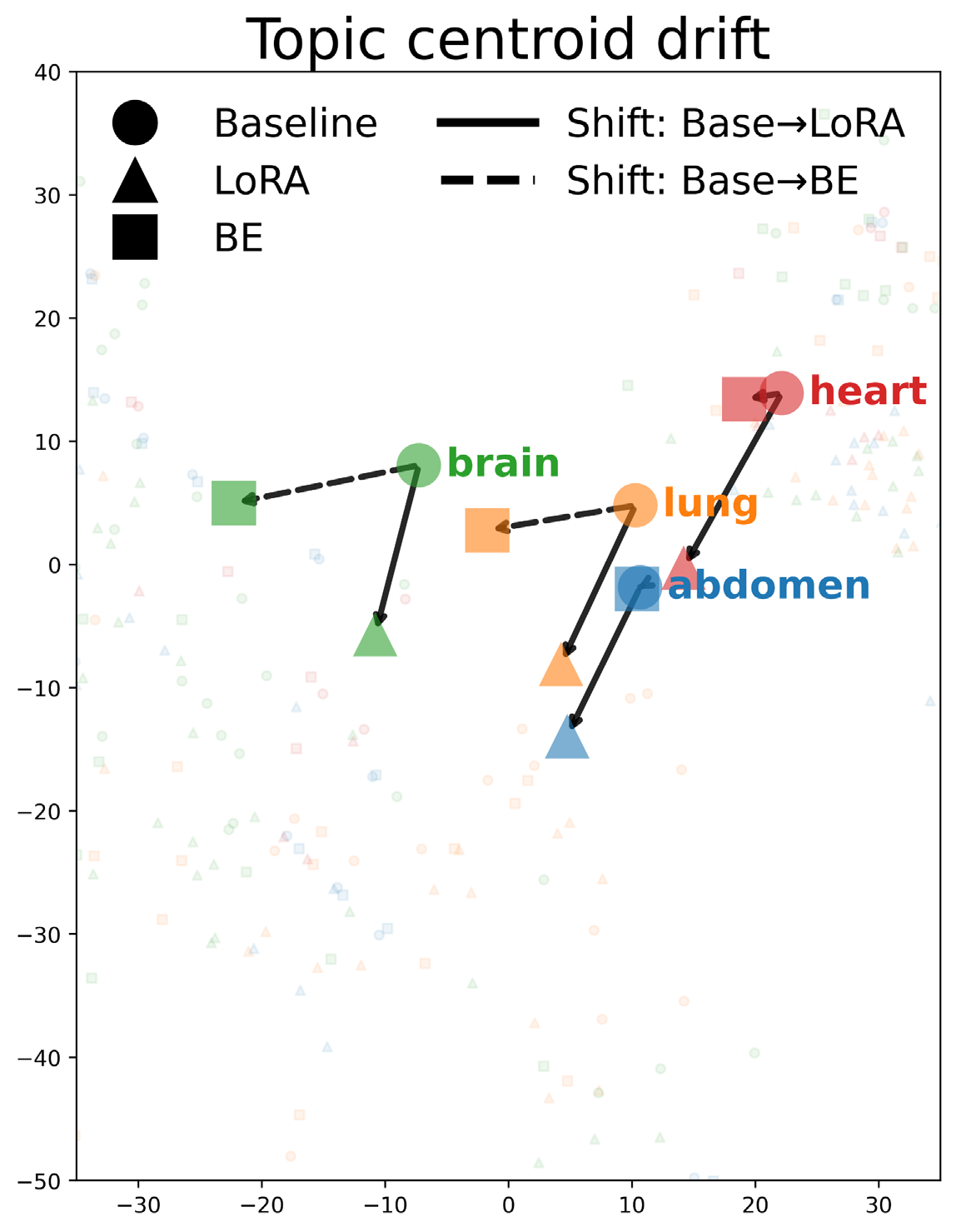
Fig 6: Composition probe: single- vs. multi-finding geometry under editing.
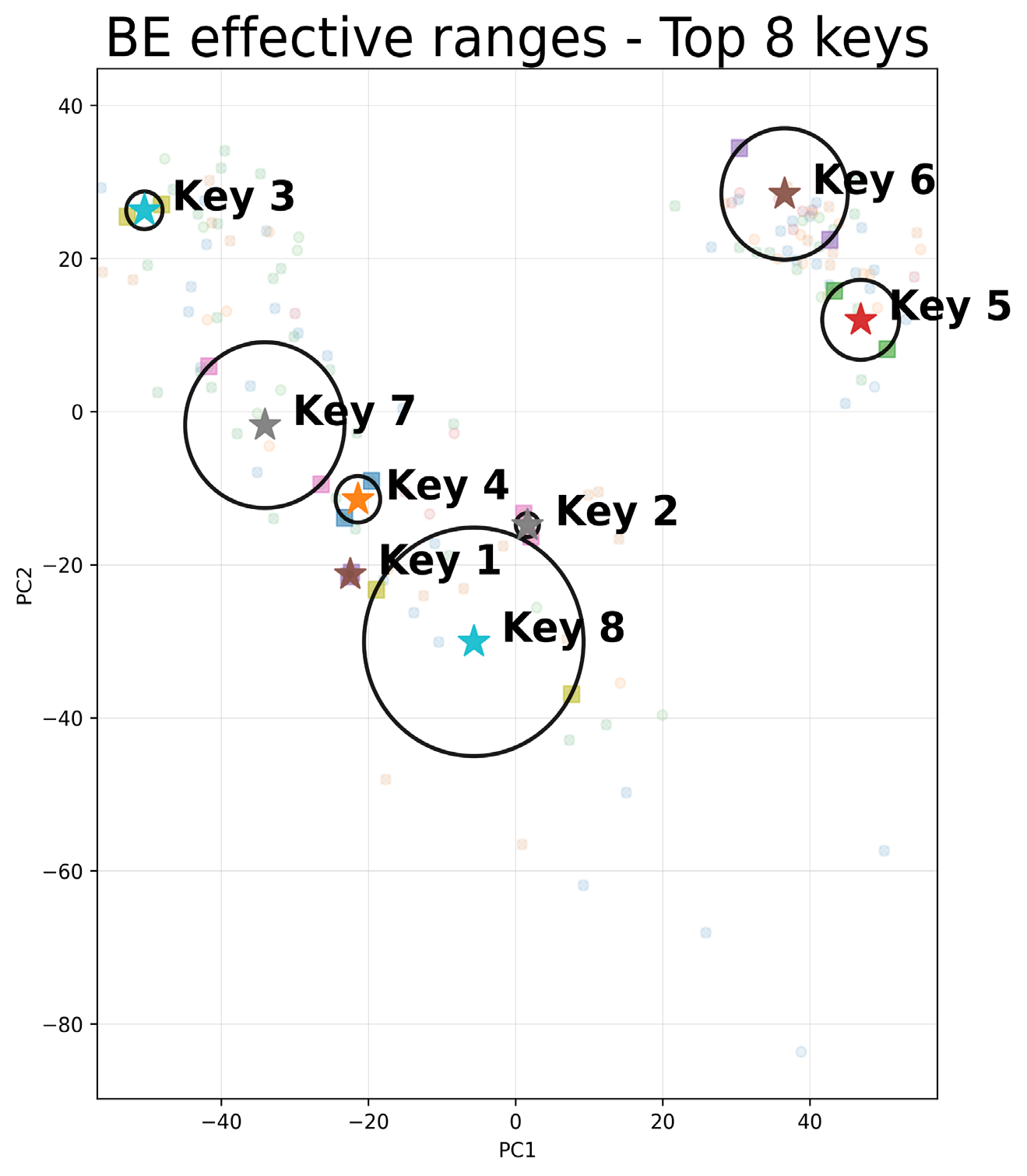
Fig 7: Architecture sweep using BELoRA over varying model components
Limitations
- M3Bench focuses on model editing for medical VLMs in QA tasks and may not generalize to other clinical modalities or downstream tasks such as report generation or segmentation.
- The study evaluates only four representative editing methods; other recent or hybrid methods might perform differently.
- Clinical composition and temporal consistency remain challenging for all editors indicating gaps in current approaches.
- The benchmark construction relies on annotation distilled by LLMs which may inherit noise or bias.
- Editing hyperparameters exhibit high sensitivity and backbone dependency, limiting turnkey deployment.
- Authors do not report extensive randomness or seed variability analyses impacting reproducibility.
Open questions / follow-ons
- How can model editing methods better handle complex clinical composition where multiple findings co-occur and latent concepts entangle?
- Can editing approaches be designed that simultaneously achieve strong reliability, locality, generality, and temporal consistency without trade-offs?
- What role can improved latent space regularization or disentanglement play to facilitate more precise local edits in medical VLMs?
- How do these model editing findings and methods extend to other high-stakes clinical multimodal tasks like automated report generation or image segmentation?
Why it matters for bot defense
For practitioners in bot defense and CAPTCHA design, this work highlights key challenges in localized model adaptation for complex multimodal AI systems. While the domain is medical VLMs, the insights on latent space geometry constraining targeted edits and the trade-offs between gradient-based and memory-based editing methods can inform approaches to AI robustness and maintainability in security-sensitive settings. The M3Bench paradigm stresses the importance of clinically grounded evaluation criteria that emphasize localized correction without unintended side effects — ideas that can transfer to multimodal bot detection models needing rapid post-deployment patching. Moreover, understanding how edits propagate and generalize under different input modalities or variant queries is crucial to prevent adversaries from exploiting inconsistent model behavior. The benchmark's emphasis on compositional and temporal consistency also parallels challenges in CAPTCHA systems under evolving attacker strategies and diverse user inputs. Overall, the rigorous evaluation framework combined with geometric characterization of embedding spaces can inspire more trustworthy model editing frameworks applicable to security-critical multimodal AI.
Cite
@article{arxiv2607_05310,
  title={ Evaluating and Understanding Model Editing for Medical Vision Language Models },
  author={ Guli Zhu and Chenwei Wu and Liyue Shen },
  journal={arXiv preprint arXiv:2607.05310},
  year={ 2026 },
  url={https://arxiv.org/abs/2607.05310}
}