
Deep Learning for Semen Analysis in Male Infertility: Computer Vision, Multimodal Fusion, and Clinical Translation
Source: arXiv:2607.05311 · Published 2026-07-06 · By Runwei Guan, Shaofeng Liang, Jiacheng Weng, Xiaoyi Gu, Jia Weng, Daizong Liu et al.
TL;DR
This paper presents a comprehensive, in-depth review of artificial intelligence methods applied to semen analysis for diagnosing male infertility. Conventional sperm analysis is laborious, subjective, and fragmented, relying heavily on manual microscopic assessment across multiple modalities such as morphology, motility, DNA integrity assays, and clinical data. The review synthesizes how modern deep learning and computer vision techniques address these challenges by automating sperm detection, tracking, segmentation, classification, and genetic integrity evaluation. Beyond isolated tasks, the authors emphasize a multimodal fusion framework integrating imaging, time-lapse video, CASA kinematic parameters, DNA fragmentation indices, and patient metadata, enabling more holistic, objective, and reproducible assessment workflows.
The review critically surveys relevant public datasets, benchmark tasks, and model families including YOLO variants, Faster R-CNN, DETR, and specialized architectures designed for tiny sperm detection under dense conditions. It highlights advances in multi-object tracking facilitating robust motility analysis essential for male fertility grading. End-to-end deep learning models that bypass intermediate trajectory extraction for direct motility classification are also discussed. Importantly, technical barriers to real-world clinical translation are analyzed, including data scarcity, cross-center domain shift, annotation inconsistency, interpretability, privacy, and integration into ART clinical workflows. Finally, the paper outlines a staged clinical translation roadmap from technical standardization and multicenter validation to regulatory approval and post-market monitoring. This structured review not only consolidates methodological progress but also foregrounds unresolved research and practical challenges in trustworthy AI-driven reproductive decision support.
Key findings
- TOD-CNN specialized tiny object detection achieved 85.60% AP50 on dense sperm video frames.
- YOLOv5s-SA with shuffle attention and depthwise convolutions improved sperm detection accuracy by 18.1% over YOLOv3 baseline.
- SpermTrack-EVD combined with YOLOv8 achieved 74.303% Higher Order Tracking Accuracy (HOTA) and 71.167% MOTA for sperm tracking.
- Hybrid UNet–YOLOv8–DeepSORT pipeline reached 98.21% segmentation accuracy, 98.43% detection mAP, and 90.41% MOTA.
- Deep learning motility classifier based on ResNet-50 yielded a mean absolute error (MAE) of 0.05 for 3-class WHO motility grading with r=0.88 correlation to experts.
- Tracking metrics alone are insufficient; frame rate, spatial calibration, and temperature control critically affect meaningful kinematic parameter computation.
- Multimodal fusion approaches integrating microscopic images, CASA parameters, DNA integrity, and clinical metadata are formalized as early/intermediate/late fusion strategies to handle missing data and uncertainty.
- Clinical translation requires addressing interpretability, domain generalization, privacy-preserving learning, and prospective validation under prospective real-world conditions.
Threat model
n/a — The work focuses on biomedical AI for sperm analysis rather than adversarial threat modeling or attack-defense scenarios.
Methodology — deep read
The review covers a broad scope of AI methods for semen analysis under the following methodological outline:
Threat Model & Assumptions: The adversary is not explicitly modeled since this is primarily a biomedical AI review, but robustness against domain shift and annotation variability challenges is emphasized. Assumptions include availability of microscopic video/image data, CASA parameters, and clinical metadata.
Data: The authors curate numerous publicly available datasets including Visem, VISEM-Tracking, and SVIA with varied annotation scales reaching over 278,000 sperm objects collectively. Datasets vary in imaging modality (static images, time-lapse video), annotation types (bounding boxes, segmentation masks), and labels (motility categories, morphology classes). Some datasets include DNA fragmentation and clinical metadata.
Architectures & Algorithms: Task-specific models include:
- Sperm detection: single-stage networks (YOLOv3/5/8 variants), two-stage Faster R-CNN, DETR, and specialized tiny-object CNNs like TOD-CNN.
- Tracking: detection-followed-by-tracking pipelines with DeepSort, FairMOT, MOTR, and customized association algorithms like SpermTrack-EVD.
- Segmentation: UNet variants and newer transformer-enhanced segmenters.
- Motility classification: end-to-end video spatiotemporal CNNs (ResNet-50 based), hybrid ML models.
- Multimodal fusion: architectures that integrate embeddings from visual encoders, CASA kinematics, DNA integrity assays, and clinical metadata using early, intermediate, or late fusion strategies.
Training Regime: Papers typically train using cross-validation folds, optimizing standard detection/segmentation losses (e.g., cross-entropy, focal loss) using Adam or SGD optimizers, batch sizes and epoch counts vary by dataset scale. Precise hyperparameters are dataset and model dependent and often not fully disclosed in the review.
Evaluation Protocol: Performance metrics include AP50 for detection, mAP, Segmentation accuracy, HOTA and MOTA for tracking, MAE and correlation for motility classification. Baselines include classical CASA methods and earlier CNN models. Ablations often analyze attention modules or fusion methods. Cross-center domain generalization and real-world prospective testing are highlighted as unmet needs.
Reproducibility: While many methods build on open-source backbone architectures, dataset fragmentation and closed clinical data limit reproducibility. The review notes absence of a unified public benchmark or shared reimplementation repository, indicating reproducibility challenges remain.
Example Workflow: Detection via YOLOv5s-SA localizes sperm in video frames, DeepSort tracking algorithm assigns consistent identities, generating trajectories for kinematic feature extraction (VCL, VSL etc.). Concurrently, a segmentation model (UNet) refines head and tail region delineations for morphology classification. Motility end-to-end models then predict WHO motility categories directly from underlying video clips without explicit tracking. Multimodal fusion models incorporate CASA parameters and DNA fragmentation indices to generate integrated sperm quality scores for clinical decision support.
Technical innovations
- Formalization of sperm analysis as a multimodal information fusion problem combining images, video, clinical data, and molecular assays.
- Specialized tiny-object detection architectures (e.g., TOD-CNN) tailored for dense, small sperm detection outperform generic detectors.
- Integration of advanced deep learning multi-object tracking methods (e.g., SpermTrack-EVD) adapted for sperm motility assessment.
- Development of end-to-end CNN motility classifiers that bypass traditional trajectory-based kinematic feature extraction.
- Critical analysis of robustness, domain adaptation, and uncertainty quantification as prerequisites for clinically trustworthy AI in sperm analysis.
Datasets
- Visem — size not explicitly stated — public dataset with annotated sperm videos.
- VISEM-Tracking — 20 annotated videos with bounding boxes for sperm tracking evaluation.
- SVIA — Aggregate >278,000 sperm annotations across three subsets publicly available.
- Various other curated microscopic sperm image and video datasets compiled and indexed by the authors.
Baselines vs proposed
- TOD-CNN: AP50 = 85.60%.
- YOLOv5s-SA: 18.1% accuracy improvement over YOLOv3 baseline.
- SpermTrack-EVD + YOLOv8: HOTA = 74.303%, MOTA = 71.167%.
- Hybrid UNet + YOLOv8 + DeepSORT: segmentation accuracy = 98.21%, detection mAP = 98.43%, MOTA = 90.41%.
- End-to-end ResNet-50 motility classification: MAE = 0.05 (three-class), r=0.88 vs expert.
Figures from the paper
Figures are reproduced from the source paper for academic discussion. Original copyright: the paper authors. See arXiv:2607.05311.

Fig 1: Translational framework of AI-driven sperm analysis. This figure summarizes how multimodal inputs, AI analysis

Fig 2 (page 2).
Fig 3 (page 2).

Fig 4 (page 2).
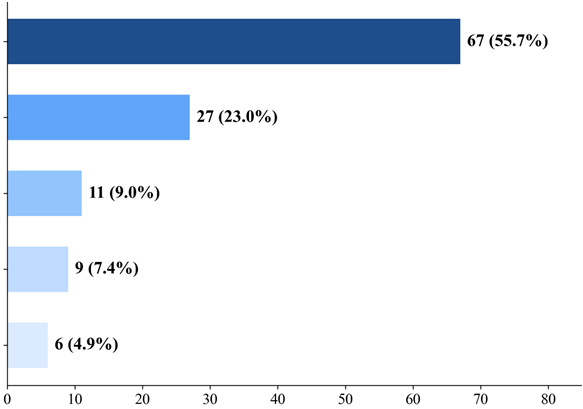
Fig 2: Search scope and reference landscape of AI-driven sperm analysis. The figure summarizes the semi-structured
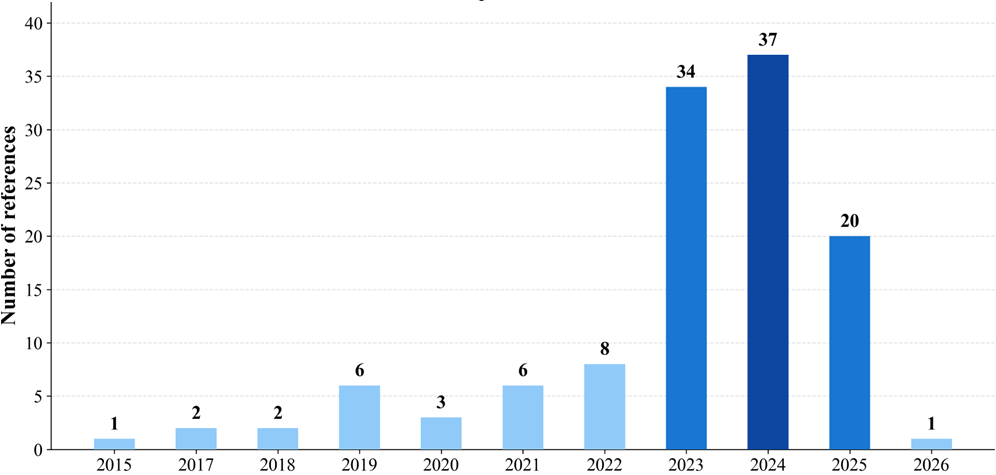
Fig 3: Detailed structure of sperm and visible sperm features discernible by computer vision (part of the figure is adapted
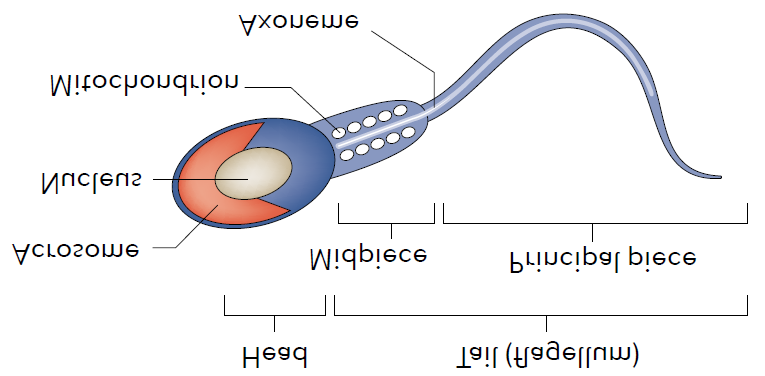
Fig 4: Evolution of representative computer-vision architectures relevant to AI-driven sperm analysis. The timeline

Fig 5: Overview of sperm object detection models with various paradigms.
Limitations
- Significant data scarcity and annotation inconsistencies across datasets impede model generalization.
- Most studies lack rigorous cross-center domain shift evaluations to confirm model robustness in varied clinical settings.
- Limited interpretability and uncertainty estimation are currently obstacles for clinical adoption and regulatory approval.
- Privacy concerns and lack of federated learning implementations restrict data sharing and collaborative model improvement.
- Absence of unified, open-source benchmarks and shared codebases hampers reproducibility and meaningful method comparison.
- Few prospective or human-in-the-loop clinical validations have been performed to demonstrate real-world utility.
Open questions / follow-ons
- How to effectively harmonize heterogeneous modalities (imaging, clinical, molecular) for robust, interpretable sperm quality assessment?
- What domain adaptation strategies best mitigate cross-center and device variability in sperm analysis models?
- How to design privacy-preserving federated learning frameworks suitable for sensitive reproductive health data?
- What are the optimal clinical integration pathways for human-AI collaboration and regulatory evaluation of sperm analysis systems?
Why it matters for bot defense
Although the paper is centered on biomedical image analysis, its insights on robust detection, tracking, and multimodal fusion of small, densely packed moving objects under varied imaging conditions are potentially relevant to CAPTCHA and bot-defense practitioners addressing dynamic, noisy visual environments. The detailed discussion on domain adaptation, annotation variability, and uncertainty estimation can inform robustness considerations in CAPTCHA challenge design and automated solver detection. Furthermore, the staged clinical translation roadmap emphasizing validation, interpretability, and privacy preservation offers valuable parallels for deploying trustworthy AI in security-critical CAPTCHA scenarios. However, direct CAPTCHA-specific algorithmic techniques or adversarial threat models are not addressed.
Cite
@article{arxiv2607_05311,
  title={ Deep Learning for Semen Analysis in Male Infertility: Computer Vision, Multimodal Fusion, and Clinical Translation },
  author={ Runwei Guan and Shaofeng Liang and Jiacheng Weng and Xiaoyi Gu and Jia Weng and Daizong Liu and Duo Pan and Qingxin Zhang and Xiao Liang and Weiping Ding and Suoyu Zhu and Ming Yuan and Yanhua Fei },
  journal={arXiv preprint arXiv:2607.05311},
  year={ 2026 },
  url={https://arxiv.org/abs/2607.05311}
}