
Biologically Informed Deep Neural Networks for Multi-Omic Integration, Pathway Activity Inference and Risk Stratification in Cancer
Source: arXiv:2607.05306 · Published 2026-07-06 · By Pedro Henrique da Costa Avelar, Le Ou-Yang, Min Wu, Sophia Tsoka
TL;DR
This paper addresses the challenge of integrating complex multi-omics data in cancer by proposing Pathway Activity Autoencoders (PAAE), a biologically informed neural network architecture that encodes prior knowledge of biochemical pathways as architectural constraints. This approach balances the trade-off between interpretability and representational power that often hampers existing methods, which are either black-box deep models with post-hoc explanations or linear models with limited capacity. By decomposing input molecular data into biologically meaningful pathway activity scores, the model yields latent features that are directly interpretable and clinically relevant. The framework is evaluated primarily on breast cancer TCGA multi-omic data for subtype classification and survival prediction, showing improved integration benefits compared to single-omics, with particular contribution from gene, protein, and microRNA expression layers. Repeatability studies with 2560 trained models reveal that moderate dropout regularization improves model robustness and consistency, while excessive dropout harms predictive performance. Visualizations and decision tree classifiers based on learned pathway activities confirm the framework's interpretability and translational relevance. Overall, this work demonstrates how embedding biological pathway knowledge within deep multi-omics integration models can yield meaningful, reproducible, and clinically actionable insights.
Key findings
- Multi-omic integration using PAAE improves breast cancer subtype classification and survival prediction compared to single-omics models.
- Gene expression, protein (RPPA), and microRNA layers contribute most strongly to downstream classification and survival tasks as quantified by adapted Shapley value analyses.
- 2560 PAAE models trained with varying dropout rates show that increasing dropout enhances repeatability (Pearson correlation of pathway activities rises sharply between 70% and 80% dropout) but excessive dropout (>80%) reduces predictive accuracy (ROC AUC and concordance index decline).
- The PAAE framework uncovers biologically relevant pathways related to breast cancer progression, including Sphingolipid Metabolism, ABC Transporters, Valine Leucine and Isoleucine Degradation, Glycosaminoglycan Biosynthesis, and Ether Lipid Metabolism, some of which are novel or underexplored in cancer biology.
- Survival analysis identifies significant stratification using pathway activity scores and gene-level features, notably the VLID pathway showing clear survival separation in TCGA and Metabric cohorts.
- An interpretable decision tree classifier trained on top pathways per PAM50 subtype achieves reasonable subtype classification, demonstrating clinical applicability of the learned interpretable features.
- Feature space visualization via UMAP clustering of inferred pathway activities aligns well with clinical subtype labels and is robust across independent datasets, highlighting generalizability.
Threat model
n/a — This work is not a security paper. It assumes a predictive modeling context where adversaries do not manipulate inputs or outcomes, focusing instead on interpretability and robustness of multi-omics representations under standard biomedical cohort assumptions.
Methodology — deep read
Threat Model & Assumptions: The paper does not explicitly define an adversarial threat model but focuses on learning robust, interpretable multi-omic representations under assumptions of noisily measured, high-dimensional molecular data from cohorts of cancer patients. The setting assumes clinical label availability (e.g., PAM50 subtypes, survival outcomes) and does not consider adversarial manipulation but targets reproducibility and interpretability amidst biological complexity.
Data: The primary data source is the TCGA Breast Cancer multi-omics dataset (MO-TCGA-BRCA), comprising six omics layers: gene expression (mRNA), DNA methylation, mutation, copy number variation, microRNA expression, and protein expression (RPPA). The publicly available Metabric dataset is used for external validation in single-omics analyses but not multi-omics due to missing layers. Data preprocessing involves normalization and mapping features to pathway gene sets, including mapping CpG sites to genes (methylation) and microRNA-target gene mappings from miRTarBase 2025.
Architecture/Algorithm: The Pathway Activity Autoencoder (PAAE) is a biologically informed neural network that integrates prior knowledge of biochemical pathways directly into the model architecture. For each pathway in a curated pathway set (e.g., KEGG, Hallmark Genes), a pathway-specific encoder block accepts only molecular features mapped to genes within that pathway and produces a single scalar activity score. These pathway activities are concatenated to form a pathway activity vector a, which may be further encoded into a latent space z. A decoder attempts to reconstruct the full molecular profile from a, optimizing mean squared error loss between input and reconstruction. The architecture thus enforces pathway-level bottlenecks that yield interpretable pathway activity scores. Multi-omics integration is performed both early (concatenating all omics features before input) and late (training separate single-omic models and integrating outputs via mean or concatenation).
Training Regime: Models are trained using fixed hyperparameters established from validation in single-omics analyses. Dropout regularization applied to the pathway activity layer is varied systematically from 0% to 90% to study robustness. For dropout experiments, 16 repeats per dropout level and 16 aligned consensus models are trained, totaling 2560 models. Training hardware and seed control details are not specified explicitly.
Evaluation Protocol: Downstream task performance is evaluated on cancer subtype classification and survival prediction. For classification, logistic regression is trained on the learned latent or pathway activity spaces and evaluated with metrics including accuracy, precision, recall, and AUROC (one-vs-rest). Unsupervised clustering quality is assessed via mutual information between clusters and class labels. Survival relevance is assessed with univariate Cox proportional hazards models, concordance index, logrank tests, and Kaplan-Meier curves. Repeatability between independently trained models is quantified via correlation metrics (Pearson, Kendall’s τ-b) and similarity measures (Centered Kernel Alignment, Average Precision@K for ranking agreement). Ablation studies on dropout regularization analyze trade-offs between repeatability and predictive power.
Reproducibility: Code related to the work is stated to be available at github.com/phcavelar/pathwayae. The paper uses standard public datasets (TCGA, Metabric) but multi-omics integration validation is limited by dataset compatibility. Detailed hyperparameters, seed strategies, and hardware are not fully described. 2560 trained models demonstrate significant computational investment.
Example End-to-End: For a given input patient profile with six omics layers, features are mapped to gene sets for each pathway. Each pathway encoder receives corresponding features and outputs a single pathway activity value. These activities are concatenated and decoded to reconstruct the entire multi-omics profile, with mean squared error guiding training. The learned pathway activity vector is used to train a logistic regression classifier to predict breast cancer subtype, with performance evaluated on held-out samples. Robustness is tested by repeating training 16 times per dropout setting, correlating pathway activity vectors across repeats to quantify stability.
Technical innovations
- Embedding curated biochemical pathway gene sets directly into an autoencoder architecture to produce interpretable pathway activity scores as latent features, bridging linear interpretable models and deep non-interpretable ones.
- Extensive application of aligned consensus modeling and dropout ablation to quantify trade-offs between pathway-level feature reproducibility and downstream predictive accuracy in multi-omics deep models.
- Extension of Shapley value-based methods to quantify marginal contributions of individual omics layers to downstream classification and survival tasks in a multi-view learning framework.
- A fully interpretable pipeline that uses the learned pathway activity space combined with a small decision tree classifier and SMOTE oversampling to achieve understandable cancer subtype prediction.
Datasets
- MO-TCGA-BRCA — multi-omics breast cancer dataset with six omics layers (gene expression, methylation, mutation, copy number variation, microRNA, RPPA) — public via TCGA
- Metabric — breast cancer gene expression and clinical data for external validation — public
Baselines vs proposed
- Single-omics models: ROC AUC and concordance index consistently lower than multi-omics integrated PAAE models (exact numeric deltas not explicitly provided).
- Dropout ablation: Pearson correlation of pathway activity vectors increases from ~0.2 at 0% dropout to ~0.6+ at 80% dropout; ROC AUC decreases beyond 70% dropout from ~0.85 to below 0.75 (Fig. 5, 13).
- Late-mean and late-concat multi-omics integration strategies outperform early integration and single-omic models in subtype classification metrics (specific values not given).
Figures from the paper
Figures are reproduced from the source paper for academic discussion. Original copyright: the paper authors. See arXiv:2607.05306.
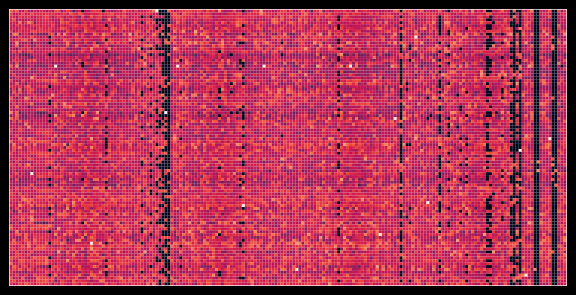
Fig 1: Diagram of the PAAE model. The representation learning module (left) receives a subset of the input gene expression
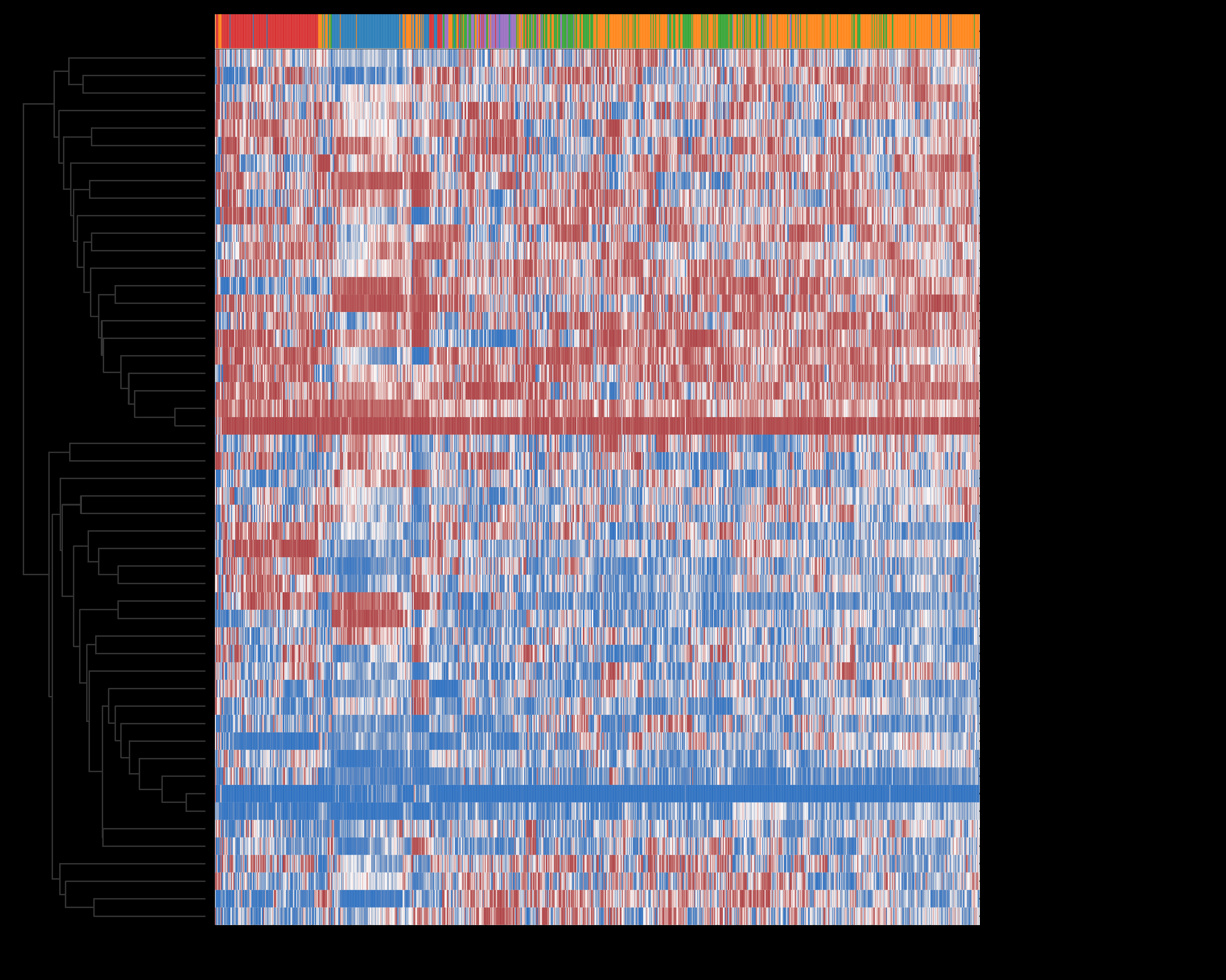
Fig 2 (page 2).
Fig 3 (page 2).
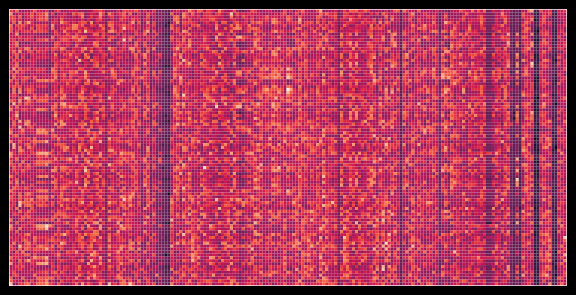
Fig 4 (page 2).
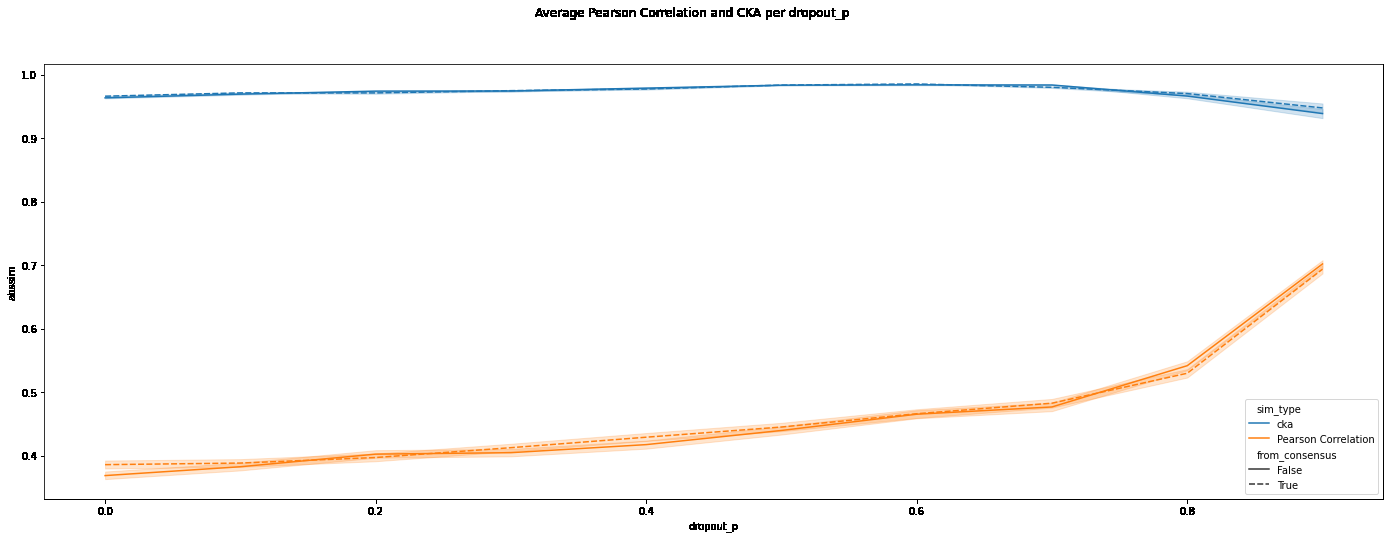
Fig 5: Plot illustrating the average Centered Kernel Alignment (CKA) similarity and the average
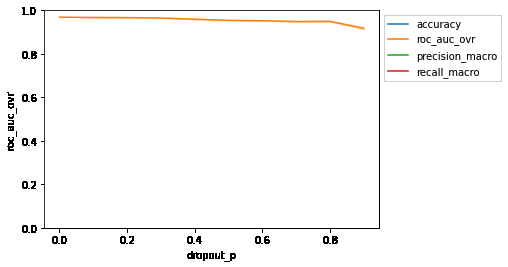
Fig 12: The clustermap using the cosine distance between samples’ inferred pathway activity vectors for
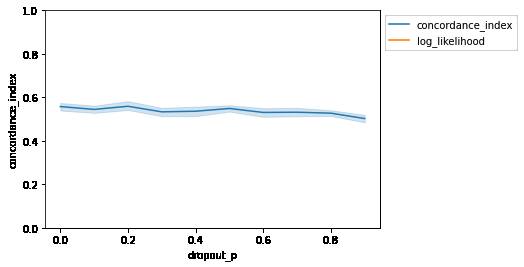
Fig 13: Average ROC AUC (left) from a one-vs-rest Logistic Regression and Concordance Index (right)

Fig 14: The learned pathway space when applying, from left to right, 0%, 10%, 50%, 80%, and 90%
Limitations
- Lack of explicit adversarial robustness evaluation or external adversarial threat model analysis.
- Multi-omics integration validation is limited by dataset compatibility; Metabric lacks all six omics layers preventing multi-omics external validation.
- Hyperparameters, training hardware details, and seed strategies are not fully specified, limiting reproducibility precision.
- Potential bias due to reliance on pathway sets curated mostly from well-studied pathways; novel or rare pathways may be underrepresented.
- Excessive dropout improving repeatability but degrading accuracy shows tension in model regularization not fully resolved.
- Interpretability demonstrated mainly for breast cancer; generalizability to other cancer types or diseases remains unproven.
Open questions / follow-ons
- How do pathway-informed models perform under adversarial attacks or input perturbations typical in clinical settings?
- Can the PAAE framework and pathway selections be generalized or adapted to other cancer types or diseases with different omics profiles?
- What are the trade-offs in clinical utility when moving from more complex but less interpretable models to fully interpretable ones in decision-making?
- How do temporal multi-omics data integration and dynamic pathway activities evolve in longitudinal cancer progression, and can PAAE models be extended accordingly?
Why it matters for bot defense
For bot-defense and CAPTCHA engineers, this work is indirectly relevant primarily through its demonstration of interpretable latent representation learning in complex, heterogeneous, multi-view data. The concept of embedding domain knowledge (here, biological pathways) into neural network architectures to constrain latent representations can inspire similar approaches for bot detection where multiple signals are integrated. The detailed analysis of robustness and repeatability under various dropout regimes highlights the need to balance representational stability versus predictive performance, a principle relevant when deploying CAPTCHA AI models under adversarial or noisy conditions. However, direct application to bot detection or CAPTCHA generation is limited since this paper targets biomedical omics data rather than behavioral or network traffic signals. Still, the pathway activity bottleneck analogy may motivate analogous interpretable modules for network or behavioral feature sets in bot detection tasks.
Cite
@article{arxiv2607_05306,
  title={ Biologically Informed Deep Neural Networks for Multi-Omic Integration, Pathway Activity Inference and Risk Stratification in Cancer },
  author={ Pedro Henrique da Costa Avelar and Le Ou-Yang and Min Wu and Sophia Tsoka },
  journal={arXiv preprint arXiv:2607.05306},
  year={ 2026 },
  url={https://arxiv.org/abs/2607.05306}
}