
Understanding the Robustness of Distributed Self-Supervised Learning Frameworks Against Non-IID Data
Source: arXiv:2607.02447 · Published 2026-07-02 · By Xuanyu Chen, Nan Yang, Shuai Wang, Dong Yuan
TL;DR
This paper addresses the critical challenge of data heterogeneity in distributed self-supervised learning (D-SSL), where decentralized clients hold non-iid unlabeled data. The authors present a rigorous theoretical analysis comparing the robustness of two major SSL paradigms—Masked Image Modeling (MIM) and Contrastive Learning (CL)—under non-iid distributed settings. They show that MIM-based D-SSL is inherently more robust to data heterogeneity than CL-based methods and that the robustness of decentralized SSL improves with the average connectivity of the client communication network. Federated learning (FL) with full connectivity is shown to be at least as robust as decentralized learning (DecL). Building on these theoretical insights, the authors propose MAR loss, which refines the MIM objective with a local-to-global alignment regularization to promote consistency between local and global representations. Extensive experiments on Mini-ImageNet simulation, different model architectures (ResNet, ViT), and downstream fine-tuning benchmarks (CIFAR-10, CIFAR-100, ImageNet) validate the theory, showing MIM’s superior robustness and the performance gains from MAR loss in heterogeneous distributed scenarios.
The work fills a notable gap by providing the first comprehensive theoretical framework to reason about robustness variance across D-SSL methods and network architectures under non-iid data. It also unifies decentralized and federated SSL within this robustness perspective, guiding future algorithmic designs and deployments in real-world distributed learning environments.
Key findings
- Distributed MIM pre-training exhibits significantly smaller sensitivity to non-IID data heterogeneity than distributed CL, proven by representability vector bounds (Theorem 4.4).
- The global representation learned in federated learning (fully connected network) is less sensitive to heterogeneity than that learned via decentralized learning, with robustness improving as the average network connectivity |¯A| increases (Theorems 4.2, 4.3; Corollary 4.5).
- MAR loss, a local-to-global alignment regularizer based on adaptive MMD, enhances robustness of distributed MIM by explicitly reducing local-global embedding divergence and yields empirical performance gains.
- Pre-training backbone model architectures (ResNet and ViT) consistently confirm that MIM-based D-SSL shows less accuracy drop between IID and non-IID distributed settings compared to CL-based counterparts across CIFAR-10, CIFAR-100, and ImageNet (Table 1).
- Simulation of non-IID data via Dirichlet-distributed class priors and feature skew confirms theoretical insights under practical heterogeneous data partitions.
- In decentralized settings, increasing average client connectivity improves robustness, narrowing the IID vs. non-IID performance gap, confirming theoretical predictions.
- Theoretical lower and upper bounds on representability vectors provide quantitative measures of how learned representations deviate under heterogeneity, with MIM’s bounds consistently tighter.
- The proposed adaptive MMD kernel bandwidth (A-MMD) in MAR loss adaptively scales kernel based on embedding distribution, offering a more stable regularization mechanism compared to fixed-bandwidth MMD.
Threat model
The threat model focuses on benign but heterogeneous distributed data holders—clients that possess unlabeled datasets with statistical non-identical distributions (non-IID), leading to representation degradation. There is no assumption of malicious adversaries or data poisoning; instead, the adversary is effectively the natural data distribution skew across clients. The capabilities are limited to holding private, heterogeneous datasets and participating in distributed model training under federated or decentralized communication settings. Adversaries cannot intercept or manipulate communications or inject false updates.
Methodology — deep read
Threat Model & Assumptions: The adversary model is implicit—heterogeneous, decentralized unlabeled data across distributed clients with no direct data sharing. The threat is the natural data heterogeneity (non-IIDness) degrading representation learning quality. Adversaries cannot manipulate communication channels or insert malicious data; the focus is on intrinsic robustness to non-IID data.
Data: The authors simulate non-IID heterogeneous data on N clients by partitioning Mini-ImageNet (60,000 images) with label distribution skew using a Dirichlet prior (varying α controls heterogeneity). Feature heterogeneity is simulated by client-specific augmentations. Local datasets have highly imbalanced and constrained class distributions with dominant classes per client, modeling realistic non-IIDness. The same total number of samples per client is maintained.
Architectures / Algorithms: Two SSL paradigms are considered - Contrastive Learning (CL), specifically SimSiam loss with positive pairs only, implemented linearly for theoretical tractability, and Masked Image Modeling (MIM), where random binary masks hide part of the input, and an encoder-decoder reconstructs masked patches. Representations are linear embeddings with regularizers to enable theoretical analysis. The distributed learning frameworks compared include federated learning (central server averaging all clients) and decentralized learning (clients communicate with neighbors as graph nodes).
Training Regime: For experiments, models include ResNet and Vision Transformer (ViT). Distributed optimization algorithms used are FedAvg for FL and D-PSGD for DecL, implemented on servers with four NVIDIA RTX 3090 GPUs. MAR loss integration involves dynamic weighting with cosine scheduling over training rounds. Each algorithm is run multiple times to average results.
Evaluation Protocol: Theoretical evaluation derives bounds on representability vectors measuring how well client local and global feature spaces capture standard basis components, quantifying sensitivity to heterogeneity. Empirical evaluation uses fine-tuning accuracy on CIFAR-10, CIFAR-100, and ImageNet after pretraining with simulated non-IID Mini-ImageNet data. Experiments vary heterogeneity level, network connectivity, model type, training frameworks, and data augmentation. IID versus non-IID accuracy gaps measure robustness.
Reproducibility: The authors release full code at their GitHub repo. Mini-ImageNet and standard benchmark datasets are public. Details of training configurations, hyperparameters, and network constructions are in appendices, promoting reproducibility. However, some theoretical proofs and details are in the appendix, requiring close reading for full understanding.
Concrete example: Consider decentralized MIM training on N clients with label skewed Mini-ImageNet data. Each client encodes masked images with local encoder. During DecL rounds, clients aggregate encoder weights with neighbors based on adjacency matrix of Erdős–Rényi generated network with specified average connectivity. MAR loss is applied with A-MMD regularizer enforcing local-global latent alignment. After pretraining, the global encoder is fine-tuned on CIFAR-10. Performance metrics comparing IID and strongly non-IID settings demonstrate MAR loss reduces performance drop, confirming tighter representability vector bounds predicted by theory.
Technical innovations
- Comprehensive theoretical framework quantifying robustness of distributed self-supervised learning methods under non-IID data using representability vectors.
- Analytical proof that MIM-based distributed SSL is inherently more robust to data heterogeneity than CL-based SSL across federated and decentralized frameworks.
- Establishing relationship between client network connectivity and robustness, proving that federated learning (full connectivity) is no less robust than decentralized learning.
- Proposal of MAR loss, an adaptive local-to-global alignment regularizer based on maximum mean discrepancy with adaptive bandwidth, improving representation consistency in distributed MIM.
- Extension of SSL robustness theory beyond contrastive/federated paradigms to general D-SSL frameworks, unifying previous isolated results.
Datasets
- Mini-ImageNet — 60,000 images — Public dataset sourced from ImageNet
- CIFAR-10 — 60,000 images — Public
- CIFAR-100 — 60,000 images — Public
- ImageNet — >1 million images — Public
Baselines vs proposed
- Simsiam + CNN: IID fine-tune accuracy 86.03% vs non-IID (label skew) 84.33% (-1.70) vs MAE + CNN: IID 87.28% vs non-IID 86.97% (-0.31)
- Simsiam + ViT: IID 72.32% vs non-IID 69.50% (-2.82) vs MAE + ViT: IID 69.90% vs non-IID 68.20% (-1.70)
- Across CIFAR-10/100/ImageNet, MAE (MIM) reduces accuracy gap from IID to non-IID by ~0.5%-2% compared to Simsiam (CL)
- Increasing decentralized network connectivity from 2 to 20 neighbors reduces IID vs non-IID performance gap for MIM as shown in experiments (detailed in paper figures)
Figures from the paper
Figures are reproduced from the source paper for academic discussion. Original copyright: the paper authors. See arXiv:2607.02447.
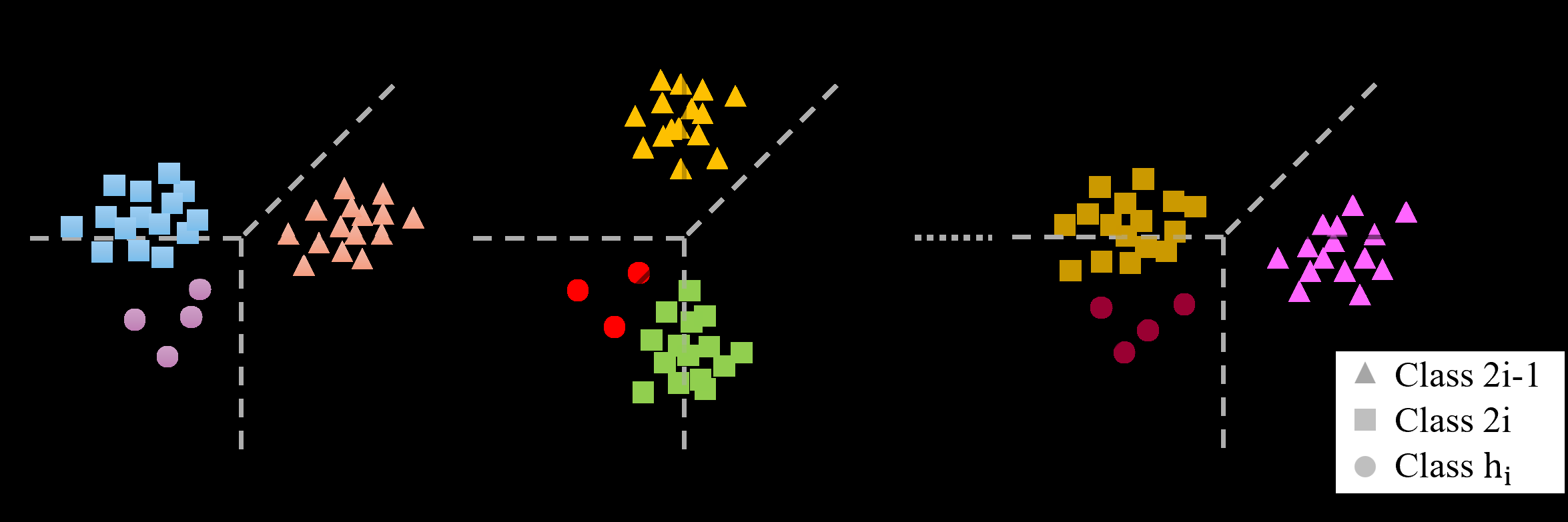
Fig 1: Illustration of the constructed heterogeneous distri-
Limitations
- The theoretical analysis relies on a simplified linear model and synthetic non-IID data constructed with Gaussian and Dirichlet assumptions, which may not capture all complexities of real distributed data.
- Only two SSL paradigms (SimSiam representing contrastive and MAE representing MIM) are analyzed; other SSL frameworks or combinations remain unexamined.
- The adversarial robustness against malicious clients or attacks on communication is not studied; the threat model assumes honest-but-heterogeneous clients.
- Empirical evaluations focus on image datasets; generalization to other modalities like text or audio is not explored.
- The impact of client dropout, communication faults, or asynchronous updates in decentralized setups is not addressed.
- While MAR loss improves robustness, its computational overhead and scalability to very large networks are not detailed.
Open questions / follow-ons
- How do other emerging SSL frameworks or hybrid methods perform under distribution heterogeneity in D-SSL?
- What is the robustness impact under adversarial or malicious client behavior disrupting distributed SSL?
- Can the theoretical framework be extended to incorporate asynchronous or partial client participation realistically occurring in large-scale decentralized deployments?
- How does robustness of D-SSL with MAR loss or other techniques extend to modalities beyond images, such as NLP or multimodal data?
Why it matters for bot defense
For bot-defense and CAPTCHA practitioners deploying client-side or distributed self-supervised learning systems to detect bots or anomalies, this paper elucidates fundamental robustness limits of different SSL approaches under heterogeneous data scenarios frequently encountered in decentralized deployments. The finding that masked image modeling (MIM) methods are inherently more robust than contrastive learning (CL) suggests MIM-based pretraining could yield more stable feature extractors across diverse client environments, reducing vulnerability to distribution shifts and circumventing brittle detection models. The demonstrated importance of network connectivity implies that designing bot-detection models benefiting from high client interconnectivity or effective aggregation can enhance robustness and model consistency. The MAR loss technique could inspire regularization strategies that enforce local-to-global consistency to stabilize learning from diverse client inputs. While primarily theoretical and image-focused, the insights can inform distributed anomaly and bot behavior modeling frameworks, emphasizing SSL paradigm choice and network communication topology as critical levers impacting reliability and attack resilience.
Cite
@article{arxiv2607_02447,
  title={ Understanding the Robustness of Distributed Self-Supervised Learning Frameworks Against Non-IID Data },
  author={ Xuanyu Chen and Nan Yang and Shuai Wang and Dong Yuan },
  journal={arXiv preprint arXiv:2607.02447},
  year={ 2026 },
  url={https://arxiv.org/abs/2607.02447}
}