
SA-HGNN: Sample-Adaptive Hyperbolic Graph Neural Network for EEG-Based Depression Recognition
Source: arXiv:2607.02063 · Published 2026-07-02 · By Yang Li, Pan Hu, Yan Zhang, Wenfan Yang, Tao Wu, Lianbo Guo
TL;DR
This work addresses the challenge of recognizing Major Depressive Disorder (MDD) from EEG data by modeling the hierarchical structure of brain functional connectivity, which is disrupted in depression but inadequately captured by prior Euclidean-space graph neural networks (GNNs). The authors propose the Sample-Adaptive Hyperbolic Graph Neural Network (SA-HGNN), a novel architecture comprising three key innovations: a Sample-Adaptive Graph Construction (SAGC) module that dynamically builds personalized brain network graphs integrating physical electrode priors and feature correlations; a Hyperbolic Graph Convolution (HGC) module that embeds and processes these graphs in hyperbolic space to better capture latent hierarchical patterns; and an Attention Pooling (AP) module that filters noise by selecting the most informative EEG channels. Evaluated on the public HUSM datasets under both resting-state and task-related EEG paradigms, SA-HGNN achieves state-of-the-art accuracy and F1 scores, outperforming seven strong graph-based baselines by significant margins, particularly boosting recall—critical for clinical screening. Visualization of learned brain connectivity patterns aligns with known neurobiological biomarkers in MDD, demonstrating interpretability of the learned hierarchical graph representations.
Key findings
- SA-HGNN achieves 95.24% accuracy and 95.77% F1 score on the HUSM-Rest dataset, outperforming the second-best baseline GraphSleepNet by 1.82% accuracy and 2.29% F1.
- On HUSM-Task data, SA-HGNN reaches 94.26% accuracy and 94.69% F1 score, exceeding the second-best baseline GCBNet by 0.39% accuracy and 0.42% F1.
- SA-HGNN achieves highest recall rates of 96.19% on resting-state and 98.70% on task-related EEG, reducing false negatives compared to all baselines.
- Ablation studies show individual modules (HGC, SAGC, AP) improve performance, with the full combination yielding best results (95.24% ACC on HUSM-Rest and 94.26% on HUSM-Task).
- Hyperparameter sensitivity analysis reveals stable performance for sparsification weight α in range 10^-6 to 10^-2 and uniform loss weight β in range 0.0005 to 0.05 (HUSM-Rest) and 10^-3 to 10^-1 (HUSM-Task).
- Visualization of learned adjacency matrices uncovers abnormal hyperconnectivity in MDD midline central regions at rest and altered left frontoparietal connectivity during tasks, consistent with clinical findings.
- Fusion of physical electrode distance priors and sample-specific feature correlations via a learnable scalar λ enables adaptive, personalized brain network topology construction for each EEG sample.
Threat model
n/a — This paper does not explicitly consider an adversarial threat model. It focuses on improving EEG-based depression classification by better representing hierarchical brain connectivity. Adversarial attacks or data poisoning scenarios are not addressed.
Methodology — deep read
The authors propose SA-HGNN, composed of three main modules: Sample-Adaptive Graph Construction (SAGC), Hyperbolic Graph Convolution (HGC), and Attention Pooling (AP), applied to EEG-based depression recognition.
Threat Model & Assumptions: The adversary model is implicit; the research focuses on modeling hierarchical brain connectivity patterns in MDD patients versus healthy controls. No explicit adversarial attacks or security threats are considered.
Data: They use the public HUSM EEG dataset containing recordings from 34 MDD patients and 30 healthy controls with 19 electrodes sampled at 256 Hz. The dataset includes resting-state (HUSM-Rest) with 7,314 total samples (3,726 MDD, 3,588 HC) and task-related EEG (HUSM-Task) with 24,400 total samples (13,200 MDD, 11,200 HC). Data is preprocessed with standard artifact rejection.
Architecture / Algorithm:
- EEG signals from N=19 channels and L time points are converted into feature matrices X∈R^N×F via a 1D-CNN temporal feature extractor.
- SAGC constructs an adaptive graph topology for each sample by fusing two adjacency matrices: a physical prior Aprior based on Euclidean distances between electrodes scaled by δ, and a sample-specific correlation matrix Asim computed from normalized feature inner products. A learnable mask M filters Asim, and a scalar λ weights Aprior in the fusion adjacency Afusion. Self-loops and symmetric normalization produce final graph ˆA.
- HGC maps Euclidean node features into hyperbolic space (Poincaré ball) via exponential map, applies linear transformations and convolution aggregations in the tangent space, then maps back to Euclidean space for the output. Trainable curvature parameter c controls hyperbolic geometry.
- AP uses a global node and multi-head attention to score EEG channels by importance, selecting the top K nodes for a coarsened graph representation. A uniformity loss encourages diversity to avoid over-smoothing.
- Final node embeddings from all layers are summed and passed to a linear layer for two-class MDD classification.
Training Regime: Training uses subject-wise 10-fold cross-validation to avoid leakage. Each fold excludes data from subjects in the test split. Batch size is 32, learning rate 0.001. Hyperparameters for sparsity loss α and uniformity loss β are optimized via grid search. Training runs on NVIDIA RTX 4090 GPU; number of epochs and random seed details are not specified.
Evaluation Protocol: Metrics include Accuracy, Recall, Precision, and F1 score, compared across 7 baseline graph-based EEG depression detection models. Ablation tests evaluate module contributions by turning off HGC, SAGC, and AP individually and in pairs. Hyperparameter sensitivity is analyzed for loss balancing weights. Quantitative results highlight statistical improvements. Visualization of learned graph centrality demonstrates clinical interpretability.
Reproducibility: No public code or pretrained weights are mentioned in the paper. Dataset is public (HUSM). Precise implementation details, random seeds, and training durations are unspecified, limiting immediate reproducibility.
Example Pipeline: For each EEG segment, extract per-channel temporal features → construct adaptive sample-specific brain graph combining physical priors and learned adjacency → embed graph nodes in hyperbolic space and perform convolutional aggregation → apply attention pooling to select informative nodes → sum layer-wise embeddings → classify as MDD or healthy.
The combination of geometry-aware hyperbolic convolutions with sample-specific adaptive graphs and noise-filtering attention is the core methodology enabling improved hierarchical pattern extraction from EEG signals.
Technical innovations
- Integration of a Sample-Adaptive Graph Construction module combining physical electrode priors with learnable sample-specific feature correlations to dynamically build personalized brain network topologies.
- Application of Hyperbolic Graph Convolution layers that embed EEG functional connectivity graphs into hyperbolic space to better capture latent hierarchical brain network structures compared to Euclidean GNNs.
- Use of a multi-head Attention Pooling mechanism that scores and selects informative EEG channels to filter out noise and enhance the discriminative power of graph embeddings.
- Joint optimization of cross-entropy classification loss with graph sparsification and attention uniformity losses to promote simpler adaptive graph structures and prevent representation over-smoothing.
Datasets
- HUSM-Rest — 7,314 EEG samples (3,726 MDD, 3,588 HC) — public dataset from Mumtaz et al. 2017
- HUSM-Task — 24,400 EEG samples (13,200 MDD, 11,200 HC) — public dataset from Mumtaz et al. 2017
Baselines vs proposed
- SDGCN [19]: Accuracy = 87.00% (HUSM-Rest) vs SA-HGNN: 95.24%
- GCBNet [20]: Accuracy = 90.91% (HUSM-Rest) vs SA-HGNN: 95.24%
- DGCNN [14]: Accuracy = 92.23% (HUSM-Rest) vs SA-HGNN: 95.24%
- LGGNet [21]: Accuracy = 93.09% (HUSM-Rest) vs SA-HGNN: 95.24%
- RGNN [22]: Accuracy = 93.29% (HUSM-Rest) vs SA-HGNN: 95.24%
- GraphSleepNet [23]: Accuracy = 93.42% (HUSM-Rest) vs SA-HGNN: 95.24%
- DCGNN [24]: Accuracy = 91.61% (HUSM-Rest) vs SA-HGNN: 95.24%
- SA-HGNN outperforms second-best GraphSleepNet by 1.82% ACC and 2.29% F1 on HUSM-Rest
- On HUSM-Task, SA-HGNN outperforms second-best GCBNet by 0.39% ACC and 0.42% F1
Figures from the paper
Figures are reproduced from the source paper for academic discussion. Original copyright: the paper authors. See arXiv:2607.02063.
Fig 1: Measurement methods of brain functional connectiv-
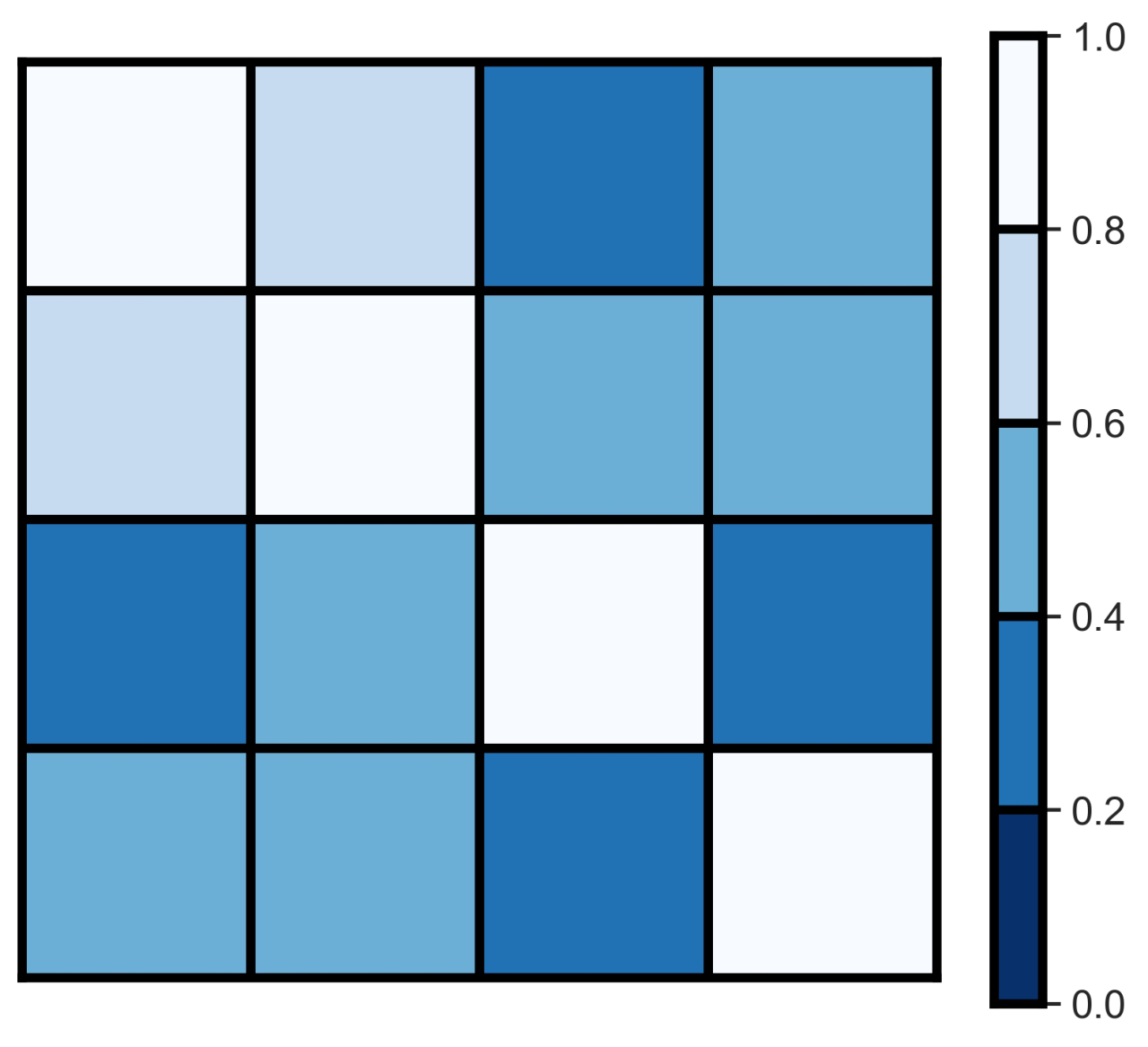
Fig 2: Overall architecture of the proposed SA-HGNN model.
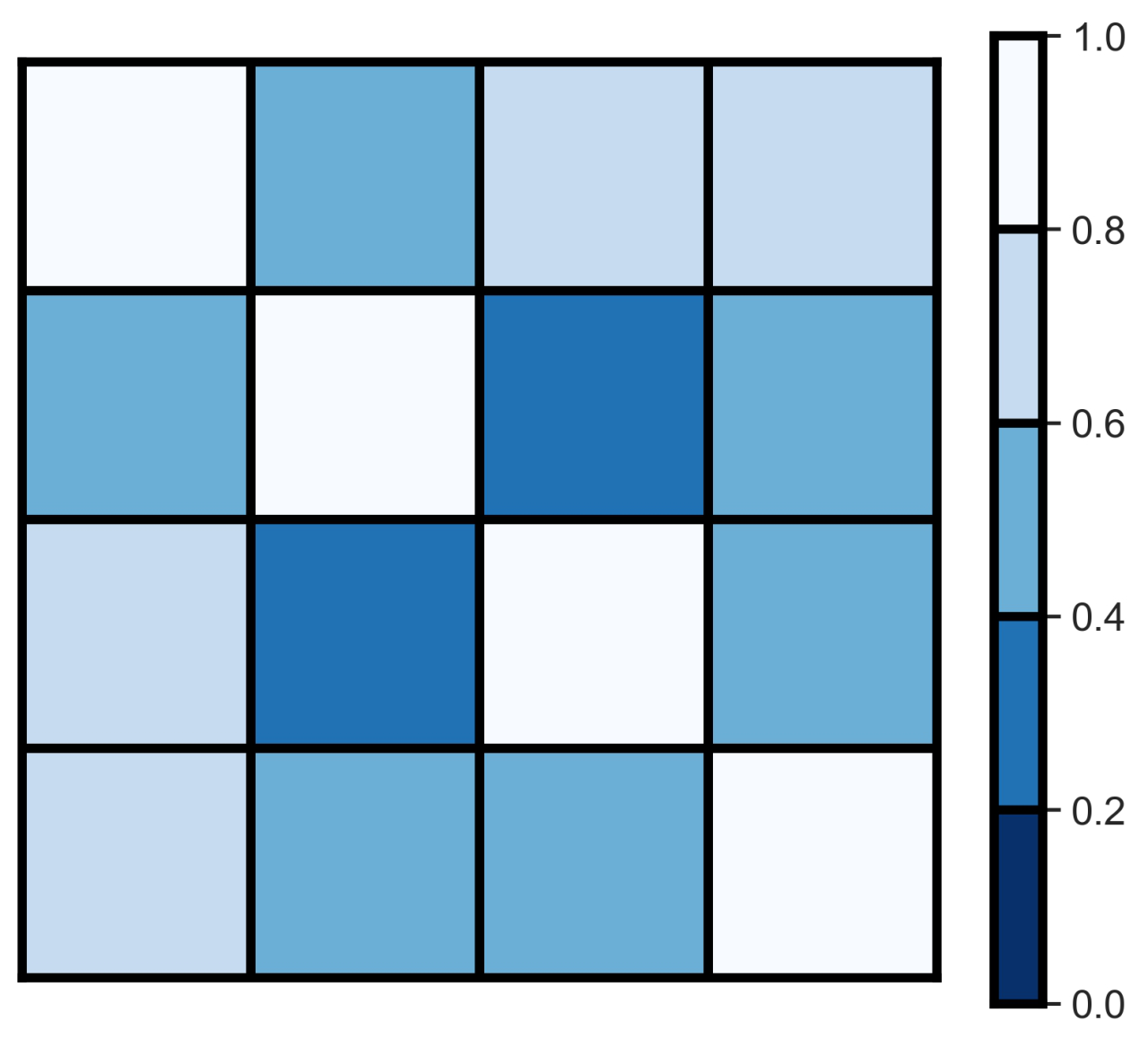
Fig 3 (page 1).
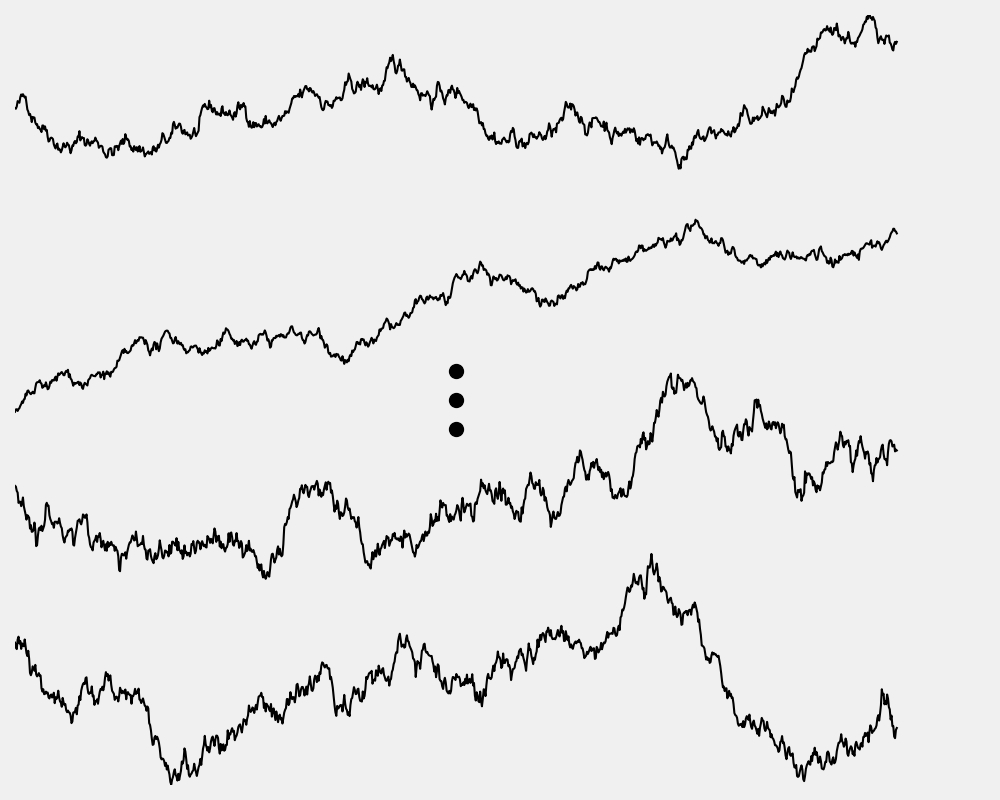
Fig 3: Hyperparameter optimization for the matrix sparsifi-
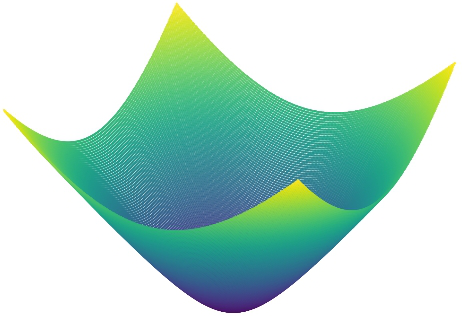
Fig 4: Topomaps of Afin for different datasets.
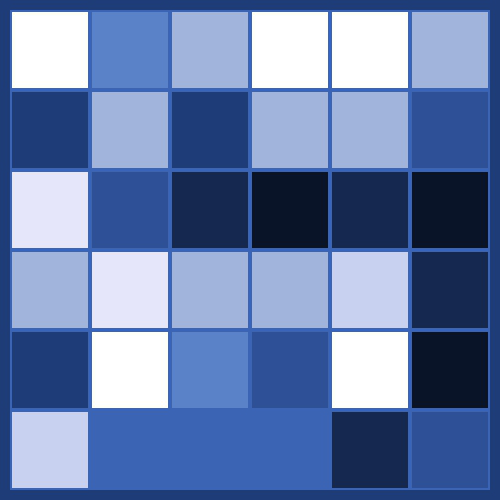
Fig 6 (page 3).
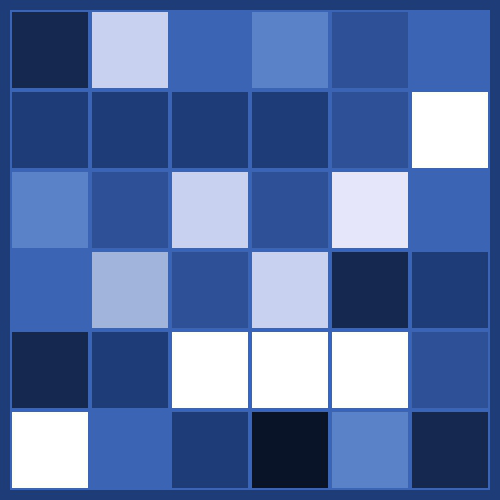
Fig 7 (page 3).
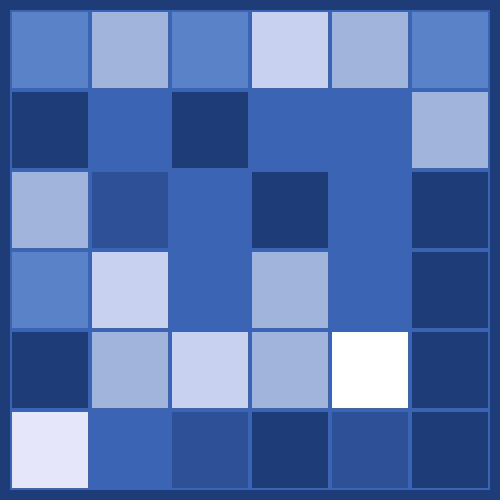
Fig 8 (page 3).
Limitations
- The model evaluation is limited to a single public EEG dataset (HUSM), which may limit generalizability to other populations or recording conditions.
- No explicit adversarial robustness or domain shift experiments were conducted to test model stability against noise or artifacts beyond attention pooling.
- Reproducibility constraints due to lack of publicly released code, pretrained models, or detailed training hyperparameters (e.g., epochs, random seeds).
- The model complexity and inference speed were not reported, which is relevant for real-time clinical deployment.
- Interpretability is demonstrated via visualization of centrality changes but lacks causal analyses linking model decisions to clinical symptoms.
- Potential overfitting risks despite cross-validation remain unquantified, especially given relatively small sample size (N=64 subjects).
Open questions / follow-ons
- How well does SA-HGNN generalize to other EEG datasets with different electrode configurations or population demographics?
- Can the hyperbolic graph framework be extended to multimodal neuroimaging data (e.g., fMRI, MEG) to further enhance depression recognition?
- What is the impact of hyperparameter choices and curvature parameter c on embedding quality, and can this adapt dynamically per sample?
- How robust is SA-HGNN to various real-world EEG artifacts, noise, or adversarial perturbations not explicitly filtered by attention pooling?
Why it matters for bot defense
Although primarily focused on EEG-based depression diagnosis rather than bot detection, this paper offers several insights useful for CAPTCHA and bot-defense engineers working with graph neural networks. The approach demonstrates that embedding graph-structured data in hyperbolic space can better capture intrinsic hierarchical relationships than conventional Euclidean GNNs. For behavioral or user interaction data naturally represented as graphs with hierarchical or scale-free properties (e.g., clickstreams, session graphs), adopting hyperbolic GNNs might improve modeling fidelity and anomaly detection.
Moreover, the sample-adaptive graph construction paradigm combining physical priors with learned correlations suggests a flexible way to tailor graph topologies dynamically per user or session, which is pertinent for adaptive bot-defense systems responding to evolving attack patterns. The attention-based pooling for noise filtering also illustrates how to identify and focus on the most informative nodes or features in noisy graph data—analogous to filtering out irrelevant signals in bot detection. While direct clinical biomarkers are irrelevant, the architectural principles of SA-HGNN can inspire novel graph-based representations and learning strategies in CAPTCHA and bot-defense research.
Cite
@article{arxiv2607_02063,
  title={ SA-HGNN: Sample-Adaptive Hyperbolic Graph Neural Network for EEG-Based Depression Recognition },
  author={ Yang Li and Pan Hu and Yan Zhang and Wenfan Yang and Tao Wu and Lianbo Guo },
  journal={arXiv preprint arXiv:2607.02063},
  year={ 2026 },
  url={https://arxiv.org/abs/2607.02063}
}