
Optimal stellar rank approximation of squeezed cat states with photon catalysis
Source: arXiv:2607.02427 · Published 2026-07-02 · By Julian K. Nauth, Nathan Walk, Ananga M. Datta, Kurt Busch, Jens Eisert, Oliver Benson et al.
TL;DR
This paper addresses the challenge of efficiently generating non-Gaussian quantum states, particularly squeezed coherent state superpositions (squeezed cat states), which are crucial for optical bosonic quantum computing and error correction. The authors systematically analyze photon catalysis protocols—where low photon-number Fock states interfere with squeezed states and post-selection is performed via photon-number-resolving detection—to prepare such non-Gaussian states. By leveraging the stellar rank formalism, which quantifies the minimal non-Gaussian resource complexity of states, they characterize the achievable fidelity of the catalyzed output relative to ideal target states and identify when these protocols are provably optimal given the non-Gaussian resources involved. The study also benchmarks photon catalysis against Gaussian boson sampling inspired methods, showing advantages in success probability and state quality when deterministic Fock state resources are used. Furthermore, they explore robustness under experimental losses by applying Hilbert space truncation and modeling loss channels in the Fock basis. Their results clarify the trade-offs between resource complexity, fidelity, and loss sensitivity, guiding near-term photonic implementations of non-Gaussian state engineering for quantum information processing.
Key findings
- Photon catalysis output states have stellar rank equal to m + n, where m and n are input and heralded photon numbers respectively.
- Optimal fidelity between catalyzed output and target squeezed cat states depends strongly on the beam splitter transmissivity η and input squeezing |ξin|.
- High fidelities (≥ 99%) for approximating squeezed cat states with stellar rank ≤ 4 are achievable for cat amplitudes |αcat| up to about 2.57 (see Table I).
- Stellar fidelity FN versus cat amplitude |αcat| exhibits a phase transition at thresholds z±N (Table II), where optimal Gaussian unitary changes from squeezing only to displacement only.
- Photon catalysis outperforms Gaussian boson sampling schemes in success probability and quality when using deterministic single-photon Fock sources (Sec. V).
- Loss modeling with Fock space truncation reveals robust operating regimes where high-fidelity non-Gaussian states can still be generated under realistic optical losses (Sec. VII).
- Approximate stellar rank analysis provides a rigorous lower bound on the non-Gaussian resource complexity needed to surpass Gaussian fidelity (F0) thresholds important for quantum advantage and error correction.
- For odd and even cat states, stellar fidelity achieves close to 1 with increasing stellar rank, enabling systematic resource trade-off quantification.
Methodology — deep read
The authors start with defining the photon catalysis (PC) protocol as a two-mode interaction between a single-mode squeezed vacuum state and a low-photon number Fock state |m⟩ at a beam splitter with transmissivity η, followed by photon-number-resolving detection (PNRD) projecting onto Fock state |n⟩. The output state |ψout⟩ is post-selected on detecting n photons, and its normalized form and success probability are computed analytically in the Fock basis with a truncation dimension d=40 to make numerical computations tractable. They calculate fidelities of |ψout⟩ with target squeezed cat states ˆSξcat |C±αcat⟩, where |C±αcat⟩ denotes even or odd Schrödinger cat states with amplitude αcat and parity ±. To optimize the protocol, the transmissivity η and input squeezing parameters are varied to maximize the fidelity at fixed m,n. \n The core theoretical tool is the stellar rank formalism, which counts the minimal number of photon additions or subtractions (non-Gaussian operations) required to generate a state from a Gaussian state. Formally, a pure state's stellar rank N is the finite Fock support of its so-called core state after applying a Gaussian unitary ˆG. Because many target states have infinite stellar rank, an approximate stellar rank is defined via stellar fidelity FN that measures the maximum overlap of the target state |ψ*⟩ with any state of stellar rank ≤N optimized over Gaussian unitaries. \n They compute FN(|C±αcat⟩) numerically and semi-analytically, establishing bounds (Table I) on the maximum |αcat| achievable at given FN and N. The fidelity optimization reduces to projecting onto truncated Fock spaces with optimal displacement and squeezing, revealing sharp phase transitions in optimal Gaussian unitaries at thresholds z±N where the protocol switches from squeezing-dominated to displacement-dominated optimization. \n They benchmark photon catalysis performance against Gaussian boson sampling inspired protocols in terms of success probability and fidelity using numerical simulations. \n To study experimental realism, losses are modeled as beam splitter loss channels on all optical modes, incorporated into a truncated Fock basis numerical simulation that computes resulting fidelity degradations. \n Throughout, numerical calculations use Hilbert space truncations and GPU parallelization for efficiency, though this limits applicability to low photon numbers and modest cutoffs. The stellar fidelity framework permits quantitative resource trade-off analysis between fidelity, resource non-Gaussianity (stellar rank), and losses. No closed-form analytic solution exists for optimizing η; numerical fidelity maximization is used. \n An exemplary parameter sweep for m=2, n=1, |ξin|=5 and 10 dB illustrates how fidelity and success probability depend on η and cat state parameters. Their fidelity calculations use projections of the output state and candidate cat states truncated to 40 photons, validated by stellar rank-based upper bounds.
Technical innovations
- Application of the stellar rank formalism as a quantitative measure of non-Gaussian resource complexity for analyzing photon catalysis output states.
- Derivation and use of the stellar fidelity metric to find optimal Gaussian unitaries (squeezing and displacement) approximating infinite-rank cats with finite stellar rank states.
- Identification of phase transition thresholds in cat amplitude where the optimal Gaussian approximation shifts from squeezing to displacement.
- Numerical benchmarking of catalysis protocols against Gaussian boson sampling-inspired approaches highlighting deterministic Fock source advantages.
- Modeling of losses in photon catalysis via Fock space truncation enabling evaluation of protocol robustness with realistic experimental imperfections.
Baselines vs proposed
- Gaussian boson sampling-inspired protocols: success probability and fidelity lower than photon catalysis schemes with deterministic Fock states under same resource constraints (Sec. V).
- Gaussian states (stellar rank N=0): maximum fidelity FN (Gaussian fidelity) with squeezed cat states is a limiting baseline representing deterministic Gaussian protocols.
- Photon catalysis outputs with stellar rank N=m+n surpass Gaussian fidelity F0, justifying non-Gaussianity investment.
Figures from the paper
Figures are reproduced from the source paper for academic discussion. Original copyright: the paper authors. See arXiv:2607.02427.
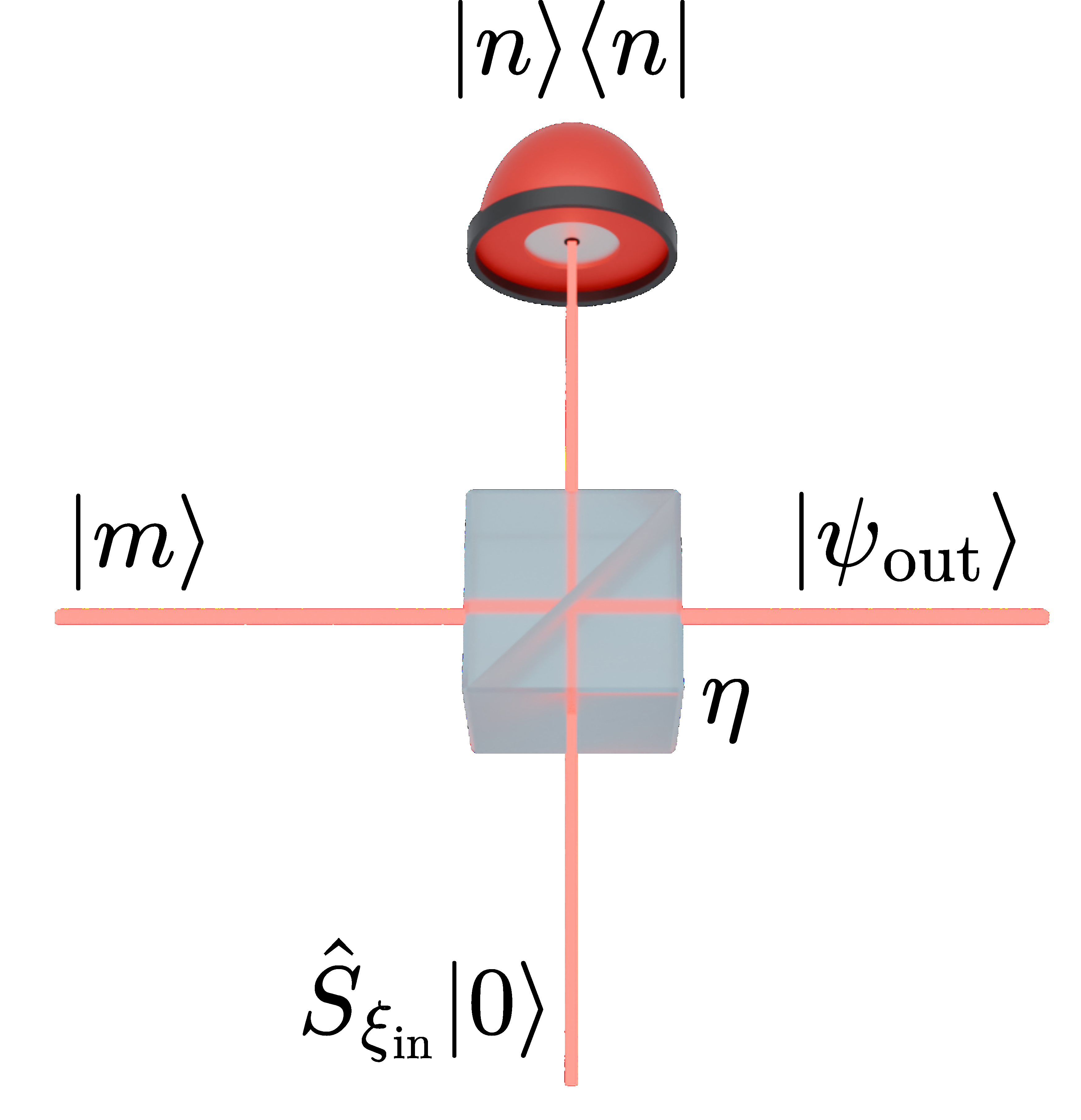
Fig 1: Photon catalysis comprising the interference of a squeezed
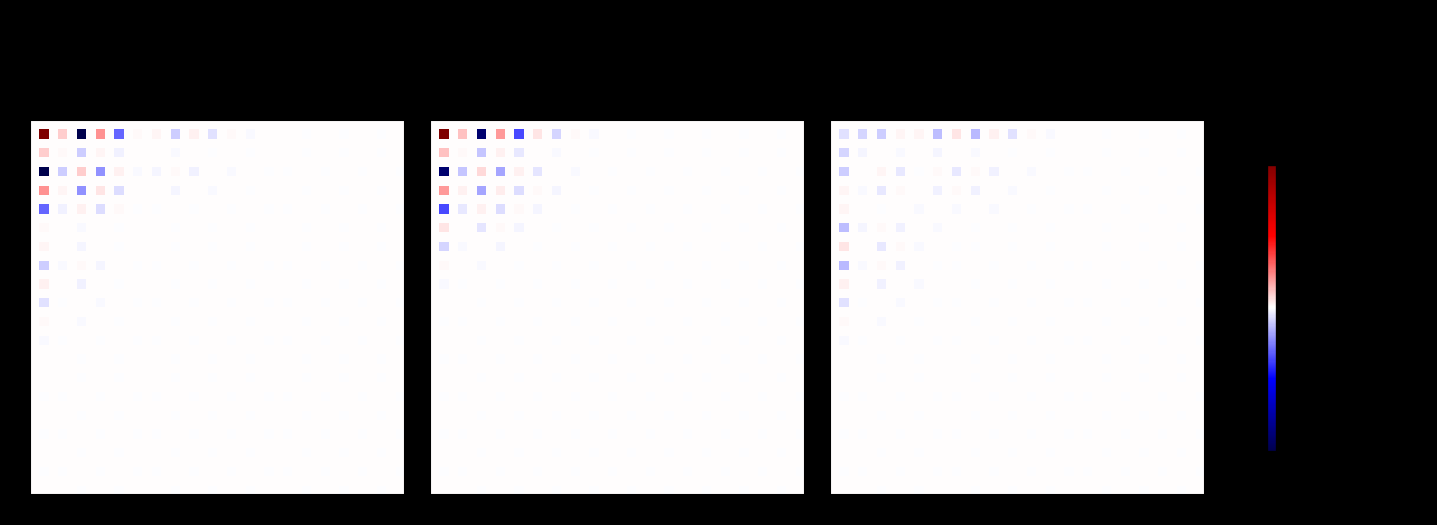
Fig 2: Optimum approximation between the catalysis output state
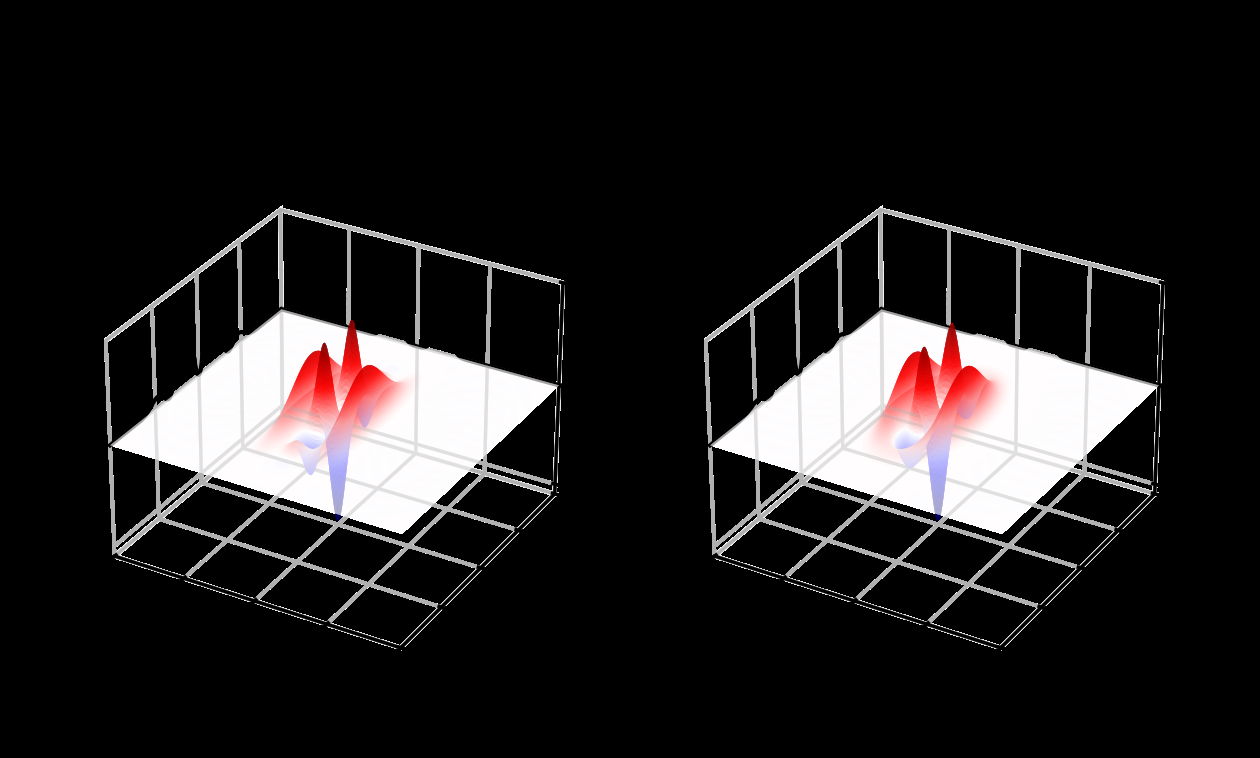
Fig 3: Top: Wigner representation of the target state indicated by
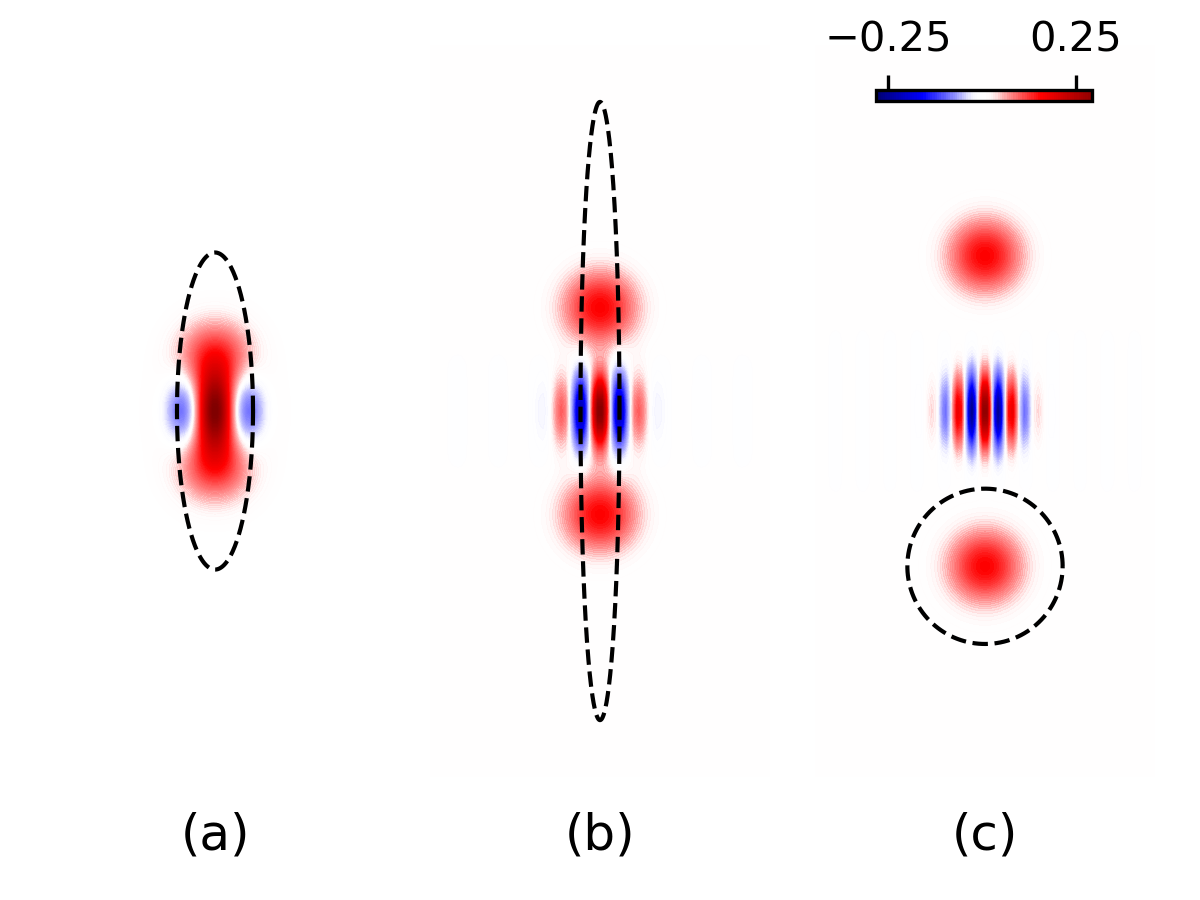
Fig 4: Dependence of the stellar fidelity FN, i.e., the maximum
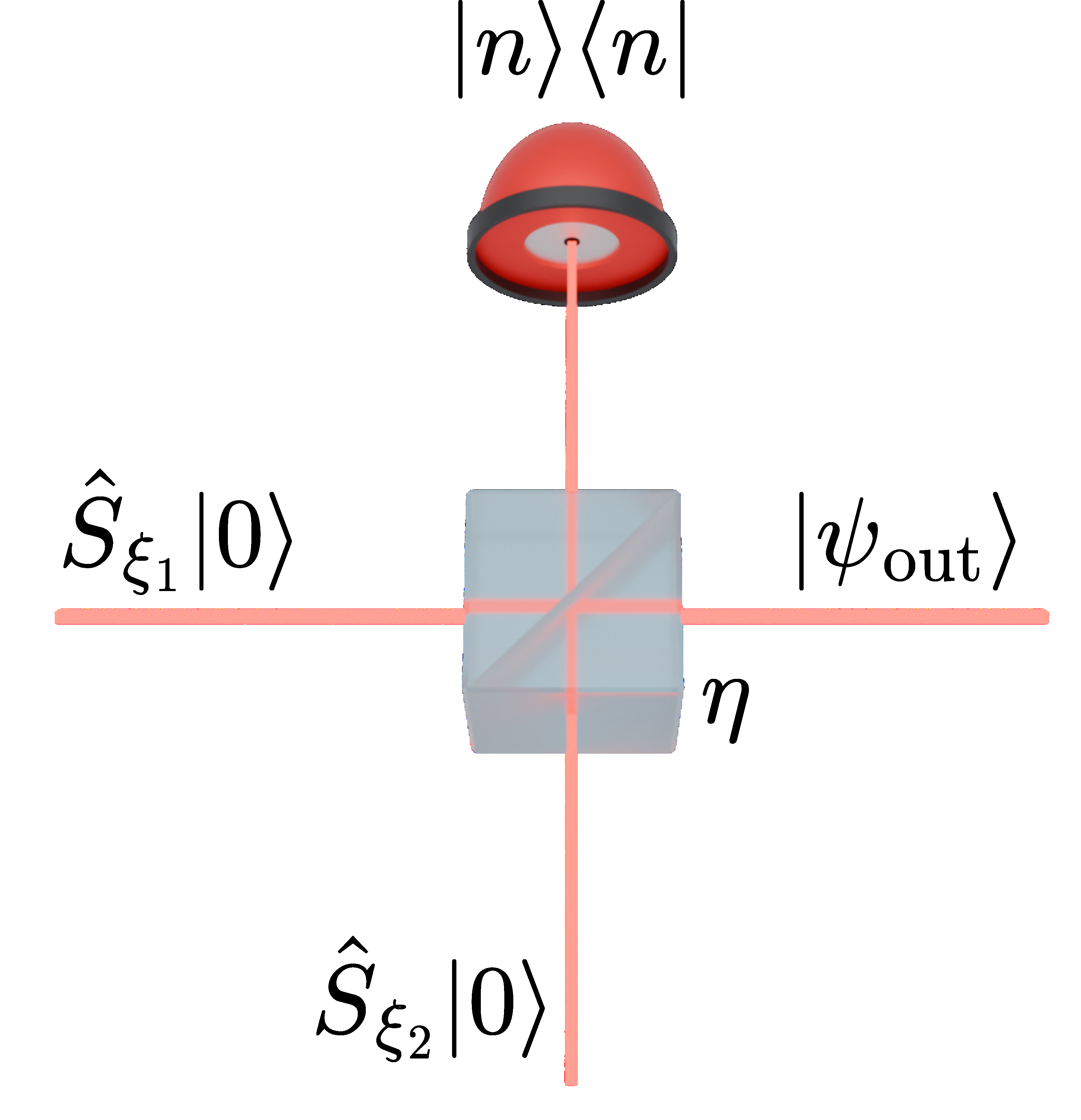
Fig 7: Similar to Fig. 6 for output states of stellar rank N = 3. Different columns refer to different combinations of m and n such that
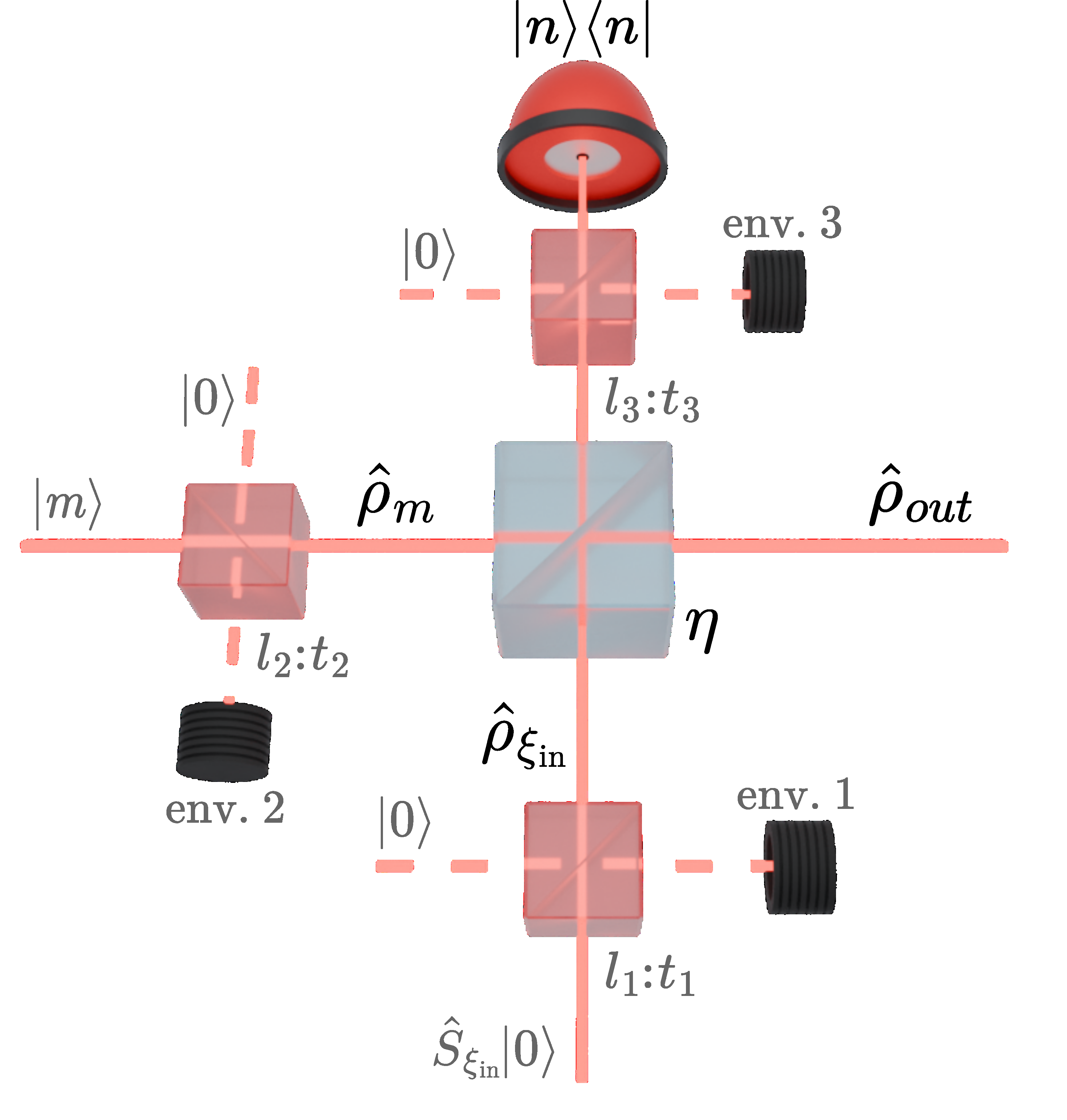
Fig 11: Loss modeling in photon catalysis for an input squeezed
Limitations
- Numerical methods rely on Hilbert space truncations (d=40) which limit scalability to higher photon numbers or larger cat state amplitudes.
- Optimization over beam splitter transmission η and squeezing parameters is performed numerically without closed-form guarantees.
- Loss modeling assumes simplified noise channels and may not capture all experimental imperfections like mode mismatch or detector inefficiency.
- Photon catalysis success probability remains probabilistic and thus may limit scalability despite high fidelity.
- Theoretical stellar rank analysis assumes ideal Gaussian unitaries; experimental realization may introduce deviations not captured here.
- No direct adversarial or noise-resilience analysis beyond loss is performed.
Open questions / follow-ons
- How do imperfections beyond loss—such as mode mismatch, detector dark counts, or partial distinguishability—affect photon catalysis fidelity and stellar rank characterization?
- Can multi-mode or iterative photon catalysis protocols surpass current stellar rank fidelity limits for larger cat states efficiently?
- What are practical scalable architectures combining deterministic Fock sources and photon catalysis for integrated photonic quantum error correction?
- How robust are the stellar rank-based resource bounds when considering fault-tolerant error-corrected bosonic codes in presence of realistic noise?
Why it matters for bot defense
While this paper primarily focuses on quantum photonics, its framework of quantifying non-Gaussian resource complexity via stellar rank and systematic fidelity-resource trade-offs has conceptual parallels to assessing resource complexity (e.g., computational or entropy-based measures) in bot defense challenges like CAPTCHAs. The rigorous notion of minimal resource requirements to approximate a target complex state echoes the minimal computational or interaction complexity needed to solve or bypass challenges. The probabilistic heralded protocols and their analysis under loss can be analogous to understanding failure modes and robustness under noise or adversarial perturbation in CAPTCHA schemes. Furthermore, the use of optimal projections in constrained resource spaces could inspire more formal resource-theoretic defenses in bot detection. However, direct application is limited since the physical quantum states and their non-Gaussian character have no immediate counterpart in classical CAPTCHA generation or classification. Nonetheless, the detailed trade-off characterization methods may inform analogous evaluation of challenge complexity and solver capability in bot defense.
Cite
@article{arxiv2607_02427,
  title={ Optimal stellar rank approximation of squeezed cat states with photon catalysis },
  author={ Julian K. Nauth and Nathan Walk and Ananga M. Datta and Kurt Busch and Jens Eisert and Oliver Benson and Roger A. Kögler },
  journal={arXiv preprint arXiv:2607.02427},
  year={ 2026 },
  url={https://arxiv.org/abs/2607.02427}
}