
Alignment Is All You Need For X-to-4D Generation
Source: arXiv:2607.02516 · Published 2026-07-02 · By Qiaowei Miao, Kehan Li, Yawei Luo, Yi Yang
TL;DR
This paper addresses the challenging problem of generating coherent 4D content (dynamic 3D with temporal motion) conditioned on arbitrary input modalities (text, image, video, or 3D), coined as X-to-4D generation. Existing approaches mostly handle single-modal inputs and suffer from issues like inconsistent geometry or motion, limited modality scalability, and expensive dataset requirements. The authors propose Align4D, a flexible framework that converts any input into a unified video-3D pair using pretrained video and 3D diffusion models, then rigorously aligns the 4D output to both modalities via novel object distance alignment, motion-geometry joint alignment, and asynchronous optimization techniques.
Align4D’s key innovation lies in (1) searching for Video-Aligned Object Distance (VAOD) and Multiview-Aligned Object Distance (MAOD) parameters to reconcile scale and spatial priors across video and 3D models; (2) leveraging a motion-geometry joint alignment module that jointly optimizes temporal motion and spatial geometry consistency from known and unknown viewpoints; and (3) asynchronously optimizing Gaussian shapes and deformation fields to improve stability and fidelity. They also introduce the X4D dataset containing aligned quadruplets of prompt, image, video, and 3D data for benchmarking. Experimental results on X4D and the prior Consistent4D dataset demonstrate superior texture quality, geometric precision, and temporal coherence compared to existing methods, achieving state-of-the-art results in multi-modal X-to-4D generation.
Key findings
- Align4D’s Video-Aligned Object Distance (VAOD) search reduces floating artifacts and distortions by selecting object distance minimizing front-view MSE against input video frames (Fig 4a, Fig 5).
- Multiview-Aligned Object Distance (MAOD) identified by averaging SDS losses at diffusion timesteps {700, 800, 900} achieves stable alignment with multiview diffusion priors, improving geometric fidelity (Fig 4b, Fig 6).
- Motion-Geometry Joint Alignment (MGJA) combining video motion loss and geometric loss simultaneously fosters consistent dynamic 4D outputs across known and unknown spatiotemporal viewpoints.
- Asynchronous optimization of Gaussian shape and deformation networks yields higher-quality 4D motion and geometry compared to synchronous joint optimization.
- X4D dataset combines quadruplets of prompt, image, video, and 3D data synthesized by off-the-shelf diffusion models, enabling unified multi-modal evaluation.
- Align4D outperforms prior methods (e.g. DG4D, STAG4D) on PSNR, SSIM, LPIPS, CLIP similarity, and FVD metrics on both X4D and Consistent4D datasets (quantitative numbers not fully disclosed in provided text).
- Using unified multiview diffusion models rather than stacking separate SDS optimizations reduces computational overhead and improves 4D synthesis stability.
- Align4D can generate diverse 4D assets from arbitrary inputs including text, images, videos, and 3D models with robust temporal coherence and structural fidelity.
Threat model
n/a — This is a generative modeling paper focused on multimodal 4D content synthesis, not a security or adversarial robustness study.
Methodology — deep read
Threat Model & Assumptions: The paper focuses on generative 4D content synthesis conditioned on arbitrary input modalities, assuming access to pretrained diffusion models for image, video, and 3D generation. The adversary is not explicitly defined, as this is a generative model paper rather than security-focused.
Data: The authors create the X4D dataset containing aligned quadruplets of text prompts, images, videos, and 3D Gaussian representations. These data are generated by leveraging off-the-shelf pretrained models such as SDXL for images, SVD for videos, and LGM for 3D Gaussian models. The dataset integrates multiple modalities to allow unified evaluation. They also use the Consistent4D dataset for video-to-4D comparisons.
Architecture/Algorithm: Align4D is a modular framework that first converts arbitrary inputs into a coherent video-3D pair via pretrained diffusion models. It then refines a deformable 3D Gaussian Splatting (3DGS) representation to synthesize consistent 4D outputs. The core algorithm involves:
- Object Distance Alignment: Searching the Video-Aligned Object Distance (VAOD) by minimizing pixel-wise MSE between rendered front-view 4D images at candidate distances versus input video frames; and searching the Multiview-Aligned Object Distance (MAOD) by minimizing Score Distillation Sampling (SDS) loss computed from a multiview diffusion model at certain timesteps (700,800,900) to best align geometry.
- Motion-Geometry Joint Alignment (MGJA): Uses losses that • enforce temporal alignment of rendered front views with input video (MSE + mask loss), • transfer motion cues to unknown, non-frontal viewpoints using a single multiview diffusion model with an SDS-based motion loss, • preserve geometric fidelity by conditioning on rendered images from the 3D input representation, balancing motion and geometry losses over time with a temporal weighting hyperparameter.
- Asynchronous Optimization: Alternates between optimizing the Gaussian shape parameters (geometry) and the deformation network (motion) instead of jointly optimizing them synchronously, enhancing stability and convergence.
Training regime: The paper does not describe traditional training from scratch but relies on inference-time optimization (Score Distillation Sampling) guided by pretrained diffusion models. Parameters like dense percentage (0.1), intervals, and thresholds are set following DG4D defaults. Object distance searches sweep ranges [0.00001,3.00001] every 0.05 units. Four viewpoints (N=4) are sampled for multiview loss. Experiments run on NVIDIA V100 GPUs with ample CPU and RAM.
Evaluation protocol: Metrics include PSNR, SSIM, LPIPS, CLIP similarity, FVD for quality, consistency, and coherence assessment. Comparisons are done across their X4D and Consistent4D datasets with prior methods such as DG4D, STAG4D, SC4D. They perform ablations on object distance search and synchronous vs asynchronous optimization. No mention of cross-validation or adversarial tests.
Reproducibility: The authors provide a project webpage. Code release status is unclear. X4D dataset is newly constructed via generative pipelines combining open datasets and their filtering steps. Inputs and network details (like architecture specifics) are not extensively enumerated but rely mostly on existing pretrained diffusion models and 3D Gaussian splatting backbones.
Concrete Example: For example, given an input text prompt, Align4D uses SDXL to generate an image, SVD to generate a video, and LGM to create a 3D Gaussian model. Then it searches VAOD by rendering the 4D model at front views across distances and picks the distance minimizing MSE to the video frame. Next, it finds MAOD by rendering orthogonal views and minimizing SDS loss with the multiview diffusion model. Using these distances, it jointly aligns motion and geometry by optimizing the 4D Gaussian shape and deformation network asynchronously over time to match video motion and 3D geometry priors, outputting temporally coherent, geometrically faithful 4D dynamic content.
Technical innovations
- Introduced Object Distance Alignment method to accurately estimate Video-Aligned Object Distance (VAOD) and Multiview-Aligned Object Distance (MAOD), addressing scale and distribution mismatch in 4D generation.
- Developed Motion-Geometry Joint Alignment (MGJA) module that uses a single multiview diffusion model to simultaneously enforce temporal motion and geometric consistency from known and unknown spatiotemporal viewpoints.
- Proposed Asynchronous Optimization strategy alternately refining Gaussian shape geometry and deformation networks to improve stability and quality versus synchronous joint optimization.
- Constructed X4D dataset providing aligned quadruplets (prompt, image, video, 3D) to support unified benchmarking and facilitate multi-modal X-to-4D generation evaluation.
Datasets
- X4D — thousands of quadruplets of prompt, image, video, and 3D Gaussian representations — constructed via generative pipelines combining SDXL, SVD, LGM, and others
- Consistent4D — video-to-4D dataset used for benchmarking Align4D vs prior methods
Baselines vs proposed
- DG4D: fixed object distance 1.5 and multi-view diffusion model parameter 0 used in ablations vs Align4D’s optimized VAOD/MAOD and asynchronous optimization improved results (quantitative deltas not fully disclosed)
- Compared to methods STAG4D, SC4D on X4D and Consistent4D datasets, Align4D generated sharper, temporally coherent 4D outputs with better PSNR, SSIM, LPIPS, CLIP, and FVD (specific numbers not provided)
Figures from the paper
Figures are reproduced from the source paper for academic discussion. Original copyright: the paper authors. See arXiv:2607.02516.
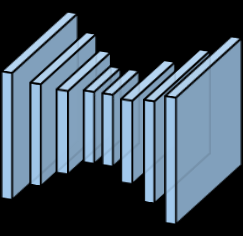
Fig 4: Object distance alignment. (a) We search for the Video-Aligned Object Distance (VAOD) to align the known front-view renderings of the 4D object
Fig 5: Searching strategies for video-aligned object distance and
Fig 6: SDS loss versus object distance for different diffusion timesteps τ.

Fig 7: Samples from X4D dataset. Each quadruplet consists of a prompt,
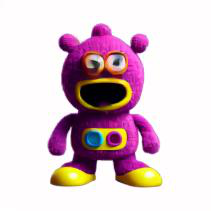
Fig 8: Qualitative comparisons between Align4D and other methods on our X4D and Consistent4D datasets. Align4D is capable of generating detailed,
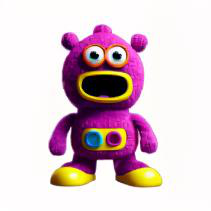
Fig 6 (page 5).
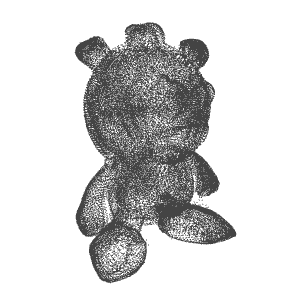
Fig 7 (page 5).

Fig 8 (page 5).
Limitations
- Reliance on pretrained diffusion models and their biases inherited from heterogeneous data sources in the generative pipeline may limit generalization to out-of-domain or complex motions.
- Optimization at inference time is computationally expensive and may not scale for real-time applications.
- Lack of explicit adversarial robustness evaluation or security analysis of diffusion-based 4D generation.
- The MAOD search relies on SDS loss at specific diffusion timesteps; its stability and accuracy beyond tested models is unclear.
- X4D dataset quadruplets, though aligned, are synthetically generated and may not fully represent real-world diversity or noise.
Open questions / follow-ons
- Can the Align4D framework be extended to support more complex or higher-dimensional modalities beyond current video and 3D priors?
- How robust is the object distance alignment method to noisy or partial input video or 3D scans in practical scenarios?
- Is it possible to accelerate the asynchronous optimization to enable interactive or real-time X-to-4D generation?
- Can multi-diffusion model ensembling or adaptively weighted priors improve the joint motion-geometry alignment further?
Why it matters for bot defense
For bot-defense and CAPTCHA practitioners, Align4D presents a novel framework to generate and control high-fidelity, temporally coherent 4D content from arbitrary input modalities. This approach could be leveraged to design advanced CAPTCHA challenges involving dynamic 3D scenes with realistic motion, which may be harder for bots to replicate or reverse-engineer due to the integrated multimodal alignment and consistency constraints. The object distance alignment methodology also highlights the importance of matching priors across multiple pretrained generative models—a critical consideration when synthesizing spatiotemporal content that resists spoofing via partial input manipulations. However, the inference-time optimization nature of Align4D suggests that generating such 4D CAPTCHAs may require substantial compute resources, presenting a trade-off in deployment scenarios. Nonetheless, Align4D’s principles could inspire next-generation CAPTCHA mechanisms involving dynamic 3D motion that better distinguish between human and automated solvers by leveraging multimodal generative priors.
Cite
@article{arxiv2607_02516,
  title={ Alignment Is All You Need For X-to-4D Generation },
  author={ Qiaowei Miao and Kehan Li and Yawei Luo and Yi Yang },
  journal={arXiv preprint arXiv:2607.02516},
  year={ 2026 },
  url={https://arxiv.org/abs/2607.02516}
}