
AbsoluteDegradation: A Physics-Inspired Synthetic Film-Degradation Pipeline and Archival Film Restoration Benchmark
Source: arXiv:2607.02131 · Published 2026-07-02 · By Mikołaj Jastrzębski, Dawid Glinkowski, Dawid Zieliński, Daniel Borkowski, Wojciech Kozłowski, Kamil Adamczewski
TL;DR
Archival film restoration remains a challenging problem because pristine ground-truth versions of deteriorated footage do not exist, forcing supervised models to rely on synthetic degradation pipelines that often poorly capture the complex, temporally coherent artifacts of real analog film decay. Furthermore, lack of large-scale, domain-representative real-world benchmarks hampers consistent evaluation and comparison of restoration methods. This paper introduces AbsoluteDegradation, a physics-inspired, modular degradation pipeline that models the analog-to-digital film degradation as a sequential composition of seven artifact families, including signal-dependent film grain, parametric scratches, and mean-reverting camera gate weave, all designed to enforce temporal coherence across frames. In parallel, they release a large-scale curated archival film dataset from lossless scans of public-domain footage spanning 1896–1918, comprising over 81,000 high-resolution frames. Extensive experiments training multiple restoration architectures show that AbsoluteDegradation’s synthetic data improves generalization to real archival footage compared to prior film degradation models. The new benchmark reveals systematic failure modes and metric misalignments in current methods, highlighting the importance of physically grounded, temporally coherent degradations and domain-authentic datasets. Together, these contributions provide a unified framework for reproducible training and evaluation in archival film restoration.
Key findings
- AbsoluteDegradation pipeline models seven analog artifact families simultaneously, including optical blur, signal-dependent blue noise grain, parametric scratches, gate weave motion, and photometric shifts, maintaining temporal coherence across frames.
- The benchmark dataset contains 81,576 high-resolution frames extracted from 30 public-domain archival films from 1896–1918, stored losslessly and curated with scene splitting, providing a more authentic real-world evaluation domain than prior datasets like SRWOV.
- Restoration models trained with AbsoluteDegradation synthetic data outperform those trained on Bringing Old Films [45] degradation pipeline across multiple architectures (MambaOFR, BasicVSR++, RTN) on no-reference image quality metrics such as CLIP-IQA+, MUSIQ, and MANIQA on both SRWOV and the new benchmark (e.g., MambaOFR CLIP-IQA+ on new dataset: 0.349 vs 0.347 baseline; MUSIQ: 39.80 vs 38.81).
- Signal-dependent blue noise grain modeling better preserves fine texture and avoids over-smoothing compared to Gaussian grain models, improving restoration authenticity at the cost of some metric degradation.
- Temporal coherence in degradation (e.g., via Ornstein-Uhlenbeck processes for gate weave and persistent dust overlays) is crucial; disabling it leads to models hallucinating or sharpening persistent artifacts.
- Permuting the order of seven core degradations (5,040 permutations) produces a richer, more diverse training distribution than fixed or fewer composition orders in prior pipelines.
- Quantitative no-reference metrics do not always correlate with perceptual or historical authenticity, as baselines achieve better metric scores by amplifying scratches and artifacts, whereas AbsoluteDegradation models produce more visually plausible, artifact-free restorations.
- Ablation of key components like moving scratches, gate weave jitter, and medium/heavy severity synthesis reduces restoration performance and generalization.
Threat model
The adversary corresponds to the natural degradation processes affecting analog film over decades: chemical decay, mechanical scratches, grain, camera gate weave, and digitization artifacts. There is no adversary intentionally manipulating or attacking the footage. The threat is posed by domain shift and complexity of realistic analog degradations that lack paired pristine footage, limiting the learning and evaluation of restoration models. The pipeline assumes the adversary cannot provide ground-truth clean frames or perfectly model all possible degradation variants.
Methodology — deep read
The authors address the lack of paired data and domain-realistic benchmarks in archival film restoration by designing a synthetic degradation pipeline and collecting a large real-world evaluation dataset. The threat model assumes an archival film restoration setting with imperfect analog films suffering from physical, chemical, and mechanical artifacts; the adversary is effectively nature causing complex degradations, rather than an intelligent attacker. There is no ground truth pristine footage to learn from, so supervised methods rely on synthetic paired data.
To create synthetic training data, the AbsoluteDegradation pipeline takes clean video clips and produces degraded counterparts using six stages: (1) Frame crop with motion padding to enable spatial alignment despite geometric transformations; (2) Dust and texture overlays from scanned emulsion textures with multi-slot temporal persistence to simulate dust and stains; (3) Negative-film emulation by applying a mild inverted-domain subpipeline of blur, grain, downsampling, and gamma correction to mimic negative chemical capture; (4) Permuted core degradations composed of blur, signal-dependent blue noise grain, JPEG compression, resolution changes, gamma correction, and horizontal/vertical gate weave simulated via Ornstein-Uhlenbeck stochastic processes to model temporally coherent camera jitter; (5) Final photometric jitter, resolution restoration, and quantization; (6) Parametric vertical mechanical scratches modeled as soft-edged diffractions with random walks and flickering intensity, also with temporal coherence.
Signal-dependent film grain is modeled using a blue noise prior modulated by ISO-like intensity and signal power coefficients, combined with additive white noise to emulate scanner noise, providing a rich high-frequency noise structure unlike prior Gaussian noise approximations. Gate weave jitter uses OU processes to capture mean-reverting smooth frame-to-frame camera shifts, with separate processes modeling vertical jitter strength variation. The pipeline samples degradation parameters once per clip to lock temporal coherence, with only grain tile shifts and gamma exposure varying frame-wise.
For evaluation, the authors curate a large-scale archival benchmark drawn from 30 public-domain archival films dated 1896–1918, stored as lossless PNG with resolutions up to 1920x1080. They extract temporally consistent clips using feature matching and manual curation, removing title cards and cartoons found in prior benchmarks like SRWOV. Dataset variants support full-scene, compact, and multi-scene evaluation subsets. No paired ground truth exists, so evaluation relies on no-reference perceptual quality metrics: BRISQUE, CLIP-IQA+, MUSIQ, and MANIQA.
They train four restoration architectures (RTN, MambaOFR, BasicVSR++, RVRT) separately on synthetic pairs from AbsoluteDegradation versus the prior Bringing Old Films degradation pipeline for comparison. Training follows original default configurations, with some modifications like RAFT replacing SpyNet for flow estimation. Multiple ablation variants disable components like temporal coherence, blue noise grain, or moving lines to measure their contributions.
Evaluation focuses on zero-shot restoration generalization to real archival datasets, analyzing metric scores, qualitative visual fidelity, temporal artifact consistency, and failure modes. Ablations probe component impact on performance and artifact handling. The pipeline generates a huge space of degradations via stochastic permutation and severity curriculum to promote robustness.
While code release is mentioned, exact reproducibility details such as public pretrained weights are not provided. The archival evaluation dataset is curated from public-domain sources, allowing community access. The study provides extensive qualitative and quantitative experimental evidence supporting the physics-grounded, temporally coherent, modular pipeline design for improved archival film restoration training data and benchmarks.
Technical innovations
- A physics-inspired modular degradation pipeline that composes seven distinct artifact families aligned with analog film capture and digitization physics, including signal-dependent blue noise grain and parametrically modeled mechanical scratches.
- Use of Ornstein-Uhlenbeck stochastic processes to model temporally coherent camera gate weave jitter with mean reversion, capturing smooth frame-to-frame motion realistically.
- A large permutation space of degradation operator orderings (7! = 5040) applied once per clip to enrich training data diversity beyond fixed-sequence pipelines.
- Introduction of a large-scale, high-resolution, lossless archival film benchmark with 81,576 frames curated from early 20th century public-domain films, enabling domain-focused, temporally consistent restoration evaluation.
- Demonstration that modeling signal-dependent grain with blue noise, rather than Gaussian noise, significantly improves restoration model authenticity and generalization.
Datasets
- AbsoluteDegradation Archival Benchmark — 81,576 high-resolution lossless frames — public-domain archival films 1896–1918 from Library of Congress
- REDS [29] — 240 training + 30 validation clips (1270×690, 100 frames each) — publicly available super-resolution/video restoration dataset
- SRWOV [27] — smaller scale real-world old video dataset with some animation and watermark artifacts — publicly available but limited
Baselines vs proposed
- MambaOFR trained on Bringing Old Films [45]: CLIPIQA+ = 0.347 vs AbsoluteDegradation: 0.349 on new archival dataset
- MambaOFR trained on Bringing Old Films [45]: MUSIQ = 38.81 vs AbsoluteDegradation: 39.80
- BasicVSR++ trained on Bringing Old Films [45]: MUSIQ = 32.55 vs AbsoluteDegradation: 40.27
- RTN trained on Bringing Old Films [45]: MUSIQ = 41.46 vs AbsoluteDegradation: 42.62
- RVRT trained on Bringing Old Films [45]: MUSIQ = 40.28 vs AbsoluteDegradation: 35.55 (underperforms)
- BRISQUE metric sometimes improves under baseline pipelines while CLIPIQA+ and MUSIQ degrade, indicating metric conflicts
- Ablation removing blue-noise grain in favor of Gaussian grain yielded higher brisque scores yet produced over-smoothed and less authentic restorations
Figures from the paper
Figures are reproduced from the source paper for academic discussion. Original copyright: the paper authors. See arXiv:2607.02131.
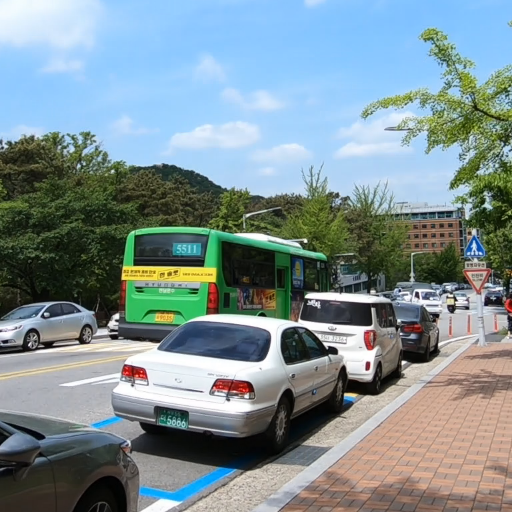
Fig 2: Qualitative and quantitative comparison of the proposed AbsoluteDegradation and Bringing

Fig 3: Representative frames from (a) SRWOV [27] and (b) our archival benchmark. (c) Quantita-
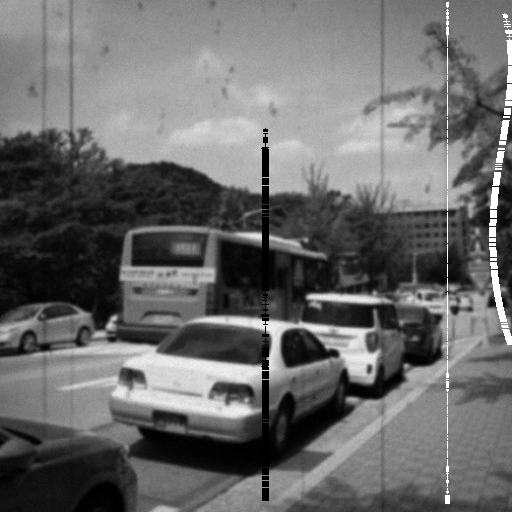
Fig 4: Qualitative analysis of restored images using our pipeline vs. Bringing Old Films [45]
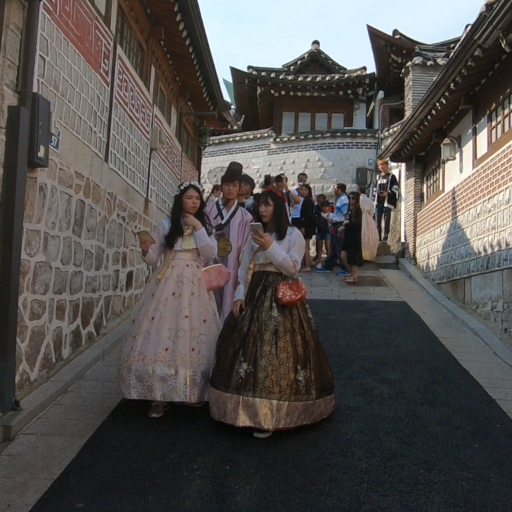
Fig 4 (page 6).
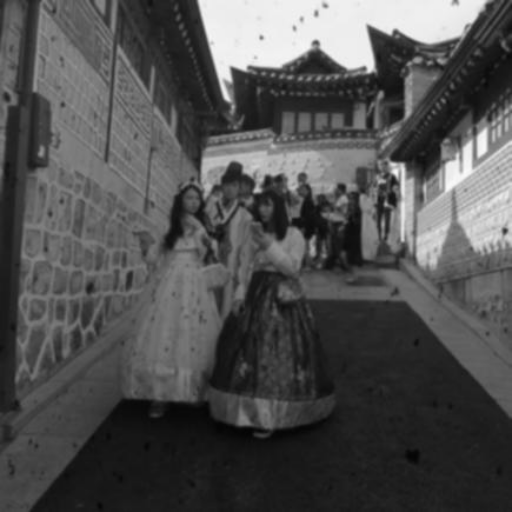
Fig 5 (page 6).
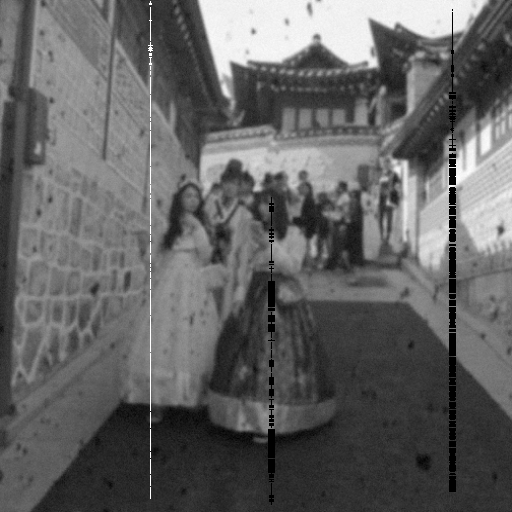
Fig 6 (page 6).
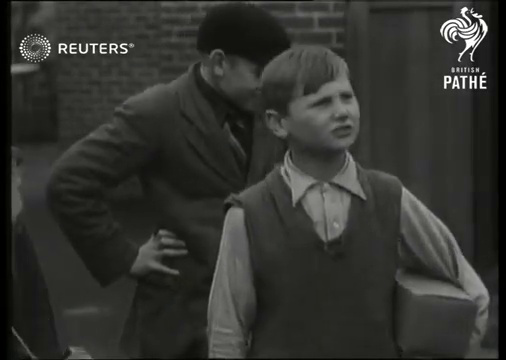
Fig 5: Degradation
Fig 8 (page 7).
Limitations
- Finite set of emulsion textures limits diversity; may fail on out-of-distribution real artifacts beyond training distributions.
- Evaluation relies on no-reference perceptual metrics which imperfectly correlate with human perceptual or historical authenticity judgments.
- Archive domain is limited to early 20th century films; applicability to other analog film stocks or eras is untested.
- Compute-intensive training due to high-resolution video and online stochastic degradation sampling.
- No adversarial robustness testing to deliberate synthetic or real attack noises or tampering artifacts.
- Synthetic pipeline makes simplifying assumptions (e.g., fixed Gaussian blur kernels) that may not model all real-world scanning optical effects.
Open questions / follow-ons
- How can restoration models trained with such synthetic degradations be adapted to handle out-of-distribution artifacts not modeled in the pipeline or emulsion texture library?
- What new no-reference perceptual metrics or task-specific quality measures can better correlate with historical authenticity and downstream usability?
- How can restoration methods balance fidelity to authentic archival appearance versus artifact removal when ground truth is unavailable?
- Can adversarial robustness to tampering or malicious film alterations be incorporated into archival video restoration?
Why it matters for bot defense
The physics-inspired, temporally coherent, and modular synthetic degradation approach exemplified by AbsoluteDegradation can inform bot-defense and CAPTCHA systems that seek realistic synthetic manipulation of temporal visual signals. Its attention to authentic artifact modeling, temporal consistency, and large permutation spaces highlights important dimensions for creating synthetic data that better mimics real-world distribution shifts and noisy inputs. Likewise, the curated archival dataset underscores the value of domain-specific, high-fidelity benchmarks with precise curation protocols. CAPTCHA designers should note that simplistic independent noise models or single-frame perturbations may fail to capture temporal or physical artifact complexity, paralleling challenges in bot detection where behavioral coherence matters. The study’s finding of metric misalignment also cautions against overreliance on standard quantitative scores alone when evaluating synthetic data realism or restoration quality in security contexts.
Cite
@article{arxiv2607_02131,
  title={ AbsoluteDegradation: A Physics-Inspired Synthetic Film-Degradation Pipeline and Archival Film Restoration Benchmark },
  author={ Mikołaj Jastrzębski and Dawid Glinkowski and Dawid Zieliński and Daniel Borkowski and Wojciech Kozłowski and Kamil Adamczewski },
  journal={arXiv preprint arXiv:2607.02131},
  year={ 2026 },
  url={https://arxiv.org/abs/2607.02131}
}