
Sensorless Four-Channel Control Architecture Using Inverse Dynamics Modeling for Human-Scale Bilateral Teleoperation
Source: arXiv:2607.01201 · Published 2026-07-01 · By Amir Noohian, Dylan Miller, Justin Valentine, Alan Lynch, Martin Jagersand
TL;DR
This paper addresses the challenge of achieving high transparency in human-scale bilateral teleoperation systems, which traditionally rely on costly and noisy force/torque sensors and struggle with the significant inertia and damping of large manipulators. The authors propose a novel sensorless four-channel control architecture that leverages inverse dynamics modeling to estimate external torques without requiring physical force sensors. The approach enables real-time dynamic compensation and force feedback based on estimated joint torques, allowing detection of contact along the entire manipulator rather than only at the end-effector.
The architecture is implemented on a customized 4-DOF leader and 7-DOF follower WAM Barrett teleoperation setup, and experimentally evaluated against classical two-channel and four-channel baselines, as well as methods with transparency enhancements such as force feedforward and local force feedback. Results demonstrate significant improvements in free-motion position tracking, leader impedance reduction (lower operator effort), and increased maximum transmittable impedance in hard contact conditions, indicating more faithful force rendering and robust haptic feedback. A door-opening task involving sustained manipulator whole-body contact highlights the method's effectiveness in practical manipulation scenarios.
Overall, this work advances sensorless transparency control in large-scale teleoperation through systematic inverse dynamics identification, external torque estimation, and four-channel control synthesis, eliminating dependence on physical force sensors and improving perceptual fidelity for human operators.
Key findings
- Inverse dynamics parameter estimation achieved normalized root mean square error (NRMSE) torque prediction below 6% across the first four joints of both leader and follower WAM arms (Table I).
- The sensorless four-channel controller (4c-DC) significantly outperformed two-channel with gravity compensation (2c-GC) and with dynamic compensation (2c-DC) and four-channel with gravity compensation (4c-GC) in free-motion position tracking (NRMSE reduced by up to ~50%), leader impedance (reduced by over 60%), and maximum transmittable impedance (increased by >100%) (Fig. 5).
- Force tracking accuracy, measured by NRMSE between estimated and ground-truth external joint torques, remained comparable (~3–12% across joints and conditions) across all controllers, indicating stable and reliable torque estimation (Table III).
- Force feedforward (2c-GC-FF) and local force feedback (2c-GC-LFB) improved leader impedance but degraded or did not improve maximum transmittable impedance, whereas 4c-DC improved both (Fig. 5).
- Gain tuning limiting force feedback gains to 0.5 (instead of 1) was necessary to preserve passivity and stability during teleoperation.
- During complex door-opening task involving whole-arm contact, 4c-DC showed best position and force tracking performance throughout free-motion and contact phases compared to baselines (Fig. 7).
- Using only viscous friction in inverse dynamics modeling avoided instability issues caused by stiction and Coulomb friction modeling.
- Joints 2 and 4 were most sensitive indicators of dynamic transparency performance due to their dominant workspace contribution and were used for detailed evaluation.
Threat model
The work implicitly assumes a non-adversarial teleoperation scenario where the main challenge is to achieve accurate and stable haptic feedback in the absence of direct force sensing. The adversary is the uncompensated dynamics, latency, and noise inherent in large-scale robotic arms, not a malicious attacker. The system cannot prevent deliberate attacks on communication channels or data integrity but focuses on enhancing transparency and stability under normal operator control.
Methodology — deep read
Threat Model & Assumptions: The paper assumes a bilateral teleoperation setting where a human operator controls a leader robot to manipulate a remote follower robot interacting with an environment. The main challenges arise from the physical properties of human-scale manipulators: high inertia, significant damping, and complex dynamics. The approach assumes no force/torque sensors are available, i.e., sensorless teleoperation. The adversary model is implicit; the focus is on suppressing distortion and delays in force and position signals for improved transparency, rather than malicious attacks.
Data Collection & Parameter Estimation: The robots used: a 4-DOF Barrett WAM leader arm equipped with a 3-DOF custom haptic wrist (modeled as rigid) and a 7-DOF Barrett WAM follower arm. Wrist dynamics were neglected due to minimal effect. Joint positions, velocities, accelerations (numerically derived), and joint torques were recorded as the arms executed optimized finite Fourier series excitation trajectories designed to maximize identifiability and condition number of the regressor matrix. This yielded overdetermined data with N samples (> number of base inertial parameters b) for parameter estimation.
Inverse Dynamics Modeling: Robot dynamics were modeled using standard rigid body dynamics: M(q)¨q + b(q, ˙q)˙q + g(q) + τ_d = τ with only viscous friction (τ_d = F_v ˙q) included to maintain passivity and avoid instability from stiction/Coulomb friction modeling. Model linearization with respect to inertial base parameters π_b was performed: τ = Y_b(q, ˙q, ¨q) π_b The base inertial parameters π_b were estimated using least squares over the collected data.
External Torque Estimation: Using the estimated inverse dynamics model and measured joint torques, the external joint torques τ_ext are estimated as the difference: τ_ext = τ - Y_b(q, ˙q, ¨q) π_b Enabling detection of contact forces applied externally on any manipulator link.
Four-Channel Control Architecture: The classical four-channel teleoperation scheme was adopted, where both leader and follower exchange position and force. The force feedback terms use the estimated external torques rather than force sensor measurements, making the control sensorless. Control inputs are: τ_l = τ_ff_l + C_p_l (q_f - q_l) - C_f_f ̂τ_e τ_f = τ_ff_f + C_p_f (q_l - q_f) + C_f_l ̂τ_h with feedforward torques τ_ff from inverse dynamics, and PID position gains C_p, force feedback gains C_f tuned experimentally.
Experimental Setup & Training: The controller runs at 500 Hz on combined hardware with UDP communication. Only four DOFs were controlled (wrist locked). Gains were chosen to balance transparency and passivity; full force feedback gain (C_f = 1) caused instability, so 0.5 was used.
Evaluation Protocol: Transparency was rigorously evaluated using free motion and hard contact tests as per Aliaga et al. (2004). Metrics included normalized root mean square error (NRMSE) for position tracking and force tracking, leader impedance (operator effort metric), and maximum transmittable impedance. Experiments applied known torque inputs and calibrated weights to validate tracking accuracy and transparency. Torque estimation error was compared to ground truth from force sensors on weights and kitchen scale. Statistical significance was computed (p<0.05) across multiple trials.
Comparison & Ablations: The proposed sensorless four-channel controller (4c-DC) was compared to two- and four-channel baselines with gravity compensation (2c-GC), dynamics compensation (2c-DC), and force feedback (4c-GC), as well as transparency enhancement approaches with force feedforward (2c-GC-FF) and local force feedback (2c-GC-LFB). Multiple metrics and joints were analyzed.
Case Study: A realistic door-opening task involving sustained whole-arm contact was used to validate performance under complex manipulation conditions.
Reproducibility: Parameter estimation used an open-source implementation from Sousa and Cortesao (2013). Control software was developed in C++ using libbarrett library. Communication was local. No public code or dataset release is mentioned, limiting direct reproducibility.
Technical innovations
- Introduction of a sensorless four-channel bilateral teleoperation control architecture utilizing inverse dynamics parameter estimation to replace physical force/torque sensors for dynamic compensation and force feedback.
- Real-time estimation of external joint torques along the entire manipulator body via inverse dynamics regression allowing haptic feedback beyond the end-effector.
- Experimental validation of human-scale teleoperation transparency improvements on large manipulators with high inertia and damping without requiring costly or noisy force sensors.
- Stable and passive control achieved through selective viscous friction modeling and reduction of force feedback gains, balancing transparency with safety.
Baselines vs proposed
- 2c-GC (two-channel with gravity compensation): Free motion position tracking NRMSE ≈ 1.4% vs 4c-DC: ≈ 0.7%
- 2c-DC (two-channel with dynamics compensation): Leader impedance reduced by >60% vs 2c-GC; 4c-DC further reduces impedance by ~30% compared to 2c-DC
- 4c-GC (four-channel with gravity compensation): Maximum transmittable impedance increased significantly compared to 2c-GC (p<0.05); 4c-DC increases it further by >50%
- 2c-GC-FF (force feedforward): Improves leader impedance but decreases maximum transmittable impedance compared to 2c-GC; 4c-DC outperforms both.
- 2c-GC-LFB (local force feedback): No significant improvement over 2c-GC for maximum transmittable impedance; 4c-DC provides better results.
- External torque estimation NRMSE between 3–12% across leader and follower arms and joints, stable across control architectures.
Figures from the paper
Figures are reproduced from the source paper for academic discussion. Original copyright: the paper authors. See arXiv:2607.01201.
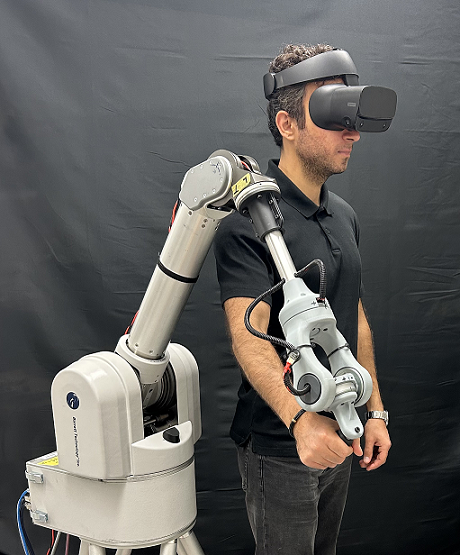
Fig 1: WAM bilateral teleoperation system setup: (a) 4-DOF leader arm
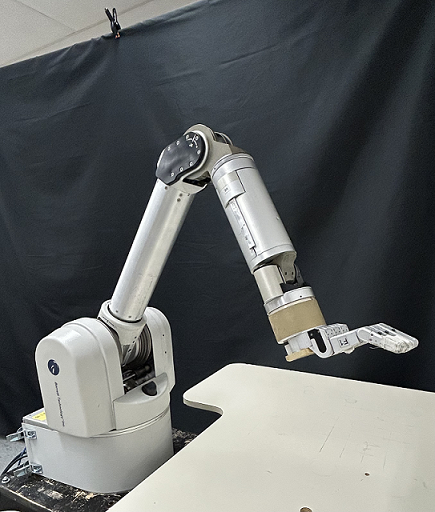
Fig 2: Four-channel teleoperation system block diagram.
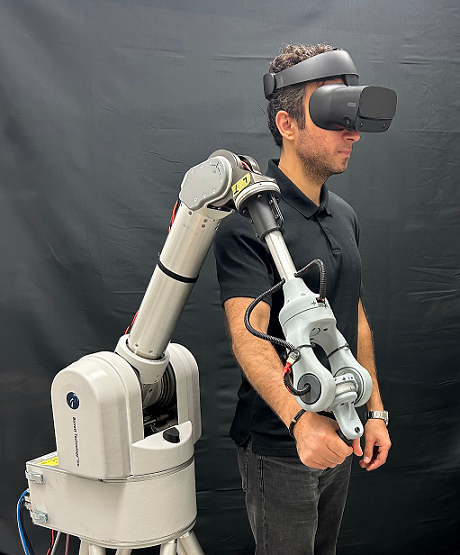
Fig 3: Schematic of the four-channel control architecture on the WAM
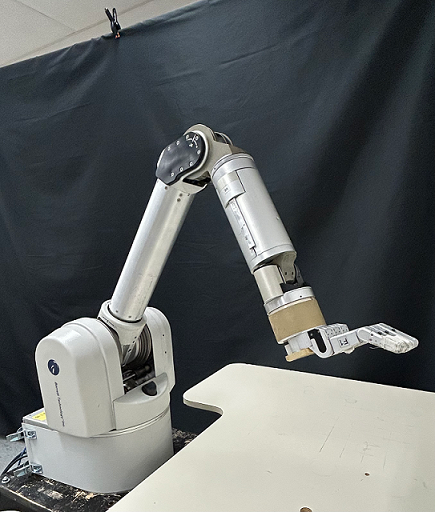
Fig 4: Evaluation experimental setup: (a) weights mounted on the leader
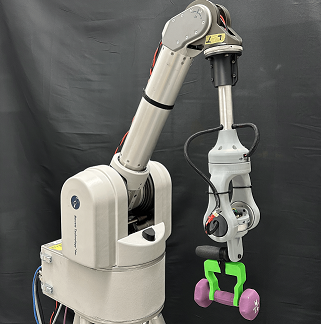
Fig 5: Transparency performance metrics across different teleoperation
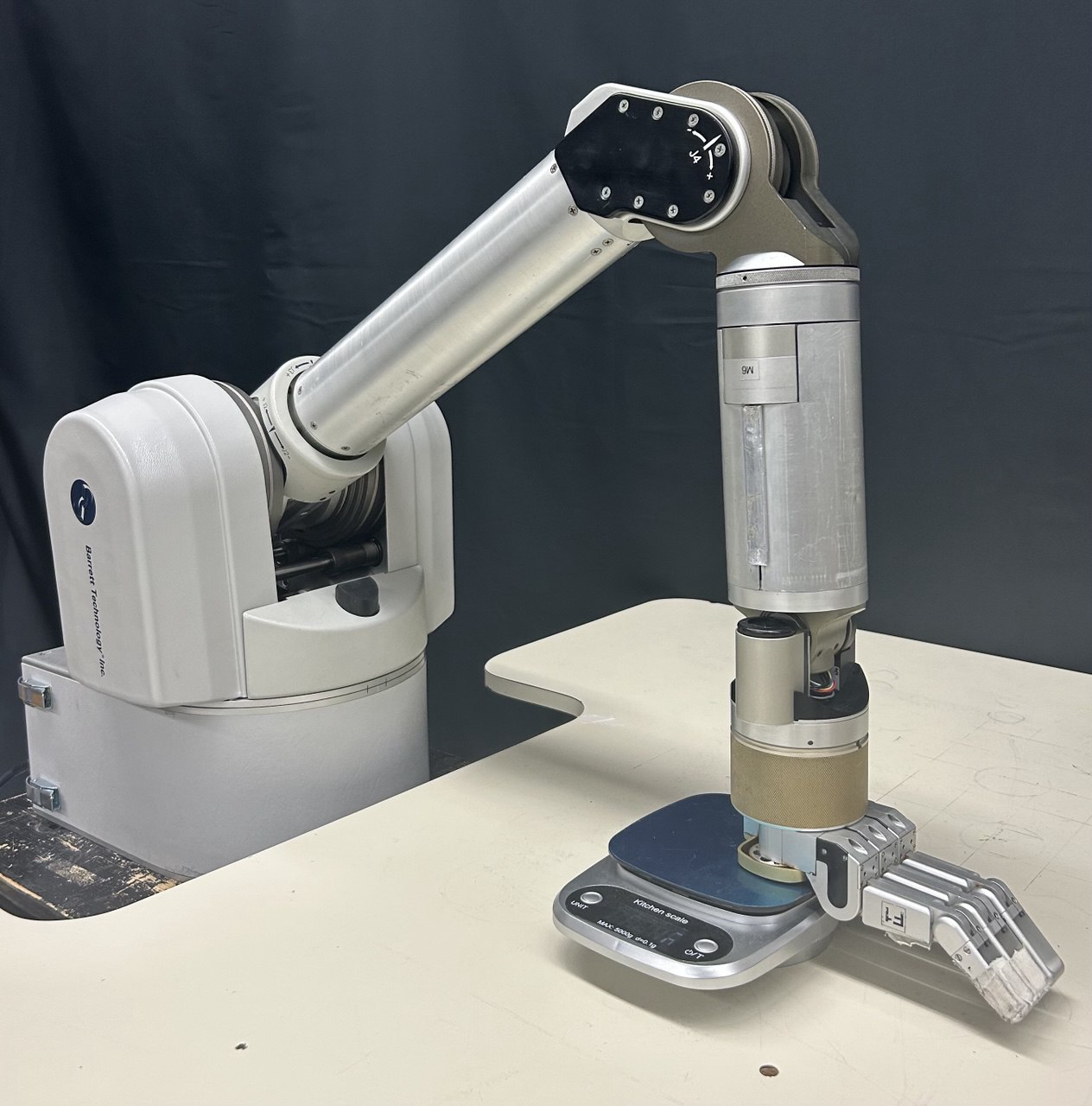
Fig 6: Door-opening task: (a) follower arm manipulating the door handle;
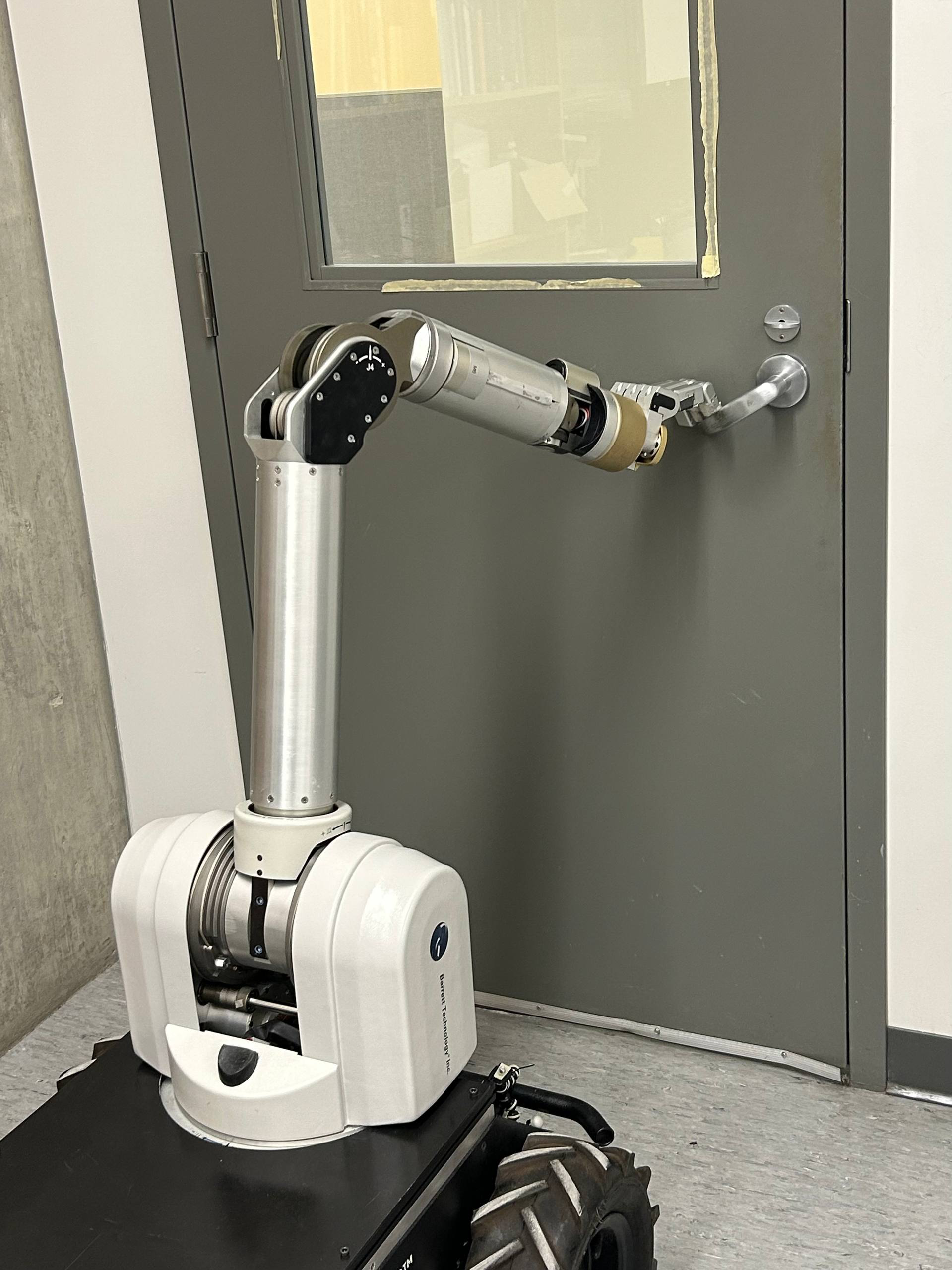
Fig 7: Comparison of teleoperation systems for the door-opening task using joint positions for position tracking and external joint torques for force
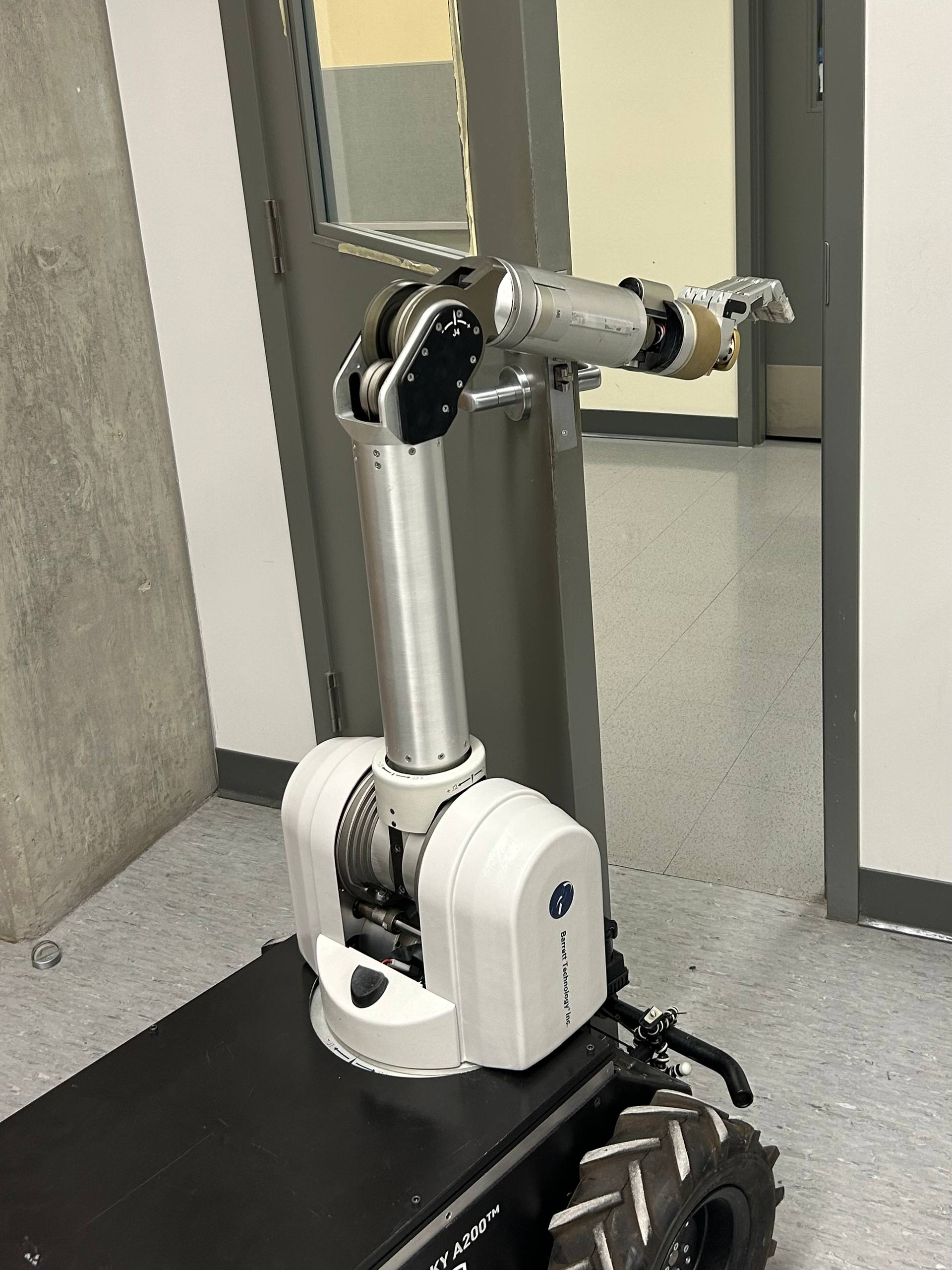
Fig 8 (page 6).
Limitations
- Friction modeling was limited to viscous friction; omitting Coulomb and stiction friction reduces model fidelity especially in slow, fine manipulation.
- Experiments were conducted with leader and follower running on the same computer with negligible communication delay; effects of network-induced latency remain unevaluated.
- Only four degrees of freedom were actively controlled; wrist joints were locked and neglected.
- Force estimation accuracy and transparency evaluations focus mainly on joints 2 and 4; other joints and full system behavior under diverse conditions are less characterized.
- The inverse dynamics model estimation requires excitation trajectories that may not be readily applicable in all teleoperation contexts.
- No adversarial robustness evaluation or security assessment against intentional disturbances or attacks.
Open questions / follow-ons
- How to incorporate and stabilize more accurate friction models (stiction, Coulomb) in inverse dynamics estimation to improve performance during slow and fine manipulation?
- Can online adaptive inverse dynamics methods or disturbance observers be integrated to compensate for modeling errors and parameter drift in real-time teleoperation?
- How robust is the sensorless four-channel control architecture to communication delays, packet loss, and asynchronous updates in distributed teleoperation setups?
- Can the method be extended and validated on heterogeneous leader-follower platforms with differing dynamics and degrees of freedom?
Why it matters for bot defense
Although this paper addresses teleoperation and robotics rather than CAPTCHA or bot defense directly, its core contribution is in sensorless, real-time estimation of external forces and dynamics compensation without explicit force sensors. For bot-defense engineers working in CAPTCHA or bot-detection, the approach exemplifies how model-based inference (inverse dynamics) can substitute for direct sensing where sensor cost, noise, or integration complexity is prohibitive. This principle can carry over to designing sensorless or indirect detection architectures that infer bot behaviors from proxy observables. Additionally, the paper's methodology for stability and passivity tuning under noisy estimates is relevant to designing robust control loops against adversarial or uncertain inputs. While not directly applicable to CAPTCHA, the architectural and analytical rigor demonstrated here can inform principled bot detection system design using model-based inference and indirect measurements.
Cite
@article{arxiv2607_01201,
  title={ Sensorless Four-Channel Control Architecture Using Inverse Dynamics Modeling for Human-Scale Bilateral Teleoperation },
  author={ Amir Noohian and Dylan Miller and Justin Valentine and Alan Lynch and Martin Jagersand },
  journal={arXiv preprint arXiv:2607.01201},
  year={ 2026 },
  url={https://arxiv.org/abs/2607.01201}
}