
Fabric Phononic Crystals for Passive Vibration Control
Source: arXiv:2607.01092 · Published 2026-07-01 · By Michael Y Wang, Hridyesh Tewani, Marianne Fairbanks, Pavana Prabhakar, Chu Ma
TL;DR
This work introduces fully woven fabric structures as phononic crystals capable of passively filtering and redirecting elastic vibrations. By combining soft cotton yarns with stiff woven copper inclusions using double weaving, the authors create hierarchical fabric lattices with engineered mechanical contrast and periodicity. They develop a multiscale modeling framework that homogenizes yarn-level weave units into effective anisotropic blocks, enabling computationally efficient prediction of phononic bandgaps and topological phenomena. Both simulation and vibration transmission experiments confirm a pronounced phononic bandgap in the fabricated fabric phononic crystals, which is absent in pure cotton fabrics of the same size and thickness.
Beyond demonstrating a phononic bandstop filter, the authors design and realize a fully woven higher-order topological insulator fabric with embedded copper inclusions arranged to induce band inversion and topological phases. Experimental modal and transmission measurements reveal in-gap edge states and localized corner states characteristic of second-order topological insulators. This novel platform shows that phononic wave control, including bandgaps and topologically protected modes, can be directly encoded through weaving patterns and material contrasts within fully woven textiles. The results suggest new opportunities for passive vibration management, sensing, haptics, and noise mitigation integrated seamlessly into fabrics, reducing reliance on active components or electronics.
Key findings
- A fabric phononic crystal with 4×7 unit cells (each 76.2 mm × 76.2 mm × 1.5 mm) exhibits a phononic bandgap for out-of-plane vibrations from approximately 44.7 Hz to 62.7 Hz (Fig 3a).
- Vibration transmission measurements show a reduction of ~35 dB in transmitted amplitude within this bandgap for the fabric phononic crystal versus no band suppression for pure cotton fabric of the same size (Fig 3g).
- Multiscale homogenization models calibrate effective anisotropic mechanical properties of cotton weave units (E1=2.86×10^8 Pa, density=600 kg/m3) and copper weave units (E=110 GPa, density=7880 or 5254 kg/m3 depending on wire gauge), enabling accurate macroscale vibration simulations.
- Tuning of copper inclusion positions in the unit cell induces band inversion at the M point in the dispersion relation, generating a topological phase transition with a Dirac cone degeneracy and bandgap formation (Fig 4b).
- A finite fabric phononic crystal composed of 12×12 units with central 6×6 nontrivial lattice exhibits edge states (at ~57 Hz) and corner states (at ~64 Hz), confirmed by eigenfrequency analysis and vibration mode shapes (Figs 4d-e, 5a-d).
- Experimental vibration measurements on the fabricated topological insulator show transmission peaks matching simulated edge and corner states near 60 Hz and 72 Hz, with bulk bandgap transmission suppression from 50 Hz to 80 Hz (Fig 5h).
- Frequency shifts in experiments compared to simulations are attributed to damping, gravity, fabric tension, and nonuniformities in yarn and wire distribution.
- The homogenized block model matches group velocity and dispersion of yarn-level models near 60 Hz, maintaining fidelity for the operational frequency band (Fig 2).
Methodology — deep read
Threat Model & Assumptions: The study addresses passive vibration control in fabric metamaterials without involving adversaries. The focus is on controlled wave propagation and band structures engineered through fabric microstructure and material contrast, assuming standard laboratory vibration sources and fixed boundary conditions. Adversarial interference or active attacks are not considered.
Data: The fabrics consist of 10/2 cotton yarns and AWG 24 or AWG 26 copper wires, double woven into 4×7 and 12×12 unit cell lattices. Samples have dimensions up to approximately 76.2 mm per unit cell and fabric thickness 1.5 mm. Experimental characterization of cotton yarn and fabric mechanical properties was performed on multiple samples (5 yarn samples, 3 fabric samples per orientation) to determine Young’s moduli, shear moduli, and densities. Vibration transmission experiments probed frequencies from 1 to 120 Hz using point excitation and high-speed camera measurements.
Architecture / Algorithm: The phononic crystal design uses a multiscale homogenization modeling framework. At the yarn scale, cotton yarns are modeled as orthotropic beams with experimentally measured elastic moduli and density. At the weave-unit scale (2.2 mm × 2.2 mm × 1.5 mm), cotton and copper weave units are homogenized into anisotropic blocks with spatially uniform effective elastic properties via a combination of numerical simulation and group velocity fitting. Copper weave units are treated as quasi-rigid with bulk copper properties and volume-averaged density. At the macroscale, these homogenized blocks form periodic lattice unit cells modeling phononic crystals with Floquet-Bloch periodic boundary conditions to calculate dispersion relations using COMSOL Multiphysics. Geometry variations tune symmetry and induce topological transitions.
Training Regime: Not applicable. Material properties were experimentally measured to parameterize models. Numerical simulations used mesh refinement for convergence. No machine learning or iterative training steps.
Evaluation Protocol: Phononic band structures and wave group velocities of homogenized blocks were compared with yarn-resolved detailed models to validate homogenization (Fig 2). Finite 4×7 (bandstop filter) and 12×12 (topological insulator) fabric phononic crystals were modeled with fixed boundaries and point excitation frequency sweeps (1-120 Hz). Transmission coefficients were computed as output/input vibration amplitude ratios at opposite corners to identify bandgaps and topological states. Experiments with identical samples and setups validated simulations. Mode shapes and vibration field distributions were analyzed to confirm localization.
Reproducibility: The paper provides detailed property tables, measurement protocols, and simulation parameters (COMSOL 6.1). Fabrication used double weaving, with process details referenced in Supplemental Information. Code or CAD files for simulation models are not stated as released. Experimental cotton and copper material parameters are fully tabulated. Dataset of fabric samples and vibration measurements is not public. Overall, the methodology is sufficiently detailed for domain experts to reproduce the results given equipment and material access.
Concrete example: A 4×7 fabric phononic crystal with 76.2 mm period unit cells and 25.4 mm copper inclusion was modeled using homogenized block properties in COMSOL. The dispersion relation calculation revealed a bandgap at 44.7-62.7 Hz. Simulated vibration field distributions at frequencies before, inside, and after the bandgap showed propagating waves or localization near the source. A shaker generated out-of-plane vibrations from 1-120 Hz; amplitude transmission amplitude measured with a high-speed camera decreased by ~35 dB within the bandgap range compared to a pure cotton control sample. This confirmed phononic bandgap behavior arising from materials contrast and weave geometry.
Technical innovations
- Development of a multiscale homogenization framework combining yarn-scale orthotropic beam models with macroscale anisotropic block models for efficiently simulating fully woven fabric phononic crystals.
- Demonstration that fully woven fabric lattices combining soft cotton and stiff copper yarns can produce pronounced phononic bandgaps and nonlinear dispersion behavior by embedding stiff inclusions within flexible substrates.
- Design and experimental realization of a fully woven higher-order topological insulator fabric exhibiting second-order topological edge and corner states encoded via controlled spatial placement of copper inclusions altering lattice symmetry and topology.
- Integration of experimental vibration transmission measurements with computational modal analysis to validate the predicted bandgap, edge, and corner modes in an entirely passive, all-fabric metamaterial platform.
Datasets
- Fabric phononic crystal samples — 4×7 and 12×12 unit cells (unit cell: 76.2 mm × 76.2 mm × 1.5 mm) — fabricated via double-weaving with cotton yarns and copper wires (AWG24, AWG26) — non-public
- Cotton yarn mechanical characterization data — 5 samples — laboratory tensile tests
- Cotton fabric mechanical characterization data — 3 samples per orientation — ASTM D5034-21 standard tests
Baselines vs proposed
- Pure woven cotton fabric (same size/thickness as phononic crystal): transmission coefficient shows no band suppression in 44-63 Hz band
- Fabric phononic crystal (cotton + copper inclusions): transmission coefficient reduced by ~35 dB within 43-63 Hz bandgap (Fig 3g)
- Simulated vs experimental transmission spectra of topological insulator: transmission peaks at ~57 Hz (edge) and ~64-72 Hz (corner) match well, with slight frequency shifts attributed to fabrication and measurement nuances (Fig 5g, 5h)
Figures from the paper
Figures are reproduced from the source paper for academic discussion. Original copyright: the paper authors. See arXiv:2607.01092.
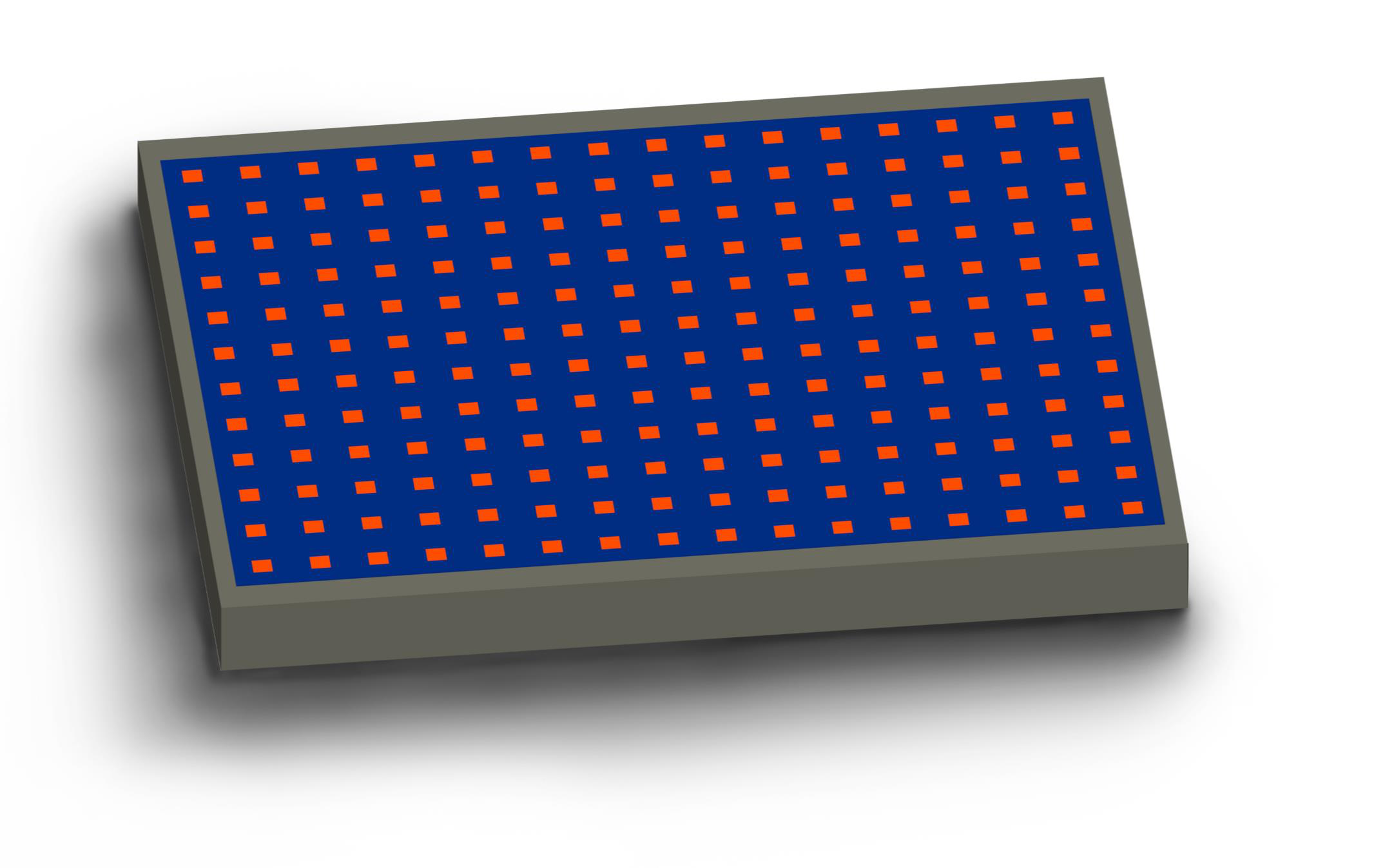
Fig 1: Overview of fabric phononic crystal design. a) A schematic of the weaving process used to fabricate the phononic

Fig 2: Comparisons of dispersion relations and wave group velocities for unhomogenized and homogenized cotton weave
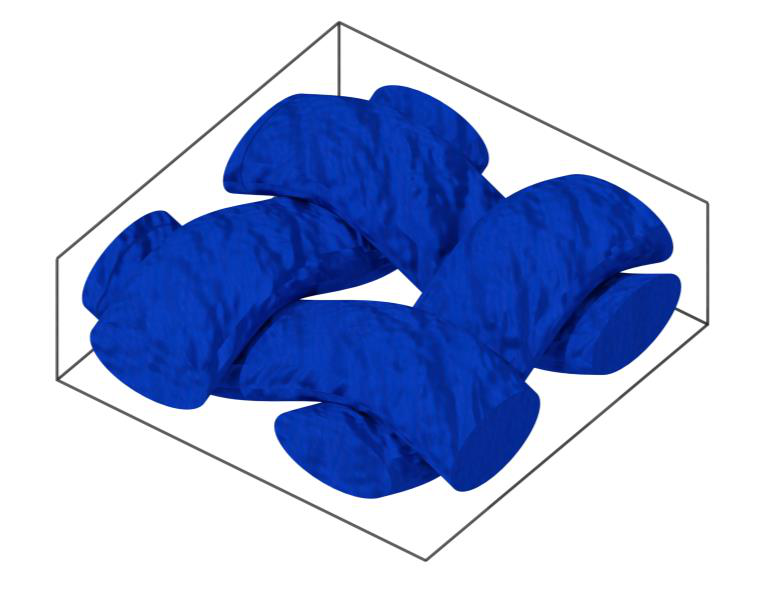
Fig 3 (page 3).
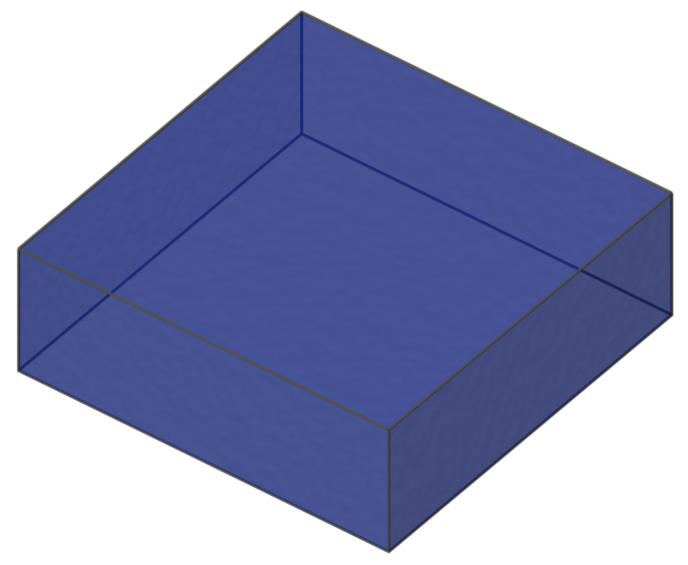
Fig 4 (page 3).
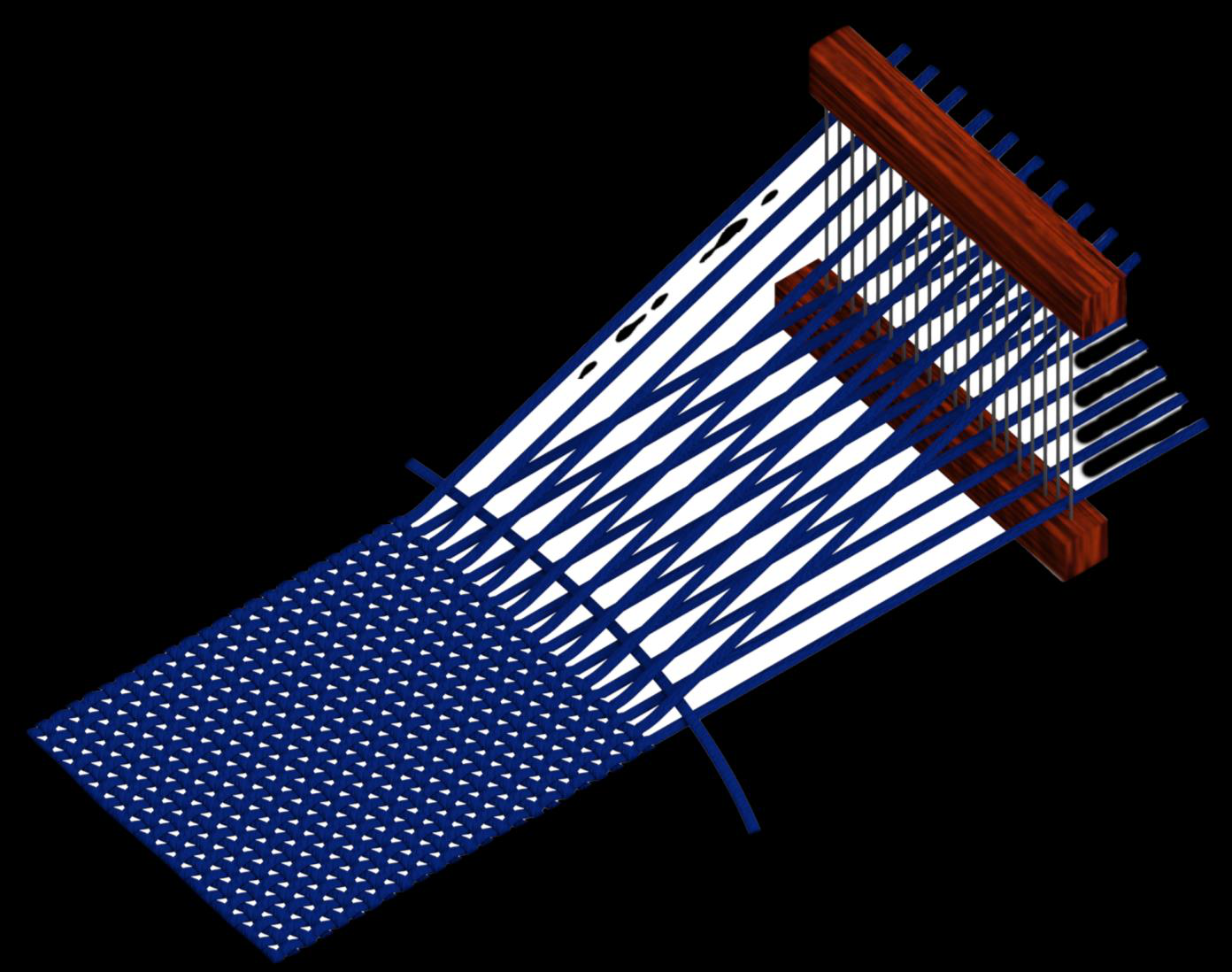
Fig 5 (page 3).
Fig 6 (page 3).
Fig 7 (page 3).
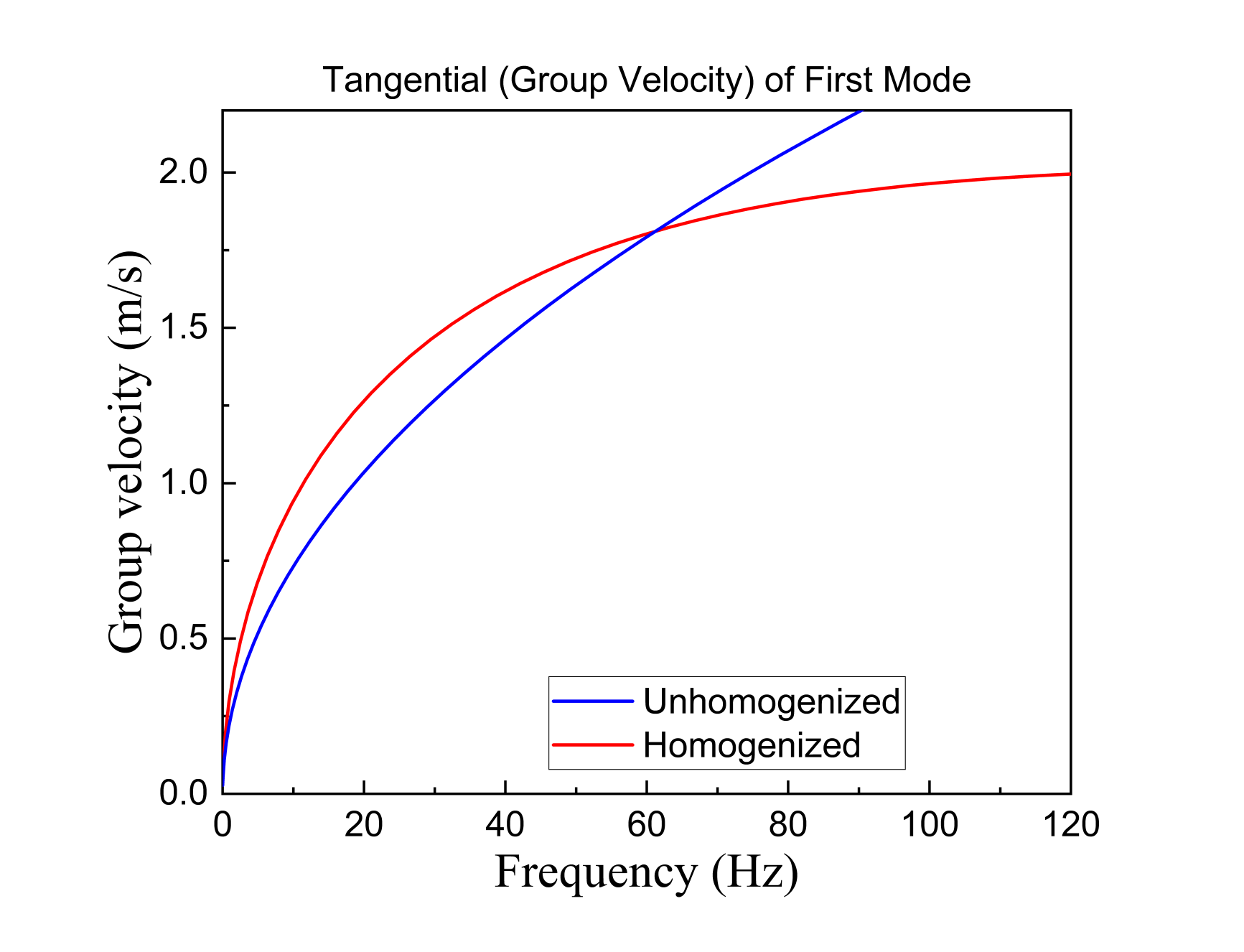
Fig 3: Fabric bandstop filter design and experimental characterization. a) Dispersion relation of the fabric phononic
Limitations
- Homogenized models simplify yarn contacts, friction, local bending, and sliding effects, which may cause discrepancies in amplitude and frequency response compared to experiments.
- Experiments show slight frequency shifts and amplitude differences due to damping, gravity, fabric tension, and nonuniformities in yarn and wire distribution that are not modeled.
- Out-of-plane vibration modes only are considered; in-plane vibrations and multi-axial loading scenarios remain unexplored.
- The mechanical environment is fixed boundary conditions on rigid frames; effects of free or deformable mounting on phononic behavior are not examined.
- No adversarial or active attack scenarios on the phononic crystals are evaluated; robustness to real-world disturbances is untested.
- The computational framework currently does not model dynamic yarn rearrangement or frictional nonlinearities that might occur in realistic wear or loading.
Open questions / follow-ons
- How do in-plane elastic waves and multi-directional vibrations propagate and can be controlled in fabric phononic crystals beyond out-of-plane modes?
- What is the impact of fabric wear, repeated bending, humidity, and environmental variations on the phononic properties and bandgaps over time?
- Can active tuning or reconfiguration (e.g., via shape-memory fibers or adjustable tension) be integrated to dynamically control phononic bandgaps in fabric metamaterials?
- How robust are the topologically protected edge and corner states against structural defects, yarn misalignment, or manufacturing inconsistencies in large-area fabrics?
Why it matters for bot defense
While not directly addressing bot defense or CAPTCHA, this work's insights on passive elastic wave control via hierarchical fabric patterns offer a novel approach to mechanical signal filtering and sensing layers embedded in textiles. Bot-defense engineers interested in physical-layer authentication or environmental sensing could consider such phononic fabrics as low-power, passive hardware filters or vibration-isolation interfaces integrated into devices or environments. The demonstrated topological protection mechanisms suggest robustness to defects and environmental noise that might inspire robust sensor designs for security applications. However, practical adaptation would require extensions on sensing modalities beyond elastic waves and integration with electronic signal processing. These phononic fabrics exemplify emerging material platforms where wave propagation is architected through passive structure alone, potentially reducing system complexity and power consumption compared to active sensor arrays currently used in intelligent security textiles or haptic user interfaces.
Cite
@article{arxiv2607_01092,
  title={ Fabric Phononic Crystals for Passive Vibration Control },
  author={ Michael Y Wang and Hridyesh Tewani and Marianne Fairbanks and Pavana Prabhakar and Chu Ma },
  journal={arXiv preprint arXiv:2607.01092},
  year={ 2026 },
  url={https://arxiv.org/abs/2607.01092}
}