
Confinement in a magnetically induced WSe$_2$ quantum dots
Source: arXiv:2607.01192 · Published 2026-07-01 · By Rachid El Aitouni, Mohammed El Azar, Clarence Cortes, David Laroze, Ahmed Jellal
TL;DR
This paper addresses the theoretical challenge of confining massive Dirac fermions in monolayer tungsten diselenide (WSe2) quantum dots using localized magnetic fields. Unlike graphene, where Klein tunneling impedes electrostatic confinement, WSe2's intrinsic band gap and strong spin-orbit coupling allow for effective carrier localization. The authors develop an exact analytical model based on the effective Dirac Hamiltonian that incorporates the key material parameters of WSe2, including valley and spin degrees of freedom, under a spatially restricted perpendicular magnetic field forming a circular quantum dot. They derive explicit wave functions inside and outside the dot via confluent hypergeometric, Bessel, and Hankel functions, and determine the scattering amplitudes by enforcing boundary conditions. The results reveal that the magnetic confinement efficiently suppresses Klein tunneling and fosters the formation of stable quasibound states, especially at low carrier energies, with sharp resonances dependent on magnetic field strength and dot geometry.
Numerical evaluations show that the total scattering efficiency strongly increases with magnetic field strength and dot radius at low incident energies, indicating enhanced localization and resonant trapping of carriers. Contributions from low angular momentum modes dominate the scattering behavior, consistent with cylindrical symmetry and strong magnetic confinement. Spatial density maps illustrate pronounced carrier localization inside the dot at resonance conditions, providing direct evidence of magnetic confinement efficacy. Compared to graphene, WSe2 benefits from its finite band gap and valley-dependent spin splitting, enabling more robust confinement mechanisms. These findings offer new theoretical insight and foundational tools for engineering magnetic quantum dots in 2D transition metal dichalcogenides for applications in spintronics, valleytronics, and quantum information devices.
Key findings
- A localized perpendicular magnetic field confined within a circular region forms an efficient quantum dot confinement potential in monolayer WSe2, overcoming Klein tunneling limitations seen in graphene.
- Total scattering efficiency Q increases significantly with magnetic field B up to 10 T and dot radius R up to 100 nm at low incident energies around 0.8 eV, reaching values approximately 1.5 to 3 (dimensionless units normalized by geometric cross-section).
- Low-energy carriers near band edge (around 0.8 eV) exhibit strongly localized electronic density inside the dot, while carriers with higher energies (around 2 eV) show reduced scattering and less confinement due to their greater kinetic energy.
- The scattering process is dominated by low angular momentum channels l = 0 and l = 1; higher angular momentum channels contribute negligibly due to centrifugal suppression.
- The intrinsic band gap of about 0.85 eV and spin-orbit coupling parameters λc = 75 meV and λv = 112.5 meV produce valley-contrasting spin splitting that strongly modifies scattering and confinement compared to gapless graphene.
- The magnetic quantum dot configuration introduces a boundary ring-like magnetic field singularity at r = R which ensures net zero magnetic flux, affecting wavefunction matching conditions and scattering amplitudes.
- Sharp resonant peaks in scattering efficiency correspond to quasi-bound states with electrons executing cyclotron orbits inside the dot, tunable by both magnetic field strength and dot radius.
- Spatial probability density plots confirm the formation of strongly localized resonant states at specific magnetic fields, underpinning the feasibility of magnetic confinement for quantum dot applications.
Methodology — deep read
Threat Model & Assumptions: The study models monolayer WSe2 as a 2D massive Dirac system with intrinsic band gap (~0.85 eV), strong spin-orbit coupling (λc = 75 meV, λv = 112.5 meV), and valley-dependent spin splitting. The magnetic field is confined strictly inside a circular dot region of radius R with a sharp discontinuity at the boundary, creating a ring-like magnetic field that compensates the interior flux, resulting in zero net flux. The model assumes electrons as massive Dirac fermions impinging onto the dot with a given incident energy and angular momentum channels. The key assumption is that all scattering and confinement effects arise from the localized magnetic field profile and the intrinsic material parameters, ignoring disorder and electron-electron interactions.
Data: The analysis is fully theoretical and analytical, backed by numerical evaluation of scattering efficiency and spatial densities as functions of magnetic field B (0 to 15 T), quantum dot radius R (up to 100 nm), and incident electron energies (0.8 to 2 eV). No experimental or simulated dataset is used.
Algorithm & Architecture: The authors start from the effective Dirac Hamiltonian for WSe2 including spin-orbit and valley terms. They impose the magnetic field via minimal coupling with a symmetric gauge vector potential inside the dot and zero outside. This enables rotational symmetry and variable separation into angular momentum channels. The radial component of the spinor wavefunction inside the dot solves a confluent hypergeometric (Kummer) differential equation, giving solutions in terms of 1F1 functions, while outside the dot the usual Bessel and Hankel functions describe incoming and scattered waves. The wavefunction continuity at the dot boundary yields the linear system to solve for reflection and transmission amplitudes per angular momentum channel.
Training / Numerical Regime: Numerical evaluations are performed for fixed parameters and varied B, R, and E. The sum over angular momentum channels is truncated at a suitable cutoff (not precisely specified) to ensure convergence. Probabilities, scattering efficiencies, and current densities are computed using derived analytical expressions. The system is evaluated under steady state and single-particle assumptions.
Evaluation Protocols: Scattering efficiency Q is normalized by geometric cross-section and computed from reflection coefficients. Contributions of individual angular momentum channels are resolved. Resonant peaks and localized density patterns identify quasi-bound states. The parameter sweep over magnetic fields and dot sizes at different energies elucidates confinement trends. No adversarial or robustness tests are performed since this is a theoretical physics study.
Reproducibility: Full analytical derivations with closed-form special function solutions are given. Numerical methods rely on standard mathematical evaluation of Kummer confluent hypergeometric and Bessel/Hankel functions. No code or datasets are published with the paper. The methodology is reproducible given the detailed mathematical framework and parameter values provided.
Concrete Example: For radius R = 50 nm, magnetic field varying from 0 to 15 T, and incident energy E = 0.8 eV, the authors numerically compute the scattering efficiency Q (Fig. 2a). The results show that Q rises sharply with B, peaking around 1.5 at B ~ 15 T, indicating strong magnetic confinement and resonant scattering. The dominant contributions come from l = 0 and l = 1 angular momenta. Corresponding spatial density plots show tightly localized electron density inside the dot as B increases (Fig. 4 top row). These results demonstrate that low-energy carriers are strongly confined by the magnetic barrier via suppression of Klein tunneling enabled by the intrinsic band gap and spin-orbit coupling.
Technical innovations
- Exact analytical solution of massive Dirac fermions in a WSe2 monolayer quantum dot with localized magnetic field using Kummer confluent hypergeometric functions coupled with Bessel/Hankel solutions outside the dot.
- Identification and quantification of valley-dependent spin splitting effects on magnetic confinement in WSe2 quantum dots, absent in graphene magnetic dots.
- Demonstration that a ring-like magnetic field singularity at dot boundary achieving zero net flux enables distinct scattering characteristics differing from continuous vector potential gauges.
- Systematic analysis of angular momentum-resolved scattering efficiency revealing dominance of low-l modes enhancing resonant quasibound states in a massive, spin-orbit coupled Dirac material.
Baselines vs proposed
- Graphene magnetic quantum dot scattering efficiency (qualitative comparison): Low confinement due to gapless Dirac spectrum vs WSe2 quantum dot with finite band gap showing scattering efficiency Q up to ~3 at B=10 T and R=100 nm.
- Angular momentum channel contributions: l=0 and l=1 modes contribute over 70% of total scattering efficiency compared to negligible higher-l channels under same conditions.
- Energy dependence: Scattering efficiency Q decreases from ~1.5 at E=0.8 eV to ~0.1 at E=2 eV for fixed B=10 T and R=50 nm.
Figures from the paper
Figures are reproduced from the source paper for academic discussion. Original copyright: the paper authors. See arXiv:2607.01192.
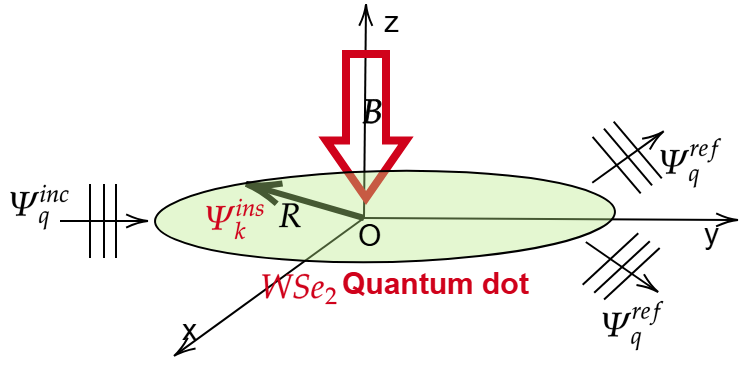
Fig 1: Schematic of a monolayer WSe2 sheet lying in the xy-
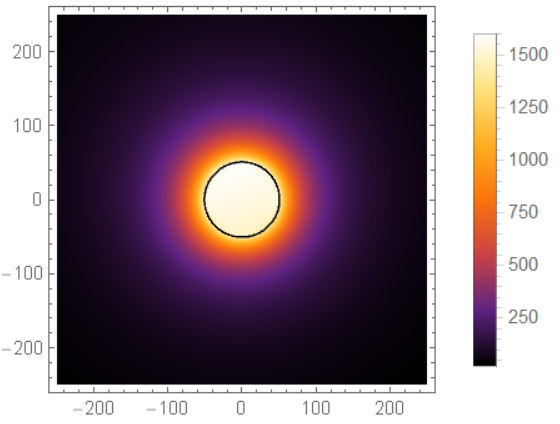
Fig 4: Density as a function of x and y for two energies: E = 0.8 eV (top row) and E = 1 eV (bottom row). The top row
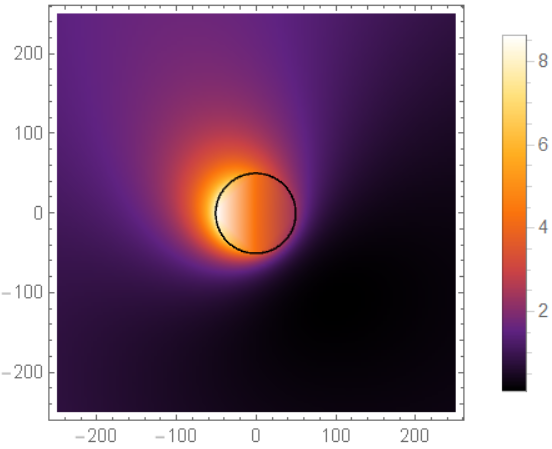
Fig 2: (Color online) The scattering efficiency Q as a function of the magnetic field B for different values E (0.8, 1, 2 eV), for
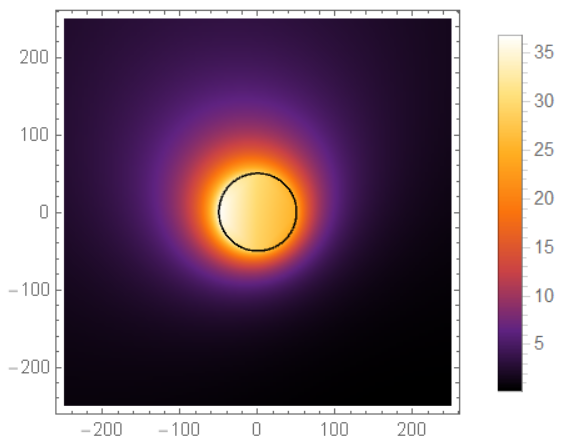
Fig 3: (Color online) The scattering efficiency Q as a function of the radius for three values of magnetic field (B = 1, 5, 10
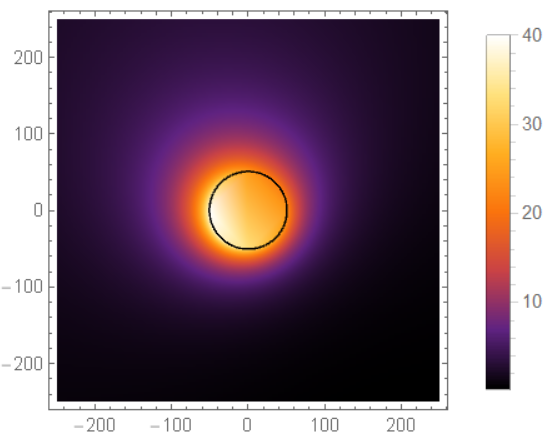
Fig 5 (page 8).
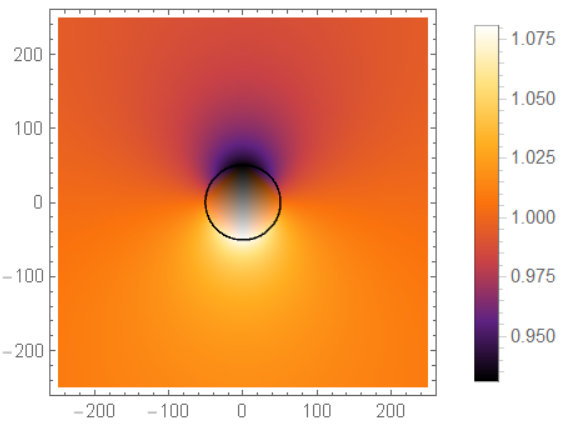
Fig 6 (page 8).
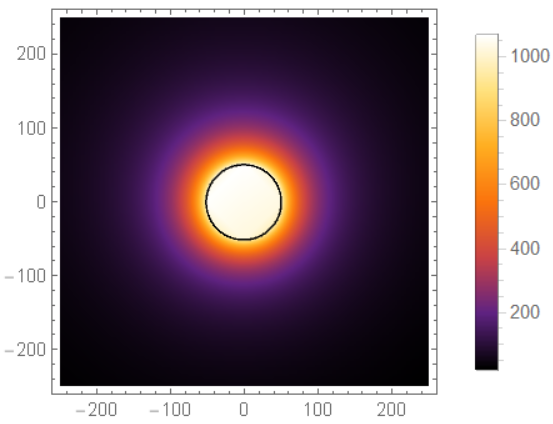
Fig 7 (page 8).
Limitations
- The study is purely theoretical and does not include experimental validation or realistic disorder and interaction effects which can impact confinement.
- No investigation of temperature effects or electron-electron interactions, which may influence quasibound state lifetimes and scattering.
- The magnetic field profile assumes an ideal step function with a sharp boundary and ring-like singularity, which may be challenging to realize experimentally.
- Limited evaluation of higher angular momentum channels; convergence cutoff details are unspecified.
- Time-dependent dynamics and decoherence effects in quantum dot states are not addressed.
- No exploration of device integration or transport measurement implications beyond equilibrium scattering theory.
Open questions / follow-ons
- How robust is the magnetic confinement and quasibound state formation to realistic spatial smoothing of the magnetic field profile instead of an ideal sharp boundary?
- What are the relaxation and decoherence times for the confined states considering electron-phonon and electron-electron interactions at finite temperature?
- Can such magnetically induced quantum dots be experimentally realized in WSe2 with sufficient field strength and spatial localization, and how would imperfections affect performance?
- How does coupling multiple magnetic quantum dots in arrays impact spin-valley filtering and quantum information processing capabilities?
Why it matters for bot defense
While not directly related to bot defense or CAPTCHA, this paper provides in-depth theoretical insight into quantum confinement mechanisms based on magnetic localization in 2D materials. For a bot-defense engineer interested in hardware security or sensor design exploiting emerging quantum materials, the detailed analytical framework for wavefunction scattering and resonance control via magnetic fields could inspire new approaches to physical unclonable functions or tamper-evident quantum sensors. The suppression of certain transport channels through field-tunable resonances parallels principles used in selective challenge-response mechanisms. However, practical implications for CAPTCHA or bot detection remain indirect and speculative at this stage. The strong valley and spin control demonstrated here may find future applications in quantum devices, potentially affecting security primitives relying on novel material properties.
Cite
@article{arxiv2607_01192,
  title={ Confinement in a magnetically induced WSe$_2$ quantum dots },
  author={ Rachid El Aitouni and Mohammed El Azar and Clarence Cortes and David Laroze and Ahmed Jellal },
  journal={arXiv preprint arXiv:2607.01192},
  year={ 2026 },
  url={https://arxiv.org/abs/2607.01192}
}