
Preparation-Space Diagnostics and Logical Information Loss in a Driven Kerr-Cat Qubit
Source: arXiv:2606.29890 · Published 2026-06-29 · By Stephen Wiggins
TL;DR
This paper investigates how logical bit errors arise in a driven Kerr-cat qubit, a superconducting nonlinear oscillator encoding quantum information in two stable coherent states (wells). The authors study the effect of applying a transient gate pulse with varying temporal profiles on the encoded qubit. Using a common preparation space of coherent states covering the vicinity of one well, they compare classical phase-space transport diagnostics with full open-system quantum simulations point-by-point. The key novelty is showing that bit corruption depends on the detailed pulse time dependence (protocol), not just strength: a sudden quench almost fully erases the bit, while a smooth Gaussian ramp largely preserves it despite similar peak amplitude. Classical finite-time sensitivity fields accurately locate the transport boundary, and a Loschmidt echo computed near pulse end predicts the later quantum bit corruption outcome in the quench regime. Sweeps over pulse parameters, cat size, and engineered two-photon dissipation clarify where classical phase-space transport predicts quantum logical errors and where it fails. The operator growth diagnostic (OTOC) fails to mediate the classical-quantum link. The work combines dynamical-systems analysis with Lindblad master-equation quantum modeling to produce a detailed preparation-resolved map of bit-loss vulnerability in a Kerr-cat qubit under gate drive.
Key findings
- Sudden quench pulses erase the logical bit with trace distance collapse to Dtr = 0.013, whereas smoothly ramped Gaussian pulses of the same peak amplitude retain about 46% of idle logical distinguishability (RD = 0.46).
- Classical finite-time sensitivity fields sharply localize on the transport boundary (mean boundary-cell sensitivity percentile ≈ 0.99) for integration times T≥8 Kerr times, reliably indicating where classical trajectories cross the separatrix.
- Quantum left-half-plane occupation probability Pleft correlates with classical leak indicator with Pearson r = +0.61 under a quench pulse but is generally less binary (Pleft ∈ [0.31, 0.54]), reflecting quantum spreading rather than sharp classical crossing.
- A Loschmidt echo fidelity between pulsed and static evolution computed near pulse end correlates strongly negatively with later trace distance loss (r = −0.94) under a quench, predicting qubit corruption early in the gate protocol.
- Increasing cat size (effective semiclassical parameter) reduces logical bit erasure severity; an engineered two-photon dissipation channel suppresses classical leak fraction close to zero and raises gate-induced retention from RD=0.02 to RD=0.94, effectively protecting the bit.
- Classical Melnikov theory applied to the separatrix confirms the existence of a turnstile transport mechanism driving classical leakage, consistent with observed leak-safety partitions under pulsed drive.
- Operator growth diagnostics (OTOCs) do not provide a robust bridge between classical sensitivity and quantum bit loss in this dissipative Kerr-cat model across studied parameters.
- Classical sensitivity predicts the leakage outcome accurately only when the leaked set is a thin layer along the transport boundary; for larger leaked fractions, the sensitivity ridge locates the boundary but anti-correlates with leakage membership.
Threat model
The threat model corresponds to the intrinsic vulnerability of a Kerr-cat qubit to logical bit-flip errors induced by its own control pulses (gates) and natural dissipation, not an external adversary. The 'adversary' is effectively the gate pulse acting as a perturbation that can drive state-leakage across the logical well boundary. No active attacker or information leak scenario is considered; rather, the focus is on diagnosing and predicting protocol-induced logical errors within the standard quantum error protection framework.
Methodology — deep read
The authors consider a Kerr-cat qubit modeled as a single nonlinear oscillator with Kerr nonlinearity K, single-photon loss κ, and two-photon parametric pumping with time-dependent amplitude p(t). The frame rotates at half the pump frequency, yielding classical mean-field equations for the complex amplitude α(t) = x(t) + iy(t) including cubic Kerr terms, two-photon drive, and linear dissipation.
The classical system dynamics feature a double-well phase space structure with two stable equilibria (wells) separated by a saddle at the origin. The dividing surface x=0 separates logical states. Pulses modulate p(t) transiently, modeled as Gaussian pulses characterized by amplitude A, width σ, and center tc. The final integration time T spans multiple Kerr time units to capture dynamics.
The quantum dynamics are propagated using the Lindblad master equation incorporating the time-dependent Hamiltonian and photon loss dissipator D[a]. States are represented in truncated Fock basis with N=24 levels. Preparation space consists of coherent states |α0⟩ centered on a 2D Cartesian grid in phase space around one logical well (radius ~0.8). Quantum observables focus on the left-half-plane occupation Pleft(T) from projectors constructed from the quadrature operator ˆX = (a + a†)/2, giving a quantum analogue to classical leak indicators.
Classical diagnostics include direct trajectory integration to classify leak/safe partitions, finite-time sensitivity (spectral norm of the Jacobian DΦT), and Lagrangian descriptors (trajectory arc length). Melnikov theory quantifies manifold splitting and identifies turnstile lobe transport thresholds. Quantum diagnostics analyzed include Pleft, Loschmidt echo fidelities between pulsed and static evolutions (fidelity measuring gate disturbance), and gate-induced out-of-time-order correlators (OTOC) based on squared commutators of quadrature operators evolved in the Heisenberg picture.
Numerical propagation uses LSODA ODE solver for classical systems with high tolerance; quantum integration methods are validated by checking moments and operator identities. Preparation-resolved fields for classical and quantum outcomes are computed on the same grid allowing pointwise comparison via Pearson correlation r.
The authors sweep across pulse amplitudes, widths, cat sizes, and presence of engineered two-photon dissipation to map parameter regimes of classical transport and quantum logical information loss. They benchmark correlations between classical sensitivity, Pleft, Loschmidt echo, and logical trace distance. Specific case studies compare sudden quenches to smooth ramps illustrating protocol dependence. Ablations show two-photon dissipation strongly suppresses logical error.
Reproducibility is facilitated by detailed parameter specification, grid choices, numerical tolerances, and comparison with prior related works. The code or datasets are not explicitly mentioned to be released. The paper contextualizes classical-quantum correspondences semiclassically and through dynamical systems tools, providing end-to-end examples linking initial coherent state preparations through classical/quantum diagnostics to final logical-bit outcomes.
Technical innovations
- Use of a coherent-state preparation space as a common domain for side-by-side comparison of classical phase-space diagnostics and open quantum system outcomes in a Kerr-cat qubit.
- Application of finite-time sensitivity fields and Melnikov theory to precisely locate classical transport boundaries induced by transient pulses in a dissipative nonlinear oscillator.
- Demonstration that logical bit corruption depends critically on the full temporal pulse protocol (smooth ramp vs sudden quench), not just pulse amplitude.
- Deploying the Loschmidt echo fidelity in an open quantum system as an early-warning diagnostic predicting much later quantum logical-bit loss caused by transient gate pulses.
Datasets
- Preparation space coherent states — 1256 grid points — constructed from coherent-state displacement operators centered on a 2D phase space disk of radius 0.8
Baselines vs proposed
- Constant pump (A=0) baseline: quantum Pleft(T) remains below 0.5, confirming logical bit well preserved vs pulsed: quench pulse with A=6, σ=0.3 yields Pleft(T) spanning [0.31, 0.54], indicating bit scrambling.
- Classical leak fraction: no pulse ~15%, quench pulse (A=6, σ=0.3) ~88%, matching quantum left-occupation correlation r=+0.61.
- Logical bit distinguishability trace distance: quench pulse lowers Dtr from idle value to 0.013, smooth Gaussian pulse retains 0.46 of idle distinguishability.
- Including two-photon engineered dissipation raises gate-induced retention RD from 0.02 to 0.94 and suppresses classical leak fraction toward zero.
Figures from the paper
Figures are reproduced from the source paper for academic discussion. Original copyright: the paper authors. See arXiv:2606.29890.

Fig 1: Classical preparation-space diagnostics at the reference pulse (A = 6, σ = 0.3,
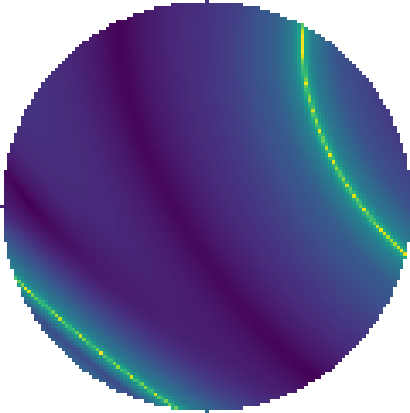
Fig 2: compares the classical and quantum fields under the reference pulse (A = 6, σ = 0.3,
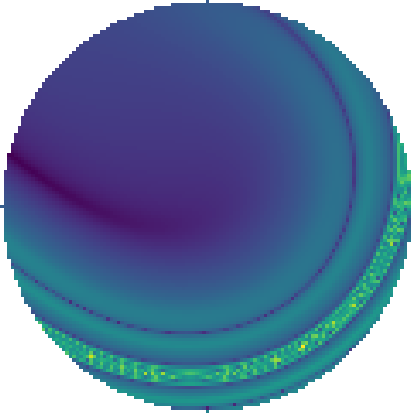
Fig 3 (page 9).

Fig 3: Two-photon pair loss and the engineered stabilizer (A = 6, σ = 0.3, κ = K =
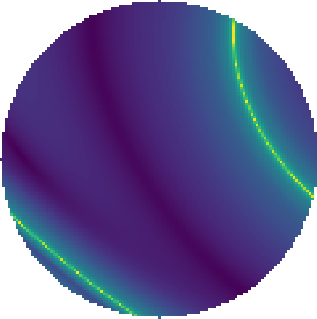
Fig 5 (page 11).

Fig 6 (page 11).

Fig 7 (page 12).

Fig 8 (page 12).
Limitations
- Quantum observable Pleft(T) is a quadrature projection proxy, not a direct logical error rate in the cat basis, possibly obscuring nuanced quantum codeword fidelity.
- Operator-growth diagnostic (OTOC) fails to provide consistent correspondence between classical sensitivity and quantum bit loss under studied conditions.
- Study limited to a single oscillator mode and coherent initial states; no consideration of non-Gaussian states or multiple-qubit interactions.
- Numerical results depend on the finite truncation of the photon-number basis (N=24), though truncation error was validated as negligible.
- No explicit adversarial attack or fast error injection studied; primarily analyzes naturally induced bit errors by control pulses.
- Assumes access to precise pulse shaping and coherent initial state preparation—may not generalize to noisy or imperfect experimental realities.
Open questions / follow-ons
- Can the Loschmidt echo diagnostic be extended or adapted to provide early warnings for arbitrary pulse shapes beyond Gaussian/quench and for multi-qubit Kerr-cat devices?
- What is the impact of more complex dissipators matching reservoir-engineered stabilizers (e.g., D[a2 - αcat²]) on classical-quantum correspondences for logical error prediction?
- Are there quantum diagnostics beyond OTOCs and the Loschmidt echo that could better bridge classical phase-space transport and quantum logical information measures?
- How robust are the classical and quantum preparation-space diagnostics to experimental noise sources and imperfect state preparation?
Why it matters for bot defense
Although this paper arises from quantum hardware control rather than classical bot defense, it provides a rigorous example of linking classical dynamical diagnostics and quantum system behavior over a shared initial-state manifold. For bot-defense engineers, the core lesson is the power of fine-grained preparation-space (input-space) diagnostics that map when and how a system becomes vulnerable to logical corruption under transient, time-dependent perturbations.
In CAPTCHA or bot-defense contexts, analogous phase-space partitions or input-preparation maps could inform which challenge inputs induce classification errors or automation vulnerabilities, particularly when inputs interact complexly with legacy models. The demonstrated importance of temporal protocol (pulse shape) beyond amplitude is a reminder that attack vectors can depend sensitively on timing and waveform shape, not just static input features.
Finally, the use of early diagnostics (Loschmidt echo here) as predictors of much later logical failure invites a design stance for CAPTCHA challenges and bot-detectors: building fast-to-evaluate indicators of eventual detection success or evasion based on initial response dynamics could enhance robustness.
Cite
@article{arxiv2606_29890,
  title={ Preparation-Space Diagnostics and Logical Information Loss in a Driven Kerr-Cat Qubit },
  author={ Stephen Wiggins },
  journal={arXiv preprint arXiv:2606.29890},
  year={ 2026 },
  url={https://arxiv.org/abs/2606.29890}
}