
One-Step Gradient Delay is Not a Barrier for Large-Scale Asynchronous Pipeline Parallel LLM Pretraining
Source: arXiv:2606.30634 · Published 2026-06-29 · By Philip Zmushko, Egor Petrov, Nursultan Abdullaev, Mikhail Khrushchev, Samuel Horváth
TL;DR
This paper addresses a practical bottleneck in large-scale Large Language Model (LLM) pretraining using Pipeline Parallelism (PP). While synchronous PP suffers from GPU idling due to pipeline bubbles, asynchronous PP (Async PP) eliminates these idle slots by allowing gradient staleness, which has been assumed to destabilize training. The authors focus on PipeDream-2BW, an async pipeline schedule guaranteeing exactly one-step gradient delay independent of pipeline depth, challenging the belief that even small fixed delays fundamentally degrade convergence. Through extensive empirical and theoretical analysis, they show that the degree of degradation strongly depends on the optimizer. Commonly-used AdamW suffers severe loss increases with one-step delay, while modern optimizers like Muon maintain near baseline synchronous performance with only minor degradation. They introduce an optimizer-agnostic Error Feedback correction that consistently reduces delay effects further, demonstrating in a 10B-parameter Mixture-of-Experts (MoE) model trained on 200B tokens that Async PP with Muon plus Error Feedback matches synchronous validation loss. Their convergence proofs for delayed Muon variants validate practical scalability, highlighting Async PP as a viable, throughput-advantageous approach to large-scale LLM pretraining despite gradient delay.
Key findings
- AdamW optimizer under one-step gradient delay suffers >0.2 increase in validation loss on 360M parameter model compared to synchronous baseline.
- Muon optimizer exhibits strong robustness, with only ~0.012 loss gap under one-step delay at 360M model scale.
- Error Feedback-inspired update correction recovers 50–90% of the sync-async loss degradation across optimizers, including up to 90% recovery for AdamW and MARS.
- Momentum parameter significantly influences staleness robustness; higher momentum consistently reduces delayed training loss gap across optimizers.
- PipeDream-2BW’s constant one-step delay schedule outperforms original PipeDream’s variable delay, stabilizing Async PP training at larger pipeline depths.
- Large-scale validation on a 10B-parameter MoE model trained on 200B tokens shows Async PP with Muon + Error Feedback achieves identical final validation loss to synchronous training.
- Theoretical convergence guarantee provided for delayed Muon optimizer with and without Error Feedback, under realistic stochastic and smoothness assumptions.
Threat model
The adversary is the inherent stale gradient information introduced by asynchronous pipeline scheduling, specifically a fixed one-step delay. The authors assume no ability to manipulate gradients or model parameters, focusing on optimization stability and convergence under this fixed delay constraint rather than on external attackers or adversarial perturbations.
Methodology — deep read
The paper is motivated by the inefficiency of synchronous pipeline parallel training due to pipeline bubbles causing GPU idling, and aims to demonstrate that asynchronous pipeline training with a fixed one-step gradient delay (via PipeDream-2BW) can be practical at LLM scale with suitable optimizer choice and corrections.
Threat Model & Assumptions: The adversary is the challenge of training nonconvex LLM objectives under stale gradients; the delay is fixed at one step, assumed uniform due to PipeDream-2BW’s scheduling. The study focuses on the optimization dynamics rather than adversarial attacks.
Data: Experiments use models from 135M to 10B parameters. Smaller models (135M, 360M) use the FineWeb-Edu dataset with a 20:1 token-to-parameter ratio, derived from publicly available corpora (Penedo et al., 2024). The 10B MoE was trained on 200B tokens of the Fine-Web corpus. Data splits and labels correspond to standard language modeling benchmarks.
Architecture/Algorithm: Training relies on PipeDream-2BW asynchronous pipeline parallel schedule which applies parameter updates after M microbatches, ensuring exactly one-step gradient delay across all pipeline stages, unlike the original PipeDream which has variable delays per stage.
They focus heavily on optimizer dynamics under delays, including AdamW (standard at time of PipeDream-2BW), Muon (modern LMO-based optimizer), and variants such as SOAP, Lion, Adan. The novel component is the optimizer-agnostic Error Feedback correction at the update level: at iteration t, the update is modified to xt+1 = xt - 2ut-1(gt-1) + ut-2(gt-2), compensating for the stale gradient bias.
Training Regime: Models are trained with a fixed global batch size chosen for synchronous near-optimal performance. Hyperparameters like learning rate, momentum decay, and weight decay are tuned locally for each optimizer to isolate the impact of delay. Epoch counts and compute infrastructure details are stated for large-scale runs (e.g., 200B tokens for 10B model). Detailed ablations sweep learning rate, momentum decay, batch size, etc.
Evaluation Protocol: Comparison is always between synchronous training and one-step delayed Async PP training under identical hyperparameters except for delay, isolating staleness effects. Metrics are primarily validation loss on held-out tokens. Experiments include ablations of mitigation strategies (synchronous start, synchronous cooldown, DC-ASGD, Error Feedback). Stability over training curves and final loss gaps are assessed. Several model sizes tested for generality.
Reproducibility: The paper provides detailed algorithm pseudocode (Algorithm 1 and 2), hyperparameter details, and convergence proofs in appendices. No public code or datasets are explicitly released, but datasets like FineWeb-Edu are public. The theoretical analysis is rigorously done with clear assumptions.
Example End-to-End: Training the 360M model on FineWeb-Edu, AdamW baseline achieves validation loss 2.612 synchronous but 2.890 delayed (+0.278 gap). Muon achieves 2.578 synchronous vs 2.590 delayed (+0.012 gap) without synchronous start. Adding Error Feedback reduces the gap further, demonstrating that optimizer choice and update correction critically enable stable Async PP training under fixed one-step delay.
Technical innovations
- Demonstration that robustness to one-step gradient delay depends critically on the optimizer, showing AdamW degrades severely whereas Muon and other modern optimizers remain robust.
- Introduction of an optimizer-agnostic Error Feedback-inspired correction at the update level to mitigate effects of stale gradients in asynchronous pipeline training.
- Empirical validation that PipeDream-2BW’s constant one-step gradient delay schedule significantly outperforms original PipeDream with variable gradient delays for Async PP stability and convergence.
- First theoretical convergence analysis of Linear Minimization Oracle (LMO) methods, specifically Muon optimizer, under gradient delay with and without Error Feedback correction.
Datasets
- FineWeb-Edu — size unspecified but large-scale language modeling corpus — public dataset referenced in Penedo et al. (2024)
- Fine-Web — 200B tokens used for large 10B MoE experiments — public dataset referenced in the paper
Baselines vs proposed
- AdamW optimizer on 360M model: validation loss synchronous = 2.612 vs delayed = 2.890 (+0.278 gap)
- Muon optimizer on 360M model: validation loss synchronous = 2.578 vs delayed = 2.590 (+0.012 gap)
- Error Feedback correction reduces AdamW’s sync-async gap by ~85–90% on 360M model
- Large-scale 10B MoE model with Muon optimizer: synchronous final loss = 1.906 vs Async PP + Error Feedback = 1.906 (no gap)
Figures from the paper
Figures are reproduced from the source paper for academic discussion. Original copyright: the paper authors. See arXiv:2606.30634.
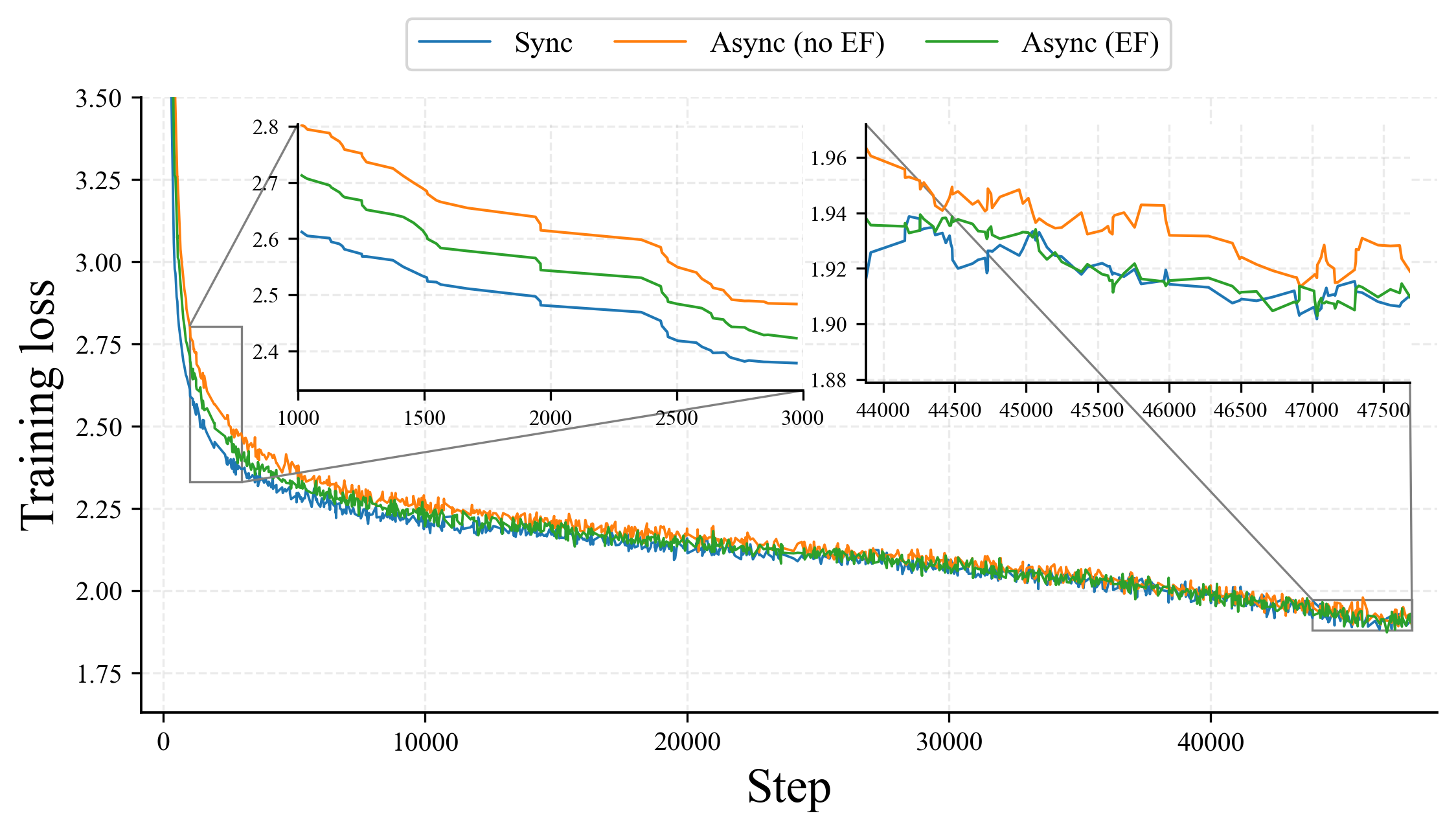
Fig 1: Training loss on a 10B MoE model trained for 200B
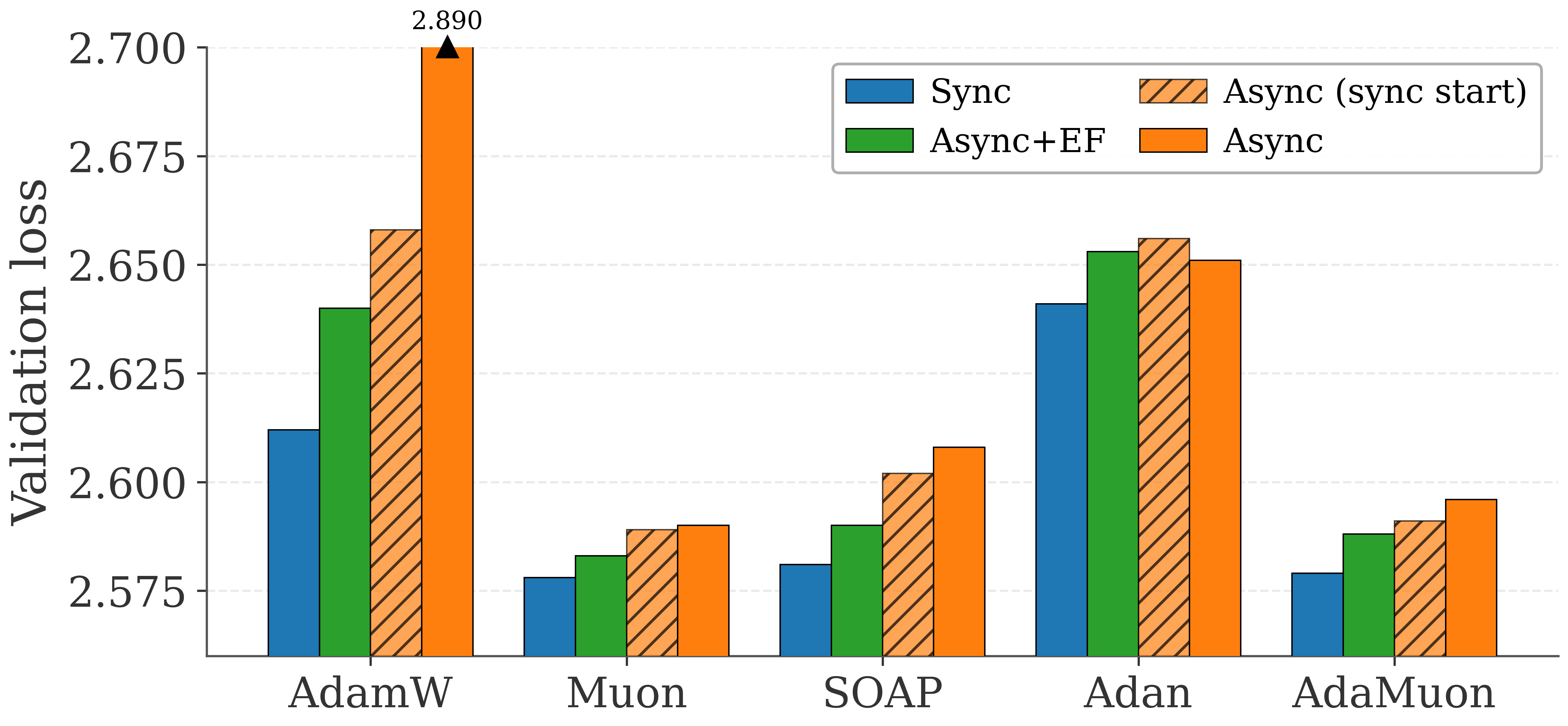
Fig 2: Validation loss of synchronous and one-step delayed op-
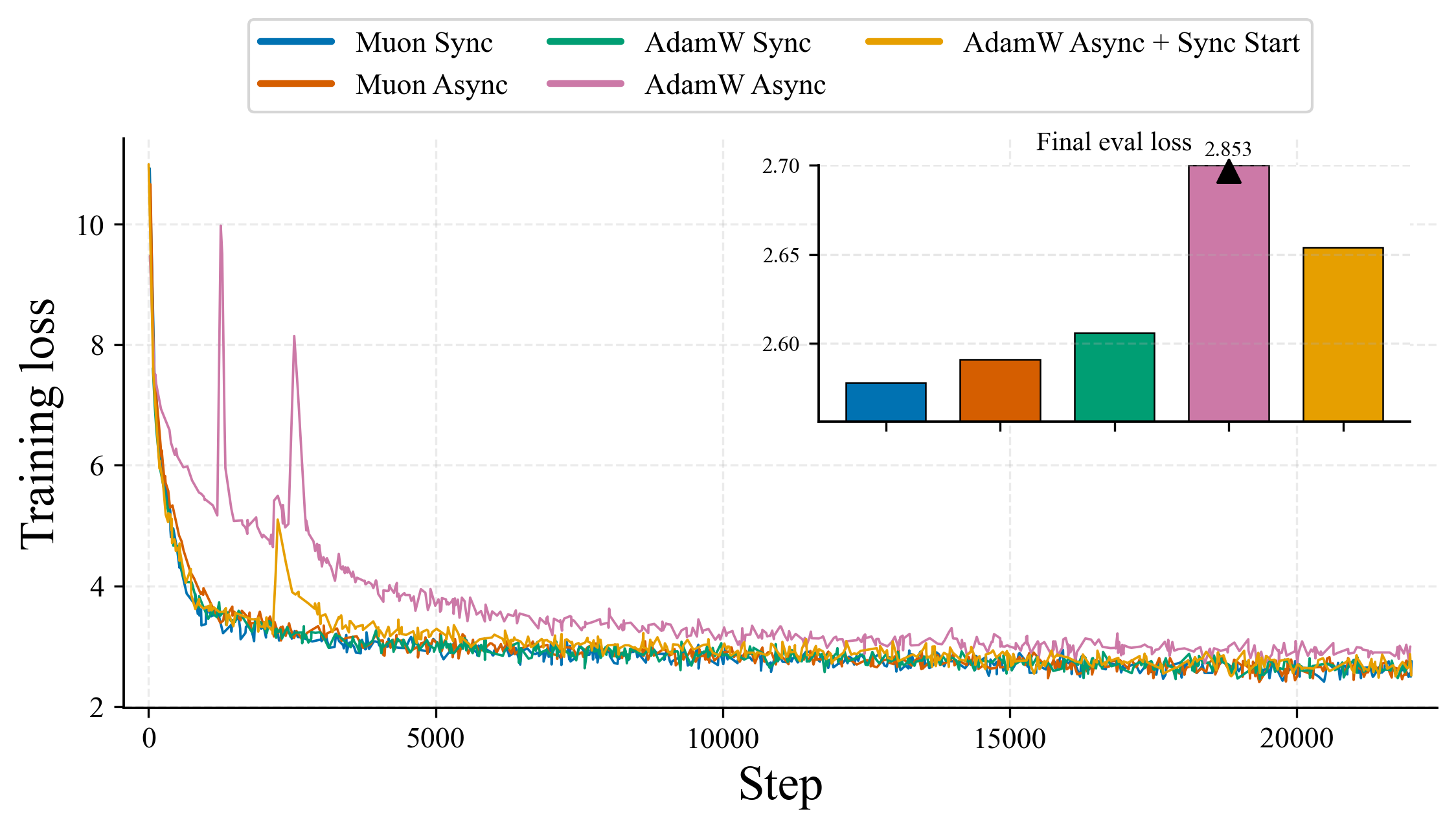
Fig 3: Synchronous and delayed AdamW and Muon training
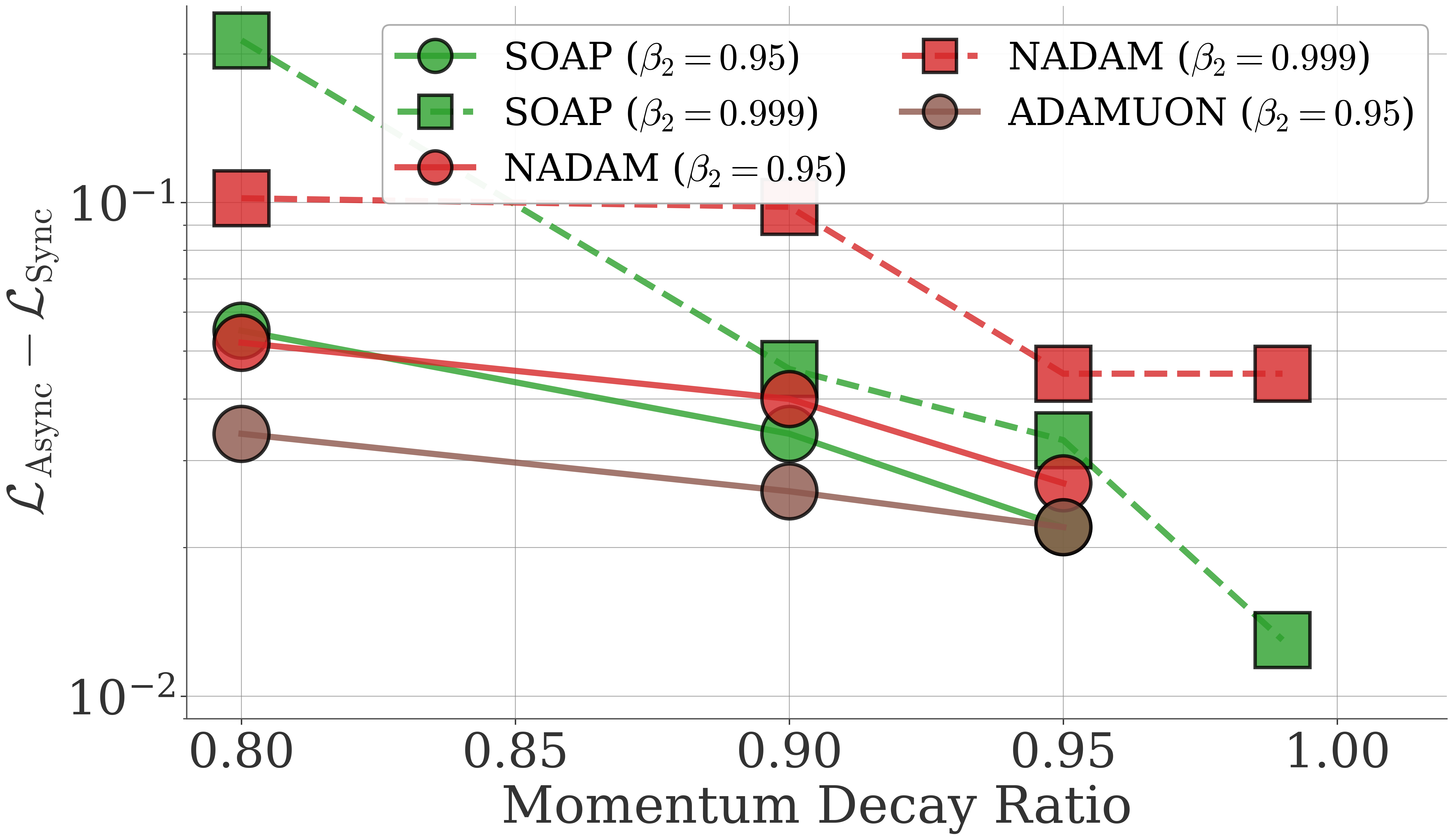
Fig 4: Final loss gap between synchronous and asynchronous training as a function of the momentum decay for various optimizers.
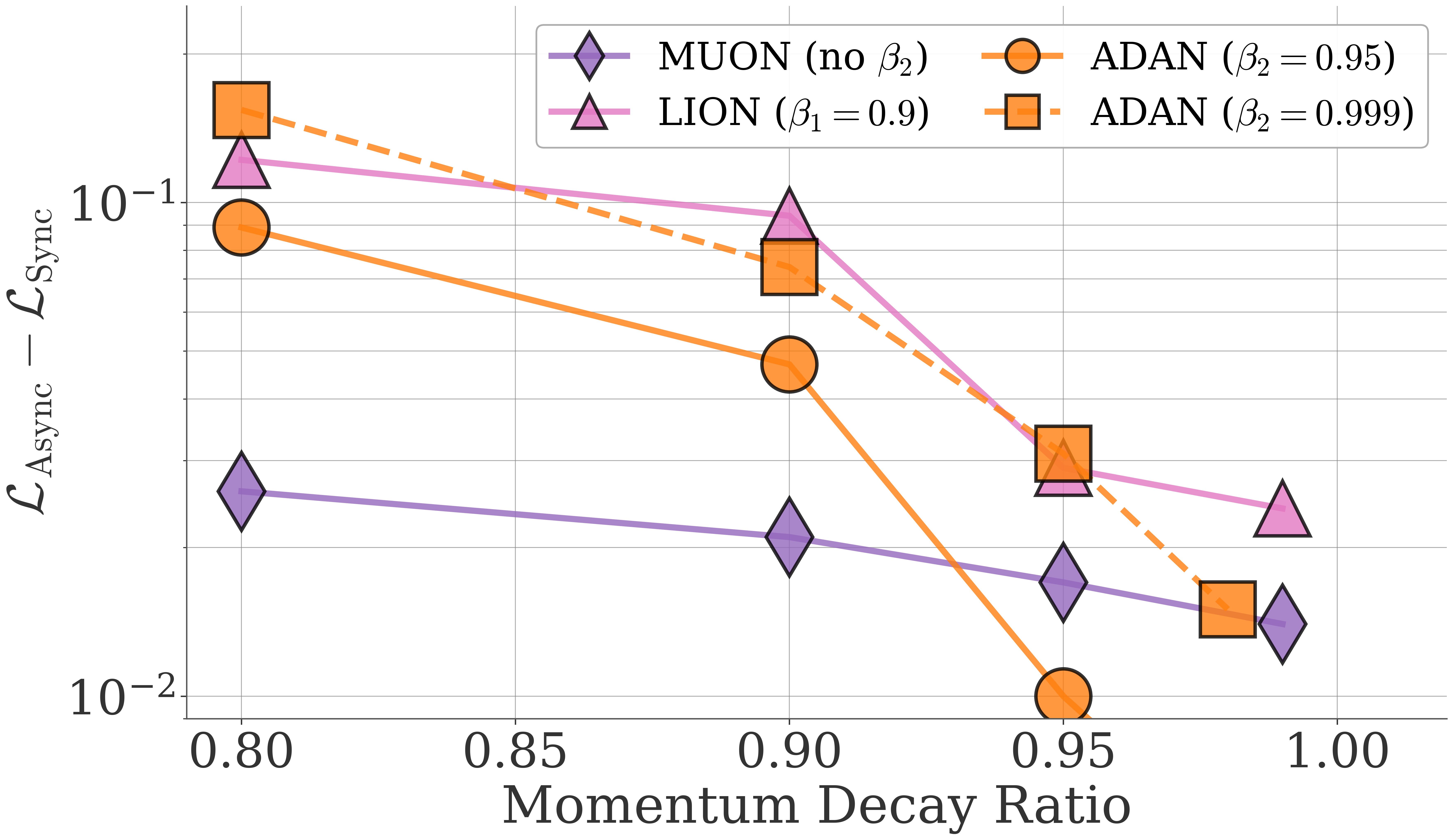
Fig 5 (page 5).
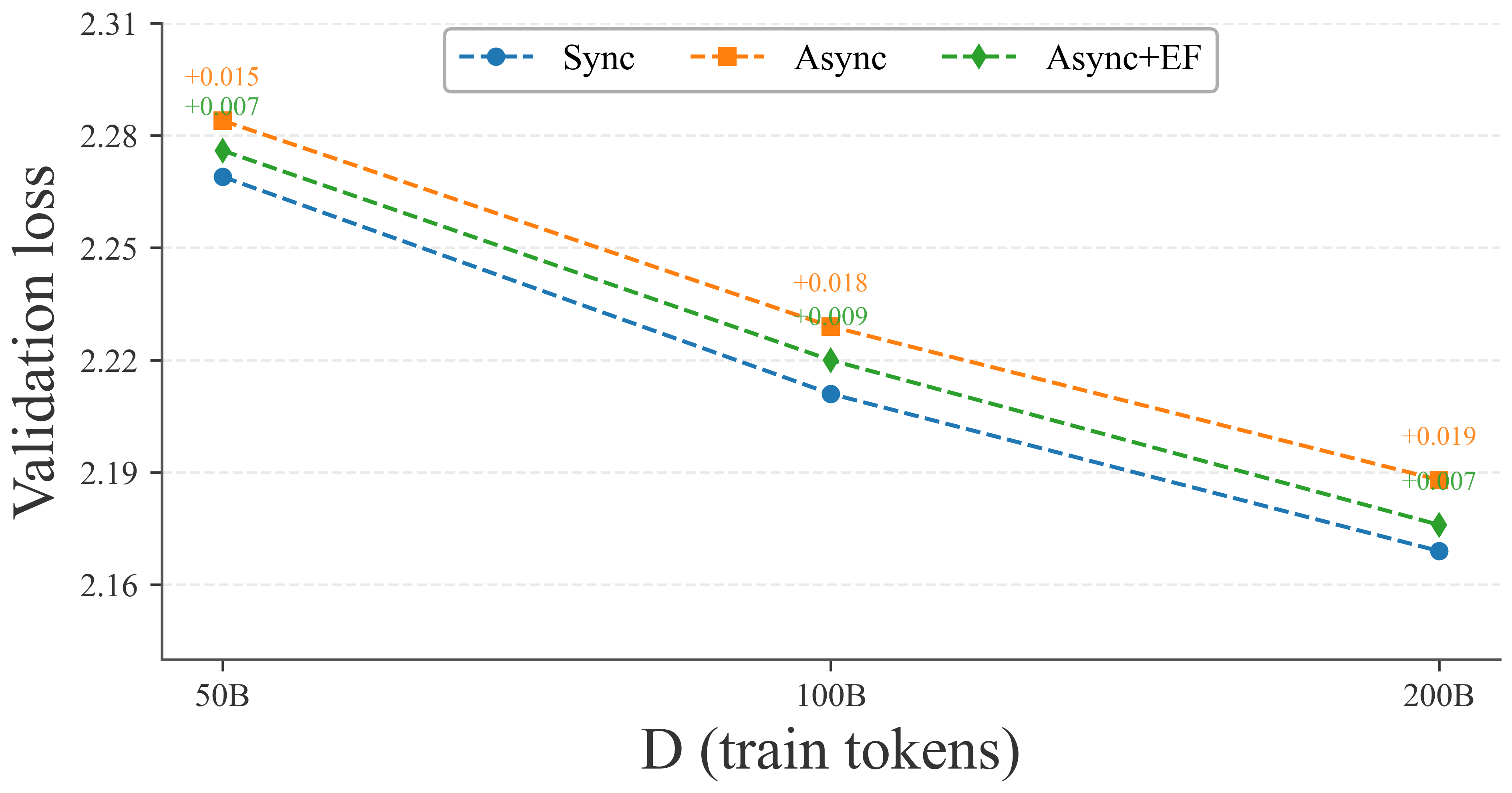
Fig 5: Validation loss of the 2B MoE model across train-
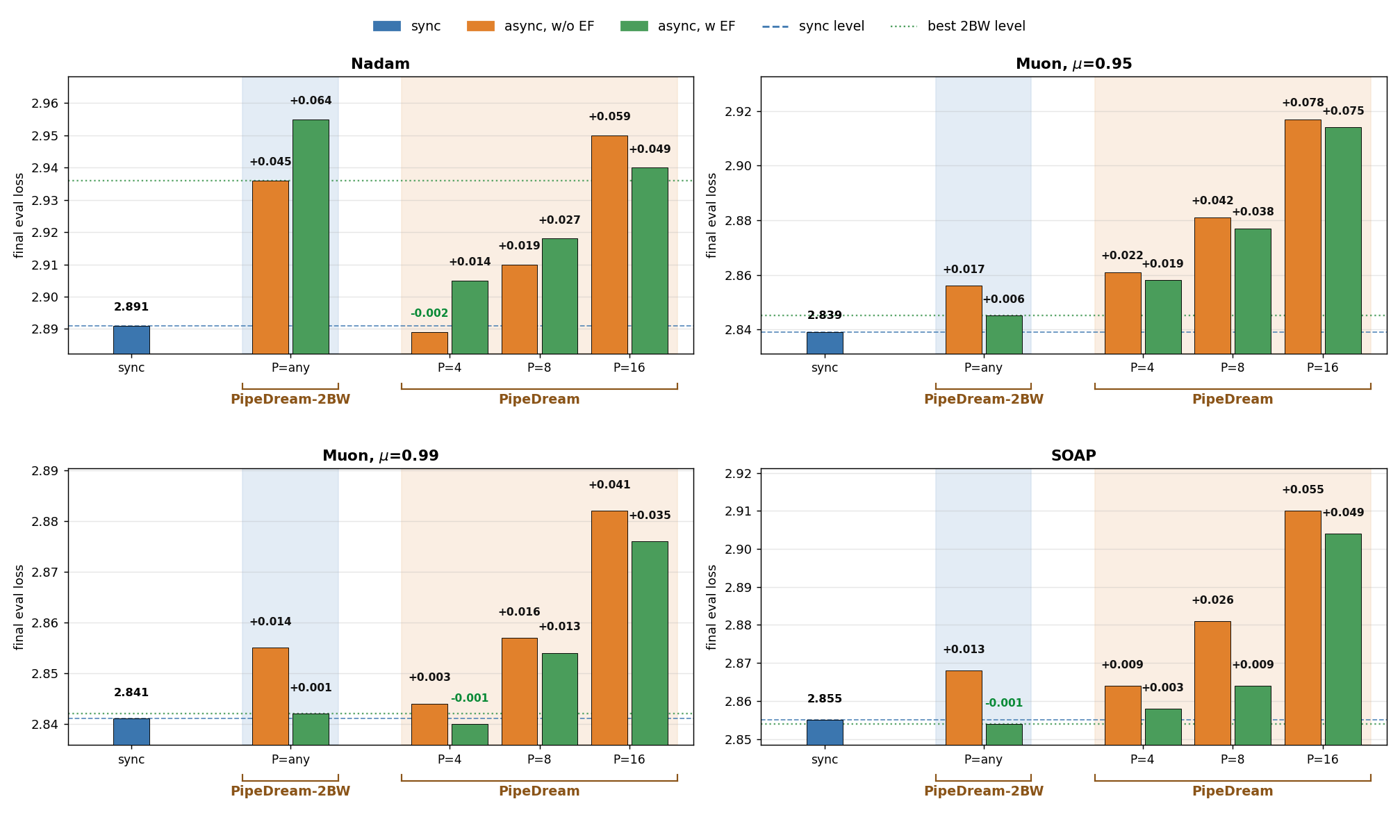
Fig 6: Comparison of synchronous training, PipeDream-2BW with constant one-step delay, and the original PipeDream schedule with
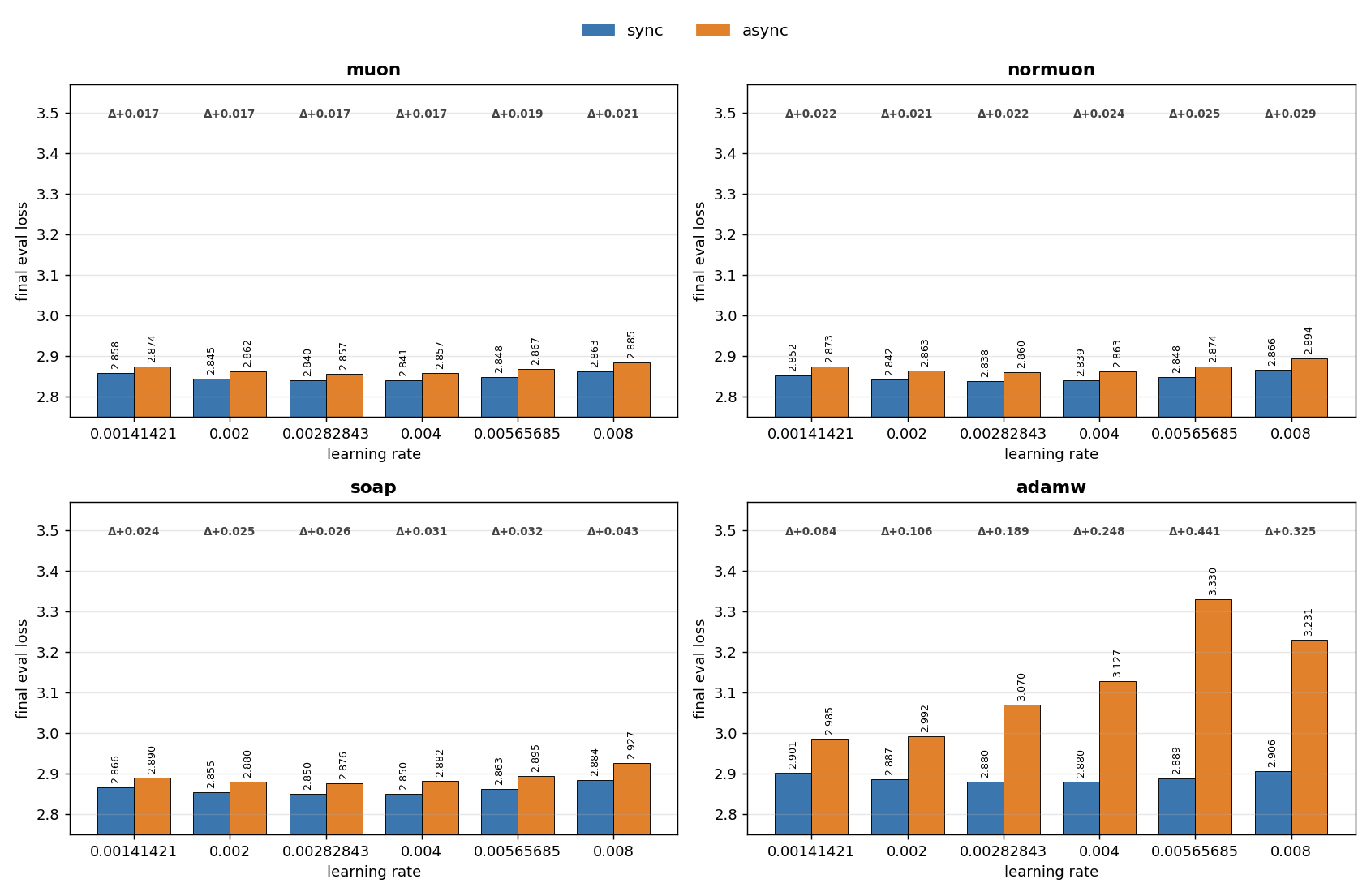
Fig 7: Effect of peak learning rate on synchronous and one-step delayed training on the 135M model. Bars show final validation loss,
Limitations
- Limited optimizer benchmarking at very large scale; large-scale experiments focus mainly on Muon optimizer.
- Lack of adversarial or worst-case analysis of gradient staleness impact; results are empirical and theoretical under standard smoothness/stochastic assumptions.
- Only one-step fixed delay considered; longer or variable delays common in other Async PP schedules are not addressed.
- Batch size constraints in practical training limit the ability to minimize sync-async gap purely by hyperparameter tuning.
- Error Feedback correction adds additional memory overhead equal to a full model copy, which could be challenging for extremely large models.
- Code and weights are not publicly released, potentially limiting reproducibility.
Open questions / follow-ons
- How do multiple-step or variable gradient delays affect optimizer robustness and can Error Feedback extensions handle these effectively?
- What are the detailed interactions between batch size scaling, learning rate schedules, and delay robustness in extremely large-scale distributed training?
- Can further optimizer designs or update rules improve robustness beyond Muon and Error Feedback for asynchronous pipeline LLM pretraining?
- How does staleness affect other modern LLM architectures such as dense vs MoE layers in heterogeneous pipelines?
Why it matters for bot defense
For bot-defense engineers focusing on CAPTCHA and bot detection system training pipelines, this work highlights that asynchronous pipeline parallelism—a technique to reduce idle GPU time and increase throughput—can be applied at large scale without sacrificing model quality, provided that the optimizer and training recipe are carefully chosen. Although largely orthogonal to CAPTCHA-specific modeling, understanding that one-step gradient delay isn’t intrinsically harmful enables more resource-efficient distributed training setups critical for rapid iteration and scaling of CAPTCHA classifiers or adversarial detection models. The Error Feedback correction offers a practical mitigation method to integrate Async PP into production training pipelines without retraining stability concerns.
Moreover, the paper’s insights about optimizer sensitivity to staleness could inform choices when deploying large-scale models in adversarial settings where training efficiency and robustness under delayed or partial updates may be relevant. Overall, the work supplies actionable guidance to reduce GPU underutilization while maintaining stable training dynamics, an essential balance when deploying computationally intensive bot-defense or CAPTCHA models.
Cite
@article{arxiv2606_30634,
  title={ One-Step Gradient Delay is Not a Barrier for Large-Scale Asynchronous Pipeline Parallel LLM Pretraining },
  author={ Philip Zmushko and Egor Petrov and Nursultan Abdullaev and Mikhail Khrushchev and Samuel Horváth },
  journal={arXiv preprint arXiv:2606.30634},
  year={ 2026 },
  url={https://arxiv.org/abs/2606.30634}
}