
Democapsid
Source: arXiv:2606.28969 · Published 2026-06-27 · By Daniel Antonio Negrón, Antoni Luque
TL;DR
Democapsid addresses a significant gap in structural virology and biotechnological modeling tools by enabling the generation and visualization of both quasi-spherical and elongated icosahedral viral capsids. While most viruses form quasi-spherical capsids with well-studied geometries, elongated capsids, which decouple width and length to allow precise control over packaging volume, have been understudied due to the lack of accessible, flexible computational tools. Democapsid introduces a comprehensive software suite implementing a mathematically grounded, generalized geometrical theory for capsid construction, supporting key parameters such as T-number (triangulation), Q-number (elongation), axial symmetries (5-fold, 3-fold, 2-fold), sphericity, and discrete body lengths to model both prolate (elongated) and oblate (flattened) capsids.
The result is a versatile framework provided as a JavaScript browser app, Python package (integrated as plugins into UCSF ChimeraX and Blender), and an R package, all under an MIT license with open-source code on GitHub. Democapsid uniquely includes numerical methods to construct 3- and 2-fold axis capsids, supports hierarchical SVG vector graphic exports for decomposable publication-quality figures, and tightly integrates theoretical capsid lattice parameters with intuitive visualization and export options. This tool enables both researchers and graphic designers to investigate, model, and effectively communicate capsid architectures—especially elongated types previously difficult to analyze—and may extend to other icosahedral-based biological compartments.
Key findings
- Democapsid supports generation of viral capsids across eight distinct icosahedral lattices with customizable parameters for T(h, k) and Q(H, K) numbers controlling quasi-spherical and elongated shapes.
- It introduces numerical methods (combined bracketing and bisection algorithms) to precisely solve for capsid coordinates involving 3- and 2-fold axial symmetries, previously unsolved analytically.
- The software enables discrete adjustments of capsid body length to model prolate (elongated) and oblate (shrunken) capsids with fine-grained control.
- Exported models can be saved as shareable links, JSON, CSV/TSV coordinate data, SVG vector graphics, or Blender scripts, supporting direct integration with visualization and publication workflows.
- Plugins for UCSF ChimeraX (v1.11.1) and Blender (≥v3.0) leverage the Python package backend to embed Democapsid-generated capsids in structural biology and artistic rendering platforms.
- The sphericity interpolation method smoothly morphs capsid surfaces between polygonal icosahedron and circumscribed spheres or cylinders depending on elongation and symmetry axis selected.
- Hierarchical grouping of lattice elements into SVG layers allows decomposable figures for detailed scientific illustration and annotation using common vector graphics software.
- Democapsid is the first tool to comprehensively implement and unify the generalized geometrical theory for elongated capsids with interactive, editable models and publication-ready visual output.
Methodology — deep read
Democapsid's methodology builds on a generalized geometrical model of viral capsids derived from the lattice theory of icosahedral symmetry. It models capsids as assemblies of triangular facets constructed by walks on hexagonal lattice primitives parameterized by discrete integers h, k (for cap facets) and H, K (for body facets), alongside turn direction (levo or dextro).
Threat Model & Assumptions: While not a security paper, the approach assumes biological capsids forming icosahedral symmetry with architectures governed by discrete lattice parameters. The tool targets researchers needing to model capsid geometry without adversarial context.
Data & Provenance: The inputs to Democapsid are user-controlled discrete lattice parameters and symmetry axes, not data-driven machine learning. Validation leverages known viral capsid structures documented in literature, including phage Enterobacteriophage T4 (e.g., T=13, Q=28).
Architecture / Algorithm: The core algorithm starts by analytically solving vertex coordinates for 5-fold symmetry capsid caps using lattice vectors and circumradius calculations. For the more complex 3- and 2-fold symmetries, Democapsid employs numerical methods that combine bracketing and bisection algorithms to solve folding constraints determining the positions of body facets relative to the cap.
It calculates intersections between caps and cylindrical or spherical bounding surfaces to form prolate or oblate bodies. Capsid vertices are interpolated from polygonal icosahedral shapes toward circumscribed spheres or cylinders to modulate sphericity. The software organizes generated geometry hierarchically into lattice primitives, facets, and capsids to facilitate vector graphics export and post-processing.
Training Regime: Not applicable; the software is deterministic and based on explicit geometric computations. The authors implemented multi-platform code in JavaScript (browser app), Python (CLI and ChimeraX/Blender plugins), and R (shiny app support), ensuring parameter consistency across implementations.
Evaluation Protocol: Validation includes reconstructing known capsid architectures such as Enterobacteriophage T4 and comparing generated coordinates to expected surface areas and triangulation numbers. Surface area error metrics assess deviation from ideal affine transformations, ensuring model fidelity. The tool exports multiple formats enabling integration with established molecular modeling (ChimeraX) and graphic design (Blender).
Reproducibility: The full source code is publicly available under the MIT license across GitHub repositories (democapsid, pydemocapsid, rdemocapsid, hkcage, blendocapsid). The browser app can run offline with all features intact. Data sets are not applicable as the tool generates synthetic geometry.
Example walkthrough: To generate a prolate capsid with 5-fold symmetry, the user inputs T(h=3, k=1) = 13 and Q(H=4, K=2) = 28 parameters indicating triangulation and elongation. The program computes hexagonal lattice vectors, solves analytically for cap vertex coordinates, then numerically determines body facet angles respecting cylindrical constraints around the elongation axis. Sphericity interpolation is applied to smooth the shape, and the resulting vertex coordinates are output as SVG for vector graphic editing or as JSON for import into ChimeraX or Blender plugins.
Technical innovations
- Numerical solution via combined bracketing and bisection algorithms for generating capsid vertices with 3- and 2-fold axis symmetries, where analytical solutions are infeasible.
- Parameterization and construction of discrete elongation steps along selectable axial symmetries (5-, 3-, 2-fold), enabling precise modeling of prolate and oblate capsid geometries distinct from prior quasi-spherical models.
- Hierarchical grouping of capsid facets and lattice primitives into SVG-compliant vector layers, allowing decomposable, scalable, and editable scientific figures.
- Cross-platform, multi-language implementation (JavaScript, Python, R) with tight integration into molecular visualization (ChimeraX) and graphic rendering (Blender) environments enhances usability and interoperability.
Baselines vs proposed
- FULLERENE software and Nanotube Modeler: lack viral capsid-specific parameters such as T-number, Q-number, and icosahedral lattice properties vs Democapsid: supports full parameterization of viral capsid geometry including elongation axis and sphericity.
- No quantitative benchmarking metrics provided against these general chemical modeling tools, but Democapsid uniquely supports virus capsid lattices and delivers publication-quality, editable vector images.
Figures from the paper
Figures are reproduced from the source paper for academic discussion. Original copyright: the paper authors. See arXiv:2606.28969.
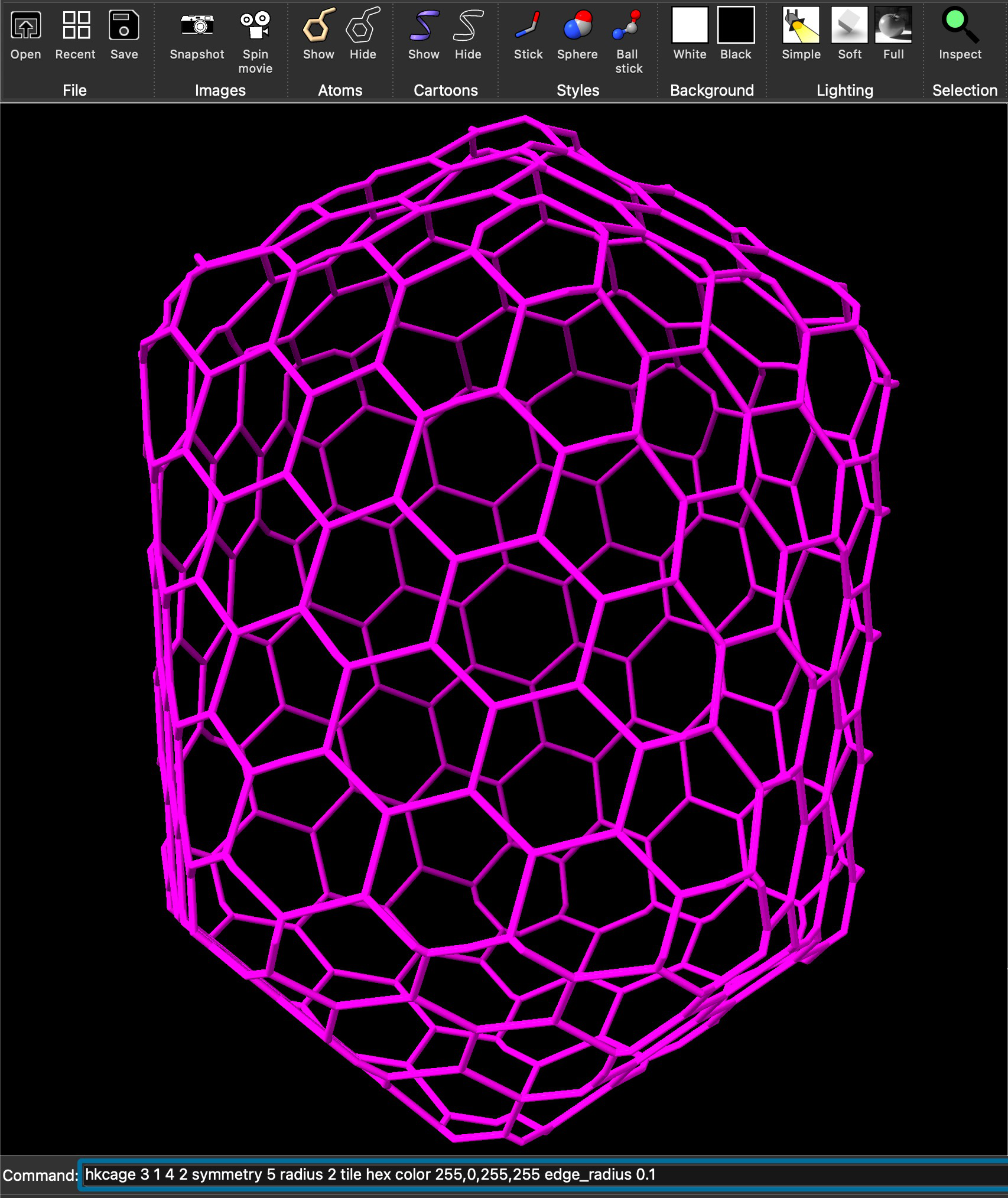
Fig 1: Democapsid software. The Democapsid JavaScript browser app (A) provides several modules to
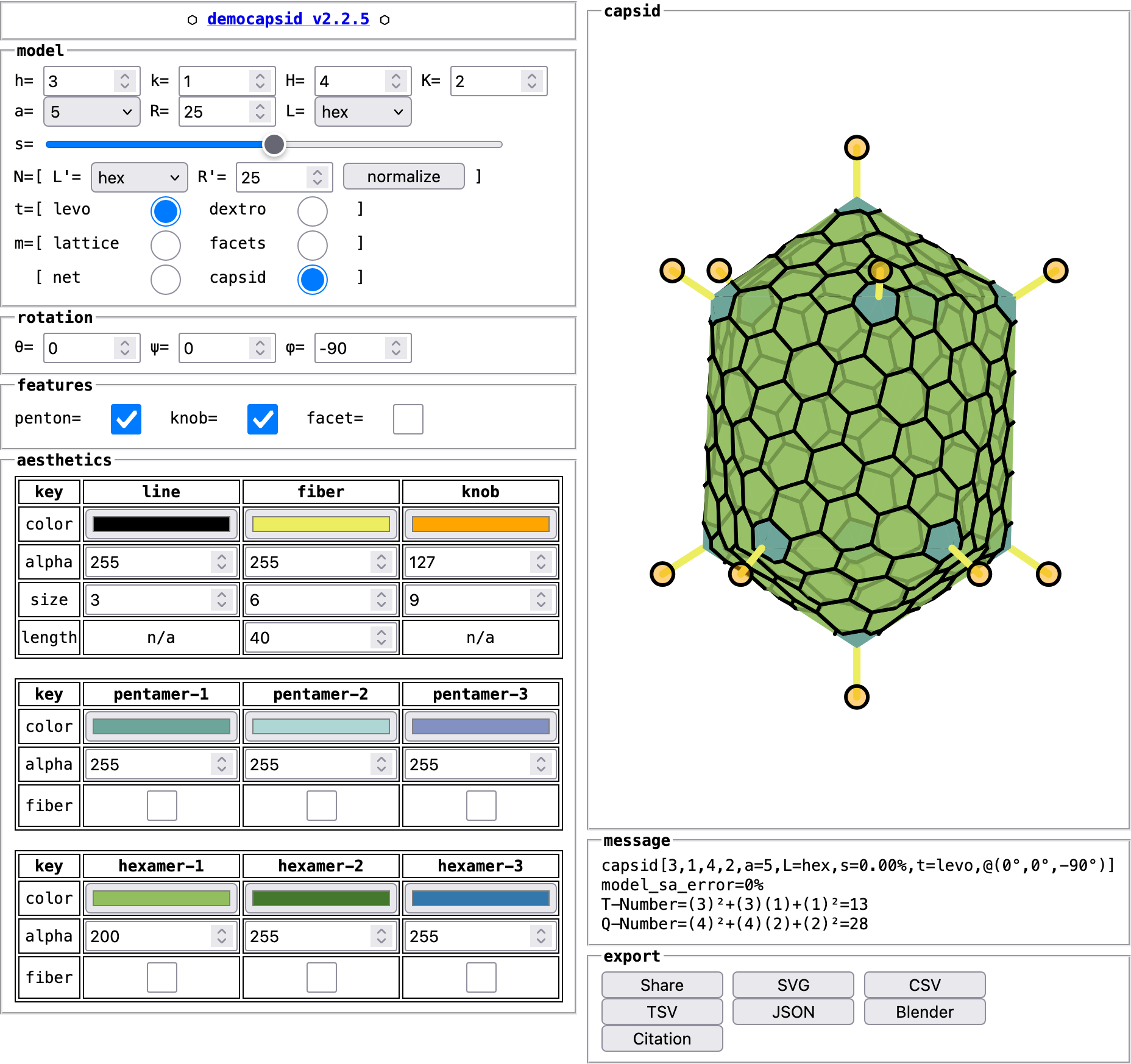
Fig 2: Capsid construction overview. A) The selected lattice primitive is a hexagon with a circumradius
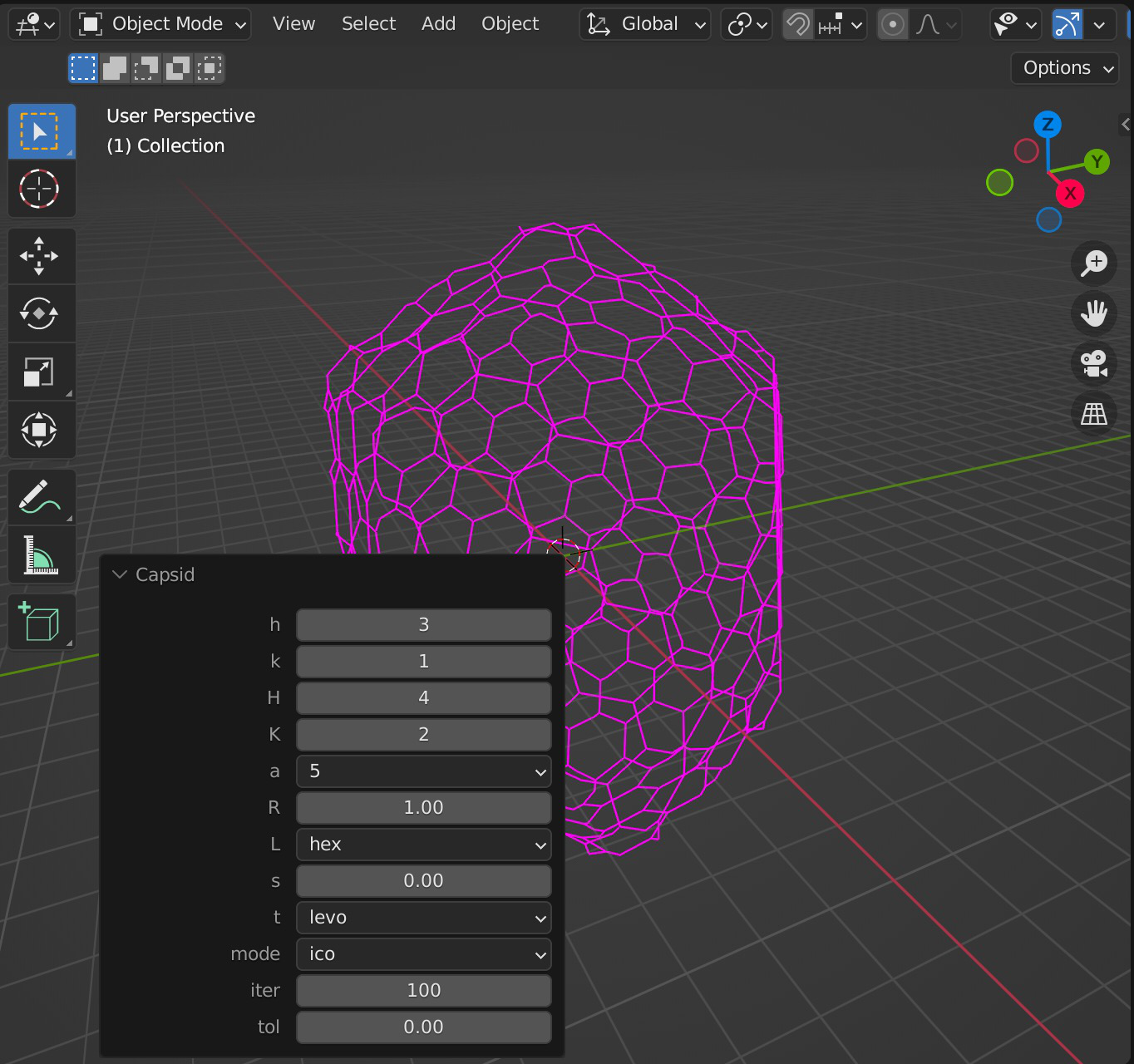
Fig 3 (page 3).
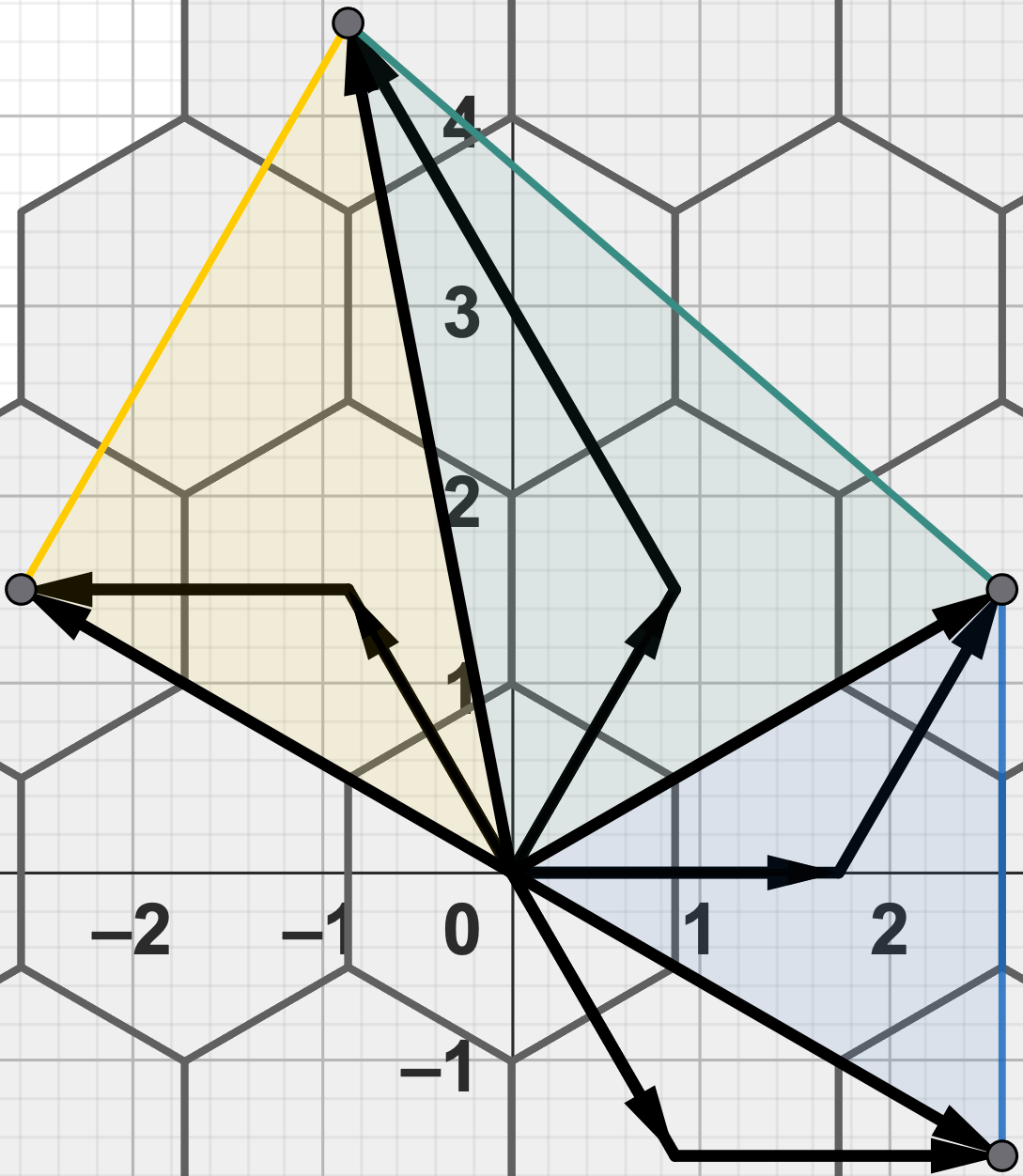
Fig 3: Axial construction summary. All constructions begin with the cap since the points are invariant.
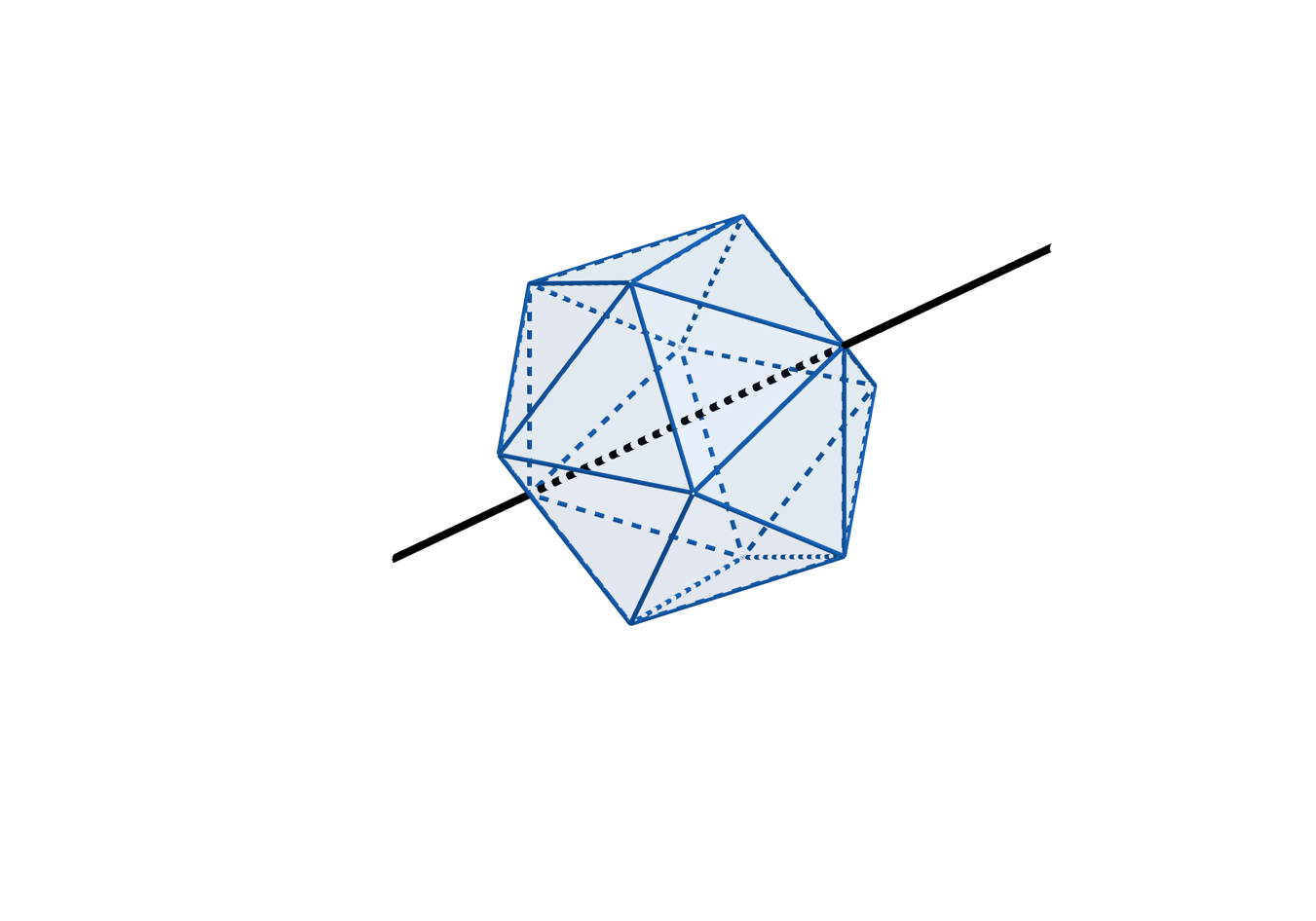
Fig 5 (page 5).
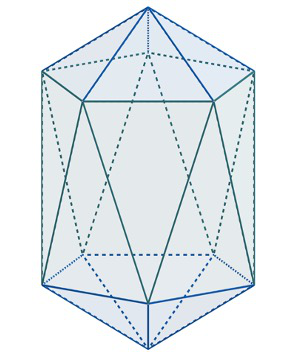
Fig 6 (page 5).
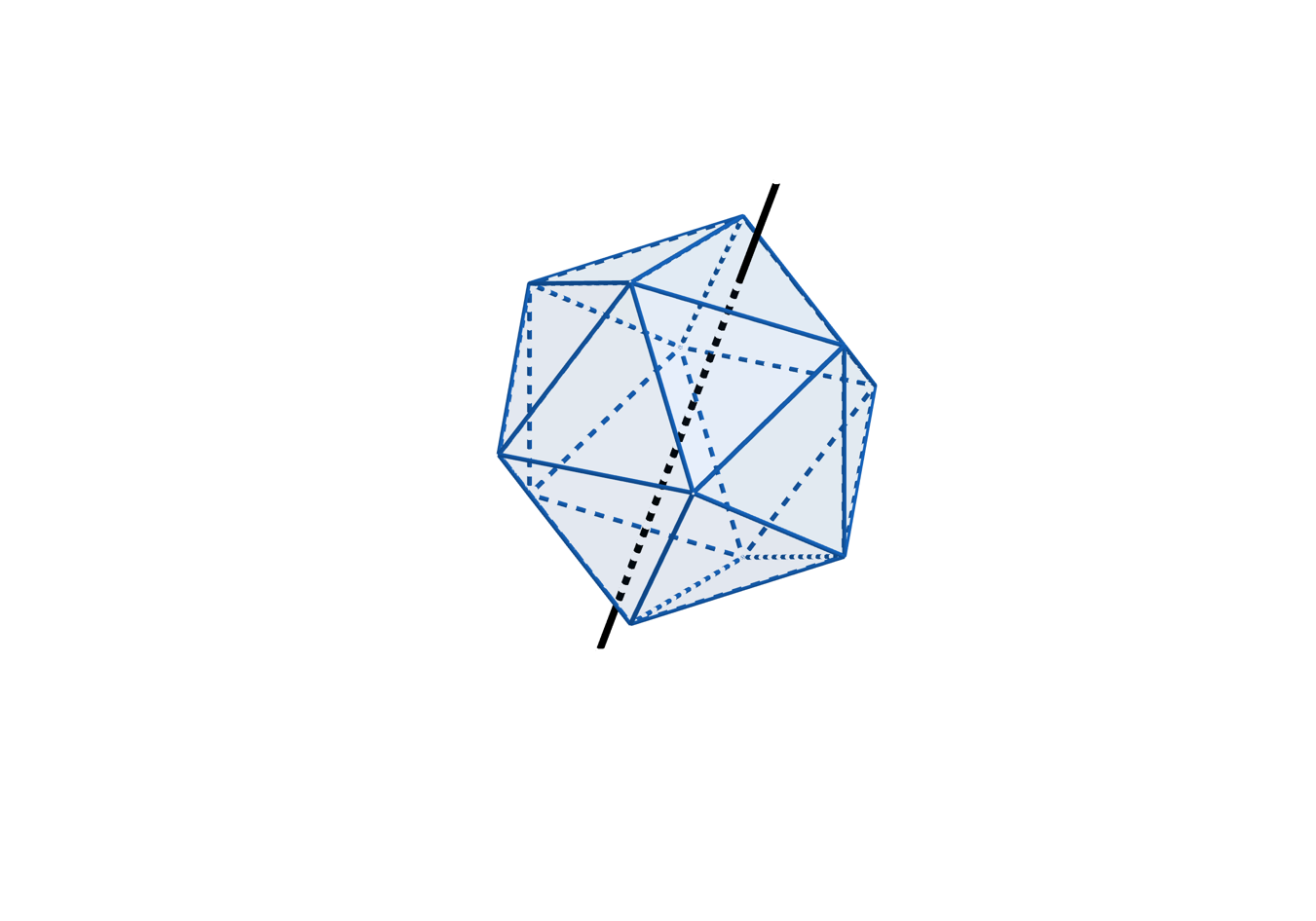
Fig 7 (page 5).
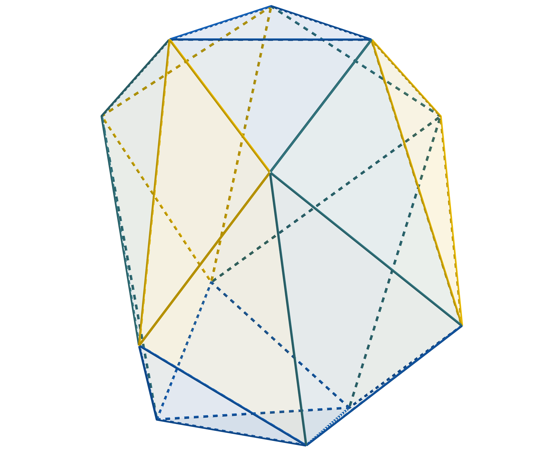
Fig 8 (page 5).
Limitations
- No adversarial or security threat evaluation since the tool is geometric modeling software rather than a bot-defense or CAPTCHA method.
- Numeric solution accuracy and potential distortion depend on convergence of bisection/bracketing methods; slight surface area errors (<not quantified>) may occur for some parameter combinations.
- Model validation appears limited to known capsid types (e.g., Enterobacteriophage T4); broader validation against diverse viral structures is not reported.
- No performance benchmarks on large capsid models or stress testing on extreme elongations; computational scalability is unclear.
- No experimental or cryo-EM data integration for model refinement; outputs are synthetic geometric constructs, not fitted structural models.
Open questions / follow-ons
- How well do generated Democapsid models correspond quantitatively with high-resolution experimental structures, especially for elongated capsids with unusual geometries?
- Can the numerical algorithms be optimized or approximated to support real-time interactive modeling and visualization of very large capsids or variants with heterogeneous protein tiles?
- What are the implications of finely tunable elongation parameters for understanding capsid assembly pathways and viral evolution dynamics?
- Could the software underpin automated design tools for engineering virus-like particles with custom cargo volumes for nanomedical applications?
Why it matters for bot defense
While Democapsid is primarily a structural biology tool for modeling viral capsids, its emphasis on mathematically rigorous geometric parameterization, numerical solution of folding constraints, and scalable vector graphics export offers conceptual parallels for CAPTCHA and bot-defense engineering in terms of generating robust, parameterized shapes. The hierarchical, decomposable SVG output and multi-platform integration might inspire techniques for generating complex, irregular challenge images that adapt smoothly in difficulty.
However, Democapsid does not address adversarial robustness or human interaction aspects critical in CAPTCHA design, nor does it involve classification of bot vs human responses. Bot-defense practitioners might study the methodological rigor in parameterizing discrete structural transformations—specifically, the enumeration and interpolation of constrained shapes with controlled symmetry—as a potential inspiration for generating resistant graphical puzzles that require spatial reasoning rooted in combinatorial geometry.
Cite
@article{arxiv2606_28969,
  title={ Democapsid },
  author={ Daniel Antonio Negrón and Antoni Luque },
  journal={arXiv preprint arXiv:2606.28969},
  year={ 2026 },
  url={https://arxiv.org/abs/2606.28969}
}