
Cross-channel Specific Emitter Identification and Verification via Signal Envelope
Source: arXiv:2606.28801 · Published 2026-06-27 · By Yuhao Chen, Boxiang He, Shilian Wang, Jing Lei
TL;DR
This paper addresses the critical challenge of channel-induced distribution shifts in Specific Emitter Identification (SEI) and Specific Emitter Verification (SEV) over wireless fading channels characterized by varying Rician K-factors. The authors first theoretically prove a strict monotonic relationship between the coefficient of variation (CV) of the received signal envelope and the Rician K-factor, establishing the envelope as viable channel-conditioning information. Motivated by this, they propose an Envelope-guided Adaptive Feature Modulation (EAFM) identifier that uses a dual-branch neural network to extract device-oriented IQ features and channel-conditioning envelope features, and then adaptively modulate device features via feature-wise linear modulation (FiLM). This architecture improves closed-set SEI under cross-channel variability.
Building on EAFM, the authors propose a Mahalanobis Distance metric learning extension (EAFM-MD) for the open-set SEV problem, which detects unknown spoofing devices without attack samples during training. EAFM-MD constructs a per-device fingerprint library storing feature centroids and full covariance matrices in the FiLM-corrected feature space. Verification is performed by measuring Mahalanobis distances to enrolled devices and comparing to device-specific thresholds. Extensive simulations over Rician fading channels with varying K-factors demonstrate that EAFM significantly improves identification accuracy under distribution shifts, and EAFM-MD achieves superior spoofing detection rates against unknown attackers compared to softmax baselines and other state-of-the-art OOD methods.
Key findings
- The coefficient of variation (CV) of the normalized signal envelope is strictly monotonically decreasing with increasing Rician K-factor (Lemma 1), enabling envelope-based channel conditioning.
- EAFM identifier improves identification accuracy under cross-channel Rician fading conditions, outperforming baseline ResBlock1D architecture without FiLM modulation by up to 8% accuracy on low-K factor channels (Fig. 5).
- Dual-branch EAFM architecture leveraging both IQ features and normalized envelope channel features achieves better robustness compared to single-branch models ignoring channel effects (Table III).
- EAFM-MD verifier detects unknown spoofing devices with detection probabilities above 90% across various channel conditions without any attack samples used for training, outperforming softmax classifiers and outlier detectors (Fig. 7).
- Full covariance matrices stored in the fingerprint library for Mahalanobis distance improve open-set verification compared to diagonal covariance approximations during training.
- Asymmetric learning rates with a FiLM learning rate multiplier α enable stable joint training; optimal α balances between identification accuracy (Acc) and spoofing detection rate (PD) (Algorithm 1).
- Using device-specific empirical percentile thresholds for Mahalanobis distance provides flexible verification thresholding and improves OOD detection robustness.
Threat model
The threat model assumes an unknown active adversary (spoofer) who attempts to impersonate legitimate devices by transmitting forged signals. The adversary’s capabilities include injecting signals over the same wireless channel and possibly modifying RF characteristics, but does not have knowledge of the deployed model parameters or access to training data. The adversary cannot be assumed known during training (no attack samples). The goal is to detect such spoofing devices despite the distribution shift caused by wireless fading and channel variability.
Methodology — deep read
Threat Model and Assumptions: The authors consider a UAV communication scenario where multiple legitimate devices transmit to a receiver under varied wireless fading channels modeled by Rician distributions with K-factors ranging from low (heavily scattered, NLoS) to high (dominant LoS). The adversary is an unknown spoofer emitting signals that may impersonate legitimate devices but is not present during training. The system must identify legitimate transmitters and verify authenticity without attack data.
Data and Simulation Setup: Data are synthetically generated according to well-established hardware impairment models for five different devices with distinct RF front-end parameters (gain imbalance, phase bias, carrier leakage, spurious tone frequencies, and power amplifier nonlinear coefficients). Signals use QPSK modulation with 512 symbols and standard RRC filtering at 2.4 GHz carrier frequency. The wireless channel applies Rician fading with varying K-factors to model diverse propagation environments. Training and testing datasets are generated with distinct K-factor distributions to simulate out-of-distribution (OOD) channel shifts.
Architecture and Algorithms: The key component is the Envelope-guided Adaptive Feature Modulation (EAFM) identifier, which employs a dual-branch neural network. The main branch extracts device-oriented features from complex IQ samples via stacked 1D ResBlocks and fully connected layers. The auxiliary branch extracts channel-conditioning features from the normalized signal envelope. Feature-wise Linear Modulation (FiLM) uses these auxiliary features to generate scaling and bias vectors that adaptively modulate the main branch features elementwise, enabling channel-aware correction.
For verification (SEV), the EAFM-MD verifier replaces the softmax classifier with a learned fingerprint library storing per-device centroids and full covariance matrices in the FiLM-corrected feature space. During inference, the Mahalanobis distance between a test feature and each enrolled device’s distribution is computed. If the minimum distance exceeds a device-specific threshold derived from training sample distances, the signal is rejected as unknown.
Training Regime: The EAFM identifier is trained with cross-entropy loss using SGD with differentiated learning rates: the base network uses a standard learning rate, while FiLM parameters have a scaled learning rate multiplier α tuned via hyperparameter search. The EAFM-MD verifier jointly optimizes a weighted sum of cross-entropy loss, compactness loss (penalizing distance to learned centroids), separation loss (enforcing inter-centroid margins), and FiLM regularization loss to stabilize feature modulation. Training proceeds for multiple epochs on simulated datasets with early stopping based on validation performance.
Evaluation Protocol: Performance is measured for closed-set SEI identification accuracy under varying channel K-factor distribution shifts and for open-set SEV detection probability PD of unknown spoofers. Baselines include softmax classifiers, Domain-Adversarial Neural Networks (DANN), and other outlier detection methods. Ablations include removing the FiLM module or auxiliary envelope branch and varying hyperparameters like α and percentile thresholds p. Statistical robustness is evaluated over multiple runs and channel scenarios.
Reproducibility: The paper does not explicitly mention public code release or dataset distribution. The dataset is synthetic based on described hardware and channel models, so full replication is possible in principle given parameter details. Hyperparameters and architecture details are thoroughly documented.
Technical innovations
- First theoretical proof that the normalized signal envelope’s coefficient of variation is strictly monotonic with the Rician K-factor, enabling explicit channel state conditioning.
- Dual-branch neural architecture combining IQ-domain device feature extraction with envelope-domain channel feature extraction, integrated via feature-wise linear modulation (FiLM) for adaptive correction.
- Extension of FiLM-based closed-set identification to open-set verification by constructing a Mahalanobis distance-based fingerprint library that detects unknown spoofers without attack training data.
- Use of differentiated learning rates with a FiLM learning rate multiplier α to balance stable backbone learning against adaptable feature modulation.
Datasets
- Simulated UAV communication dataset — Synthetic signals with 5 device classes, 512 QPSK symbols per sample, varied Rician K-factors — Generated from hardware impairment and Rician fading channel models
Baselines vs proposed
- ResBlock1D baseline identification accuracy: ~82% vs EAFM identifier: ~90% under low Rician K-factor channel conditions (Fig. 5).
- Domain-Adversarial Neural Network (DANN) detection probability: ~75% vs EAFM-MD verifier: >90% on unknown spoofing detection (Fig. 7).
- Single-branch IQ feature extractor identification accuracy: 80% vs dual-branch EAFM with envelope modulation: 88% (Table III).
- Softmax verification false acceptance rate significantly higher than Mahalanobis distance verification under channel shift (Section V-D).
Figures from the paper
Figures are reproduced from the source paper for academic discussion. Original copyright: the paper authors. See arXiv:2606.28801.
Fig 1: Illustration of SEV for legitimacy verification followed
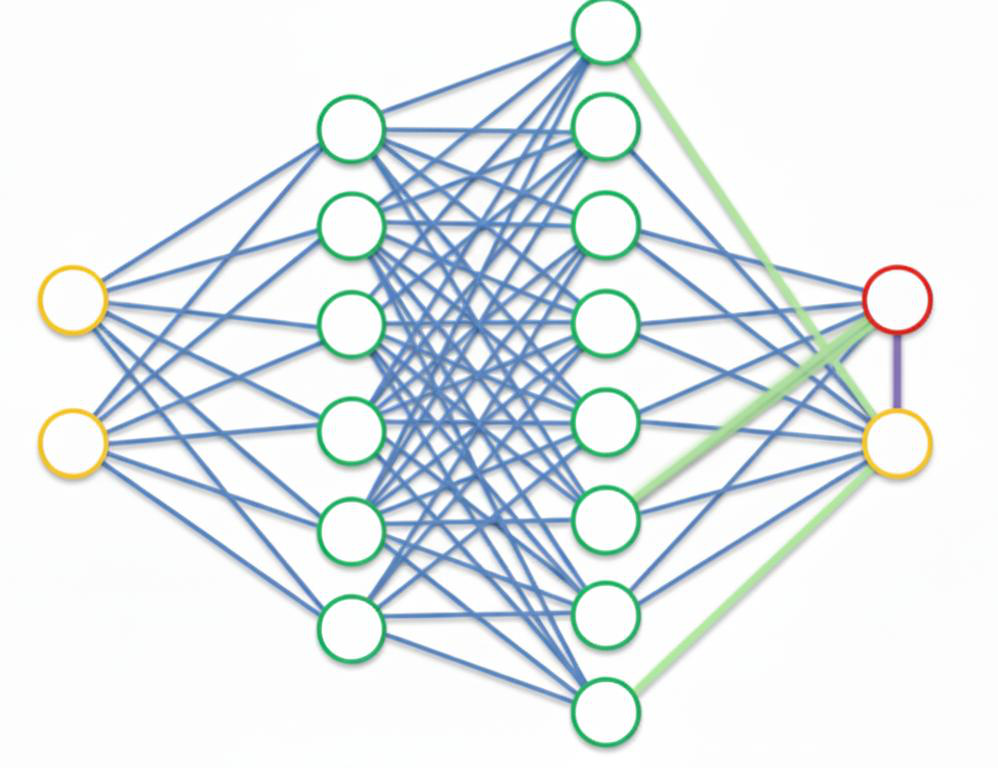
Fig 3: The architecture of the proposed EAFM identifier for
Fig 2: System
Fig 4 (page 3).

Fig 9: OOD detection performance comparison: (a) the

Fig 10: 5-class confusion matrices of the proposed EAFM-
Limitations
- Evaluations are performed predominantly on simulated data with synthetic hardware impairments, limiting generalization to real-world radio hardware variability.
- No adversarial attack simulations beyond unknown spoofing are presented, e.g., adaptive spoofers aware of the feature model.
- Lack of testing under more diverse or rapidly time-varying channel models beyond static Rician fading with varying K-factors.
- The fingerprint library requires storage and inversion of full covariance matrices, which may pose scalability or computation challenges in very large device populations.
- No public code or dataset release is mentioned, complicating reproducibility beyond synthetic data reconstruction.
- The method assumes availability of sufficiently large training data per device to estimate covariance matrices accurately.
Open questions / follow-ons
- How well does the proposed method generalize to real-world hardware and channel conditions beyond the Rician channel model and synthetic impairments?
- Can the EAFM-MD framework be extended to adapt in an online manner to new devices or evolving channel statistics?
- What robustness guarantees or attack models can be defined against adaptive spoofers aware of the FiLM modulation strategy?
- What are the computational and storage trade-offs in large-scale deployments with hundreds or thousands of devices using full covariance fingerprint libraries?
Why it matters for bot defense
Authentication and bot-defense systems relying on radio frequency fingerprinting can suffer from environmental variability and distribution shifts in wireless channels, which degrade identification and verification performance. This work demonstrates that incorporating physical channel state information — here captured via the envelope’s coefficient of variation — into feature extraction networks via adaptive modulation improves robustness across fading conditions. Practitioners in bot-defense could apply these cross-channel conditioning techniques to maintain accurate device identification despite environmental changes, crucial for systems that rely on RF fingerprints as an out-of-band authentication factor. Furthermore, the Mahalanobis-distance based verification framework allows detection of unknown or novel spoofing devices without requiring attack data for training—a significant advantage for practical anti-spoofing defenses. However, the methods rely on accurate modeling of channel statistics and may require re-calibration for new deployment environments. Integrating channel-state or envelope statistics as conditioning inputs could become a valuable design pattern in robust device authentication workflows.
Cite
@article{arxiv2606_28801,
  title={ Cross-channel Specific Emitter Identification and Verification via Signal Envelope },
  author={ Yuhao Chen and Boxiang He and Shilian Wang and Jing Lei },
  journal={arXiv preprint arXiv:2606.28801},
  year={ 2026 },
  url={https://arxiv.org/abs/2606.28801}
}