
Efficient Approximation of the Wigner Kernel in Phase-Space Quantum Mechanics
Source: arXiv:2606.28269 · Published 2026-06-26 · By Mehran Attar, Bassant Selim, Jean Michel Sellier
TL;DR
This paper addresses a key computational bottleneck in the Signed Particle Formulation (SPF) of quantum mechanics—the evaluation of the Wigner kernel. The Wigner kernel is central to the stochastic creation of signed particles representing quantum dynamics in phase space, but its exact computation involves highly oscillatory integrals that are costly to evaluate numerically, especially in time-dependent and large-scale simulations. The authors propose an analytical approximation for the Wigner kernel applicable to one-dimensional single-body quantum systems by leveraging a series expansion (Maclaurin series) of the potential function. Retaining only the leading odd derivative term, they derive a closed-form approximation expression that bypasses expensive numerical integration and efficiently estimates the kernel and the associated Gamma function that governs particle creation probabilities.
Through extensive numerical experiments on single, double, triple, and quadruple Gaussian potential profiles, the approximation closely matches the exact Wigner kernel and Gamma functions in key behaviors while substantially reducing execution time—often by an order of magnitude or more across phase-space grid sizes. The work thus offers a practical tradeoff, maintaining sufficient accuracy for Monte Carlo simulations based on the SPF while significantly improving computational efficiency. This approximation enables more scalable quantum simulations within the SPF and Wigner Monte Carlo frameworks. The authors outline future directions to extend their method to multi-dimensional and many-body quantum systems.
Key findings
- The proposed analytical approximation captures the dominant behavior of the exact Wigner kernel and Gamma function for various Gaussian potentials (single to quadruple), as shown in Figures 3-13.
- Execution time for computing the Wigner kernel over 1000 runs is reduced from up to 26 ms (numerical) to under 0.07 ms (analytical) for 200 spatial cells (Table 1 vs Table 2).
- The method uses only the first odd term (n=1) from the Maclaurin series expansion of the potential function difference, simplifying the integral to a closed form.
- The analytical expression for the Wigner kernel is given by V'(x)/[2π(ħk)^2] * sin(2kx) for momentum p=ħk, applicable to Gaussian and related potential functions (Equation 12 and 14).
- Approximate Gamma functions derived from the analytical kernel closely follow the numerical ones, preserving key symmetries such as γ(x) = γ(-x).
- Approximation errors in the kernel have limited impact on Monte Carlo simulations, since they are statistically averaged sampling procedures inherently tolerant to moderate errors.
- The annihilation technique in SPF, which removes particles with opposing signs in the same phase-space cell, improves computational feasibility for millions of particles.
Methodology — deep read
Threat Model & Assumptions: The signed particle formulation assumes quantum systems represented as ensembles of signed classical particles evolving in phase space under a given potential V(x). The adversary here is not defined since it is a simulation method, but computational complexity is the main challenge addressed. The computation of the Wigner kernel (an integral involving V(x)) is expensive due to its oscillatory nature.
Data & Problem Setup: The authors tested their approximation on 1D quantum systems characterized by various Gaussian-based potential profiles—single, double, triple, and quadruple Gaussian functions. The potentials have explicit analytical forms (Equations 15-18). The phase-space grid is discretized with position x and momentum p grid steps defined by parameters including ħ and system length LX = 200 nm. No external dataset is used as the problem is mathematical/physical simulation.
Architecture & Algorithmic Novelty: The core novelty is a novel analytical approximation of the Wigner kernel. The Wigner kernel involves the integral of V(x+x') - V(x-x') multiplied by a sinusoidal kernel. The authors exploit the Maclaurin series expansion of this difference, noting only odd derivatives survive. Truncating at the first odd term (the first derivative), the integral becomes tractable and leads to a closed-form expression: V_W(x,p) ≈ V'(x) / [2π p^2] * sin(p^2 T / ħ m) (Equation 12) or rewritten in terms of ħ k momentum as V'(x) / [2π (ħ k)^2] * sin(2 k x).
This avoids direct numerical evaluation of oscillatory integrals.
Training Regime: Not applicable; this is an analytical approximation evaluated via numerical experiments.
Evaluation Protocol: The authors numerically compute both the exact Wigner kernel via integral (Equation 3) and the approximate analytical formula for each Gaussian potential type. They then compute the Gamma function γ(x), which governs stochastic particle creation, from these kernels (Equation 1). They visually and quantitatively compare the kernel shapes, Gamma functions, and symmetry properties (e.g., γ(x) = γ(-x)). Average execution times for computing the kernel over 1000 runs are measured for different phase-space grid sizes N_x ranging 50 to 500. Figures 3-13 illustrate kernel and Gamma function comparisons; Tables 1-2 document timing.
Reproducibility: Code and data are not publicly released. The method is clearly described analytically to be reproducible by readers possessing the Wigner-SPF background. No frozen weights or datasets exist as the work is analytical/numerical.
Example end-to-end: For the single Gaussian potential V(x) = V_max * exp(- (x - center)^2 / 2σ^2), the exact Wigner kernel is computed by numerically integrating Equation (3). The approximation uses Equation (12) with the derivative V'(x) analytically computed. Both kernels are evaluated over x and p grids; Gamma function γ(x) is obtained integrating positive parts of V_W over momentum. Accuracy is assessed visually (Fig 3 and 4) and timing quantifies efficiency gains.
Technical innovations
- Analytical approximation of the Wigner kernel using only the leading odd derivative term of the potential's Maclaurin series expansion, enabling closed-form kernel estimation.
- Closed-form formula for the Wigner kernel as V'(x)/(2π (ħ k)^2) sin(2 k x), significantly simplifying the previously oscillatory integral form.
- Demonstration that the approximation preserves critical phase-space structure and Gamma function symmetry necessary for the Signed Particle Formulation.
- Empirical validation across multiple Gaussian potential configurations showing the approximation’s accuracy and significant runtime improvements.
Baselines vs proposed
- Numerical Wigner kernel computation: average execution time up to 26 ms (N_x=200) vs proposed analytical method: 0.067 ms (Table 2 vs Table 1).
- Numerical Gamma function vs analytical Gamma function: visually close match across single, double, triple, quadruple Gaussian potentials (Figures 4, 7, 10, 13).
Figures from the paper
Figures are reproduced from the source paper for academic discussion. Original copyright: the paper authors. See arXiv:2606.28269.

Fig 1: Annihilation of particles: In region (1), one positive
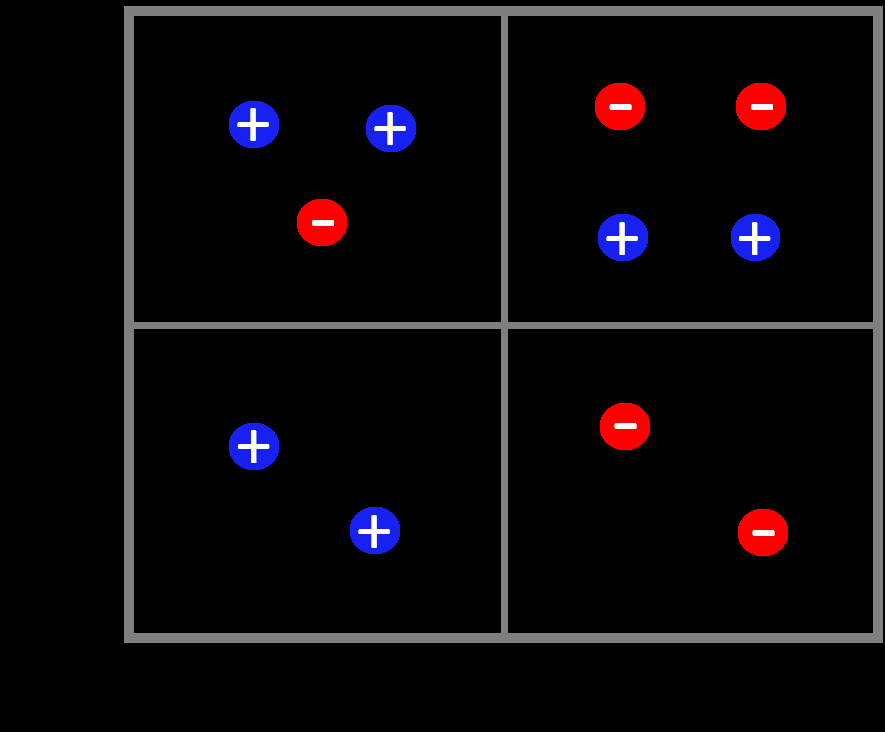
Fig 2: Single Gaussian potential function
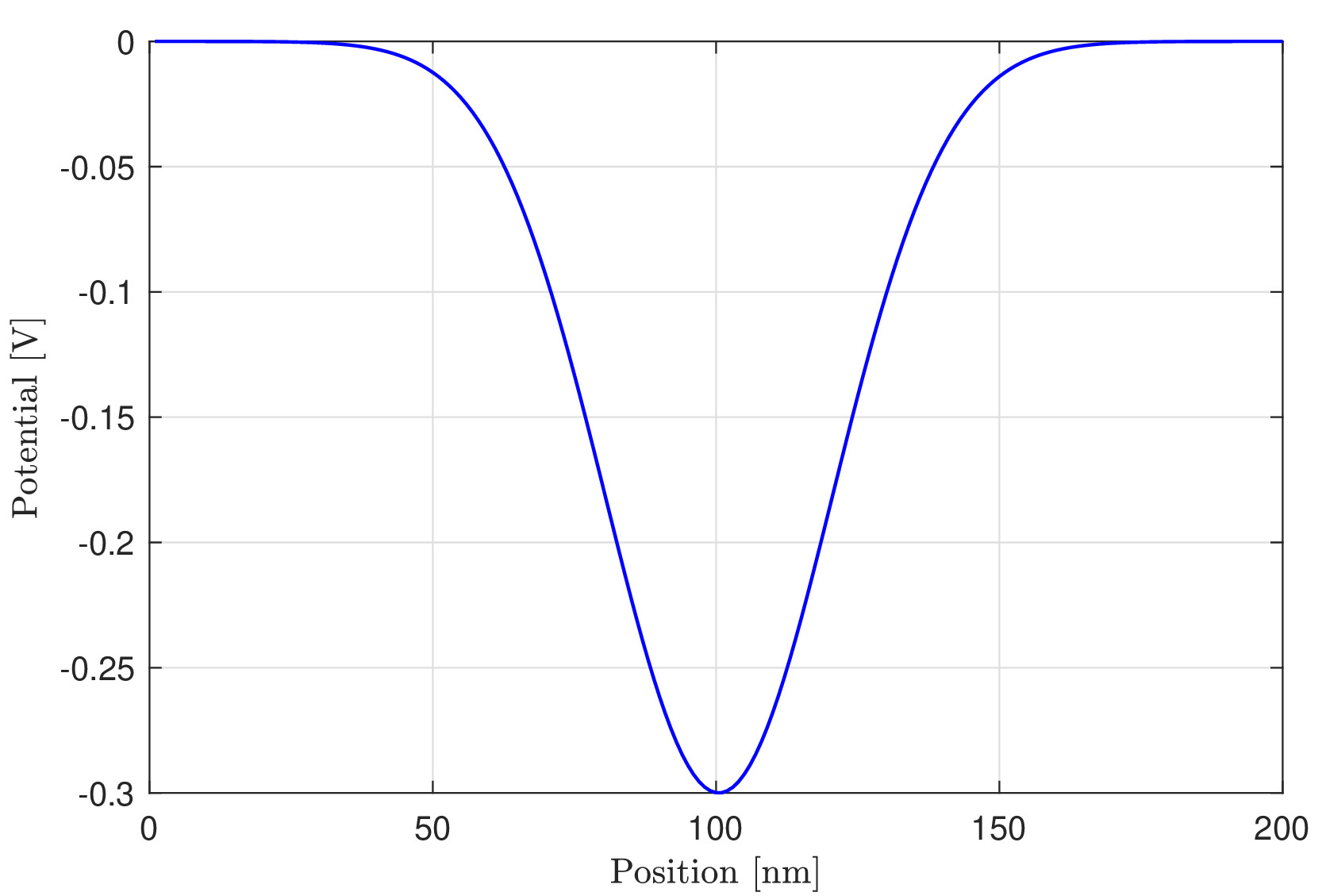
Fig 3: Comparison of actual and estimated Wigner kernel
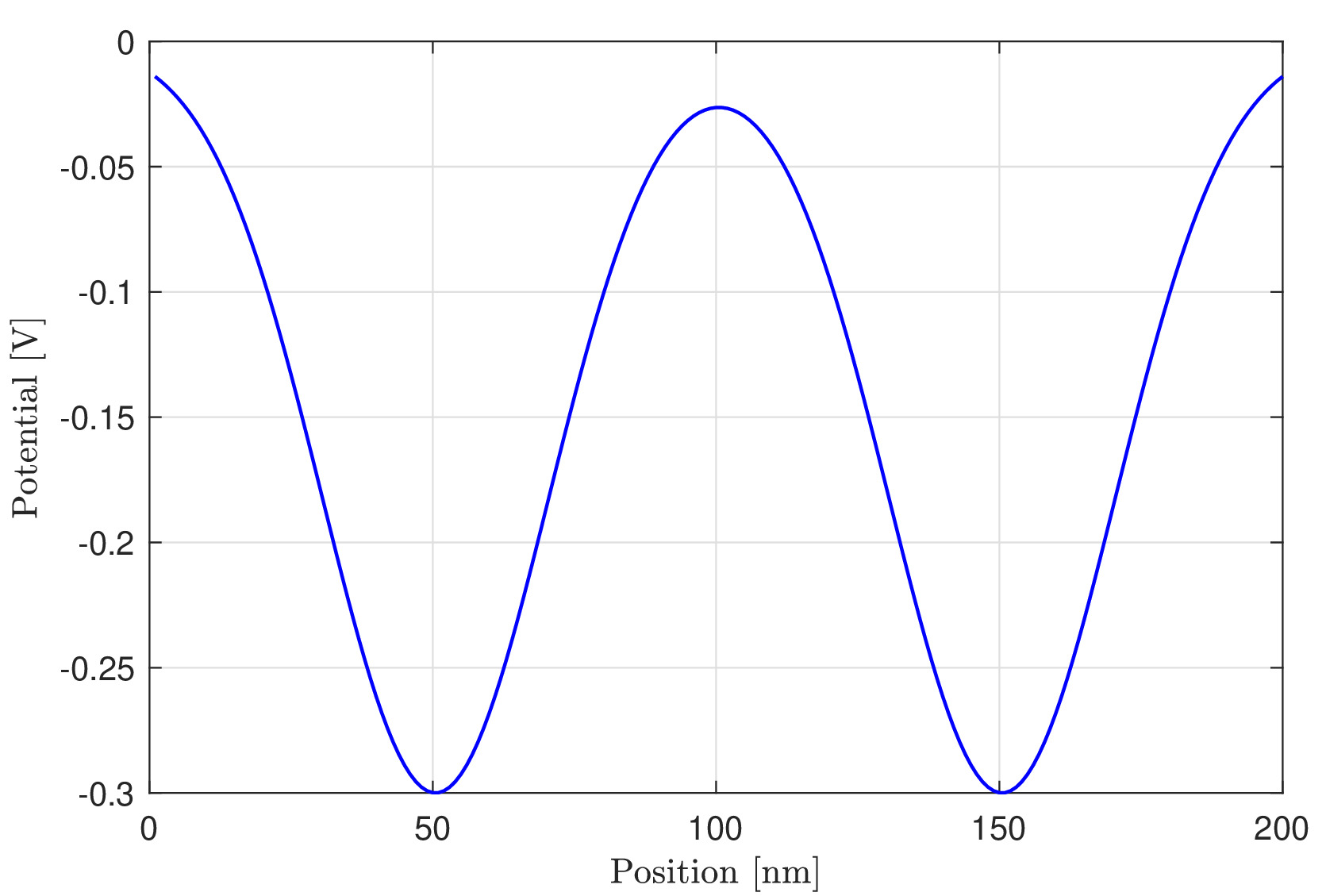
Fig 4: Comparison of Gamma function using the actual
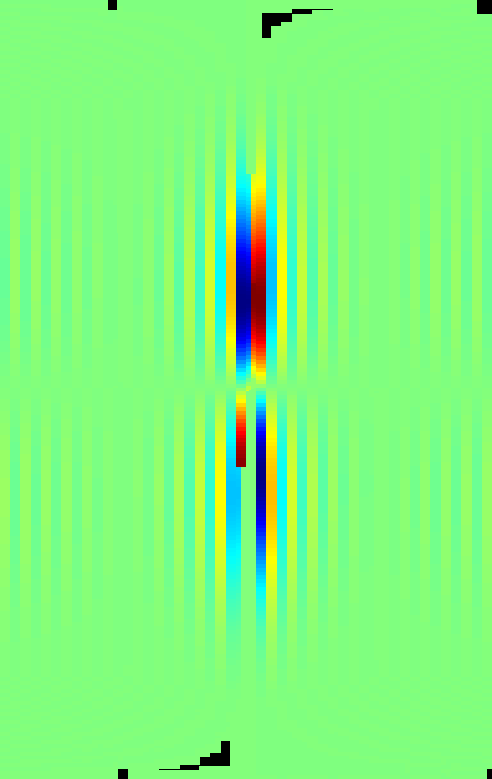
Fig 5: Double Gaussian potential function.
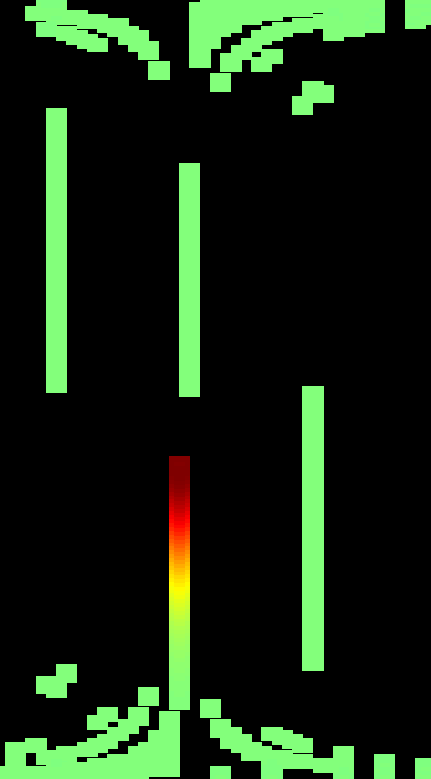
Fig 6: Comparison of actual and estimated Wigner kernel

Fig 7: Comparison of the Gamma function using the actual

Fig 9: and Figure 10). This confirms the effectiveness of
Limitations
- The approximation retains only the first odd derivative term from the Maclaurin expansion, potentially limiting accuracy for potentials with significant higher-order variations.
- Work is limited to one-dimensional single-body quantum systems; multi-dimensional and many-body generalizations remain future work.
- No adversarial or robustness analyses under noisy or perturbed potentials were conducted.
- No formal probabilistic error bounds or rigorous convergence analyses are provided for the approximation relative to exact kernel.
- Code and datasets are not publicly released, limiting immediate independent reproducibility.
- Potential errors introduced by truncation of infinite integration limits to finite windows are not deeply analyzed.
Open questions / follow-ons
- How well does the analytical approximation extend to multi-dimensional and many-body quantum systems within the Signed Particle Formulation?
- What is the impact of including higher-order odd terms in the Maclaurin expansion on accuracy and computational cost?
- Can formal error bounds or probabilistic guarantees be established for the approximation relative to the exact Wigner kernel?
- How does the analytical approximation perform under potentials with sharp discontinuities or non-Gaussian features?
Why it matters for bot defense
While not directly related to CAPTCHA or bot defense, this work demonstrates a principled analytical approximation technique to reduce computational overhead in a core kernel evaluation required for Monte Carlo quantum simulations. Bot-defense engineers can analogously consider such kernel approximations or series expansions to speed up computationally expensive probability kernel computations involved in behavioral or fingerprinting models. The notion of trading minor approximation error for large runtime gains is relevant when balancing security detection accuracy with latency constraints. Further, the statistical tolerance of Monte Carlo sampling to moderate kernel errors may inspire similar approaches in noise-tolerant detection pipelines. Overall, the paper provides a methodological example for improving efficiency in stochastic simulation kernels widely used in scientific computing contexts.
Cite
@article{arxiv2606_28269,
  title={ Efficient Approximation of the Wigner Kernel in Phase-Space Quantum Mechanics },
  author={ Mehran Attar and Bassant Selim and Jean Michel Sellier },
  journal={arXiv preprint arXiv:2606.28269},
  year={ 2026 },
  url={https://arxiv.org/abs/2606.28269}
}