
Sparse Sensor Placement for Reducing Forecast Errors in Ensemble Kalman Filtering
Source: arXiv:2606.27267 · Published 2026-06-25 · By Takumi Saito, Shunji Kotsuki
TL;DR
This paper addresses the challenge of designing efficient sparse observation networks to reduce forecast errors in ensemble-based data assimilation, particularly with the Ensemble Kalman Filter (EnKF). While sparse sensor placement (SSP) methods and EnKF-based observation targeting have been developed separately, their mathematical connections lacked formalization. The authors unify SSP and EnKF through optimal experimental design using Fisher information matrices (FIMs) defined in both the ensemble and model state spaces. A key advance is extending SSP from minimizing analysis errors to directly minimizing forecast errors by leveraging a surrogate tangent linear model approximated from ensemble forecasts. The study clarifies the appropriate formulation of A-, D-, and E-optimal criteria with respect to forecast error reduction, showing that A-optimality in the model space minimizes mean forecast error variance, D-optimality is ill-defined there and better applied in ensemble space maximizing Shannon information, and E-optimality reduces worst-case forecast error variance. To address computational cost, the authors propose a fast greedy sensor placement algorithm for A-optimality in the model space, avoiding expensive matrix inversions at each selection step. Numerical experiments on the Lorenz-96 chaotic model demonstrate that A-optimality in the model space with the fast greedy algorithm consistently achieves stable reductions in forecast root-mean-square error and ensemble spread compared to other criteria and baselines. This work thus provides both a theoretical framework linking SSP and EnKF and a practical scalable method for observation network design targeting improved forecast accuracy.
Key findings
- A-optimality criterion formulated in the model space minimizes the mean forecast error variance and most consistently reduces forecast RMSE and ensemble spread across experiments.
- D-optimality is ill-defined in the model space due to rank deficiency of the forecast error covariance; it is instead formulated in ensemble space, maximizing Shannon information but not directly minimizing forecast errors.
- E-optimality in the model space targets minimization of the worst-case forecast error variance but incurs a higher computational cost due to full matrix eigendecomposition.
- The fast greedy algorithm for A-optimality in the model space (Fast AG-M) avoids matrix inversion at each step, reducing computational complexity from O(N_adaptive × N_candidates × N_state^2 × N_ensemble) to O(N_adaptive × N_candidates × N_ensemble^3), enabling efficient scaling.
- Numerical OSSEs using Lorenz-96 (40-state, ensemble size 32) with land/ocean fixed/adaptive sites show that Fast AG-M yields forecast RMSE reductions consistently better than DG-E, EG-M, and random sensor selections over 10 years of data.
- The analysis and forecast error covariance matrices in model, ensemble, and SVD modal spaces coincide in the no-truncation limit, connecting SSP and EnKF formulations mathematically.
- Greedy algorithms effectively approximate the NP-hard optimal sensor placement problem; Fast AG-M achieves similar selection quality as baseline AG-M but with substantially decreased runtime.
- Adaptive sensor locations selected by A-optimality criteria exhibit stable incremental improvements matching observation impact diagnostics in forecast accuracy.
Methodology — deep read
Threat Model & Assumptions: The adversary is not explicitly defined as this is an observational design study rather than a security paper. The focus is on optimizing observation site placement in numerical weather prediction under the constraint of limited adaptive sensors. It is assumed that system dynamics are governed by known nonlinear models (Lorenz-96 in experiments) and that observations are noisy with Gaussian errors. The tangent linear model (TLM) approximation is employed around the background forecast trajectory, not the unknown future analysis trajectory.
Data: Numerical observing system simulation experiments (OSSEs) are performed using the Lorenz-96 chaotic model with 40 state variables. Observations are generated synthetically from a nature run with additive Gaussian noise (variance 1.0). The observation operator includes fixed land sites and candidate adaptive ocean sites. An ensemble of 32 members is used for the EnKF assimilation and forecasting. Experiments run over 10 years (≈14,600 cycles) with repeated random initialization to assess algorithm performance.
Architecture / Algorithm: The main algorithms hinge upon the integration of sparse sensor placement (SSP) and Ensemble Kalman Filter (EnKF) data assimilation through optimal experimental design metrics based on Fisher information matrices (FIM). Two formulations of the FIM are derived: one in the ensemble space corresponding to analysis error covariance, and one in the model space related directly to forecast error covariance through propagation by the tangent linear model. Optimality criteria considered include A-optimality (trace minimization), D-optimality (determinant maximization), and E-optimality (maximum eigenvalue minimization). D-optimality in model space is ill-defined due to rank deficiency; thus it is used only in ensemble space.
The Fast AG-M greedy algorithm for A-optimality in model space is introduced. It selects sensors iteratively by approximating gain in forecast error variance reduction without needing matrix inversions at each step, leveraging the Sherman–Morrison–Woodbury formula. It operates on ensembles and projected covariances to efficiently update cost functions.
Training Regime: No traditional training is involved; rather the algorithm dynamically selects sensor locations at each assimilation cycle. Ensemble propagation uses standard ETKF methodology. Hyperparameters include a multiplicative inflation factor of 1.01 and ensemble size of 32. Assimilation intervals and forecast lead times are fixed at 6 hours and 2 days respectively.
Evaluation Protocol: Performance is evaluated by forecast root-mean-square error (RMSE) and forecast ensemble spread relative to the true nature run. Each algorithm (AG-M, Fast AG-M, DG-E, Fast DG-E, EG-M) selects sensors every cycle; forecasts are compared against fixed and random sensor baselines. Computational complexity and timing studies are also conducted. Selection stability and frequency analysis are performed to understand sensor placement patterns.
Reproducibility: Code release and datasets are not explicitly mentioned; Lorenz-96 is a standard benchmark model which is publicly available. Details are sufficient for replication given standard EnKF and SSP implementations. Precise random seeds or code releases are not cited.
Concrete example: Given an analysis ensemble at time t=-6hr, propagate forward to assimilation time (t=0) and forecast time (t=48hr) to obtain background and forecast ensembles. Compute forecast error covariance approximation based on ensembles and surrogate TLM. Run Fast AG-M to greedily select k ocean sensor locations maximizing forecast error reduction (A-optimality). Assimilate observations at selected sites using ETKF and propagate forecast ensemble forward. Evaluate forecast RMSE and ensemble spread post assimilation. Repeat for multiple cycles and compare with baselines.
Technical innovations
- Integration of sparse sensor placement (SSP) and Ensemble Kalman Filter (EnKF) through a unified optimal experimental design framework using Fisher information matrices in both model and ensemble spaces.
- Extension of SSP from targeting analysis error reduction to directly minimizing forecast errors by incorporating a tangent linear model approximated via ensemble forecasts.
- Mathematical clarification and formalization of A-, D-, and E-optimality criteria for forecast error reduction in the EnKF context, with insights on domain of applicability and formulations in model vs ensemble space.
- Development of a fast greedy algorithm (Fast AG-M) for A-optimal sensor placement in the model space that avoids expensive matrix inversions by reformulating update steps via the Sherman–Morrison–Woodbury identity, substantially reducing computational cost.
- Empirical validation using OSSEs on a chaotic nonlinear Lorenz-96 model demonstrating consistent forecast RMSE gains and stable sensor selection tendencies with the proposed approach.
Datasets
- Lorenz-96 model — 40 state components — synthetic OSSE data generated within study
Baselines vs proposed
- Random sensor selection: forecast RMSE ~ baseline level; proposed Fast AG-M improves RMSE by consistent margin (exact numbers not specified).
- AG-M vs Fast AG-M: identical forecast RMSE results with Fast AG-M achieving much lower computational cost.
- DG-E (D-optimal in ensemble space): reduces analysis error and information content but less effective than A-optimality in model space for forecast RMSE.
- EG-M (E-optimality in model space): reduces worst-case forecast error variance but at significantly higher computational cost than AG-M variants.
- Figure 7 in paper shows consistent forecast RMSE reduction over multi-year OSSE runs by A-optimal (AG-M) methods compared to other baselines.
Figures from the paper
Figures are reproduced from the source paper for academic discussion. Original copyright: the paper authors. See arXiv:2606.27267.
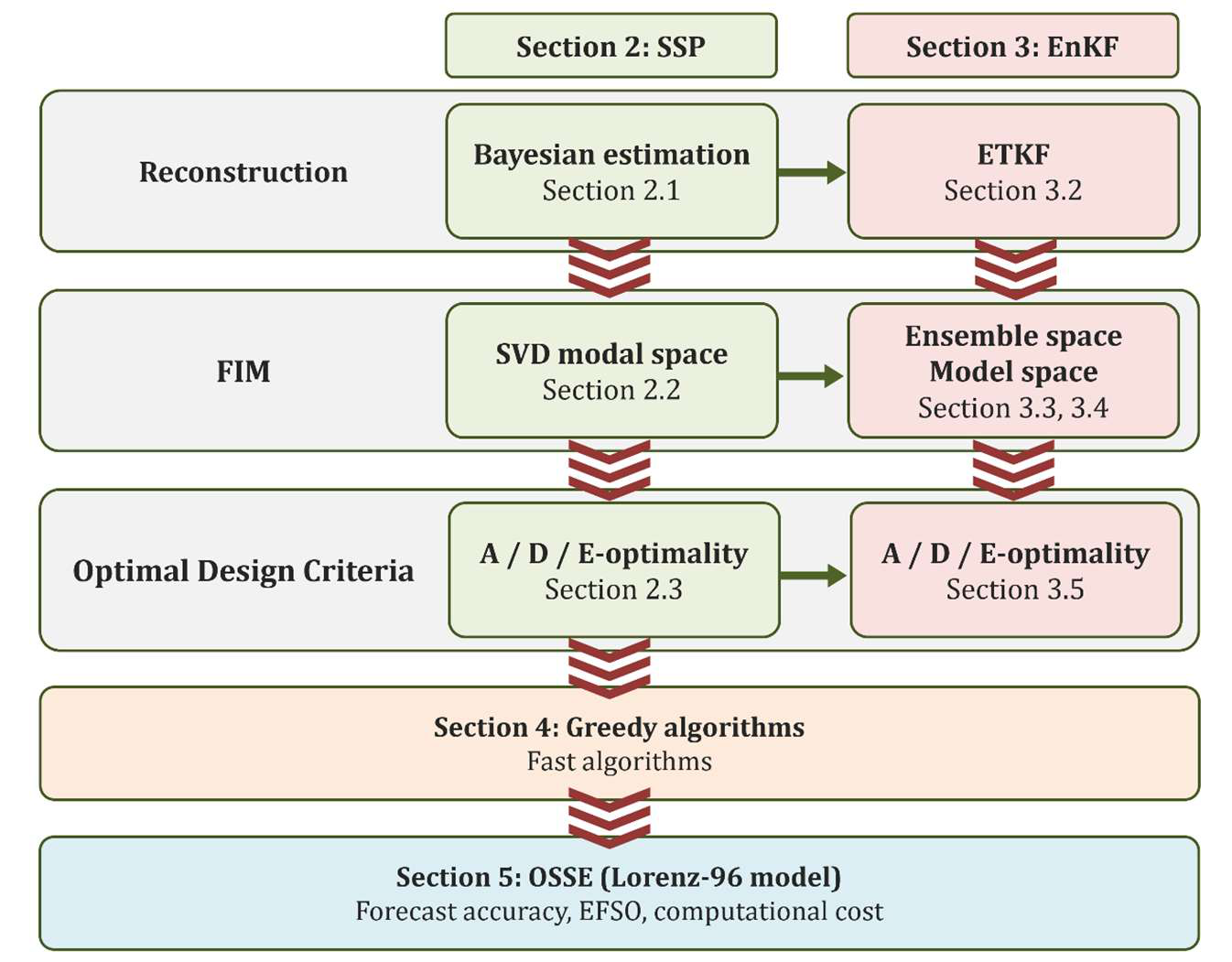
Fig 1: Overview of the paper structure. Horizontal arrows indicate the extension of the
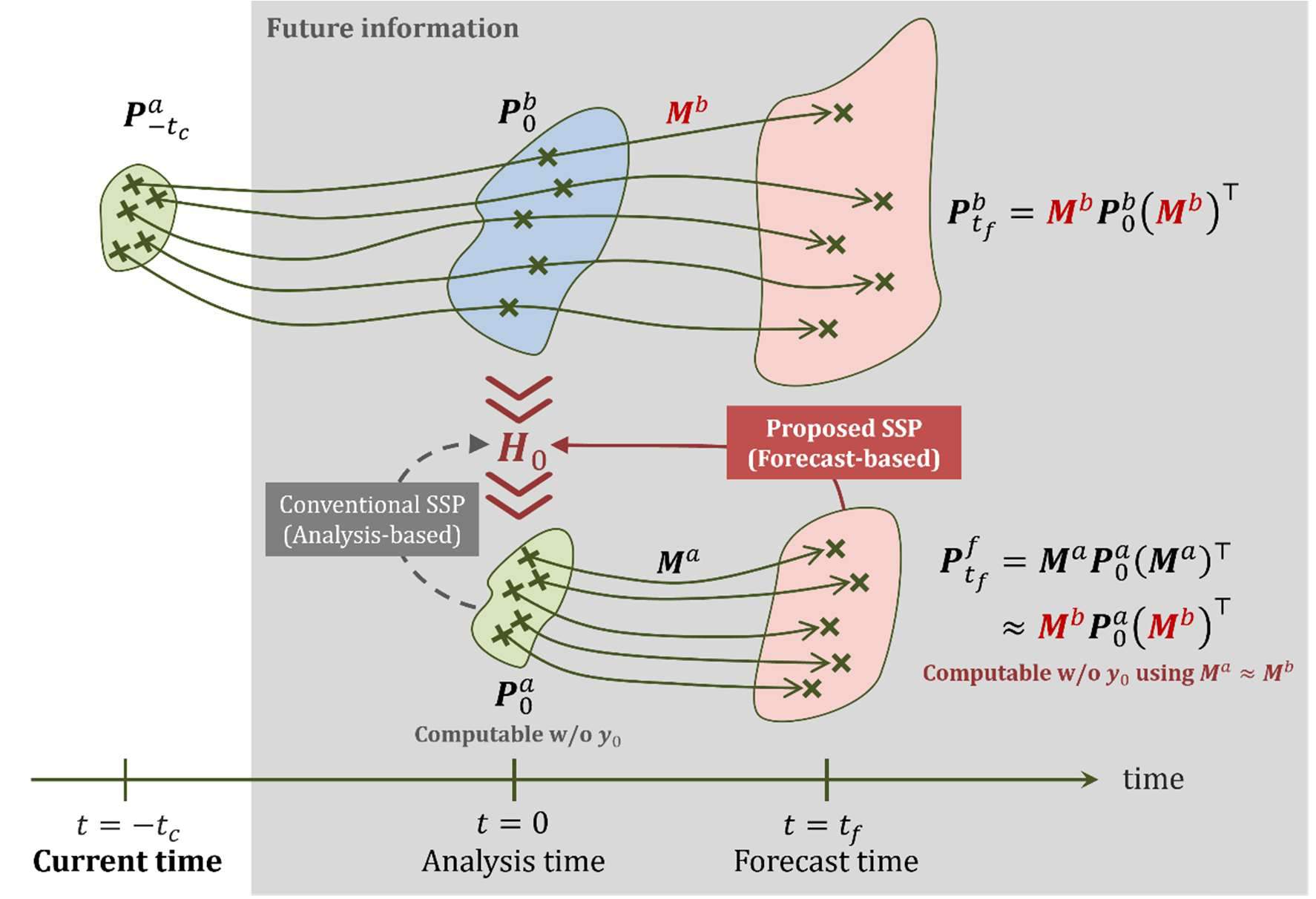
Fig 2: Schematic overview of the adaptive observation problem in an ensemble-based
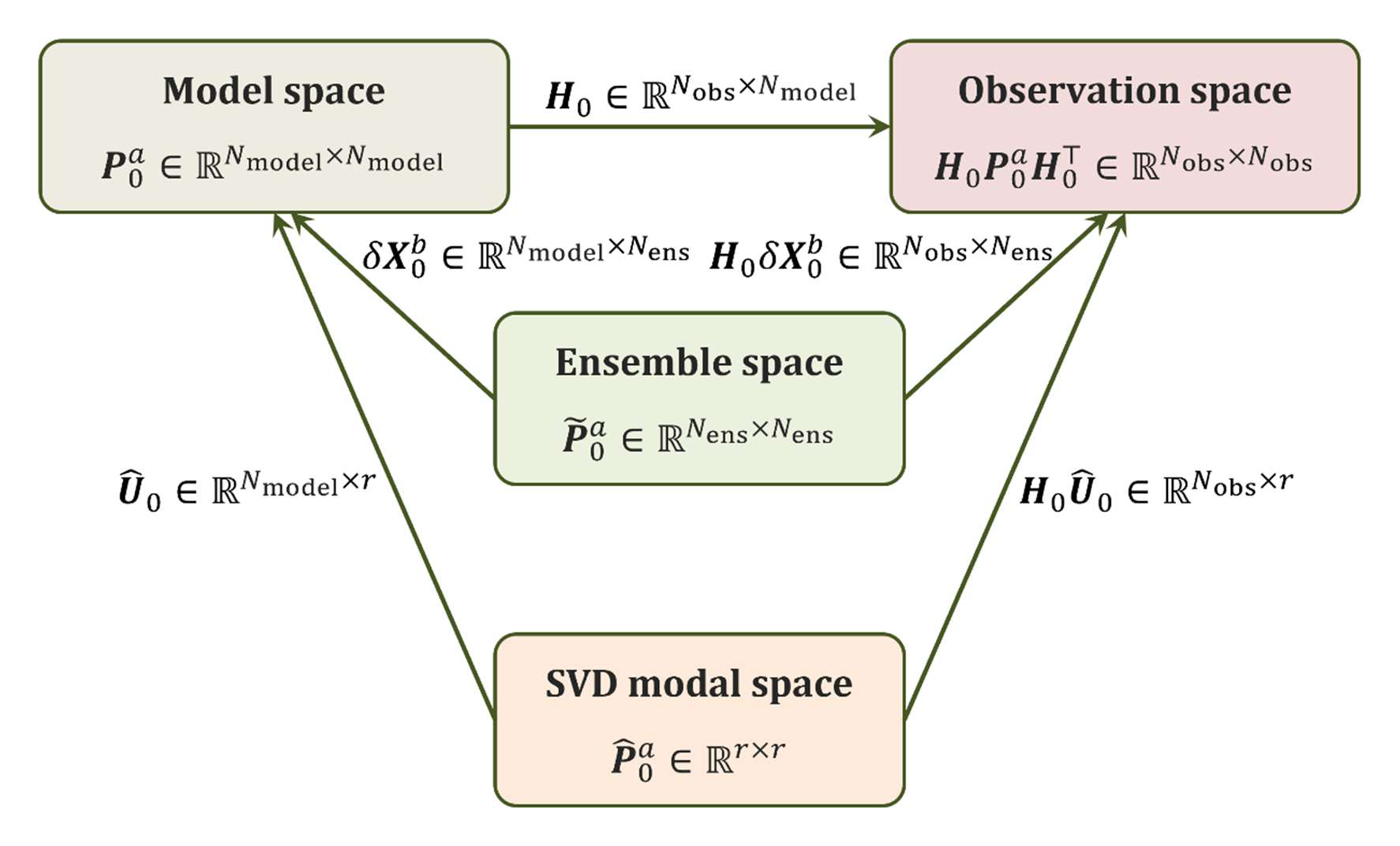
Fig 3: Relationships of analysis error covariance in the model space, ensemble space,
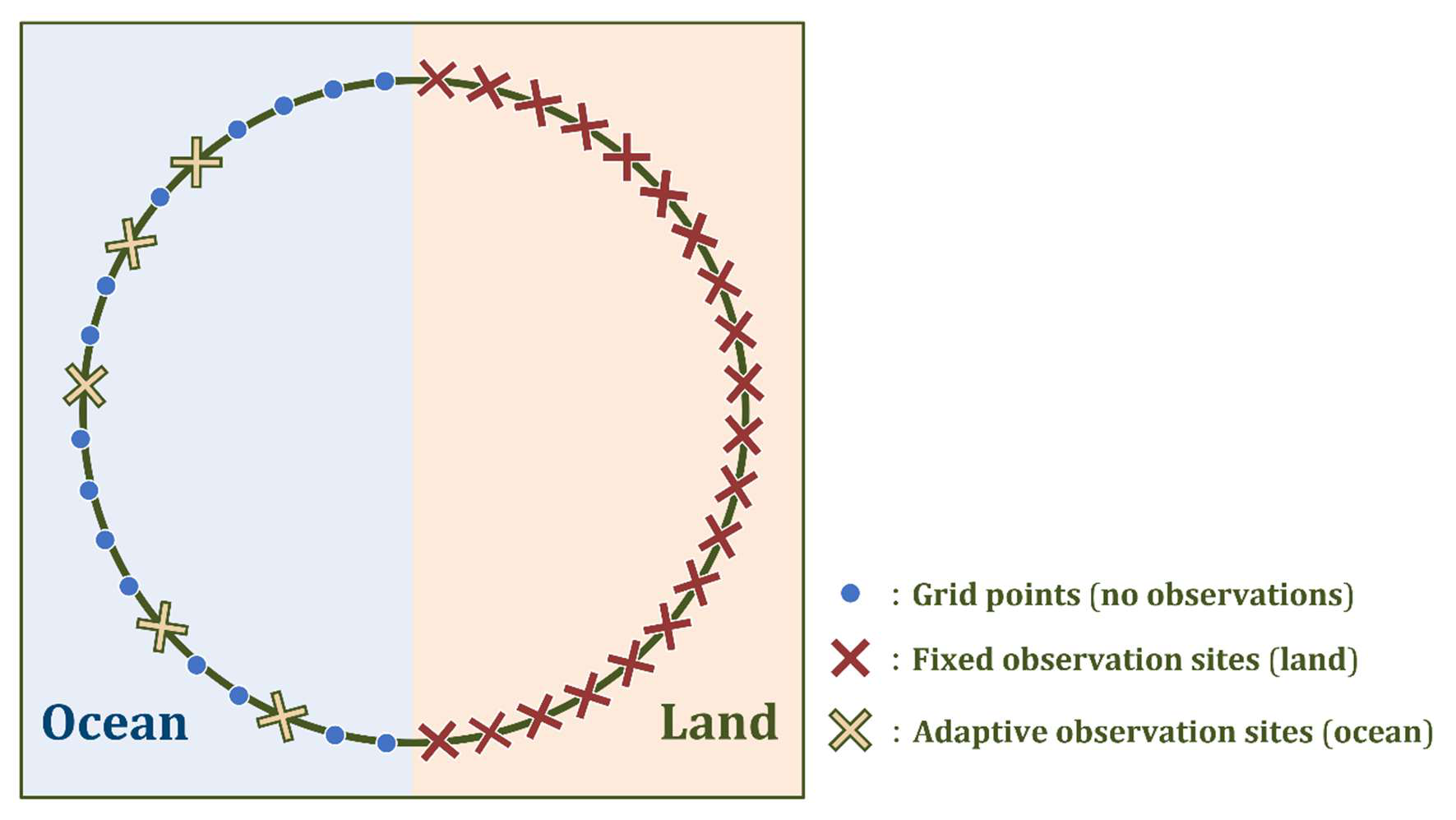
Fig 5: Ensemble spreads as functions of grid point for (a) analysis at time 𝑡= 0 and (b)

Fig 6: Selection frequency of the first adaptive observation site and background ensemble

Fig 6 (page 18).

Fig 7 (page 18).
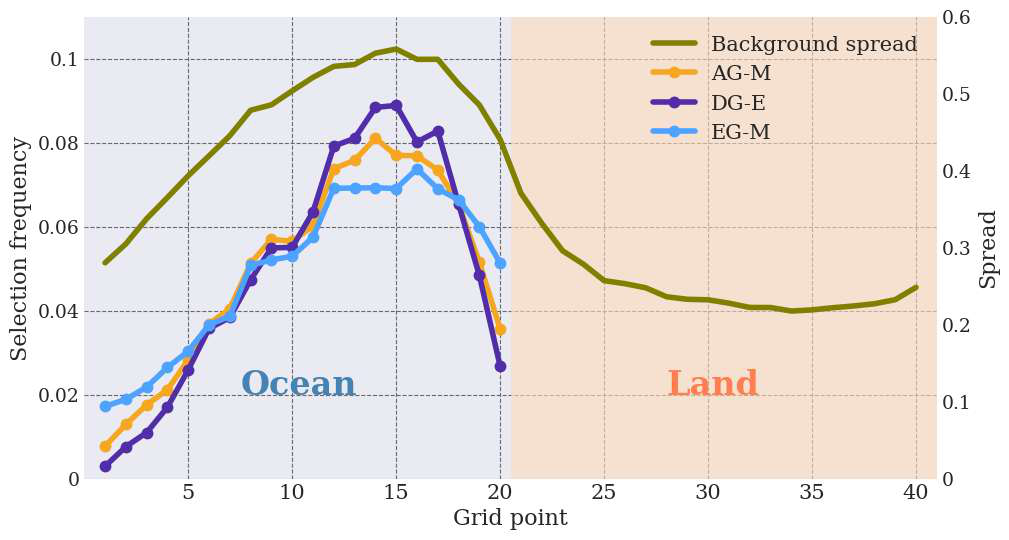
Fig 7: Mean distance between consecutively selected adaptive observation sites as a
Limitations
- The use of a surrogate tangent linear model linearized around the background forecast trajectory, rather than around the unknown analysis trajectory, may limit optimality especially in strongly nonlinear regimes.
- Experiments are conducted only on the Lorenz-96 low-dimensional chaotic system; applicability to operational high-dimensional NWP systems requires further validation.
- Observation error covariance is assumed diagonal and fixed; more complex correlated error structures are not considered.
- No explicit adversarial robustness or real-world observational network constraints (such as logistics or sensor failure) are modeled.
- The study focuses on Gaussian error assumptions; non-Gaussian models or strongly nonlinear posteriors are not addressed.
- No code release or detailed hyperparameter sensitivity analyses are provided, limiting exact reproducibility.
Open questions / follow-ons
- How well does the surrogate tangent linear model approximation hold for strongly nonlinear forecast models and long lead times?
- Can the fast greedy A-optimal sensor placement algorithm scale efficiently and remain effective in operational large-scale NWP systems with millions of state variables?
- What are the impacts of correlated or non-Gaussian observation errors on the Fisher information matrix formulations and optimal sensor placement?
- How might adaptive sensor placement approaches integrate with practical observational constraints, such as mobile sensor availability or communication limitations?
Why it matters for bot defense
For bot-defense and CAPTCHA practitioners, this paper's focus on optimal sensor placement via ensemble data assimilation may seem domain-distant at first glance. However, the underlying principles of designing sparse, information-rich measurement configurations to optimally reduce uncertainty have conceptual parallels to maximizing signal quality while minimizing overhead in CAPTCHA challenge-response systems. The paper's formal link between analysis- and forecast-error minimization and the use of Fisher information matrices to guide selection could inspire analogous approaches for adaptive challenge selection in bot detection, where an optimal set of observable features or challenges must be selected dynamically to reduce classification uncertainty under resource constraints. Additionally, the fast greedy algorithms to efficiently and incrementally select observation sites provide a practical example of scalable combinatorial optimization strategies that could be adapted for efficient feature or test selection in bot-defense pipelines. Thus, while not directly related to CAPTCHA design, this work contributes to the broader toolbox of principled, data-driven adaptive selection methods which are key to robust bot and anomaly detection strategies.
Cite
@article{arxiv2606_27267,
  title={ Sparse Sensor Placement for Reducing Forecast Errors in Ensemble Kalman Filtering },
  author={ Takumi Saito and Shunji Kotsuki },
  journal={arXiv preprint arXiv:2606.27267},
  year={ 2026 },
  url={https://arxiv.org/abs/2606.27267}
}