
Physical Layer Authentication With Channel Knowledge Maps in Indoor Environments
Source: arXiv:2606.27044 · Published 2026-06-25 · By Luca Bonaventura, Francesco Ardizzon, Stefano Tomasin
TL;DR
This paper addresses the problem of physical layer authentication (PLA) for mobile devices in indoor environments characterized by complex multipath propagation and obstructions. Traditional PLA approaches rely on assumptions of channel feature time consistency or tractable modeling, which break down with device motion and indoors non-line-of-sight conditions. The authors propose leveraging prior environmental channel knowledge maps (CKMs) that encode path loss and angle of arrival statistics at known user locations, using multiple fixed access points (APs). At each time step, the APs estimate the dominant channel tap’s path loss and angle of arrival, which are then compared against CKM entries in the spatial neighborhood of the user’s last known position. This approach avoids explicit channel modeling and adapts to motion and indoor multipath effects. The authentication decision is framed as a likelihood test or generalized likelihood ratio test between hypotheses of legitimate versus attacker transmission. Several attacker models are designed, from random to fully informed adversaries aware of the CKM and location history.
The authors validate their method via numerical simulations in a representative indoor room, generating CKMs using a MATLAB ray-tracer. Results show robust authentication capability under realistic noise levels and system parameters. For random-position attackers, both miss detection and false alarm probabilities can be as low as approximately 0.3%. More sophisticated attackers with knowledge of the CKM have increased success but remain detectable with probabilities around 0.6%. The generalized likelihood ratio test provides protection against worst-case attacks but may be more vulnerable to random-position attacks. Overall, the method effectively integrates environment-aware communications concepts to extend PLA to dynamic, obstructed indoor scenarios.
Key findings
- Random-position attacks can be detected with missed detection probability (PMD) and false alarm probability (PFA) both around 3×10^-3 for K=0.05 noise level and 4 APs (Fig. 2, 3).
- Increasing number of APs from 1 to 4 improves PLA detection performance significantly, reducing missed detection for fixed false alarm rates (Fig. 2a).
- Authentication degrades with noise scaling factor K increasing from 10^-3 to 0.5, with PMD rising accordingly (Fig. 2b).
- Informed attacker selecting position from nearby window (WT = WA) reduces PMD from around 0.006 to 0.02 at PFA=0.01, showing limited but relevant attack improvement (Fig. 3).
- Full map attacker moving instantly to optimal position achieves PMD ≈ 6×10^-3 and PFA ≈ 6×10^-3, setting an upper bound on attacker efficacy (Fig. 3).
- Generalized likelihood ratio test (GLRT) reduces vulnerability to full map attacks compared to likelihood test (LT), but increases vulnerability to random position attacks (Fig. 4).
- Signal obstructions in indoor environment induce a floor value on the test statistic, limiting achievable PFA/PMD tradeoffs and causing step-like behavior in DET curves (Fig. 3).
- Estimates of path loss and angle of arrival at each AP are modeled as Gaussian distributed with variance inversely proportional to number of pilot symbols and array antennas (Section II-B).
Threat model
The adversary is a mobile attacker capable of synchronizing transmissions and overshadowing the legitimate user's signals, aiming to impersonate the user to the verifier. The attacker may have no environmental channel knowledge, partial CKM knowledge nearby, or full CKM knowledge with unrestricted mobility. The attacker cannot alter authenticated and integrity-protected trusted communication among the fixed APs and central verifier. The attacker cannot fabricate channel conditions outside physical plausibility dictated by CKMs.
Methodology — deep read
Threat Model & Assumptions: The adversary Trudy aims to impersonate legitimate user Alice to the centralized verifier Bob. Trudy can synchronize transmissions and overshadow Alice's pilot signals, preventing the use of cross-AP inconsistencies. Trudy may have no CKM knowledge (random attack), partial (informed), or full CKM knowledge and mobility (full map attack). Bob has authenticated and integrity-protected communication among APs, which are fixed and equipped with uniform linear arrays.
Data: The environment is modeled as an 8×5×3 m3 indoor room with furniture, discretized into 0.1 m grid squares representing user positions P. Channel knowledge maps (CKMs) associating each position p with path loss (PL) and angle-of-arrival (AoA) features per AP are generated by MATLAB ray-tracing, simulating multi-path propagation. APs have 4 antennas and observe 10 pilot symbols per time step.
Architecture/Algorithm: At each time t_k, each AP n estimates the dominant channel tap's PL and AoA from the received pilot signals, modeled as noisy Gaussian random variables around true CKM values ϕ_n(p). These estimates from all APs are concatenated into a vector ˆϕ(k). Using knowledge of the previous estimated position p_{k-1} and maximum user velocity ν, Bob restricts the legitimate user’s possible positions P_k to a square window around p_{k-1}.
Authentication is modeled as a binary hypothesis test: H0 (Alice legitimate) vs H1 (Trudy attacker). Two test statistics are proposed: (a) a likelihood test (LT) maximizing the likelihood over P_k using Gaussian models, and (b) a generalized likelihood ratio test (GLRT) comparing max likelihood over P_k vs outside P_k to model worst-case attacks.
If the test statistic exceeds a threshold ξ, the transmission is accepted as Alice; otherwise rejected. The user’s estimated position p_k is updated by maximizing the posterior likelihood over P_k. Attackers select positions either randomly outside P_k, within a local window (informed attack), or anywhere outside P_k for the full map attack, to maximize their chance of impersonation.
Training/Simulation Regime: The system is simulated for a single authentication step from t_{k-1} to t_k. Positions p_{k-1} and p_k are sampled randomly from the discretized room. Monte Carlo simulations across 10,000 runs estimate false alarm and missed detection probabilities. Noise variance is scaled by factor K from 10^{-3} to 0.5 to test robustness. Default parameters follow IEEE 802.11 standards with 2 GHz carrier, 15 dBm transmit power, and antenna spacing λ/2.
Evaluation Protocol: Metrics are false alarm probability P_FA and missed detection probability P_MD, computed over all runs. Detection error trade-off (DET) curves plot PMD vs PFA. Tests compare LT and GLRT under various attack strategies: random position, informed, and full map. Ablations include varying number of APs N, noise scaling K, and attacker position window size W_T. Effects of signal obstructions are noted via non-zero floor in test statistics.
Reproducibility: Ray-traced CKMs and simulation code are implemented in MATLAB. Authors do not mention public code or dataset release. The setup using standardized parameters and the room model is described in sufficient detail for reimplementation. Exact random seeds are not specified.
Example end-to-end scenario: Suppose at time t_{k-1} Alice was at position p_{k-1} inside the room. Bob constructs P_k around p_{k-1} considering Alice's max velocity. Alice moves within P_k to p_k and transmits pilots. APs estimate PL and AoA noisy measurements ˆϕ(k). Bob computes the likelihoods over P_k using CKM values. If the likelihood exceeds threshold, Bob authenticates and updates estimated position to p_k. If Trudy transmits from a random position p_T outside P_k, likelihood falls below threshold, detecting the attack.
Technical innovations
- Leveraging spatially indexed channel knowledge maps (CKMs) for PLA in indoor environments with moving users, eliminating the need for explicit channel analytical models.
- Integration of AP measurements of dominant channel tap path loss and angle-of-arrival with CKM neighborhood search to accommodate user mobility within velocity constraints.
- Proposing and analyzing three attacker models with varying CKM knowledge and mobility (random, informed, full map) to evaluate security robustness.
- Formulating PLA as a likelihood or generalized likelihood ratio test over spatial neighborhoods defined by displacement constraints, accounting for multipath and obstructions.
Datasets
- Ray-traced indoor channel knowledge map — size corresponds to 0.1 m discretized room area of 8×5 m — generated via MATLAB ray tracer; not publicly released
Baselines vs proposed
- Likelihood Test (LT) with 1 AP: detection error (PMD at PFA=10^-2) ~0.046 vs with 4 APs: PMD ~0.003 (Fig. 2a)
- LT with noise scaling K=0.001: PMD ~10^-4 vs K=0.05: PMD ~0.003 at PFA=10^-2 (Fig. 2b)
- Random Position Attack (RPA) LT: PMD ~0.003 at PFA=0.01 vs Full Map Attack (FMA) LT: PMD ~0.006 (Fig. 3)
- Informed Attack (IA) with WT=WA: reduces PMD from 0.006 to 0.02 relative to RPA (Fig. 3)
- Full Map Attack PMD: 6×10^-3 vs Random Position Attack PMD: 3×10^-3 under LT at PFA=10^-2
- GLRT vs LT under RPA: GLRT raises PMD significantly, increasing vulnerability; under FMA: GLRT lowers PMD vs LT slightly (Fig. 4)
Figures from the paper
Figures are reproduced from the source paper for academic discussion. Original copyright: the paper authors. See arXiv:2606.27044.
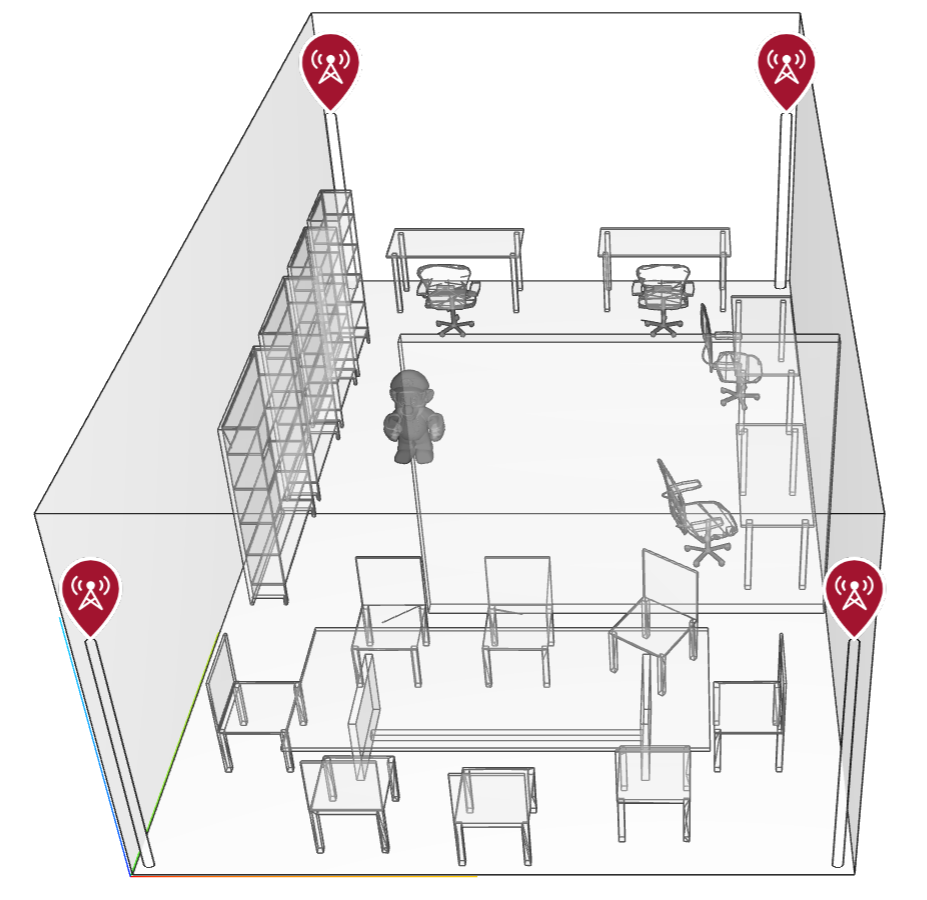
Fig 1: Schematic representation of the security scenario involving Alice,

Fig 2 (page 2).

Fig 3 (page 2).

Fig 4 (page 2).
Limitations
- Evaluation limited to single authentication step; no analysis of multi-step or trajectory-level authentication performance over time.
- CKMs are assumed noiseless and generated by ray-tracing; real-world map inaccuracies and dynamic environmental changes are not considered.
- No experimental validation or over-the-air measurements; all results are simulation-based.
- Assumes attacker cannot manipulate communication between APs and Bob; may not hold in all practical deployments.
- Only Gaussian noise and Rician fading models considered; broader channel impairments and hardware non-idealities are not evaluated.
- Authorship gives little detail on computational complexity or latency of the authentication test in real deployments.
Open questions / follow-ons
- How robust is CKM-based PLA to real-world environmental dynamics and map inaccuracies over time?
- What are the computational and latency requirements for implementing likelihood-based PLA tests in real-time?
- How does PLA accuracy evolve over multi-step trajectories with accumulated localization uncertainty?
- Can attacker strategies improve further by exploiting temporal correlation of channel features beyond spatial CKMs?
Why it matters for bot defense
This work is highly relevant to bot-defense and CAPTCHA practitioners interested in leveraging physical-layer wireless authentication to counteract attackers in complex indoor environments. The proposed approach shows how embedding prior environmental knowledge into channel feature maps can enhance authentication robustness for mobile devices subject to multipath and obstructions — common challenges in indoor public or enterprise spaces where bots may attempt to spoof location or identity.
Practitioners could apply these concepts by implementing multi-AP measurement collections and probabilistic hypothesis tests to verify legitimate device movement coherently with expected physical propagation characteristics. The analysis of different attacker knowledge levels offers useful insights for designing mitigation strategies. However, practical deployment requires attention to updating CKMs dynamically and evaluating computation overhead. Overall, the paper advances environment-aware PLA towards more realistic indoor scenarios, a critical frontier for robust bot detection on wireless access networks.
Cite
@article{arxiv2606_27044,
  title={ Physical Layer Authentication With Channel Knowledge Maps in Indoor Environments },
  author={ Luca Bonaventura and Francesco Ardizzon and Stefano Tomasin },
  journal={arXiv preprint arXiv:2606.27044},
  year={ 2026 },
  url={https://arxiv.org/abs/2606.27044}
}