
Design and Performance Evaluation of Secure RF and WiFi-Based Communication in Drone Swarms via Testbed Implementation
Source: arXiv:2606.27028 · Published 2026-06-25 · By Bhavya Dixit, Aayushi Rajgor, Subham Kumar, Rushikesh Patil, Ananthapadmanabhan A., Gaurav S. Kasbekar et al.
TL;DR
This paper addresses the critical challenge of securing UAV swarm communications against eavesdropping, focusing on the widely used but unencrypted MAVLink protocol that underpins UAV telemetry exchange. The authors integrate and experimentally evaluate five encryption schemes—MAVShield (a lightweight cipher proposed by the authors), AES-CTR, Speck-CTR, ChaCha20, and Rabbit—within a real UAV swarm testbed comprising four custom-built drones communicating over both RF and WiFi channels. They demonstrate that MAVShield achieves comparable telemetry packet delivery ratios and formation control performance to unencrypted communication but with significantly lower computational overhead compared to standard encryption algorithms, thereby enabling practical secure UAV swarm coordination. Notably, the study incorporates a novel collision avoidance algorithm based on a modified artificial potential field (APF) operating directly in geodetic coordinates, eliminating costly Cartesian transformations and reducing trajectory oscillations or local minimum trapping during coordinated flight.
Key findings
- MAVShield cipher reduces CPU utilization to approximately 1.038%, compared to higher values for AES-CTR, Speck-CTR, ChaCha20, and Rabbit under comparable UAV swarm flight conditions.
- Memory consumption of MAVShield is as low as 0.031%, outperforming other evaluated algorithms on the companion computer hardware.
- Packet delivery ratio (PDR) with MAVShield remains comparable to the unencrypted case during UAV formation flights over RF and WiFi channels, unlike other ciphers which degrade link reliability.
- Flight experiments with four UAVs show MAVShield enables stable autonomous formation flying in line, T-shape, and Y-shape patterns with collision avoidance, integrating encrypted telemetry communication without latency penalties.
- The modified APF collision avoidance algorithm computes attractive and repulsive forces directly in latitude-longitude coordinates, removing Cartesian coordinate transformations to reduce control jitter and avoid local minima.
- Algebraic cryptanalysis using algebraic normal forms, linearization, elimination techniques, and SAT-based solving fails to recover MAVShield keys despite access to four plaintext-ciphertext pairs, indicating robustness against key recovery.
- Wireshark network traffic analysis confirms that MAVLink message payloads are fully encrypted with MAVShield over both RF and WiFi channels, preventing telemetry data leakage to passive eavesdroppers.
- MAVShield maintains low power consumption overhead (approximately 12.921%) compared to other encryption schemes tested in UAV swarm communication scenarios.
Threat model
The adversary is a passive eavesdropper capable of intercepting MAVLink telemetry communications on RF or WiFi channels between UAVs but cannot modify, inject, or jam traffic. The attacker has knowledge of the MAVLink protocol structure and may have access to multiple plaintext-ciphertext pairs but does not possess secret encryption keys or the ability to perform active attacks.
Methodology — deep read
Threat Model and Assumptions: The adversary is assumed to be a passive eavesdropper capable of intercepting UAV telemetry messages over open RF or WiFi channels but unable to modify or inject packets. The attacker has knowledge of MAVLink protocol headers but not encryption keys. No active jammer or man-in-the-middle attacks are evaluated. The goal is to prevent confidentiality breaches of telemetry data critical for swarm coordination.
Data and Experimental Setup: The authors constructed a UAV swarm hardware testbed of four custom-built quadcopter UAVs equipped with companion computers running a Python-based communication module. UAVs communicate using the MAVLink protocol over RF (915 MHz) and WiFi links. Telemetry data include GPS coordinates, attitude, velocity, altitude, and sensor readings needed for formation and collision avoidance. Split details are unnecessary since data are generated live during flight tests.
Architecture and Encryption Integration: Five encryption schemes—MAVShield (a lightweight block cipher developed previously by the authors), AES-CTR, Speck-CTR, ChaCha20, and Rabbit stream ciphers—were integrated into the Python communication stack on each UAV. MAVShield encrypts the MAVLink payload while leaving headers unencrypted for routing. A SHA-256 based cryptographic checksum and message signing ensure integrity and authenticity. The encryption module dynamically encrypts before transmission and decrypts immediately on reception after signature verification.
Training and Execution Regime: There is no machine learning training involved. Encryption implementations were benchmarked on the onboard companion computer CPUs during real UAV flight tests. Flight scenarios included autonomous leader-follower formation control with three distinct patterns (line, T, Y) and collision avoidance using a novel modified APF approach operating directly in geodetic coordinates.
Evaluation Protocol: Metrics included CPU utilization percentage, memory consumption, and packet delivery ratio (PDR) measured in live flight experiments. Flight performance was assessed by tracking formation stability and collision avoidance success without jitter or local minima. Cryptanalytic evaluation of MAVShield employed algebraic normal form (ANF), linearization, elimination, and SAT-solver based techniques with access to four known plaintext-ciphertext pairs to test key recovery resistance. Network packet captures using Wireshark assessed potential telemetry data leakage.
Reproducibility: The paper does not explicitly mention code or dataset release. The experiments rely on custom UAV testbeds, proprietary firmware and hardware, and live telemetry. The cryptanalysis methods use public algebraic techniques but exact implementation details or code are not disclosed. Future work may be needed for open sourcing.
Concrete example: In one key flight test, four UAVs formed a line pattern using the leader-follower algorithm. Telemetry messages encrypted with MAVShield were exchanged over RF links. The onboard CPUs measured <1.1% utilization for encryption tasks with negligible effect on formation control cycle time. Collision avoidance was engaged when inter-UAV distance thresholds dropped, using the geodetic APF algorithm to generate smooth avoidance trajectories without oscillations. PDR remained above 95%. Wireshark analysis confirmed payload encryption preventing eavesdropping visibility.
Technical innovations
- Integration and real-time evaluation of MAVShield lightweight cipher within live UAV swarm telemetry over RF and WiFi communication links.
- Development of a modified artificial potential field collision avoidance algorithm operating directly in geodetic coordinates (latitude/longitude), eliminating costly Cartesian transformations.
- Demonstration that MAVShield achieves encryption efficiency comparable to unencrypted communication in real flight scenarios, outperforming established algorithms like AES-CTR and ChaCha20 in CPU and memory overhead.
- Application of algebraic cryptanalysis techniques to establish MAVShield’s resilience against key recovery even with multiple known plaintext-ciphertext pairs.
- Embedding of an encryption-decryption framework with dynamic payload encryption and SHA-256 based authentication compatible with MAVLink protocol constraints.
Baselines vs proposed
- Unencrypted MAVLink telemetry: CPU utilization ~0% vs MAVShield: ~1.038%
- AES-CTR encryption: higher CPU and memory use than MAVShield, exact values not specified but notably higher overhead reported
- Packet Delivery Ratio (PDR) unencrypted vs MAVShield: comparable (>95%) vs other ciphers: lower or degraded PDR observed
- Battery power overhead for MAVShield at 12.921%, lower than other tested encryption schemes
Figures from the paper
Figures are reproduced from the source paper for academic discussion. Original copyright: the paper authors. See arXiv:2606.27028.
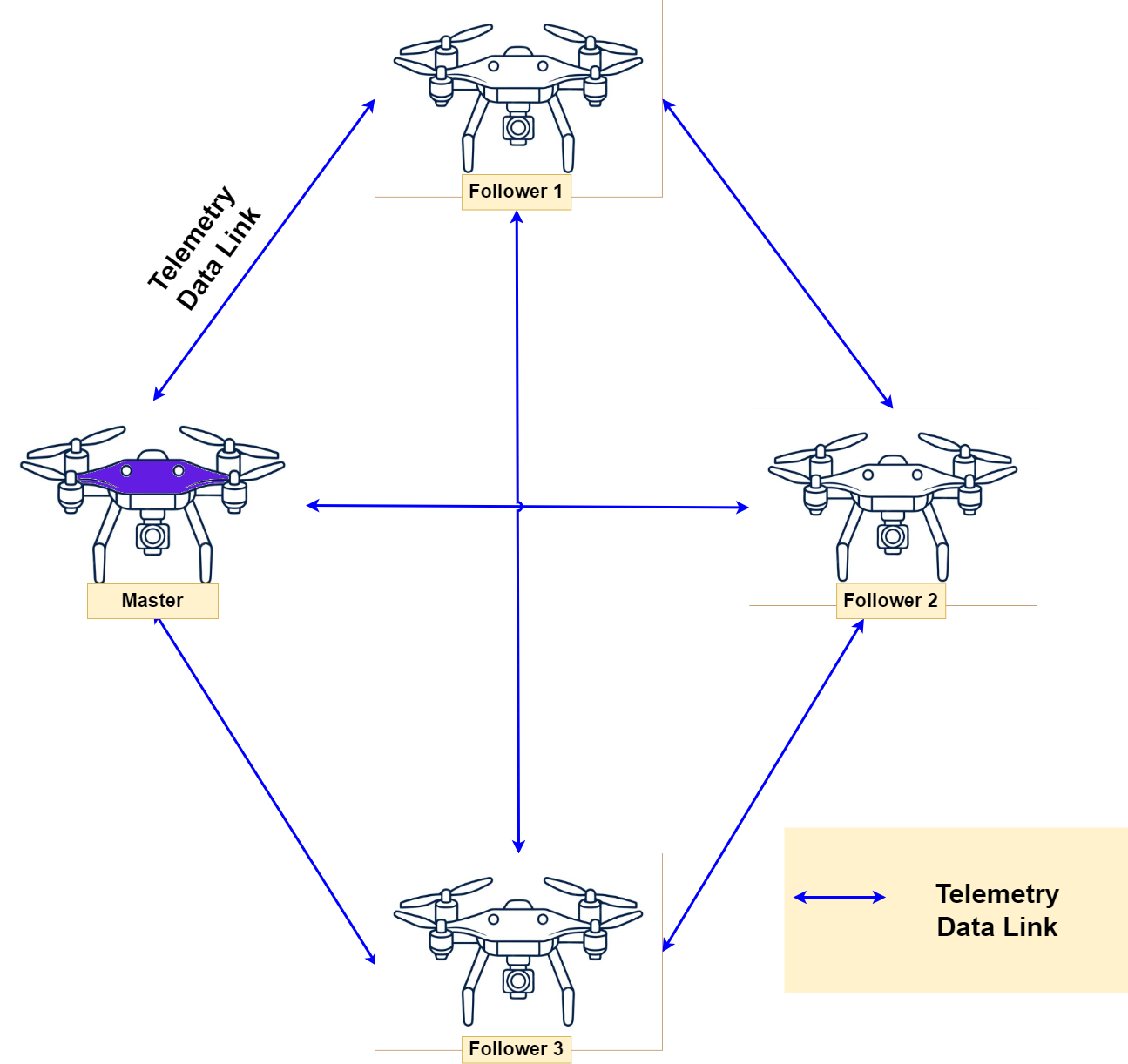
Fig 1: The figure shows a swarm mesh network with one to all communi-
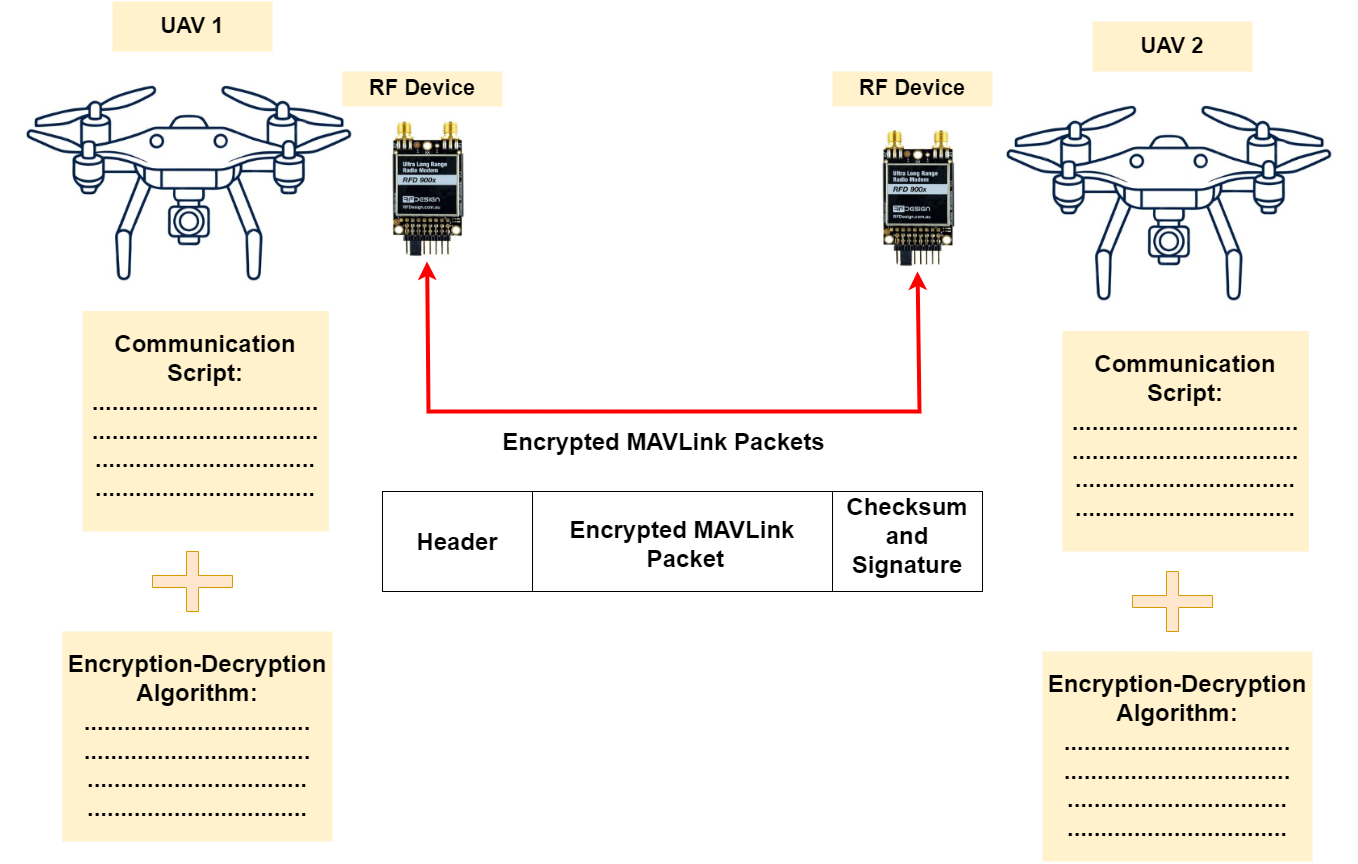
Fig 2: The figure shows integration of encryption-decryption algorithm in
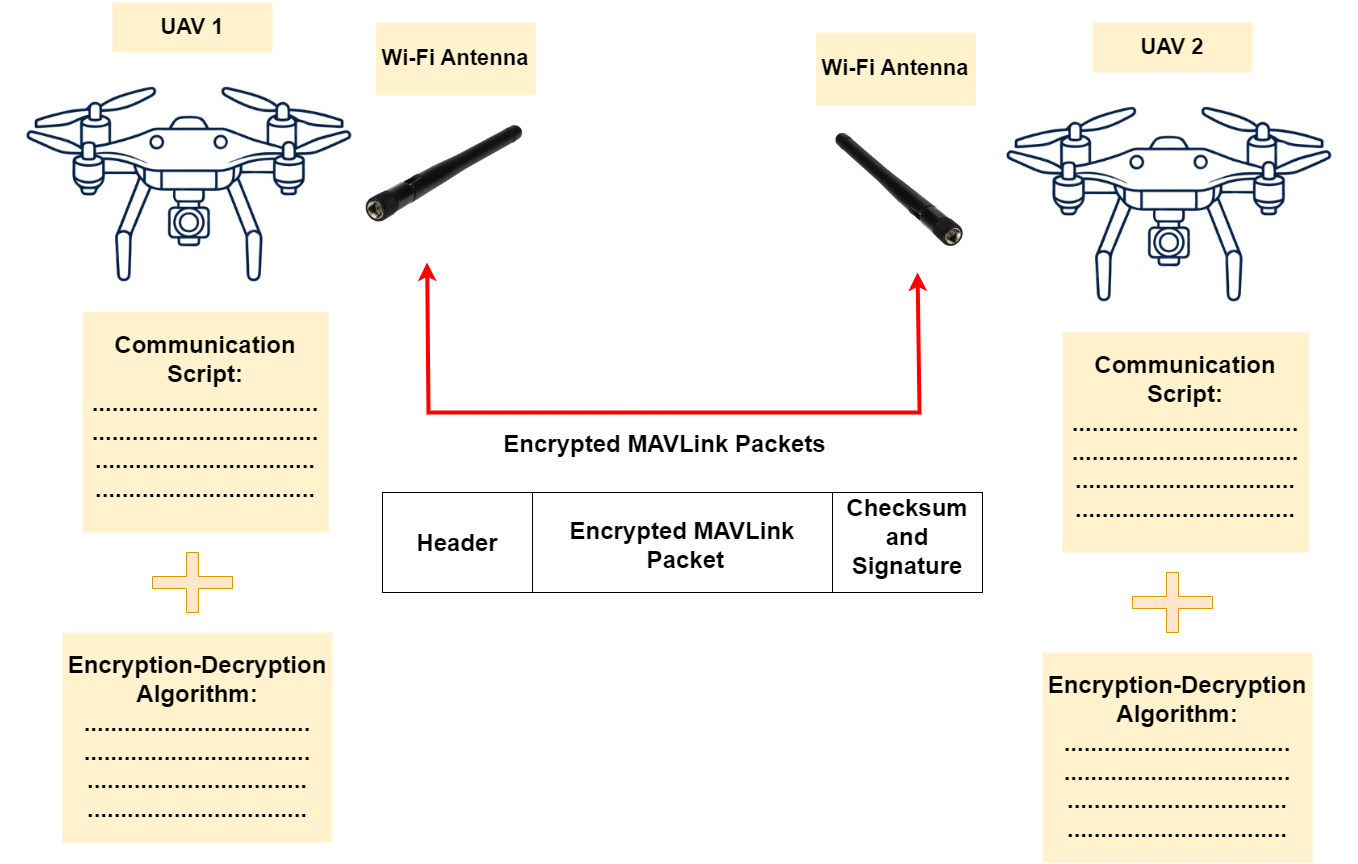
Fig 3: The figure shows integration of encryption-decryption algorithm in
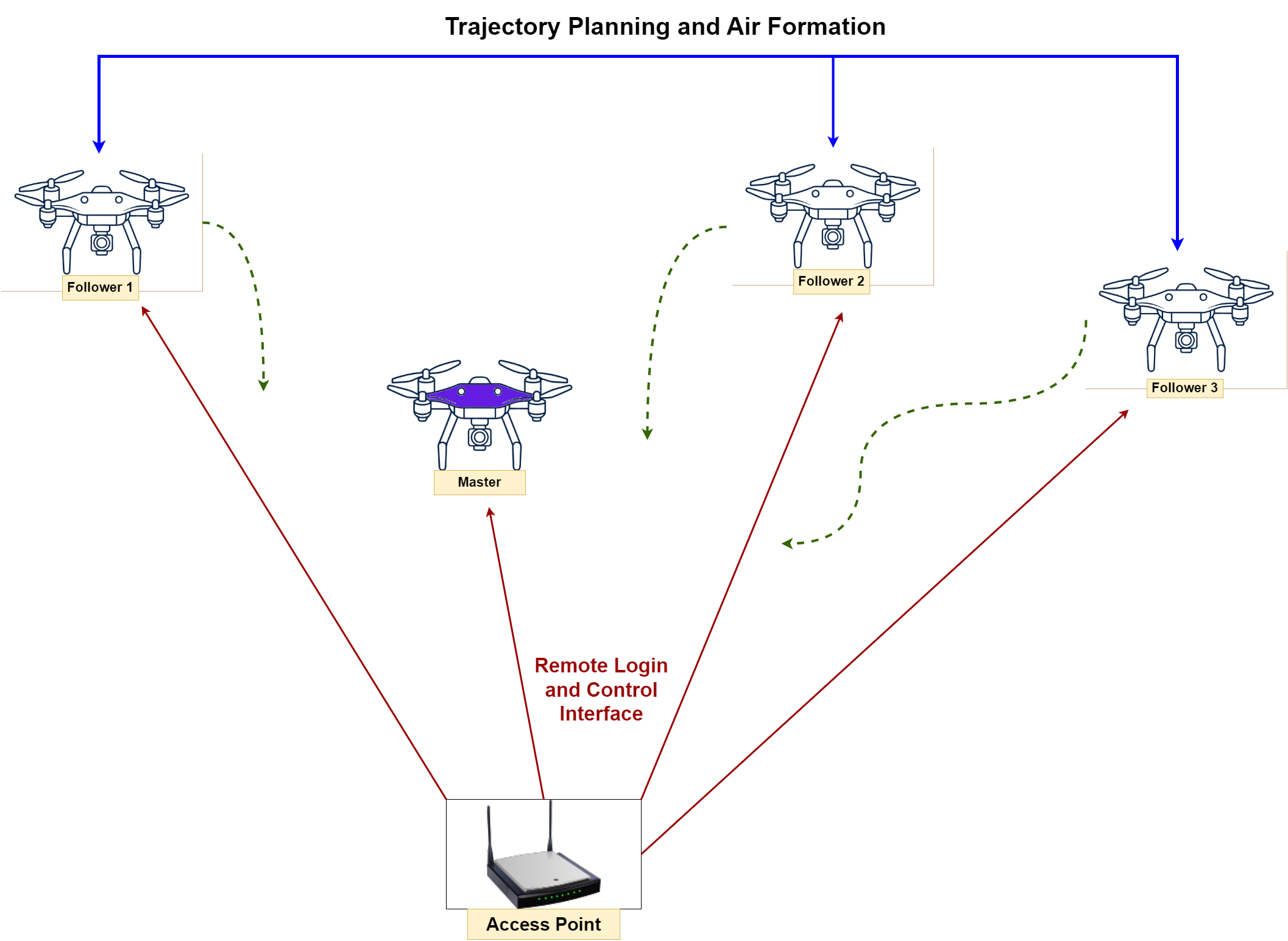
Fig 4: The figure shows our UAV-to-UAV communication framework.
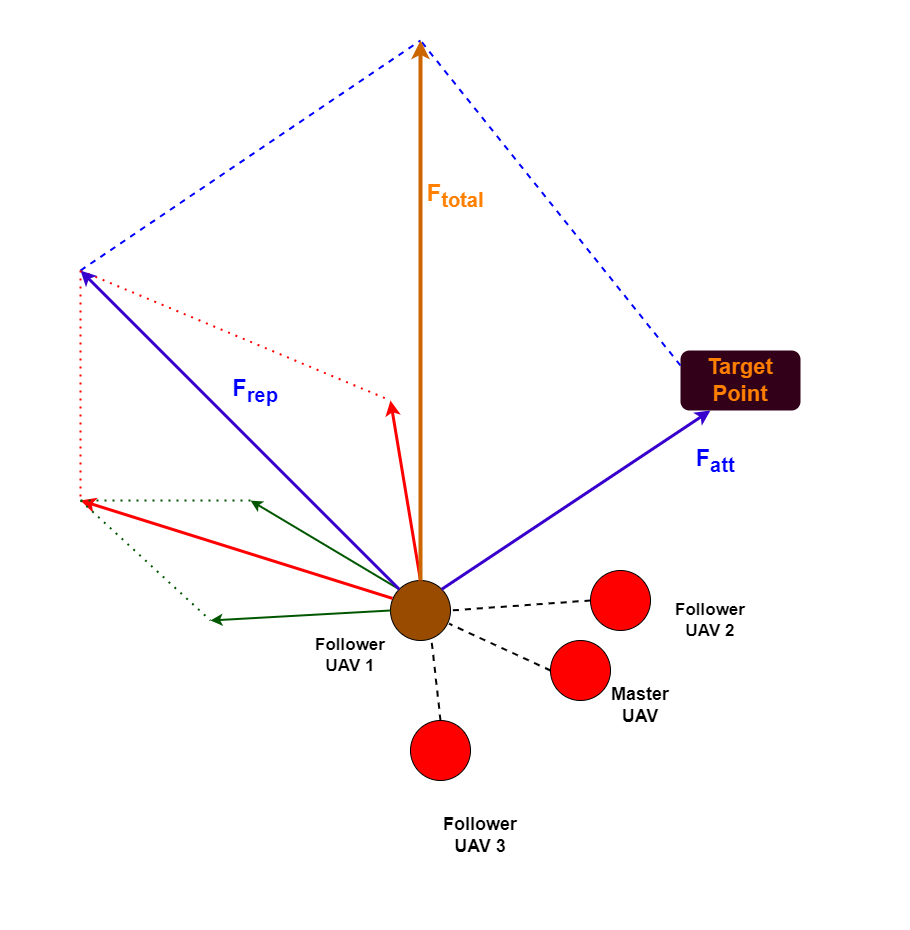
Fig 5: The figure shows a schematic of the modified APF-based method for
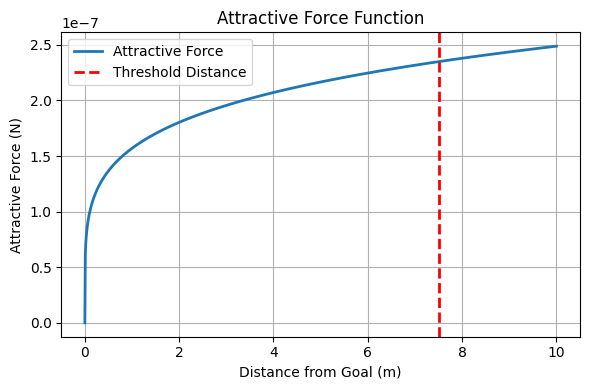
Fig 6: The figure shows the attractive force between the UAV and the goal,
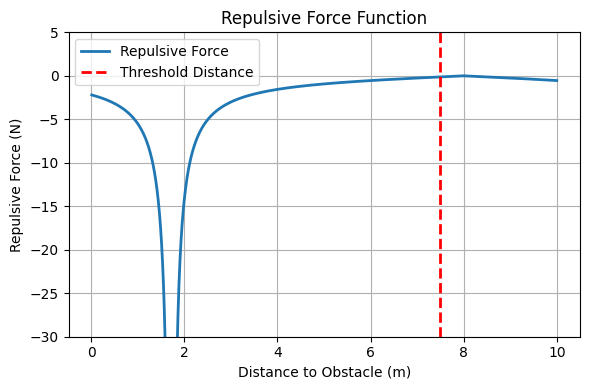
Fig 7: The figure shows the repulsive force between the UAV and the
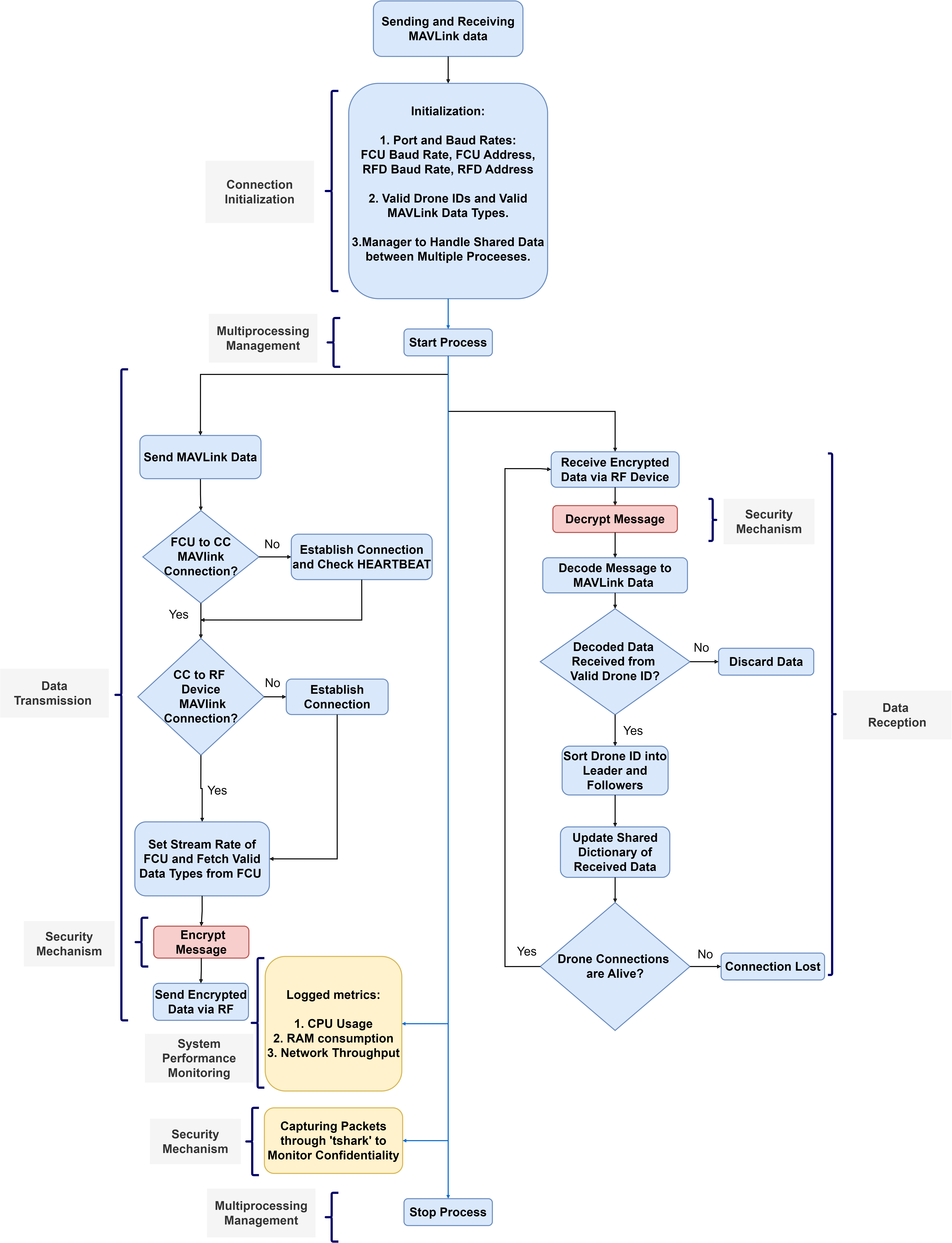
Fig 8: The figure shows a flowchart of RF-based UAV-to-UAV communica-
Limitations
- The adversary model excludes active attacks such as jamming, spoofing, or man-in-the-middle, focusing solely on passive eavesdropping.
- Limited UAV swarm size (four UAVs) and specific hardware may not generalize to large-scale swarms or other UAV platforms.
- No explicit evaluation under network congestion, interference, or harsh environmental conditions affecting communication reliability.
- Details on code release and full reproducibility are lacking; the implementation relies on custom hardware and proprietary firmware.
- The cryptanalysis assumes access to four known plaintext-ciphertext pairs; resistance under different or adaptive attack models is not explored.
- Collision avoidance validation is shown under limited scenarios; generalization to complex obstacle environments or 3D flight dynamics requires further study.
Open questions / follow-ons
- How well does MAVShield scale performance-wise in larger UAV swarms (tens or hundreds of UAVs) with higher message throughput?
- Can the modified APF collision avoidance method be extended to operate effectively with dynamic obstacles or 3D flight path planning in cluttered environments?
- What is the resilience of MAVShield to active attacks such as replay, spoofing, or jamming in adversarial environments?
- Could machine learning-based or adaptive encryption approaches further reduce overhead or improve security in resource-constrained UAV swarms?
Why it matters for bot defense
For bot-defense and CAPTCHA practitioners, this paper underscores the importance of lightweight yet robust encryption to secure communication channels in multi-agent autonomous systems such as drone swarms. The integration of encryption at the application layer (within the MAVLink protocol) without degrading real-time responsiveness demonstrates an effective design pattern for protecting telemetry and control data against passive eavesdropping. The geodetic-coordinate based collision avoidance approach highlights how system designs that eliminate costly data transformations can improve control stability—an insight valuable for securing distributed automated systems under resource constraints. Though not directly about CAPTCHAs or bot mitigation, the paper’s emphasis on balancing cryptographic strength and operational efficiency in wireless multi-agent networks informs secure system design best practices applicable to bot-defense technologies reliant on low-latency, high-integrity data exchange.
Cite
@article{arxiv2606_27028,
  title={ Design and Performance Evaluation of Secure RF and WiFi-Based Communication in Drone Swarms via Testbed Implementation },
  author={ Bhavya Dixit and Aayushi Rajgor and Subham Kumar and Rushikesh Patil and Ananthapadmanabhan A. and Gaurav S. Kasbekar and Arnab Maity },
  journal={arXiv preprint arXiv:2606.27028},
  year={ 2026 },
  url={https://arxiv.org/abs/2606.27028}
}