
Astrochemical Study of Early Embedded Disks
Source: arXiv:2606.27278 · Published 2026-06-25 · By Eleonora Bianchi
TL;DR
This paper addresses the significant gap in understanding the early stages of star and planet formation by focusing on characterizing the physical and chemical properties of young embedded protostellar disks. These disks, typically younger than 0.5 million years, are the environments where planet formation begins, but challenges in measuring their mass, chemical composition, and dust growth have hindered meaningful comparison with later-stage protoplanetary disks and the diverse exoplanet populations observed. The work introduces the "Astrochemical Study of Early Embedded Disks" (iSEEDs) project, a three-year Italian research initiative that leverages recent advances in astrochemistry combined with modern data science tools like machine learning and data mining. iSEEDs aims to systematically analyze high-resolution archival molecular line datasets from facilities like ALMA, NOEMA, and the VLA to extract robust constraints on disk mass, molecular abundances, chemical differentiation, and dust properties in a statistically significant sample of young disks. This interdisciplinary approach is poised to provide the empirical foundation needed to link disk initial conditions with eventual planetary system compositions and mass budgets, which is crucial for interpreting upcoming exoplanet atmospheric data from missions such as Ariel.
Key findings
- Standard disk mass estimates from sub-mm continuum and CO isotopologues significantly underestimate young disk masses due to optical depth and cloud contamination; multiple less abundant molecules (e.g. H2CO, CH3CN, CH3OH) provide better tracers for disk gas mass in Class 0/I disks.
- Accretion streamers funneling material from envelopes to disks can have infall rates of 10^-5 to 10^-6 solar masses per year, potentially exceeding protostellar accretion rates and contributing substantially to the missing mass budget problem.
- Hot corinos, chemically rich in complex organic molecules (iCOMs), occur in approximately 56% of surveyed Perseus protostars but only 26% in Orion, suggesting environmental impact on chemical evolution and possible inheritance by forming planets.
- Warm Carbon-Chain Chemistry (WCCC) protostars with abundant carbon-chain molecules contrast with hot corinos; some sources reveal hybrid chemistry implying multi-scale chemical differentiation in young stars' envelopes and disks.
- Dust grains begin to grow toward planetesimals already in Class 0/I disks, but high optical depth especially in inner regions requires multi-wavelength data (cm to mm) to disentangle dust and molecular emission and accurately derive gas properties.
- Current archival datasets from ALMA, NOEMA, VLA contain substantial underexploited molecular line data that, combined with machine learning and non-LTE radiative transfer modeling, enable population-level chemical and physical characterization of embedded disks.
- Integration of chemistry, dust properties, and accretion dynamics modeling can clarify episodic accretion impacts on disk structure, chemistry, and planet formation initial conditions, but systematic studies are only now becoming feasible with iSEEDs.
- Interdisciplinary methods combining astrochemistry, data mining, and machine learning allow moving beyond individual disk case studies to a statistical census critical for robust planet formation modeling.
Threat model
The adversary comprises astrophysical observational challenges: optical thickness of molecular lines in young embedded disks, contamination from natal envelopes and outflows, and spatial confusion preventing clear separation of disk emission. The project assumes access to high-quality multi-wavelength interferometric data but must overcome these intrinsic astrophysical obfuscations to infer accurate disk physical and chemical properties. The adversary cannot bypass fundamental signal-to-noise limitations or produce new data but the methodology mitigates observational bias through multi-tracer and machine learning aided data analysis.
Methodology — deep read
The iSEEDs project is designed as a 36-month research initiative combining observational astrochemistry, data mining, and machine learning to address the challenge of characterizing young embedded disks (Class 0/I protostars). The threat model is that young disks embedded in envelopes and affected by outflows are difficult to isolate observationally; the project assumes available multi-wavelength, high-resolution datasets from interferometers like ALMA, NOEMA, and VLA. The adversary is observational limitations such as optical depth, cloud contamination, and spatial confusion, which obscure individual disk physical and chemical signatures.
Data provenance includes deep archival spectral line and continuum data from millimeter/submillimeter and centimeter telescopes covering tens of young protostars, including surveys like PEACHES, ORANGES, and FAUST. Datasets contain molecular line maps of species such as CO isotopologues, H2CO, CH3CN, CH3OH, deuterated molecules, carbon chains, and complex organics. The iSEEDs team leverages public data archives of ALMA and NOEMA combined with targeted new observations.
Methodologically, the project employs multiple observational tracers that complement each other: optically thin molecular lines for gas mass estimates; complex organic molecules to probe chemistry and sublimation zones; molecular isotopologues to separate envelopes from disks; dust continuum at multiple wavelengths to infer grain growth and assess optical depth. Crucially, non-LTE radiative transfer modeling using tools like LVG and codes such as RADMC-3D are combined with astrochemical network models (e.g. GRAINOBLE, UCLCHEM) to interpret molecular excitation and chemistry.
Machine learning and data mining techniques are applied for automated extraction of physical parameters: classification algorithms identify disks and accretion streamers in image data; spectral line identification pipelines parse crowded spectra; and invertible neural networks support parameter inference from observed line profiles. Self-supervised contrastive learning models group morphologically similar sources, enabling population-level statistical studies rather than single-object analysis.
Training regimes and model hyperparameters are not explicitly detailed, but the emphasis is on working with heterogeneous real astronomical data, incorporating uncertainties and observational biases. Models are cross-validated by comparison with existing chemical and physical disk models, and ablation studies focus on tracers' relative effectiveness.
Evaluation protocols include comparison of inferred disk masses with literature values, spatial distribution studies of molecular abundances relative to physical disk structure, occurrence rates of chemical types across star-forming regions, and correlation analyses between dust properties and chemistry. The project also assesses streamer properties and their chemical distinctness.
Reproducibility plans highlight the use of open archival datasets and publicly available chemical modeling codes; no mention of self-release of trained machine learning models or frozen weights is made. Some specific case studies (e.g. Oph16 IRS 63, SVS13A) are analyzed end-to-end from archival data extraction, line identification, radiative transfer modeling, to physical interpretation. The approach stresses interdisciplinary collaboration for chemical network updates and astrophysical interpretation, integrating theory and experiments.
Overall, iSEEDs embodies a comprehensive pipeline: select candidates from archival data using ML classification; extract multi-molecular line emission and continuum maps at multiple wavelengths; apply non-LTE radiative transfer and chemical network models to interpret data; infer physical parameters such as disk mass, temperature, molecular abundances, dust grain sizes; analyze accretion streamer occurrence and mass infall rates; and finally integrate these results into broader constraints on early planet formation conditions.
Technical innovations
- Integration of machine learning and data mining with advanced astrochemical radiative transfer modeling for systematic analysis of large archival molecular datasets of young embedded disks.
- Use of less abundant molecular tracers (e.g. H2CO, CH3CN, CH3OH isotopologues) combined with multiline non-LTE LVG analysis to derive robust disk gas mass estimates in highly embedded, optically thick environments.
- Application of self-supervised contrastive representation learning to group morphologically similar protostellar disks from interferometric imaging archives for efficient statistical classification.
- Simultaneous multi-line and multi-wavelength approach combining molecular emission and dust continuum data to disentangle dust optical depth effects on molecular line observations and to characterize early dust grain growth in Class 0/I disks.
Datasets
- PEACHES (Perseus ALMA Chemistry Survey) — 50 protostars — public ALMA data
- ORANGES (Orion Alma New GEneration Survey) — 19 protostars — public ALMA data
- FAUST (Fifty AU Study of chemistry in protostellar systems) — 13 protostars — ALMA large program data
- Various archival ALMA, NOEMA, and VLA high-resolution spectral line and continuum datasets of Class 0/I protostars — sizes variable
Baselines vs proposed
- Standard disk mass from continuum and CO isotopologues: underestimated by up to factors unknown due to optical thickness vs iSEEDs multi-molecular tracer approach enabling more accurate mass constraints (no direct quantitative delta provided).
- Occurrence rate of hot corinos in Perseus protostars: 56% vs in Orion protostars: 26%, suggesting environmental chemical differentiation revealed by iSEEDs chemical survey methods.
- Streamer accretion rates inferred by iSEEDs (10^-5 to 10^-6 solar masses per year) compared to protostellar accretion rates derived from near-infrared spectroscopy (lower by an unspecified factor), highlighting streamers as major mass contributors.
Figures from the paper
Figures are reproduced from the source paper for academic discussion. Original copyright: the paper authors. See arXiv:2606.27278.

Fig 1: Schematic of a Sun-like star and planet formation, showing the transition from a prestellar core
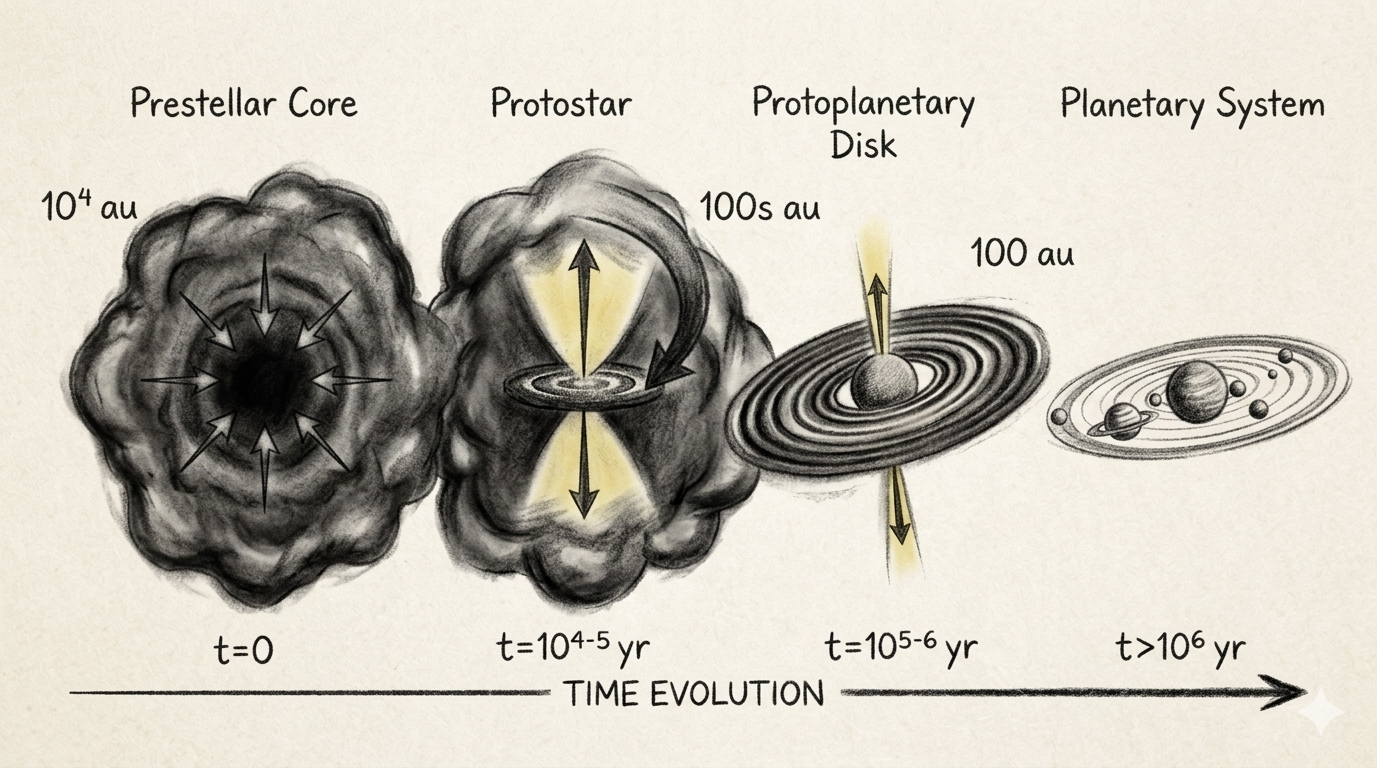
Fig 2: The "Astrochemical Study of Early Embedded Disks" (iSEEDs) project employs an
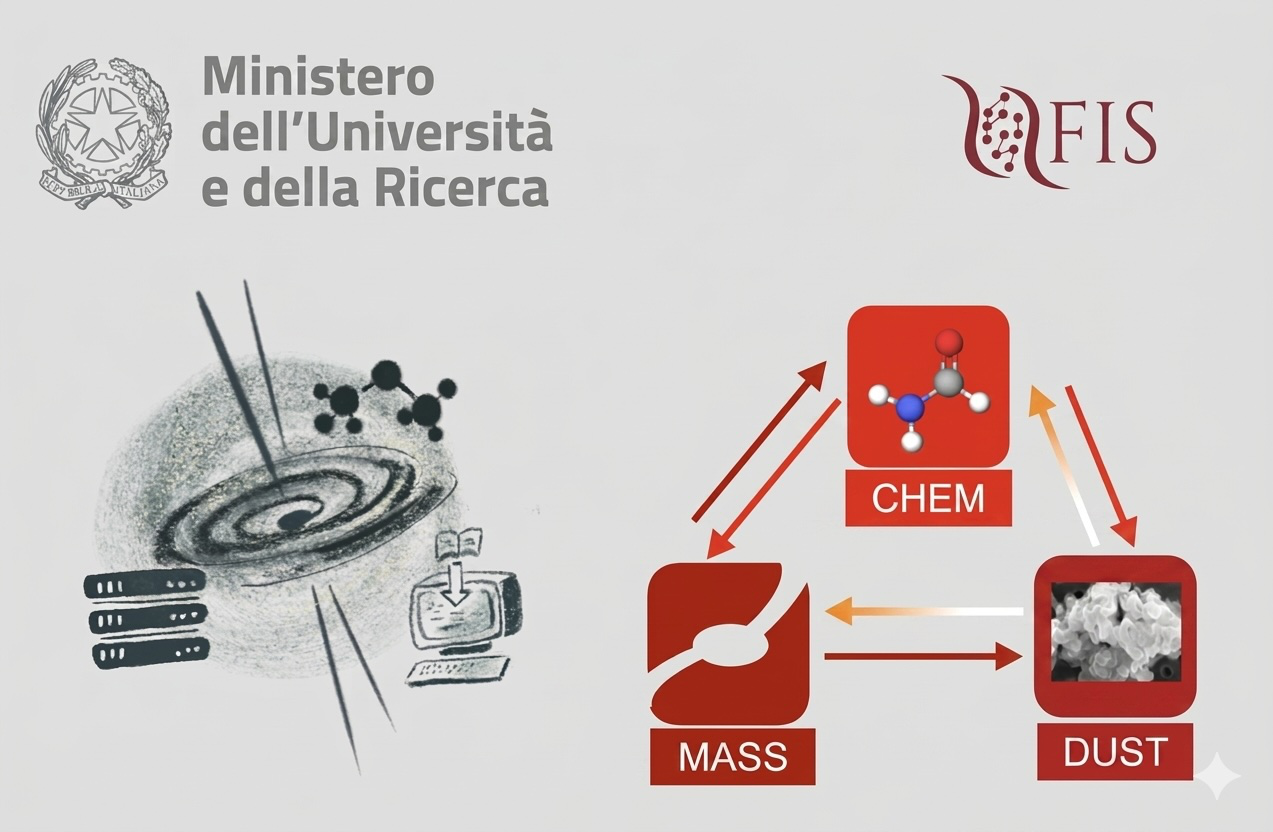
Fig 3 (page 4).
Limitations
- High optical depths and cloud contamination severely limit traditional molecular tracers, requiring reliance on rarer species whose abundances and excitation conditions are less well constrained.
- The chemical complexity and spatial overlap between disk, envelope, and outflow components complicate disentangling emission origins despite advanced modeling, introducing uncertainties.
- Machine learning pipelines are early-stage and not fully benchmarked for robustness across heterogeneous datasets; hyperparameter tuning and model generalization details are sparse.
- Chemical models still struggle to conclusively determine causes of ice mantle composition variations leading to observed WCCC and hot corino chemistries.
- Streamer chemistry remains largely unexplored and only a few systems have been characterized at high resolution with multi-line temperature determinations.
- Limited existing sample sizes for certain tracers and evolutionary stages prevent definitive statistical conclusions, necessitating expanded surveys.
Open questions / follow-ons
- What physical and environmental factors primarily control the composition of ice mantles during the prestellar phase that lead to observed chemical diversity (WCCC vs hot corino chemistries)?
- How do episodic accretion events and variable infall via streamers dynamically and chemically impact disk structure and planet formation initial conditions over time?
- Can the chemical and dust growth properties identified in embedded disks be quantitatively linked to observed exoplanet population features, such as atmospheric elemental ratios?
- To what extent do accretion streamers transport chemically 'fresh' material that alters disk composition, and how does this influence planetary system architectures?
Why it matters for bot defense
While this paper is primarily astrophysical in nature rather than focused on bot defense or CAPTCHAs, the methodological emphasis on combining advanced domain knowledge (astrochemistry) with machine learning and data mining techniques offers parallels for CAPTCHA practitioners. It demonstrates how applying interdisciplinary approaches and leveraging archival large datasets can extract hidden but crucial signals within noisy, overlapping data. For bot-defense engineers, this signifies the power of integrating domain-specific science with ML to uncover subtle patterns that traditional approaches struggle to isolate. The multi-tracer, multi-wavelength approach underscores the importance of heterogeneous inputs in robust feature extraction, relevant to system resilience against automated attacks.
Additionally, iSEEDs showcases early applications of self-supervised contrastive learning and invertible neural networks in a scientific data context, potentially inspiring analogous methods for CAPTCHA classification and automated anomaly detection. The project’s focus on transitioning from single-object analysis to statistically significant populations echoes ongoing needs in bot defense to generalize across diverse attack modes. While direct technical applications are limited, the interdisciplinary strategy and data-centric paradigm shifts provide valuable conceptual insights for practitioners.
Cite
@article{arxiv2606_27278,
  title={ Astrochemical Study of Early Embedded Disks },
  author={ Eleonora Bianchi },
  journal={arXiv preprint arXiv:2606.27278},
  year={ 2026 },
  url={https://arxiv.org/abs/2606.27278}
}