
Poisoning effect of ammonia on the performance and transport process of proton exchange membrane fuel cells
Source: arXiv:2606.25992 · Published 2026-06-24 · By Yaxian Han, Wei Gao, Yichao Huang, Tianyou Wang, Zhizhao Che
TL;DR
This paper addresses the persistent issue of ammonia poisoning in proton exchange membrane fuel cells (PEMFCs) fueled by hydrogen produced via ammonia decomposition. Ammonia traces unavoidably contaminate the hydrogen feed and degrade fuel cell performance, yet the detailed poisoning mechanism and spatial distribution inside the membrane-electrode assembly (MEA) remain insufficiently understood. The authors develop a comprehensive three-dimensional multiphysics numerical model that explicitly resolves ammonia transport, dissolution into ionomer phases, protonation to ammonium ions (NH4+), and the resulting local neutralization of sulfonic acid sites that degrade proton conductivity. Through coupling of species transport, electrochemical reactions, and water management, the model assesses how ammonia concentration, operating temperature, humidity, and membrane thickness impact fuel cell performance.
Key findings demonstrate that ammonia poisoning primarily manifests by substantial reduction of proton conductivity in both the PEM and anode catalyst layer ionomer due to NH4+-induced partial sulfonic-site neutralization. This conductivity loss causes current density redistribution and hydration changes resulting in non-uniform and substantial performance losses. Increasing the operating temperature and humidity help alleviate poisoning by enhancing conductivity and reaction kinetics, while thinner membranes reduce poisoning impact by shortening proton transport paths but degrade current uniformity. The model achieves close agreement with experimental polarization curves and provides spatially-resolved insights into coupled transport and electrochemical feedbacks underlying ammonia poisoning.
Overall, the work provides an important mechanistic and spatially detailed framework to quantify and understand ammonia contamination effects in PEMFCs, supporting design and operation strategies to improve ammonia tolerance without relying on empirical uniform voltage penalties or lumped conductivity corrections.
Key findings
- Increasing ammonia concentration to 100 ppm reduces peak power density by 21.1% under steady-state poisoning conditions.
- Ammonia causes a monotonic decrease in proton conductivity of the membrane and anode catalyst layer ionomer, with ACL proton conductivity dropping by 68.4% at 150 ppm NH3.
- Higher operating temperatures reduce the power density loss due to ammonia poisoning from 55.4% at 60°C to 13.4% at 90°C for 0 to 150 ppm NH3.
- Reduced membrane thickness (10 μm vs 127 μm) lowers ammonia-induced performance loss from about 20% to 2.77% peak power density reduction at 50 ppm NH3.
- NH3/NH4+ species spatially accumulate in the anode side ionomer, locally neutralizing sulfonic acid groups and causing current density redistribution between channel and rib regions.
- Decreased dissolved water content under ammonia poisoning exacerbates proton conductivity loss due to hydration dependence.
- The 3D multiphysics model's polarization curves match experimental data with maximum voltage errors of 0.0365 V (0 ppm NH3) and 0.0521 V (30 ppm NH3).
- The model reveals that ammonia poisoning is governed by coupled NH3 transport, ionomer chemistry (neutralization), hydration, and electrochemical feedbacks rather than a uniform voltage penalty.
Threat model
The adversary is effectively trace ammonia contamination in the hydrogen fuel stream at ppm levels entering the PEMFC anode. The ammonia molecules can dissolve into the ionomer, form ammonium ions that neutralize sulfonic acid groups, and degrade proton conductivity, reducing cell performance. The adversary does not affect cathode side ammonia transport or irreversible material degradation. Dynamic or transient attacks, electrocatalytic poisoning pathways, and stack-level effects are out of scope.
Methodology — deep read
Threat model & assumptions: The threat considered is trace ammonia (NH3) contamination in the hydrogen feed to a PEM fuel cell. Ammonia is treated as an explicit species entering the anode gas channel in ppm-level concentrations (0–150 ppm). The model assumes steady-state operation with no reactant crossover or long-term material degradation effects modeled. The cathode side ammonia crossover is neglected, focusing poisoning effects on the anode membrane and catalyst layer. Ammonia protonation in hydrated ionomer forms ammonium (NH4+), which partially neutralizes sulfonic acid sites, degrading proton conduction. Gravity effects and gas crossover are ignored, and gases follow ideal behavior. The domain models one channel and one adjacent rib (1 mm width, 50 mm length) as a repeating unit.
Data: The study uses numerical simulations with parameters and geometries detailed in the supplementary material. Mesh independence and validation against experimental polarization curves from Uribe et al. [23] were performed. The mesh consists of about 99,200 cells. The simulation spans multiple NH3 concentrations (0–150 ppm), operating temperatures (60–90 °C), relative humidities, and membrane thicknesses (10–127 μm).
Architecture / algorithm: The model couples multi-physics PDEs for gas flow, species transport (H2, NH3, O2, N2, H2O vapor), liquid water transport, heat transfer, electron and proton charge transport, and electrochemical kinetics. Importantly, NH3 is explicitly modeled as a transported species that dissolves in hydrated ionomer, protonates to NH4+, then partially neutralizes sulfonic acid sites altering local proton conductivity according to an empirical model (Pisani et al. and Hongsirikarn et al.). This reduces local ionic conductivity in both the PEM and anode catalyst layer (ACL) ionomer phase. The spatial distribution of NH3/NH4+ modifies local ohmic losses, current density, electroosmotic drag, hydration, and reaction rates, forming a strongly coupled feedback loop. Geometry explicitly resolves channel and rib regions capturing cross-sectional non-uniformity.
Training regime: Not applicable (numerical model simulations).
Evaluation protocol: The model outcomes include polarization curves, current density distributions, proton conductivity maps, and dissolved water content profiles. Validation is done by comparing simulated polarization curves at 0 and 30 ppm NH3 with experimental curves, showing maximum voltage errors <0.053 V. Parametric sweeps over NH3 levels, temperature, humidity, and membrane thickness quantify impacts on peak power density and current density non-uniformity. Spatial field maps correlate poisoning effects with local ionomer conductivity and hydration. Simulations hold cell voltage fixed for internal field comparisons.
Reproducibility: No public code or datasets reported in the paper. Model parameters and governing equations are detailed in the supplement and main text, enabling partial reproduction by experts.
Example end-to-end study: Simulations at 50 ppm NH3 and 0.5 V output voltage show that ammonia dissolves into ionomer, forms NH4+, causes sulfonic site neutralization and reduction of local proton conductivity in membrane and ACL ionomer. This conductivity loss causes current density to decrease and redistribute spatially under channel and rib. Reduced proton flux weakens electroosmotic drag, lowering hydration especially under channel regions. Hydration loss further amplifies conductivity reduction due to hydration dependence, reinforcing performance loss. This steady-state coupled feedback loop produces a 21.1% peak power loss at 100 ppm NH3 and clearly visible cross-sectional gradients in proton conductivity and current density (Fig 3).
Technical innovations
- Development of a fully 3D multiphysics PEMFC model explicitly coupling ammonia transport, dissolution into ionomer, protonation to ammonium, and local sulfonic site neutralization affecting proton conductivity.
- Simultaneous resolution of spatially non-uniform ionic conductivity degradation in both the PEM and anode catalyst layer ionomer, enabling detailed mapping of poisoning effects under channel-rib geometry.
- Integration of feedbacks between ammonia-induced conductivity loss, current density redistribution, local water transport, and hydration-dependent proton conductivity in a transport-resolved framework.
- Quantitative parametric analysis linking ammonia concentration, operating temperature, humidity, and membrane thickness to performance degradation with spatially resolved diagnostics, surpassing prior lumped or 1D poisoning treatments.
Baselines vs proposed
- Experiment (Uribe et al. 0 ppm NH3): voltage error max 0.0365 V vs simulation.
- Experiment (Uribe et al. 30 ppm NH3): voltage error max 0.0521 V vs simulation.
- Peak power density loss at 100 ppm NH3: simulation shows 21.1% reduction vs 0 ppm baseline.
- Power density loss at 150 ppm NH3 and 60 °C: 55.4% vs 13.4% loss at 90 °C.
- ACL proton conductivity drop at 150 ppm NH3: 68.4% decrease vs 0 ppm baseline.
- Membrane thickness 10 μm: 2.77% power density reduction at 50 ppm NH3 vs 20.1% reduction at 127 μm.
Figures from the paper
Figures are reproduced from the source paper for academic discussion. Original copyright: the paper authors. See arXiv:2606.25992.
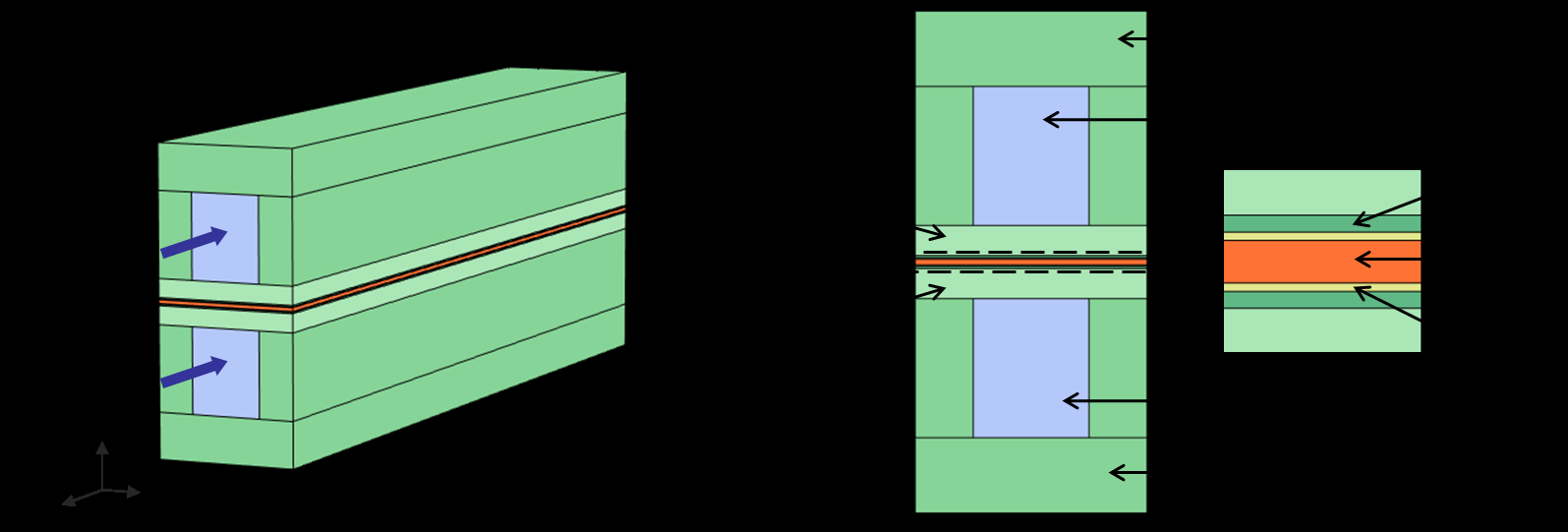
Fig 1: Schematic illustration of the geometric model of the PEMFC (not to scale).
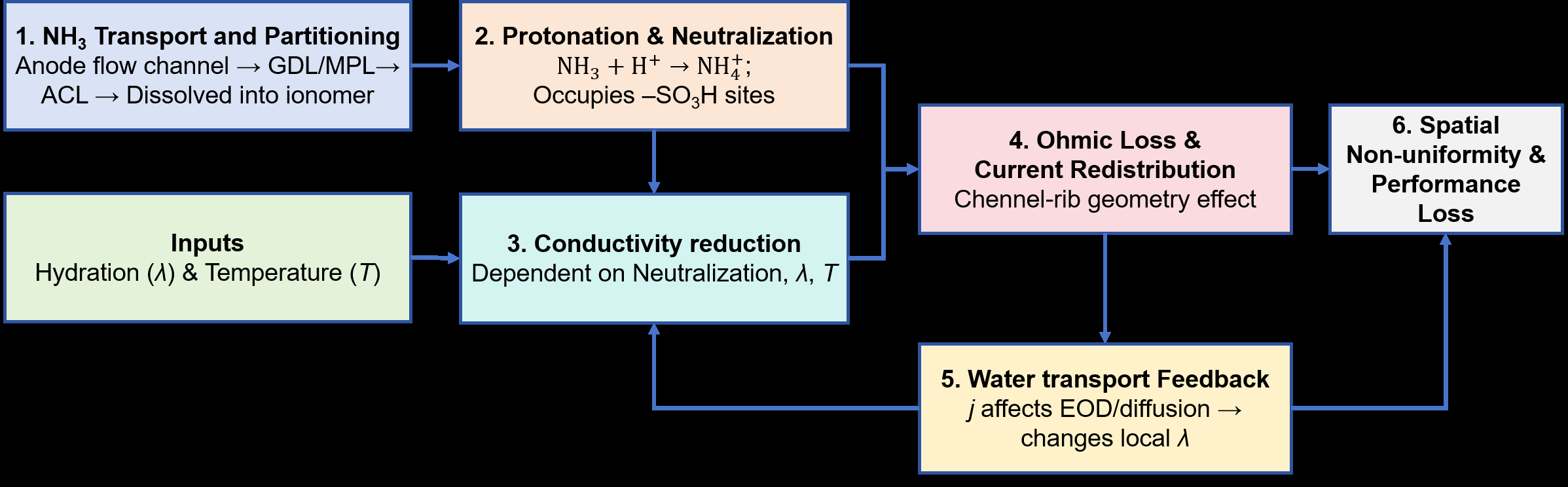
Fig 2: Schematic of the coupling pathway for NH3 poisoning in the multiphysics model.
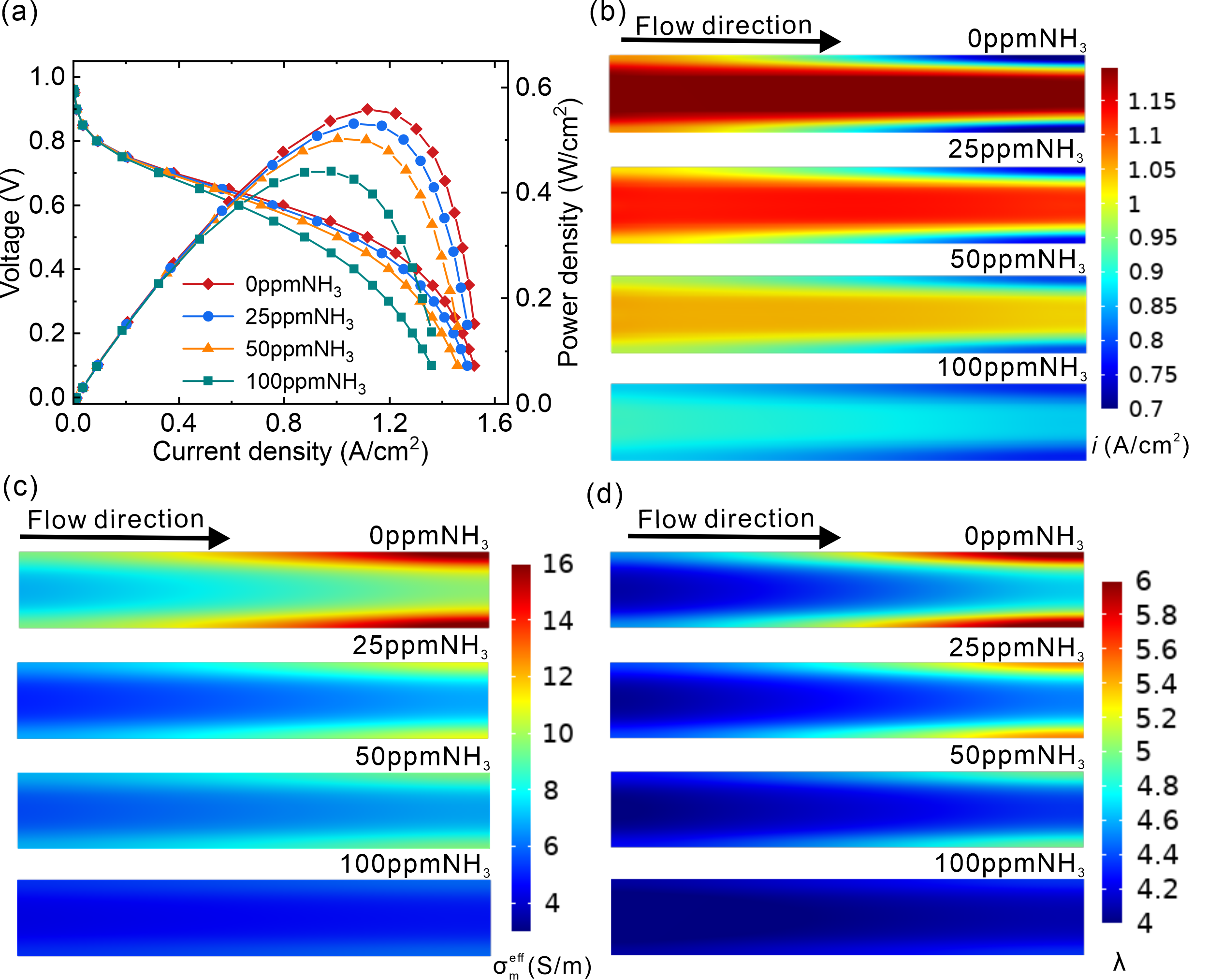
Fig 3: Influence of NH3 concentrations on PEMFCs: (a) polarization and power-density curves;
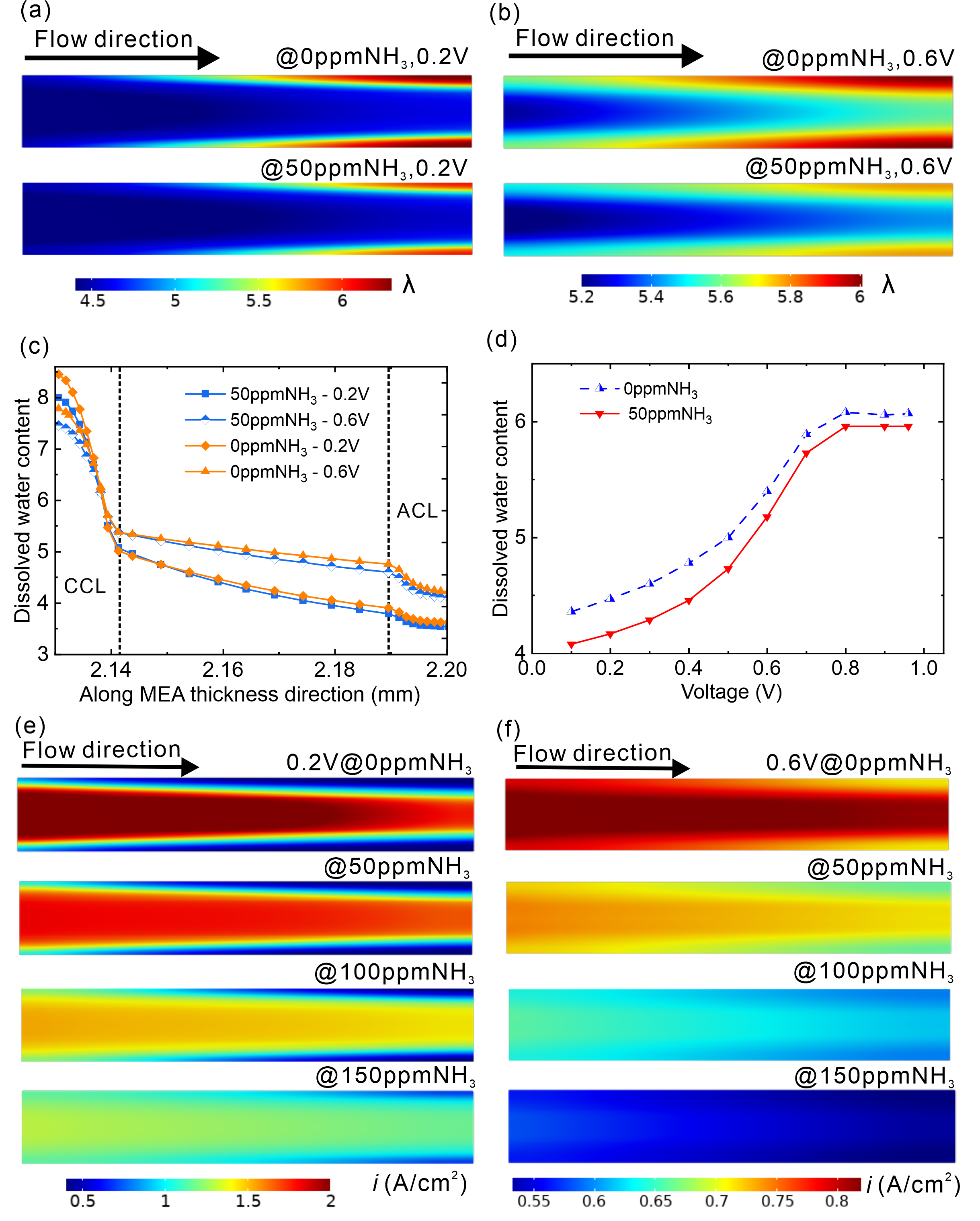
Fig 4: (a-b) Comparison of the distribution of the dissolved water content for 0 and 50 ppm NH3
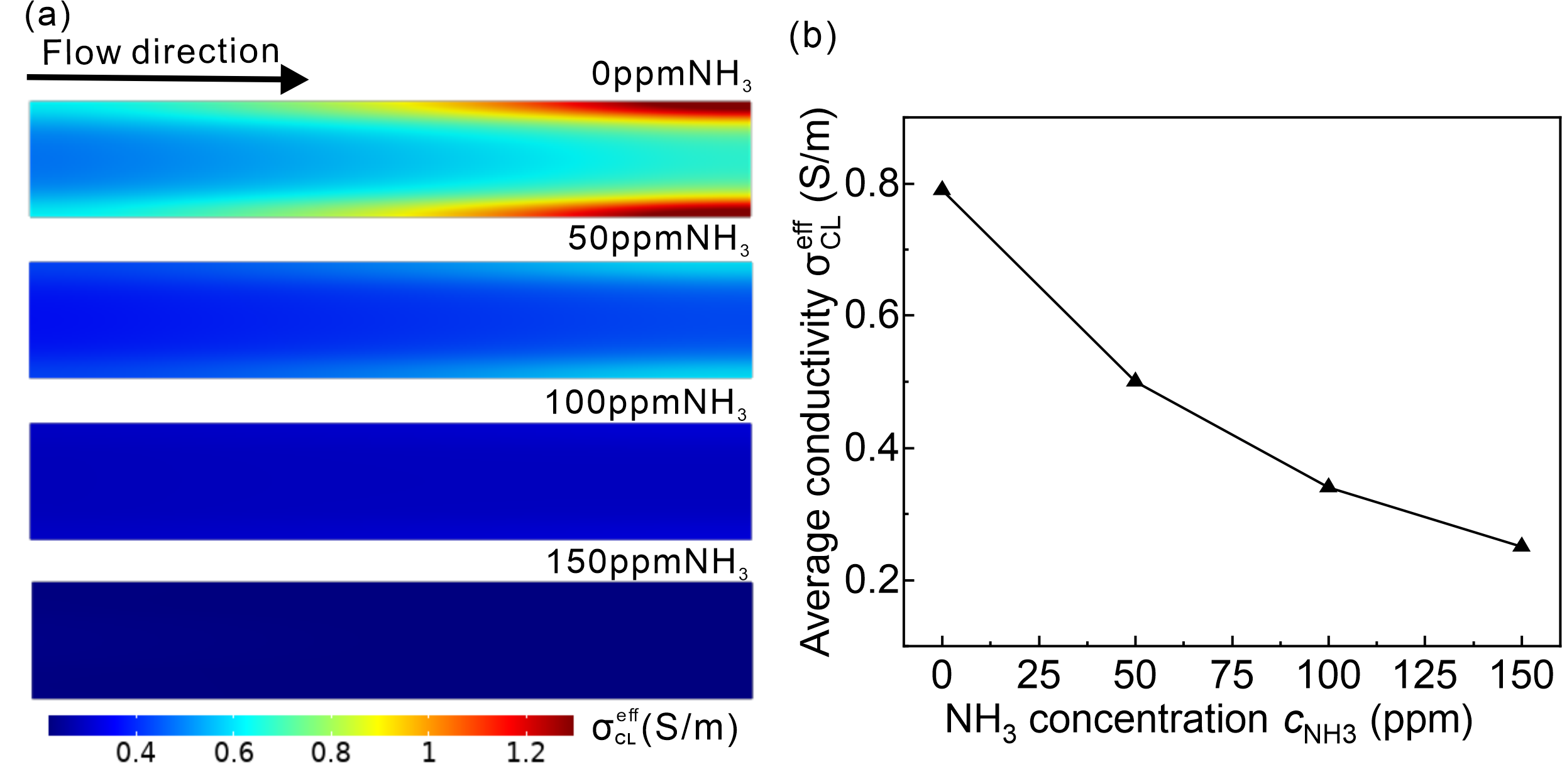
Fig 5: Influence of NH3 concentration on the ACL: (a) proton conductivity distribution at the
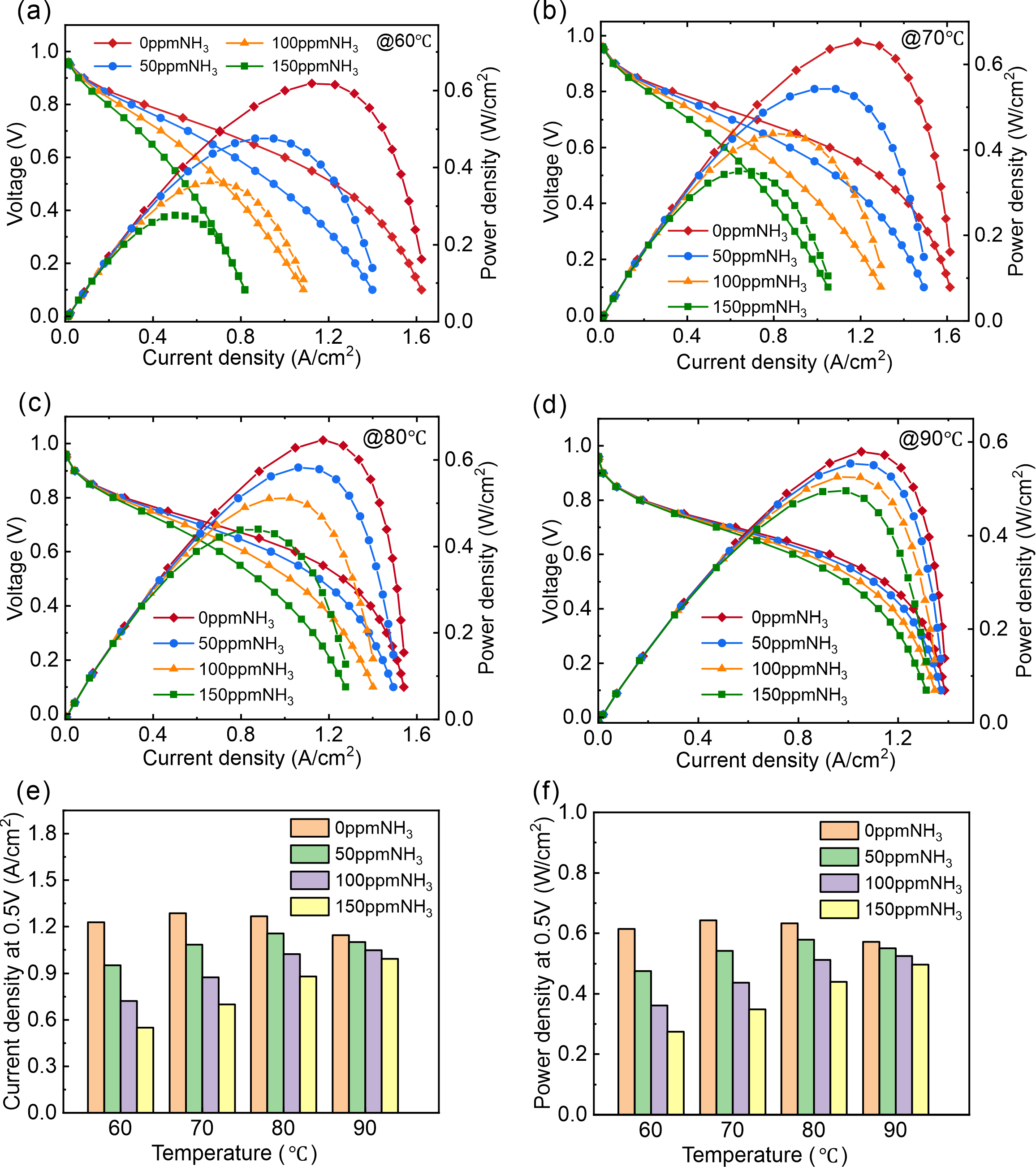
Fig 6: (a-d) Polarization and power-density curves of PEMFC at different operating
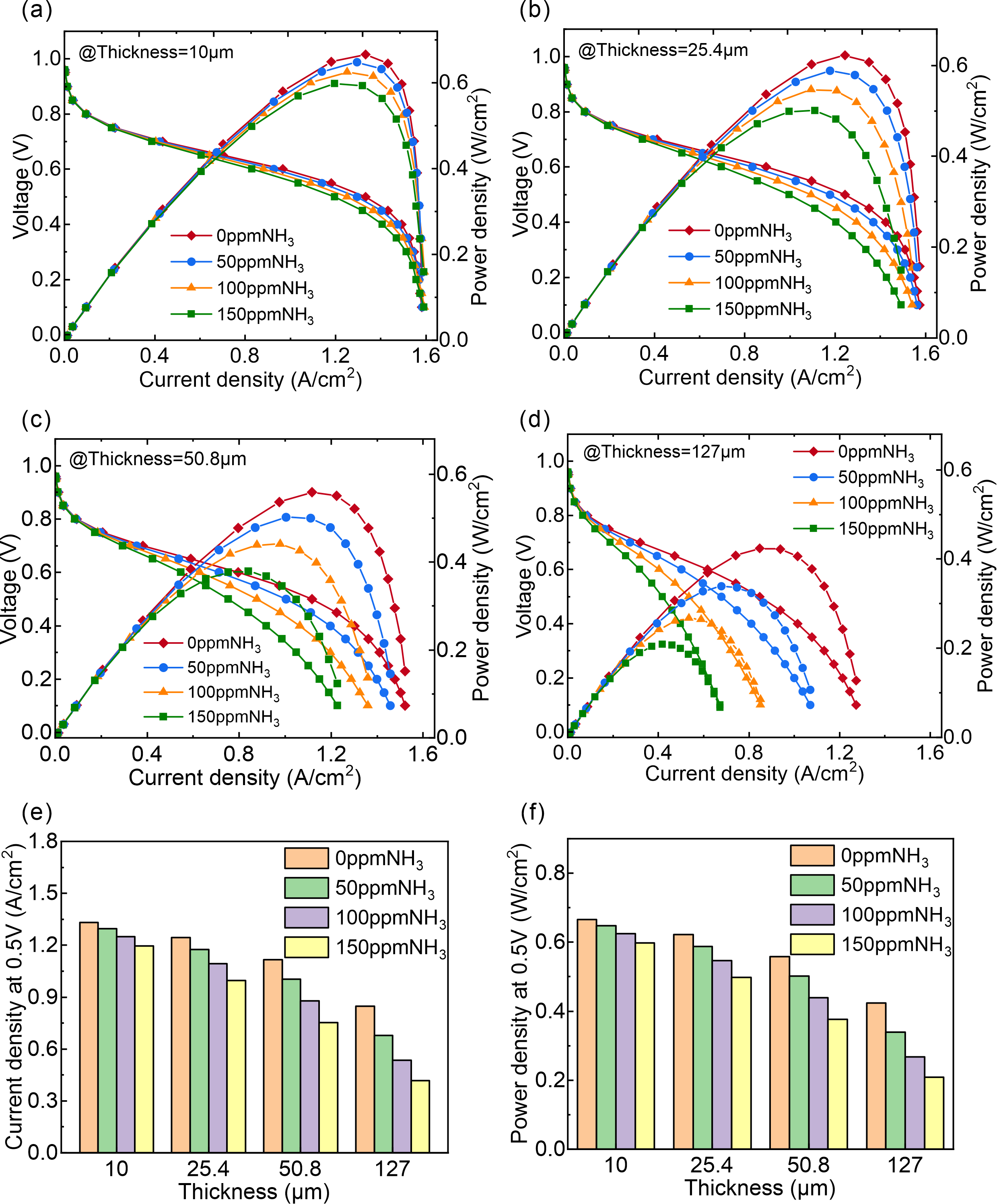
Fig 7: (a-d) Polarization and power-density curves of PEMFCs at different membrane
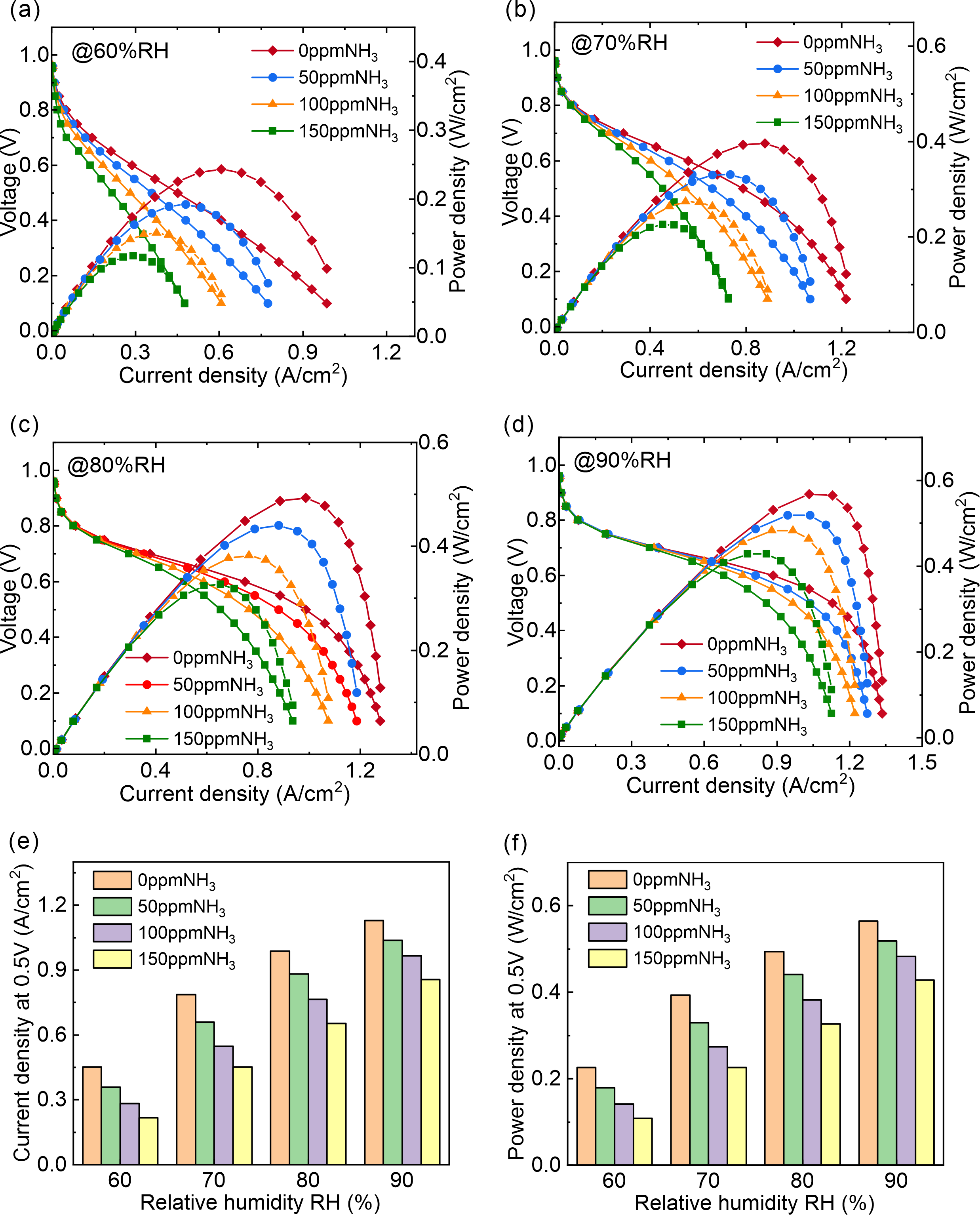
Fig 8: (a-d) Polarization and power-density curves of PEMFCs under different operating
Limitations
- Ammonia crossover to cathode and related effects are neglected, potentially underestimating poisoning on cathode side.
- Long-term irreversible material degradation mechanisms (corrosion, contact resistance changes) are not modeled, limiting applicability to steady-state or short-term effects.
- Electrocatalytic impacts of ammonia/ammonium on hydrogen oxidation reaction or oxygen reduction reaction kinetics at Pt surfaces are not incorporated due to lack of kinetic parameters.
- Model assumes steady-state operation; transient dynamics and recovery processes from ammonia exposure are not captured.
- Simulation domain models a single channel-rib unit with assumed periodicity, ignoring large-scale cell variations or stack-level effects.
- No public release of code or data, limiting reproducibility to expert readers reproducing from equations.
Open questions / follow-ons
- How do transient ammonia poisoning and recovery dynamics evolve over time and operating conditions?
- What is the impact of ammonia crossover and poisoning on the cathode catalyst layer under realistic operating conditions?
- How do ammonium species influence electrocatalytic kinetics of HOR and ORR at various potentials and catalyst materials?
- Can advanced membrane materials or ionomers with altered ammonium binding properties mitigate ammonia poisoning more effectively?
Why it matters for bot defense
While not directly related to CAPTCHA or bot defense, this detailed multi-physics modeling of contaminant poisoning in PEM fuel cells exemplifies an advanced mechanistic approach to studying subtle, spatially distributed degradation in complex systems. Bot-defense practitioners could draw inspiration from the approach of explicitly modeling chemical interactions, spatial heterogeneity, and multi-factor feedback loops rather than relying on lumped or empirical penalties. Similarly, flawed or attacking agents analogous to ammonia molecules cause subtle degradation of system integrity in a spatially non-uniform fashion, highlighting the importance of coupling transport- and reaction-driven feedback mechanisms. The parametric insights into how operating conditions modulate poisoning severity may also resemble how system parameters influence attack success or defense tolerance in security settings. However, direct application would require domain adaptation since proton conduction and ionomer chemistry have no direct analogs in CAPTCHA pipelines.
Cite
@article{arxiv2606_25992,
  title={ Poisoning effect of ammonia on the performance and transport process of proton exchange membrane fuel cells },
  author={ Yaxian Han and Wei Gao and Yichao Huang and Tianyou Wang and Zhizhao Che },
  journal={arXiv preprint arXiv:2606.25992},
  year={ 2026 },
  url={https://arxiv.org/abs/2606.25992}
}