
FedReLa: Imbalanced Federated Learning via Re-Labeling
Source: arXiv:2606.26037 · Published 2026-06-24 · By Guangzheng Hu, Patricia Menéndez, Feng Liu, Mingming Gong, Guanghui Wang, Liuhua Peng
TL;DR
Federated learning (FL) suffers significant performance degradation under the combined challenges of global class imbalance and heterogeneous local data distributions. Existing algorithm-level methods partially address these issues but rely on assumptions such as access to global class priors or incur additional communication/training overhead. Data-level methods for imbalance mitigation are underdeveloped in FL due to strict privacy constraints and the scarcity of minority-class samples across clients. This paper introduces FedReLa, a novel and lightweight data-level approach that performs model-agnostic, feature-dependent local sample relabeling to correct biased global decision boundaries without requiring global class distribution knowledge or additional communication costs. FedReLa leverages posterior probabilities from the global model to selectively relabel majority-class samples likely to intrude into minority-class feature spaces, refocusing decision boundaries to improve minority-class recognition. Extensive experiments on multiple standard benchmarks exhibiting step-wise and long-tailed class imbalance (Fashion-MNIST, CIFAR-10/100, ImageNet-LT) demonstrate that FedReLa significantly improves minority/tail-class accuracy (up to +38.30% and +30.17%) while enhancing overall accuracy, consistently outperforming prior state-of-the-art methods.
Key findings
- FedReLa improves tail/minority class accuracy by up to 38.30% on step-wise imbalanced datasets and 30.17% on long-tailed datasets compared to baselines (Tables 1 and 2).
- FedReLa requires zero additional communication cost and introduces no new trainable parameters, running as a one-shot local pre-processing step at a specified communication round.
- The method is model-agnostic and compatible as a plug-in with existing algorithm-level FL imbalance methods, yielding consistent accuracy improvements when combined.
- Using class-wise z-score standardization and tanh normalization of global posterior probabilities effectively calibrates biased minority-class posterior underestimations to guide re-labeling.
- FedReLa selectively relabels only from majority to minority classes, preventing label corruption of minority samples and preserving their integrity.
- Experiments with varying degrees of client data heterogeneity (Dirichlet parameter α in {0.1, 0.3, 10}) show FedReLa maintains superior performance under non-IID settings.
- FedReLa improves model convergence and robustness by aligning local and global decision boundaries, reducing bias from heterogeneous local class prior distributions.
- Ablation studies show z-score standardization is essential to balance performance trade-offs across head, medium, and tail classes compared to direct use of posteriors.
Threat model
The threat model assumes honest-but-curious clients participating in federated learning with private, heterogeneous, and imbalanced local data distributions. The adversary is restricted from accessing other clients' raw data, local class priors, or the global class distribution. The work focuses on mitigating natural data-induced biases rather than defending against malicious attackers or label poisoning. FedReLa operates under these privacy and distributional constraints to improve minority class performance without leaking local information.
Methodology — deep read
Threat Model & Assumptions: The paper assumes a classical FL setting where multiple clients hold private local datasets with class-imbalanced and heterogeneous distributions. Adversaries and privacy concerns prohibit sharing raw data or local class priors explicitly. The adversary model is implicit, focusing on mitigating natural data imbalance and heterogeneity rather than malicious attacks. The global class distribution is unknown and inaccessible to any client.
Data: The authors evaluate on several standard image classification benchmarks adapted to FL, including Fashion-MNIST, CIFAR-10, CIFAR-100, and ImageNet-LT. Datasets are partitioned among clients using latent Dirichlet allocation (LDA) to simulate non-IID local distributions with a tunable concentration parameter α controlling heterogeneity. Step-wise and long-tailed global class imbalance settings are simulated by undersampling classes with imbalance ratios (IR) or imbalance factors (IF) ranging from 10 to 100. The number of clients per experiment varies (e.g., 100 clients for CIFAR-10 step-wise, 40 for ImageNet-LT long-tailed). Splits preserve class imbalance and heterogeneity, with class-balanced test sets for evaluation.
Architecture / Algorithm: FedReLa operates as a model-agnostic, data-level relabeling module. Using the current global model, clients infer posterior class probabilities Q(k) on their local data samples. These posterior probabilities are often biased (minority classes underestimated). To counter this, FedReLa applies class-wise z-score standardization to recalibrate the posterior scores and then normalizes with a tanh function. This produces a relabeling probability matrix ρ(k) for each sample, indicating the propensity to switch from majority to minority class labels. Relabeling is restricted asymmetrically; only majority-to-minority relabeling occurs, preserving minority labels. Reweighting vectors are computed from local class prior counts with min-max scaling to control relabeling intensity per class and client. A client-specific threshold based on quantiles of the z-score distribution sets a cutoff to filter weakly similar samples. At a prescribed communication round T_relabel, each client probabilistically relabels its local dataset accordingly, which is then used in local training for subsequent rounds.
Training Regime: FL training proceeds with standard communication rounds for aggregation and local updates using FedAvg or other baseline algorithms. FedReLa is applied once at round T_relabel as a preprocessing step, yielding relabeled data reused for future rounds. The exact number of communication rounds depends on the dataset and baseline employed and is sufficient to ensure convergence; this is detailed in the appendix. Training uses standard hyperparameter settings for each baseline FL method. The z-score standardization and tanh normalization threshold τ are tunable hyperparameters.
Evaluation Protocol: Performance is assessed on class-balanced test sets using classification accuracy. Under step-wise imbalance, metrics include overall accuracy, majority-class accuracy, and minority-class accuracy. For long-tailed imbalance, overall accuracy plus head, medium, and tail class accuracies are reported. Results average over three seeds. Comparisons include standard FL methods (FedAvg, FedProx, FedNova, MOON) and state-of-the-art imbalance-aware algorithms (CLIMB, FedETF, FedLOGE, FedYoYo). Ablations isolate the effect of z-score standardization. Improvements on tail/minority classes and overall accuracy quantify effectiveness. Sensitivity analyses are conducted for key parameters (Appendices B & C).
Reproducibility: The authors provide code at https://github.com/guangzhengh/FedReLa.git enabling reproduction. No mention of frozen weights or closed datasets; all used datasets are publicly available standard benchmarks. The method involves minor modifications to local data preprocessing, facilitating reimplementation.
Example Walkthrough: For a client with local dataset D(k), at round T_relabel the client first obtains posterior probabilities Q(k) for each sample using the global model distributed from the server. Then it calculates class-wise means and standard deviations for posterior scores to compute z-scores for minority-class probabilities. Applying tanh normalization with a threshold produces relabeling probabilities ρ(k). For majority-class samples with sufficiently high relabeling probability, their labels are changed probabilistically to minority classes with highest ρ(k) values. The relabeled dataset eD(k) is then used in subsequent local training until next aggregation. This repurposes the global model to define a feature-dependent local label reassignment without exposing raw data or needing extra parameter training.
Technical innovations
- A novel label re-labeling approach for federated learning that adjusts local data labels based on feature-aware, posterior-derived probabilities without accessing global class priors.
- Class-wise z-score standardization and tanh normalization of global model posteriors effectively calibrate skewed minority-class probabilities to identify candidate majority-class samples for relabeling.
- Asymmetric selective relabeling scheme that only relabels from majority to minority classes, preserving minority class integrity and avoiding label noise.
- A lightweight, communication-free, one-shot preprocessing step integrated into any FL local training iteration, enabling universal composability with algorithm-level imbalance correction methods.
Datasets
- Fashion-MNIST — 70,000 images — public (Xiao et al., 2017)
- CIFAR-10 — 60,000 images — public (Krizhevsky & Hinton, 2009)
- CIFAR-100 — 60,000 images — public (Krizhevsky & Hinton, 2009)
- ImageNet-LT — long-tailed subset of ImageNet — public (Liu et al., 2019)
Baselines vs proposed
- FedAvg step-wise imbalance (Fashion-MNIST, IR=10): minority accuracy improved from 52.50% to 77.00% (+24.5%) with FedReLa
- FedProx step-wise imbalance (Fashion-MNIST, IR=10): minority accuracy improved from 53.20% to 76.80% (+23.6%) with FedReLa
- FedETF long-tailed (CIFAR-100, IF=50): tail accuracy improved by approx. 20% with FedReLa integrated
- FedLOGE long-tailed (ImageNet-LT): tail class accuracy improved by over 30% when combined with FedReLa
- CLIMB step-wise imbalance: overall accuracy improved by ~2% with FedReLa augmentation
- MOON step-wise imbalance: minority-class accuracy improved by +26.00% with FedReLa
- All SOTA methods combined with FedReLa see consistent boosts in minority/tail accuracy and overall accuracy (Tables 1 and 2)
Figures from the paper
Figures are reproduced from the source paper for academic discussion. Original copyright: the paper authors. See arXiv:2606.26037.
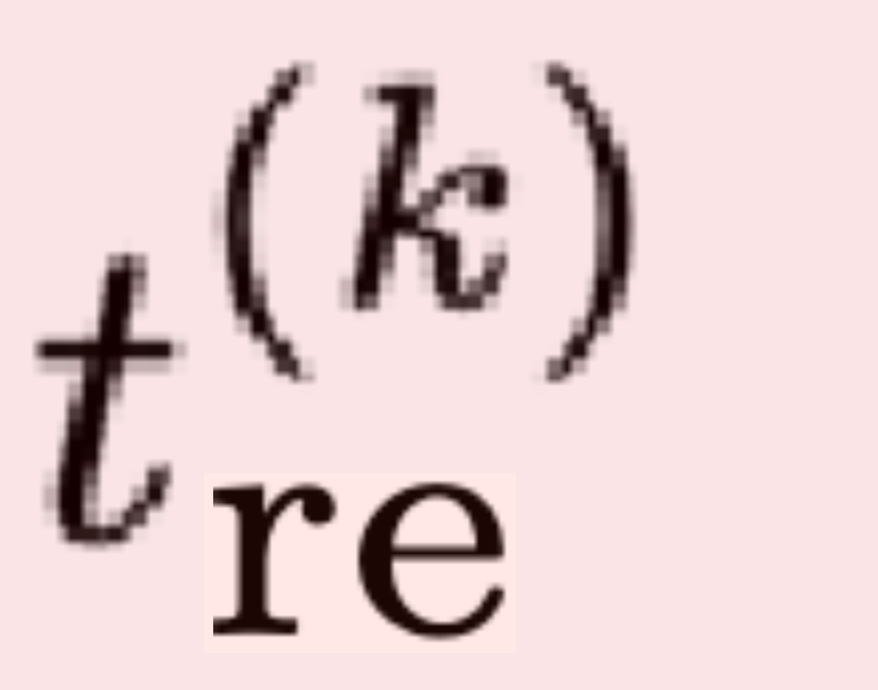
Fig 1: FedReLa Framework. At round t = Trelabel, FedReLa re-labels the local dataset with the label re-allocator based on the global

Fig 2: FedReLa re-labeling examples on CIFAR-10-LT. Top

Fig 3 (page 7).

Fig 4 (page 7).

Fig 5 (page 7).

Fig 6 (page 7).

Fig 7 (page 7).

Fig 8 (page 7).
Limitations
- FedReLa relies on the global model to produce meaningful posterior distributions; if the global model is very poor or unstable early in training, relabeling guidance may be suboptimal.
- Relabeling is tuned via hyperparameters (τ, thresholds) that need empirical validation; inappropriate settings could degrade performance due to excessive or insufficient relabeling.
- Experimental evaluation focuses mainly on image classification tasks; applicability to other modalities or regression tasks is unexplored.
- Extreme adversarial settings or deliberate label poisoning attacks are not addressed; the relabeling method assumes honest clients.
- Only moderate non-IID heterogeneity modeled via latent Dirichlet distributions; the method’s behavior under more severe or systematic distribution shifts is unclear.
- Minority classes with completely absent local samples cannot be directly recovered by relabeling since no anchor samples exist locally.
Open questions / follow-ons
- How FedReLa performs under dynamic client participation and varying degrees of client dropout or intermittent connectivity.
- Extension of the relabeling approach to other modalities beyond images, such as text or sensor data in FL.
- The efficacy and robustness of FedReLa under adversarial label or perturbation attacks in federated settings.
- Automated hyperparameter tuning or adaptive thresholding for relabeling probabilities to reduce manual intervention.
Why it matters for bot defense
For bot-defense and CAPTCHA practitioners, FedReLa's approach offers a novel data-level technique to enhance federated learning models where client data is naturally imbalanced and heterogeneous—a typical scenario in large distributed networks including those behind attack detection systems. The method's model-agnostic and communication-free nature means it can be integrated into existing federated anomaly detection pipelines without privacy violations or additional communication costs. Improving minority-class detection (e.g., rare or emerging bot behaviors) is critical in security, and FedReLa enables decision boundary correction for such underrepresented classes despite non-IID data partitions. Moreover, its selective relabeling based on learned global features can serve to mitigate biased model predictions caused by uneven or skewed client data distributions prevalent in bot traffic patterns. Practitioners should consider FedReLa as a complementary preprocessing step alongside algorithmic imbalance solutions to optimize the minority-class detection crucial for robust bot-defense.
Cite
@article{arxiv2606_26037,
  title={ FedReLa: Imbalanced Federated Learning via Re-Labeling },
  author={ Guangzheng Hu and Patricia Menéndez and Feng Liu and Mingming Gong and Guanghui Wang and Liuhua Peng },
  journal={arXiv preprint arXiv:2606.26037},
  year={ 2026 },
  url={https://arxiv.org/abs/2606.26037}
}