
BlowLive: Blow-Based Multi-Factor Biometrics with Liveness Detection and Revocability
Source: arXiv:2606.25998 · Published 2026-06-24 · By Eyasu Getahun Chekole, Howard Halim, Daniël Reijsbergen, Jianying Zhou
TL;DR
This paper addresses fundamental limitations in biometric authentication, including vulnerability to spoofing due to weak liveness detection, template privacy leakage, intra-user variability, and lack of revocability of physiological biometrics. The authors propose BlowLive, a multi-factor biometric framework combining blow-based acoustic behavioral biometrics with facial physiological biometrics. BlowLive extracts robust spectral features from blow acoustics using GFCC and leverages FaceNet embeddings for face-based recognition. A fuzzy extractor architecture derives stable cryptographic keys from inherently noisy biometric inputs to enhance template security and enable revocation. To defend against replay, synthetic, and deepfake attacks, they introduce a novel Doppler-shift based liveness detection that analyzes ultrasonic signals modulated by airflow during phone blowing. Evaluated on data from 50 participants, BlowLive achieves near-perfect authentication accuracy (blow-acoustic: 99.56%, face: 100%, fusion: 100%) and strong liveness detection accuracy (99.42%), showing effectiveness in stability, security, and revocability. This is a practical proof-of-concept leveraging smartphone sensors without extra hardware, addressing major existing gaps in behavioral biometric stability, spoofing resistance, and revocation capability.
Key findings
- Authentication accuracy for blow-acoustic biometric: 99.56% on dataset with 50 participants.
- Facial biometric authentication accuracy: 100% using FaceNet embeddings.
- Multi-factor fusion modalities achieve 99.95% (score-level) and 100% (feature-level) accuracy.
- Doppler shift-based liveness detection module achieves 99.42% accuracy detecting playback, synthetic, and deepfake attacks.
- Fuzzy extractor-based scheme enables biometric template revocation and key renewal for blow-acoustic modality.
- GFCC (Gammatone Frequency Cepstral Coefficients) effectively capture discriminative blowing patterns for behavioral biometrics.
- CNN-based embedding network maps GFCC sequences to stable 128-dimensional vectors for comparison using triplet loss.
- The system operates on commodity smartphones without additional sensors, using an imperceptible 20 kHz ultrasonic tone for Doppler liveness analysis.
Threat model
The adversary is capable of mounting playback attacks by replaying recorded genuine blowing signals, stolen sample attacks using leaked authentic biometric data, and AI-based deepfake attacks synthesizing blow-acoustic inputs to deceive the system. The attacker cannot compromise the phone microphone hardware or inject live signals that mimic genuine airflow Doppler signatures. The threat model assumes the biometric capture device is trusted and not physically tampered with.
Methodology — deep read
- Threat model and assumptions: The adversary can launch playback attacks by recording and replaying genuine blow signals, stolen sample attacks by obtaining leaked biometric samples, and deepfake attacks by synthesizing blow-acoustic signals to fool authentication. The system assumes the phone microphone is uncompromised and captures legitimate signals. The attacker cannot physically compromise the sensor or inject live signals. 2. Data: The authors collected synchronized blow-acoustic and facial data from 50 participants using an Android app that records the blow audio and face images/videos concurrently. The blow signal includes a continuous 20 kHz ultrasonic tone emitted by the phone, whose Doppler shifts caused by airflow during blowing are used for liveness verification. 3. Architecture and algorithms: BlowLive has three main components: (a) Feature extraction from blow signals using GFCCs computed over 50 ms frames with 24-channel gammatone filterbanks, logarithmic compression, DCT, and delta coefficients leading to 26-dimensional per-frame vectors. These sequences are processed by a CNN with 1D convolutional layers, batch norm, and ReLU, followed by temporal mean pooling and a two-layer fully connected network to produce a 128-dimensional L2-normalized embedding vector. (b) Facial embedding extraction using a FaceNet Inception-ResNet-v1 model pretrained on VGGFace2, projecting 512-d features to 128-d vectors via a fully connected head with ReLU. This network is further fine-tuned on their dataset with triplet loss. (c) Multi-modal fusion is performed at both score-level and feature-level for enhanced accuracy. (d) For liveness detection, a novel Doppler shift module isolates the ultrasonic tone component via a narrowband band-pass filter around 20 kHz, computes short-time Fourier transform to estimate the instantaneous peak frequency shifts (Doppler frequency offsets) caused by blowing airflow, extracts spectral and temporal envelope features, and combines these into a hybrid scoring function to distinguish genuine live blows from replay or synthetic attacks. 4. Training: CNN and FaceNet projection heads are trained for 50 epochs with Adam optimizer, learning rate 1e-4, batch size 32, using triplet loss to learn discriminative embeddings robust to noise and intra-user variability. 5. Evaluation: Authentication accuracy is measured via standard verification metrics comparing embeddings using Hamming distance thresholds. Liveness detection accuracy is evaluated on genuine and spoofed blow signals (replay, synthetic, deepfake). Multiple fusion schemes are compared in ablation studies. The protocol uses held-out test participants and cross-validation is implied but details are limited. 6. Reproducibility: The authors implemented a proof-of-concept Android app and shared detailed algorithmic descriptions but no public code or datasets are released. Exact split and seed strategies are not specified. One concrete example: An enrolled user's blow audio is transformed into GFCC features, passed through the CNN to extract a 128-d embedding. Simultaneously, a captured face image is embedded by FaceNet projection head, then embeddings are fused and a cryptographic key is derived via the fuzzy extractor scheme for authentication. Meanwhile, Doppler shifts in the ultrasonic 20 kHz tone caused by airflow are processed in parallel for liveness detection before allowing the main authentication.
Technical innovations
- Introduction of blow-based acoustic biometrics combined with simultaneous facial recognition for multi-factor authentication leveraging complementary behavioral and physiological signals.
- Novel Doppler shift-based liveness detection using an imperceptible 20 kHz ultrasonic tone and time-frequency analysis to capture subtle airflow turbulence signatures unique to live blowing, resilient to playback and synthetic attacks.
- Use of GFCC features with a dedicated CNN embedding model to produce stable, discriminative embeddings from noisy behavioral blow-acoustic signals.
- Integration of fuzzy extractor-based key derivation from biometric embeddings enabling strong template protection and revocability at both biometric template and cryptographic key levels.
Datasets
- BlowLive dataset — 50 participants — collected by authors using a custom Android application capturing simultaneous blow-acoustics and facial images with ultrasonic emission
Baselines vs proposed
- Blow-only biometric (GFCC-CNN): authentication accuracy = 99.56% vs. prior breath-based approach [Halim et al.] accuracy < baseline not specified
- Facial biometric (FaceNet fine-tuned): authentication accuracy = 100%
- Score-level fusion: authentication accuracy = 99.95%
- Feature-level fusion: authentication accuracy = 100%
- Liveness detection via Doppler module: accuracy = 99.42% vs traditional heuristics and lip-motion based Doppler methods achieving ~90-96%
Figures from the paper
Figures are reproduced from the source paper for academic discussion. Original copyright: the paper authors. See arXiv:2606.25998.
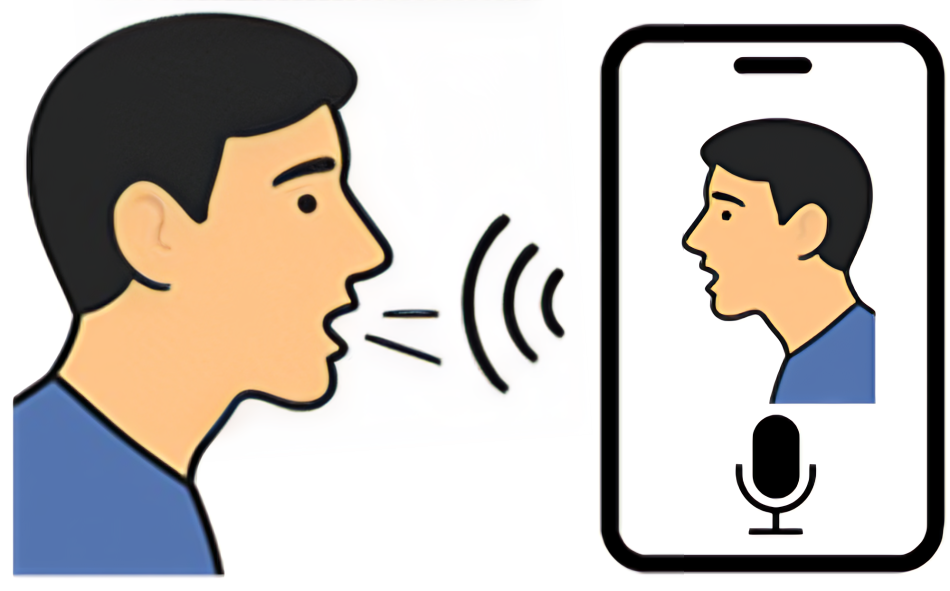
Fig 1: Illustration of BlowLive
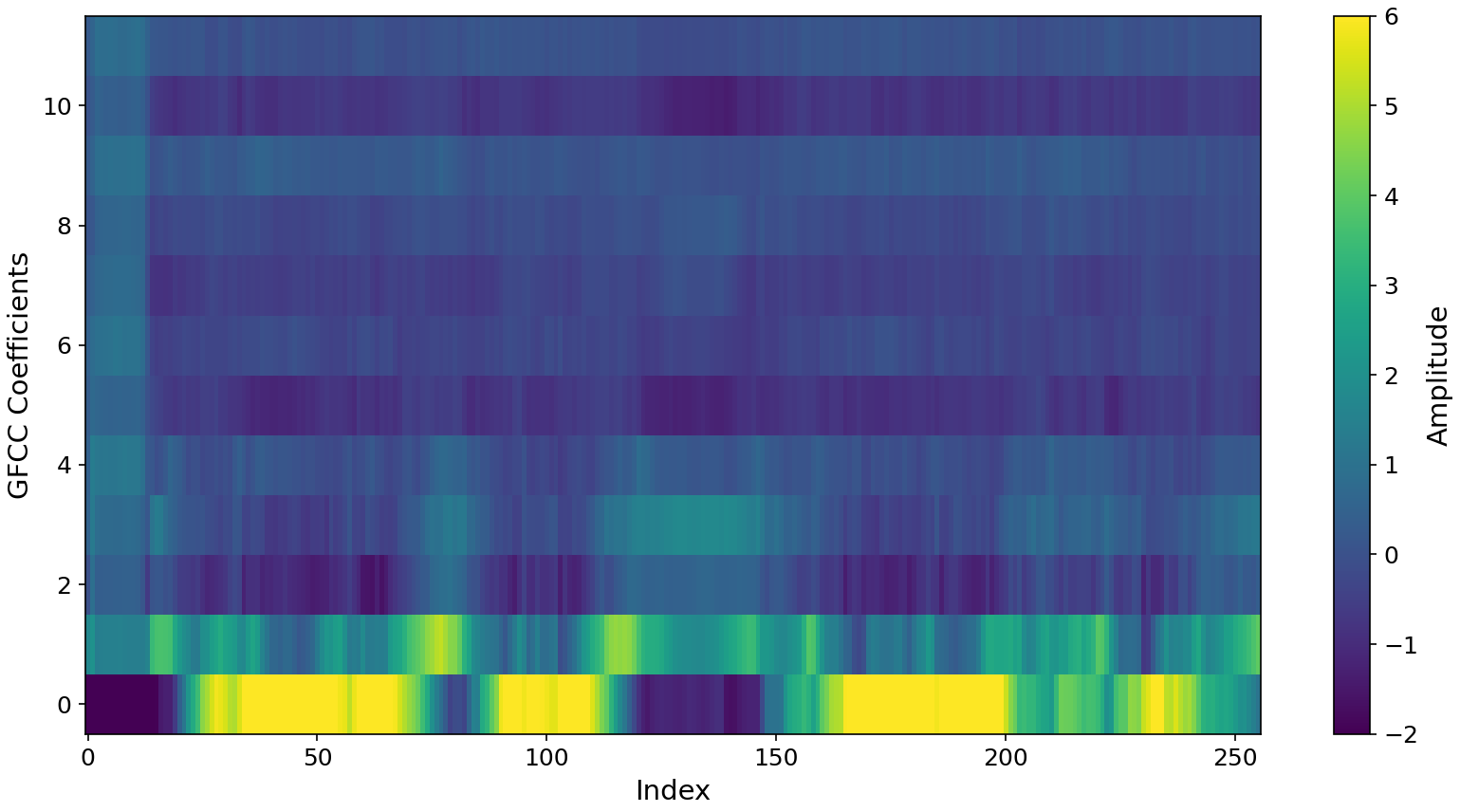
Fig 3: Sample raw blow-acoustic data of (a) Participant 1 (b) Participant 2 (c) Participant 3.
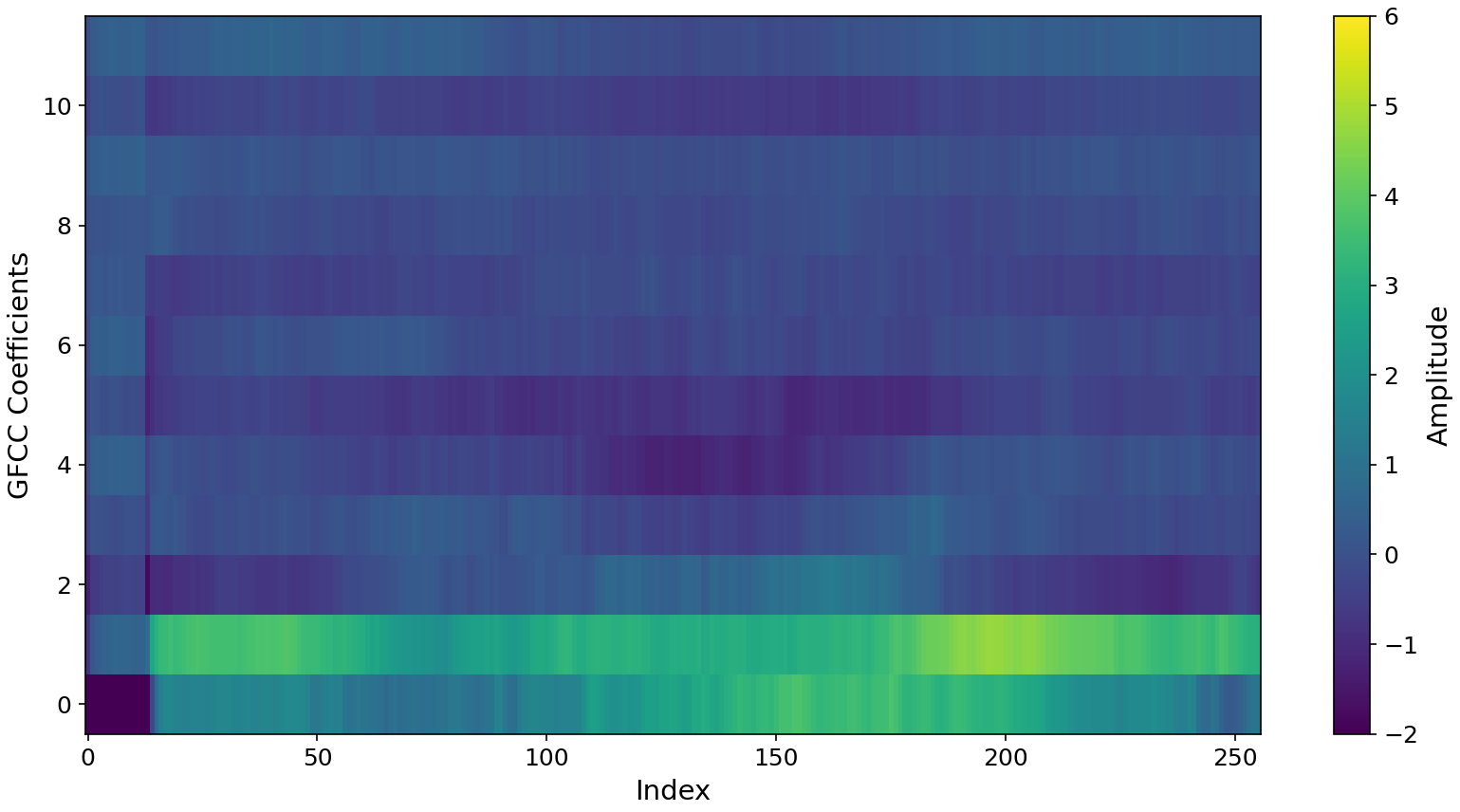
Fig 4: Sample refined blow-acoustic data of (a) Participant 1 (b) Participant 2 (c) Participant
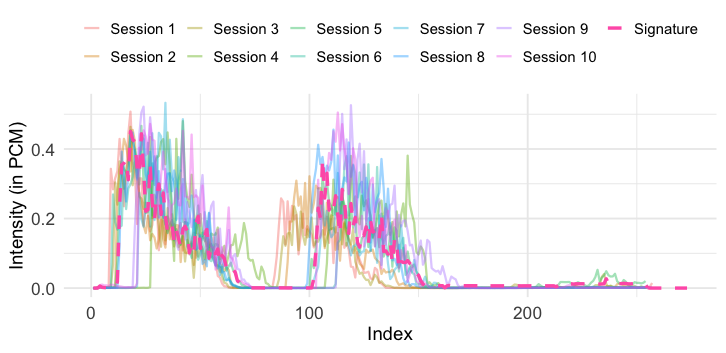
Fig 5: GFCC-based feature extraction for blow-acoustic data of (a) Participant 1 (b) Partici-
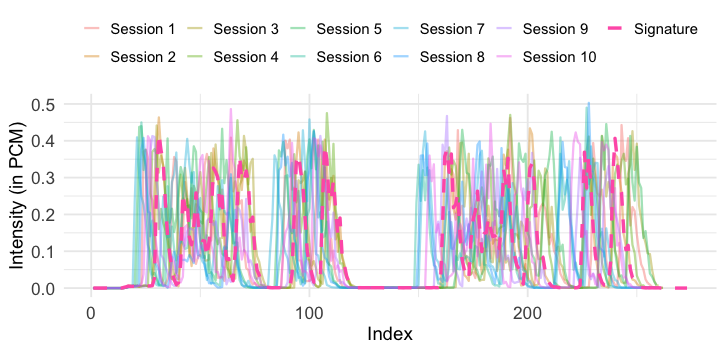
Fig 6: Doppler shifts for (a) live blow, (b) playback acoustic signals
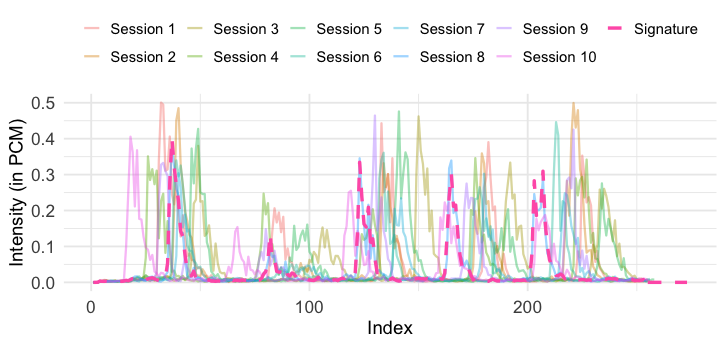
Fig 6 (page 15).
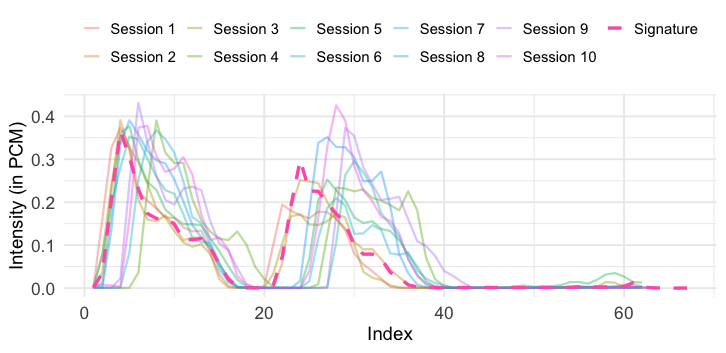
Fig 7 (page 15).
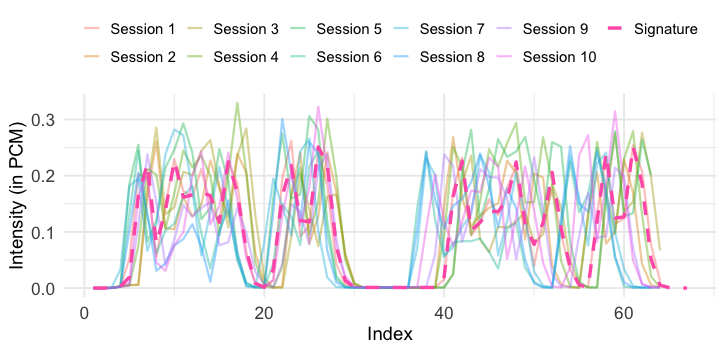
Fig 8 (page 15).
Limitations
- Dataset limited to 50 participants, which may not capture full population diversity or device variability.
- The liveness detection and authentication robustness under more diverse environmental conditions (noise, different phones) is untested.
- No explicit adversarial attacks (adaptive or adversarial ML) evaluated beyond replay and synthetic deepfake attempts.
- No public release of data or code, limiting reproducibility and external validation.
- Evaluation predominantly under controlled conditions; generalization to real-world deployment scenarios unverified.
- Fusion benefits and thresholds could depend on dataset-specific tuning, not explored with larger cross-dataset experiments.
Open questions / follow-ons
- How does BlowLive perform under varied environmental acoustic noise and microphone characteristics across different smartphone models?
- Can the Doppler liveness detection module withstand adaptive adversaries that attempt to mimic Doppler profiles or generate enhanced synthetic signals?
- What is the long-term stability and intra-user variability of blow-based acoustic biometrics over months or years to assess template renewal frequency?
- How generalizable is the approach to other behavioral biometrics involving airflow or similar physical interactions?
Why it matters for bot defense
From a bot-defense perspective, BlowLive demonstrates a promising multi-factor biometric authentication paradigm combining a novel behavioral biometric (blow-acoustic) with physiological biometrics (face), enhancing security through complementary modalities. The Doppler-shift based liveness detection is particularly noteworthy as a hardware-assisted defense against replay and AI-based spoofing attacks—a major concern in biometric bot-fraud. The fuzzy extractor template protection and revocability mechanisms address practical issues around long-term biometric data leakage and user privacy, which are critical for scalable secure deployment. Captcha or bot-defense engineers might consider similar multi-sensor fusion approaches leveraging involuntary and harder-to-replicate physics-based signals to raise the attack complexity for automated spoofing bots. However, robustness across real-world noise, input variability, and large-scale deployments remain open challenges before practical integration into consumer-facing anti-bot security systems.
Cite
@article{arxiv2606_25998,
  title={ BlowLive: Blow-Based Multi-Factor Biometrics with Liveness Detection and Revocability },
  author={ Eyasu Getahun Chekole and Howard Halim and Daniël Reijsbergen and Jianying Zhou },
  journal={arXiv preprint arXiv:2606.25998},
  year={ 2026 },
  url={https://arxiv.org/abs/2606.25998}
}