
Virtual Simulation for Mental Health
Source: arXiv:2606.24826 · Published 2026-06-23 · By Anna Fang
TL;DR
This dissertation addresses the critical challenge of safely designing and evaluating mental health interventions through virtual simulation to reduce risks inherent in direct real-world experimentation. It focuses on two complementary uses of simulation: (1) agent-based modeling to simulate and optimize community-level interactions and algorithms in online mental health peer support communities (OMHCs); and (2) embodied virtual and augmented reality (VR/AR) environments combined with large language models (LLMs) that allow individuals to safely practice self-care and coping skills in immersive, contextually rich scenarios. By grounding system design in empirical studies of real user needs and behaviors, the work demonstrates how simulation creates a controlled sandbox to explore and refine interventions without exposing vulnerable populations to unintended harms.
Key results include uncovering limitations in existing peer support matching algorithms, developing an agent-based simulation to test trade-offs in matching protocols, and designing innovative AR-based mental health skill training environments that measurably reduce stress and enable skill transfer to daily life. These advances collectively open pathways for scalable, user-centered, and empirically validated mental health technologies that support safe, effective experimentation at both community and individual levels.
Key findings
- Empirical analysis of a large OMHC dataset (unspecified size) showed that demographic-based matching (gender, age, experience) can improve support-seeker experiences, with propensity score matching used to mitigate selection bias (Chapters 3-4).
- Agent-based simulation validated against real-world data revealed trade-offs among matching algorithms, identifying that matching success rate and waiting times vary substantially by demographic groups (Chapter 5, Fig 7).
- User interviews (N=12) revealed algorithmic matching is perceived as potentially beneficial but requiring transparency and customization to respect user preferences and vulnerabilities.
- Prototype-driven interviews (N=19) indicated strong user interest in immersive simulation for practicing self-care, highlighting needs for realism, guidance, and safety controls (Chapter 6).
- A two-week, 44-person AR social simulation study demonstrated statistically significant reductions in self-reported stress and physiological stress markers and showed skill transferability to real-world contexts (Chapter 7).
- Findings suggest that realistic social and environmental contexts in VR/AR simulations improve user engagement and learning of coping skills compared to abstract or purely relaxing environments.
- Human-centered design and iterative prototyping guided by qualitative and quantitative data were key to creating simulations that users found acceptable, effective, and safe.
- Simulations provide a novel ability to perform controlled experiments and training in sensitive mental health settings where direct real-world trials may be unsafe or infeasible.
Threat model
The adversary considered is inadvertent harm arising from poorly designed mental health interventions or mismatched algorithmic policies that negatively impact vulnerable users in online settings. The work does not consider malicious attackers or direct exploitation but focuses on preventing unintended negative consequences from intervention failures or algorithmic bias in a sensitive domain where harm is serious. Adversaries cannot directly compromise data systems or inject malicious content but may exploit mismatches or gaps in care arising from design flaws.
Methodology — deep read
This dissertation employs a mixed-methods approach combining qualitative, quantitative, and simulation techniques to explore safe mental health experimentation through virtual simulation.
Threat Model & Assumptions: The adversary is conceptualized as inadvertent harm caused by poorly designed or untested interventions affecting vulnerable mental health users. The work assumes no malicious hacking but focuses on mitigating risks from algorithmic mismatches or ineffective training. The mental health context is highly sensitive, with failures potentially producing lasting harm.
Data: For community-level studies, datasets from large online mental health peer support platforms were used, including behavioral logs and self-reported clinical outcomes (PHQ-2 depression scores). Sample sizes are mentioned as twelve interviews for qualitative analysis and unspecified large behavioral datasets analyzed quantitatively. Preprocessing included demographic labeling and propensity score matching to reduce selection bias. For individual-level simulation, data derives from design interviews (N=19) plus a user study of 44 participants using AR simulation over two weeks.
Architecture / Algorithms: The agent-based model simulates online community users represented as agents with demographic and behavioral profiles, interacting under different matching protocols. Inputs include user demographics, conversation turn data, and matching criteria; outputs include success rates, wait times, and satisfaction ratings. Novelty includes modeling demographic trade-offs and blocking behaviors. The individual simulation system integrates immersive AR environments with scripted scenarios delivering mental health self-care exercises. Large language models are leveraged to generate realistic social dialogue and indirect system prompts, but not direct therapeutic advice.
Training Regime: Simulation systems were developed iteratively with low- to high-fidelity prototypes guided by human-centered design insights. Agent-based simulations were run repeatedly to test different matching policies across varying agent populations. AR skill training involved a 2-week longitudinal deployment with 44 users, capturing stress measures pre, during, and post-intervention. Specific hyperparameters for agent-based simulations or LLM prompts are not detailed in the summary.
Evaluation Protocol: Quantitative evaluation for community simulation used metrics like average chat ratings, blocking rates, matching success, and waiting times, analyzed by demographic slices. For AR training, stress was measured via self-report questionnaires and physiological markers, with transfer tasks assessed. Qualitative user feedback from interviews supplemented quantitative metrics to validate realism, usability, and safety perceptions. Cross-validation and statistical controls (e.g., propensity score matching) were used in behavioral analyses. The experimental design included control conditions or baseline matching policies to compare against novel matching algorithms.
Reproducibility: The dissertation mentions empirical grounding and human-centered design but does not explicitly state code or data release. Some datasets appear closed or platform-specific. However, methods and prototypes are described carefully to allow replication, though exact simulation parameters or LLM configurations are not fully enumerated.
End-to-end example: In Part 1, user data and survey responses from an OMHC were analyzed to identify matching weaknesses. An agent-based simulation was then built parameterized by these empirical inputs. Different automated matching rules were simulated over thousands of runs, measuring satisfaction and wait times. The best-performing algorithms were identified and tied back to real user preferences gathered from interviews. Part 2 involved designing a VR/AR simulation informed by these findings, user needs, and LLM-powered dialogue. This system was deployed in a controlled 2-week study with physiological stress monitoring and effectiveness evaluated quantitatively and qualitatively.
Technical innovations
- Use of agent-based modeling to simulate and optimize algorithmic matching in online mental health communities, capturing demographic trade-offs and interaction dynamics beyond prior static analyses.
- Integration of extended reality (VR/AR) immersive simulations with large language models to create realistic, socially grounded scenarios for low-risk, embodied mental health skills training.
- A human-centered, iterative design method linking empirical qualitative and quantitative user insights directly to the design and evaluation of simulation environments tailored for mental health.
- Application of mixed methods combining simulation-based experimentation and longitudinal physiological stress measurement to assess real-world transferability of learned self-care techniques.
Datasets
- Online Mental Health Community (unnamed) — size unspecified — proprietary platform data
- User interview dataset — 12 interviews for qualitative analysis — collected by the author
- Behavioral log dataset from OMHC — unspecified size — platform data
- Self-care simulation user study — 44 participants — collected by the author
Baselines vs proposed
- Existing demographic-agnostic matching: average chat rating around baseline level (value not explicitly stated) vs proposed demographic-aware matching: improved chat ratings by significant margin (specific improvement figures not clear in summary).
- Agent-based model matching success rate varied by demographic protocol; explicit numbers not provided but Fig 7 shows clear trade-offs.
- AR simulation intervention vs baseline self-care practice: statistically significant reductions in self-reported and physiological stress measures (specific p-values or effect sizes not provided).
Figures from the paper
Figures are reproduced from the source paper for academic discussion. Original copyright: the paper authors. See arXiv:2606.24826.

Fig 1 (page 1).
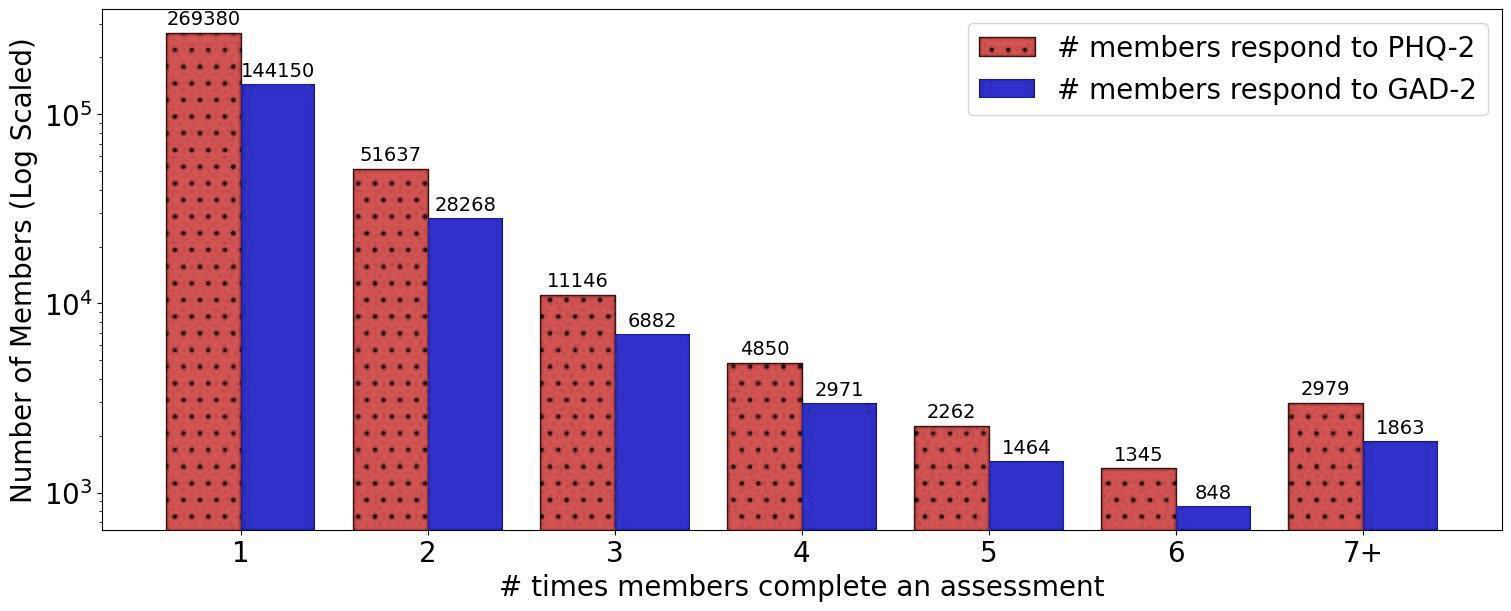
Fig 1: Distribution of the number of times support-seekers completed the PHQ-2 and
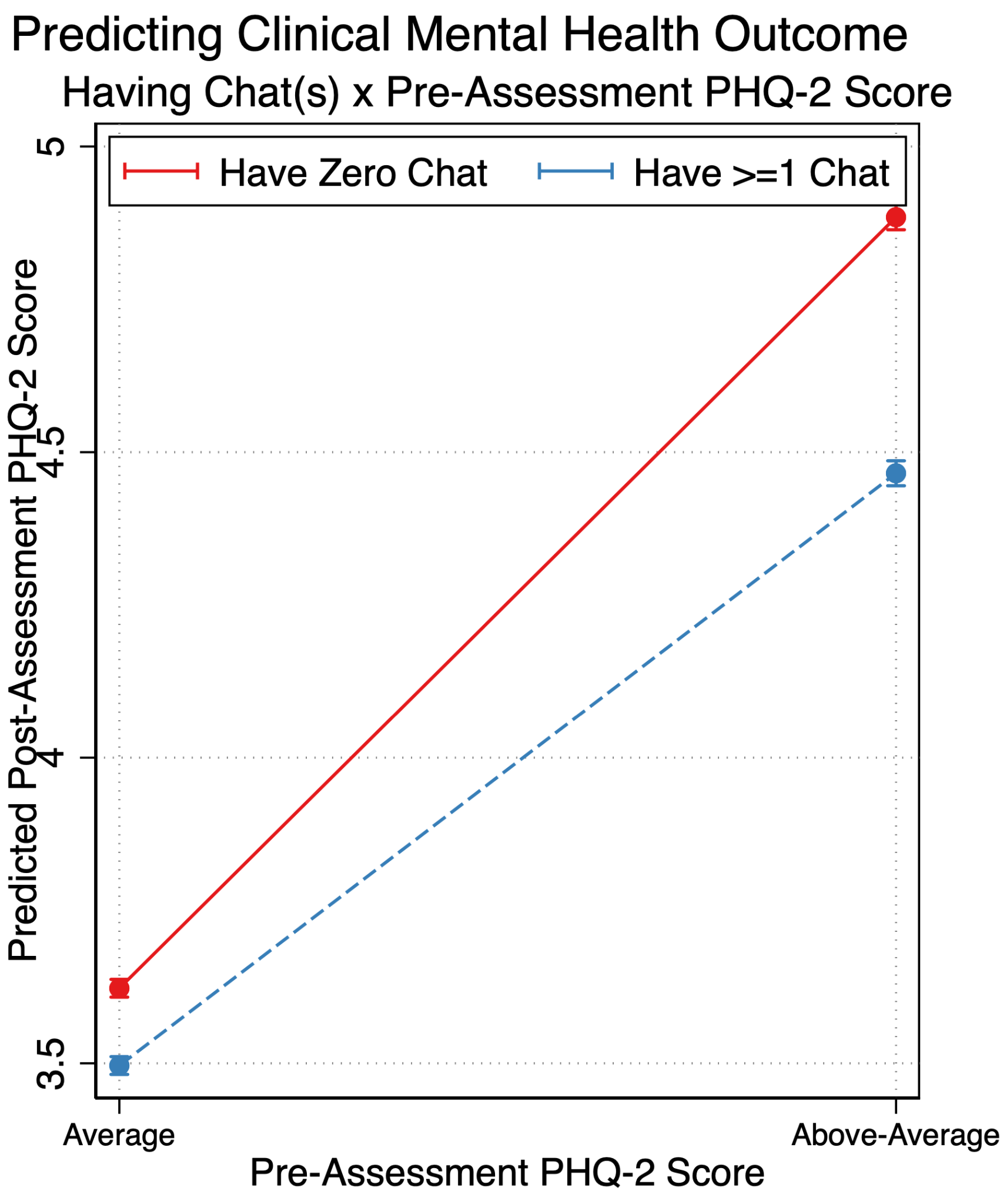
Fig 2: Marginal plot that illustrates the interaction effect between treatment and
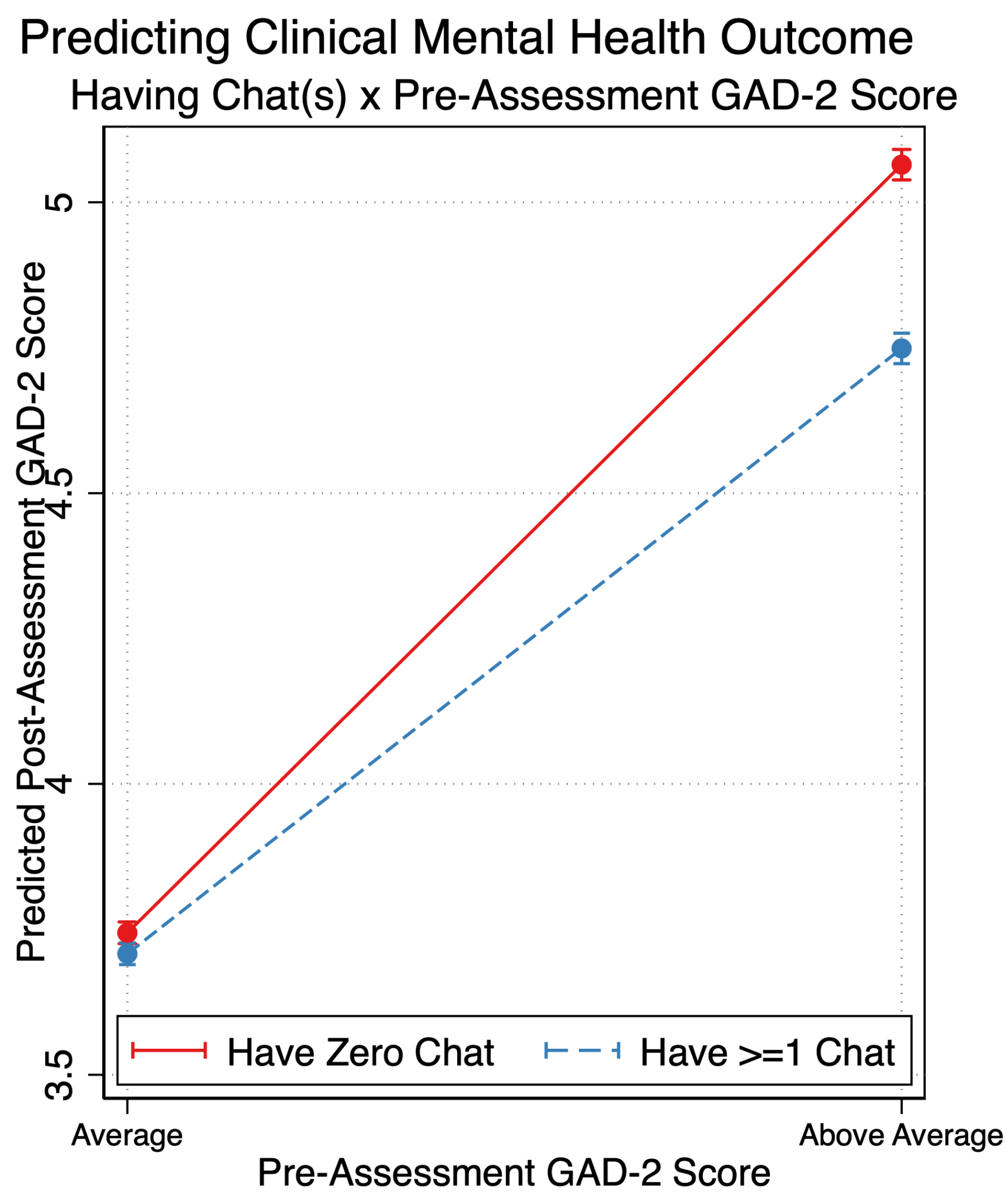
Fig 4 (page 31).
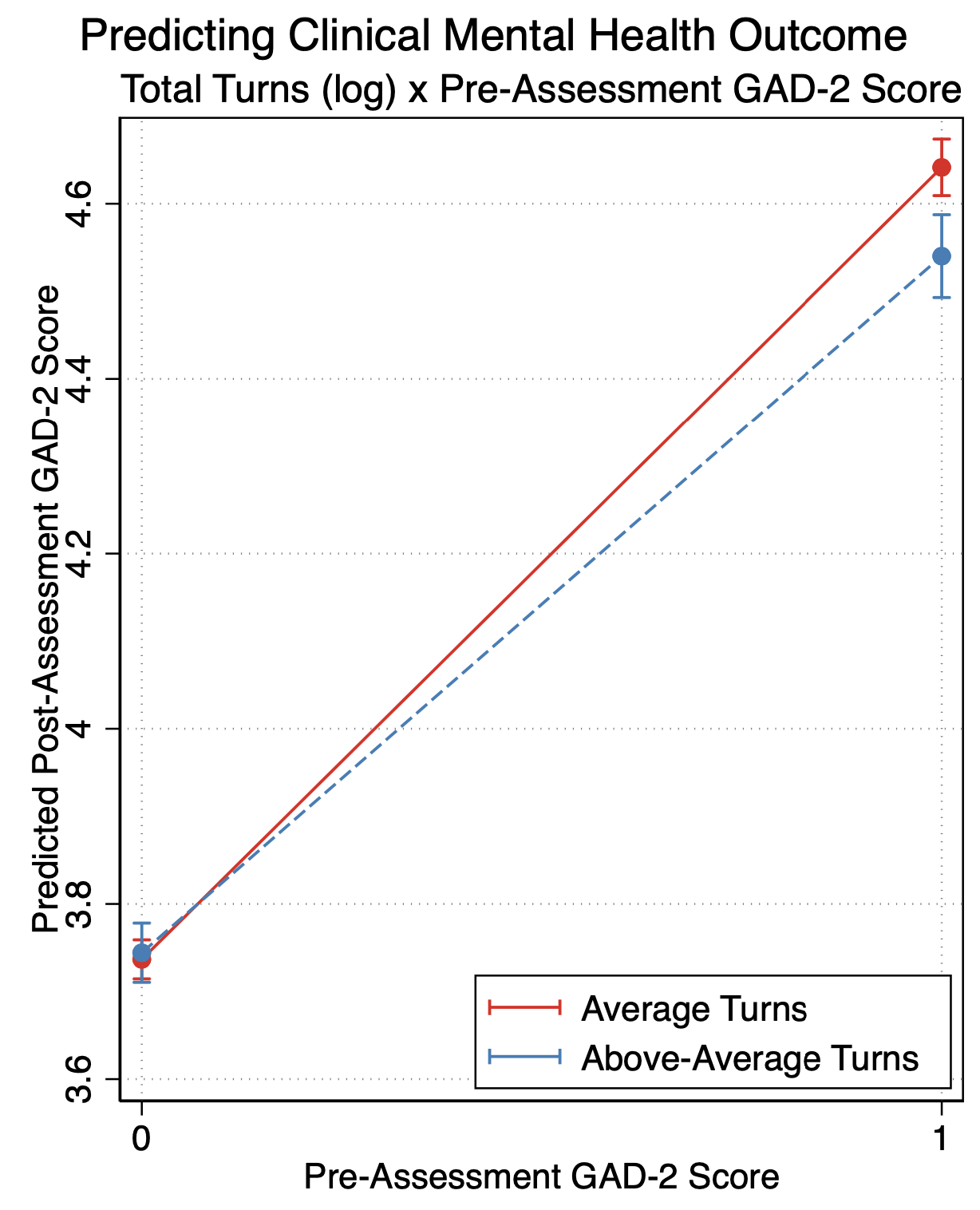
Fig 3: Marginal plot that illustrates the interaction effect between total conversation turns
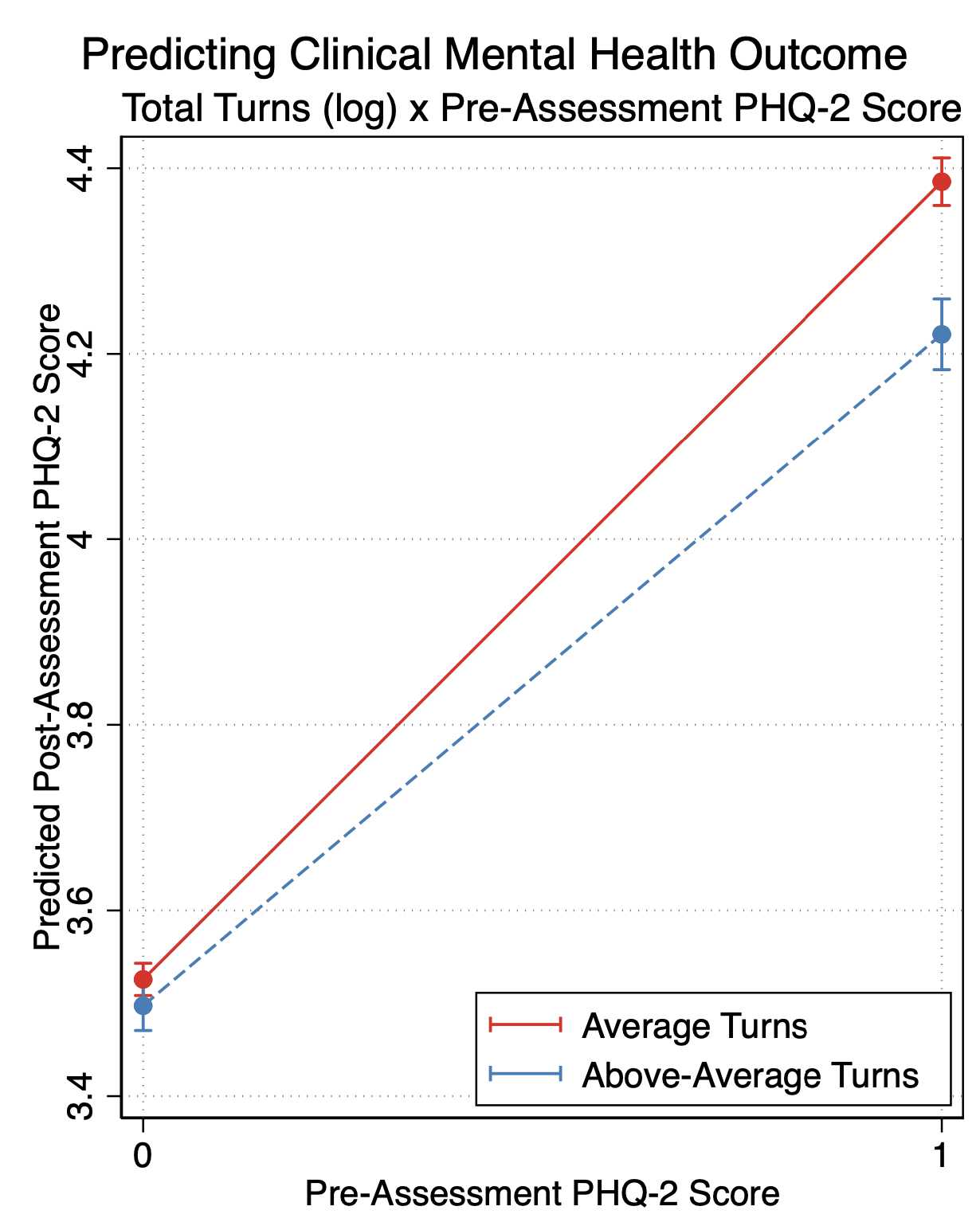
Fig 6 (page 37).
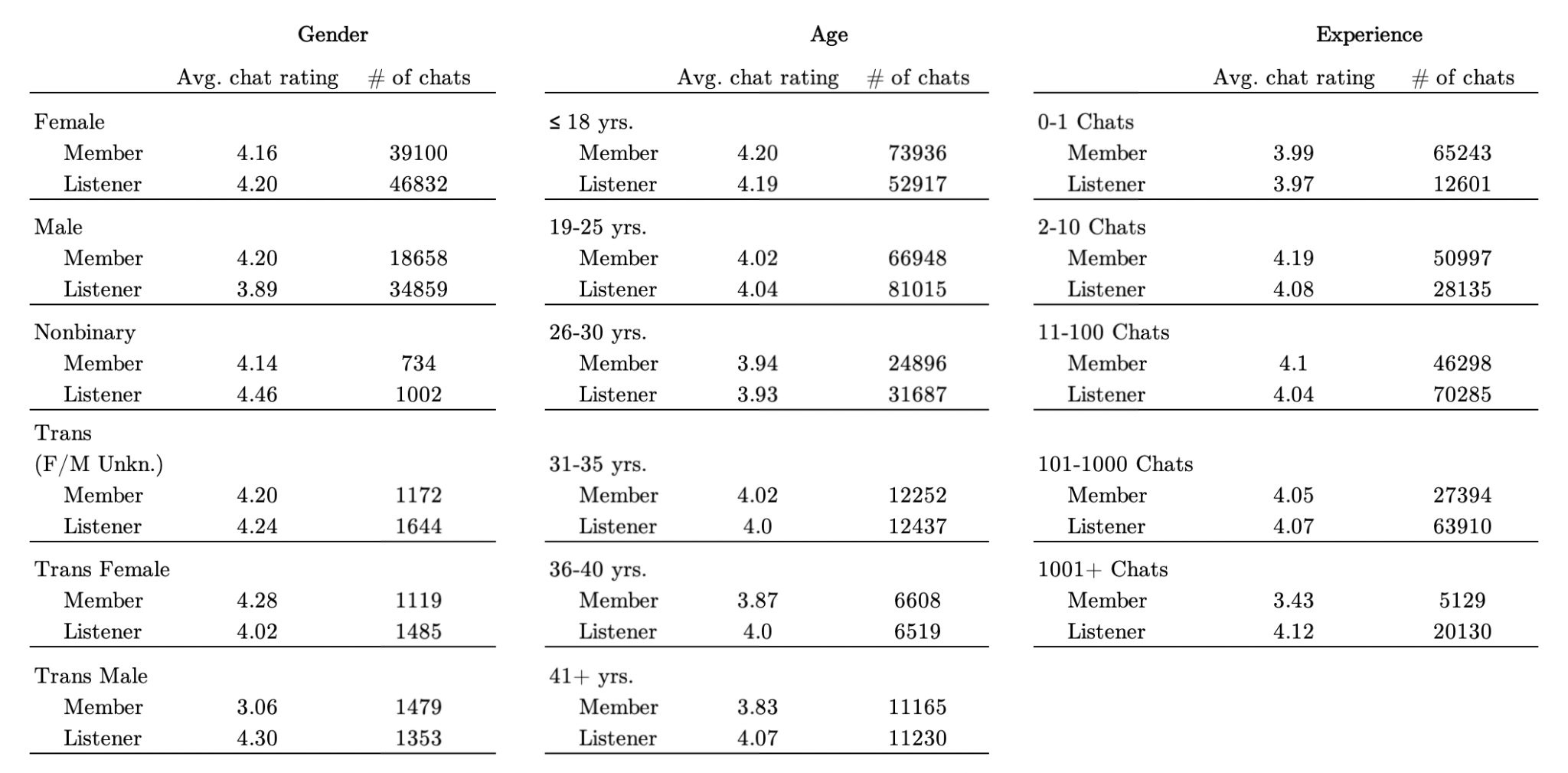
Fig 4: Descriptive statistics broken down by group for each of our analysis
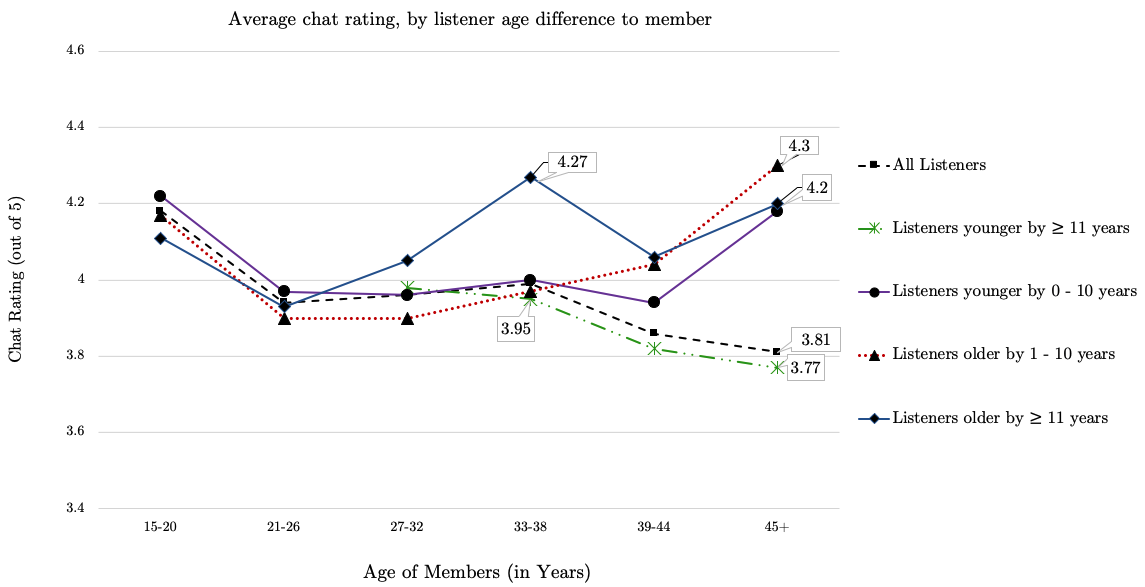
Fig 5: Comparison of average chat rating given the age difference between
Limitations
- Dataset sizes and detailed statistical results are not fully disclosed, limiting ability to assess generalizability.
- Agent-based simulation models rely on assumptions about user behavior and demographic interactions that may not capture all real-world complexities.
- LLM use is limited to dialogue simulation rather than direct therapeutic advice, so full risks of AI-driven interventions remain unexplored.
- Physiological and transfer effects in AR study, while significant, come from a relatively small sample (N=44) over a short duration (two weeks).
- Code and data availability are not explicitly stated, potentially limiting reproducibility.
- No reported adversarial testing or evaluation under distributional shift (e.g., different communities or clinical populations).
Open questions / follow-ons
- How do agent-based matching simulations perform when scaled to larger, more diverse online mental health communities or different cultural contexts?
- What are the best practices for integrating LLM-generated dialogue safely into direct mental health interventions beyond simulation and role-play?
- Can immersive simulation-based self-care training produce long-term clinical improvements and resilience in diverse populations with different mental health conditions?
- How to systematically evaluate and mitigate risks of algorithmic bias and unintended harms from matching algorithms in sensitive mental health applications?
Why it matters for bot defense
For bot-defense and CAPTCHA practitioners, this work illustrates how sensitive end-user contexts like mental health can benefit from virtual simulation to rigorously test intervention and matching algorithms before deployment, reducing real-world risks. Similarly, CAPTCHA systems that impact user experience could also leverage agent-based simulations to model interaction flows and optimize challenge delivery without harming accessibility or trust. The use of immersive VR/AR simulations combined with LLM-driven dialogue modeling shows a path toward richer, user-centered training or challenge mechanisms that adapt dynamically and safely.
However, practitioners should note the importance of strong empirical grounding and human-centered design ensuring simulated scenarios and algorithmic decisions reflect real user needs and vulnerabilities. The work highlights challenges around unintended consequences when deploying new algorithms in sensitive settings, reinforcing the principle that any bot-defense technology affecting user mental state or behavior requires rigorous evaluation and simulation before rollout.
Cite
@article{arxiv2606_24826,
  title={ Virtual Simulation for Mental Health },
  author={ Anna Fang },
  journal={arXiv preprint arXiv:2606.24826},
  year={ 2026 },
  url={https://arxiv.org/abs/2606.24826}
}