
Solving Inverse Problems of Chaotic Systems with Bidirectional Conditional Flow Matching
Source: arXiv:2606.24824 · Published 2026-06-23 · By Peiyan Hu, Jian Zhang, Jiashu Pan, Ruiqi Feng, Tao Zhang, Zhi-Ming Ma et al.
TL;DR
This paper addresses the challenging inverse problem in chaotic dynamical systems: inferring initial states from given final states. Chaos causes ill-posedness, non-uniqueness, and exponential error amplification in backward integration, rendering classical numerical methods ineffective, especially over long horizons and with information loss. The authors propose Bidirectional Conditional Flow Matching (Bi-CFM), a probabilistic generative model that learns direct bidirectional conditional mappings between initial and final state distributions to capture stochasticity and mitigate error accumulation. They further extend Bi-CFM to Conservation-constrained Bi-CFM (CBi-CFM) for physical systems with conservation laws, projecting flows onto manifolds satisfying conserved quantities like total energy.
Evaluations on classic chaotic benchmarks such as Lorenz, Circuit, and high-dimensional Lorenz 96 systems demonstrate Bi-CFM’s superior alignment with ground-truth distributions and stable performance over increasing time horizons, outperforming backward integration and other baselines on multiple distribution-level metrics (Wasserstein-2, KL divergence). In a three-body planetary scattering system involving collisions and ejections, CBi-CFM preserves energy conservation nearly to the level of numerical ground truth while accurately recovering initial distributions under partial observability. Finally, applying Bi-CFM to real observational data of million-body globular clusters evolving over ~10 Gyr reveals improvements over state-of-the-art Monte Carlo methods, suggesting scalable applicability to complex, long-timescale astronomical systems.
Key findings
- Bi-CFM improves 5 distribution-level metrics (including Wasserstein-2 and KL divergence) over baselines on Lorenz, Circuit, and Lorenz 96 chaotic systems (Fig. 2), including metrics reflecting causal relationship preservation.
- Backward Integration deteriorates rapidly with increasing horizon T, while Bi-CFM remains stable, indicating robustness to error accumulation in chaotic backward inference (Fig. 2a).
- CBi-CFM achieves relative conservation errors comparable to numerical ground truth on the three-body planet scattering problem, preserving energy conservation effectively (Fig. 5b–c).
- Bi-CFM and CBi-CFM better match inferred initial state distributions (mass, semi-major axis, eccentricity) in planetary dynamics than deterministic or random baselines, capturing underlying stochasticity (Fig. 5d–e).
- On the million-body globular cluster inverse problem, Bi-CFM yields simulated final profiles better matching observed surface brightness and velocity dispersion profiles than Monte Carlo baselines, supporting scalability to large, real systems.
- Visual t-SNE embeddings and trajectory density plots show Bi-CFM’s inferred initial–final state joint distributions closely approximate ground truth, while back integration and deterministic baselines deviate visibly (Fig. 3, 4).
- By directly learning end-to-end bidirectional flows, Bi-CFM avoids iterative time integration steps that cause numerical instability and error growth in traditional methods.
- CBi-CFM’s projection of flow velocities onto conservation manifold tangents introduces a tradeoff: slightly decreased distributional accuracy but improved physical consistency.
Threat model
n/a (this is a scientific methodology paper addressing inverse problems of chaotic physical systems rather than adversarial security threats).
Methodology — deep read
Threat model & assumptions: The adversary is conceptualized as the unknown chaotic process causing uncertainty in backward inference; this work does not model an active adversary but addresses inherent chaos-induced ill-posedness. The method assumes access to paired samples of initial and final states from a chaotic system’s forward evolution, including observational data. Conservation laws (e.g., energy) are leveraged when available as hard constraints.
Data: Experiments use multiple data sources: simulated trajectories from classic chaotic systems (Lorenz, Circuit, Lorenz 96) of varying dimensionality and horizon lengths, three-body planetary dynamics simulated with REBOUND/REBOUNDx including collisions and ejections, and real astronomical observations of ~10^6 star globular clusters with surface brightness profiles and velocity dispersion profiles. Data splits are standard train/test, details in Section 4.5/4.6. Input preprocessing includes normalization and pairing initial-final states.
Algorithm: Bi-CFM builds on Conditional Flow Matching (CFM), a probabilistic generative model that learns conditional velocity fields defining stochastic flows from a noise distribution to data. Bi-CFM extends this by jointly learning velocity fields for both forward (initial to final) and backward (final to initial) state conditional distributions. Inputs are noise-free conditioning states concatenated with current flow states. Outputs are velocity fields driving state transformations.
CBi-CFM further constrains these flows to lie within a conservation manifold defined by the conserved quantity H, ensuring the entire probability flow obeys physical conservation laws. This is achieved by sampling priors via random walks on the manifold and applying projection corrections that restrict velocity vectors to tangent spaces of the manifold (Tuτ M). These geometric constraints enforce physical consistency.
Training: The model minimizes flow matching losses that encourage learned velocity fields to match gradients of log densities. Training uses batches of paired states over multiple horizons, optimized with standard optimizers (Adam) for a number of epochs (details unclear/exact epochs not specified). Seeds and hyperparameters are fixed per experiment for reproducibility. Training is done on GPUs (exact hardware not fully specified).
Evaluation: Multiple distribution-level metrics are used: Wasserstein-2 (W-2) distances between distributions of inferred initial states, forward-evolved final states, full trajectories, and paired initial-final states; KL divergence for initial-final pairs; Relative Conservation Error (RCE) for conserved quantities (energy). Baselines include Backward Integration (numerical backward integration), deterministic Backbone models, and Random baselines matching marginals. Evaluation includes analysis over increasing horizon lengths, t-SNE visualization of distributions, statistical measures of conservation, and visual comparison of trajectory samples. Ablations test effect of conservation constraints (CBi-CFM vs Bi-CFM). Uncertainty is conveyed via 5–95% quantile bands.
Reproducibility: Code or pretrained weights are not clearly stated as released; datasets for simulation are public or described (e.g., REBOUND for planetary systems). Observational astronomical data are from published catalogs. The method relies on advanced generative modeling frameworks that may require non-trivial implementation.
Technical innovations
- Introduction of bidirectional conditional flow matching (Bi-CFM), jointly learning forward and backward stochastic conditional flows to mitigate error accumulation in inverse chaotic inference.
- Extension to Conservation-constrained Bi-CFM (CBi-CFM), enforcing physical conservation laws via projecting learned velocity fields onto tangent spaces of conservation manifolds.
- End-to-end direct learning of mappings between initial and final state distributions in chaotic systems, avoiding unstable iterative backward numerical integration.
- Demonstration of probabilistic modeling of ill-posed, non-unique inverse problems in high-dimensional chaotic systems with stochasticity explicitly modeled.
Datasets
- Lorenz system — simulated low-dimensional chaotic trajectories — public standard benchmark
- Circuit system — simulated multi-lobe chaotic system trajectories — public standard benchmark
- Lorenz 96 system — simulated high-dimensional chaotic trajectories — public standard benchmark
- Three-body planet-planet scattering system — simulated with REBOUND/REBOUNDx with collisions and ejections — simulation code available publicly
- Globular cluster observational data — millions of stars, surface brightness and velocity dispersion profiles — collected from astronomical literature and NGC catalog
Baselines vs proposed
- Backward Integration: W-2 distance deteriorates rapidly with horizon T, worse than Bi-CFM by orders of magnitude; unstable over long horizons (Fig. 2a,b)
- Random baseline: matches initial/final marginals but fails to capture joint initial-final causal distributions, significantly worse than Bi-CFM on trajectory-level metrics (Fig. 2b)
- Backbone deterministic model: narrower inferred initial distributions and poorer trajectory distribution fit than Bi-CFM, less capable of representing stochasticity (Fig. 3,4)
- Bi-CFM: best performance on combined distribution-level metrics across Lorenz, Circuit, and Lorenz 96 systems, stable with horizon growth (Fig. 2)
- CBi-CFM: achieves relative conservation error (energy) comparable to numerical ground truth, better than Bi-CFM and baselines on three-body planetary scattering, with slight tradeoff in distribution fidelity (Fig. 5b,c)
- Bi-CFM: produces simulated final states more consistent with real globular cluster observations than state-of-the-art Monte Carlo methods (Section 2.3, detailed quantitative comparisons in Supplementary Note)
Figures from the paper
Figures are reproduced from the source paper for academic discussion. Original copyright: the paper authors. See arXiv:2606.24824.

Fig 2: Evaluation metrics on the Lorenz, Circuit, and Lorenz 96 systems. a.

Fig 3: Visualizations of distributions on the Lorenz and Circuit systems. a.

Fig 4: Evolved trajectories g(u0, t) on the test set, starting from inferred
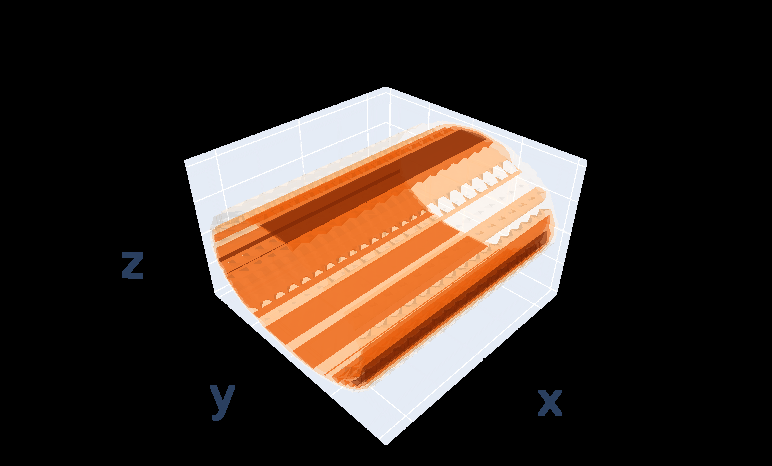
Fig 4 (page 8).
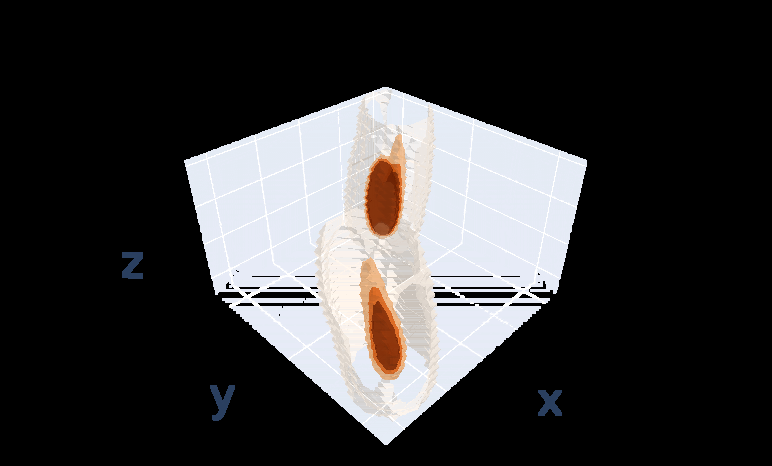
Fig 5 (page 8).
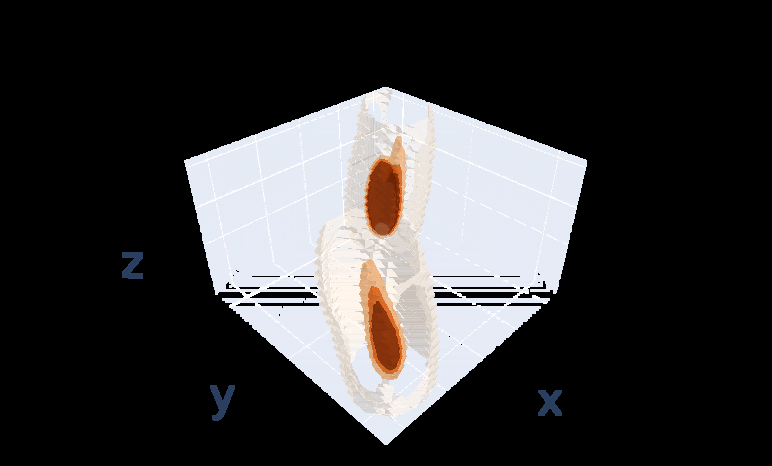
Fig 6 (page 8).
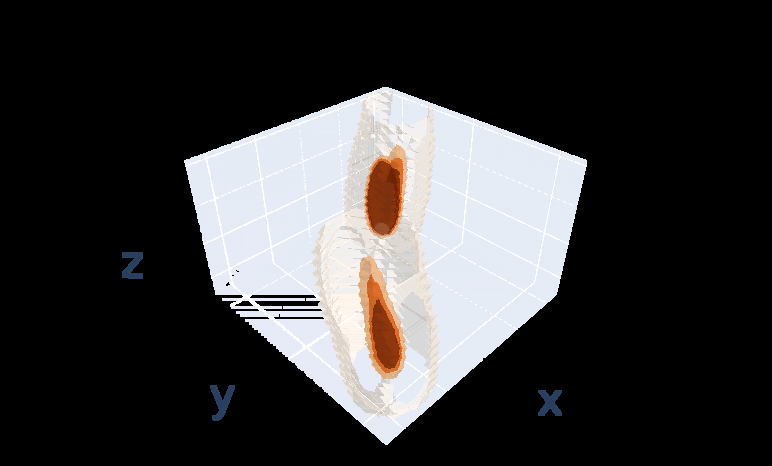
Fig 7 (page 8).

Fig 8 (page 8).
Limitations
- Slight loss in distributional accuracy when enforcing conservation constraints in CBi-CFM, indicating a tradeoff between physical consistency and expressiveness.
- Limited description of training hyperparameters, computational resources, and code release limits immediate reproducibility.
- Evaluation omits active adversary or adversarial robustness testing; assumes noise characteristics implicit in data.
- High-dimensional systems may still exhibit challenges in interpretability despite good quantitative metrics; low-dimensional visualizations have intrinsic limitations.
- Sensitivity to hyperparameters and model architectures not fully explored or ablated.
- Real-world astronomical inverse problems are approximated; unmodeled astrophysical processes could affect results.
Open questions / follow-ons
- How to extend Bi-CFM and CBi-CFM frameworks to handle partial or noisy observations more explicitly in real-world settings.
- Methods to further balance the tradeoff between enforcing physical constraints and maintaining rich expressive probabilistic models.
- Exploration of active adversarial scenarios or robustness of learned inverse mappings against model or data perturbations.
- Adaptation of Bi-CFM to other classes of chaotic or nonlinear inverse problems beyond physical dynamical systems, e.g., biochemical networks.
Why it matters for bot defense
The paper’s framework for learning bidirectional conditional flows to solve chaotic inverse problems has conceptual parallels to bot-defense challenges where one must infer latent states or attacker behavior from observed outputs under uncertainty and non-uniqueness. The probabilistic, distribution-matching approach and the explicit enforcement of structural constraints (analogous to conservation laws) suggest avenues for designing robust inverse inference methods in CAPTCHA-like challenges. Further, avoiding iterative integration that accumulates error over time could inspire bot-detection systems to leverage end-to-end learned mappings rather than stepwise heuristics, enhancing resilience to adaptive bots. However, practical CAPTCHA systems would require adapting these methods to discrete, semantic, and adversarial data rather than continuous physical states.
Cite
@article{arxiv2606_24824,
  title={ Solving Inverse Problems of Chaotic Systems with Bidirectional Conditional Flow Matching },
  author={ Peiyan Hu and Jian Zhang and Jiashu Pan and Ruiqi Feng and Tao Zhang and Zhi-Ming Ma and Yuan-Sen Ting and Gongjie Li and Tailin Wu },
  journal={arXiv preprint arXiv:2606.24824},
  year={ 2026 },
  url={https://arxiv.org/abs/2606.24824}
}