
Inside Crypter-as-a-Service: An Ecosystem Analysis of the exploit.in Underground Forum Research Talks
Source: arXiv:2606.24226 · Published 2026-06-23 · By Mathieu Jeannot, Jean-Yves Marion, Manon Pamar, Maira Nassau, Pierre Marty, Romain Guittienne
TL;DR
This paper presents a comprehensive longitudinal analysis of the Crypter-as-a-Service (CraaS) ecosystem on exploit.in, a major Russian-language cybercrime forum active from January 2020 to August 2025. Leveraging nearly one million posts filtered and annotated with LLM assistance and manual validation, the authors compile a substantial dataset of 491 threads and 2,949 posts related specifically to crypters—malware obfuscation tools designed to evade antivirus detection. Their key finding is that crypters are not simply static tools but continuously maintained operational services with subscription models, frequent stub updates (as often as daily), and layered trust and governance mechanisms to facilitate commerce under anonymity. The paper establishes a detailed taxonomy of five seller types (ranging from structured SaaS-like operators to fraudulent sellers) and four buyer profiles (from one-shot buyers to in-house recruiters), illustrating the economic diversity of this underground market.
Critically, social network analysis reveals a hierarchical market centered on a small core of influential intermediary actors who mediate trust, act as guarantors, and uphold marketplace integrity through escrow deposits and public arbitration. This infrastructure mitigates the risks inherent in illicit transactions and supports specialization in the malware supply chain. Compared with similar marketplaces like HackForums, exploit.in demonstrates greater professionalization, technical sophistication (including advanced obfuscation techniques and EDR bypass), and more formalized governance. Overall, the paper offers rich empirical insight into how underground CraaS services are structured, governed, and monetized, advancing understanding of a key enabling layer in the contemporary cybercrime economy.
Key findings
- From ~1,000,000 posts on exploit.in, 491 threads and 2,949 posts related to crypters were identified from 2020-2025.
- Crypters are offered as continuously maintained services with stub updates sometimes on a daily basis to achieve sustained antivirus evasion.
- Five distinct seller archetypes were identified: Structured CraaS Operators, Independent Software Vendors, Telegram Bot Operators, Independent Artisans, and Fraudulent/Low-Quality Sellers.
- Four buyer profiles were categorized: Malware Operators, One-Shot Buyers, Tool Acquirers, and In-House Recruiters, each mapping onto different seller archetypes with characteristic pricing and trust signals.
- Pricing models range widely: Telegram Bot Operators charge $5 per crypt or $109/month subscriptions, while high-end Services offer $3,000/month subscriptions or up to $20,000 for source code.
- Social network analysis shows a giant co-participation component of 815 nodes (90% of actors), with a small core of highly central brokers maintaining trust via escrow and guarantor services.
- Spearman correlation between reputation and betweenness centrality is positive (ρ=0.145, p=0.035), indicating reputation associates more with brokerage than with raw connectivity.
- exploit.in enforces escrow payments ranging from $500–$1,500 as deposits, which moderators require for reopening banned vendor threads, reducing exit scams.
- Compared to HackForums, exploit.in market exhibits more technical sophistication including Rust-based crypters, EDR bypass, polymorphic stubs, and LLVM-based obfuscators.
Threat model
The adversary is a cybercriminal marketplace observer aiming to understand operational dynamics within the Crypter-as-a-Service ecosystem. Actors include crypter sellers, buyers seeking malware obfuscation, trust brokers, and scammers. Sellers and buyers operate pseudonymously on a restricted forum requiring payment. The adversary cannot de-anonymize users directly nor enforce contracts, relying on forum-internal escrow, reputation, and guarantor mechanisms to mitigate fraud and establish trust.
Methodology — deep read
Threat Model & Assumptions: The study assumes a cybercriminal ecosystem consisting of crypter sellers and buyers operating under pseudonymity and restricted forum access. Adversaries include forum scammers and law enforcement observing but do not directly interfere with forum governance. Buyers seek stealth malware obfuscation, while sellers provide various service levels. The authors assume users do not reveal real identities. The adversary in network analysis is a marketplace observer trying to understand role and trust dynamics.
Data: The dataset derives from the restricted-access Russian-language forum exploit.in, requiring a $200 registration fee for authoritative data access. Approximately 1 million forum posts from January 2020 to August 2025 were collected. Filtering for crypter-related keywords (English and Russian) yielded 491 threads and 2,949 posts involving 1,058 unique users. Posts are multilingual: 65% English, 25% Russian, 10% mixed. Media and images were collected manually. Sensitive personal identifiers were anonymized. No user interaction or transaction was conducted by the researchers.
Annotation & Validation: They used a hybrid pipeline combining keyword filtering, LLM-assisted automated annotation (using ChatGPT 5.2), and manual human review on 20% of threads. Actor-type classification (buyer, seller, other) achieved 98% accuracy. Economic model classification had Cohen's kappa of 0.96 indicating near-perfect agreement. Extracted structured fields included actor types, pricing, payment method, crypter names, and seller categories.
Taxonomy Development: Based on annotated data, the team identified five seller archetypes spanning various technical sophistication and service automation levels, and four buyer profiles based on transaction types and motivations. Pricing and payment modalities were also catalogued.
Network Construction & Analysis: A co-participation graph was created connecting forum users who jointly participated in threads, resulting in a giant connected component of 815 nodes and 14,549 edges. Centrality measures (degree, betweenness, PageRank, eigenvector) were calculated and correlated with known reputation scores of thread starters. Statistical analyses included Spearman and Pearson correlations accounting for reputation distribution skew.
Institutional Governance Analysis: Qualitative analysis of escrow, guarantor, and moderation practices was performed through thematic review of forum discussions and enforcement actions documented in the dataset.
Comparative Analysis: Results were compared with prior literature on HackForums using published findings to characterize differences in sophistication, governance, and market professionalization.
An example end-to-end illustrates a Structured CraaS Operator offering a subscription-based automated crypting service with regular updates, escrow-enforced deposits, public reputation scores, and delivery via a web panel. Buyers pay $3,000/month for continuous updates and support. Reputation and social network analysis identify this seller as a highly trusted central marketplace figure.
Technical innovations
- Development of a granular taxonomy of crypter sellers and buyers categorizing five distinct seller archetypes and four buyer profiles, linked via detailed transactional logics.
- Application of LLM-assisted annotation combined with manual validation to curate a high-quality, longitudinal corpus of underground cybercrime forum posts over five years for empirical CraaS ecosystem analysis.
- Use of social network co-participation graphs combined with reputation score correlation to reveal trust brokers' structural influence beyond direct transaction volume in illicit markets.
- Identification and documentation of formalized governance infrastructure within exploit.in including escrow, security deposits, and guarantor-mediated dispute resolution contrasting with looser trust models on other forums.
Datasets
- exploit.in crypter corpus — 2,949 posts, 491 threads, 1,058 users — collected from exploit.in forum, January 2020 to August 2025
Baselines vs proposed
- HackForums CraaS ecosystem [2]: pricing $20–$550 vs exploit.in $5–$25,000 with broader range of subscription and per-build models
- Correlation reputation ~ betweenness centrality on exploit.in: Spearman ρ=0.145 (p=0.035) vs degree centrality ρ=0.245 (p=0.0003) shows brokerage influence more linked to reputation than raw co-participation
- Reputation correlation PageRank: Spearman ρ=0.204 (p=0.0028) on exploit.in indicates positional influence shapes vendor trust
Figures from the paper
Figures are reproduced from the source paper for academic discussion. Original copyright: the paper authors. See arXiv:2606.24226.
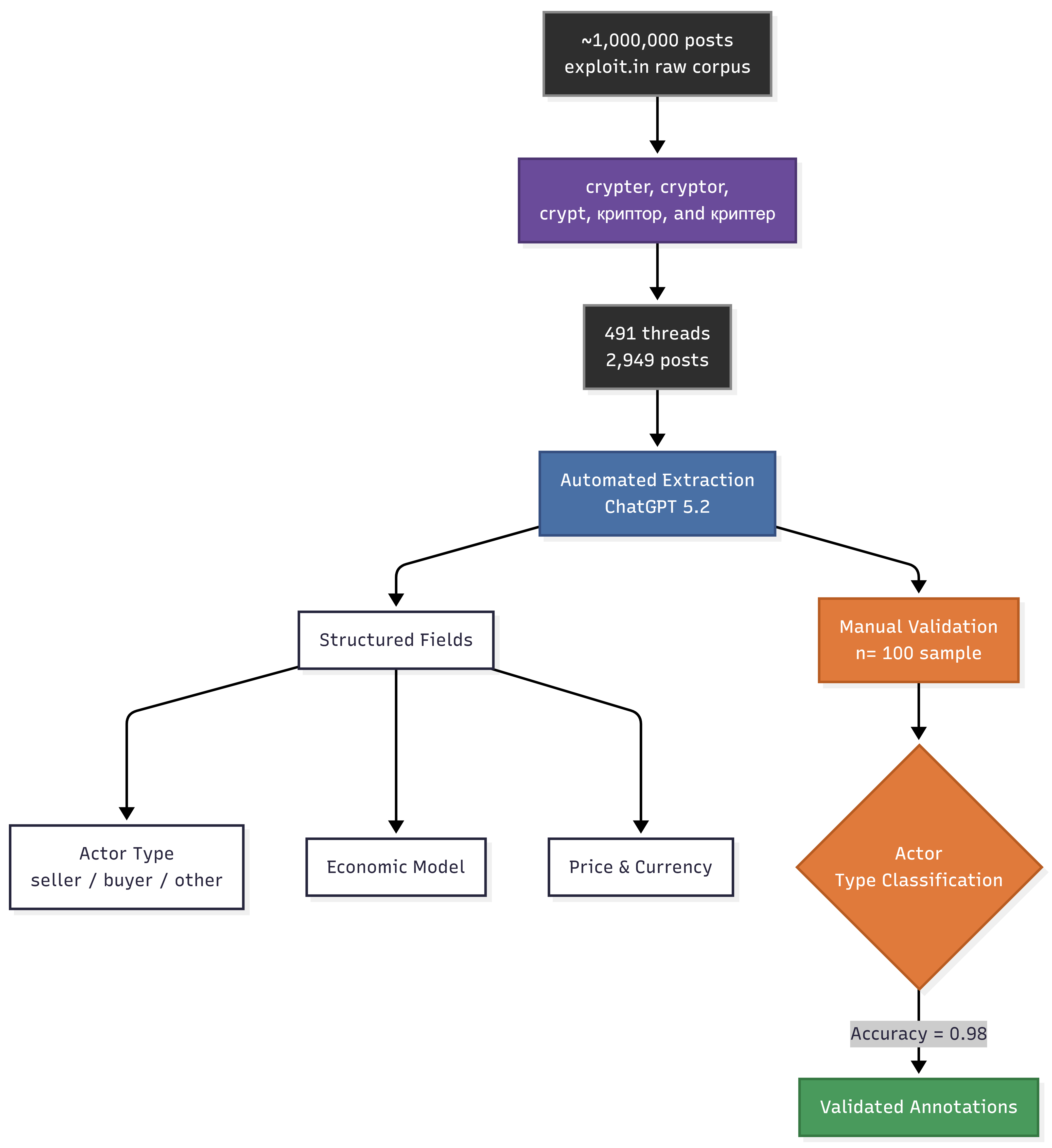
Fig 1: Overview of the annotation pipeline and validation process
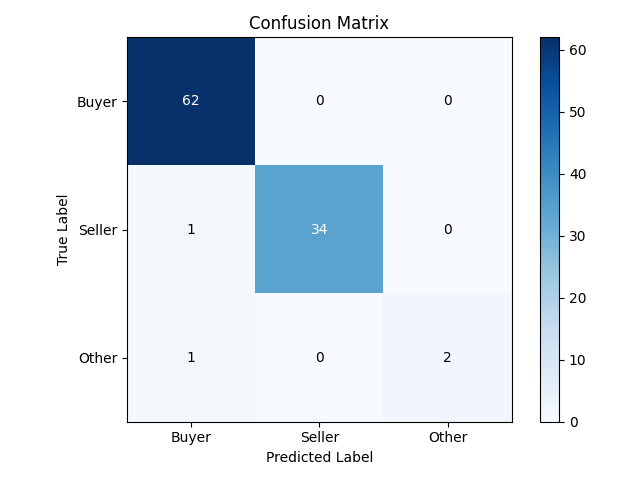
Fig 2: Confusion matrix for automated actor type classification (n=100)
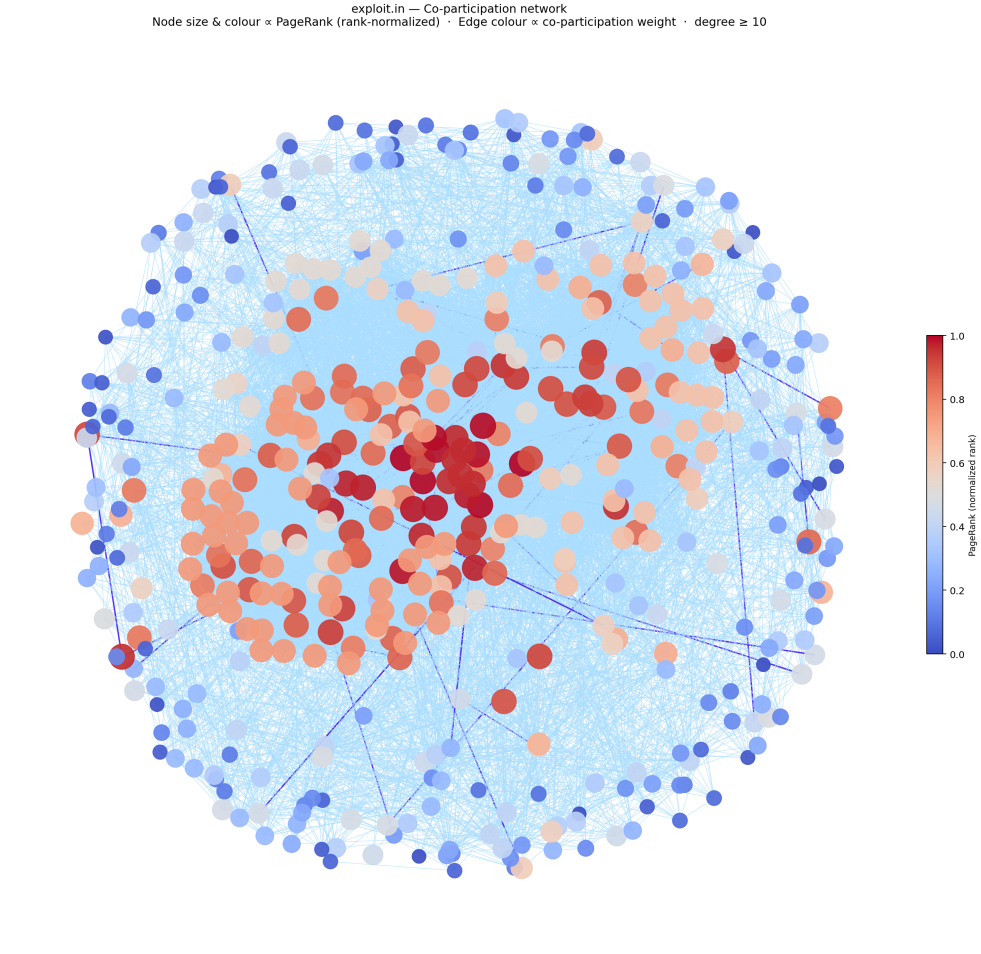
Fig 3: Co-participation network of exploit.in. Node size and colour reflect PageRank (rank-normalized). Edge colour reflects co-participation weight.
Limitations
- Reputation data only available for thread starters, inducing selection bias and limiting generalization of network-reputation correlations to all forum users.
- Data drawn from one forum (exploit.in) with restricted access; findings may not generalize to other geolinguistic or less gated cybercrime communities.
- No direct validation of technical efficacy of crypters or detection evasion performance beyond forum claim analysis.
- Analysis does not include real transaction or malware execution data to link crypting service to downstream infection rates.
- Limited insight on adversarial responses from antivirus companies or law enforcement interventions on the forum marketplace.
Open questions / follow-ons
- How effective are various crypter operational models at evading state-of-the-art antivirus and endpoint detection systems in real-world deployment?
- What adversarial strategies, such as law enforcement infiltration or takedown efforts, most effectively disrupt the CraaS ecosystem's trust and governance infrastructure?
- How does the underground crypter economy adapt in response to rapid changes in endpoint defense technology, especially AI-driven detection?
- Can similar institutional trust structures observed on exploit.in be found across other linguistic and cultural cybercrime forums, or are they context-specific?
Why it matters for bot defense
For bot-defense and CAPTCHA practitioners, the paper offers vital insight into how malware obfuscation services—key tools enabling stealthy attack payloads—are professionally maintained and economically structured in underground markets. Recognizing the complexity and continuous maintenance of crypters helps defenders anticipate that malware variants encountered in the wild may be regularly refreshed to evade detection tools, which complicates signature-based blocking and necessitates adaptive, behavior-based approaches.
Moreover, the marketplace’s strong institutional trust infrastructure indicates that disabling individual seller accounts or performing simple takedown actions may have limited disruptive impact; attackers can rely on brokers and escrow-enforced reputations to sustain operations. This underlines the importance of systemic disruption targeting core trust intermediaries alongside technical mitigations. Understanding the pricing and delivery models (e.g., Telegram bot operators with low-cost, instant crypting) also suggests high-volume, automated crypted payload generation, connecting to botnet scale and CAPTCHAs required to impair adversary automation flows.
Cite
@article{arxiv2606_24226,
  title={ Inside Crypter-as-a-Service: An Ecosystem Analysis of the exploit.in Underground Forum Research Talks },
  author={ Mathieu Jeannot and Jean-Yves Marion and Manon Pamar and Maira Nassau and Pierre Marty and Romain Guittienne },
  journal={arXiv preprint arXiv:2606.24226},
  year={ 2026 },
  url={https://arxiv.org/abs/2606.24226}
}