
Reducing the rate of personal insults in social media with bystander bots
Source: arXiv:2606.21043 · Published 2026-06-19 · By Libby Hemphill, Lingyao Li, Ryan Burton, David Jurgens
TL;DR
This paper investigates whether automated bystander interventions, implemented as bots replying to personal insults on Reddit, can effectively reduce the frequency of such insults. Prior work has largely focused on toxic content detection or punitive moderation, which can have unintended consequences, particularly for marginalized groups. Instead, the authors leverage psychological conflict de-escalation strategies through bots that reply to insulting comments using different styles of responses drawn from offline bystander intervention literature. Their randomized controlled trial monitored over 26,000 Reddit users who posted insults and randomly assigned a subset (2,955 users) to receive a single bot reply from one of seven intervention strategies. Results show that while the bots did not reduce the likelihood of posting any insult nor reduce total comment counts, they significantly reduced the number of insults posted by users with a history of high insult rates. Among the strategies tested, appreciative and confrontational style replies were the most effective in decreasing insult count post-intervention. This demonstrates that automated, context-aware de-escalation replies are a promising approach to mitigate personal insults online, complementing traditional content moderation. Limitations around model precision and the need for subtle strategy design are discussed.
Key findings
- Insult detection model achieved precision of 0.88 and recall of 0.60 for insults on Reddit comments (N=547 test set).
- 26,298 users posting insults identified; 2,955 randomly assigned to treatment receiving a single bot reply.
- No significant difference in the likelihood of posting any insult post-intervention between control and treatment (OR=1.013).
- Bystander bot interventions reduced the count of insults among high prior insult-rate users (interaction OR=0.987, p<0.01).
- No significant effect on overall comment volume; intervention suppressed insults rather than participation.
- Among seven strategies tested, 'Appreciate' and 'Confront' responses correlated with reduced insults (NB-GLM, Table 6).
- 'Meme' responses increased insult counts post-intervention.
- The bot replies generally received positive community feedback measured through upvote/downvote ratios (karma).
Threat model
The adversary is an online user posting personal insults on Reddit threads, unaware or indifferent to automated bot responses. The adversary can post insults possibly to provoke or exclude others but cannot prevent detection by the insult classifier or bot reply posting by the system. The adversary has limited ability to recognize or adapt to bot intervention strategies. The system assumes no active adversarial evasion or stealthy toxic comments below detection thresholds.
Methodology — deep read
The authors set out to evaluate automated bystander interventions against personal insults on Reddit through a randomized controlled trial. The threat model assumes that insults are direct second-person attacks that can be detected by a classifier; the adversary is a Reddit user posting insults unaware of or indifferent to the bot. The bots reply with one pre-selected response from a set of 35 crafted messages reflecting seven psychological de-escalation strategies.
Data provenance involved continuous streaming of Reddit comments via PRAW from r/all during Nov 2019 to Apr 2020. They focused on subreddits deemed 'ok-to-post' (≥10,000 subscribers, no bot bans, not age-restricted or quarantined). When a user posted an insult (detected by the insult detection model), and they had not been assigned before, the user was randomly allocated to treatment or control. Treatment users received a single bot reply; control users no replies. Users were only treated once per insulting post.
The insult detection model was custom-trained with 4,000 labeled Reddit comments and 547 test comments, labeled by crowdworkers following a strict definition for personal insults (directed attacks on persons including hate speech). It combined a fine-tuned BERT model for binary classification with a 'you construction' rule-based filter requiring second-person pronouns plus a slur from a predefined insult lexicon. This hybrid approach balanced precision and recall to minimize false positives and erroneous bot replies.
The bystander bot’s output was randomly selected from 35 hand-crafted messages spanning seven de-escalation strategies adapted from psychological conflict management: Apologize, Appreciate, Avoid, Compromise, Confront, Meme (comic), and Smooth (empathetic). These were vetted through manual pilot testing and community feedback.
The experimental period collected all user comments for one month pre- and one week post-intervention to measure changes in insult count and rate per user. Evaluations used logistic regression to test likelihood of insults post-treatment, negative binomial generalized linear models (NB-GLM) for insult counts, and robust linear models for insult percentages, controlling for prior insult rate and user activity patterns via PCA of subreddit participation. Community feedback on bot comments was measured by karma scores using regression models controlling for subreddit effects.
No cross-validation or external datasets were reported. Code and model release status is not stated. The empirical evaluation is limited to Reddit and the defined insult type, with intervention restricted to a single bot reply per insulting comment per user.
Overall the approach systematically observes bystander intervention in-the-wild with careful statistical modelling to isolate treatment effects while mitigating false positives and nuisance confounders. The methodology emphasizes precision in insult detection and diverse psychological strategies simulated through bot messages.
Technical innovations
- A hybrid insult detection model combining fine-tuned BERT with a linguistically informed 'you construction' rule to improve precision in detecting personal insults.
- First randomized controlled trial deploying bystander intervention bots replying with psychology-inspired de-escalation strategies directly to insults in large-scale online social media.
- Systematic comparison of seven distinct intervention strategies implemented as bot replies and analysis of their differential impacts on subsequent insulting behavior.
- Use of user-subreddit participation PCA loadings to control behavioral regularity and baseline subreddit toxicity effects in regression models assessing insult changes.
Datasets
- Reddit comments — 26,298 insult authors identified from r/all stream between Nov 2019-Apr 2020 — public Reddit data
- Insult annotation dataset — 4,000 training comments, 547 test comments — labeled by Amazon Mechanical Turk workers
Baselines vs proposed
- Naïve Bayes + TF-IDF: test accuracy < fine-tuned BERT model (exact accuracy not stated)
- Support Vector Machine + TF-IDF: test accuracy < fine-tuned BERT model (exact accuracy not stated)
- Control group insult likelihood post-intervention: OR=1.013 vs treatment: OR=1.013 (no significant difference)
- Treatment group insult counts post-intervention: NB-GLM OR=1.064, interaction with prior insult rate OR=0.987 (significant reduction for high insult users)
- Appreciate intervention: karma coefficient = 1.545 (p<0.01); Confront intervention: karma coefficient = 1.349 (p<0.01)
- Meme intervention: karma coefficient = 2.780 (p<0.01) but resulted in higher insult counts post-intervention
Figures from the paper
Figures are reproduced from the source paper for academic discussion. Original copyright: the paper authors. See arXiv:2606.21043.
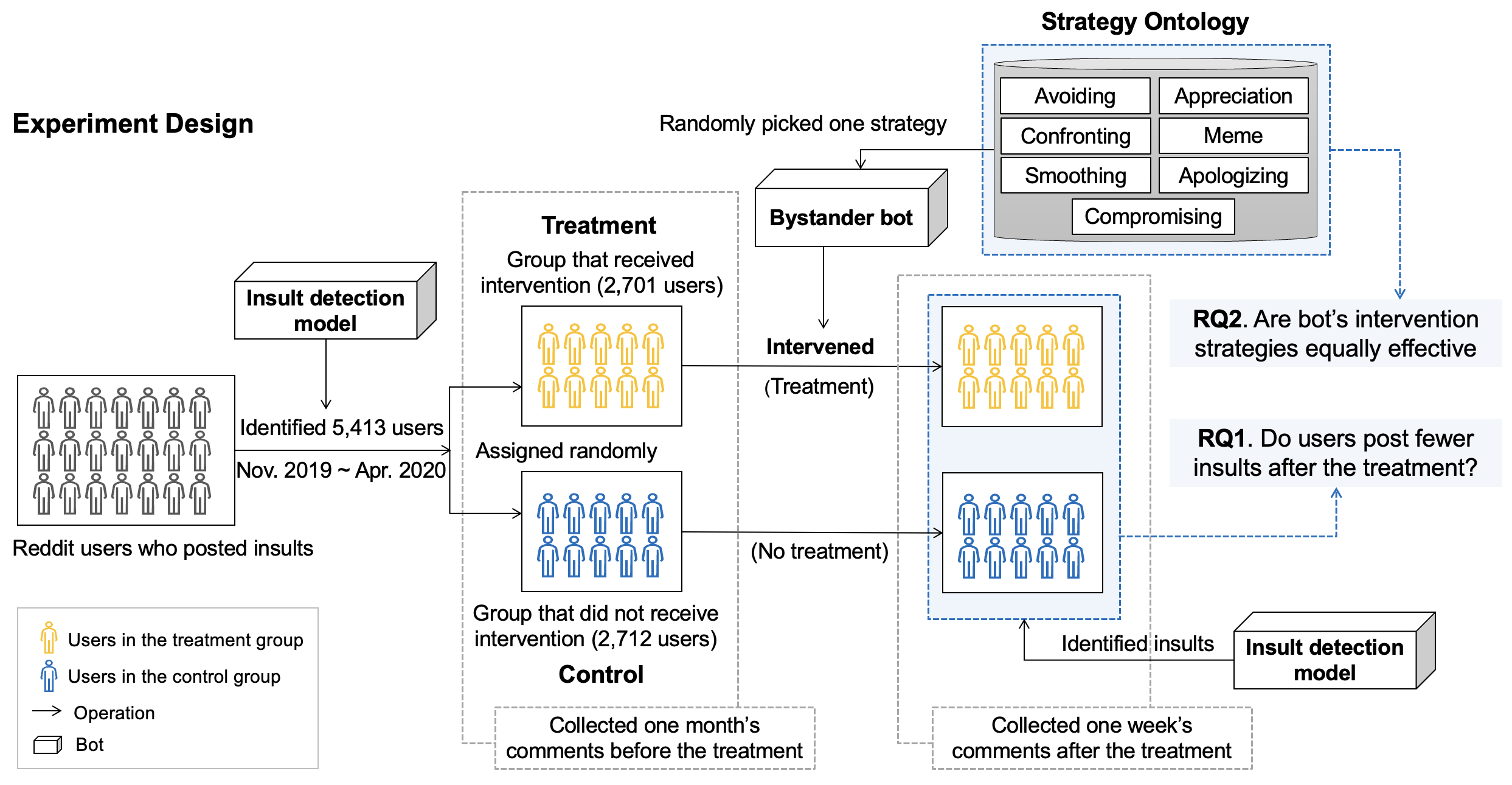
Fig 1: Overview of our experimental design
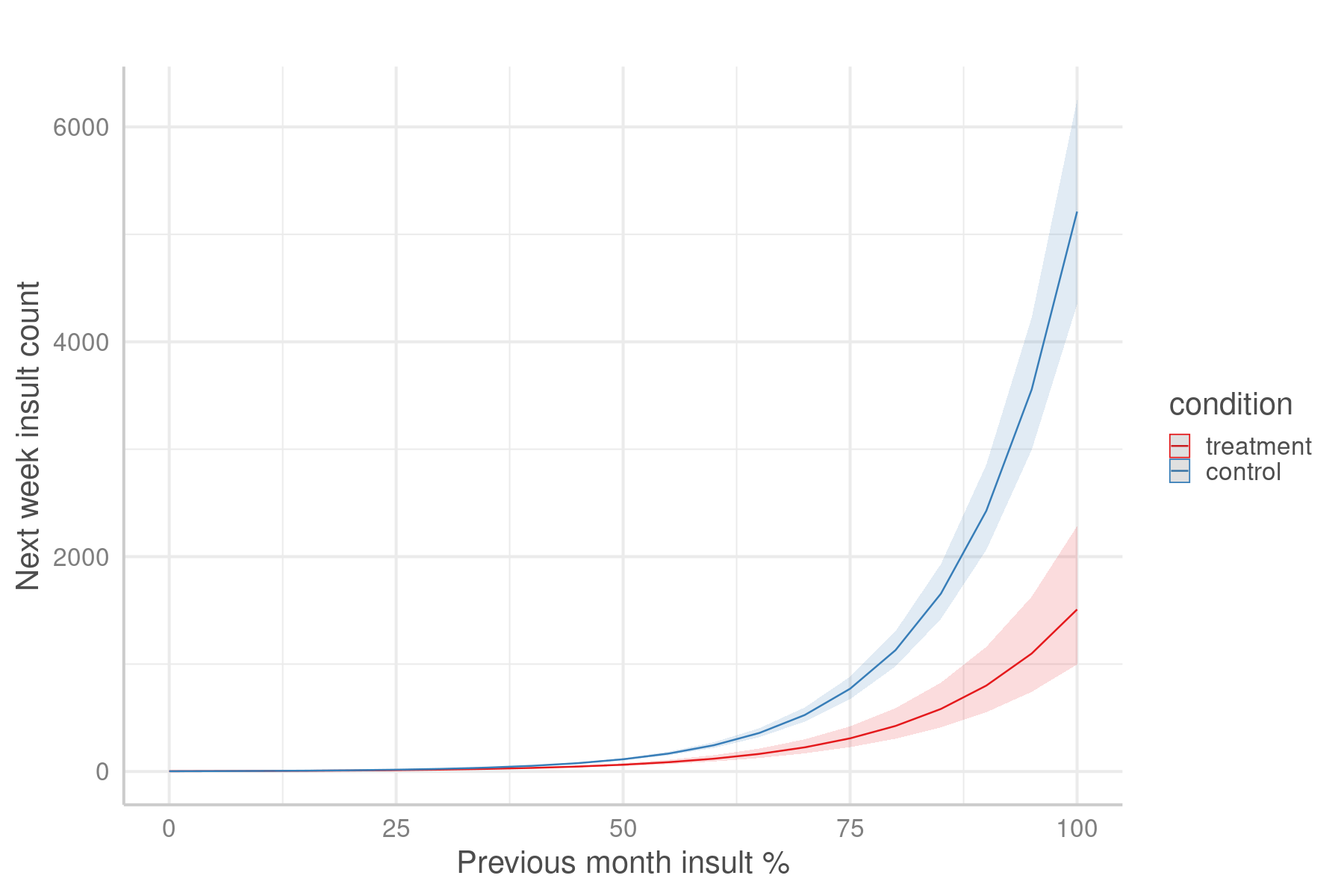
Fig 3: Predicted insults by count after personal insult detection
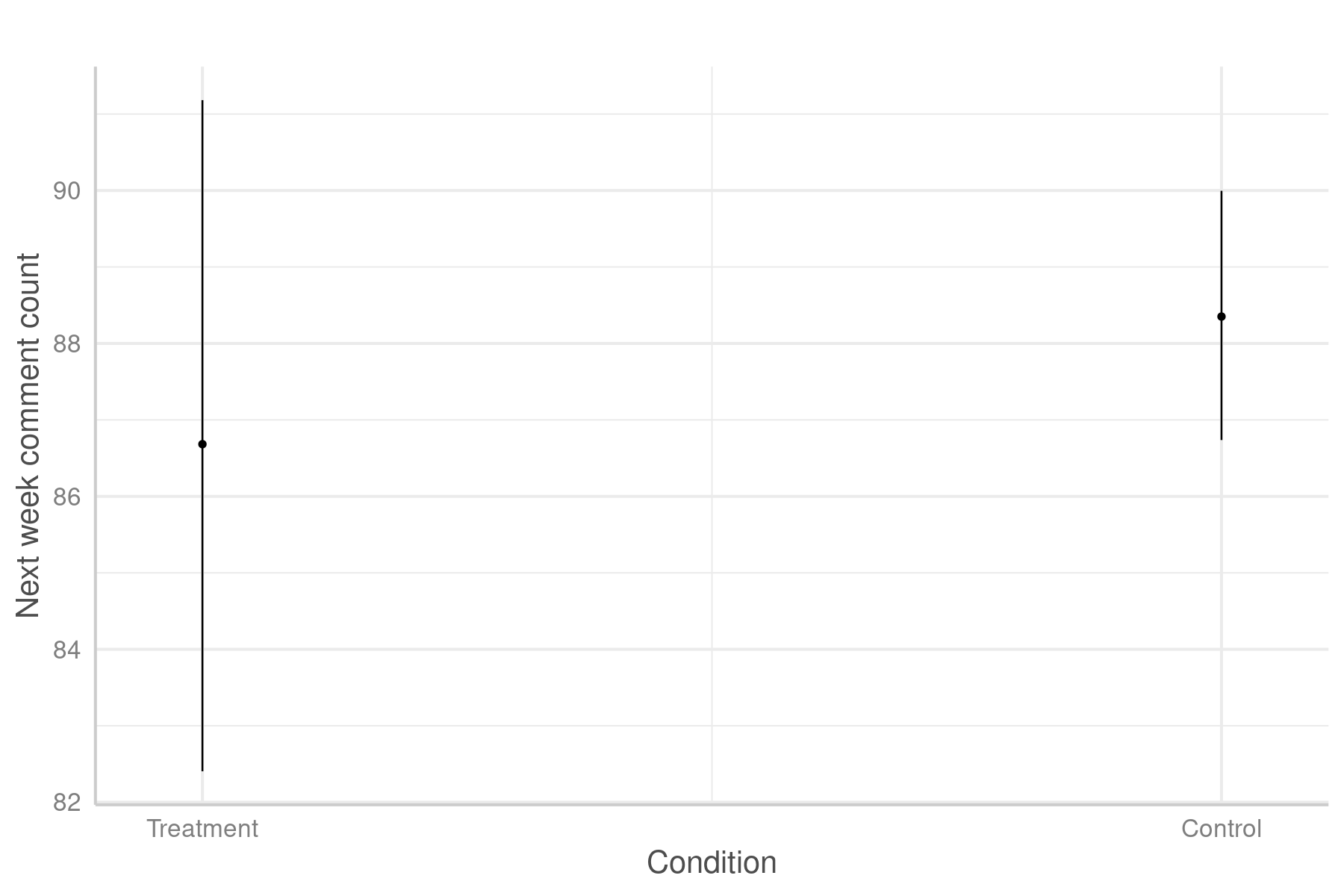
Fig 4: Total comments in the week following detection

Fig 4 (page 35).

Fig 5 (page 35).
Fig 6 (page 35).

Fig 7 (page 35).
Fig 8 (page 35).
Limitations
- Insult detection model has imperfect recall and precision, leading to some false positive bot replies and missed interventions.
- Intervention limited to only one automated reply per user insult event; cumulative or repeated interventions not tested.
- Effectiveness evaluated only over a short (one week) post-treatment window; long-term behavior changes unknown.
- Study restricted to Reddit, focusing on personal insults only; generalizability to other platforms or toxicity types is not established.
- No adversarial testing to see if users deliberately subvert bot responses or detection.
- Possible uncontrolled confounders despite PCA controls; causal claims should be interpreted with caution.
- Community perception might vary across subreddits beyond those included due to 'ok-to-post' filter.
Open questions / follow-ons
- How do repeated or long-term bystander bot interventions influence user behavior and community toxicity dynamics?
- Can integrating emotion or personality analysis tailor bot responses to individual insulters for better outcomes?
- What is the differential impact of these strategies across culturally diverse or niche subreddit communities?
- How might adversaries adapt to or evade such automated interventions, and how can bots detect/respond to this?
Why it matters for bot defense
For bot-defense and CAPTCHA practitioners, this study provides an authoritative example of how automated systems can actively intervene in hostile user interactions to reduce toxic behaviors without relying on punitive or removal strategies. Analogous to CAPTCHA deterring abusive automated access, bystander bots act as automated social moderators that improve community participation by de-escalating conflict. Importantly, the paper highlights the necessity of precision in detection models to avoid false positives and the benefit of employing varied and psychologically-grounded response strategies rather than uniform replies. Practitioners should consider not only detection accuracy but also tailored, context-sensitive automated responses to combat hostile or abusive user behavior effectively. The research also illustrates methodological rigor in deploying and evaluating automated behavior modification at scale, which may inspire similarly structured evaluation protocols for bot defense in abusive or adversarial settings.
Cite
@article{arxiv2606_21043,
  title={ Reducing the rate of personal insults in social media with bystander bots },
  author={ Libby Hemphill and Lingyao Li and Ryan Burton and David Jurgens },
  journal={arXiv preprint arXiv:2606.21043},
  year={ 2026 },
  url={https://arxiv.org/abs/2606.21043}
}