
Topological Data Analysis for High-Dimensional Dynamic Process Monitoring
Source: arXiv:2606.20443 · Published 2026-06-18 · By Angan Mukherjee, Tyler A. Soderstrom, Michael J. Kurtz, Victor M. Zavala
TL;DR
This paper addresses the challenge of detecting both major and subtle minor events in complex, high-dimensional multivariate time-series data arising from industrial processes, such as an olefins plant. Existing process monitoring methods tend to fall into two broad categories: reconstruction-based approaches (e.g., PCA and autoencoders) which detect events via reconstruction error, and trajectory-based approaches (e.g., Koopman autoencoders) which model temporal latent dynamics. Both have limitations, particularly in reliably identifying transient, minor instabilities embedded in noise. The authors propose a novel hybrid framework combining Topological Data Analysis (TDA) with neural ordinary differential equations (NODE). Multivariate time-series data are represented as normalized 2D manifolds (variable vs time grids), from which topological summaries (Euler characteristic curves) are extracted using sublevel-set filtrations. A NODE model then learns the continuous-time dynamics of these topological descriptors, allowing detection of abrupt changes indicative of process events.
The approach was benchmarked on a large-scale industrial olefins plant dataset with annotated minor and major events. Results show that PCA, AE, and KAE primarily detect major events (shutdowns, startups) but often fail to detect minor instabilities (temperature shifts, rate cuts). In contrast, the proposed TDA-NODE method detects both minor and major events more effectively, demonstrating higher sensitivity and interpretability by focusing on topological structure changes rather than raw signal reconstruction or linear latent dynamics. This combination of TDA's noise robustness and NODE's modeling of temporal directionality achieves scalable, accurate event detection in complex industrial environments.
Key findings
- PCA reconstruction error peaks strongly at major events (shutdown, startup) but shows limited sensitivity to minor events like temperature fluctuations or rate changes (Fig 7b).
- Autoencoder reconstruction errors behave similarly to PCA, detecting major but not minor events adequately (Fig 7c).
- Koopman Autoencoder (KAE) latent dynamic increments detect major events via sharp latent state changes but fail to reliably capture minor event signatures (Fig 8).
- TDA-NODE framework extracts Euler characteristic (EC) curves from manifold representations of normalized data windows and models their continuous-time evolution via NODE, capturing dynamic topological structure.
- Large predicted derivatives of EC curves by NODE align closely with onset of both minor and major events, enabling improved detection sensitivity compared to baselines.
- The dataset covers 63 days at 1-minute granularity for n=56 variables, with six annotated event types ranging from subtle coldbox temperature excursions (~40 min duration) to prolonged shutdown (~13 days).
- The moving window size was 1 day with 20% overlap, generating a sequence of windows for topological feature extraction and dynamic modeling.
- Model architecture for NODE: single hidden layer neural network with 64 units and tanh activation, trained to predict time derivatives of EC vectors sampled at prescribed filtration thresholds.
Threat model
The adversary is an unknown perturbation or fault that induces changes in the underlying system dynamics manifesting as variations in the multivariate time-series sensor data. The monitoring system aims to detect both abrupt and subtle changes in process behavior but does not consider active adversarial manipulation or data poisoning. The adversary cannot permanently mask events or alter topology in a way that escapes changes in topological descriptors.
Methodology — deep read
The threat model implicitly assumes a process monitoring scenario where the system operator or automated system seeks to detect changes in a complex dynamic process from high-dimensional time-series data. The method does not explicitly consider adversarial manipulations, but targets robustness to noise and subtle dynamic events.
The data consisted of sensor measurements from an industrial olefins plant, comprising 56 process variables sampled every minute over 63 days (~90,000 minutes). Six distinct event intervals (major and minor) were identified via expert annotation.
Input data for modeling was structured as multivariate time-series matrices (variables × time). A moving window approach segmented the dataset into overlapping 1-day windows (with 20% overlap). Each window produced a normalized 2D manifold representation: rows correspond to normalized variables, columns to time steps within the window.
Topological Data Analysis was applied by interpreting each window's manifold as a scalar field, then computing sublevel-set filtrations over intensity thresholds between 0 and 1. For each threshold, Betti numbers (connected components β0 and holes β1) were computed forming Euler characteristic (EC) curves (χ = β0 - β1) for each window.
The EC curves were discretized into vectors by sampling at r filtration thresholds, forming latent topological state vectors zk.
A neural ODE (NODE) model was trained to learn the continuous-time dynamics of these latent EC vectors, modeling dz/dt = fθ(z), where fθ is a feedforward neural network with one hidden layer of 64 tanh units. The NODE input was the EC curve vector of a window, and its output was the predicted time derivative.
Training involved minimizing prediction errors of the EC curve evolution across successive windows, effectively learning smooth trajectories in topological space.
Event detection was based on identifying large predicted time-derivative norms of the EC curves (||dz/dt||) indicating rapid topological changes signaling events.
Baseline methods included PCA and AE as reconstruction-based approaches detecting events via reconstruction error per window, and KAE as a trajectory-based baseline modeling approximately linear latent-space dynamics with discrete latent increments ||∆zk||.
Reconstruction errors and latent dynamic increments were computed per moving window and compared to thresholded event annotations. The model comparisons evaluated sensitivity to both major and minor events.
All methods operated on the same windowing scheme. The provided code and datasets are public at https://github.com/zavalab/ML/tree/master/TDA_Process_Monitoring, enabling reproducibility.
One concrete example: For a window representing a coldbox temperature excursion, the manifold normalization produced a 2D scalar field. Sublevel-set filtration and Betti computations yielded an EC curve vector. Feeding this vector into the trained NODE produced a predicted time derivative vector with large norm at the event onset, successfully flagging this subtle minor event, while PCA and AE reconstruction errors remained low and KAE latent increments were also small.
Technical innovations
- Representing high-dimensional multivariate time-series data as normalized 2D manifolds (variables vs time) to leverage spatiotemporal structure for topology extraction.
- Applying sublevel-set filtrations to compute Euler characteristic curves as compact topological descriptors capturing dynamic shapes within the manifold representation.
- Using neural ordinary differential equations (NODEs) to learn continuous-time dynamics of topological summaries, modeling temporal evolution of latent topological state.
- Event detection via monitoring predicted time-derivative norms of topological descriptors, enabling detection of subtle and transient process instabilities beyond traditional reconstruction or linear latent dynamics methods.
Datasets
- Industrial Olefins Plant Dataset — 56 variables × ~90,000 minutes (63 days) — proprietary industrial process data
Baselines vs proposed
- PCA: reconstruction error peaks at major events (shutdown, startup), insensitive to minor events vs TDA-NODE: detected both minor and major events via large EC curve derivative norms
- AE: reconstruction error similar to PCA, sensitive mainly to major events vs TDA-NODE: better detection of subtle minor events
- KAE: latent increment ∥∆zk∥ responds to major events but misses minor event signatures vs TDA-NODE: captures dynamic topological changes linked to minor events
Figures from the paper
Figures are reproduced from the source paper for academic discussion. Original copyright: the paper authors. See arXiv:2606.20443.
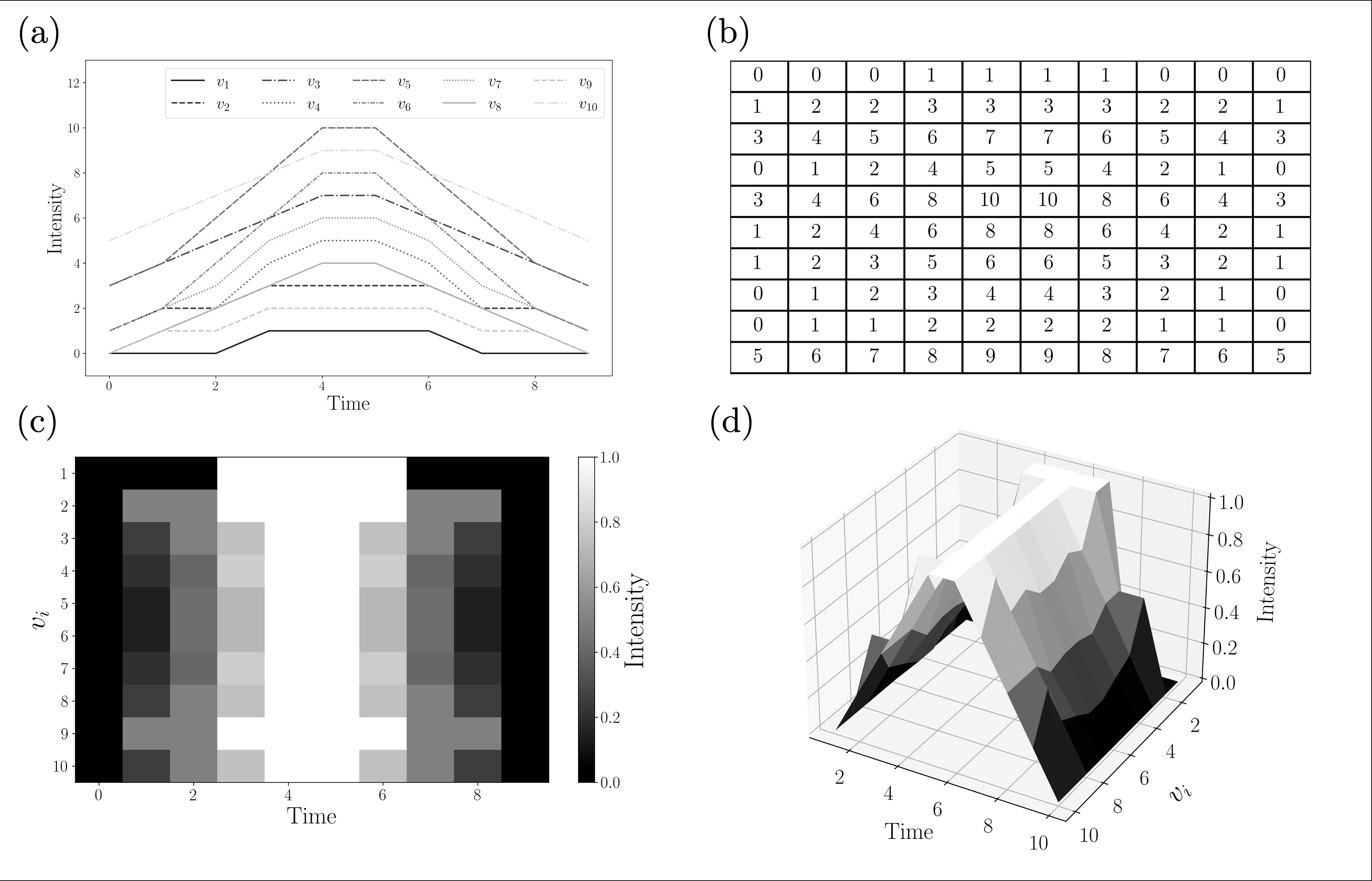
Fig 1: Different representations of multivariate time-series data. (a) Raw time-series trajectories for process
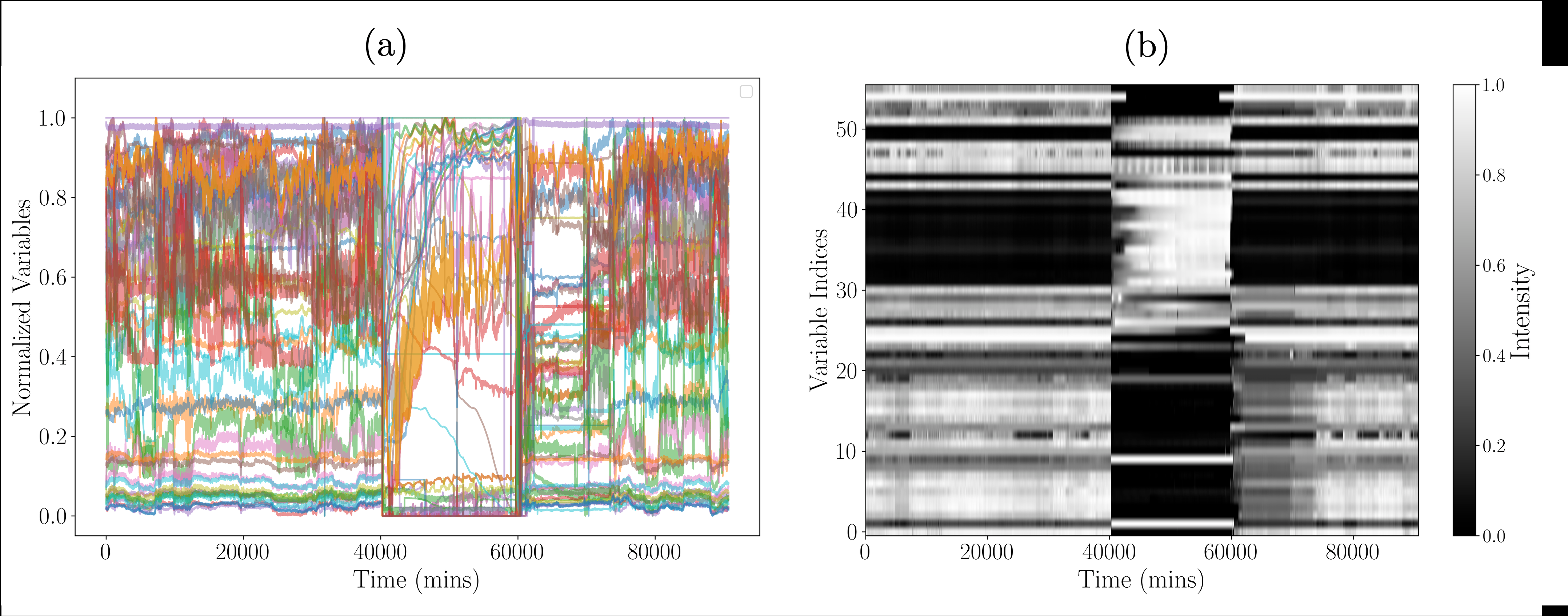
Fig 2: Different representations of a multivariate time-series dataset. (a) Raw normalized trajectories for
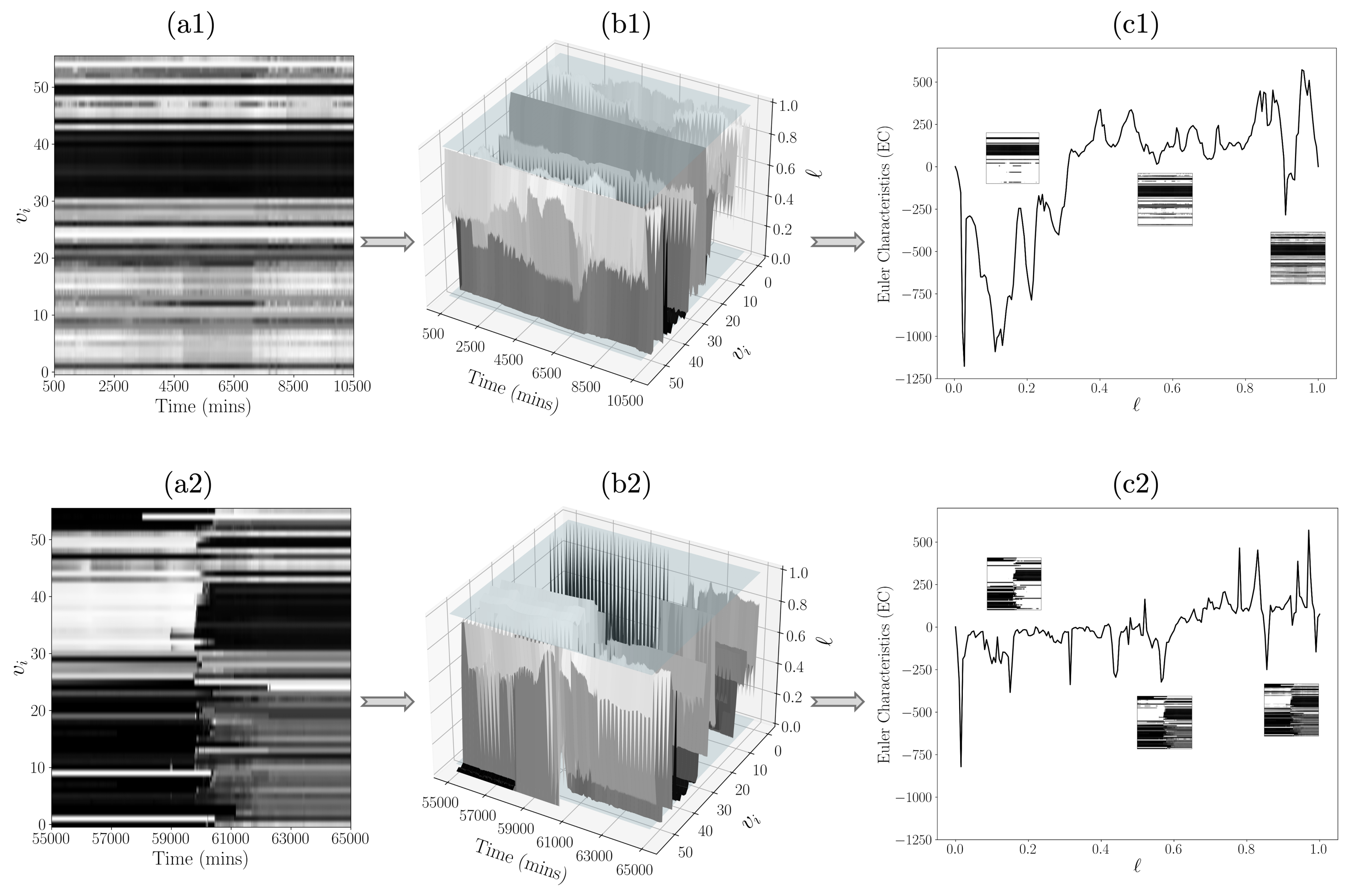
Fig 3: illustrates this construction for two representative windows. Different windows typically
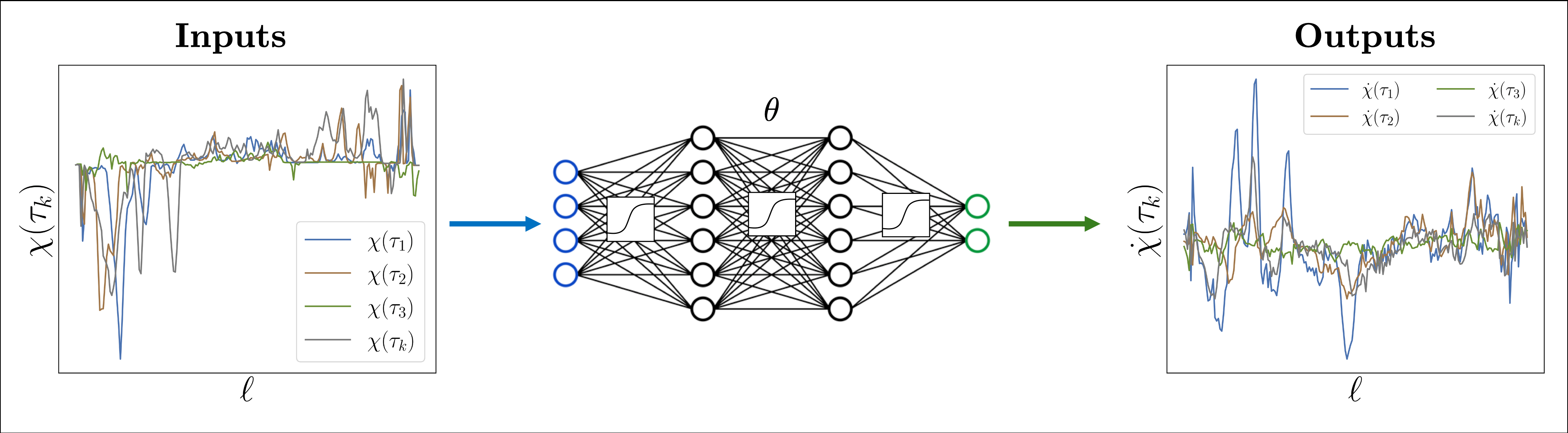
Fig 4: NODE architecture used to learn the temporal evolution of the topological descriptors. The input con-
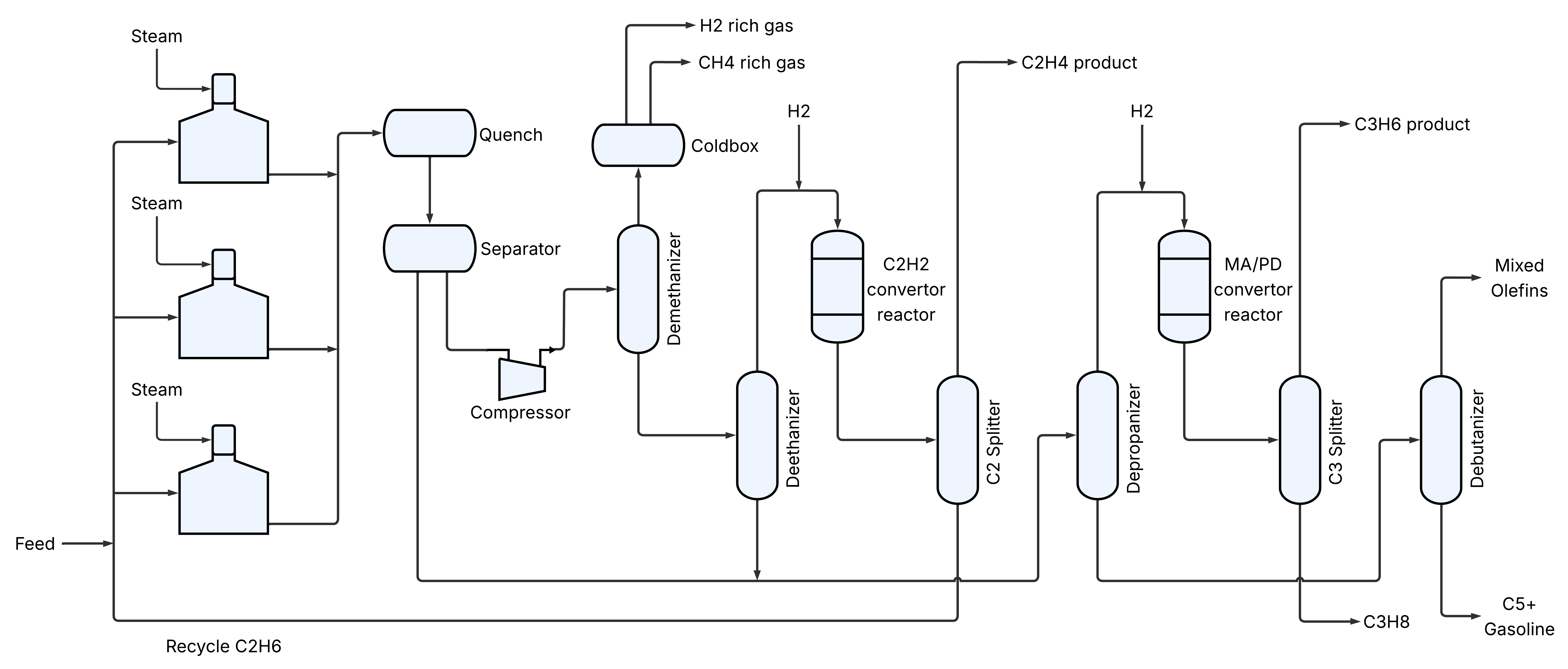
Fig 5: presents a schematic of a
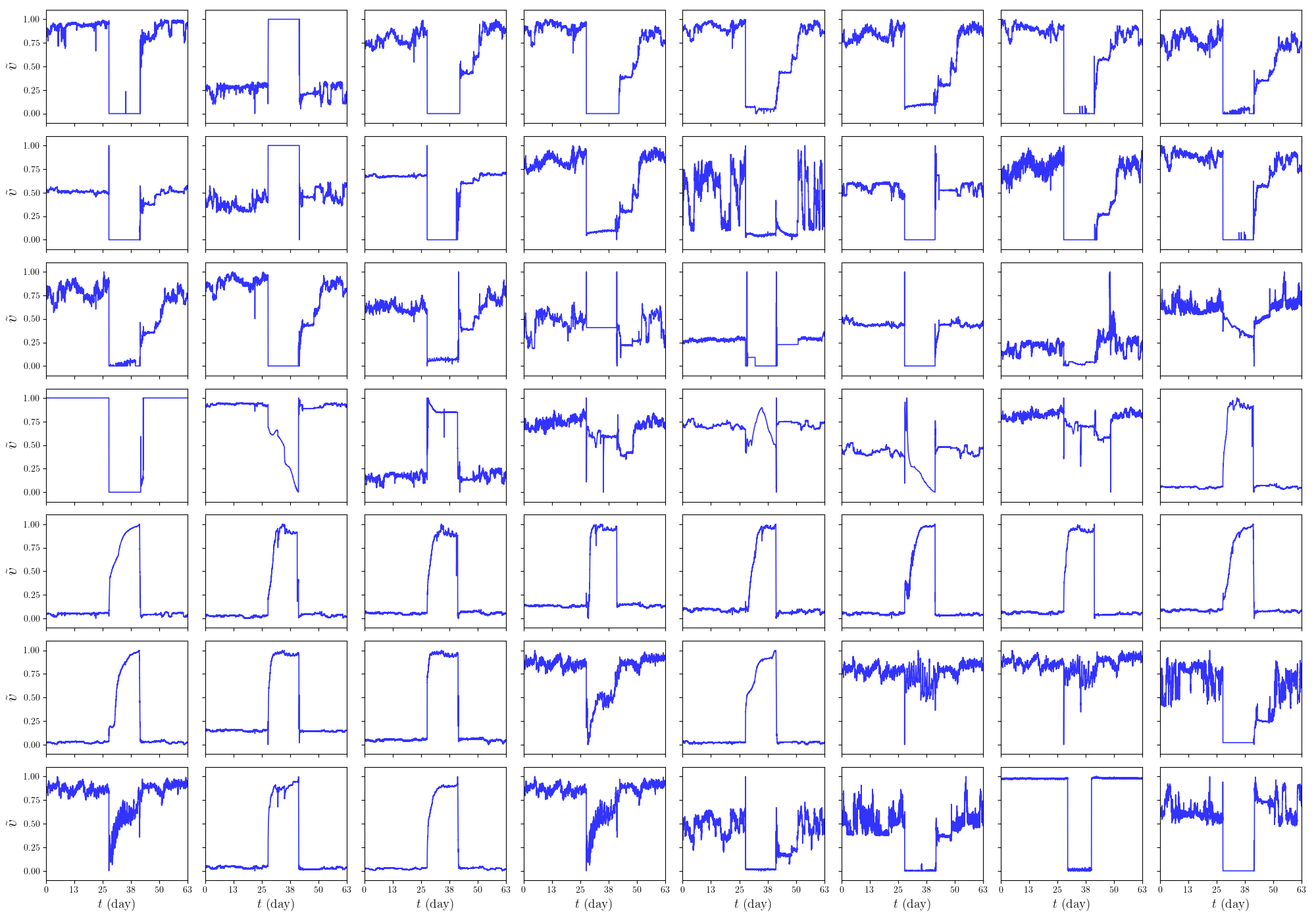
Fig 6: shows the normalized time-series of all measured process variables p˜vq across the full
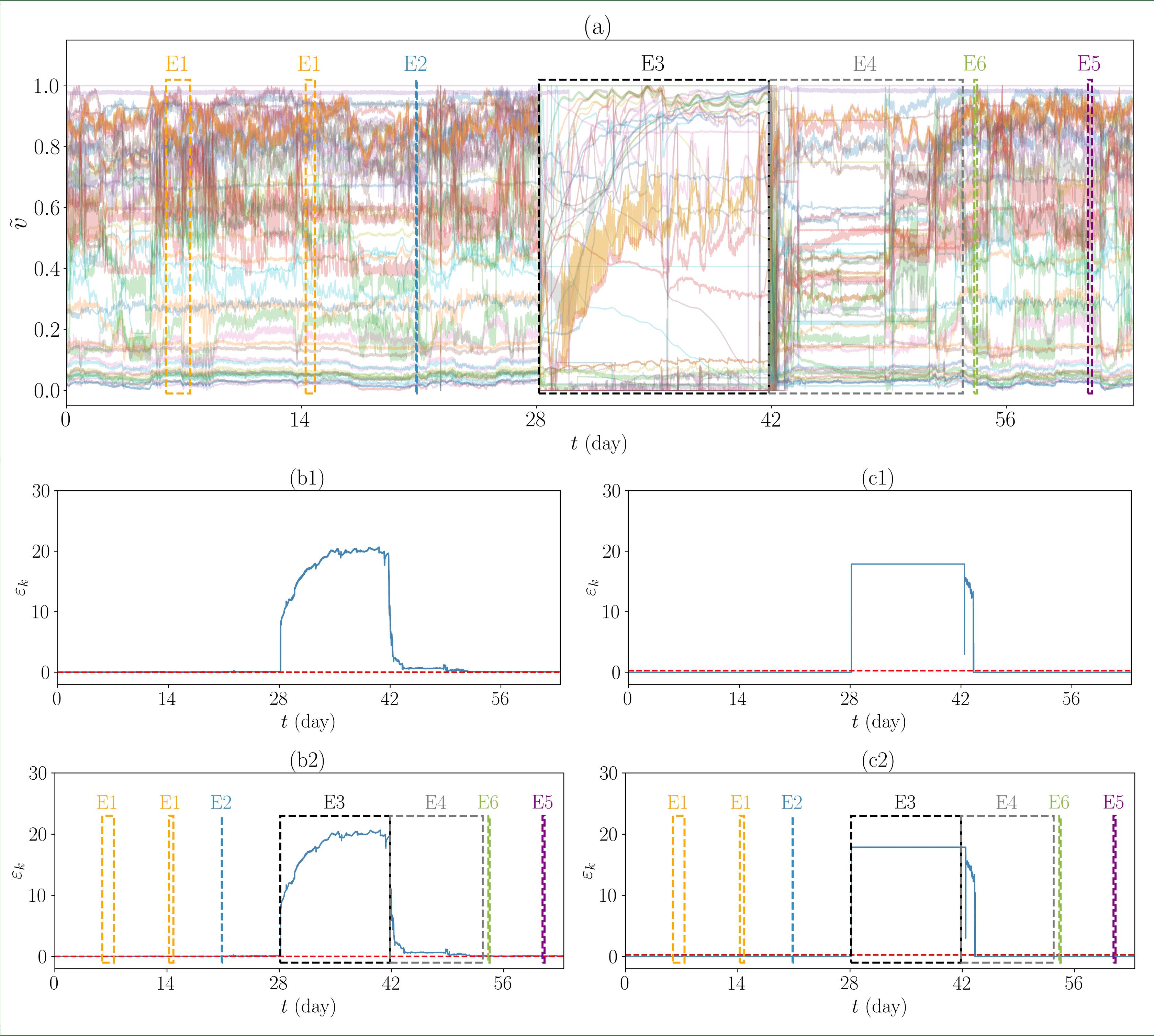
Fig 7: Performance of the reconstruction-based monitoring approaches. (a) Normalized multivariate time-
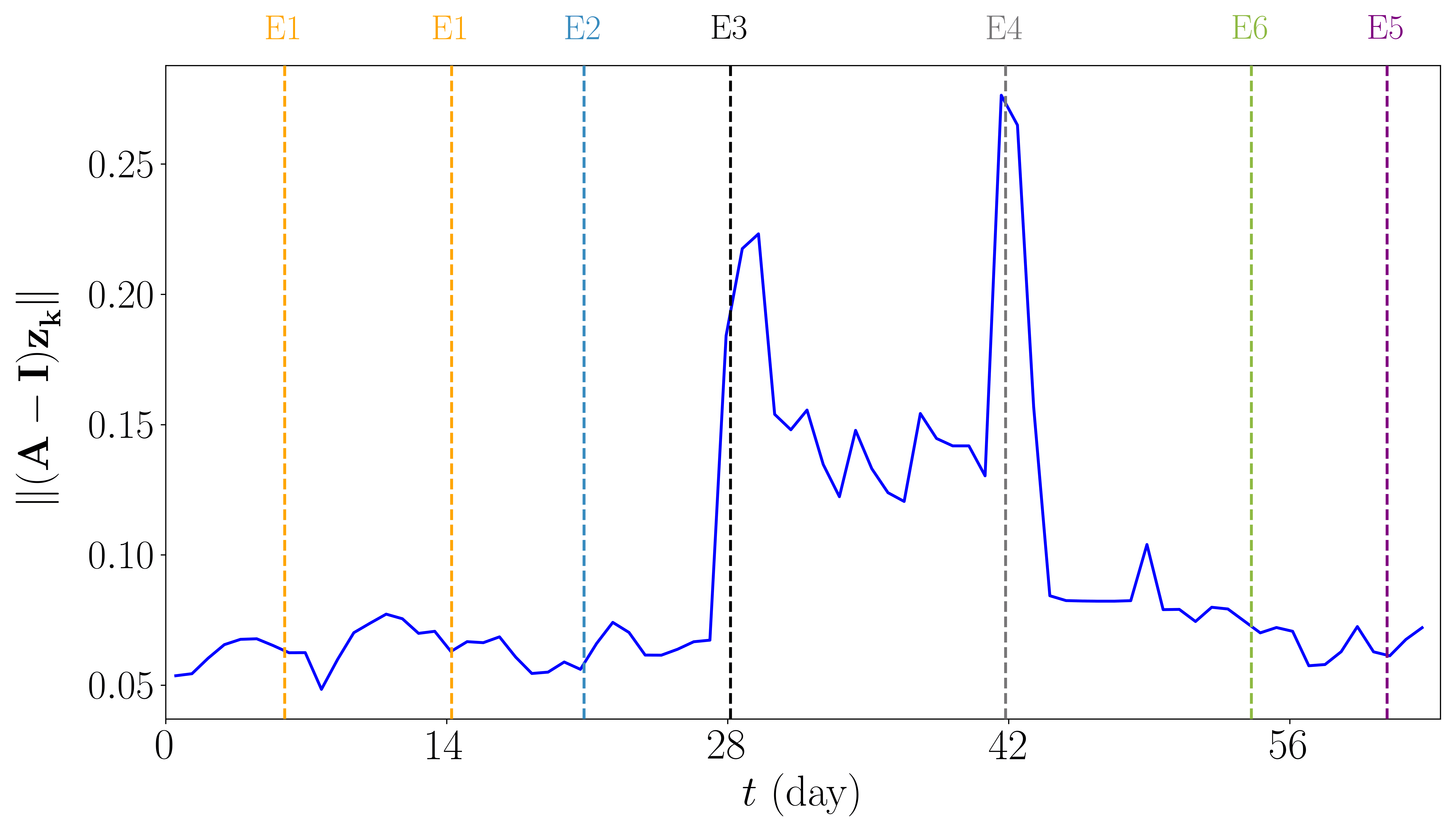
Fig 8: KAE event detection showing the temporal evolution of ∥∆zk∥across all time windows overlaid with
Limitations
- The approach assumes availability of sliding window segmentation with overlapping windows, which may affect latency and localization of event detection.
- The NODE model and TDA feature extraction parameters require tuning (e.g., filtration thresholds, latent dimension r) which may impact sensitivity.
- No explicit adversarial robustness evaluation was conducted, so resilience to malicious perturbations is unknown.
- The olefins dataset is proprietary and specific to a particular industrial plant; generalizability to other processes or sensor configurations requires further study.
- Computational overhead of sublevel-set filtrations and NODE training on very large-scale streaming data was not detailed.
- Detection thresholds for derivative norms were not fully explored, and tradeoffs between false positives and missed events are unclear.
Open questions / follow-ons
- How does the TDA-NODE approach perform on diverse industrial datasets with different sensor types, sampling rates, and process dynamics?
- What are optimal strategies for selecting filtration thresholds and latent vector dimension to maximize sensitivity and specificity?
- Can the approach be adapted to perform real-time streaming event detection with low computational latency?
- How robust is the TDA-NODE model to adversarial or corrupted sensor data, noise beyond normal measurement variation, or missing data?
Why it matters for bot defense
For bot-defense or CAPTCHA engineers, this work illustrates the potential of topological data analysis combined with dynamic latent models to discern subtle temporal patterns within high-dimensional data streams. Analogous challenges appear in bot detection where signals may be noisy, dynamically evolving, and multi-featured. Leveraging TDA can provide a noise-robust, shape-aware feature representation that complements traditional feature or latent embeddings. Furthermore, modeling the continuous-time dynamics of topological features via neural ODEs might enable detection of nuanced, evolving attack behaviors that elude static or reconstruction-based methods.
While the industrial monitoring context differs, the methodology suggests that topology-based representations coupled with trajectory-aware deep models could improve detection sensitivity to transient or hard-to-capture behaviors in security data. It prompts exploration of manifold or topological embeddings for user interaction or behavioral biometrics, combined with temporal dynamics models, as alternative or complementary signals to existing bot/detection pipelines.
Cite
@article{arxiv2606_20443,
  title={ Topological Data Analysis for High-Dimensional Dynamic Process Monitoring },
  author={ Angan Mukherjee and Tyler A. Soderstrom and Michael J. Kurtz and Victor M. Zavala },
  journal={arXiv preprint arXiv:2606.20443},
  year={ 2026 },
  url={https://arxiv.org/abs/2606.20443}
}