
Smooth time-dependent control of dipolar Bose-Einstein condensates
Source: arXiv:2606.20507 · Published 2026-06-18 · By Chris Whitty, Aitor Alaña, Michele Modugno, Xi Chen, Géza Tóth, Andreas Ruschhaupt et al.
TL;DR
This paper addresses the challenge of finely controlling the quantum state of dipolar Bose-Einstein condensates (BECs), particularly when driving the system through phase transitions between superfluid and supersolid states. These condensates are characterized by long-range anisotropic dipole-dipole interactions and contact interactions tuned via the time-dependent s-wave scattering length, a parameter experimentally accessible through Feshbach resonances. The authors develop smooth and experimentally feasible control protocols for the time-dependent scattering length to prepare target ground states while suppressing excitations caused by finite-time evolution. They apply two main approaches: a variational approach with inverse engineering (VAIE) based on Euler-Lagrange equations employing a Gaussian ansatz to design shortcuts to adiabaticity within the superfluid regime; and a direct two-parameter numerical optimization scheme to cross the more complex superfluid-to-supersolid phase transition. Their results demonstrate high-fidelity protocols that outperform standard polynomial ramps and quasi-adiabatic schemes, achieving minimum fidelities F_min around 0.95 for superfluid transfers in times on the order of ~20 ms, and F_min ~0.97 for the superfluid-supersolid transition in ~90 ms. The approaches suppress the formation of detrimental density currents and excitations, offering practical control recipes readily implementable in contemporary dipolar gas experiments.
Key findings
- Variational approach with inverse engineering (VAIE) achieves F_min > 0.95 fidelity for superfluid ground state transfer between a_s = 120 a0 and 96 a0 within tf ≈ 8 (≈20 ms) control time.
- VAIE protocols outperform polynomial ramp schemes (a^{(1)}_s, a^{(2)}_s, a^{(3)}_s), which induce larger excitations and lower final fidelities (down to ~0.75 F_min).
- Direct two-parameter numerical optimization of polynomial schemes yields fidelity F_min ≈ 0.97 crossing the superfluid to supersolid transition from a_s = 95.9 a0 to 90.9 a0 at tf = 45 (≈92 ms).
- Optimized protocols suppress post-control time current density oscillations, correlating with reduced excitations and higher fidelity steady states.
- The Gaussian ansatz and VAIE fail to capture dynamics across the superfluid-supersolid phase transition due to modulated density symmetry breaking.
- The optimized scattering length protocol for the phase transition features an initial rapid drop below the critical a_c_s, a return to a local maximum, then a smooth descent to the final target value, similar to a 'parachute-jump'-type STA scheme.
- Inverse participation ratio (IPR) values approach known supersolid signatures (IPR ~ 3.2) under optimized control, confirming preparation of modulated density states with minimal excitations.
- Shorter control times require higher energy excursions and lead to increased residual excitations, consistent with quantum speed limit considerations.
Methodology — deep read
Threat model & assumptions: The study models the controlled quantum evolution of a trapped dipolar BEC of N = 3×10^4 Dy-162 atoms in a cylindrical harmonic trap, focusing on mean-field dynamics described by the extended Gross-Pitaevskii equation (eGPE) incorporating contact, dipole-dipole, and Lee-Huang-Yang (LHY) quantum fluctuation terms. The adversary is not explicit due to the quantum control setting, but the 'threat' is unwanted excitations and imperfect state preparation from finite-time driving. The key controllable parameter is the s-wave scattering length a_s(t), modulated experimentally via magnetic Feshbach resonance. Dipole moments are aligned along the z-axis.
Data and system setup: Simulations performed for realistic experimental parameters (ω_x, ω_y, ω_z = 2π×(15,100,100) Hz; l_0=1μm length scale) with initial and target scattering lengths chosen relative to the superfluid-supersolid phase boundary a_c_s. Wavefunctions normalized and dynamics solved numerically for times up to 2 tf (twice control time).
Architecture/algorithm: Two control algorithms are developed. The variational approach with inverse engineering (VAIE) starts from a separable Gaussian ansatz for the wavefunction with time-dependent widths w_x(t), w_ρ(t) and phases α_x(t), α_ρ(t). The Lagrangian formalism (Euler-Lagrange equations) for these parameters reduces the eGPE to coupled ODEs. The control problem is recast by inverse-engineering these ODEs to solve for a_s(t) given predefined smooth parameter trajectories satisfying boundary conditions. Polynomial parameterizations of widths w_x(t) and w_ρ(t) with free coefficients are optimized to satisfy constraints and minimize residual excitations.
For the superfluid-supersolid transition, the single Gaussian ansatz breaks down due to density modulations. A direct optimization scheme optimizes small parametric variations ∆a_s(t; λ_1, λ_2) added to polynomial base ramps to maximize fidelity F_min between evolved and target states at final time. This is done via numerical fidelity evaluations over a 2D parameter search.
Training regime: The 'training' is numerical optimal control via iterative parameter search (two-parameter sweep) over short polynomials for a_s(t). No stochastic training or machine learning used. Time evolution is calculated by numerically solving the eGPE forward from initial ground state. Control times tf vary from ~8 to 90 in dimensionless units (~20 ms to 92 ms).
Evaluation protocol: Performance measured by target-overlap fidelity F_T(t) = |⟨Ψ_target|Ψ(t)⟩|^2 and the strict minimal fidelity F_min over the range t ∈ [tf, 2tf] to ensure stability after control is finished and excitation oscillations subside. Numerical ground states are computed by energy minimization. Control schemes compared include polynomial ramps of increasing smoothness, VAIE analytic schemes, and numerically optimized VAIE or direct-optimization schemes. Suppression of condensate current density j_x(x,t) and inverse participation ratio (IPR) are also used as excitation and modulation metrics.
Reproducibility: The methodology is detailed with explicit equations and parameter values for the dipolar BEC system, enabling reproduction with standard numerical solvers for the eGPE and parameter optimization. Code release is not mentioned. The model uses a single-component extended GPE mean-field description incorporating established LHY correction approximations.
One concrete example: To transfer the condensate ground state in the superfluid regime from a_s = 120 a0 to 96 a0 within tf=8 (~20 ms), the Gaussian ansatz widths w_x(t) and w_ρ(t) are parameterized by simple polynomials optimized to satisfy boundary conditions and minimize residual excitations via cost function incorporating Euler-Lagrange constraint deviation. Using these widths, Eq. (18) is solved numerically for a_s(t). This protocol achieves F_min > 0.95 fidelity, with stable condensate density and suppressed current oscillations post-control time. The fidelity dynamics, density profiles, and current density flows illustrate the superiority of the VAIE-derived control over polynomial ramps.
Technical innovations
- Combination of a time-dependent variational approach using Euler-Lagrange equations with inverse engineering (VAIE) to analytically design smooth scattering length control protocols for dipolar BECs in the superfluid regime.
- Direct two-parameter numerical optimization of polynomial scattering length ramps tailored to drive the condensate across the superfluid-supersolid phase transition with high fidelity, overcoming limitations of simple Gaussian ansatz.
- Introduction of a fidelity performance metric F_min defined as the minimal target-overlap fidelity over a post-control time interval to rigorously quantify final excitation suppression.
- Analytic derivation of coupled differential equations for Gaussian wavefunction widths incorporating dipolar and LHY interactions, enabling efficient inverse engineering of the scattering length profile.
Datasets
- Simulated dipolar BEC of 162Dy atoms — N=30,000 atoms — modeled with extended Gross-Pitaevskii equation parameters derived from experimental literature
Baselines vs proposed
- Polynomial ramp a^{(1)}_s(t): F_min ≈ 0.75 vs VAIE scheme a^{(v)}_s(t): F_min > 0.95 for tf=8
- Polynomial ramp a^{(2)}_s(t): F_min ≈ 0.80 vs VAIE scheme a^{(v)}_s(t): F_min > 0.95 for tf=8
- Polynomial ramp a^{(3)}_s(t): F_min ≈ 0.85 vs VAIE scheme a^{(v)}_s(t): F_min > 0.95 for tf=8
- Numerically optimized VAIE a^{(vn)}_s(t): marginally improves F_min above 0.95 vs analytic VAIE scheme for tf=8
- Direct two-parameter optimized scheme a^{(n)}_s(t) in superfluid-supersolid transition: F_min ≈ 0.97 vs polynomial ramps (≈0.90 or less) for tf=45
Figures from the paper
Figures are reproduced from the source paper for academic discussion. Original copyright: the paper authors. See arXiv:2606.20507.
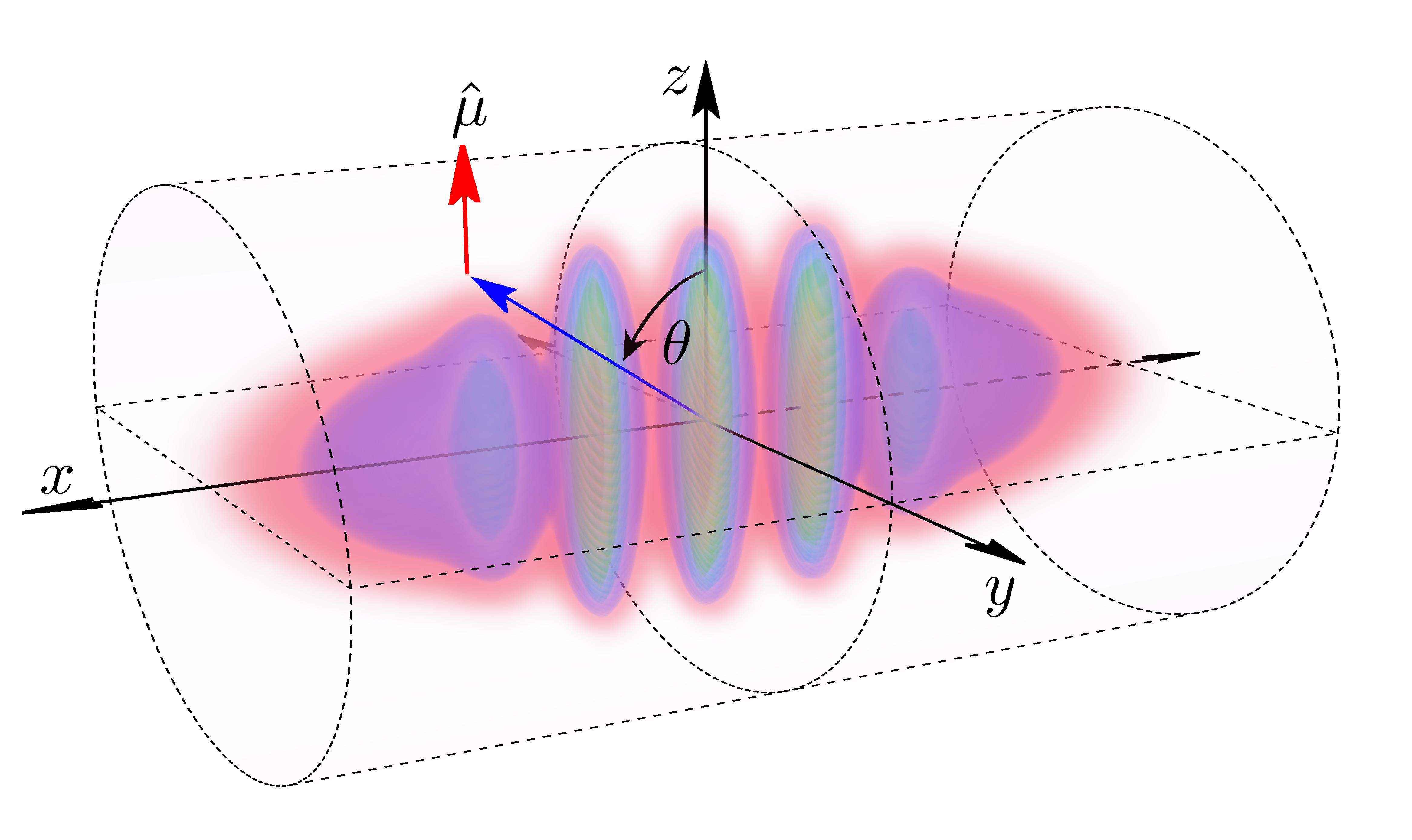
Fig 1: Diagram of the system setup: The ground state den-
Limitations
- The variational Gaussian ansatz fails to capture emergent density modulations after crossing the superfluid-supersolid phase boundary, limiting applicability of VAIE in that regime.
- The optimized control protocols are demonstrated in simulations without incorporating particle loss, finite temperature effects, or incoherent noise present in experiments.
- No rigorous adversarial robustness evaluation was performed; excitations induced by experimental imperfections or noisy control are unaddressed.
- The direct optimization approach uses only a two-parameter search over polynomial corrections which may not explore more complex control landscapes.
- Reproducibility depends on numerical solvers and parameter sensitivity; no public code or frozen checkpoints are provided.
- The condensate dynamics assume mean-field extended GPE validity, which may not capture quantum fluctuations beyond LHY correction in certain regimes.
Open questions / follow-ons
- Can a more sophisticated variational ansatz (e.g., sums of Gaussians) combined with inverse engineering extend VAIE methods smoothly across the superfluid-supersolid transition?
- How do particle losses, finite temperature effects, and experimental noise impact the fidelity and robustness of these control protocols?
- What are the quantum speed limits or optimal control time bounds for realistic supersolid formation under these interactions?
- Can advanced optimal control techniques (e.g., GRAPE, CRAB) restricted to experimentally feasible pulse shapes yield further performance improvements despite increased computational cost?
Why it matters for bot defense
While not directly linked to bot-defense or CAPTCHA challenges, this paper is instructive for CAPTCHA practitioners interested in advanced quantum control methods as examples of smooth, optimized time-dependent parameter control in complex nonlinear systems. The use of variational inverse engineering highlights how analytic approximations can reduce computational overhead in control tasks, a principle potentially extendable to designing adaptive challenge-response schemes that require minimal client-side overhead while maintaining security guarantees. The explicit focus on suppressing excitations corresponds analogously to minimizing false positives and negatives by carefully tuning system parameters. Finally, the tradeoffs between protocol complexity, control time, and achievable fidelity echo the practical constraints in deploying robust anti-bot challenges where speed and accuracy are balanced. Bot-defense researchers may benefit from considering the optimization frameworks and boundary constraint formulations presented here as inspiration for control and parameter tuning under strong nonlinearities.
Cite
@article{arxiv2606_20507,
  title={ Smooth time-dependent control of dipolar Bose-Einstein condensates },
  author={ Chris Whitty and Aitor Alaña and Michele Modugno and Xi Chen and Géza Tóth and Andreas Ruschhaupt and Eugene Ya. Sherman },
  journal={arXiv preprint arXiv:2606.20507},
  year={ 2026 },
  url={https://arxiv.org/abs/2606.20507}
}