
Resonant heterodyne conversion applied to a low-frequency haloscope for dark matter axion searches in the 1-35 MHz range
Source: arXiv:2606.20422 · Published 2026-06-18 · By Navarro-Madrid Jose R., Reina-Valero José, Díaz-Morcillo Alejandro, Gimeno Benito
TL;DR
This paper addresses the low-frequency dark matter axion search problem using resonant microwave cavities by applying resonant heterodyne up-conversion as the detection method. Traditional haloscopes use homodyne detection requiring strong static magnetic fields and face volume and frequency scaling challenges, typically limiting sensitivity to axion masses corresponding to frequencies above ~100 MHz. Here, the authors develop a theoretical framework starting from axion electrodynamics to derive the axion-induced source term for a heterodyne setup involving two cavity modes: a driven pump mode and a readout mode which detects axion-induced mode mixing signals. They carefully account for the finite axion linewidth and introduce effective quality factors governing the system's bandwidth and sensitivity. Utilizing and extending the BI-RME 3D full-wave electromagnetic method to realistic two-port cavities, including pump leakage effects, they analyze the large RADES-BabyIAXO cavity and identify a quasi-TE011 and quasi-TM010 mode pair optimally suited for detecting axions in the 0.9 to 34.6 MHz range. Analytical and numerical predictions show excellent resonance agreement, with full-wave simulations accurately resolving off-resonance behavior and pump leakage. Optimization of port coupling is derived to maximize scanning rates. Sensitivity projections for cryogenic copper and superconducting niobium cavities suggest that, if thermal noise dominates and pump leakage is suppressed, axion-photon couplings as low as 10^{-15} GeV^{-1} could be probed, significantly improving over previous heterodyne-based axion searches in this frequency domain.
Key findings
- The quasi-TE011 - quasi-TM010 mode pair in the RADES-BabyIAXO cavity allows sensitivity to axion frequencies between 0.9 and 34.6 MHz.
- Analytical and BI-RME 3D full-wave calculations agree well at resonance; full-wave modeling provides more accurate characterization off-resonance and quantifies pump leakage.
- Optimal port coupling coefficients (βp, βr) maximize scanning rate, balancing quality factor impacts and noise temperature effects.
- Effective detection quality factor Qh,2 is approximated as \u2248 sqrt(Qh,1^2 + QL,r^2), dictating the bandwidth of the detected signal combining axion linewidth and readout mode response.
- Detected power under thermal-noise-limited conditions and sufficient pump leakage suppression scales as Pd \u2248 8 κrp QL,p Qh,1 / (ωr ωp) g_aγγ^2 ρ_a c^3 ħ C_rp P_inc,p.
- Taking finite axion linewidth into account reduces detected power by a factor of ~10-1000 depending on frequency detuning and quality factors.
- Superconducting niobium cavities with high Q and pump leakage rejection could probe axion-photon couplings down to 10^{-15} GeV^{-1} at 90% confidence level.
- Pump leakage and mechanical vibrations produce spurious signals but are estimated to be subdominant above ~1 MHz frequencies.
Threat model
The adversary is the ambient dark matter axion field acting as a classical weakly coupled source with unknown effective coupling g_{aγγ}, signal frequency ωa, and finite linewidth. The detector aims to measure the exceedingly small axion-photon conversion signal amidst thermal and technical noise. Intrinsic limitations arise from the irreproducible nature of the axion and unavoidable system noise, rather than active adversarial interference.
Methodology — deep read
Threat model and assumptions: The adversary is the unknown dark matter axion field with frequency ωa in the MHz range interacting weakly with photons via a coupling g_{aγγ}. The detection apparatus assumes knowledge of the cavity resonant modes, pump and readout ports, and system noise properties. The analysis assumes axion De Broglie wavelengths much larger than cavity dimensions, enabling ∇a ≈ 0 approximations. Possible spurious signals arise from pump leakage and mechanical vibrations.
Data provenance and setup: The study focuses on the largest RADES-BabyIAXO cavity, a quasi-cylindrical multimode microwave resonator designed for 1-35 MHz axions. Quality factors QL,p and QL,r for pump and readout modes respectively, coupling coefficients βp and βr, and cavity dimensions are parameters in the model. No external magnetic field is applied; instead, the pump mode provides the relevant RF magnetic field.
Architecture and algorithms: The authors start with axion electrodynamics derived from an effective Lagrangian coupling axion field a and electromagnetic field tensor F^{μν}. They formulate Maxwell’s equations including the axion-photon interaction terms and derive equivalent axion-induced current density expressions. Using these, they compute the axion-generated volumetric current source driving the readout mode via an overlap integral (Eq. 22). The detection power is related to these overlaps and cavity mode energies (Eqs. 23-33).
The BI-RME 3D frequency-domain full-wave electromagnetic method is used to model realistic cavity configurations with two ports, accurately computing complex modal field distributions, including pump leakage into the readout channel. This method solves boundary integral equations expanding fields in resonant modes to capture spectral and phase response over frequencies.
Training regime: Not applicable, as the work is theoretical and computational modeling.
Evaluation protocol: Detected powers are computed analytically and numerically for resonant and off-resonant frequencies, comparing overlap factors and frequency responses. Phase noise and finite axion linewidth effects are modeled via Lorentzian spectral convolutions (Fig. 2). Sensitivity projections consider thermal noise limited conditions with realistic Q factors from copper and superconducting niobium cavities. Optimal coupling coefficients maximizing scanning rate are derived mathematically (Section II.D). Various systematics such as pump leakage and mechanical vibrations are assessed qualitatively.
Reproducibility: The paper applies well-documented physics frameworks and the publicly known BI-RME 3D method developed in prior literature (Refs. 61-70). Full numerical parameters and cavity designs are specified for the RADES-BabyIAXO cavity. However, no code or dataset links are explicitly provided, so reproducibility depends on access to cavity design files and BI-RME software implementations.
Example walk-through: Starting with the monochromatic axion field a(r,t)=a0 cos(ωa t - k·r + φ), the effective axion current density in the frequency domain is computed (Eq. 17). For the pump mode magnetic field Bp(r) at frequency ωp, the overlap with the readout mode electric field Er(r) is calculated (Eq. 22) forming the dimensionless form factor Crp (Eq. 31). The power generated in the readout mode by this axion-induced current is proportional to Q factors and overlap squared (Eq. 32). The power coupled to the output port depends on coupling βr (Eq. 27). Sensitivity projections incorporate finite linewidth and noise via quality factors Qh,1 and QL,r combined into Qh,2 (Eq. 49). Finally, scanning rate optimization formulas relate port couplings, quality factors, and noise temperature (Eq. 58). The BI-RME 3D method simulates the full cavity response over frequency to confirm these analytical estimates and quantify pump leakage.
Technical innovations
- Extension of the BI-RME 3D full-wave electromagnetic method to heterodyne axion detection in two-port cavities including pump leakage characterization.
- Derivation of effective quality factors (Qh,1, Qh,2) accounting for finite axion linewidth and cavity mode bandwidth interaction in the detection spectral profile.
- Identification and analytic optimization of the quasi-TE011 - quasi-TM010 mode pair in RADES-BabyIAXO cavity for low-frequency (0.9-34.6 MHz) heterodyne axion detection.
- Analytic expressions linking cavity mode overlaps, port coupling coefficients, pump power, and detected axion signal power enabling optimized scanning rates.
- Demonstration that heterodyne detection sensitivity scales differently than classical Sikivie haloscope scaling, with volume affecting pump field constraints rather than signal power at fixed circulating pump power.
Datasets
- RADES-BabyIAXO cavity simulations — size parameter unspecified — proprietary experimental design
Baselines vs proposed
- Previous heterodyne-based axion searches: sensitivity to g_{aγγ} not explicitly quantified vs proposed niobium cavity sensitivity down to ~10^{-15} GeV^{-1} at 90% C.L.
Figures from the paper
Figures are reproduced from the source paper for academic discussion. Original copyright: the paper authors. See arXiv:2606.20422.
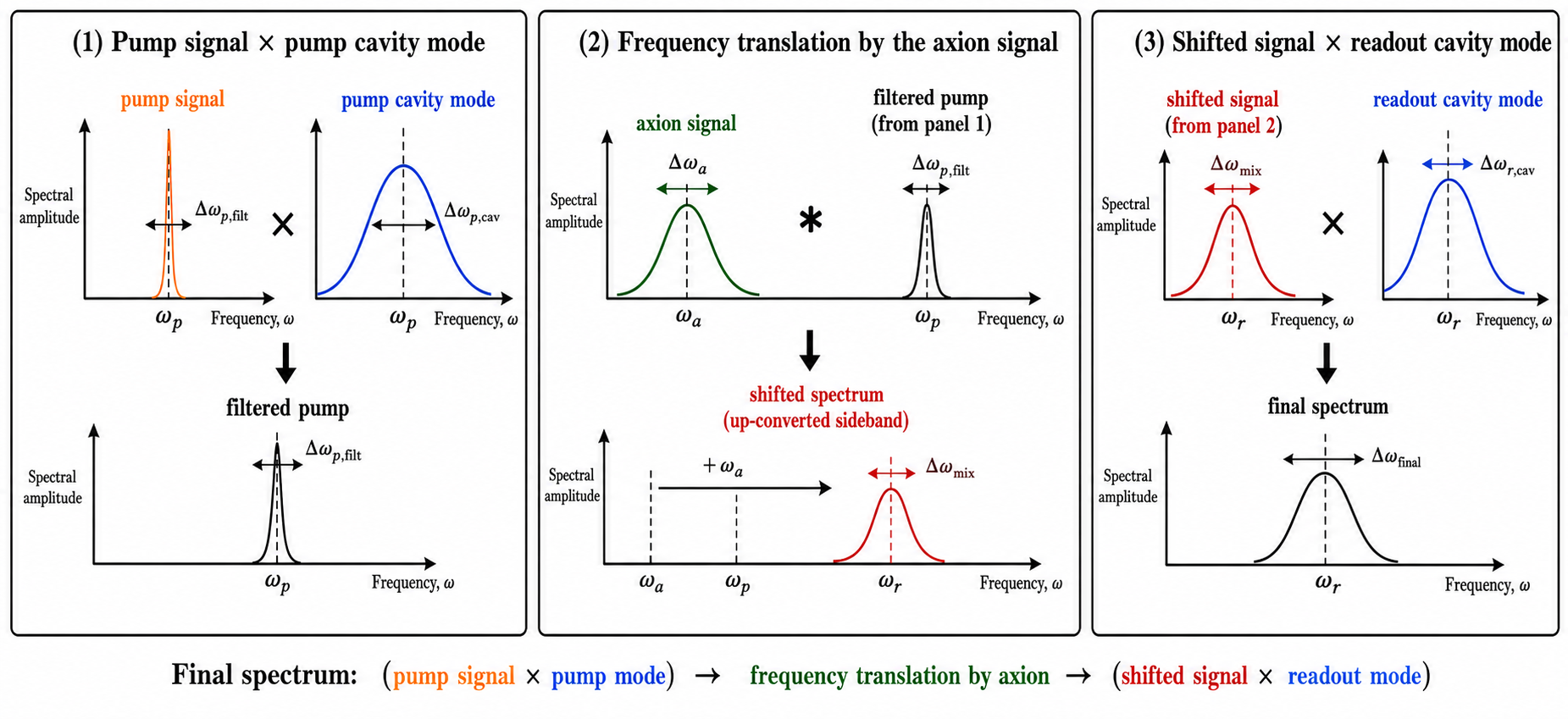
Fig 2: Schematic representation of the up-conversion process in the frequency-domain. Left, Stage 1: the injected pump
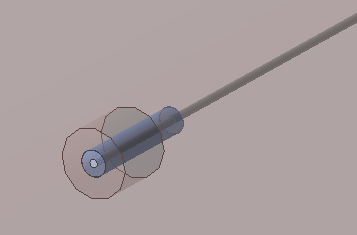
Fig 6: 3D schematic of the quasi-cylindrical RADES-
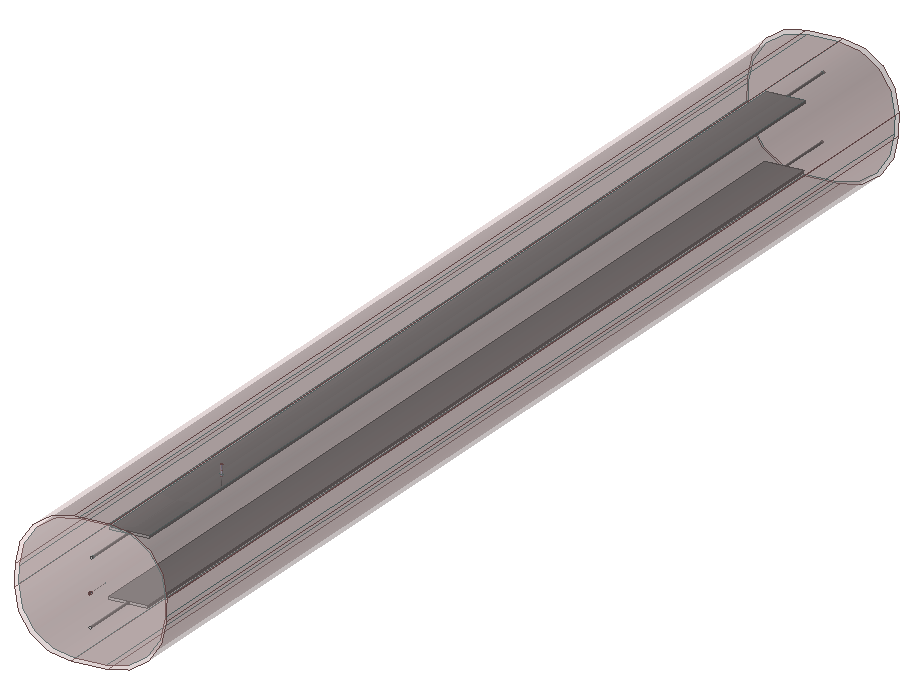
Fig 7: shows the computed overlap factors for all modes
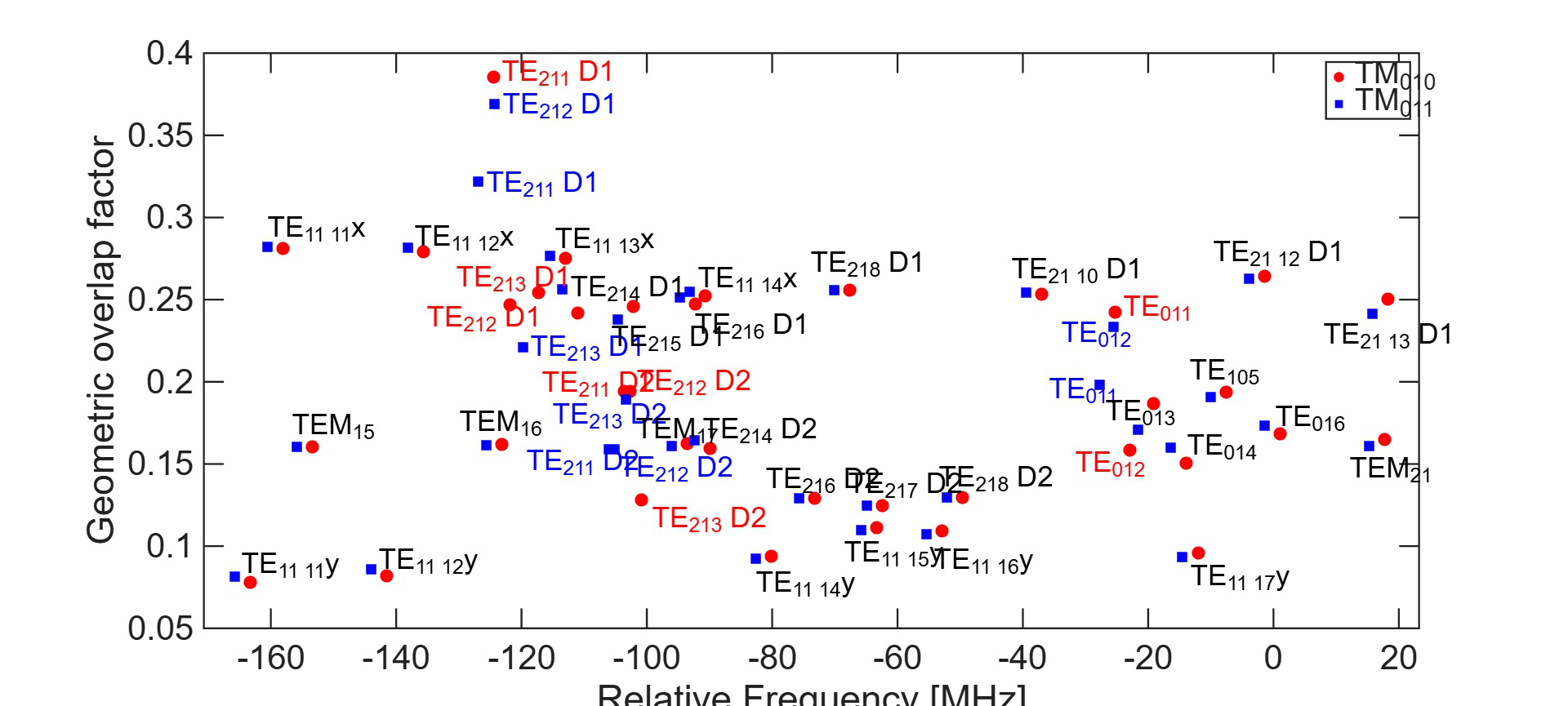
Fig 8: (a) Variation of the resonant frequencies of the selected qTE (fr = ωr/(2π)) and qTM (fp = ωp/(2π)) modes, (b)
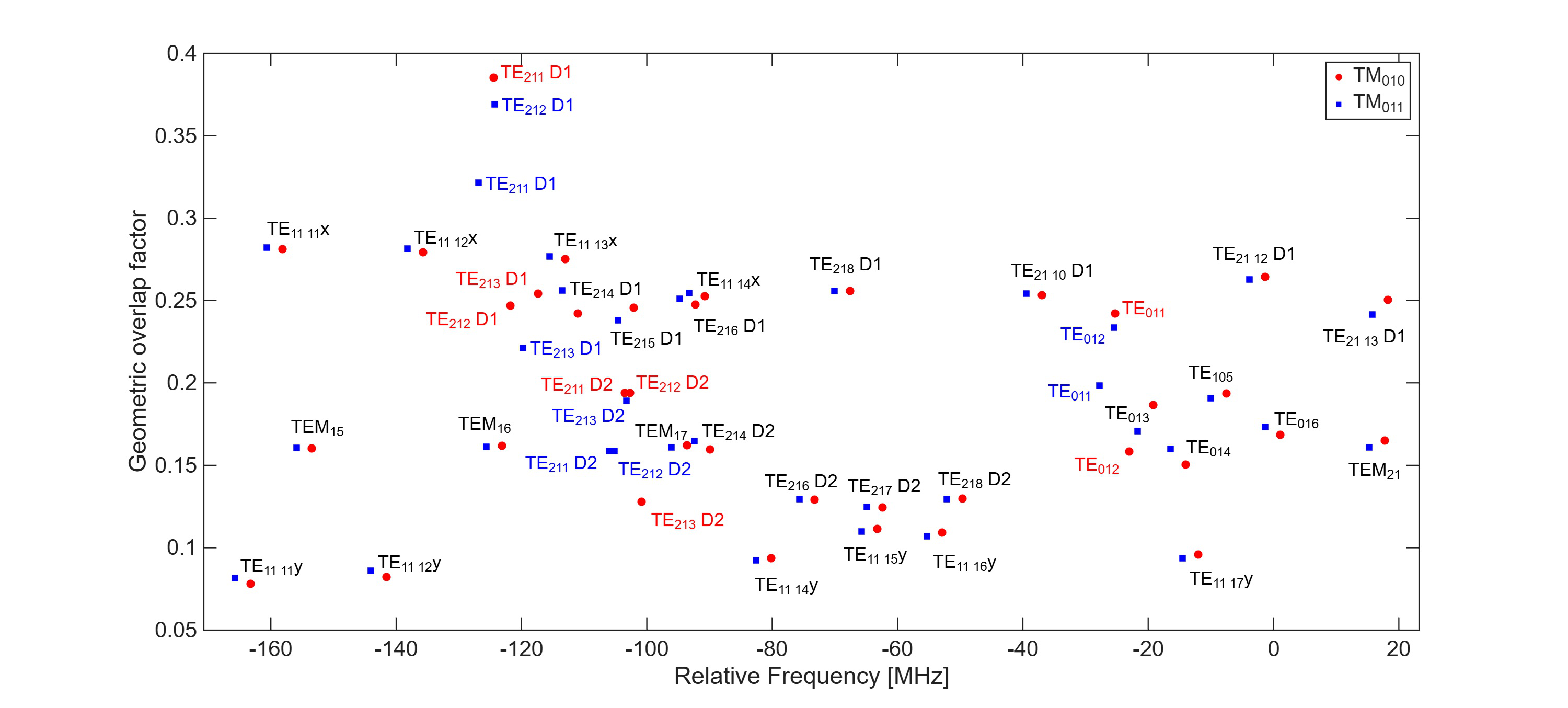
Fig 9: Geometric overlap factors between the selected qTE modes with (a) qTM010 mode, and (b) qTM011 mode as a
Limitations
- Pump leakage into the readout channel, if insufficiently suppressed, can mask the extremely weak axion-induced signal.
- Model assumes axion De Broglie wavelength much larger than haloscope size; effects beyond this approximation are unexamined.
- Mechanical vibration-induced noise is considered negligible above ~1 MHz but not quantitatively bounded for other regimes or setups.
- The analysis assumes thermal-noise-limited operation; other technical noises such as phase noise from the pump source may impact sensitivity.
- Experimental feasibility of sustaining high pump power near the superconductor critical magnetic field without damaging cavities is not demonstrated.
- Theoretical sensitivity projections rely on idealized cryogenic and noise temperature assumptions not yet realized in practice.
Open questions / follow-ons
- How effectively can pump leakage be experimentally suppressed and monitored in practice to approach the theoretical noise limits?
- What are the effects of non-ideal cavity fabrication tolerances and environmental fluctuations on mode orthogonality and sensitivity?
- Can alternative cavity geometries or mode pairs enable extending heterodyne detection to even lower or higher axion mass ranges?
- How would realistic phase noise and technical disturbances from RF synthesizers quantitatively affect the ultimate sensitivity?
Why it matters for bot defense
Though this paper is from the field of fundamental physics searching for dark matter axions, the detailed analytical and full-wave modeling techniques for separating extremely weak signals from strong pump leakage and noise backgrounds will interest bot-defense engineers working on CAPTCHA anti-abuse systems where subtle signals and spurious coupling pose challenges. The methodology of characterizing and optimizing mode coupling, noise bandwidths, and leakage pathways parallels the problem of isolating human user signals versus bot-generated interference in noisy digital channels.
The heterodyne technique’s focus on mixing a strong pump mode with a weak signal to translate detection to a more favorable frequency range could inspire signal processing methods in CAPTCHA behavior analytics. The careful modeling of finite linewidths and quality factors affecting signal detection bandwidths alerts practitioners to consider bandwidth matching and leakage characterization when deploying multi-channel detection systems. Overall, this work illustrates how deep physical modeling and mathematical optimization inform robust signal extraction strategies amidst strong background noise, a challenge shared in bot detection.
Cite
@article{arxiv2606_20422,
  title={ Resonant heterodyne conversion applied to a low-frequency haloscope for dark matter axion searches in the 1-35 MHz range },
  author={ Navarro-Madrid Jose R. and Reina-Valero José and Díaz-Morcillo Alejandro and Gimeno Benito },
  journal={arXiv preprint arXiv:2606.20422},
  year={ 2026 },
  url={https://arxiv.org/abs/2606.20422}
}