
Multi-Granular Attention-Driven Reinforcement Learning Framework for Web Intelligent Enhancement Systems
Source: arXiv:2606.19690 · Published 2026-06-18 · By Navin Chhibber, Deepak Singh, Anokh Kishore, Nikita Chawla, K. Anguraj
TL;DR
This paper addresses the challenges of semantic understanding, adaptability, and scalability faced by traditional ML, deep learning, and reinforcement learning methods in dynamic and heterogeneous web environments. The authors propose MGAR-WIES, a Multi-Granular Attention-based Reinforcement Web Intelligent Enhancement System that integrates semantic graph modeling with attention mechanisms and adaptive multi-agent reinforcement learning. The approach constructs a dynamic semantic graph embedding of heterogeneous web data to capture local and global contextual relationships through graph attention networks. Then, a multi-agent RL framework optimizes personalized web actions such as content recommendation, navigation, and service adaptation while continuously integrating online user feedback for real-time model updates and improved personalization over time. Empirical results demonstrate that MGAR-WIES achieves 80% accuracy, outperforming baselines including Q-learning, Deep RL, DQN, and AL-BBN models.
Key findings
- MGAR-WIES achieved 80% accuracy, 78% precision, and 76% recall on heterogeneous web data tasks, outperforming Q-learning (75% accuracy), Deep RL (76%), and DQN (78%) baselines (Table 1).
- MGAR-WIES improved accuracy by 5 percentage points over AL-BBN [17] (80% vs 75%) on comparative analysis (Table 2).
- Use of graph attention networks enabled capturing both local relevance and global contextual dependencies among web entities, improving semantic understanding.
- Multi-agent reinforcement learning leveraged semantic graph embeddings as states, reducing state-space complexity and enabling faster policy convergence and more stable learning.
- Continuous online feedback integration allowed real-time updating of semantic embeddings and RL policies, sustaining personalization accuracy and robustness.
- Cold-start problem for new web pages and users was mitigated by initializing embeddings via nearest neighbor similarity in semantic space.
- Attention-aware semantic graph embeddings facilitated unified representation of heterogeneous data modalities (textual, visual, behavioral, network).
- MGAR-WIES implementation used Python libraries (TensorFlow, PyTorch, NetworkX) on a workstation with NVIDIA GPU, Intel i7, 32GB RAM.
Threat model
The paper does not explicitly define a formal adversary or threat model. The implicit assumption is a benign but dynamic web environment with noisy, incomplete, and evolving data where the system must adapt continuously. No adversarial manipulations or malicious actors are considered in the current scope.
Methodology — deep read
Threat Model & Assumptions: The adversary model is implicit; the system assumes dynamic web environments with heterogeneous, multimodal data and evolving user preferences. The adversary is not explicitly defined, but the system must cope with noisy, incomplete, and changing data without explicit adversarial attacks considered.
Data: The dataset comprises heterogeneous web data modalities: textual content (e.g., blogs, social media), visual data (images, videos), behavioral logs (clickstreams, dwell times), and network data (hyperlinks, social graphs). Data is collected via web crawlers and APIs and reflects dynamic user interactions. Preprocessing involves cleaning, normalization to uniform scales, and dimensionality reduction via Principal Component Analysis (PCA) to obtain fused, tractable representations.
Architecture / Algorithm: The system constructs a dynamic semantic graph G=(E,R), where nodes E represent web entities and edges R model weighted semantic relationships calculated using feature similarity metrics. Node embeddings are learned through graph embedding techniques enhanced with graph attention networks (GATs) that assign attention coefficients to neighbors for weighted message passing. The output embeddings preserve both local and global contextual information.
Next, these semantic embeddings, combined with user behavioral context and content features, form the state input to a multi-agent reinforcement learning (MARL) framework. Each agent corresponds to a web service dimension (content recommendation, navigation, advertising, social recommendation). Actions optimize personalized web interactions. The agents jointly optimize a global objective of maximizing cumulative rewards defined by user engagement metrics. Temporal difference (TD) learning is used to iteratively update the action-value function.
Finally, an online continuous adaptation module integrates real-time user feedback (clicks, dwell time, ratings) into both embeddings and RL policies using an incremental gradient-based update rule. New entities are embedded by averaging similarities to nearest neighbors, mitigating cold start. Joint policy updates synchronize learning across agents ensuring coordination.
Training Regime: Specific details on epochs, batch sizes, or hyperparameters are not stated explicitly. The system is implemented in Python using TensorFlow, PyTorch, NetworkX, and Scikit-learn and trained on a workstation with Intel i7, 32GB RAM, and NVIDIA GPU. Learning rate parameters and discount factors are mentioned but no exact tuning regime is described.
Evaluation Protocol: The system is evaluated on accuracy, precision, and recall metrics computed from true positive, true negative, false positive, and false negative counts. Baselines include Q-learning, Deep RL, Deep Q-Network (DQN), and AL-BBN probabilistic models. Comparative experiments demonstrate consistent gains in performance metrics. There is no mention of statistical significance testing, cross-validation, or evaluation on held-out attacker/adversarial scenarios. Also, distribution shift testing is not reported.
Reproducibility: Code release is not mentioned, nor is the dataset publicly available, limiting reproducibility. Implementation environment and key libraries are specified.
Example End-to-End Flow: Raw heterogeneous web data is collected and cleaned, features are normalized and reduced by PCA, then modeled as nodes and edges in a semantic graph. GATs compute node embeddings encoding contextual relationships. These embeddings are combined with real-time user behavior and content features to form the state input to a multi-agent RL agent. The agent selects personalized web actions to optimize user engagement, updating its policy via temporal difference learning using observed rewards. Continuous user feedback dynamically updates the semantic embedding and policy parameters to adapt to evolving web content and user preferences. This self-improving loop sustains personalization effectiveness.
Technical innovations
- Integration of graph attention networks to construct semantic graphs capturing both local relevance and global context from heterogeneous web data.
- Use of adaptive multi-agent reinforcement learning leveraging semantically enriched graph embeddings as states for personalized web actions.
- Incorporation of continuous online feedback mechanisms to update semantic graph embeddings and RL policies in real time, enabling sustained adaptability.
- Cold-start handling by approximating embeddings for new entities via similarity with existing semantic graph nodes.
- Unified multi-modal fusion framework combining textual, visual, behavioral, and network data into a dynamic semantic knowledge graph.
Baselines vs proposed
- Q-Learning: accuracy = 75% vs MGAR-WIES: 80%
- Deep RL: accuracy = 76% vs MGAR-WIES: 80%
- DQN: accuracy = 78% vs MGAR-WIES: 80%
- AL-BBN [17]: accuracy = 75% vs MGAR-WIES: 80%
Figures from the paper
Figures are reproduced from the source paper for academic discussion. Original copyright: the paper authors. See arXiv:2606.19690.
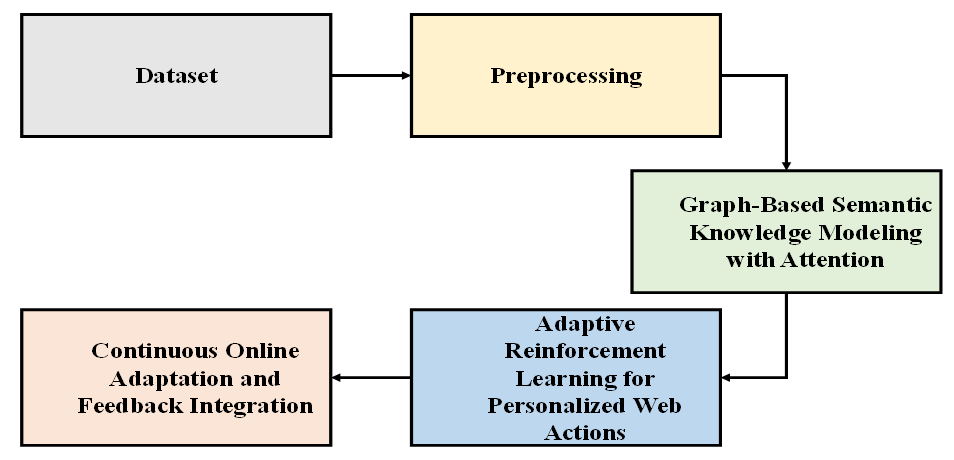
Fig 1: Overview of proposed approach for web enhancement systems
Limitations
- Lack of explicit adversarial robustness evaluation or security threat assessment against malicious actors.
- No detailed information on dataset size, distribution, or public availability limits reproducibility and generalization insights.
- Training hyperparameters, epochs, and convergence behavior are not clearly specified.
- Evaluation metrics limited to accuracy, precision, recall; no ablation studies or statistical significance analyses reported.
- No testing under distribution shifts or unseen web content distributions to assess robustness.
- The multi-agent RL coordination mechanisms details and scalability at large web scale remain unclear.
Open questions / follow-ons
- How does MGAR-WIES perform under adversarial attacks or intentional manipulation of web content or user feedback?
- Can the approach scale efficiently to web-scale graphs with hundreds of millions of entities and real-time streaming data?
- What is the sensitivity of the system to hyperparameter choices in graph attention layers and RL algorithms?
- How explainable or interpretable are the learned policies and graph attention weights from a user or operator perspective?
Why it matters for bot defense
For bot-defense and CAPTCHA practitioners, the MGAR-WIES framework offers insights into constructing semantic, context-aware models of user interactions and web content using graph attention mechanisms. This approach can enhance the personalization and adaptability of challenge mechanisms by capturing evolving user behavior and content semantics in real time. The continuous online learning and reinforcement learning components may inspire adaptive CAPTCHA difficulty tuning or intelligent bot-detection triggered by nuanced, multi-agent signals rather than static thresholds. However, the paper does not address adversarial or malicious bot scenarios explicitly, so applying it directly to bot-defense requires additional security-centric extensions. Its focus on heterogeneous and multimodal web data modeling can aid in developing richer user-state representations that could complement CAPTCHAs and anomaly detection systems in dynamic online environments.
Cite
@article{arxiv2606_19690,
  title={ Multi-Granular Attention-Driven Reinforcement Learning Framework for Web Intelligent Enhancement Systems },
  author={ Navin Chhibber and Deepak Singh and Anokh Kishore and Nikita Chawla and K. Anguraj },
  journal={arXiv preprint arXiv:2606.19690},
  year={ 2026 },
  url={https://arxiv.org/abs/2606.19690}
}