
Mixed Floquet Lattice model for gapless topology
Source: arXiv:2606.20378 · Published 2026-06-18 · By Goutham Vinjamuri, Ashutosh Dubey, Ankur Das
TL;DR
This work studies the realization and characterization of time-reversal-broken Weyl semimetals in Floquet synthetic dimensions generated by two incommensurate periodic drives applied to a one-dimensional lattice system. The model examines a mixed-dimensional setting with one real spatial dimension and two synthetic dimensions arising from drive phases. Unlike fully gapped topological insulators, the gapless semimetallic Weyl states produce a nuanced response: the momentum-resolved power transfer between drives faithfully detects Weyl-node topology and slice Chern numbers, but the total energy transfer over real space follows a distinct Rice–Mele-type pumping behavior that does not reproduce the static Weyl-semimetal phase diagram. This reveals a fundamental obstruction in encoding continuous Weyl-node positions with a single integer-valued invariant in the driven synthetic lattice. The study highlights that gapless semimetallic topology does not translate straightforwardly to Floquet synthetic dimensional platforms, instead giving rise to novel non-equilibrium dynamical phase structures.
Key findings
- For fixed real momentum kx, the power transfer rate between two incommensurate drives measures the kx-resolved Chern number, capturing Weyl-node separation (Fig. 2).
- The total power transfer integrated over real space does not reproduce the static Weyl-semimetal phase diagram but matches an effective Rice–Mele-type charge pump.
- In the Weyl W2 phase, Chern number C(kx) exhibits a step-like function with value 1 inside the Weyl node separation ±k0 and 0 outside, consistent with topology.
- The momentum-resolved Chern number from energy pumping agrees quantitatively with calculations using the Fukui–Hatsugai–Suzuki method.
- Band-resolved power transfer shows that only a subset of bands carry quantized Chern numbers and participate in energy pumping.
- A topological obstruction prevents encoding the continuous Weyl-node position k0 into a single integer invariant of the total real-space pump (Supplement).
- The total pump invariant remains constant under continuous deformations, while k0 varies continuously, demonstrating the obstruction.
- Different dynamical phase diagrams arise from the mixed Floquet lattice realization compared to static models, evidencing non-equilibrium gapless topology.
Methodology — deep read
Threat Model & Assumptions: The authors consider a quantum system with two incommensurate drive frequencies applied to a one-dimensional lattice of two-level systems. The drives produce two synthetic Floquet lattice dimensions. The system realizes a time-reversal symmetry broken Weyl semimetal in a mixed (1 real + 2 synthetic)-dimensional space. Adversary or noise is not discussed as this is a condensed matter theory work studying intrinsic system topology.
Data: No empirical data sets are used. The analysis is theoretical and numerical based on a model Hamiltonian constructed from a known Weyl-semimetal static Bloch Hamiltonian. Parameters such as hopping amplitudes and onsite potentials, drive frequencies (chosen in golden ratio), and mass terms are varied to probe different Weyl, insulating, and trivial phases.
Architecture / Algorithm: The system Hamiltonian is a one-dimensional chain of driven two-level systems described by Eq. (2), where the two drives couple through periodic time-dependent terms that map to synthetic lattice hopping in the Floquet lattice (Eq. (3)). The system is treated in mixed real and synthetic momentum space. Quasienergy bands are obtained by diagonalizing the Floquet lattice Hamiltonian H(q) with q = (θ1,θ2) synthetic momenta arising from drive phases. For fixed real kx, the Floquet bands exhibit Weyl points and Chern numbers characterizing topology. Power transfer between drives is computed from the work operator.
Training & Numerical Regime: Numerical calculations use discretized kx and Floquet lattice parameters. The time evolution operator U(t) is used to compute energy pumping rates. The Fukui-Hatsugai-Suzuki method computes Chern numbers on the Floquet band tori. Parameters such as mass m and hopping tx are varied to span static Weyl phases LCI, W2, and trivial (NI). Frequency ratio ω1/ω2 = golden ratio ensures quasiperiodicity.
Evaluation Protocol: The main metric is the power transfer rate between the two drives dE1/dt or dE2/dt, computed as expectation values of drive-specific work operators in the time-evolved states. This is analyzed as a function of real momentum kx, yielding momentum-resolved Chern numbers. Full real-space power transfer is computed by Fourier transforming kx and studying the resulting time-dependent Rice–Mele-like model with periodic boundary conditions. Baselines include the static Weyl semimetal phase diagram and direct calculation of Floquet band Chern numbers with the Fukui-Hatsugai-Suzuki method. The momentum-resolved pumping matches the Chern numbers well, while the total pumping deviates qualitatively.
Reproducibility: The paper provides detailed model specifications, equations, and parameter settings. The Fukui-Hatsugai-Suzuki method employed is standard for numerically computing Chern numbers. The authors mention supplemental material with additional numerical results but no public code or datasets are linked. The model is fully defined analytically, enabling reproducibility by other theorists.
Concrete Example: With tx/ty = 0.6 and varying mass m, for m = 0.8 (LCI phase), the momentum-resolved power transfer rate shows quantized energy pumping corresponding to Chern number C = 1 for all kx, reflecting a fully gapped topological phase. At m = 1.8 (W2 phase), the system exhibits two Weyl nodes at ±k0, with momentum-resolved pumping revealing a step in C(kx) from 1 to 0 across nodes, detecting Weyl topology. At m = 3 (trivial), momentum-resolved and total pumping vanish, reflecting trivial band topology. Fourier transforming to real-space shows the total pumping follows a dynamical Rice–Mele pump invariant unrelated to Weyl node positions. This explicates the topological obstruction preventing a single total invariant from encoding continuous Weyl node data.
Technical innovations
- Demonstration that mixed (1 real + 2 synthetic) Floquet lattices realize Weyl semimetal topology only in a momentum-resolved manner, with total real-space response governed by distinct Rice–Mele-type pumping.
- Introduction of a topological obstruction argument showing no single integer-valued total pump invariant can encode continuous Weyl node positions in Floquet synthetic dimensions.
- Quantitative connection of momentum-resolved energy pumping rates between two incommensurate drives to kx-resolved Chern numbers revealing Weyl node separation.
- Application of Floquet synthetic dimension theory to gapless topological phases rather than fully gapped insulators, revealing novel non-equilibrium dynamical phases.
Baselines vs proposed
- Fukui–Hatsugai–Suzuki Chern number calculation (static Floquet synthetic bands): kx-resolved Chern number matches power transfer extraction (Fig. 2).
- Static Weyl semimetal phase diagram: momentum-resolved pumping reproduces Weyl node separation, total pumping deviates following Rice–Mele pumping topology.
- Band-resolved power transfer: Bands in topological regime show quantized C = 1; trivial bands show C = 0 (Supplement Fig. 1).
Figures from the paper
Figures are reproduced from the source paper for academic discussion. Original copyright: the paper authors. See arXiv:2606.20378.
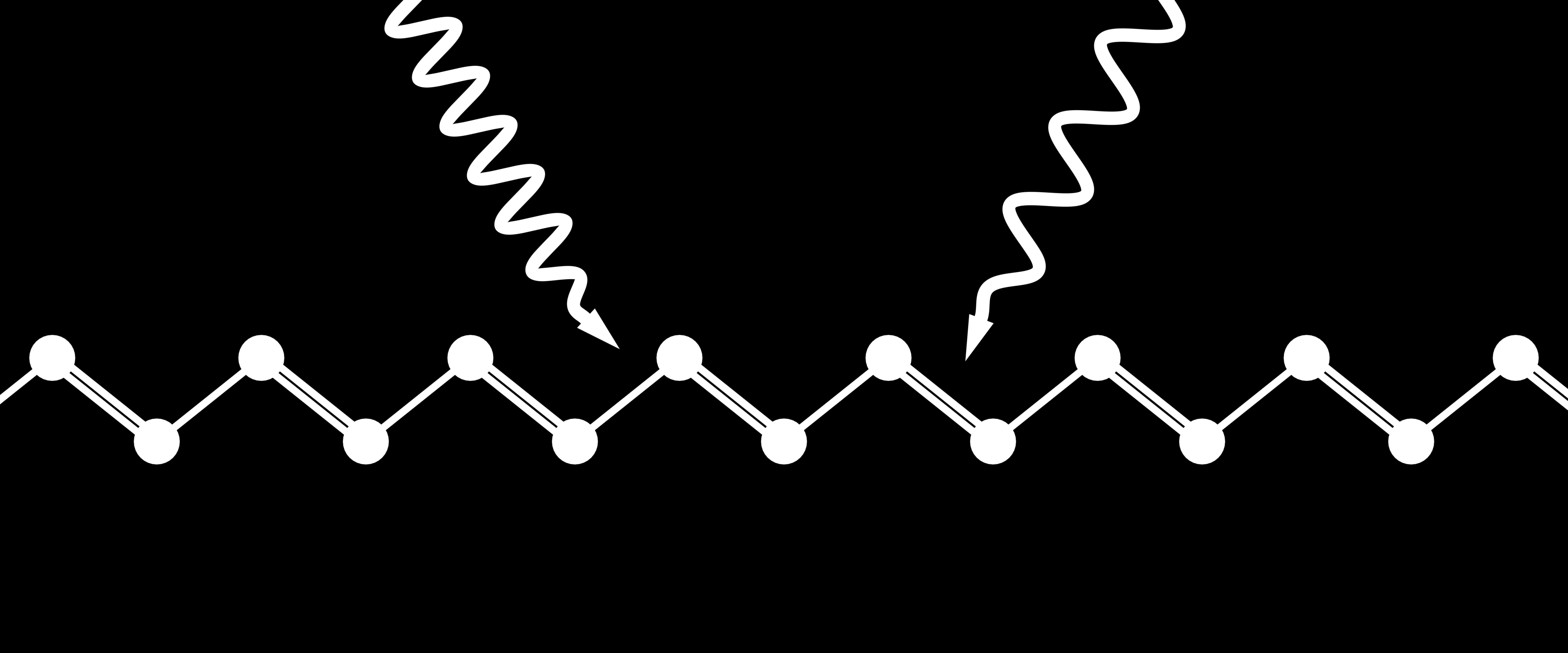
Fig 1: Panel (a) illustrates a cartoon of the system where
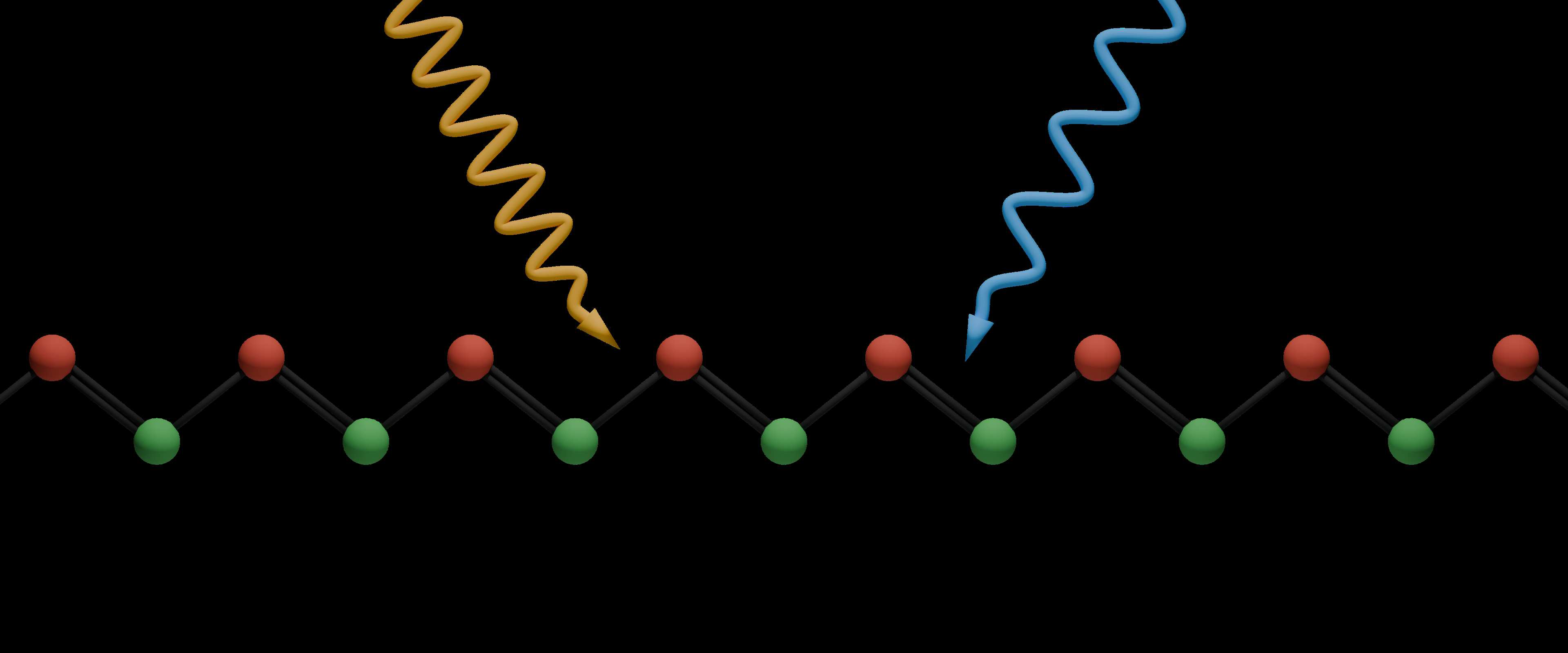
Fig 2: Chern number C(kx) extracted from the rate of energy pumping (green line and circles), plotted together with the
Limitations
- No experimental validation or implementation presented; proposals are theoretical and numerical.
- Reproducibility depends on numerics not fully open sourced; no public code or exact computational details for numerical diagonalization given.
- Effects of disorder, noise, interactions, or decoherence on the pumping and topology are not studied.
- Only two Weyl nodes (W2 phase) explicitly analyzed; extension to higher node multiplicities W4, W6, W8 left for future work.
- The topological obstruction result applies under assumption of adiabatic driving and gap preservation for effective one-dimensional pump; non-adiabatic or dissipative effects unexamined.
- No detailed study of dynamical stability or robustness of the Rice–Mele-type pump phase diagram under parameter variation.
Open questions / follow-ons
- How do multiple Weyl nodes with higher multiplicities (W4, W6, W8) affect momentum-resolved and total pumping responses in mixed Floquet lattices?
- Can alternative embeddings or choices of synthetic dimensions better encode gapless topology without the obstruction observed here?
- What is the robustness of the described momentum-resolved topology and Rice–Mele pumping phases under interactions, dissipation, or experimental imperfections?
- How can these momentum-resolved pumping responses be detected directly in experiments using ultracold atoms, photonic systems, or superconducting qubits?
Why it matters for bot defense
For bot-defense or CAPTCHA practitioners exploring synthetic dimension or frequency-based challenge-response schemes, this work highlights the subtlety of realizing and detecting gapless topological features in driven systems. The findings caution against assuming that complex topological phenomena such as Weyl semimetals will yield straightforward integrated dynamical signatures. Instead, observables may be strongly momentum or frequency resolved, requiring richer diagnostics to unambiguously capture the underlying topology. The results suggest that synthetic frequency-domain lattices and multi-tone drives can realize exotic dynamical phases with complex energy-transfer signatures that could be harnessed or defended against. Understanding momentum-resolved versus total integrated responses may inform the design of robust frequency conversion or energy-pumping based challenge-response protocols where smooth parameter variations do not degrade detection fidelity. The demonstrated topological obstruction also indicates intrinsic limitations when trying to compress high-dimensional topological information into single scalar signatures for verification purposes.
Cite
@article{arxiv2606_20378,
  title={ Mixed Floquet Lattice model for gapless topology },
  author={ Goutham Vinjamuri and Ashutosh Dubey and Ankur Das },
  journal={arXiv preprint arXiv:2606.20378},
  year={ 2026 },
  url={https://arxiv.org/abs/2606.20378}
}