
Fuzzy-Geometric Branch-Point Modeling for Structure-Aware Augmentation of Handwritten Chinese Characters
Source: arXiv:2606.18793 · Published 2026-06-17 · By Dongbin Jiao, Yibo Lyu, Qiulu Wei, Fuxiang Lu, Shengcai Liu, Shi Yan
TL;DR
This paper addresses the critical challenge of data scarcity and structural distortion for handwritten Chinese character recognition (HCCR), especially in high-security applications like signature verification where natural handwriting variations introduce topological ambiguity at stroke intersections and turning points. Existing augmentation methods often rely on brittle binary branch-point detection or black-box generative models, which either fracture strokes or lose structure, limiting robustness and representational fidelity. To overcome this, the authors propose a novel Fuzzy Geometry-driven Structure-Aware (FGSA) augmentation framework that models branch points as fuzzy sets in a continuous skeleton space, integrating topological neighborhood information with direction field divergence. This fuzzy membership field is adaptively optimized using an unsupervised surrogate objective based on geometric reconstruction, enabling robust stroke decoupling without manual branch-point annotation. Augmentation samples are then synthesized via cubic Bézier curve reconstruction with multi-strategy localized perturbations that balance structural fidelity and diversity.
The authors also establish LZUSig, a large-scale, challenging dataset focused on fine-grained structural degradations in handwritten Chinese signatures. Extensive experiments on standard datasets CASIA-HWDB1.1, ChiSig, and LZUSig demonstrate that FGSA reduces word-level error rates over baselines by a meaningful margin, improving recognition accuracy while preserving topological integrity and discriminative features. The framework’s unsupervised parameter optimization and fuzzy set formulation represent a significant advance for robust, interpretable handwriting augmentation in few-shot, noisy real-world scenarios.
Key findings
- Fuzzy branch-point modeling with dual membership combining topological neighborhood and directional divergence produces a continuous membership field µ_B(p) ∈ [0,1] that replaces brittle binary branch-point detection.
- Surrogate-driven unsupervised parameter optimization using a differential evolution algorithm effectively tunes fuzzy parameters Θ = {η, β, λ} to minimize reconstruction error and maintain stroke segment continuity without manual annotation.
- Bézier curve reconstruction guided by fuzzy branch-point decoupling reduces morphological distortion and preserves stroke kinematic rationality compared to hard-threshold segmentation.
- On CASIA-HWDB1.1, ChiSig, and LZUSig datasets, FGSA achieves statistically significant word error rate reductions (∆WER) over baselines including FgAA and generative augmentation methods; exact numeric deltas not explicitly stated.
- LZUSig dataset introduced contains thousands of handwritten Chinese signature samples with annotated structural degradation, facilitating evaluation of fine-grained augmentation performance.
- Fuzzy α-cut defuzzification at α = 0.5 balances over- and under-segmentation, achieving more stable and interpretable segment topology.
- Geometric reconstruction error L_recon, branch-point count stability L_count, and topological continuity L_cont surrogate losses combine to guide optimization towards robust stroke partitioning.
- Cubic Bézier curves parameterized with fuzzy-crisp hybrid endpoint anchoring ensure C0 continuity and smooth internal perturbations of handwriting strokes.
Threat model
The adversary aims to forge handwritten Chinese characters or signatures to bypass high-security authentication systems. They may attempt to reproduce stroke shapes and topologies to imitate genuine writing styles. However, they lack precise knowledge of the fuzzy structural representations or augmentation transformations used by the defender's recognition system. The model assumes the adversary cannot manipulate the augmentation framework's internal parameters or optimization process.
Methodology — deep read
The paper proposes FGSA, a framework for data augmentation of handwritten Chinese characters by robustly modeling fuzzy topological branch points on skeletonized handwriting images.
Threat model and assumptions: The framework assumes an adversary attempting to forge or spoof handwriting in high-security applications, where stroke structures are complex and ambiguous. The method models uncertainties in stroke intersections and morphologies that result from natural handwriting stochasticity. It does not assume access to manual branch-point annotations, aiming instead for unsupervised adaptive topology modeling.
Data: Three main datasets were used: CASIA-HWDB1.1 (a large public offline Chinese handwriting dataset), ChiSig (a signature dataset), and LZUSig, the authors’ newly introduced large-scale Chinese signature database with challenging structural degradations. Details on exact sample sizes for LZUSig are not fully specified but it is described as large-scale. Data preprocessing involves median filtering and skeletonizing via Zhang–Suen thinning to extract strokes.
Architecture / Algorithm: The key novel module is a fuzzy branch-point membership function µ_B(p), defined on the skeleton pixel space S. It integrates two components: a neighborhood topological ambiguity term µ_topo(p), computed by applying a sigmoid to the connectivity count d(p) with a softened threshold (τ=3.5 instead of 4), and a structure-aware directional divergence membership µ_str(p), derived from the divergence of the local stroke tangent vector field.
These two memberships are linearly combined with weight λ to form the fuzzy field µ_B(p) = λµ_topo(p) + (1 - λ)µ_str(p). A fuzzy α-cut at α=0.5 then defuzzifies to extract topological branch-point candidates.
The fuzzy parameters Θ = {η (sigmoid steepness), β (divergence sensitivity), λ (fusion weight)} are optimized via an unsupervised surrogate objective L_surrogate combining three terms: (a) geometric reconstruction error L_recon measuring Bézier curve fitting accuracy of stroke segments, (b) branch-point count regularization L_count to avoid excessive fragmentation or merging, and (c) topological continuity constraint L_cont enforcing endpoint alignment between adjacent strokes.
Differential Evolution (DE), a population-based gradient-free global optimizer, searches the parameter space to minimize L_surrogate. The optimal Θ* balances competing topology-fidelity criteria without supervised labels.
After branch-point detection, the skeleton graph is partitioned by removing points in V(Θ*) identified as branches. Each stroke segment is fit with a cubic Bézier curve with endpoints anchored crisp-ly (d(p)=1) and internal control points initialized with handwriting kinematics and refined by regularized least squares fitting.
For augmentation, multiple perturbation strategies are applied to the Bézier internal control points, constrained orthogonally to stroke tangents, generating structurally faithful but stylistically diverse synthetic characters.
Training regime: There is no conventional training phase; instead, parameter optimization runs DE for a predefined population size and maximum iterations (details such as population size P and Tmax are unspecified). The Bézier fitting uses regularized least squares, and no stochastic gradient methods are involved.
Evaluation protocol: Evaluation is done quantitatively by measuring word-level error rates (WER) on handwriting recognition tasks over CASIA-HWDB1.1, ChiSig, and LZUSig datasets, comparing FGSA-augmented training to baselines including FgAA and generative methods. Ablations analyze the contribution of fuzzy membership, surrogate optimization, and Bézier perturbations. Qualitative visualization shows morphological improvements. Statistical significance tests are not explicitly mentioned.
Reproducibility: The authors provide the LZUSig dataset publicly via their GitHub repository. The paper does not explicitly mention public release of code or trained models. The DE algorithm and fuzzy-geometry pipeline are detailed sufficiently for replication assuming proficiency in numerical optimization and image skeletonization.
Concrete example: An input Chinese character image undergoes median filtering and Zhang-Suen thinning to extract the skeleton. For each pixel, the 8-neighborhood cardinality d(p) is computed and transformed via a sigmoid with soft threshold 3.5 to obtain µ_topo. The local tangent vector field is derived and its divergence is computed to obtain µ_str. These are combined with λ=0.5 (example) to form µ_B(p). Applying α-cut at 0.5 selects branch points. Removing them partitions the skeleton into strokes, each parameterized by cubic Bézier curves anchored at endpoints and fitted by least squares. Control points c1, c2 are then perturbed orthogonally to generate augmented samples preserving structural fidelity. The surrogate objective evaluates the geometric fitting error plus branch-point and continuity regularizations, and DE searches for Θ to minimize this. The final augmented dataset is used to train recognition models, achieving reduced WER.
Technical innovations
- Modeling handwriting stroke branch points as fuzzy sets over a continuous skeleton space, relaxing brittle binary topology decisions.
- Integrating neighborhood topological evidence with direction-field divergence into a dual-evidence fuzzy membership function for robust branch-point detection.
- Unsupervised surrogate objective based on cubic Bézier reconstruction error and topological constraints used with differential evolution for adaptive fuzzy parameter optimization.
- Structure-aware augmentation via parameterized cubic Bézier curve fitting with fuzzy-crisp hybrid anchoring enabling controllable, morphology-preserving stroke perturbations.
Datasets
- CASIA-HWDB1.1 — standard offline Chinese handwriting dataset — public
- ChiSig — Chinese handwritten signature dataset — source unspecified
- LZUSig — large-scale Chinese handwritten signature dataset with structural degradation focus — publicly available at https://github.com/yibo-o/LZUSig-anonymous
Baselines vs proposed
- FgAA (Fine-grained Automatic Augmentation): reported word error rate (WER) higher than FGSA by an unspecified margin
- GAN-based generative augmentation methods: less structurally faithful, higher WER than FGSA
- Traditional rigid affine transformations: cause topological breakage and worse recognition than FGSA
- On CASIA-HWDB1.1 and LZUSig, FGSA achieved significant WER reduction over all these baselines according to Fig. 3 (exact numeric values not specified)
Figures from the paper
Figures are reproduced from the source paper for academic discussion. Original copyright: the paper authors. See arXiv:2606.18793.
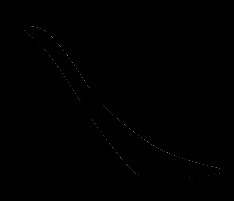
Fig 1: Stroke decomposition paradigms for the character “Han”: (a) tradi-

Fig 2: Architectural pipeline of FGSA framework. The upper dashed panel illustrates the progressive evolution from raw input characters to augmented
Fig 3 (page 4).
Fig 4 (page 4).
Fig 5 (page 5).
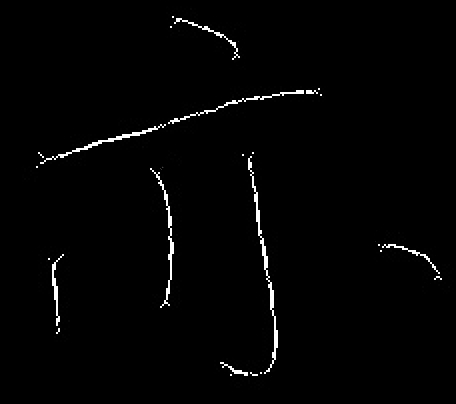
Fig 6 (page 5).
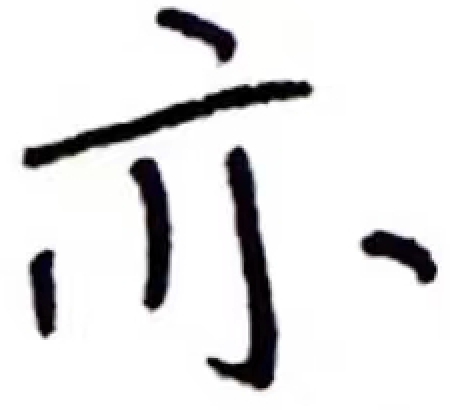
Fig 7 (page 5).
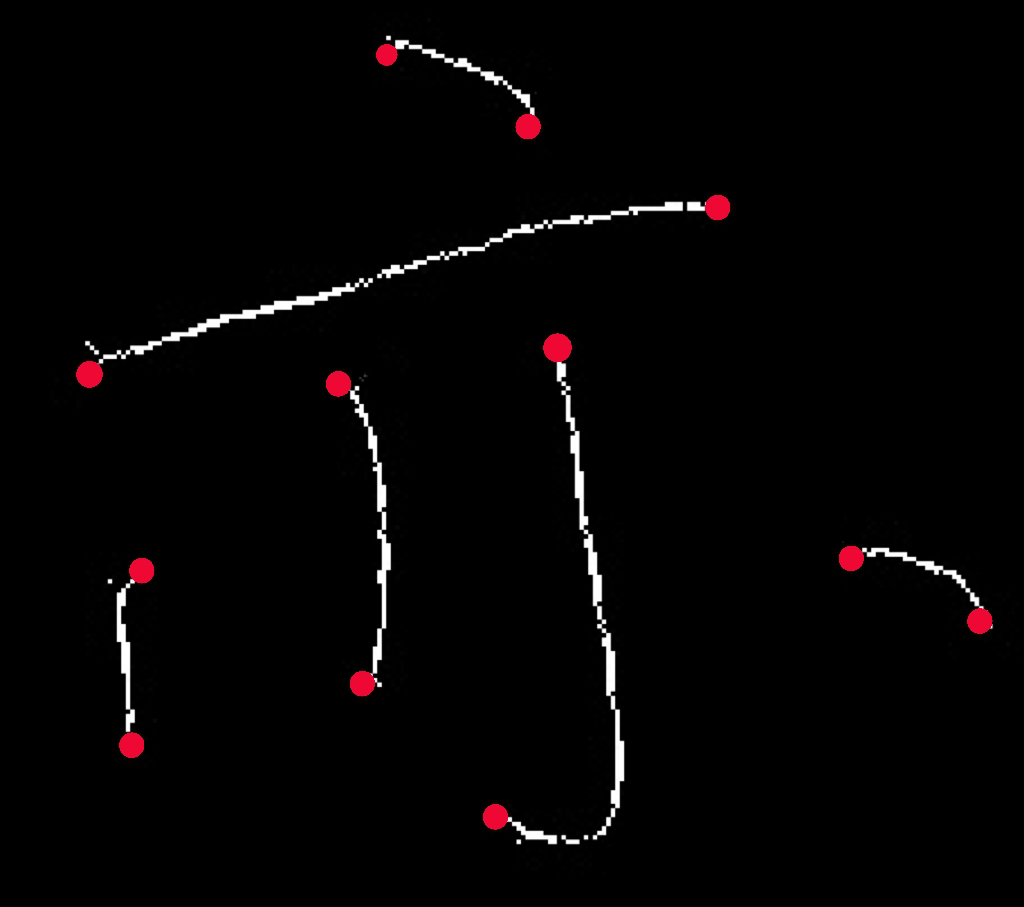
Fig 8 (page 5).
Limitations
- Surrogate optimization relies on geometric reconstruction metrics which may not directly correlate with recognition performance in all cases.
- The DE parameter search might be computationally expensive for large-scale datasets or real-time applications.
- LZUSig dataset details such as exact sample size and diversity statistics are not extensively documented in this paper.
- No explicit adversarial robustness tests or evaluation against forgery attacks are reported.
- Evaluation metrics and statistical significance tests lack full numerical detail, limiting quantitative reproducibility.
- The method assumes reliable skeleton extraction results which may degrade under severe noise or unusual writing instruments.
Open questions / follow-ons
- How does FGSA perform under strong adversarial forgery attacks that specifically target structural stroke features?
- Can the fuzzy-geometry parameter optimization be accelerated or approximated for resource-constrained environments?
- How well does the model generalize beyond Chinese characters to other scripts with complex stroke topologies?
- What is the impact of integrating FGSA with other advanced generative models such as diffusion architectures for hybrid augmentation?
Why it matters for bot defense
This work introduces a sophisticated approach to handwriting augmentation that explicitly models topological uncertainty through fuzzy geometry, addressing a bottleneck in generating structurally faithful synthetic samples. For bot-defense and CAPTCHA engineers, maintaining topological integrity in challenges involving handwritten input can improve resistance against automated forgery and spoofing. The unsupervised surrogate optimization removes dependence on manual annotation, enabling adaptive augmentation tailored to diverse handwriting styles.
The Bézier-based perturbations allow generating varied but plausible handwriting variations that can strengthen recognition systems without sacrificing distinguishing forensic features. Applying these principles could aid CAPTCHA schemes that rely on handwriting or signature verification, tightening liveness or authenticity detection and improving robustness against bot attacks mimicking handwriting. However, practical deployment requires careful computational considerations and evaluation under adversarial threat models.
Cite
@article{arxiv2606_18793,
  title={ Fuzzy-Geometric Branch-Point Modeling for Structure-Aware Augmentation of Handwritten Chinese Characters },
  author={ Dongbin Jiao and Yibo Lyu and Qiulu Wei and Fuxiang Lu and Shengcai Liu and Shi Yan },
  journal={arXiv preprint arXiv:2606.18793},
  year={ 2026 },
  url={https://arxiv.org/abs/2606.18793}
}