
A New Methodology for Classifying Eclipsing Binaries with Kepler Data and Deep Learning
Source: arXiv:2606.19295 · Published 2026-06-17 · By Mousam Mondal, Patricia Cruz, Hugh R. A. Jones, M. C. Gálvez-Ortiz, John F. Aguilar
TL;DR
This paper addresses the problem of automated classification of eclipsing binary (EB) star systems into three morphological classes: contact (CEB), detached (DEB), and semi-detached (SDEB) using photometric light curves from the Kepler mission. It introduces a novel classification methodology based on analyzing the chi-square statistics computed over sliding median filtered phase-folded light curves, capturing distinct patterns for each EB class. Initially, the authors model these chi-square versus box size curves with a polynomial damped sinusoidal (PDS) function to extract meaningful parameters, notably a derived period (PPDS) used as a feature for machine learning classification. Using a random forest trained on these features, they achieve an overall accuracy of 86.5%, with good class separability for contact and detached binaries but poor accuracy (22%) for semi-detached systems.
To improve classification of the challenging semi-detached class, the authors develop a 1D convolutional neural network (CNN) operating directly on normalized chi-square curves, boosting accuracy to 90% overall and 47% for semi-detached binaries. They further incorporate simulated light curves from the PHOEBE binary star modeling code into CNN training, enhancing the distinction between contact and detached classes and pushing binary classification accuracy to 99%. Analysis reveals a strong correlation between the PDS period and binary orbital period, and identifies a subset of systems with temporal variability across quarters (dubbed "Temporally Varying systems") likely linked to magnetic activity such as starspots and flares on cooler stars. The study contributes practical new classification features derived from chi-square curve morphology, a new deep learning classifier, and insights into binary variability behavior.
Key findings
- Polynomial damped sinusoidal (PDS) function fitting to chi-square vs box size curves achieves 86.5% total classification accuracy across contact, detached, and semi-detached classes.
- Random forest classifier trained on six PDS parameters identifies angular frequency (ω) as the most important feature with normalized importance 0.34, followed by constant vertical offset (0.238).
- Using PPDS threshold of 30 optimizes accuracy balance with 84% accuracy on contacts and 95% on detached binaries, but only 22% on semi-detached.
- 1D CNN on normalized chi-square curves improves overall accuracy to 90%, increasing semi-detached accuracy from 22% to 47%.
- Adding PHOEBE simulated light curves to CNN training boosts contact vs detached binary classification accuracy to 99%.
- Chi-square morphology and derived PPDS strongly correlate with orbital period (Porb), indicating classification relies partly on period separation.
- A subset of EB systems show significant quarterly variability in light curves and chi-square curves, defined as Temporally Varying (TV) systems.
- Four newly identified Temporally Varying systems with magnetic activity signatures (flares, starspots) are reported for future astrophysical study.
Methodology — deep read
The authors start with a curated sample of 2865 eclipsing binary systems from the Kepler Eclipsing Binary Catalog (KEBC) that have well-sampled long-cadence light curves over 17 quarters. Each quarter corresponds to about 93 days of observation. The phase-folded light curves are normalized quarter-by-quarter using a sliding median approach to remove long-term trends, dividing the PDC flux by a spline-smoothed baseline.
For each normalized phase-folded light curve, they compute chi-square statistics against medians over a range of sliding window (box) sizes from 10 to 100 epochs (4.9 to 49 hours approximately). The chi-square vs box size curve characterizes how flux variability changes with smoothing scale, revealing class-distinct morphologies: detached binaries show increasing polynomial or exponential-like trends, contact binaries show damped sinusoidal patterns, and semi-detached systems show intermediate or distorted behaviour.
They fit these chi-square curves with a polynomial damped sinusoidal (PDS) function characterized by amplitude (A), polynomial exponent (n), exponential damping (B), angular frequency (ω), phase (φ), and vertical offset (C). The key derived parameter is the period PPDS=2𝜋/ω, which acts as a physical descriptor related to orbital period. The fits are performed after min-max normalizing the chi-square curves to [0,1].
A random forest classifier using the six PDS parameters as features is trained on the visually labeled 2806-system subset. 5-fold cross-validation yields 87.6% accuracy, with ω and C the most important features. Classification thresholds on PPDS and fit goodness (R²) are developed to distinguish contact, detached, and semi-detached classes.
To overcome low semi-detached accuracy from PDS fitting (22%), they implement a 1D convolutional neural network (CNN) directly on normalized chi-square curves, with architecture selected via experimentation among Fourier, wavelet, and CNN models. The CNN improves multi-class accuracy to 90%, raising semi-detached accuracy to 47%.
To further mitigate irregular chi-square curves, they augment training with simulated light curves generated by the PHOEBE astrophysical modeling code, representing contact and detached binaries. The CNN trained on both Kepler data and PHOEBE simulations achieves 99% accuracy in binary (contact vs detached) classification.
Potential Temporally Varying (TV) systems are identified by measuring the normalized spread of PPDS across quarters—the spread exceeding a statistical threshold indicates variability likely due to magnetic activity. Cross-matching with catalogues of magnetically active stars supports interpretation of flares and starspots as causes.
All results rely on careful preprocessing, normalization, and quarter-by-quarter analysis ensuring consistency. The study uses extensive visual labels from the KEBC and Kepler data publicly available at MAST. The paper does not explicitly mention code or trained model release, but provides classification tables.
Technical innovations
- Novel use of chi-square versus sliding window box size plots on phase-folded light curves to extract physically meaningful morphological features for EB classification.
- Introduction of a polynomial damped sinusoidal parametric function to model chi-square trend curves and derive classification features.
- A two-step classification pipeline combining PDS parameter-based random forest with a 1D CNN on normalized chi-square curves improves multi-class EB classification accuracy.
- Inclusion of astrophysically simulated PHOEBE light curves in CNN training to mitigate irregularities and raise binary class accuracy to 99%.
- Definition of Temporally Varying EB systems using the normalized spread of PPDS across quarters, linking statistical variability to magnetic stellar activity.
Datasets
- Kepler Eclipsing Binary Catalog (KEBC) — 2865 EBs — Kepler public data from Mikulski Archive for Space Telescopes (MAST).
- PHOEBE simulated light curves — size not explicitly given — generated by the PHOEBE modeling code for contact and detached binaries.
Baselines vs proposed
- Random Forest on PDS parameters: accuracy = 86.5% total (81.7% contact, 94.1% detached, 22.1% semi-detached)
- 1D CNN on normalized chi-square curves (Kepler data): accuracy = 90% total, semi-detached accuracy improved to 47%
- 1D CNN trained on Kepler + PHOEBE simulated data: binary classification (contact vs detached) accuracy = 99%
Figures from the paper
Figures are reproduced from the source paper for academic discussion. Original copyright: the paper authors. See arXiv:2606.19295.
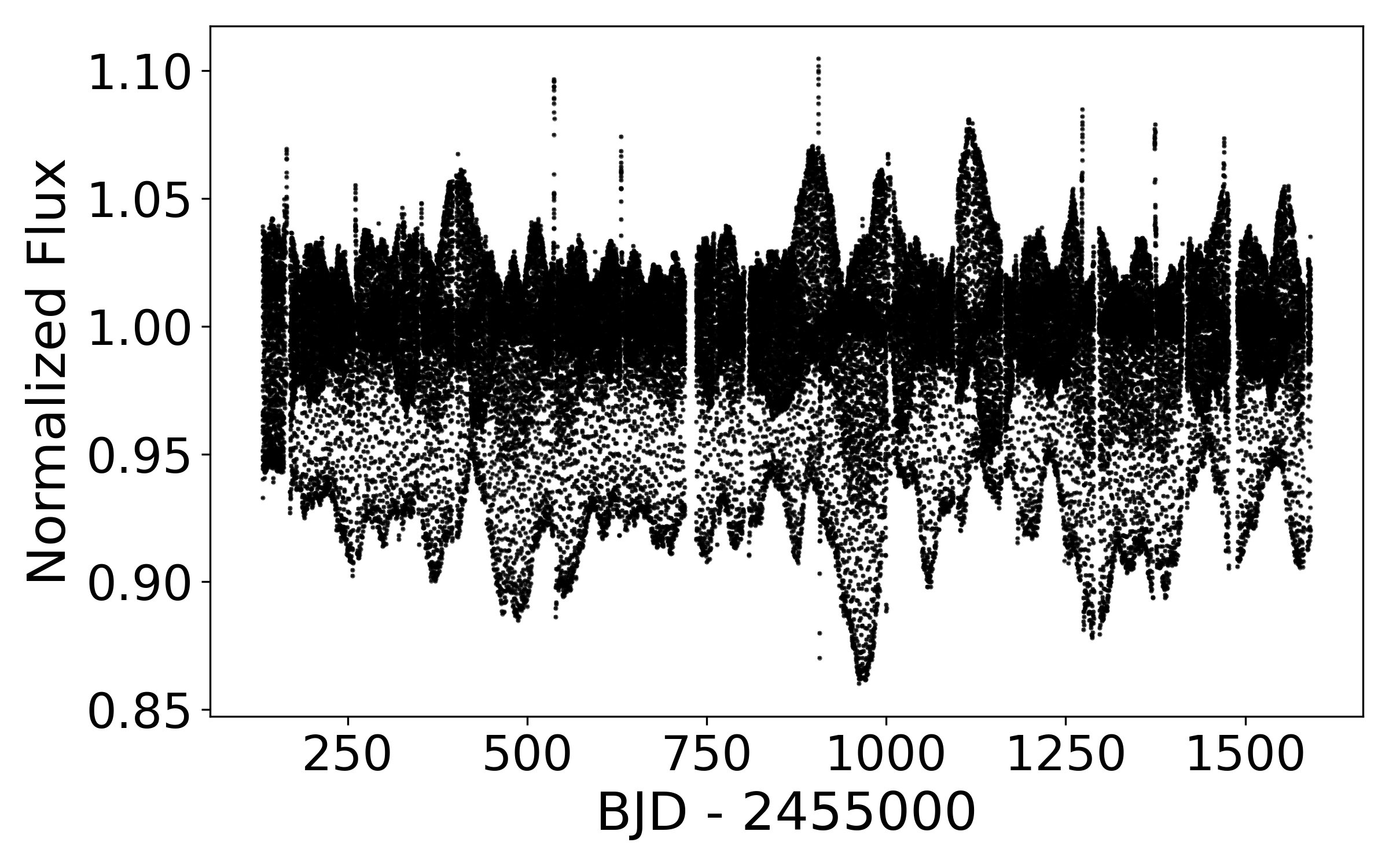
Fig 13: Distribution of TV systems with 𝑃PDS on the x-axis and 𝑃orb on the y-axis. The solid red line shows equation (2), while the dashed red line shows
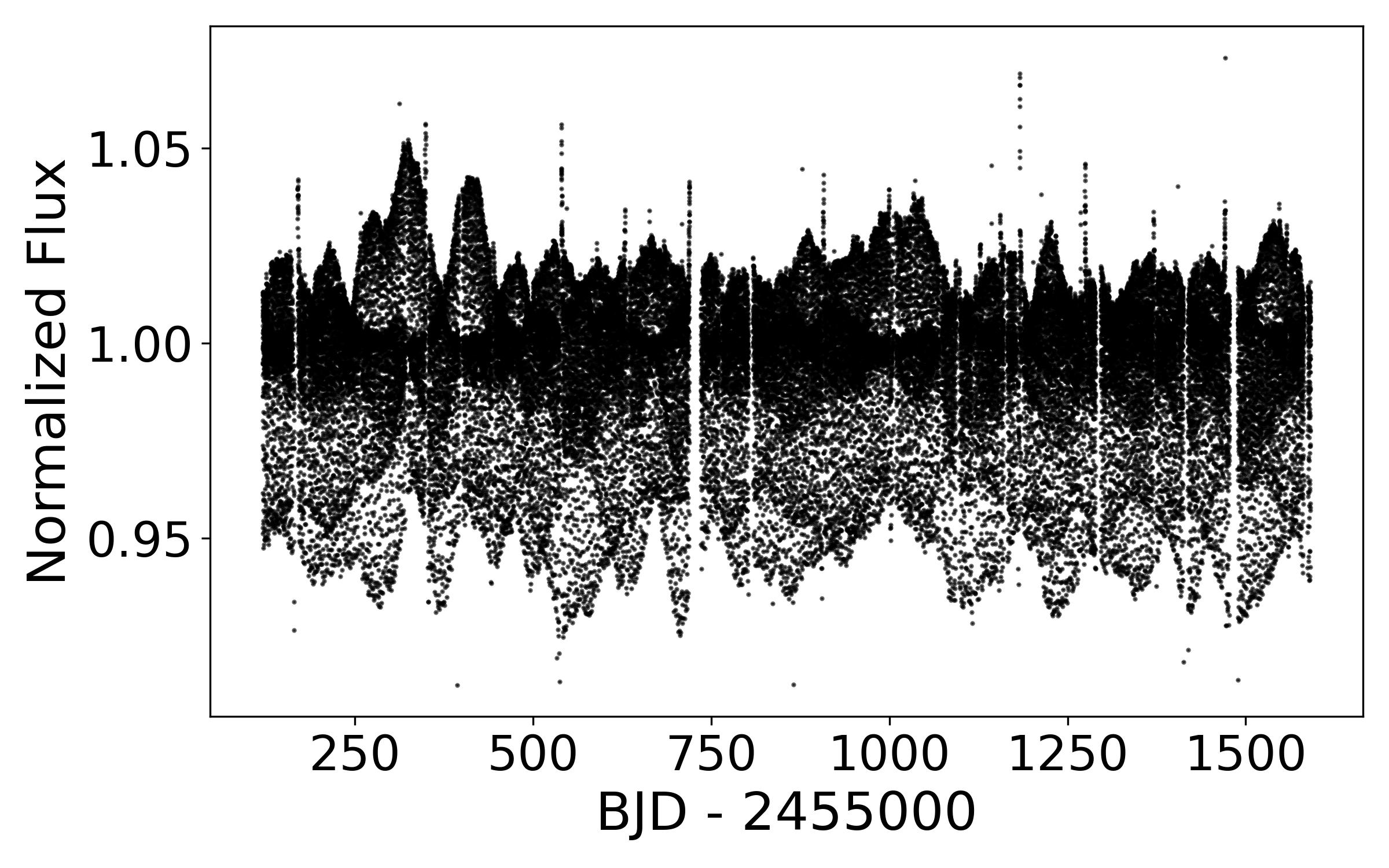
Fig 14: (a) Time-domain Kepler light curve of KIC 2577756, plotted as normalized flux versus BJD, showing strong variability and clear flare signatures
Limitations
- Semi-detached class remains difficult to classify accurately, with only 47% accuracy even after CNN improvements.
- Classification effectiveness partially relies on correlation with orbital period rather than purely morphological features, potentially limiting generalization.
- Certain binaries display irregular or distorted chi-square patterns that reduce fitting and classification accuracy, especially for semi-detached and short-period detached systems.
- Temporally Varying system identification is based on a statistical threshold without extensive physical validation or adversarial testing.
- Study does not report detailed robustness evaluation under noise, missing data, or cross-survey domain shifts.
- No mention of code or trained model public release, which may limit reproducibility.
Open questions / follow-ons
- Can classification accuracy for semi-detached binaries be further improved by integrating additional astrophysical features or more advanced deep learning architectures?
- How robust is the method to noisy, incomplete, or heterogenous light curve data common in other surveys besides Kepler?
- What is the physical origin and incidence rate of the identified Temporally Varying systems, and how does magnetic activity quantitatively affect their light curve morphology?
- Can the methodology generalize to other time-domain stellar variability classes beyond eclipsing binaries?
Why it matters for bot defense
This paper’s methodology demonstrates a sophisticated pipeline for classifying time-series data with subtle morphological differences using specialized statistical representations (chi-square vs smoothing scale) combined with deep learning. For bot-defense and CAPTCHA practitioners, the key takeaway is how domain-specific feature engineering—here, the chi-square box size curves—can highlight class-distinctive structure in noisy temporal signals that conventional methods may miss. The use of complementary parametric curve fitting and CNN models exemplifies multi-stage classification enhancing robustness.
Additionally, incorporating simulated data generated from physical models into training can significantly boost classifier performance, providing a strategy to augment limited labeled real data. The detection of temporal variability across observation epochs and its quantification through statistical dispersion metrics also illustrates a practical technique for flagging dynamic or anomalous cases in longitudinal data. Overall, the approach highlights the value of combining domain expert-informed diagnostics with machine learning to tackle challenging classification problems in sequential data domains relevant to bot detection or human behavior verification.
Cite
@article{arxiv2606_19295,
  title={ A New Methodology for Classifying Eclipsing Binaries with Kepler Data and Deep Learning },
  author={ Mousam Mondal and Patricia Cruz and Hugh R. A. Jones and M. C. Gálvez-Ortiz and John F. Aguilar },
  journal={arXiv preprint arXiv:2606.19295},
  year={ 2026 },
  url={https://arxiv.org/abs/2606.19295}
}