
Receiver-Aware Analysis and Verification of the Spectral Separation Coefficient Under Interference-Induced Degradation
Source: arXiv:2606.18196 · Published 2026-06-16 · By Lucas Heublein, Fabian Benschuh, Alexander Rügamer, Felix Ott
TL;DR
This paper tackles a critical gap in GNSS interference impact assessment by explicitly incorporating receiver-specific front-end characteristics into the computation of the Spectral Separation Coefficient (SSC), a metric that quantifies spectral overlap between interference and the desired signal. Classical SSC formulations treat receivers in an idealized or receiver-independent way, ignoring filtering and processing effects that can significantly modify interference impact. The authors develop a receiver-aware SSC formulation that integrates the receiver transfer function and effective bandwidth, allowing interference effects to be mapped more accurately to correlator output degradation and effective carrier-to-noise density ratio (Cs/N0) degradation. To validate their approach, they acquire a comprehensive real-world open-field dataset of 210 diverse interference instances and generate a controlled simulated dataset using a radio frequency constellation simulator (RFCS) with the same receiver module. They compute SSC and jamming resistance quality factor Q for each scenario and compare predicted C/N0 degradations against measured outcomes.
Results demonstrate the robustness of the proposed model: interference-induced C/N0 degradation correlates strongly with the receiver-aware SSC and Q factor, capturing how spectral alignment and bandwidth shape impact beyond raw interference power alone. The jamming resistance quality factor Q effectively predicts interference susceptibility, showing higher values correspond to increased resistance. Both real and simulated environments confirm these relationships across a wide range of interference types (chirp, BPSK, noise, multitone, pulsed). This work highlights the importance of receiver dependency for accurate performance prediction under interference and advances practical GNSS interference assessment by grounding it in real receiver architectures and experimental validation.
Key findings
- Receiver-aware spectral separation coefficient (SSC), integrating the receiver front-end transfer function, directly quantifies interference impact on correlator output SNIR and effective Cs/N0 (Eq. 9 and 10).
- Real-world open-field dataset contains 210 distinct interference scenarios covering 6 interference types and bandwidths from 0.1 to 60 MHz, with signal power at 10 dBm and effective measurement over 40.5 MHz bandwidth.
- Jamming resistance quality factor Q, derived from SSC, predicts effective C/N0 degradation across interference types with strong monotonic relation to interference power Ci (Fig. 1), where higher Q (e.g., 42.37) shows improved resistance.
- Modulated BPSK interference with Q=1.54 causes up to 49.3 dB degradation despite moderate power, while wideband chirp with Q=12.59 causes 39.07 dB degradation, confirming impact depends on spectral overlap rather than power alone (Fig. 2a,b).
- Simulation experiments with RFCS matched real-world trends, e.g., chirp with frequency shift increases Q from 5.37 to 42.37 and reduces degradation from 6.66 dB to 1.64 dB (Fig. 2d,e and Table II), validating receiver-aware SSC in controlled settings.
- Degradation ∆ in effective C/N0 is not solely a function of received interference power Ci but strongly determined by spectral alignment quantified by Q; interference with broader bandwidth and frequency offset increases Q and reduces degradation.
- Estimates of interference power Ci from raw IQ samples and VGA gain settings match reference RFCS Ci to within a few dB, enabling practical application of SSC-based analysis using measured signals.
Threat model
The adversary is a radio-frequency jammer emitting interference signals with various spectral characteristics intended to degrade GNSS receiver performance without requiring physical access or insider knowledge of receiver internals. The jammer’s capabilities include producing signals with varying bandwidth, power, modulation, and frequency offset within GNSS bands. However, the adversary is not assumed to adapt in real time to receiver defenses or execute advanced spoofing attacks; they cannot alter receiver hardware or algorithmic parameters. The analysis focuses on passive assessment of interference impact given fixed receiver front-end filtering and processing.
Methodology — deep read
Threat Model & Assumptions: The work addresses a GNSS receiver subject to external RF interference of various waveform types. The adversary is characterized as a jammer producing wideband or narrowband signals overlapping with GNSS bands, focusing on interference power and spectral characteristics observable at the receiver. They do not consider active adaptive adversaries targeting receiver internals or employing sophisticated spoofing. Receiver front-end characteristics (filter transfer functions, bandwidth) and correlator properties are fixed and known.
Data: Two primary datasets are used.
- Real-world dataset: Collected in an open-field environment (30m x 50m) with a representative GNSS receiver module (E1 band), an arbitrary waveform generator (AWG) placed 20m away emitting 210 distinct interference instances spanning 6 interference types (chirp, frequency hopper, modulated, pulsed, multitone, noise) with bandwidths 0.1–60 MHz at 10 dBm power. Measurements include 122,880 IQ samples per instance with 40.5 MHz bandwidth.
- Simulated dataset: Generated using a Spirent GSS9000 Radio Frequency Constellation Simulator (RFCS), matched in receiver architecture and signal format (E1 B/C signals). Twelve interference scenarios with controlled parameters, including BPSK, noise, and chirp signals with/without frequency shift. Each recording contains 1 minute baseline + 1 minute interference, recorded with variable VGA gain.
- Architecture / Algorithm: They use a receiver-aware SSC formulation integrating receiver frequency response HR(f) explicitly into the spectral overlap integral: κis = ∫ |HR(f)|² Ss(f) Si(f) df where Ss(f) and Si(f) are normalized PSDs of desired signal and interference. This SSC then defines a jamming resistance factor Q = 1/(Rc κis), Rc is spreading code rate. The effective carrier-to-noise ratio under interference (Cs/N0)eff is then computed using these quantities and interference power levels Ci.
The receiver front-end transfer function HR(f) is characterized by analog bandwidth (~60MHz) and digital filters restricting to 40.5 MHz. The correlator output SNIR is modeled incorporating receiver filtering, signal and interference PSDs, and power levels.
Training Regime: Not applicable as this is an analytical and experimental work rather than ML training.
Evaluation Protocol:
- Compute interference PSD (Si(f)) from recorded signals
- Numerically evaluate spectral integrals over effective receiver bandwidth
- Calculate SSC κis and Q, then map to expected (Cs/N0)eff degradation
- Compare against measured carrier-to-noise density ratio from GNSS-SDR processing
- Baseline interference-free measurements for comparison
- Evaluate across multiple interference types, powers, bandwidths, and frequency shifts
- Ablation study varying Q to isolate impact on (Cs/N0)eff degradation (Fig. 1)
- Experimental validation through real-world dataset with diverse interference plus controlled lab-generated RFCS data
- Reproducibility: The receiver used is a fixed hardware module with well-characterized front-end; the recorded open-field dataset with 210 interference cases and Spirent RFCS simulations are described in detail but code / data release status is not explicitly stated, so full reproducibility is unclear. Numerical computation of spectral overlap integrals is straightforward to implement given the receiver filter and PSD data.
Concrete Example End-to-End: For a chirp interference recorded in the real-world dataset with bandwidth 10 MHz, the interference power Ci is estimated from IQ sample magnitudes and VGA gain as −63.81 dBm. The PSD Si(f) is computed by Welch’s method. Using a known GPS L1 signal PSD Ss(f), the receiver transfer function HR(f) is applied to weight frequencies. The SSC κis is numerically integrated over the receiver bandwidth, yielding a jamming resistance quality factor Q = 12.59. Using Eq. 10, the predicted effective carrier-to-noise density ratio degradation ∆ is 39.07 dB. This closely matches the measured C/N0 drop observed in post-processed GNSS-SDR data, confirming the SSC-based computation reflects actual interference impact.
Technical innovations
- Explicit integration of receiver front-end frequency response HR(f) into the spectral separation coefficient (SSC) calculation, making it receiver-dependent rather than idealized or abstract.
- Combined use of a large-scale real-world open-field dataset with 210 diverse interference scenarios alongside controlled RFCS simulation using the same receiver module for experimental validation of SSC-based interference impact predictions.
- Establishment of the jamming resistance quality factor Q, derived from receiver-aware SSC, as a compact, physically interpretable metric that robustly predicts effective Cs/N0 degradation across interference types and power levels.
- Numerical approach for practical application assessing interference impact from raw IQ samples by PSD estimation and spectral overlap computation tailored to fixed receiver front-end, enabling end-to-end performance mapping.
Datasets
- Real-world open-field GNSS interference dataset — 210 interference scenarios — proprietary, recorded at Fraunhofer IIS with custom AWG
- Spirent GSS9000 RFCS simulated interference dataset — 12 interference scenarios — proprietary controlled lab recordings with same receiver module
Baselines vs proposed
- BPSK interference (Q=1.54): computed C/N0 degradation ∆ = 49.30 dB vs wideband chirp (Q=12.59): ∆ = 39.07 dB, showing spectral overlap impact greater than power alone
- Simulated chirp interference with frequency shift: Q increased from 5.37 to 42.37, degradation reduced from 6.66 dB to 1.64 dB
- Noise interference bandwidth increase from 10 MHz to 20 MHz raises Q from ~10 to ~24 and increases interference power but reduces effective degradation, illustrating bandwidth vs spectral alignment tradeoff
Figures from the paper
Figures are reproduced from the source paper for academic discussion. Original copyright: the paper authors. See arXiv:2606.18196.
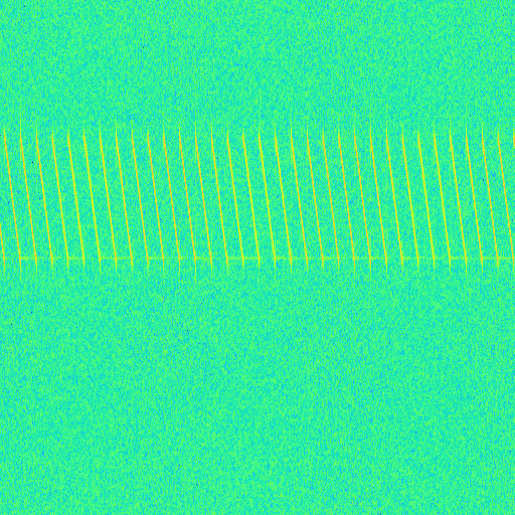
Fig 2: Presentation of signal+interference spectrograms (left), and the Welch PSD (middle) with normalized signal (right; for
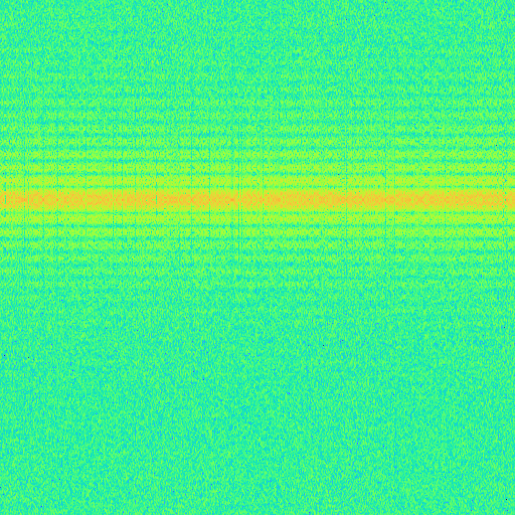
Fig 3: Overview of jamming resistance Q, interference power
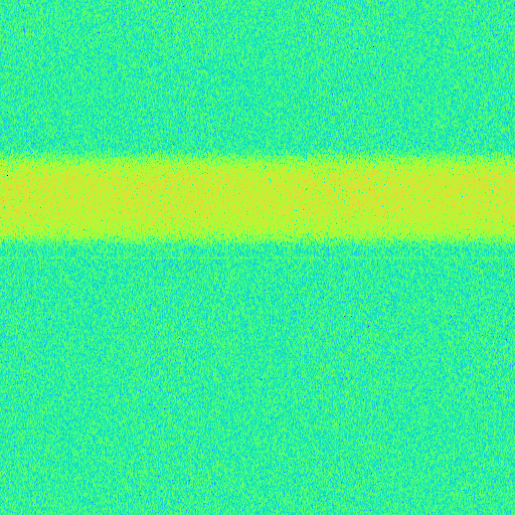
Fig 4: Plot of C/N0 loss for each visible satellite for four different interferences (first period shows no interference).
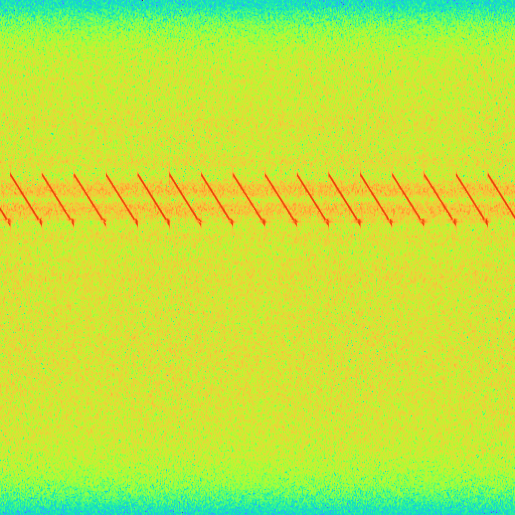
Fig 1: Correlation between
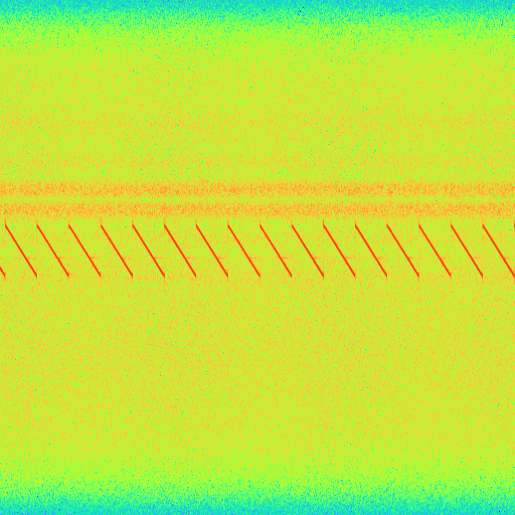
Fig 5 (page 5).
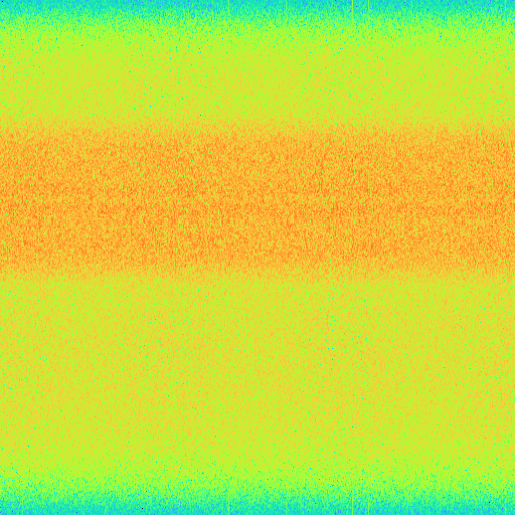
Fig 6 (page 5).
Limitations
- Experiments are limited to a single receiver module architecture and GNSS E1 band; findings may not generalize directly to different receiver designs or other GNSS bands.
- Interference scenarios cover only six broad classes and specific parameter ranges; real-world jammers could exhibit more complex or dynamic waveform behaviors not captured here.
- No explicit adversarial or adaptive jammer behavior considered, e.g., interference purposely designed to exploit receiver nonlinearities or time-varying characteristics beyond spectral overlap.
- Limited discussion of tracking accuracy degradation or higher-level navigation impacts beyond carrier-to-noise density ratio changes; the mapping from C/N0 degradation to positioning errors is not addressed.
- Code and datasets are not publicly released, which may limit reproducibility and independent validation by other researchers.
Open questions / follow-ons
- How does the receiver-aware SSC and Q metric perform when generalized across different GNSS bands or receiver designs with distinct front-end filtering characteristics?
- Can SSC-based metrics be integrated into adaptive interference mitigation algorithms to dynamically predict and counteract performance degradation in deployed GNSS systems?
- What is the precise relationship between measured effective C/N0 degradation predicted by SSC and downstream navigation accuracy or integrity metrics under realistic operational contexts?
- How robust is the receiver-aware SSC formulation under multi-path, dynamic interference environments, and nonstationary jammer waveforms that violate underlying stationarity assumptions?
Why it matters for bot defense
For bot-defense engineers focusing on anti-spoofing and interference robustness in GNSS or RF-based authentication systems, this work highlights the critical importance of incorporating detailed receiver front-end characteristics into interference impact assessments. Classical interference metrics ignoring receiver filtering may misestimate real-world degradation, leading to either overly optimistic assumptions of immunity or excessive false alarms. Mapping interference spectral properties to effective carrier-to-noise ratio degradation via a receiver-dependent SSC allows more precise predictions of when positioning or timing integrity might be compromised, informing more reliable detection and mitigation strategies.
While the direct connection to CAPTCHA or bot-detection mechanisms is indirect, the methodology exemplifies how physical-layer receiver knowledge is essential to accurately quantify external signal threats. Systems relying on GNSS-derived time or location for bot-resistance must consider how interference spectral alignment—beyond raw power—can undermine receiver performance and thereby system-level trustworthiness. This motivates incorporating receiver-aware spectral analysis into holistic bot-defense designs that employ physical-layer anomaly detection.
Cite
@article{arxiv2606_18196,
  title={ Receiver-Aware Analysis and Verification of the Spectral Separation Coefficient Under Interference-Induced Degradation },
  author={ Lucas Heublein and Fabian Benschuh and Alexander Rügamer and Felix Ott },
  journal={arXiv preprint arXiv:2606.18196},
  year={ 2026 },
  url={https://arxiv.org/abs/2606.18196}
}