
Einstein-Podolsky-Rosen correlations between mechanical oscillators revealed through SU(1,1) interferometry
Source: arXiv:2606.18202 · Published 2026-06-16 · By Max-Emanuel Kern, Stefano Marti, Raquel Garcia-Belles, Andraz Omahen, Igor Kladaric, Arianne Brooks et al.
TL;DR
This work experimentally demonstrates continuous-variable (CV) Einstein-Podolsky-Rosen (EPR) correlations between two spatially separated mechanical oscillators, each with an effective mass of approximately 16 micrograms. Prior to this, continuous-variable quantum correlations stronger than entanglement had not been observed at such macroscopic scales. The authors achieve this by coupling two high-overtone bulk acoustic wave resonators (HBARs), separated by 3.6 mm, to a superconducting transmon qubit. Through carefully calibrated parametric microwave drives, they engineer an effective two-mode squeezing (TMS) interaction between phononic modes of the two resonators, creating strongly correlated phonon pairs. Leveraging this TMS interaction, the authors implement a mechanical SU(1,1) interferometer, an analogue of the Mach-Zehnder interferometer but with parametric amplifiers replacing beamsplitters. By measuring phonon number populations after two TMS operations with controlled phase difference, they reveal phase-coherent interference fringes that serve as a witness for EPR correlations (steering). The observed EPR steering criterion violates classical bounds with 99% confidence, thereby directly witnessing quantum correlations stronger than entanglement in these macroscopic mechanical systems. The results expand the experimental toolbox in circuit quantum acoustodynamics and pose new insights on the quantum-classical boundary for mechanical degrees of freedom.
Key findings
- Observation of continuous-variable EPR correlations between two 16 µg mechanical oscillators separated by ~3.6 mm.
- Two-mode squeezing (TMS) rate gTMS measured up to ~20 kHz, tunable via parametric drive strength and detuning.
- Implementation of a mechanical SU(1,1) interferometer using sequential TMS operations with controllable relative phase.
- Phase-dependent phonon population fringes in mode B demonstrate coherent amplification and interference (Fig. 3e).
- Minimum EPR steering criterion E(ϕ) < 1 observed at phase ϕ ≈ π with violations at 99% (B→A) and 98% (A→B) confidence (Fig. 4a-b).
- TMS dynamics produce nearly thermal phonon number distributions consistent with sinh²(gTMS tTMS) scaling (Fig. 2c).
- The interferometric measurement method maps phonon number to quadrature-based entanglement and steering inequalities.
- The qubit-phonon coupling strengths are ga/2π ≈ 296 kHz and gb/2π ≈ 235 kHz with phonon T1 times of ∼100–190 µs.
Methodology — deep read
The experiment employs a circuit quantum acoustodynamics (cQAD) device with two high-overtone bulk acoustic wave resonators (HBARs) bonded atop a superconducting transmon qubit chip. These HBARs use piezoelectric AlN on sapphire substrates, producing spatially distinct phonon modes (frequencies around 5.698 GHz and 5.704 GHz for modes A and B), separated by 3.6 mm.
The transmon qubit frequency is tunable via AC Stark shifts induced by a far-detuned microwave drive. Two additional parametric microwave drives are applied near the qubit transition with frequencies satisfying ω1 + ω2 = ωa + ωb to engineer a nondegenerate two-mode squeezing (TMS) interaction mediated by the qubit's nonlinearity. The effective Hamiltonian is H/ℏ = Δ(a†a) + gTMS(a†b† e^{-iϕ} + a b e^{iϕ}), where Δ is an effective detuning and gTMS depends on drive amplitudes, detunings, and coupling strengths. This creates correlated phonon pairs across modes A and B.
To calibrate TMS, the phonon number distribution is measured after varying TMS interaction time (tTMS) by a resonant phonon number (RPN) measurement: the qubit is excited, allowed to swap excitation resonantly with the phonon mode for a time tRPN, then read out. The qubit population dynamics as a function of tRPN is numerically fitted to extract Fock state populations, which follow a thermal distribution consistent with TMS theory. The mean phonon number fits a sinh²(gTMS tTMS) model to extract gTMS.
The SU(1,1) interferometry protocol applies two TMS operations separated by a controlled phase ϕ. The first TMS (TMS1) generates the two-mode squeezed phonon state; the phase accumulates; the second TMS (TMS2) mixes the modes coherently. Measuring phonon population after TMS2 shows interference fringes as a function of ϕ. The fringe minimum at ϕ≈π calibrates resonance.
Quantum correlations are quantified by mapping the measured phonon populations after TMS2 to variance-based EPR steering inequalities on composite quadratures, leveraging theoretical relations linking population to quadrature variances. Violation of bounds indicates entanglement and two-way EPR steering.
Experiments are performed in a dilution refrigerator at millikelvin temperatures ensuring phonon modes near ground state. Device parameters (coupling strengths, coherence times) are characterized repeatedly to ensure stability. Statistical uncertainties are evaluated by Monte Carlo methods propagating measurement noise. Code and raw data are to be made publicly available.
As a concrete example, to measure gTMS for mode A, parametric drives are applied with fixed amplitudes and detuning, TMS interaction time tTMS is swept from 0 to 15 µs. After each tTMS, the qubit is reset and the phonon number distribution of mode A is measured using the RPN technique. The extracted mean phonon number vs. tTMS fits well to sinh²(gTMS tTMS), yielding gTMS/2π ≈ 6.8 kHz at ξ1ξ2=0.09 and ∆a/2π=-1.22 MHz. Results for mode B follow similarly. This step-by-step calibration validates the quantitative control of TMS interaction.
Evaluation protocols use phonon-number measurement, phase scans of SU(1,1) fringes, derivation of EPR parameters from population data, and statistical confidence intervals from Monte Carlo sampling. Baselines are vacuum input measurements (TMS1 off). Some model deviations at higher drives are ascribed to higher-order effects beyond leading-order analytical theory but well captured by time-dependent simulations. Cross-validation across modes A and B is performed.
Overall, the methodology thoroughly integrates device engineering, parametric microwave control, phonon state tomography via qubit coupling, interferometric phase control, and rigorous quantum correlation witnesses in a macroscopic mechanical platform. The approach reveals EPR steering beyond entanglement, previously unobserved for massive mechanical oscillators.
Technical innovations
- Engineering of nondegenerate two-mode squeezing interaction between two spatially separated gigahertz phonon modes via a superconducting transmon qubit driven with two parametric microwave tones.
- Implementation of a mechanical SU(1,1) interferometer for phonon modes, enabling phase-sensitive amplification and interference as a tool to reveal quantum correlations.
- Use of phonon number measurements combined with sequential two-mode squeezing operations to witness continuous-variable EPR steering without direct quadrature readout.
- Calibration and control of two-mode squeezing interaction rates via drive strengths and qubit-phonon detunings with quantitative agreement to theory and numerical simulations.
Datasets
- HBAR phonon mode spectroscopy data — device-specific dataset from ETH Zurich (non-public)
- Phonon number distribution measurements via RPN techniques — proprietary experimental data (non-public currently)
Baselines vs proposed
- Vacuum input (TMS1 off) for SU(1,1) interferometer: phonon mode B population constant at sinh²(gTMS tTMS2) ≈ 0.1 vs TMS1 on with phase-dependent interference fringes varying ±50%
- Entanglement witness E(ϕ) bound for separable states ≥ (1 + tanh² r2) > 1 vs measured minimum E(ϕ) ≈ 0.90 < 1 indicating entanglement and two-way EPR steering
- Coupling strength ga/2π = 296.4(18) kHz and gb/2π = 234.9(14) kHz compared to previous single-mode squeezing: expanded control of two-mode interactions
Figures from the paper
Figures are reproduced from the source paper for academic discussion. Original copyright: the paper authors. See arXiv:2606.18202.
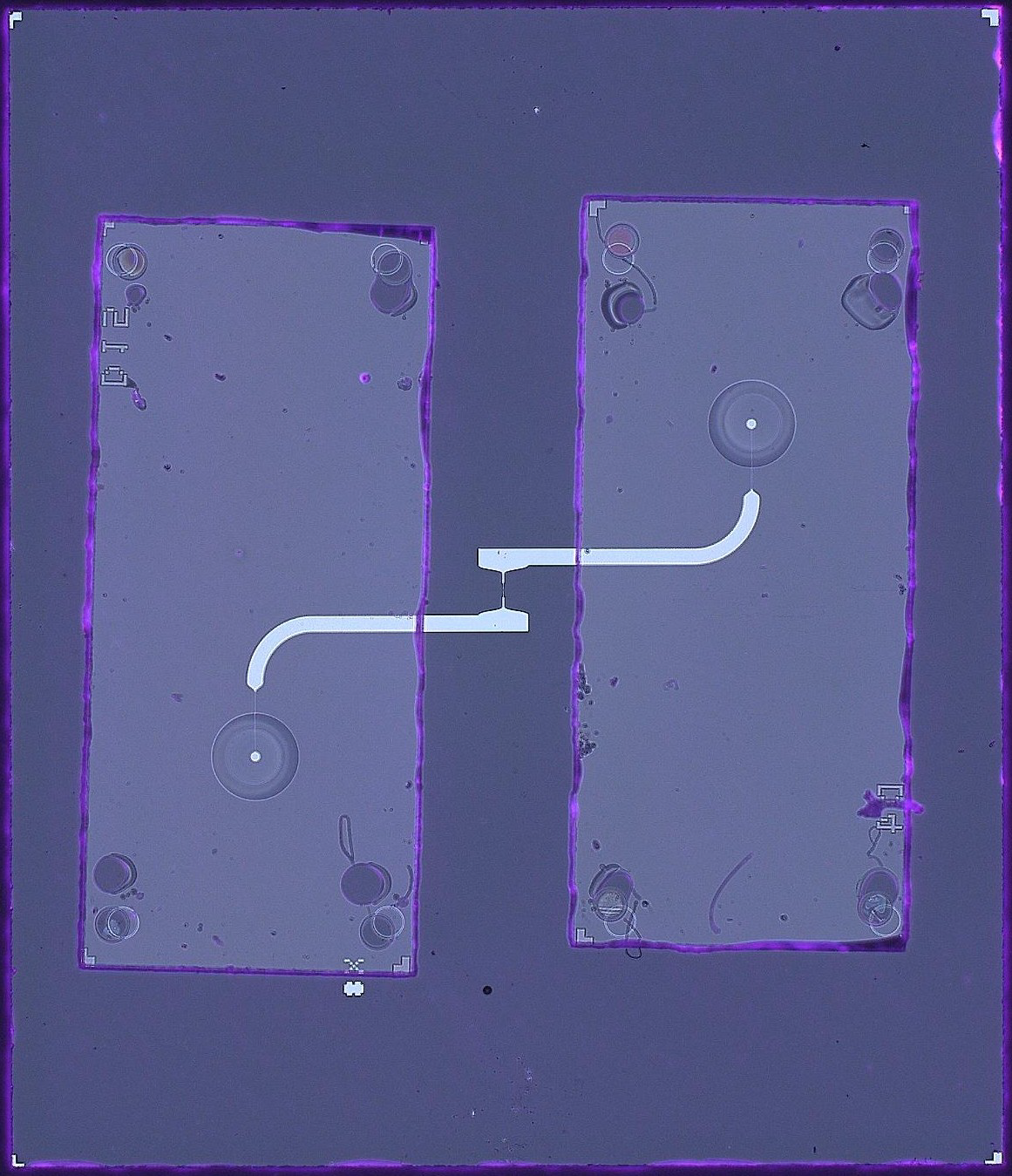
Fig 1: Device and two-mode squeezing engineering.
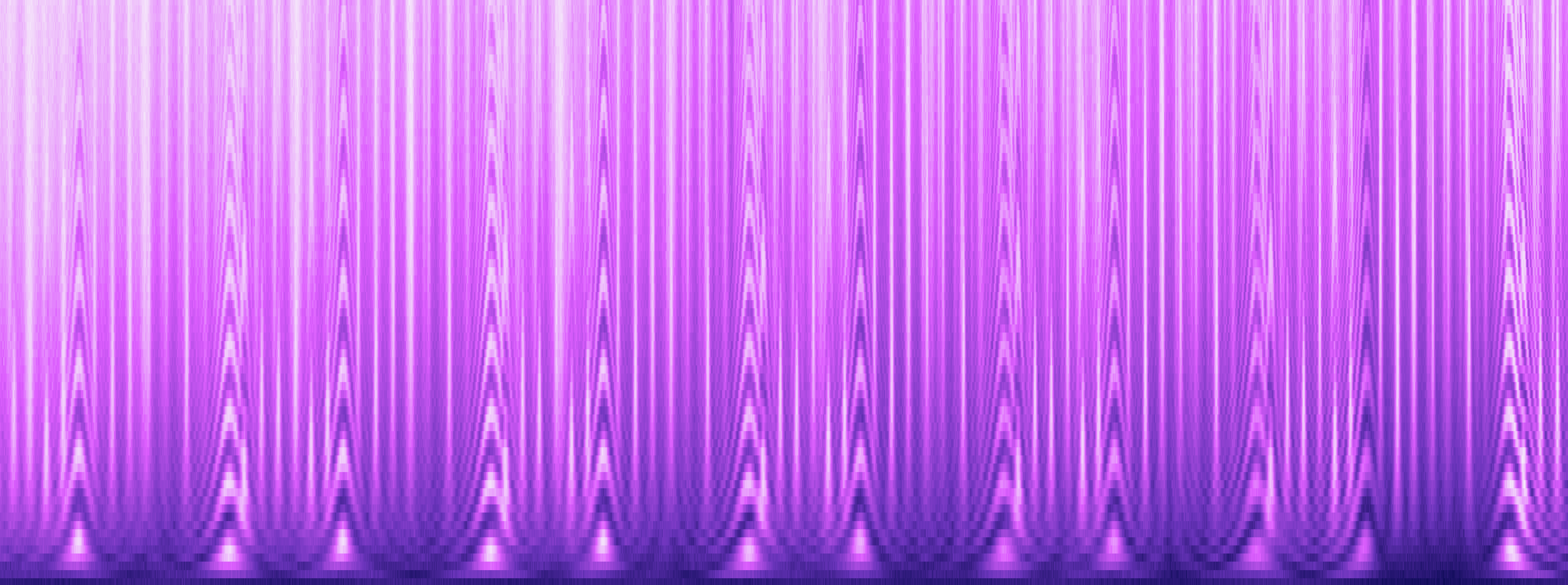
Fig 2: TMS rate characterization.
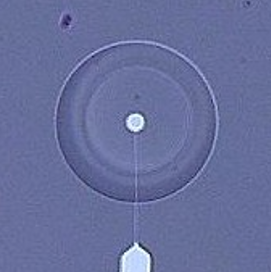
Fig 3: Mechanical SU(1,1) interferometry. (a) Schematic of an SU(1,1) interferometer, where the output is sensitive
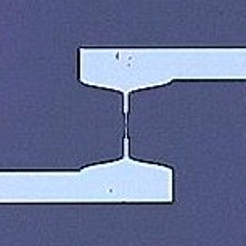
Fig 4 (page 2).

Fig 4: Witnessing EPR correlations. (a) Minimum of the EPR steering criterion E(ϕ) extracted from SU(1,1) interfer-
Fig 6 (page 4).
Limitations
- The demonstration is limited to gigahertz-frequency phonon modes of HBARs on a specific cQAD device; generalizability to other mechanical platforms is not shown.
- The tomography method reconstructs only phonon number distributions, lacking direct quadrature measurements which would offer more complete CV state characterization.
- Higher-order nonlinear effects arising at stronger parametric drive strengths cause deviations from simplified theoretical models.
- Potential influence of qubit-induced loss and decoherence mechanisms on phonon coherence are not exhaustively quantified.
- No investigation of environmental or adversarial noise effects that could degrade EPR correlations over longer distances or timescales.
Open questions / follow-ons
- How can the demonstrated mechanical EPR steering be extended to multipartite mechanical networks for complex CV quantum information tasks?
- What are the limits of coherence and control for such macroscopic mechanical states under realistic environmental decoherence?
- Can this interferometric phonon number measurement technique be adapted to enable loophole-free Bell tests or device-independent quantum information protocols with mechanical systems?
- How might integration with microwave or optical quantum links enable hybrid quantum networks involving mechanical EPR correlations?
Why it matters for bot defense
While the paper is fundamentally about quantum correlations and mechanical oscillators, the techniques developed—especially the use of parametric two-mode squeezing mediated by superconducting circuits and the SU(1,1) interferometry protocol for detecting strong continuous-variable correlations—can inform advanced quantum sensing methods. For bot-defense and CAPTCHA practitioners focusing on robust physical unclonable functions (PUFs) or quantum-enhanced randomness sources, the demonstrated ability to create and verify strong macroscopic quantum correlations in mechanical systems could inspire new directions in tamper-evident hardware or noise-resilient quantum verification schemes. The interferometric measurement approach linking population observables to entanglement and steering witnesses may also offer design principles for quantum-proof hardware authentication techniques.
However, direct application to CAPTCHA or bot-detection is limited since the platform and physics concern macroscopic quantum mechanics rather than classical cryptographic or machine learning-based defenses. The main takeaway is the demonstration of highly controlled, tunable quantum correlations in large mechanical systems and novel readout protocols which could inspire analogous verification strategies in future quantum-secure hardware modules.
Cite
@article{arxiv2606_18202,
  title={ Einstein-Podolsky-Rosen correlations between mechanical oscillators revealed through SU(1,1) interferometry },
  author={ Max-Emanuel Kern and Stefano Marti and Raquel Garcia-Belles and Andraz Omahen and Igor Kladaric and Arianne Brooks and Yiwen Chu and Matteo Fadel },
  journal={arXiv preprint arXiv:2606.18202},
  year={ 2026 },
  url={https://arxiv.org/abs/2606.18202}
}