
Anisotropic Short-Range Order Modulates Ferroelectric Switching in Wurtzite ScAlN Alloys
Source: arXiv:2606.18213 · Published 2026-06-16 · By Shunda Chen, Xianchao Dong, Xiaochen Jin, Tianshu Li
TL;DR
This study investigates the role of atomic short-range order (SRO) in modulating ferroelectric switching barriers in wurtzite ScAlN alloys, challenging the conventional assumption of random solid solutions. Using density functional theory (DFT)-based canonical ensemble Monte Carlo sampling combined with solid-state nudged elastic band (SS-NEB) calculations, the authors reveal that ScAlN exhibits robust, highly anisotropic SRO that favors columnar mixed-cation motifs along the polar c axis while suppressing in-plane Sc–N–Sc motifs. This anisotropic ordering substantially increases the intrinsic ferroelectric switching barrier across a wide composition range compared to randomly mixed special quasirandom structures (SQS). The key microscopic descriptor linked to barrier variation is the population of columnar Sc–N–Al–N–Sc motifs. The study establishes anisotropic SRO as an independent, tunable degree of freedom for engineering ferroelectric switching kinetics without altering alloy composition. More broadly, it reveals how local chemical order couples to the symmetry-distinct directions of the polar wurtzite lattice to affect functional properties.
Key findings
- Canonical MC/DFT sampling at 300 K shows Sc0.33Al0.67N lowers energy by evolving from SQS to anisotropic SRO configurations with columnar Sc motifs (Fig. 1a).
- SS-NEB switching barrier for SRO structure at x=0.33 is substantially larger than for SQS, demonstrating direct impact of SRO on barrier (Fig. 1b).
- Across 5.6%–44.4% Sc compositions, SRO systematically increases switching barrier up to ~80% relative to SQS (Fig. 2a,b).
- SRO suppresses in-plane Sc–N–Sc motifs and enhances columnar Sc–N–Al–N–Sc and Sc–N–Sc–N–Sc motifs, showing anisotropic chemical ordering (Fig. 3a–c).
- Structural changes due to SRO include contraction of c lattice parameter, reduced cation–N vertical displacement, smaller volume per atom, and narrower cross-plane bond-angle distributions, better matching experiment (Fig. 3d–f).
- Energetic comparison of motifs shows columnar Sc–N–Al–N–Sc motif lowers energy by 214.5 meV relative to in-plane Sc–N–Sc motif, explaining anisotropic ordering (Supporting Fig. S5).
- Switching barrier correlates negatively with in-plane Sc–N–Sc motif population (R2=0.803) and strongly positively with columnar Sc–N–Al–N–Sc motif population (R2=0.930) (Fig. 4a,b).
- A linear model using only in-plane Sc–N–Sc and columnar Sc–N–Al–N–Sc motif populations reproduces switching barriers with R2=0.951 (Fig. 4c).
Threat model
Not applicable; this is a fundamental materials science study investigating intrinsic atomic ordering effects on ferroelectric switching in alloys without adversarial context.
Methodology — deep read
The authors study wurtzite ScAlN alloys focusing on local chemical ordering effects on ferroelectric switching. The threat model is intrinsic material behavior with no adversary; the goal is to understand microscopic structural factors altering switching barriers.
They generate atomic configurations using density functional theory (DFT) within the PBE approximation via VASP. Supercells contain 108 atoms (3x3x3 wurtzite primitive cells). Special quasirandom structures (SQS) are generated at multiple Sc compositions (5.6%, 11.1%, 22.2%, 33.3%, 37%, 44.4%) using the ATAT code.
To capture atomic correlations beyond random mixing, canonical-ensemble Metropolis Monte Carlo (MC) sampling combined with DFT total energies is performed. Trial moves randomly swap Sc and Al atoms on the cation sublattice, followed by full structural relaxation with DFT. Acceptance is according to the Metropolis criterion at fixed temperatures (mainly 300 K, also 500 K, 700 K, and 1600 K for generating different degrees of order). Each composition has at least four independent MC trajectories initialized from different SQS seeds, with over 2000-4000 MC steps each.
Ferroelectric switching pathways and intrinsic barriers are computed by solid-state nudged elastic band (SS-NEB) calculations, which relax both lattice vectors and atomic coordinates. SS-NEB runs at least 7 images per pathway, starting from linearly interpolated polarization-reversed states, performed on multiple independent SQS and SRO configurations per composition. Electronic convergence criterion is 10^-6 eV, forces below 0.01 eV/Å.
Post-simulation, motif counting quantifies populations of specific local atomic arrangements relevant to polar connectivity (in-plane Sc–N–Sc, columnar Sc–N–Al–N–Sc, and Sc–N–Sc–N–Sc motifs). A controlled motif comparison isolates the energetic favorability of these motifs in identical supercells differing only by single motif placement.
Statistical analysis correlates motif populations with switching barrier variations across configurations. A linear model using the two most significant motifs predicts switching barriers with high accuracy (R2=0.951).
Convergence of SS-NEB with respect to image number and cross-validation across independent MC trajectories ensures robustness. No public code or frozen weights are indicated; data sharing available on request. This represents a comprehensive first-principles sampling and pathway calculation approach linking anisotropic local order to functional switching barriers in ferroelectric wurtzite alloys.
Technical innovations
- Application of first-principles canonical ensemble Monte Carlo sampling combined with DFT to reveal spontaneous anisotropic short-range order in polar wurtzite ScAlN alloys.
- Use of solid-state nudged elastic band calculations relaxing lattice and atomic degrees of freedom to compute intrinsic ferroelectric switching barriers for chemically ordered vs random alloy configurations.
- Identification and quantification of specific anisotropic motifs—especially columnar Sc–N–Al–N–Sc chains—as primary microscopic structural descriptors controlling switching barrier variations.
- Demonstration of anisotropic SRO as an independent structural degree of freedom that can tune ferroelectric switching barriers without changing alloy composition.
- Construction of a physically interpretable linear motif-population-based predictive model of switching barrier variations with high accuracy (R2=0.951).
Datasets
- ScxAl1−xN alloy configurations — 108-atom supercells — generated via ATAT SQS and canonical MC/DFT sampling (non-public)
Baselines vs proposed
- Special quasirandom structures (SQS): switching barrier decreases with increasing Sc concentration, baseline values used for comparison.
- Short-range order (SRO) structures: switching barrier is systematically up to ~80% higher than SQS across all compositions tested (Fig. 2a,b).
- Motif model using in-plane Sc–N–Sc and columnar Sc–N–Al–N–Sc populations: R2 = 0.951 predicting switching barriers, validating motif-based descriptor versus raw DFT results (Fig. 4c).
Figures from the paper
Figures are reproduced from the source paper for academic discussion. Original copyright: the paper authors. See arXiv:2606.18213.
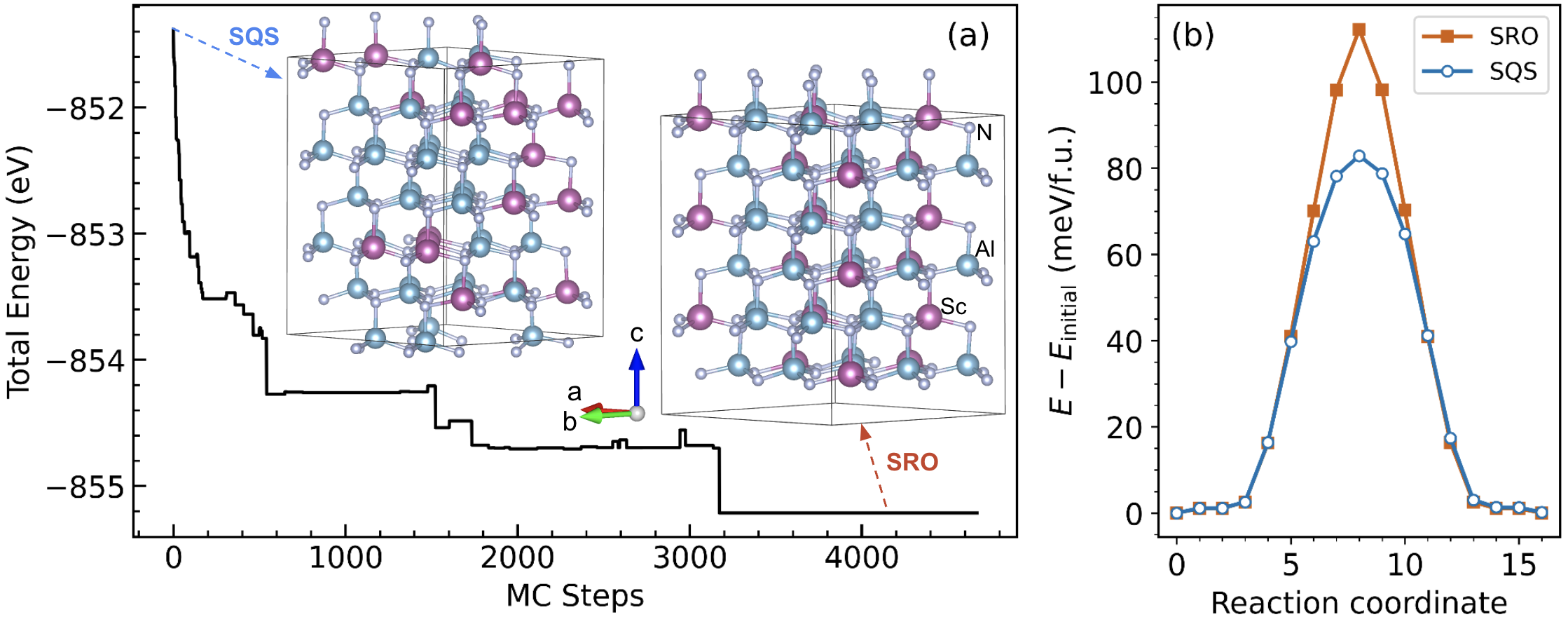
Fig 1: Emergence of short-range order and its impact on ferroelectric switching in ScAlN alloys. (a) Evolution
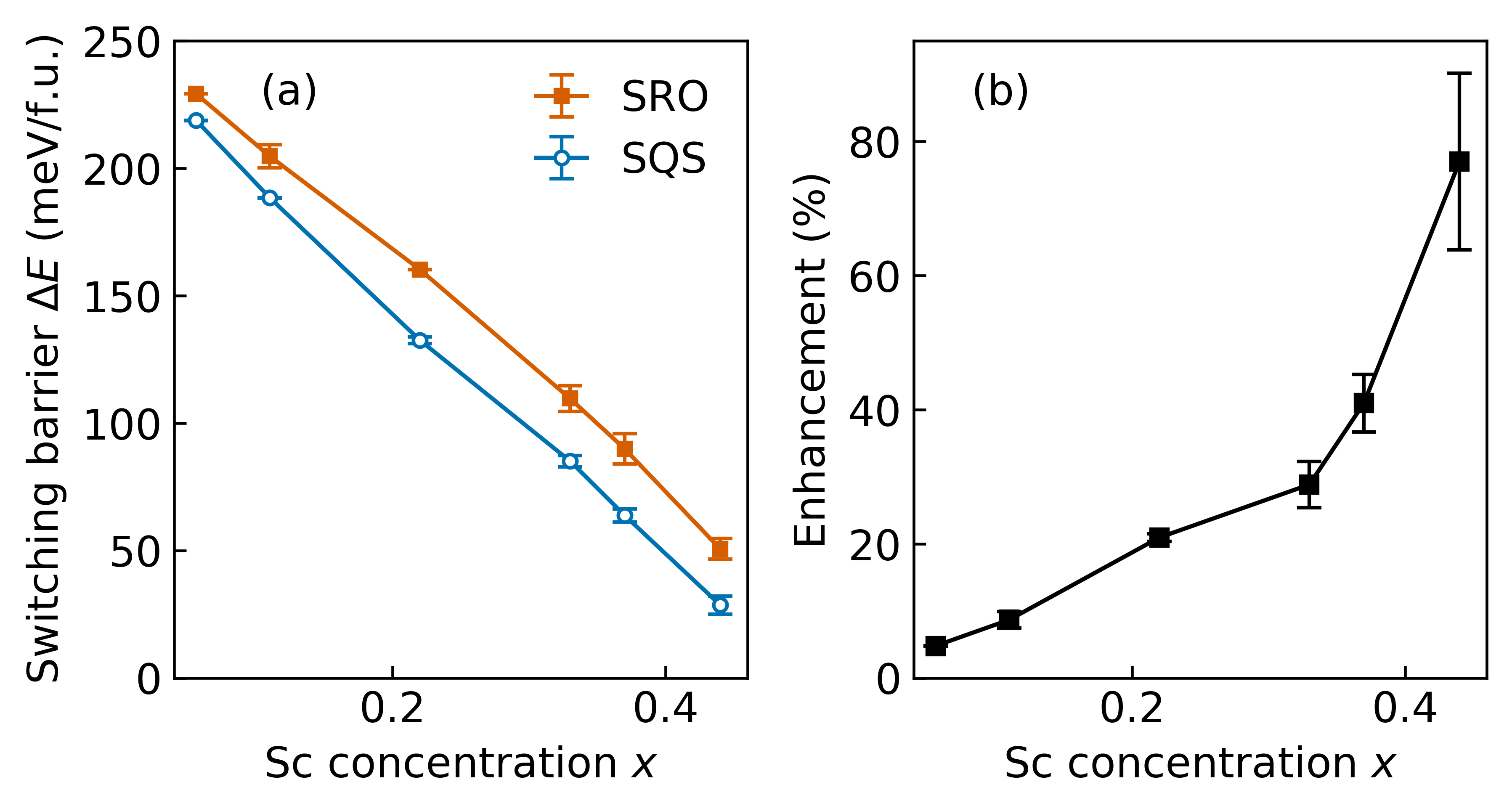
Fig 2: Composition dependence of ferroelectric
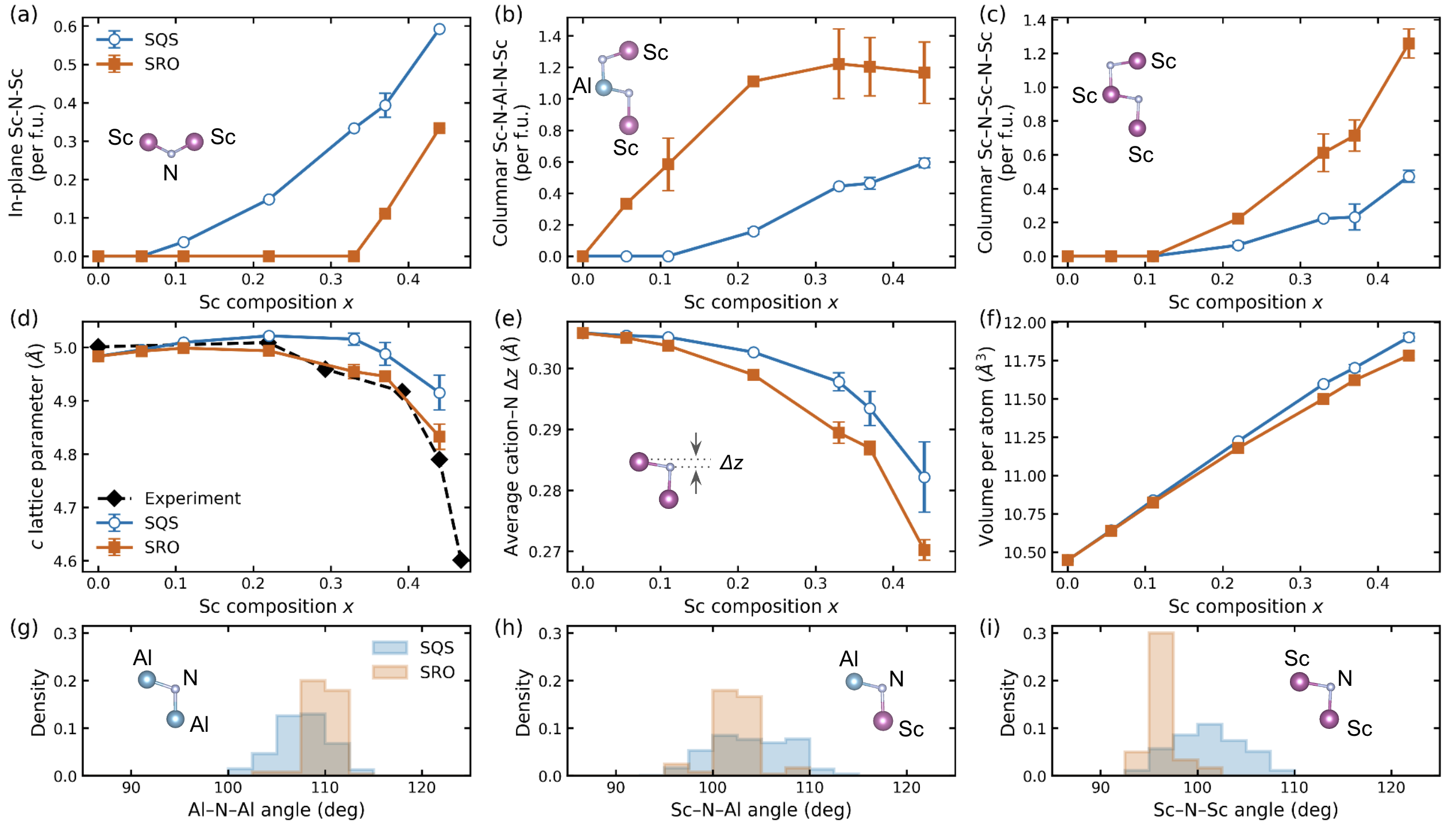
Fig 3: Anisotropic short-range order reorganizes motif populations and structural properties. (a) In-plane
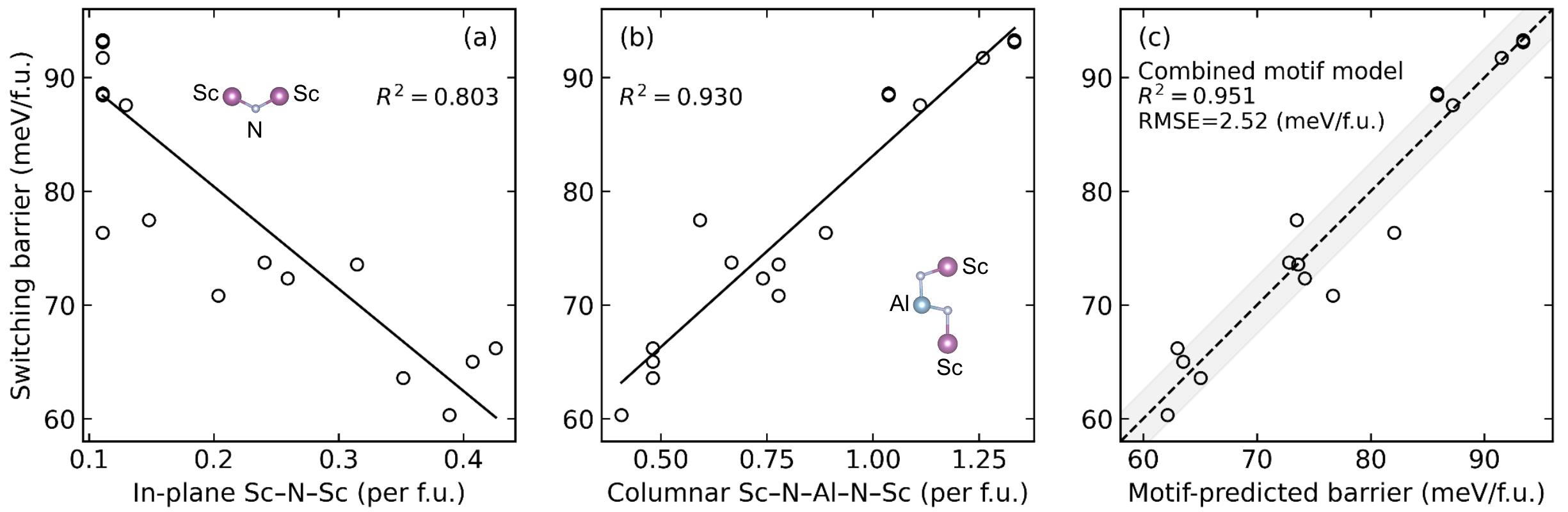
Fig 4: Anisotropic short-range order tunes switching barriers at fixed composition. Switching barrier from SS-
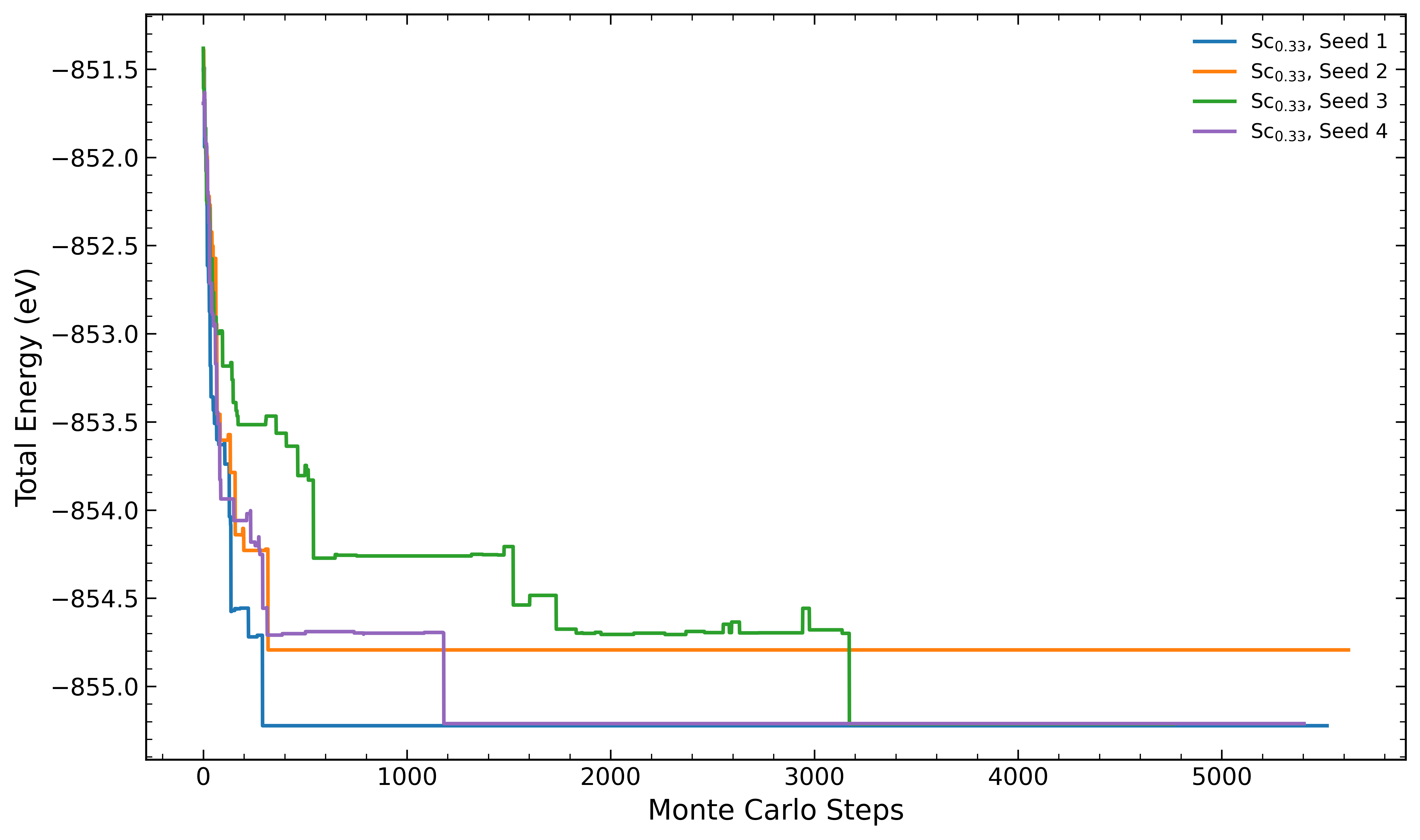
Fig 5 (page 9).
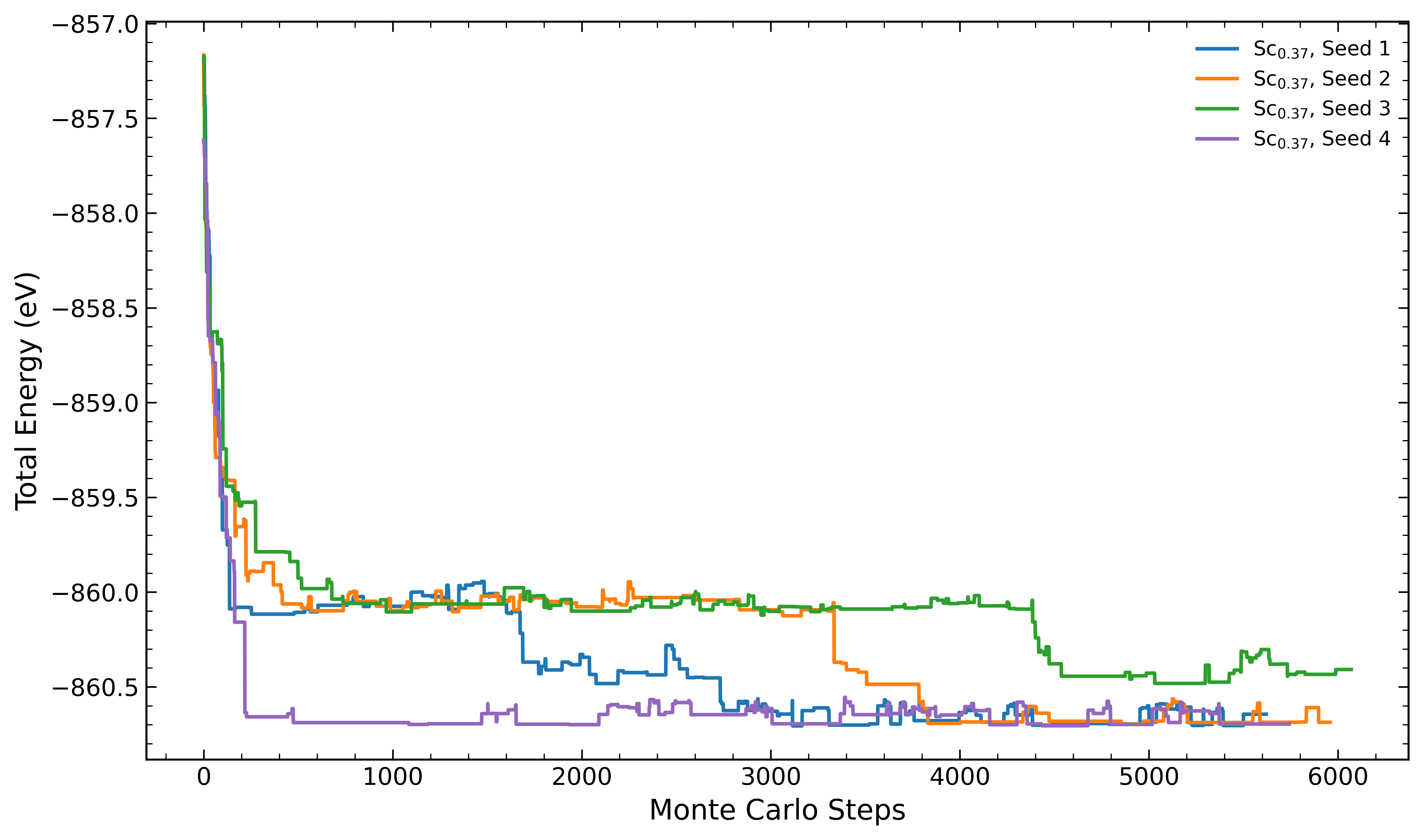
Fig 6 (page 10).
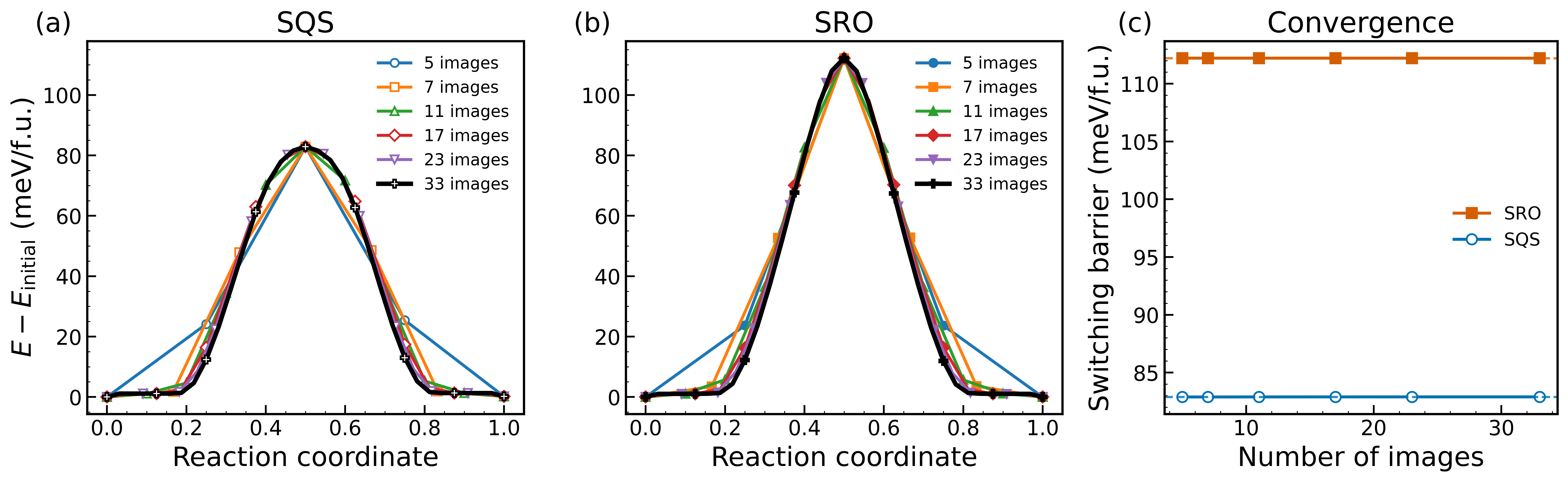
Fig 7 (page 10).
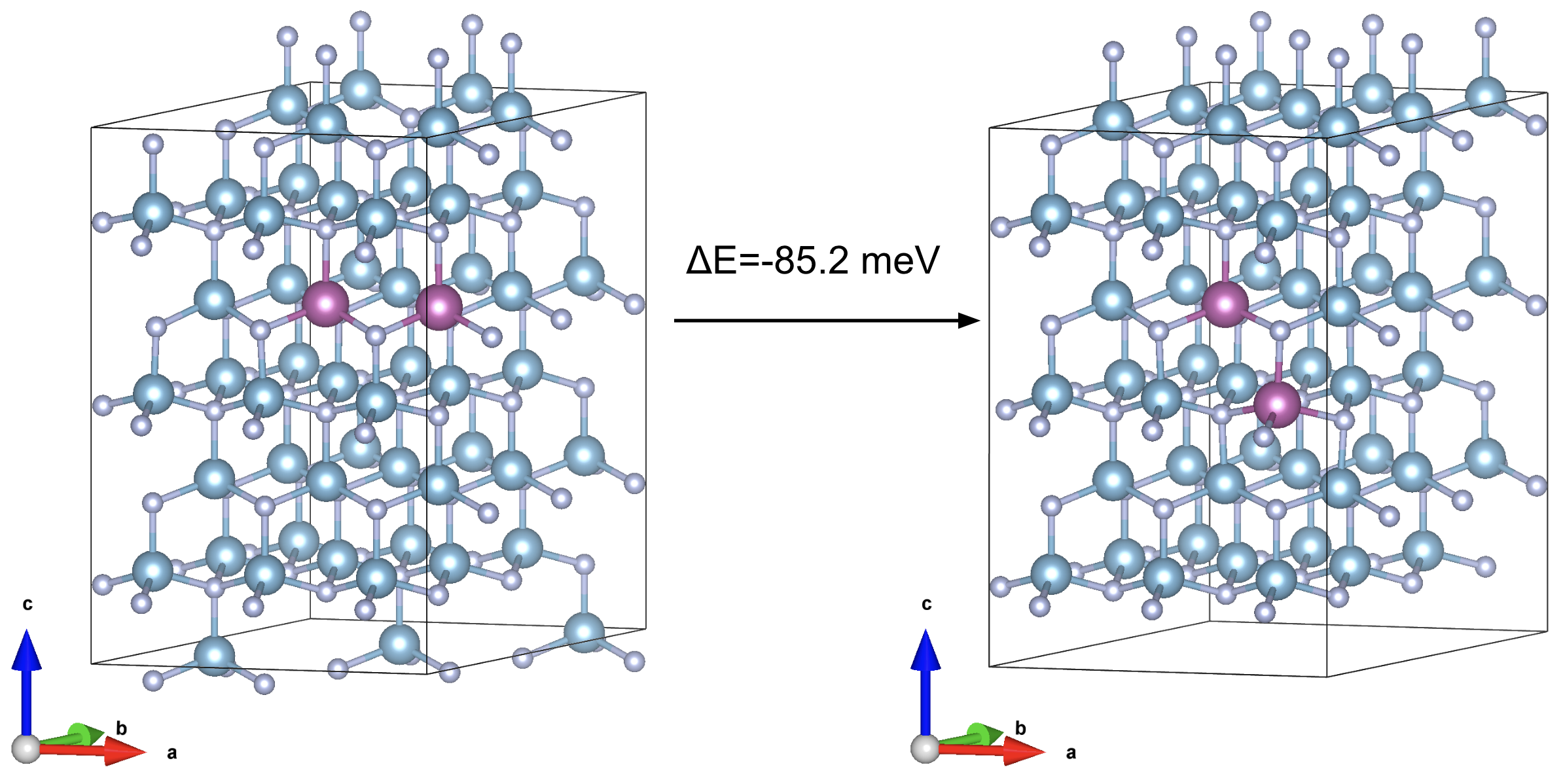
Fig 8 (page 11).
Limitations
- DFT calculations use PBE generalized gradient approximation which may have limitations in describing excited states or electronic correlations.
- Sampling is limited to canonical ensemble MC at mostly 300 K with some higher temperature points; experimental growth conditions may differ.
- Switching barriers computed neglect finite-temperature dynamics and extrinsic effects like defects, interfaces, or strain fields present in real devices.
- The study focuses on intrinsic switching barrier; kinetic factors and domain wall motion effects are not addressed.
- Code and data are not publicly released; reproducibility depends on data sharing upon request and replication of expensive DFT Monte Carlo simulations.
- Single supercell size (108 atoms) might limit capturing longer-range correlations or larger-scale inhomogeneities.
Open questions / follow-ons
- How does anisotropic short-range order evolve under real experimental growth conditions and thermal processing pathways?
- What is the impact of extrinsic defects, interfaces, and strain on SRO and its modulation of switching barriers?
- Can SRO engineering be experimentally controlled to tailor ferroelectric properties in ScAlN devices?
- Does analogous anisotropic SRO phenomena occur in other polar semiconductor or ferroelectric alloy systems?
Why it matters for bot defense
While not directly related to CAPTCHA or bot-defense, this paper showcases a rigorous computational approach to identifying subtle local structural variables (anisotropic short-range order motifs) that substantially affect a critical functional property (ferroelectric switching barrier). For bot-defense engineers, the key takeaway is the importance of considering and quantifying microscopic correlated structures and heterogeneities rather than relying on random or uniform assumptions. This mindset parallels recognizing that local, anisotropic, or motif-level correlations in user behavior or interaction patterns could reveal deeper distinguishing features to enhance robustness against automated attacks. Additionally, the motif-based predictive modeling approach illustrates how small sets of interpretable local features can accurately predict complex system-level outcomes, a principle translatable to CAPTCHA design or bot detection feature engineering.
Cite
@article{arxiv2606_18213,
  title={ Anisotropic Short-Range Order Modulates Ferroelectric Switching in Wurtzite ScAlN Alloys },
  author={ Shunda Chen and Xianchao Dong and Xiaochen Jin and Tianshu Li },
  journal={arXiv preprint arXiv:2606.18213},
  year={ 2026 },
  url={https://arxiv.org/abs/2606.18213}
}