
Transverse Modulation of Continuous Electron Beams by a Structured Optical Cavity
Source: arXiv:2606.16958 · Published 2026-06-15 · By Marius Constantin Chirita Mihaila, Julie Sk{ý}palová, Martin Kozák
TL;DR
This paper addresses the long-standing challenge of compact third-order spherical aberration correction for continuous low-energy electron beams, especially relevant to scanning electron microscopy (SEM) at energies around 5 keV. The authors propose a novel phase plate concept based on the ponderomotive interaction of electrons with a structured intracavity optical standing wave inside a near-concentric Fabry–Pérot resonator. By resonantly exciting a Laguerre-Gaussian mode (LG_1^0) with topological charge l=1, an annular phase profile is imparted onto the electron beam that approximately cancels the positive third-order spherical aberration caused by conventional electron lenses. Numerical modeling shows that for a 5 keV electron beam with 25 mrad semi-convergence angle and objective lens spherical aberration coefficient C_s=1 mm, full correction is achievable, reducing the focal spot size from about 4.6 Å (aberrated) to 1.4 Å (corrected), approaching the diffraction limit. Detailed wave-propagation simulations confirm that even with a central hole of 100 µm diameter in the cavity input mirror to allow electron passage, sufficient circulating optical power (~130 kW) can be sustained to realize the required ponderomotive phase shifts at experimentally feasible laser powers. This work extends prior pulsed optical aberration correction approaches to a continuous-wave, cavity-enhanced architecture, offering a tunable, free-space, and minimally invasive alternative to material or electrostatic phase plates, multipole correctors, and pulsed laser schemes for aberration correction in low-kV electron microscopy.
Key findings
- The ponderomotive phase shift induced by an intracavity standing-wave LG_1^0 mode can fully compensate a third-order spherical aberration of C_s=1 mm for a 5 keV electron beam at 25 mrad semi-convergence angle.
- Numerical simulation predicts a reduction in focal probe width from σ ≈ 4.6 Å (uncorrected) to σ ≈ 1.4 Å (corrected) after applying the optical phase modulation, a factor of ~3 improvement in central lobe width.
- The corrected probe’s diffraction-limited resolution corresponds to a blur diameter ~9 times smaller when estimated from the disk-of-least-confusion metric.
- A near-concentric Fabry–Pérot cavity with 100 µm central mirror aperture still sustains a circulating power of ∼130 kW after 10^4 round trips, well above the ∼34 kW required for aberration correction.
- The cavity’s high Q-factor (~6×10^8) and photon lifetime (~350 ns) yield a highly stable phase profile insensitive to laser power fluctuations or pointing noise.
- Using an LG_1^0 mode reduces peak mirror intensity and associated thermal loading compared to Gaussian modes at the same circulating power.
- Wave-propagation simulations show that the central aperture minimally perturbs the cavity mode shape, preserving the LG_1^0 intensity profile required for phase compensation.
- The approach only requires free-space optical cavity elements, avoiding charging, contamination, and scattering issues common with material phase plates.
Methodology — deep read
Threat Model & Assumptions: The proposed concept assumes an electron microscope environment where continuous, quasi-monochromatic electron beams at 5 keV energy pass coaxially through an optical cavity. The adversary model is not explicitly studied as the work focuses on optical aberration correction – the system must maintain mechanical stability to preserve cavity alignment and electron beam overlap. No intentional adversarial perturbations are considered.
Data: No experimental data is presented; instead, the study uses analytical calculations and numerical simulations. Key inputs include a 5 keV electron beam with 0.1 eV energy spread, a lens with third-order spherical aberration C_s=1 mm, and convergence semiangle 25 mrad. The intracavity optical mode is modeled as a standing-wave Laguerre-Gaussian LG_1^0 with wavelength 1064 nm. Parameters such as cavity length, mirror curvatures, hole diameter (100 µm), and circulating power (~130 kW) are specified.
Architecture / Algorithm: The electron wavefunction accumulates a ponderomotive phase shift when traversing the structured intracavity light field, treated as a thin phase element (projected-potential approximation). The phase shift ϕ_p(r⊥) is calculated by integrating the ponderomotive potential U(r,t) along the electron trajectory. The intracavity optical field is modeled explicitly using analytical vector-field expressions for the standing-wave LG_1^0 mode, including longitudinal corrections for finite numerical aperture (Eq. S1 in Supplemental Material). The electron wave after modulation is ψ_mod = ψ_in exp(iϕ_p).
The electron–light interaction plane (IP) is imaged (magnification M~4.2) onto the objective aperture plane (OAP). The phase modulation ϕ_p is rescaled accordingly and combined with the primary lens aberration phase χ(θ) (Eq. 11). The corrected probe is obtained by Fourier transforming the pupil plane wavefunction.
Training / Simulation Regime: Numerical FFT-based wave-propagation simulations (modified OSCAR package) model intracavity field build-up over 10^4 round trips, including diffraction, mirror curvature, and hole aperture diffraction loss. Optical parameters include mirror reflectivities (R1=0.99921, R2=0.99992), cavity length near concentric condition (L=50 mm - 3 µm), and laser input power (Pin=40 W). Analytical phase calculations derive accumulated electron phase for the LG_1^0 mode with focal waist wf=8.1 µm.
Evaluation Protocol: The focal-plane electron probe intensity is computed for uncorrected and corrected phase profiles, normalized peak intensity compared, and Gaussian fits to the central lobe widths are made to quantify aberration correction efficacy. Circulating cavity power is tracked as a function of central hole diameter to assess feasibility. The residual phase after correction is optimized within the modal basis.
Reproducibility: The paper mentions that supporting data is openly available (reference 83), but no specific code release or frozen weights are noted. The intracavity field and electron phase calculations are based on published analytical expressions and standard FFT simulation tools.
Concrete example: For a 5 keV beam with 25 mrad convergence, the intracavity LG_1^0 standing wave with ~34 kW circulating power induces a ponderomotive phase shift compensating Cs=1 mm spherical aberration, reducing the focused electron probe size at the Fourier plane from ≈4.6 Å to ≈1.4 Å. Simulations confirm this correction under realistic cavity geometry with a 100 µm aperture.
The methods combine optical cavity design, vector-field mode modeling, electron wavefunction modulation theory, and electron optics wave propagation incorporating aberrations.
Technical innovations
- Use of a near-concentric Fabry–Pérot resonator supporting a Laguerre-Gaussian LG_1^0 intracavity standing wave to induce a cylindrically symmetric ponderomotive electron phase profile for aberration correction.
- Extension of prior pulsed optical aberration correction approaches to continuous-wave cavity-enhanced electron beam modulation, enabling large interaction lengths and phase accumulation on continuous electron beams.
- Demonstration that a Fabry–Pérot cavity with a central mirror aperture of 100 µm can sustain >100 kW circulating power in an LG_1^0 mode, allowing free-space ponderomotive phase plates compatible with electron optical columns.
- The projected-potential approximation combined with explicit imaging to the electron objective aperture plane to model the transfer and compensation of third-order spherical aberration via intracavity optical fields.
Baselines vs proposed
- Uncorrected electron probe: focal spot width σ ≈ 4.6 Å versus corrected probe: σ ≈ 1.4 Å
- Uncorrected probe peak intensity ≈ 3% of the corrected peak intensity
- Fabry–Pérot cavity one-way circulating power with hole diameter 100 µm: ~130 kW versus required power for correction: ~34 kW
Figures from the paper
Figures are reproduced from the source paper for academic discussion. Original copyright: the paper authors. See arXiv:2606.16958.
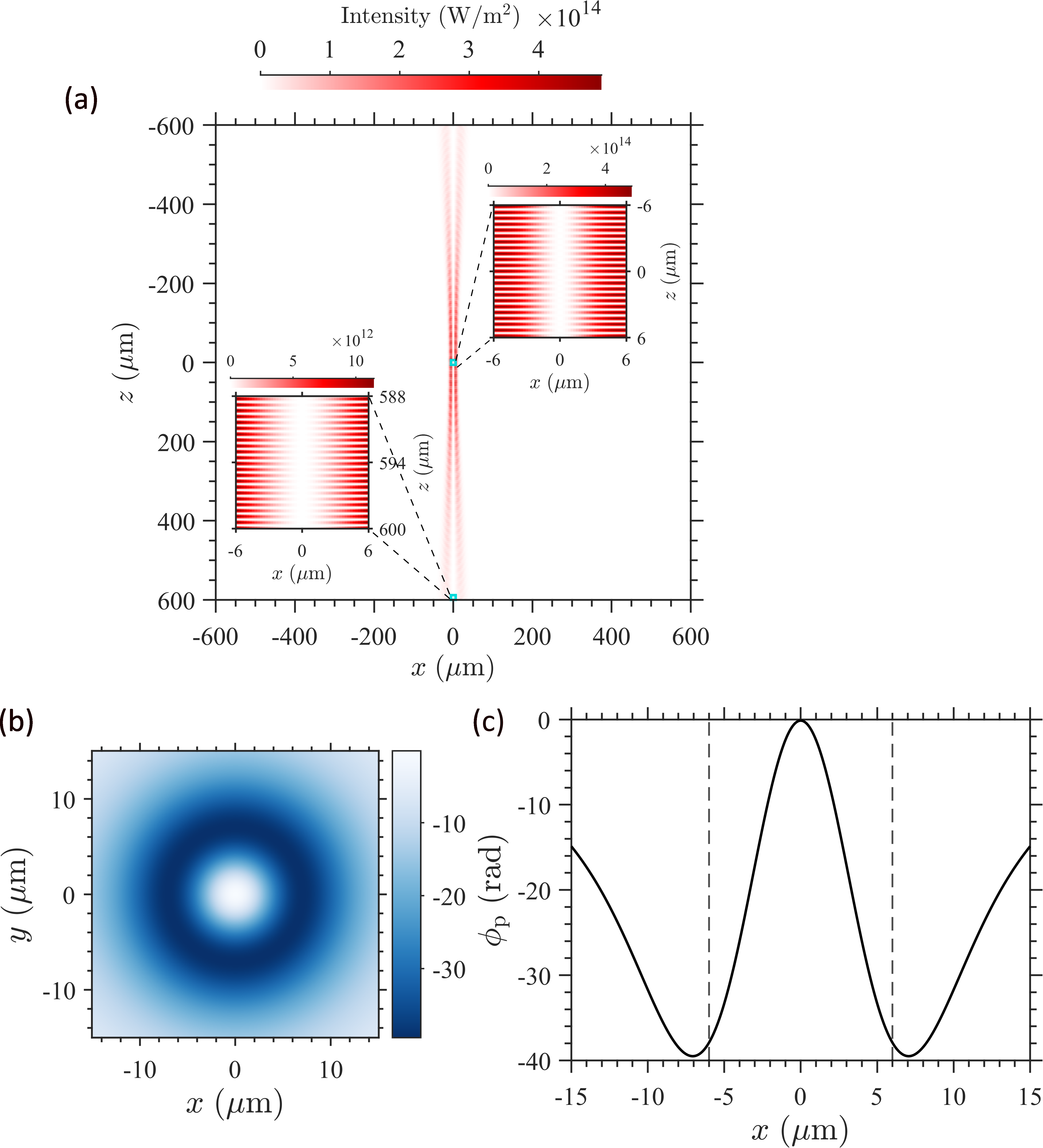
Fig 1: (a) Standing-wave intensity distribution of the opti-
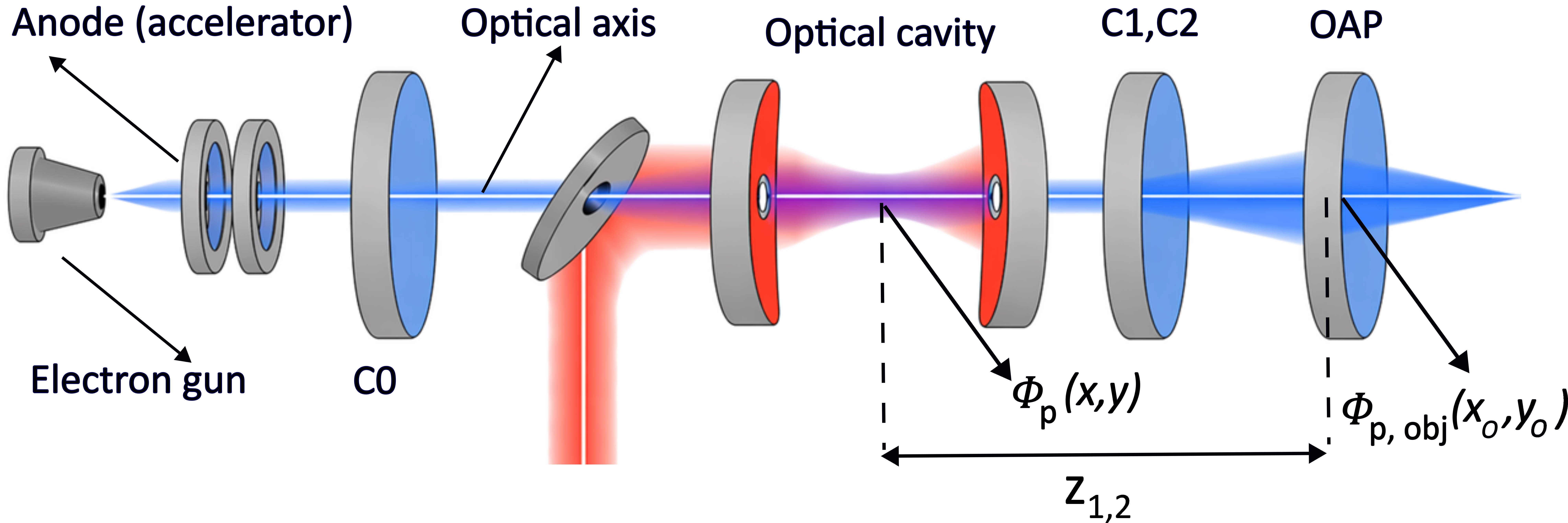
Fig 2: Proof-of-concept electron-optical layout for trans-
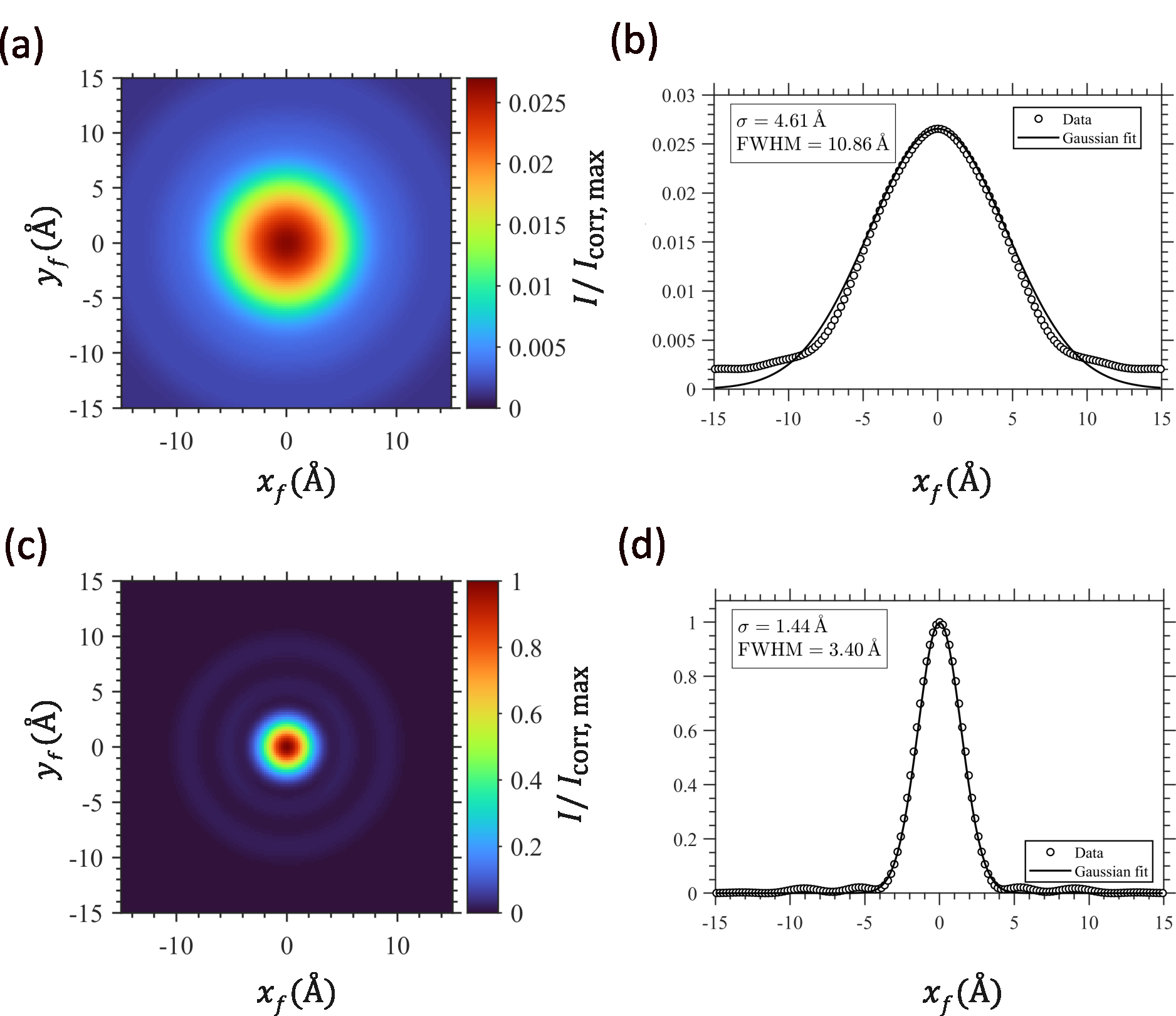
Fig 3: Focal-plane electron-probe intensities before and after
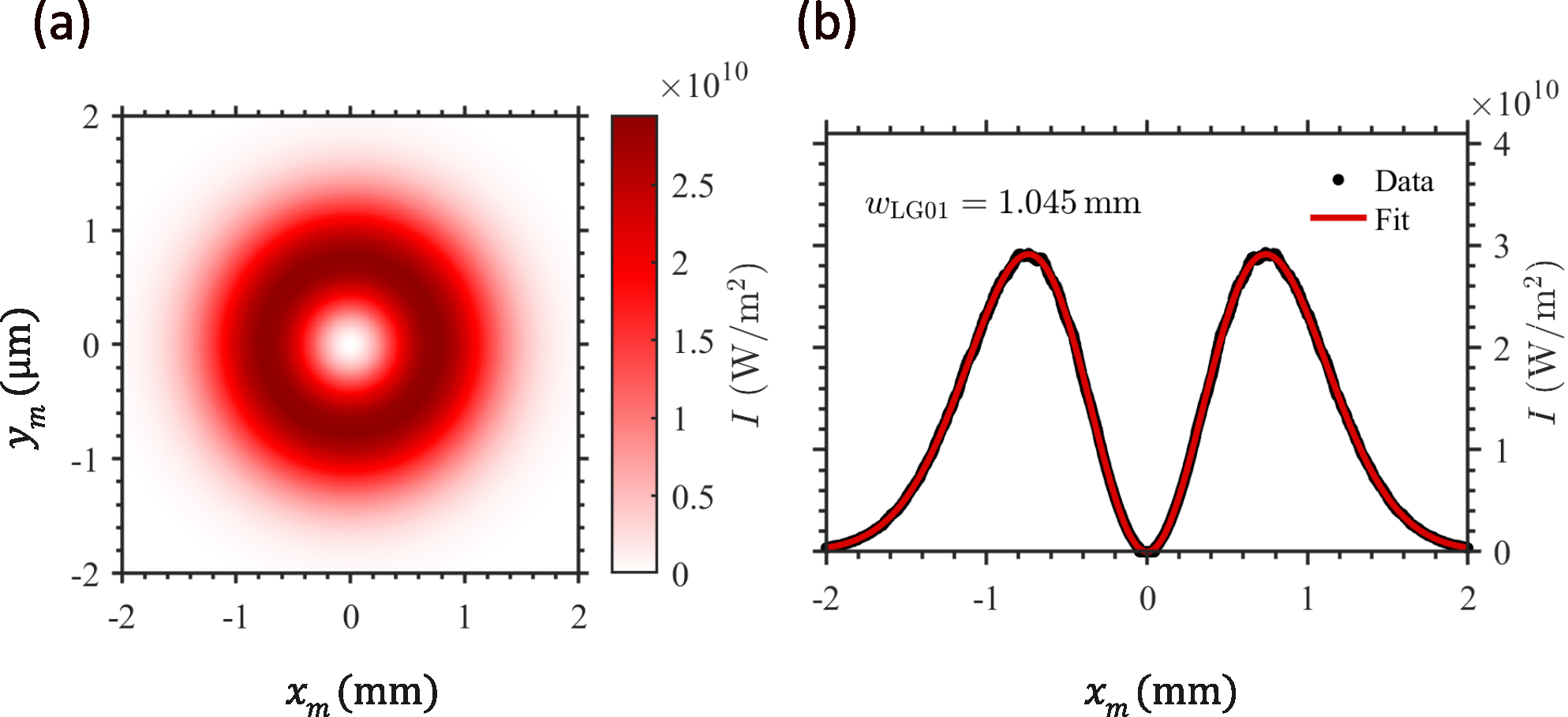
Fig 4: (a) Circulating intensity profile (at about 130 kW
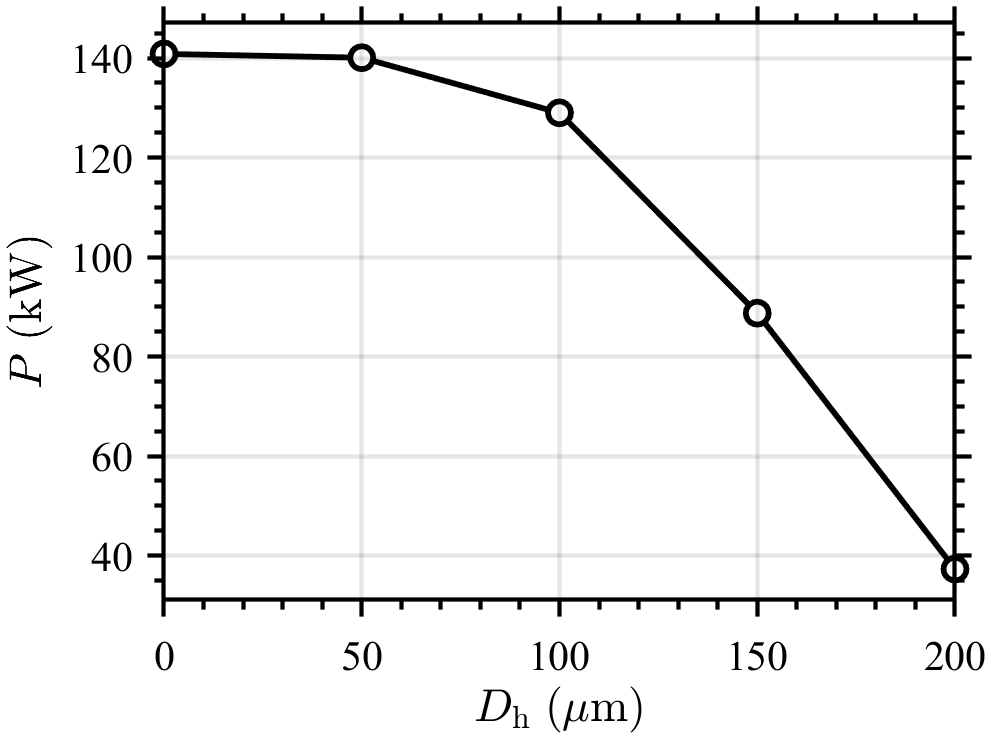
Fig 5: One-way circulating power P in the Fabry–P´erot
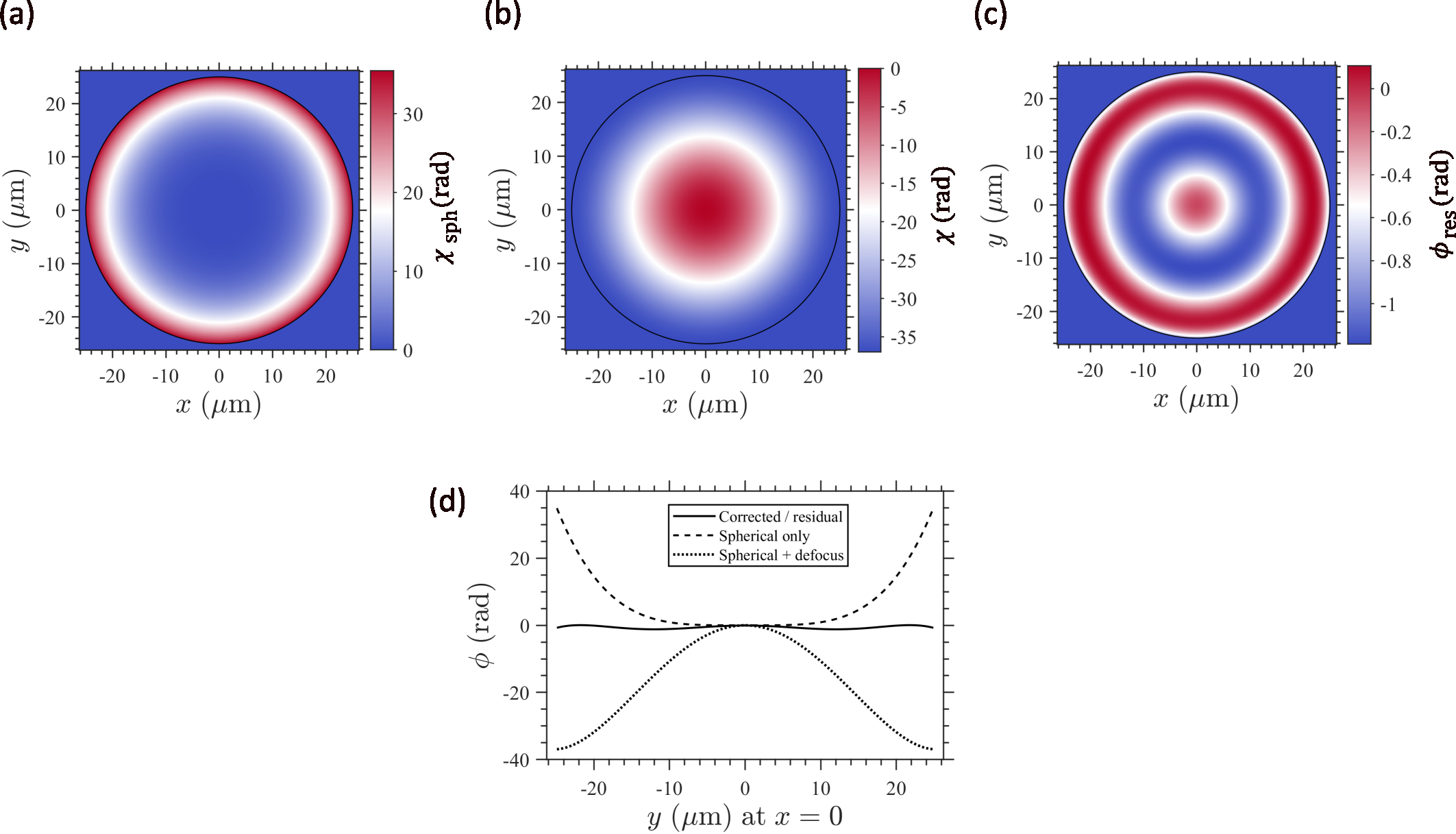
Fig 6 (page 10).
Limitations
- The range of electron phase profiles achievable is limited by the discrete set of supported cavity eigenmodes; arbitrary phase modulation patterns are not possible.
- Chromatic aberration remains a limitation at low electron energies unless energy spread is sufficiently small or combined with complementary monochromation or chromatic correction.
- The model neglects internal free-space propagation and transverse redistribution during the electron-light interaction, relying on projected-potential approximation which might be less accurate at higher electron divergence.
- The proposed scheme requires exceptional mechanical stability of the cavity relative to the electron beam axis to maintain phase stability, and sensitivity to environmental noise is not quantitatively analyzed.
- The effects of Johnson noise and thermal fluctuations on cavity mirror coatings under high circulating power are acknowledged but not experimentally validated.
- Experimental validation remains to be conducted; all results are theoretical and simulation-based.
Open questions / follow-ons
- How to expand the accessible electron phase profiles beyond the supported cavity eigenmode basis allowing more complex aberration corrections or tailored shaping?
- What is the impact of real environmental mechanical vibrations and thermal fluctuations on cavity-electron beam alignment and phase stability in a practical SEM setting?
- How could this approach be integrated with chromatic aberration correction methods or monochromators to push low-energy electron microscopy resolution further?
- Can higher-order Laguerre-Gaussian modes or superpositions be engineered in the cavity to enable phase contrast imaging techniques or additional beam manipulations?
Why it matters for bot defense
While this paper does not directly address bot defense or CAPTCHAs, the fundamental concept of imprinting controlled phase modulations on continuous electron beams via high-finesse optical cavities may inspire analogous wavefront shaping methods in other domains. For bot defense practitioners, the demonstrated approach exemplifies how stable, tunable, structured light fields can modulate particle beams in free space without material interaction, avoiding losses and contamination. Translated metaphorically, this suggests that optical cavities could be used to create dynamic, adaptive wavefront modulations with high stability and low noise—qualities desirable in generating robust challenge signals in optical CAPTCHAs or anti-bot detection schemes relying on subtle phase or spatial modulation patterns. The discrete modal basis limitation also highlights the trade-offs between complexity and practicality in wavefront synthesis, a consideration important in CAPTCHA design for balancing effectiveness and deployability. More broadly, this research reinforces that cavity-enhanced continuous-wave optical modulation achieves effects akin to static physical phase plates but with tunability and minimal degradation—principles relevant to designing resilient, low-latency bot defense optical challenges.
Cite
@article{arxiv2606_16958,
  title={ Transverse Modulation of Continuous Electron Beams by a Structured Optical Cavity },
  author={ Marius Constantin Chirita Mihaila and Julie Sk{ý}palová and Martin Kozák },
  journal={arXiv preprint arXiv:2606.16958},
  year={ 2026 },
  url={https://arxiv.org/abs/2606.16958}
}