
Disentangling multi-spin dynamic correlations in the Heisenberg spin-$\frac{1}{2}$ chain
Source: arXiv:2606.16992 · Published 2026-06-15 · By V. K . Bhartiya, U. Kumar, T. Kim, S. Fan, S. Okamoto, M. Mitrano et al.
TL;DR
This paper addresses a fundamental challenge in quantum materials research: extracting and characterizing multi-spin dynamical correlations beyond conventional two-spin correlations accessible via inelastic neutron scattering (INS). The authors focus on magnetic excitations in the prototypical Heisenberg spin-1/2 chain realized in Sr2CuO3. They demonstrate that resonant inelastic X-ray scattering (RIXS), performed at the Cu L3-edge, can selectively probe two- versus multi-spin dynamic correlations by tuning (detuning) the incident photon energy. This detuning accesses distinct intermediate states associated with separate resonance energies, enabling disentanglement of two-spin and multi-spin excitations each with unique spectral profiles.
Through careful experimental RIXS measurements combined with exact diagonalization simulations of a 1D t-J Hamiltonian, the study reveals that the two-spin and multi-spin dynamical correlation functions resonate at energies separated by approximately 3/4J (J being the magnetic exchange energy). The two-spin channel exhibits a Lorentzian resonant energy profile indicative of a single dominant intermediate electronic configuration, while the multi-spin channel shows a broader Gaussian-like profile arising from multiple intermediate spin configurations containing spin flips. These distinct resonance profiles and energy shifts allow controlled tuning of the relative spectral weight of two- and multi-spin channels inside and outside the well-known two-spinon continuum. This methodology enables direct experimental access to higher-order multi-spin correlations that encode many-body quantum dynamics inaccessible through linear-response probes. The results are quantitatively reproduced by the exact diagonalization modeling, solidifying the physical interpretation in terms of intermediate-state spin configurations, core-hole lifetime effects, and exchange interactions.
Key findings
- The resonance energies of two- and multi-spin dynamical correlations are separated by approximately 3/4J (~0.15-0.20 eV), consistent across momentum transfers q = -0.045, -0.125, and -0.45 r.l.u.
- The two-spin spectral weight exhibits a Lorentzian energy profile, consistent with a single dominant intermediate electronic configuration, while the multi-spin channel shows a Gaussian profile implying multiple intermediate spin excitations.
- Distinct resonant energies and profiles persist even inside the two-spinon continuum where two- and multi-spin contributions overlap (Fig. 2g-i).
- Exact diagonalization of the one-dimensional t-J model reproduces the separation in resonance energies (∆th ≈ 0.19 eV) and the distinct Lorentzian vs Gaussian profiles without parameter tuning (Fig. 4).
- The width of the two-spin resonance depends mainly on core-hole inverse lifetime Γ/2, whereas the multi-spin resonance width scales primarily with the ratio 2J/Γ (Fig. 5 and Appendix B.1).
- Intermediate states associated with the multi-spin resonance (labeled B and C peaks in XAS) contain spin excitations represented as ferromagnetic-like domain walls (Fig. 3b), unlike the A resonance linked to two-spin correlations.
- The incident-energy detuning thus serves as an experimental knob to selectively enhance or suppress two-spin versus multi-spin dynamical responses in RIXS.
- Multi-spin contributions unique to RIXS appear at energies outside the two-spinon continuum and cannot be captured by the linear response two-spin dynamical structure factor measured by INS (Fig. 2d).
Threat model
n/a (This paper is a fundamental condensed matter physics experimental and theoretical study on quantum spin dynamics, not a security or adversarial machine learning context.)
Methodology — deep read
Threat model & assumptions: The focus is on probing intrinsic quantum many-body spin dynamics in a clean, well-characterized material (Sr2CuO3) modeled as a one-dimensional Heisenberg spin-1/2 chain. The adversary here is not malicious but rather the difficulty in extracting nonlinear multi-spin correlations in solid-state systems originating from complex intermediate states in RIXS.
Data: High-resolution Cu L3-edge RIXS and X-ray absorption spectra were collected from a single crystal of Sr2CuO3 at temperatures above its 3D ordering (35 K) to preserve 1D quantum fluctuations. Measurements covered various momentum transfers q along the spin chain and incident photon energies detuned ±0.8 eV around the Cu L3 absorption resonance (~931.8 eV). Energy resolutions down to ~33 meV were used, with some relaxed to 66 meV to increase photon flux for weak signals. Spectra were decomposed into elastic, phonon (Gaussian peaks at ~35, 70, and 105 meV), two-spin, and multi-spin contributions.
Architecture / algorithm: The two-spin dynamic structure factor S(q, ω) for the spin-1/2 chain was taken from exact Bethe ansatz solutions, fully accounting for two- and four-spinon contributions. The residual spectral weight in RIXS S'(q, ω) beyond this two-spin response was attributed to multi-spin excitations unique to the RIXS cross-section and extracted via fitting. Exact diagonalization (ED) simulations were performed for a 1D t-J model including core-hole potential and spin-orbit coupling effects, evaluating spin-conserving and non-spin-conserving RIXS channels as a function of incident photon detuning.
Training regime: Not applicable; theoretical ED calculations were performed with parameters previously established for Sr2CuO3 (J=241 meV, inverse core-hole lifetime Γ/2 ~0.3 eV). No randomness or optimization seed was mentioned; calculations are exact for small cluster sizes.
Evaluation protocol: Experimental RIXS spectra were fit using a sum of exact two-spinon DSF, phonon Gaussians, and an additional multi-spin response S'. The spectral weights were integrated over energy windows within and outside the two-spinon continuum boundaries defined analytically. Resonant energy profiles (spectral weight vs detuning) were fitted with Lorentzian (two-spin) and Gaussian (multi-spin) lineshapes. The resonance energy separation ∆exp and line shape differences were compared to ED predictions ∆th. Momentum dependence was mapped to confirm robustness.
Reproducibility: The paper does not explicitly provide code or data releases but uses well-known models (t-J Hamiltonian, Bethe ansatz DSF) and experimental protocols (Cu L3-edge RIXS) suitable for reproduction. Some parameter values (J, Γ) are taken from prior literature [34]. Experimental data appear high-quality with error bars quantified for fit parameters. The ED model is standard and may require access to substantial computational resources for exact diagonalization. Overall, methods are clearly described to permit reproducibility with suitable expertise.
Concrete example: At q=-0.125 r.l.u., RIXS spectra taken at different detuning energies ∆ω exhibit a two-spinon continuum with spectral weight shifting resonance conditions: the lower-energy part of the continuum resonates at the two-spin Lorentzian-like profile (∆ω≈0 eV), while the higher-energy spectral weight shows a Gaussian-like profile at higher detuned incident energies (∆ω≈+0.2 eV). The difference in resonance energies (~0.15 eV) matches 3/4J (~180 meV for J=241 meV). ED simulations confirm that these distinct spectral weight profiles correspond to excitation of different intermediate states with or without spin flips. This demonstrates experimentally controlled disentangling of multi-spin correlations via photon energy detuning.
Technical innovations
- Demonstration that tuning incident photon energy detuning in Cu L3-edge RIXS selectively excites distinct intermediate states enabling separation of two- and multi-spin dynamic correlations within the same material and absorption edge.
- Identification that the resonant energy difference between two- and multi-spin responses is approximately 3/4J, quantitatively linking it to the energy cost of breaking a nearest-neighbor spin singlet in the Heisenberg chain.
- Observation that the two-spin channel exhibits a Lorentzian resonant energy profile while the multi-spin channel shows a Gaussian profile, reflecting fundamentally different intermediate state configurations and lifetimes.
- Use of exact diagonalization of the 1D t-J Hamiltonian incorporating core-hole lifetime effects to reproduce experimentally observed resonance shifts and line shapes, providing a microscopic basis for interpreting RIXS multi-spin dynamics.
- Experimental methodology to disentangle multi-spin nonlinear dynamical correlations within the two-spinon continuum by exploiting intermediate-state selection rules accessible through incident photon energy tuning.
Datasets
- Sr2CuO3 RIXS spectra — high-resolution Cu L3-edge data over multiple momentum transfers and detuning energies — proprietary experimental data from Brookhaven NSLS-II and Oak Ridge National Laboratory
Baselines vs proposed
- Exact two-spinon dynamical structure factor S(q, ω) from Bethe ansatz: serves as baseline for two-spin response; observed Lorentzian resonant energy profile peak at baseline resonance energy.
- Multi-spin channel spectral weight S′(q, ω): shows Gaussian resonant energy profile offset by approximately 0.15-0.20 eV (≈3/4J) above two-spin resonance in experiment (Fig. 2g-i) and ED simulation (Fig. 4).
- Integrated spectral weight resonance shift experimental ∆exp ≈ 0.16-0.20 eV vs theoretical ∆th ≈ 0.19 eV with no parameter tuning beyond literature values.
- Two-spin resonance linewidth scales primarily with core-hole lifetime Γ/2; multi-spin linewidth scales roughly with 2J/Γ ratio (Fig. 5 and Appendix B.1).
Figures from the paper
Figures are reproduced from the source paper for academic discussion. Original copyright: the paper authors. See arXiv:2606.16992.
Fig 1: (a) A schematic showing the S = 1/2 1D spin chain in Sr2CuO3 made of corner-shared Cu-O plaquettes and the
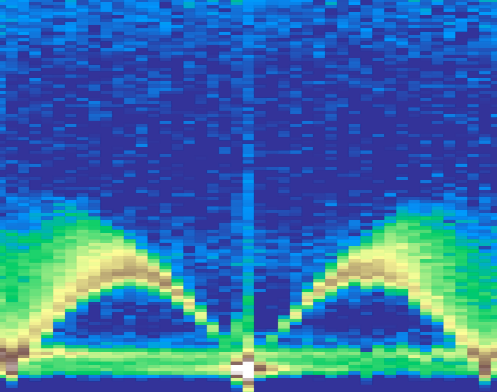
Fig 2: (a)-(c) RIXS spectra recorded as a function of the detuning energy ∆ω for different momentum transfers, as indicated
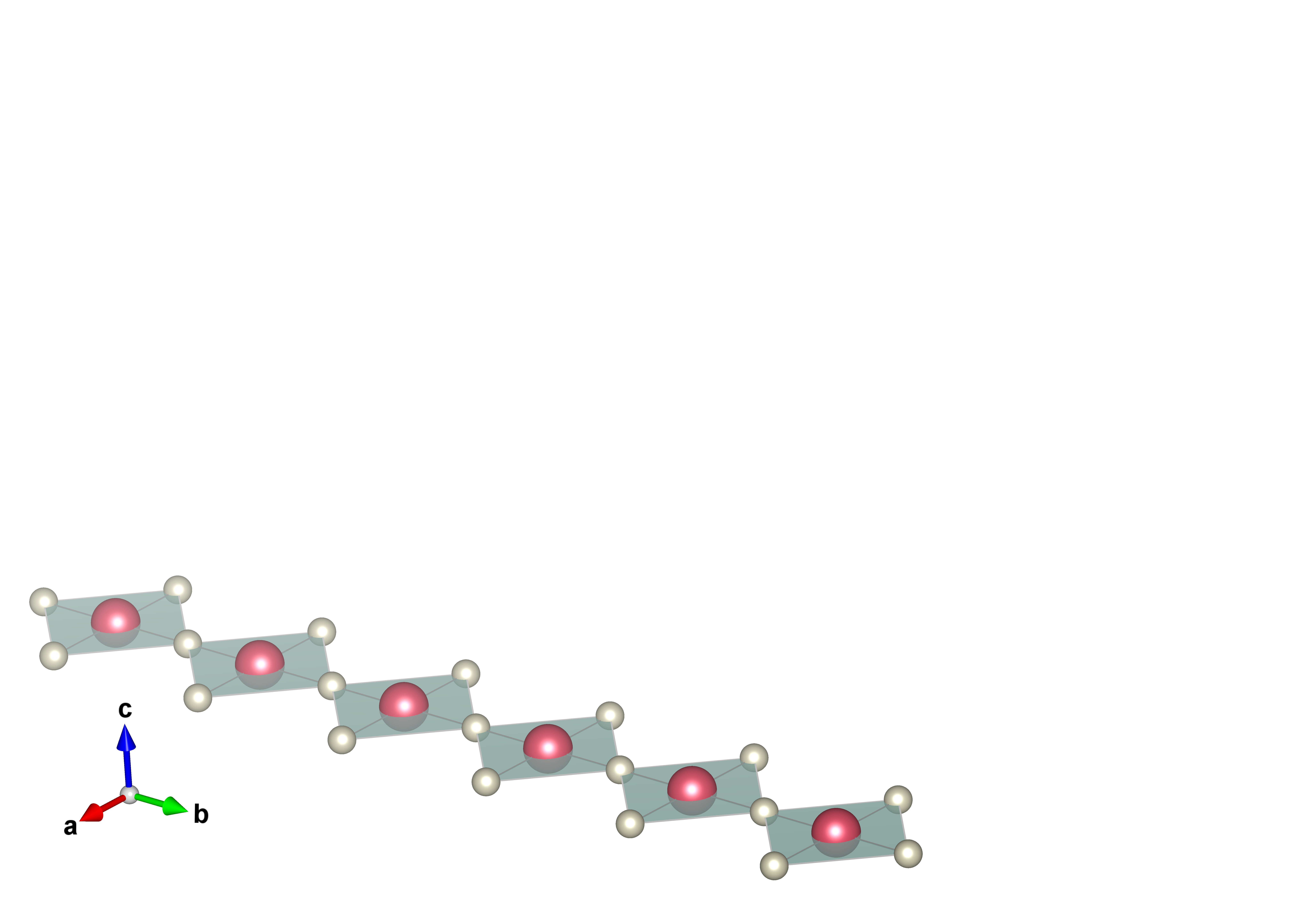
Fig 3: shows how varying the incident energy selects
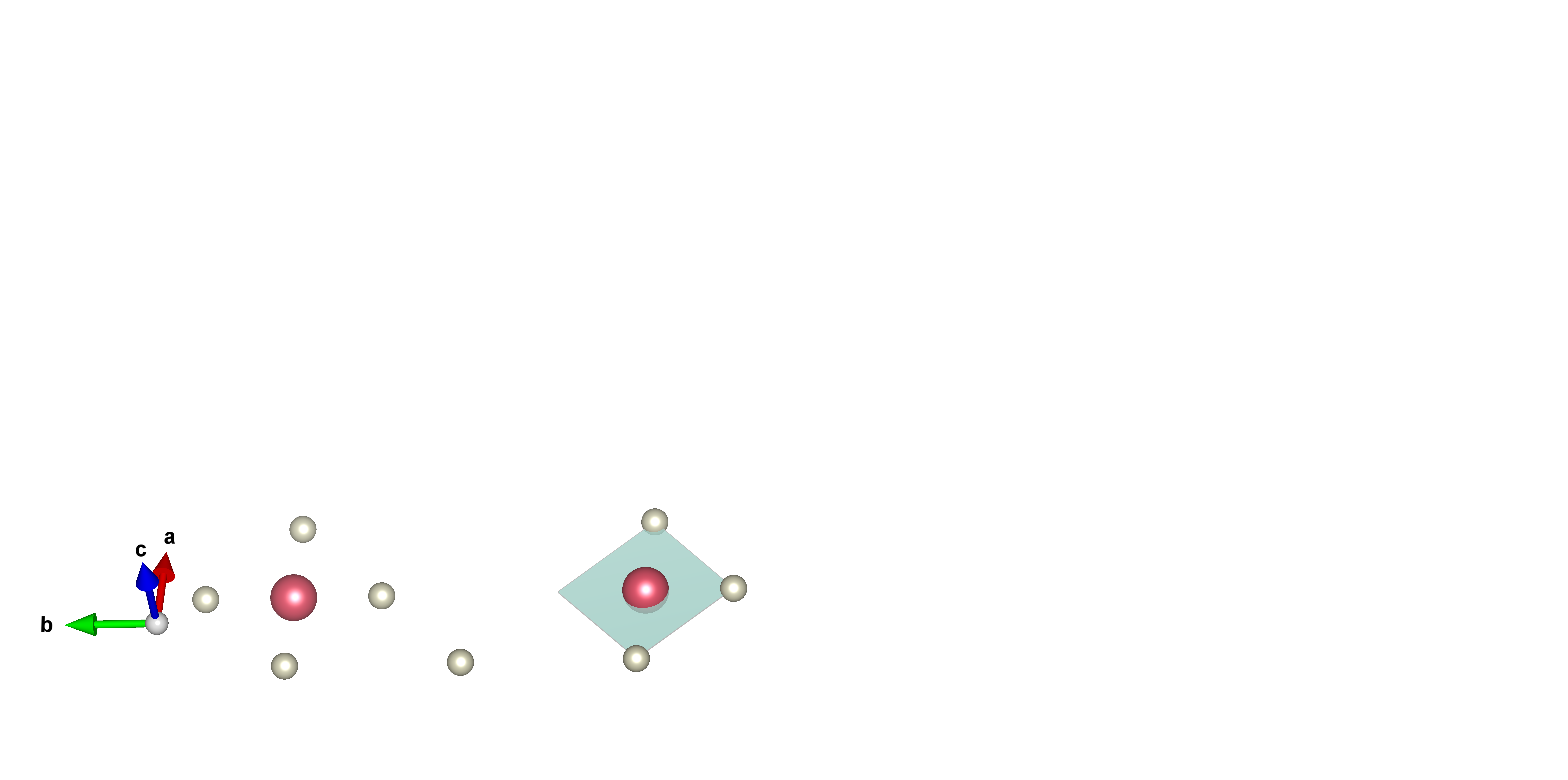
Fig 4 (page 3).
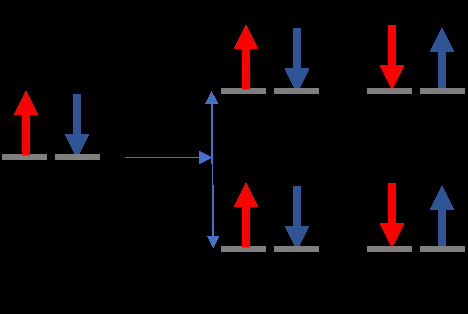
Fig 5: demonstrates that ∆th ≈0.19 eV (≈3
Limitations
- The study focuses on an idealized one-dimensional spin-1/2 chain material (Sr2CuO3), limiting direct generalization to higher-dimensional or less clean quantum magnets.
- Multi-spin correlations are extracted indirectly by residual spectral weight after subtracting two-spin DSF and phonons, which could contain small systematic errors or unidentified contributions.
- The exact diagonalization model uses finite cluster sizes (not explicitly stated) which may limit capturing long-range correlations and full continuum details.
- Core-hole lifetime parameter Γ/2 is essential but treated as a fixed input rather than independently measured, introducing some uncertainty in exact resonance linewidth scaling.
- The approach assumes the t-J model with spin-conserving and non-spin-conserving channels fully captures intermediate states; other excited-state effects or disorder are neglected.
- No direct time-resolved RIXS experiments were conducted; dynamical evolution of multi-spin correlations remains unexplored.
Open questions / follow-ons
- How does the detuning methodology and multi-spin correlation disentanglement extend to two- and three-dimensional quantum magnets with more complex interactions?
- Can incident-energy detuning be combined with polarization analysis or advanced time-resolved RIXS to selectively probe dynamical evolution of multi-spin correlations out of equilibrium?
- What are the implications of controlled intermediate-state selection on engineering quantum phases or manipulating fractionalized excitations in correlated materials?
- How robust is the multi-spin excitation disentanglement in the presence of disorder, temperature, or coupling to other degrees of freedom such as phonons or charge excitations?
Why it matters for bot defense
Although this work does not directly pertain to bot-defense or CAPTCHA technologies, the experimental and theoretical methodology demonstrates a sophisticated approach to disentangling nonlinear multi-particle correlations in complex quantum systems. Bot-defense engineers working on sophisticated anomaly detection could find analogies in probing higher-order interactions beyond pairwise correlations. Specifically, the principle of using a tunable probe parameter (here incident photon energy detuning) to isolate nonlinear multi-body signals from dominant linear responses might inspire novel approaches to isolate subtle multi-feature behavioral signatures in bot detection. Moreover, the characterization of distinct spectral line shapes (Lorentzian versus Gaussian) linked to underlying mechanisms could motivate analogous feature design for distinguishing benign user behavior from coordinated automated activity involving complex dependencies. Overall, while not directly applicable, the insights provide a framework for controlled disentanglement of higher-order interactions in complex data observed in security contexts.
Cite
@article{arxiv2606_16992,
  title={ Disentangling multi-spin dynamic correlations in the Heisenberg spin-$\frac{1}{2}$ chain },
  author={ V. K . Bhartiya and U. Kumar and T. Kim and S. Fan and S. Okamoto and M. Mitrano and M. P. M. Dean and J. Pelliciari and I. A. Zaliznyak and S. Johnston and V. Bisogni },
  journal={arXiv preprint arXiv:2606.16992},
  year={ 2026 },
  url={https://arxiv.org/abs/2606.16992}
}