
Tuning perpendicular magnetic anisotropy in ultra-low damping Li$_{0.5}$Al$_{x}$Fe$_{(2.5-x)}$O$_4$ thin films for efficient spin-orbit torque switching
Source: arXiv:2606.13573 · Published 2026-06-11 · By Daisy O'Mahoney, Sauviz P. Alaei, Anna Janni, Muzhda Mehrzad, Christoph Klewe, Alpha T. N'Diaye et al.
TL;DR
This work addresses the challenge of simultaneously achieving ultra-low magnetic damping, perpendicular magnetic anisotropy (PMA), and low spin-orbit torque (SOT) switching current densities in ultra-thin magnetic insulator films. Such materials are critical for advancing spintronic devices that use magnons to transmit information with minimal energy loss. The authors investigate ferrimagnetic spinel Li0.5AlxFe2.5-xO4 (LAFO) thin films grown epitaxially on MgGa2O4 substrates with Al substitution levels (x) from 0.5 to 1.0 to systematically tune magnetic properties. They demonstrate that PMA can be tuned via epitaxial strain controlled by Al composition, that ultra-low Gilbert damping (down to 2-3 × 10^-4) is maintained primarily due to an Fe3+-only magnetic sublattice, and that low critical SOT switching currents correlate with small but finite PMA.
An optimal composition, LAFO x=0.7 (Li0.5Al0.7Fe1.8O4), emerges which balances weak PMA, high saturation magnetization, minimal damping, and low SOT switching current densities (~8 × 10^6 A/cm^2). The Pt/LAFO interfaces exhibit nearly composition-independent and relatively high damping-like SOT efficiencies (~0.08). Overall, the study establishes LAFO thin films with tunable perpendicular anisotropy and ultra-low damping as a promising platform for low-power, energy-efficient spintronic and magnonic applications.
Key findings
- Gilbert damping parameters as low as 2-3 × 10^-4 achieved across LAFO films with varying Al (x=0.5-1.0), with a minimum at x=0.7.
- LAFO x=0.7 films show weak but stable PMA with small anisotropy fields (<70 mT) and coercive fields below 1 mT in all directions.
- Saturation magnetization decreases nearly linearly from ~200 kA/m at x=0.5 to ~80 kA/m at x=1.0 due to Al substitution.
- Tensile epitaxial strain increased from ~0.1% at x=0.5 to ~1.2% at x=1.0 on MgGa2O4 substrate, driving anisotropy transition from in-plane to perpendicular.
- Pt/LAFO bilayers exhibit nearly constant damping-like spin-orbit torque efficiencies θ_DL in range 0.073 to 0.094 across compositions accessible by ST-FMR.
- Critical SOT switching current densities as low as 8 × 10^6 A/cm^2 measured for LAFO x=0.7 with weak PMA, significantly lower than for higher PMA x=1.0.
- Element-specific XMCD confirms magnetism originates solely from Fe3+ ions, unaffected by Al substitution affecting Fe distribution.
- XRD and reciprocal space mapping show coherent strain and excellent crystallinity maintained across all compositions.
Threat model
n/a — This is a materials science and spintronic device physics study without explicit security adversary considerations or attack scenarios.
Methodology — deep read
The study focused on epitaxial Li0.5AlxFe2.5-xO4 (LAFO) thin films grown via pulsed laser deposition (PLD) with six nominal Al substitution levels (x=0.5 to 1.0) on single-crystal (001) MgGa2O4 (MGO) substrates. This allowed tuning of in-plane tensile strain by varying the lattice constant via Al content. Films were ~13 nm thick for structural and magnetic characterization and 8 nm thick for spin-orbit torque (SOT) measurements. Pt overlayers (2.5-4 nm) were sputtered on LAFO to form bilayers for electrical characterization.
Structural characterization involved high-resolution X-ray diffraction (XRD) and reciprocal space mapping (RSM) to confirm lattice parameters, strain state, and film crystallinity. Static magnetic properties, including saturation magnetization and anisotropy fields, were measured at room temperature via SQUID magnetometry along multiple crystallographic axes. Element-specific chemical and magnetic states were determined using X-ray absorption spectroscopy (XAS) and X-ray magnetic circular dichroism (XMCD) at the Fe L2,3 edges to confirm Fe3+ valence and cation site distribution.
Dynamic magnetic properties, including Gilbert damping, were extracted using broadband ferromagnetic resonance (FMR) spectroscopy in a coplanar waveguide geometry over 5-30 GHz frequencies. Linewidth vs frequency allowed fitting to extract intrinsic damping α and inhomogeneous broadening ΔH0 via standard models. Effective magnetization and g-factor were extracted by fitting resonance fields to the Kittel equation.
Spin-torque ferromagnetic resonance (ST-FMR) measurements on Pt/LAFO bilayers quantified damping-like spin-orbit torque efficiency θ_DL by observing shifts in linewidth under applied dc current. Devices consisted of lithographically defined Hall bars (10-20 µm width). DC current-induced SOT switching was performed by applying 5 ms pulses while measuring anomalous Hall resistance hysteresis loops under small in-plane magnetic helper fields. Switching current densities were extracted as a function of helper field magnitude.
The threat model implicitly assumes the material will be implemented in spintronic devices requiring low energy switching and coherent magnon transport. No hostile adversary simulation was performed. Evaluation was thorough with multiple experimental probes linking microscopic magnetic origin to macroscopic switching behavior. The data spans multiple complementary methods on the same samples to understand the effects of epitaxial strain and Al substitution on key device-relevant parameters.
Although no code or computational methods were reported, the experimental protocol and measurement techniques are well described, enabling reproducibility by groups with advanced growth and characterization facilities. The precise epitaxial growth parameters, target stoichiometry, and substrate preparation were provided. Several figures illustrate typical raw data and fits for XRD, XMCD, FMR, ST-FMR, and switching experiments, confirming data quality and consistent trends.
Technical innovations
- Demonstration of continuous tuning of perpendicular magnetic anisotropy in ultra-low damping LAFO thin films via chemical substitution-driven epitaxial strain.
- Establishment of an optimal composition (x=0.7) balancing weak PMA, ultra-low Gilbert damping (~3 × 10^-4), and low SOT switching current density (~8 × 10^6 A/cm^2).
- Verification that ultra-low damping is governed primarily by Fe3+ sublattice valence stability, minimally affected by Al-induced disorder.
- Observation that damping-like spin-orbit torque efficiencies are governed by Pt/LAFO interface quality and remain nearly constant across varying film magnetic properties.
Datasets
- LAFO thin films (x=0.5 to 1.0 Al substitution) — ~13 nm thick for structural/magnetic studies, 8 nm for SOT studies — grown on MgGa2O4 (001) substrates
- Pt/LAFO bilayers with 2.5-4 nm Pt on LAFO films for SOT switching and spin-torque ferromagnetic resonance
Baselines vs proposed
- Gilbert damping α: LAFO x=0.5 ~1.5 × 10^-4; LAFO x=0.7 ~3 × 10^-4; LAFO x=1.0 higher due to disorder; prior spinel ferrites have higher α (no exact number given).
- Critical switching current density Jc: LAFO x=0.7 ~8 × 10^6 A/cm^2; LAFO x=1.0 ~>10^7 A/cm^2; comparable YIG has Jc ~10^6-10^7 A/cm^2.
- Damping-like SOT efficiency θ_DL: constant ~0.07-0.09 across LAFO compositions measurable by ST-FMR.
Figures from the paper
Figures are reproduced from the source paper for academic discussion. Original copyright: the paper authors. See arXiv:2606.13573.
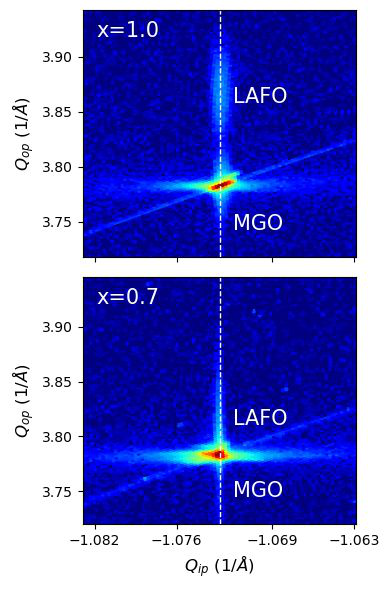
Fig 1: Structural characterization of LAFO. (a) XRD spec-
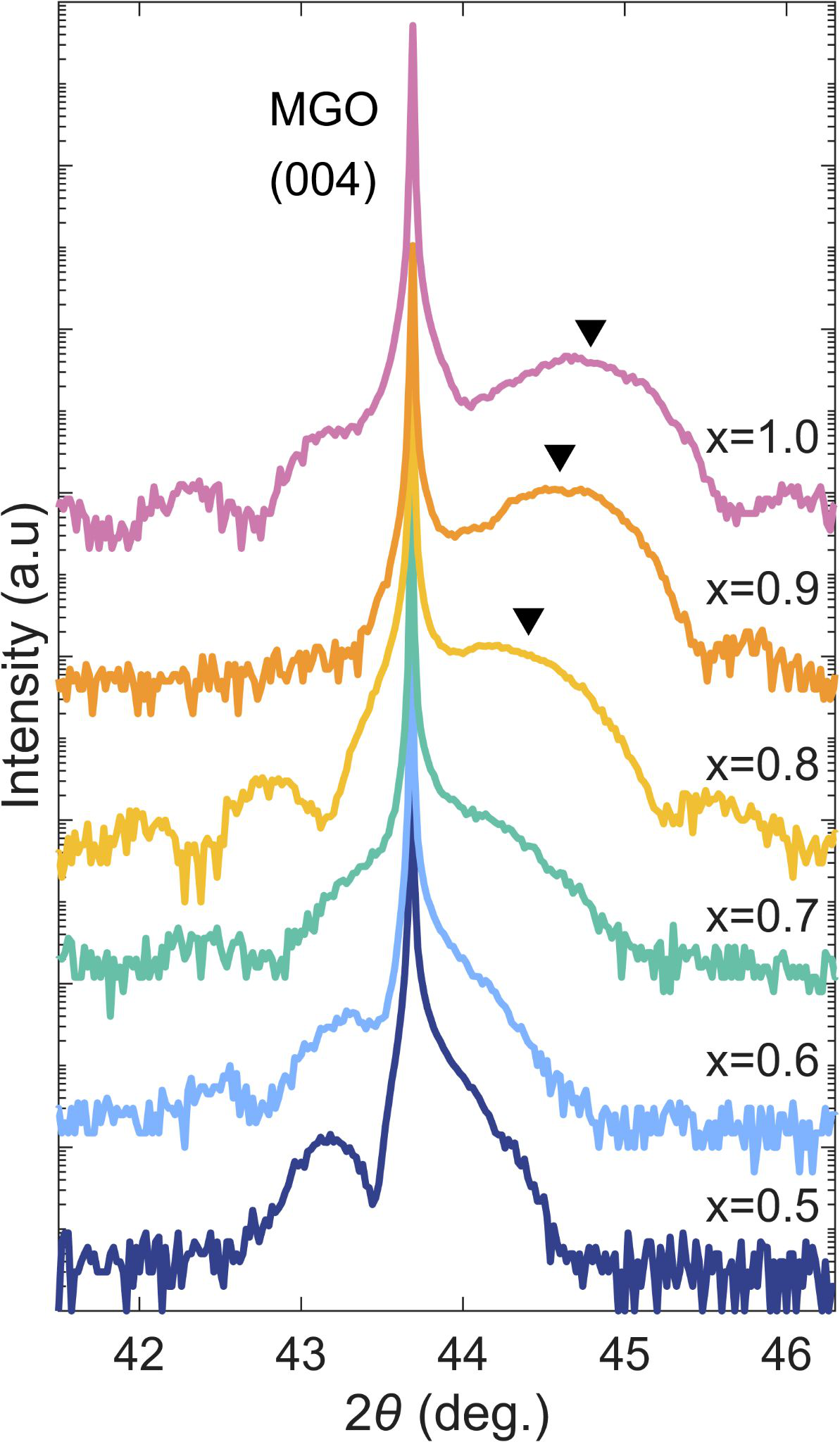
Fig 2: Static magnetic measurements at room temperature
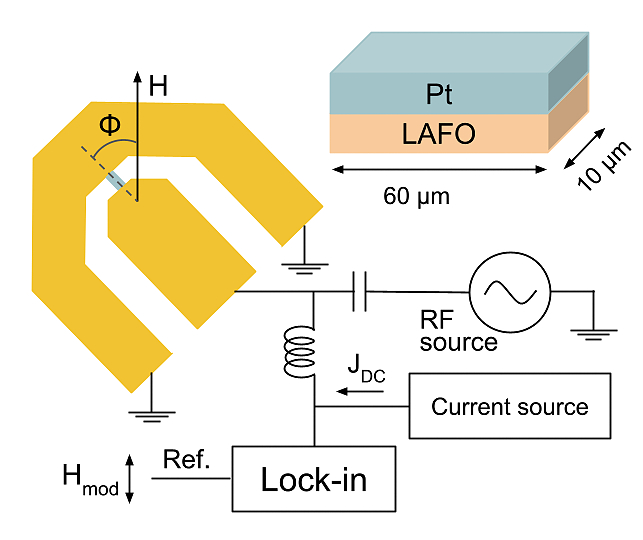
Fig 5: Spin-torque ferromagnetic resonance (a) Pt/LAFO
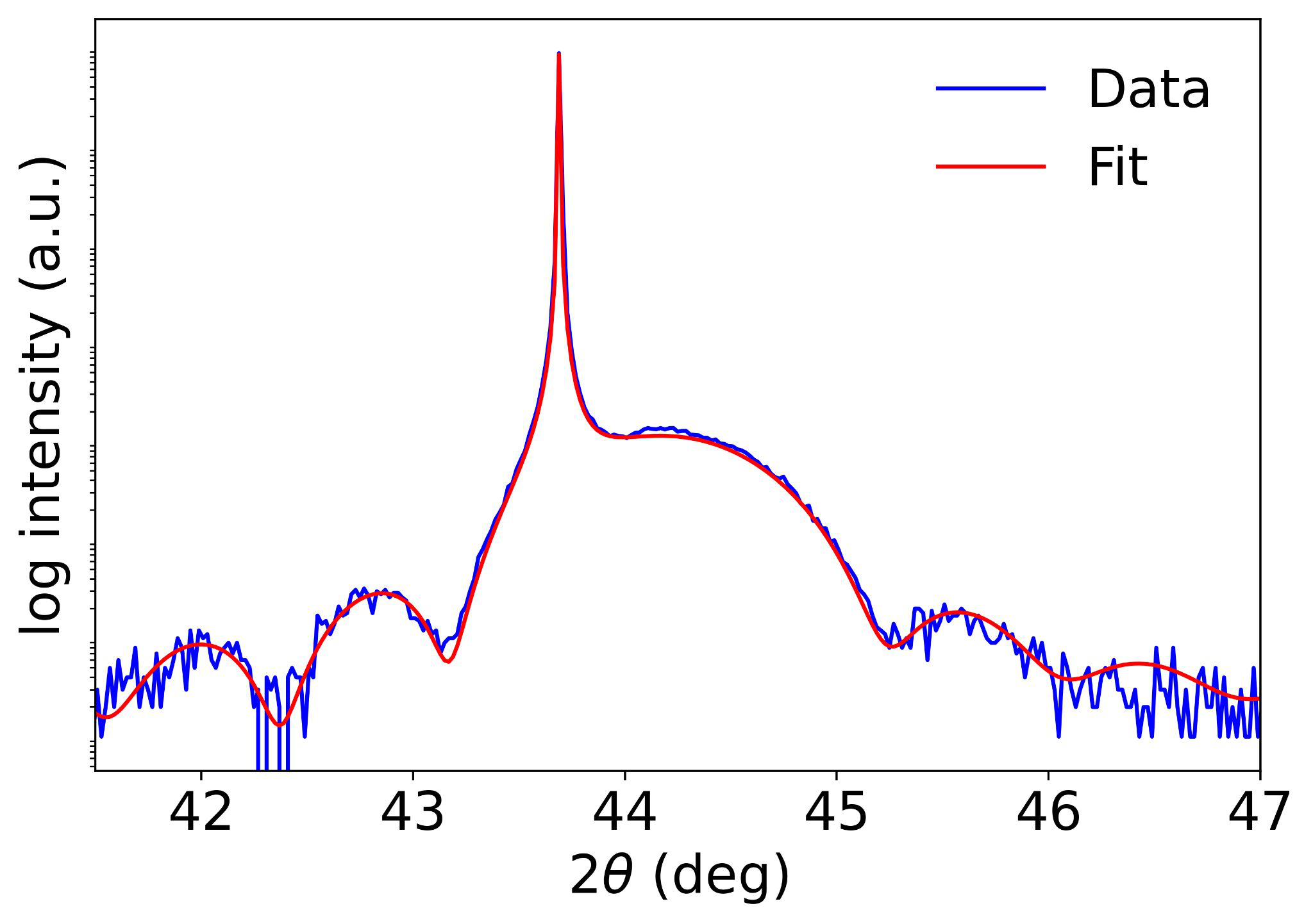
Fig 4 (page 16).
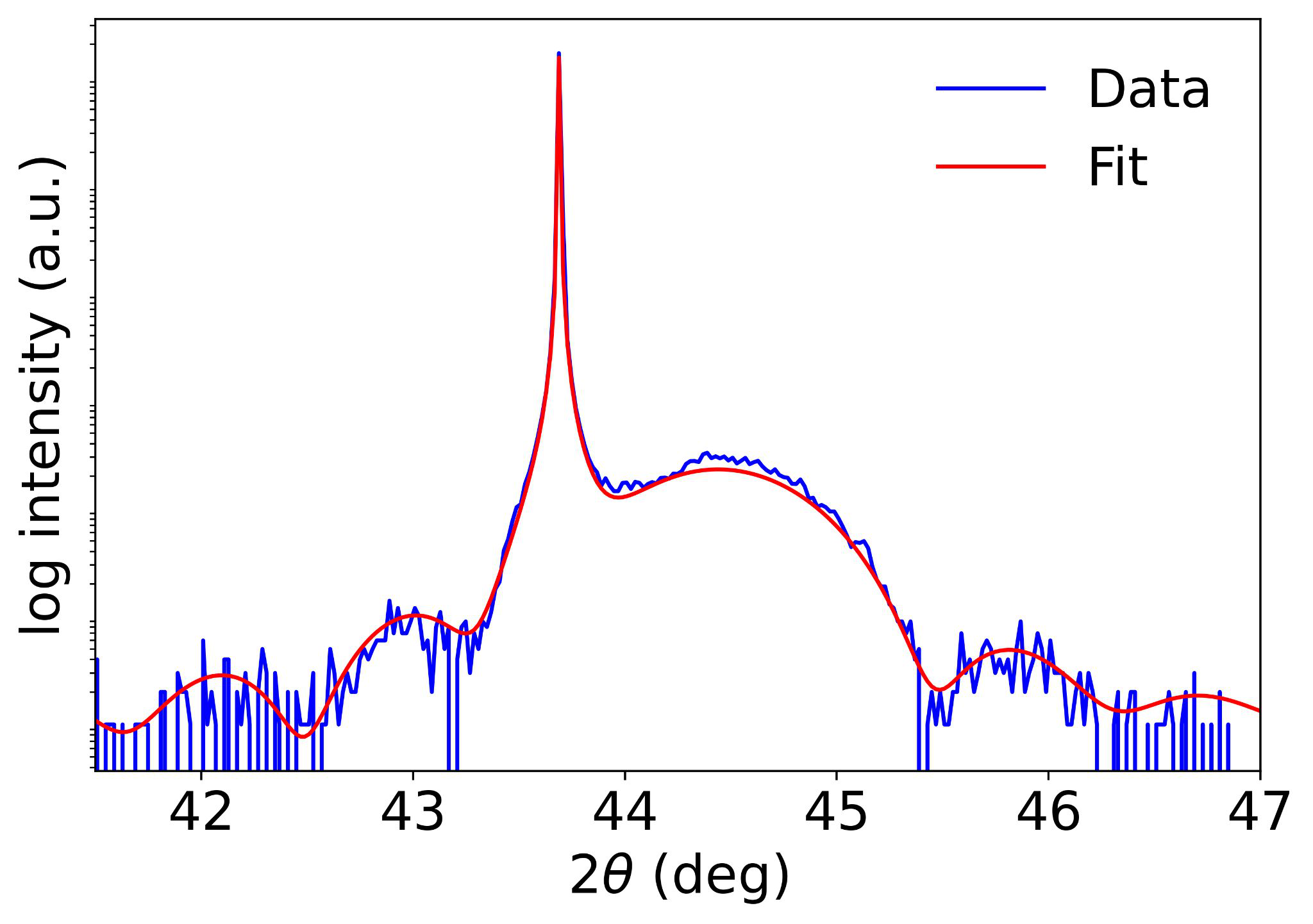
Fig 5 (page 16).
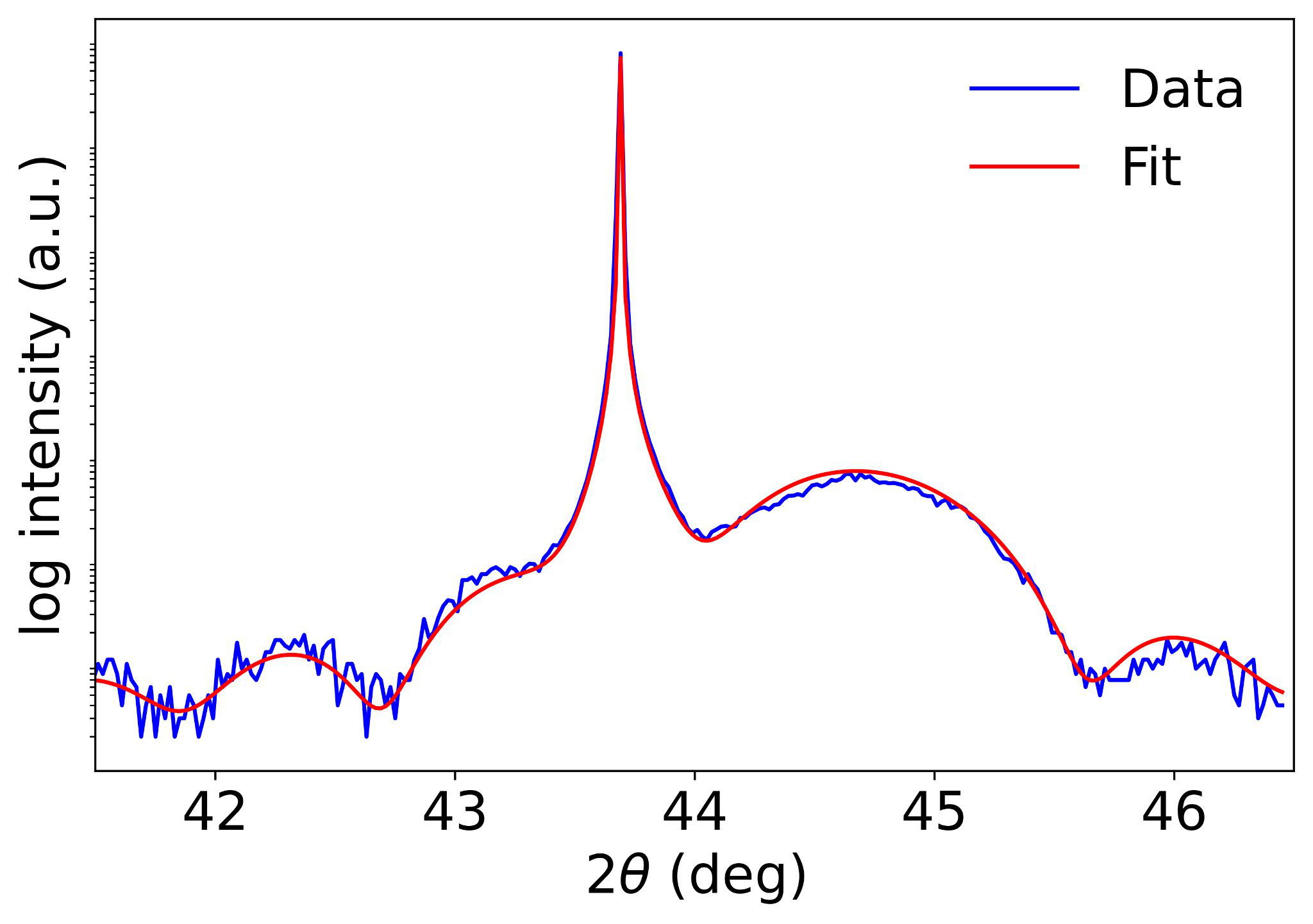
Fig 6 (page 16).
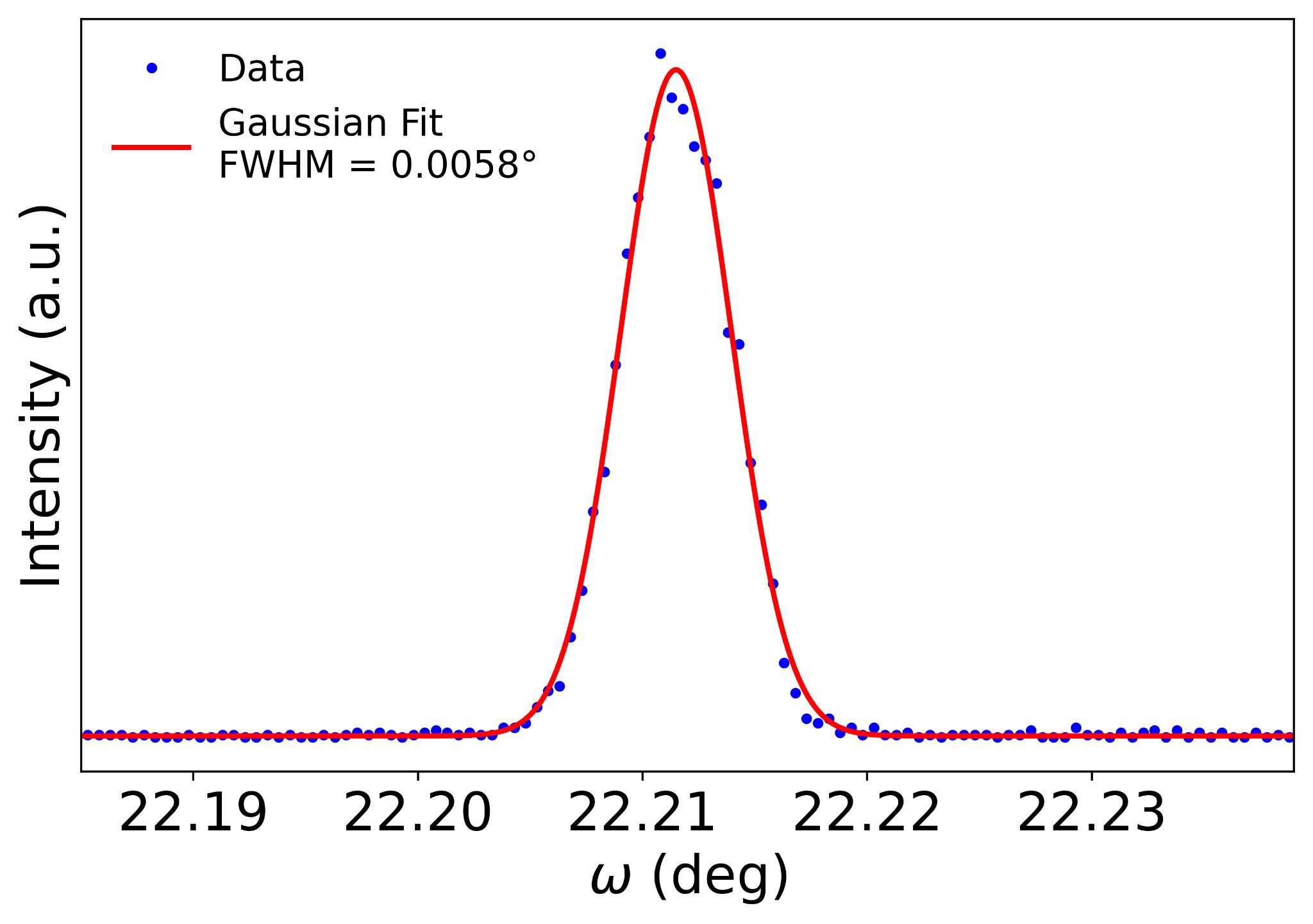
Fig 7 (page 16).
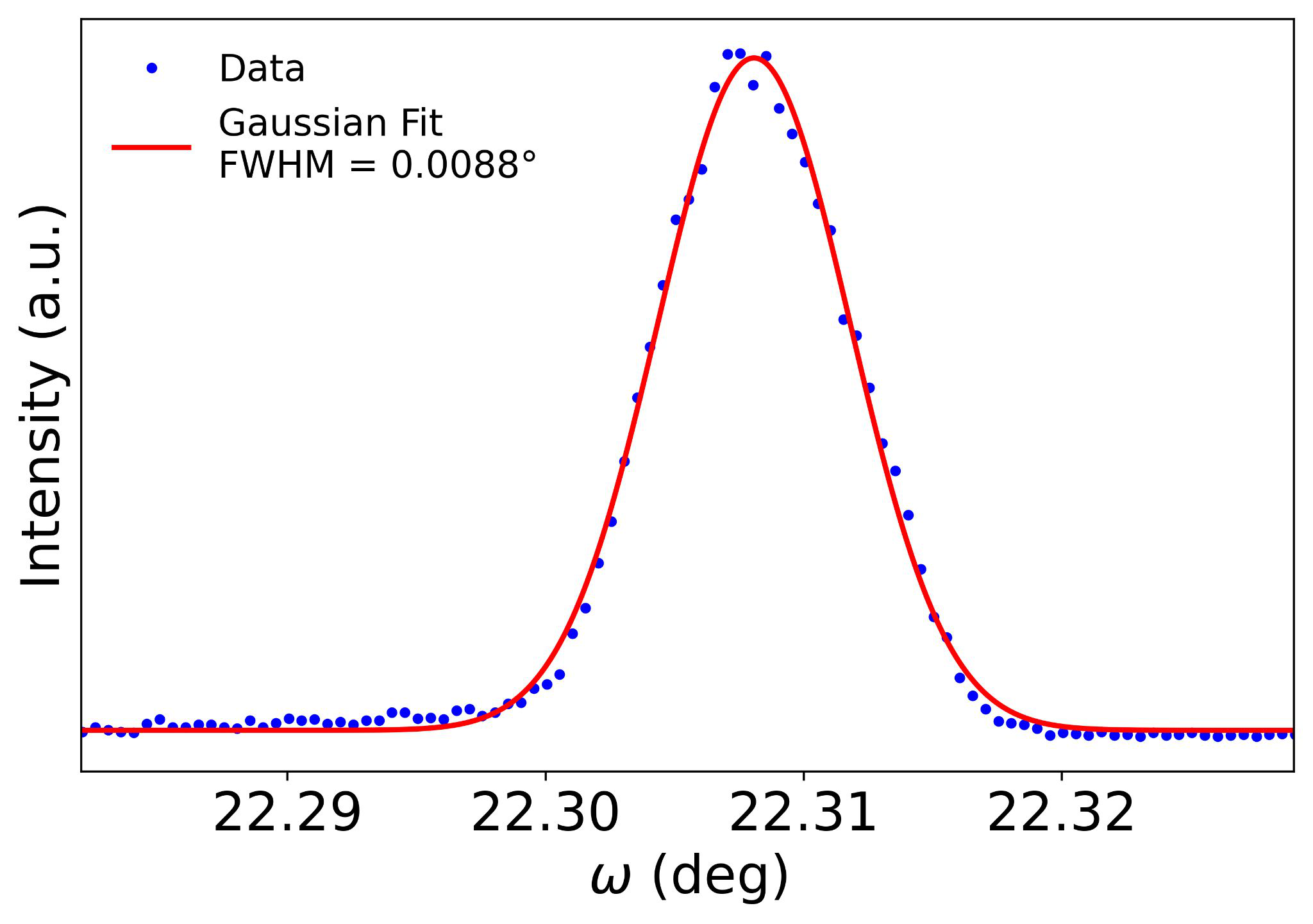
Fig 8 (page 16).
Limitations
- ST-FMR measurements difficult in films with strong PMA due to broad resonances; data available only for subset of compositions (x=0.5 to 0.9).
- No direct investigation of device endurance, thermal stability, or long-term reliability under switching conditions.
- No explicit measurement of spin diffusion lengths or magnon transport lengths in these films reported here.
- Influence of possible defects, vacancies, or interfacial roughness beyond crystalline quality metrics not deeply explored.
- No adversarial or environmental robustness testing relevant to practical device integration.
Open questions / follow-ons
- Can this weak but stable PMA regime be maintained or enhanced in thinner films or patterned nanostructures relevant for device scaling?
- What are the magnon spin diffusion lengths and propagation characteristics for LAFO compositions with tuned PMA and ultra-low damping?
- Can the helper magnetic field required for SOT switching be eliminated via exchange bias layers or device geometry engineering?
- How do device endurance, switching speed, and power consumption compare for LAFO-based devices in integrated circuits?
Why it matters for bot defense
While this study is focused on spintronic materials rather than traditional bot-defense, the demonstrated ability to tune magnetic anisotropy and achieve ultra-low damping with low switching currents in epitaxial thin films could inspire novel physical unclonable functions or hardware security primitives using spin states or magnonic excitations. The ultra-low energy switching and coherent spin-wave manipulation offer a pathway toward low-power, physically secure devices that resist cloning or tampering. For CAPTCHA or bot-defense engineers interested in hardware-backed authentication, understanding the interplay of magnetic anisotropy, damping, and spin-orbit torque efficiency in optimized insulator films could guide development of novel spintronic sensors or entropy sources. However, direct application to CAPTCHA architectures requires further exploration of device integration and readout mechanisms.
Cite
@article{arxiv2606_13573,
  title={ Tuning perpendicular magnetic anisotropy in ultra-low damping Li$_{0.5}$Al$_{x}$Fe$_{(2.5-x)}$O$_4$ thin films for efficient spin-orbit torque switching },
  author={ Daisy O'Mahoney and Sauviz P. Alaei and Anna Janni and Muzhda Mehrzad and Christoph Klewe and Alpha T. N'Diaye and Zbigniew Galazka and Yuri Suzuki },
  journal={arXiv preprint arXiv:2606.13573},
  year={ 2026 },
  url={https://arxiv.org/abs/2606.13573}
}