
Spin-Polarized Oxygen Evolution in Chiral-Molecule-Modified Plasmonic Photoanodes
Source: arXiv:2606.13660 · Published 2026-06-11 · By Priscila Vensaus, Milad Sabzehparvar, Fatemeh Kiani, Germán García Martínez, Giulia Tagliabue
TL;DR
This paper addresses the longstanding challenge in photoelectrochemical oxygen evolution reaction (OER), which is hindered not only by kinetic barriers but also by spin constraints linked to forming triplet oxygen molecules. The authors develop a hybrid photoanode architecture that integrates TiO2 as a stable semiconductor, achiral Au nanoparticles as visible-light plasmonic absorbers generating energetic hot carriers, a NiFe-based oxygen-evolution catalyst, and a chiral molecular interface formed by cysteine. Using wavelength-resolved photo-scanning electrochemical microscopy (photo-SECM), they directly detect local oxygen evolution under operando illumination, correlating O2 production with photocurrent. Functionalization with homochiral L-cysteine enhances both photocurrent and local O2 evolution significantly compared to racemic DL-cysteine controls, particularly near the Au plasmon resonance wavelength, with up to 130% photocurrent increase under visible excitation. These results provide compelling evidence that the chiral molecular layer modulates plasmonic hot-carrier transfer through chirality-induced spin selectivity (CISS), enabling spin-polarized photoelectrochemical water oxidation in an otherwise achiral plasmonic system. This work establishes a new platform coupling plasmonic hot-carrier generation to spin-dependent catalytic oxygen evolution via molecular chirality.
Key findings
- TiO2/Au/NiFe photoanode exhibits photocurrent density of 19 µA·cm⁻² at 1.23 V vs RHE under AM1.5G, exceeding TiO2/NiFe (13 µA·cm⁻²) and bare TiO2 (10 µA·cm⁻²).
- Introduction of Au nanoparticles shifts light absorption from UV to visible with plasmonic LSPR absorption centered at 574 nm, red-shifted to 602 nm after NiFe deposition.
- Photo-SECM detects wavelength-dependent local O2 generation correlating with Au plasmon resonance peak; TiO2/Au/NiFe shows stabilized O2 evolution without laser-induced degradation seen in TiO2/Au alone.
- L-cysteine functionalization increases photocurrent by 8% under AM1.5G and by 130% under 550 nm long-pass filtered visible illumination compared to racemic DL-cysteine control.
- Local O2 detection current enhancement due to L-cysteine reaches a maximum difference of 1.3 pA at 590 nm wavelength, coinciding with plasmon resonance.
- DL-cysteine control exhibits slightly higher optical absorption than L-cysteine, ruling out absorption as cause of enhanced photocurrent.
- NiFe catalyst layer not only improves catalytic OER current but also stabilizes plasmonic electrode against laser-induced surface modifications.
- Photoanode generates measurable O2 even at open circuit under localized illumination, demonstrating plasmonic hot-hole driven oxidation without external bias.
Methodology — deep read
Threat Model & Assumptions: The study assumes photogenerated charge carriers in a photoanode under various illumination wavelengths, focusing on spin constraints affecting OER catalysis. No explicit adversarial threat model as this is a materials catalysis study. The key scientific assumption is that molecular chirality can induce spin-polarization of plasmonic hot-carriers affecting OER pathways.
Data: The experimental data comes from fabricated TiO2-based photoanodes functionalized stepwise with Au nanoparticles (∼9 ± 3 nm diameter) via sputtering and annealing, cysteine molecular layers (L- or DL- forms), and ultrathin NiFe catalyst depositions (0.5 nm nominal). Photoelectrochemical data includes chronoamperometry, linear sweep voltammetry (LSV) under AM1.5G and filtered illumination, and wavelength-resolved photo-scanning electrochemical microscopy (photo-SECM) in 0.1 M KOH electrolyte. Measurements were spatially localized with a focused laser beam and an ultramicroelectrode (Au UME) positioned ~6 μm above the electrode surface to detect oxygen evolution electrochemically in operando.
Architecture/Algorithm: The system is a hierarchical photoanode architecture: transparent ITO/fused silica substrate / 40 nm TiO2 thin film / Au nanoparticle plasmonic sensitizers / chiral cysteine molecular monolayer / ultrathin NiFe catalyst layer. Optical measurements confirm LSPR absorption of Au NPs shifts upon NiFe and cysteine functionalization. Photo-SECM detection setup uses a biased Au ultramicroelectrode to detect O2 generated locally under controlled light excitation wavelengths.
Training Regime: N/A for this experimental materials paper.
Evaluation Protocol: Photocurrent was scanned via LSV at a scan rate of 50 mV·s−1, chopped-light chronoamperometry at 1.23 V vs RHE, and photo-SECM at various excitation wavelengths from 470 to 750 nm were recorded. Substrate photocurrent (Δisub = isub,light − isub,dark) and tip O2 reduction current (Δitip = itip,light − itip,dark) were correlated. Multiple on/off illumination cycles were averaged for signal stability. Controls include bare TiO2, TiO2/Au, TiO2/NiFe, TiO2/Au/NiFe, TiO2/Au functionalized with L-cysteine versus DL-cysteine racemic mixture. Optical absorption and SEM imaging supported structural characterization.
Reproducibility: Details of fabrication and measurement protocols are given with supplementary information cited. The datasets and code are not indicated as publicly released. Materials and methods appear reproducible with standard photoelectrochemical instrumentation. No mention of frozen weights or open source code.
Concrete End-to-End Example: Under 550 nm long-pass filtered light matching the Au LSPR, TiO2/Au/L-cys/NiFe electrodes show a 130% enhanced photocurrent compared to racemic control, with enhanced local O2 detection by ∼1.3 pA measured by Au UME photo-SECM spaced 6 μm above the illuminated spot. This demonstrates spin-polarized hot-hole transfer at the chiral interface improves plasmon-assisted water oxidation efficiency. The control experiments with DL-cys exclude optical absorption differences as confounders.
Technical innovations
- Integration of achiral Au nanoparticles plasmonic sensitizers with chiral molecular cysteine layers and NiFe OER catalysts on TiO2 photoanodes to isolate molecular chirality effects on spin-polarized hot-carrier transfer.
- Use of wavelength-resolved photo-scanning electrochemical microscopy (photo-SECM) for operando local detection of O2 evolution spatially correlated with photocurrent and plasmon excitation wavelengths.
- Demonstration that chiral molecular functionalization (L-cysteine vs racemic DL) enhances OER photocurrent and O2 detection specifically under plasmonic visible-light excitation, evidencing CISS effect on plasmon-derived hot holes.
- Stabilization of plasmonic TiO2/Au photoanodes with ultrathin NiFe catalyst layers preventing laser-induced degradation during localized photoelectrochemical measurements.
Datasets
- Photoelectrochemical measurement dataset — sizes: multiple electrodes with variable architectures, measured photocurrent and local O2 currents across wavelengths from 470-750 nm — in-lab experimental data
Baselines vs proposed
- Bare TiO2 photoanode: photocurrent density = 10 µA·cm⁻² at 1.23 V vs RHE vs TiO2/Au/NiFe: 19 µA·cm⁻²
- TiO2/NiFe photoanode: photocurrent density = 13 µA·cm⁻² vs TiO2/Au/NiFe: 19 µA·cm⁻²
- TiO2/Au/L-cysteine/NiFe: photocurrent under AM1.5G = 14.2 µA·cm⁻² vs TiO2/Au/DL-cys/NiFe: 13.1 µA·cm⁻² (8% increase)
- TiO2/Au/L-cysteine/NiFe under 550 nm LP filter: photocurrent increased by 130% relative to DL-cysteine control
- Local O2 detection tip current difference Δitip between L-cys and DL-cys peaks at 590 nm with 1.3 pA increase
Figures from the paper
Figures are reproduced from the source paper for academic discussion. Original copyright: the paper authors. See arXiv:2606.13660.
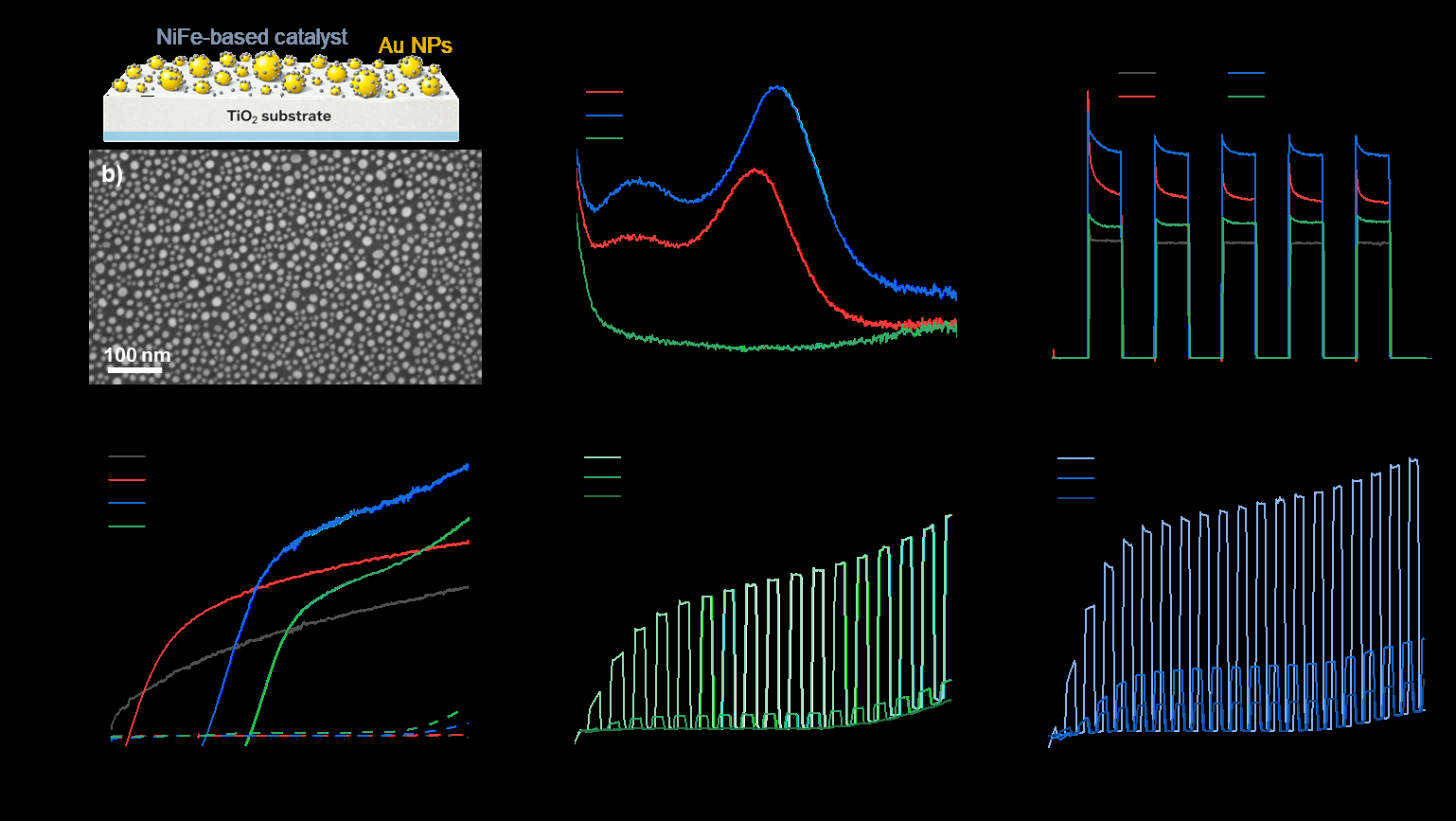
Fig 1: Photoelectrochemical characterization. a) Schematic representation of the
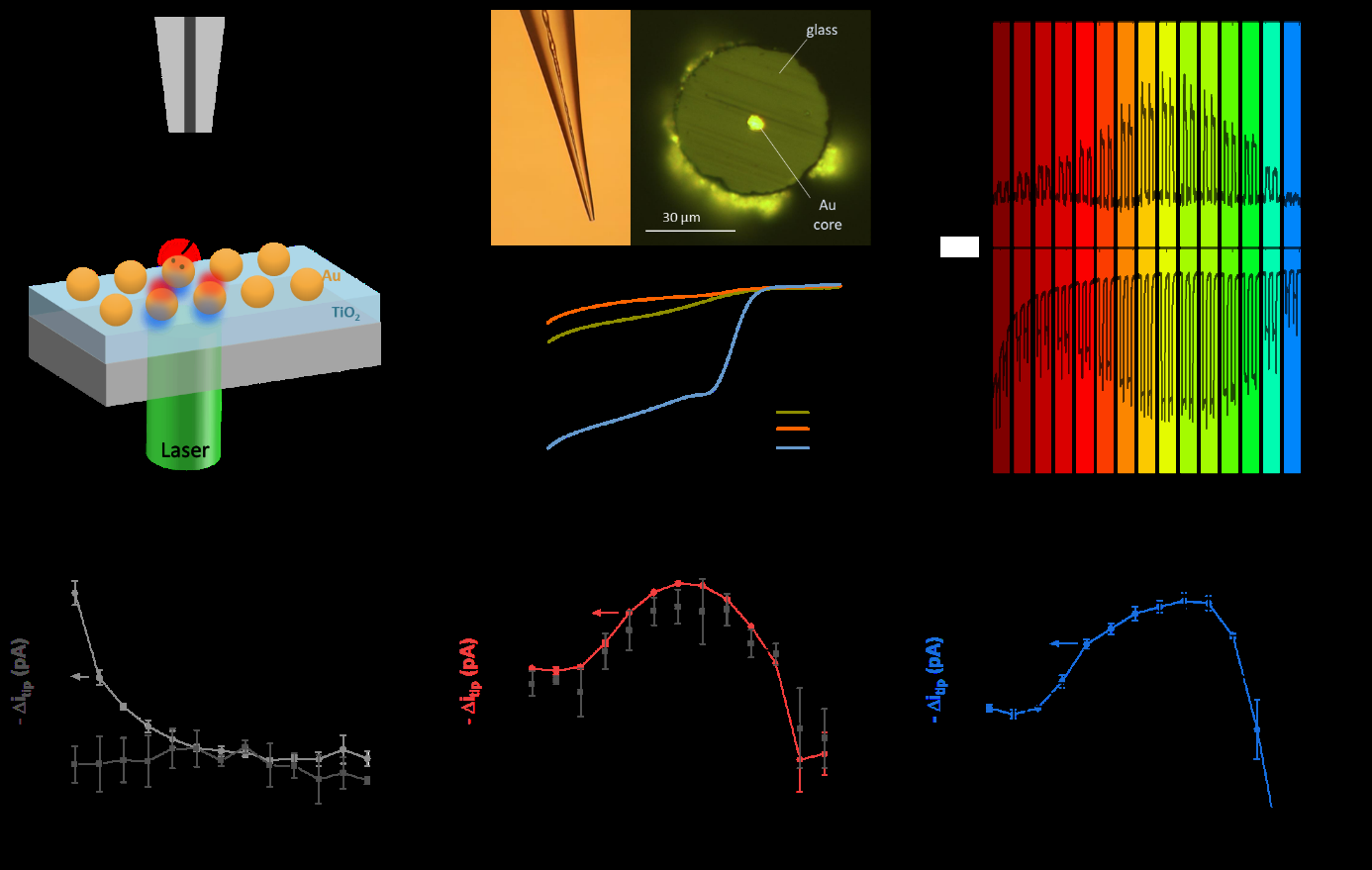
Fig 2: Local O₂ detection via photo-SECM. a) Schematic representation of the

Fig 3: a,b) PEC LSV with chopped AM1.5G illumination (a) and a 550 nm LP filter (b) of
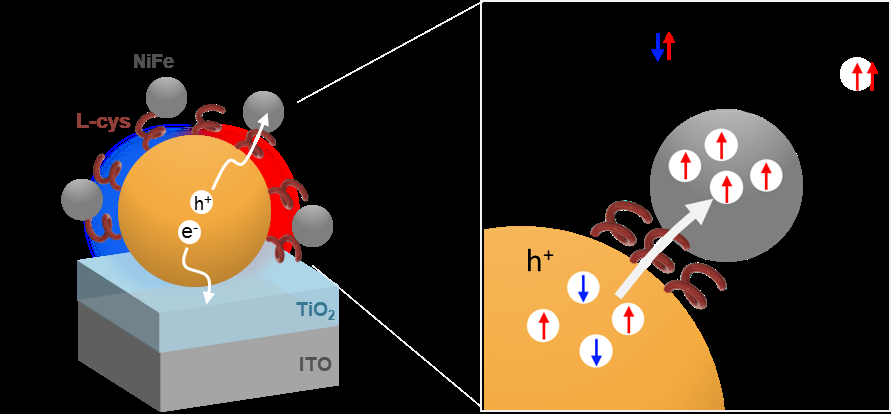
Fig 4: Proposed mechanism for spin-selective plasmon-assisted oxygen evolution at
Limitations
- Photocurrent densities and OER rates are modest compared to optimized TiO2 photoanodes, constrained by thin TiO2 layers (40 nm) for optical transparency and ultrathin NiFe catalyst for interface clarity.
- Molecular cysteine layers partially passivate interface, reducing overall photocurrent despite spin-selective enhancement.
- No direct spin polarization or spin dynamics measurements; CISS effect inferred indirectly via photocurrent and oxygen evolution differences between enantiomers.
- The catalytic active phase of NiFe under operation is assumed to be oxidized oxyhydroxide but not directly characterized in situ.
- Stability and durability tests beyond localized photo-SECM measurements and laser-induced damage mitigation are limited.
- No tests under varied electrolyte conditions or long-term device operation reported.
- No direct comparators with structurally chiral nanoparticles to fully isolate molecular versus nanoparticle chirality contributions.
Open questions / follow-ons
- What are the mechanistic pathways and excited-state spin dynamics underlying the spin-selective charge transfer mediated by chiral molecules at the plasmonic interface?
- How can molecular coverage, binding geometry, and catalyst accessibility be optimized to maximize spin-polarized hot-hole transfer without interfacial passivation?
- Can this chiral plasmonic platform be generalized to other semiconductor/catalyst systems or scaled for practical solar fuel devices?
- What is the long-term stability and operational durability of such chiral-functionalized plasmonic photoanodes under realistic operating conditions?
Why it matters for bot defense
While this paper originates from materials photoelectrochemistry, its findings on chiral molecular interfaces inducing spin-selective charge transfer via the CISS effect have broader implications for controlling electron spin in nanoscale charge transport processes. Bot-defense engineers focusing on CAPTCHA and bot detection could conceptualize analogous spin-filtering or chirality-based molecular approaches for signal modulation or challenge-response mechanisms that exploit subtle physical properties beyond charge alone. The use of operando localized chemical product detection (here via photo-SECM monitoring of evolved O2 near specific excitation wavelengths) exemplifies high-resolution correlation of stimulus and response, an approach potentially adaptable for advanced behavioral biometrics or anti-bot verification signals in transparent or light-based detection systems. More practically, the concept that molecular-scale chirality can decisively influence charge transfer pathways opens intriguing avenues for designing novel sensors or security primitives that leverage spin-selective or chiral electronic effects as a defense layer, though such applications remain highly exploratory.
Cite
@article{arxiv2606_13660,
  title={ Spin-Polarized Oxygen Evolution in Chiral-Molecule-Modified Plasmonic Photoanodes },
  author={ Priscila Vensaus and Milad Sabzehparvar and Fatemeh Kiani and Germán García Martínez and Giulia Tagliabue },
  journal={arXiv preprint arXiv:2606.13660},
  year={ 2026 },
  url={https://arxiv.org/abs/2606.13660}
}