
Semi-Device-Independent Certification for Nonlocality without Entanglement
Source: arXiv:2606.13667 · Published 2026-06-11 · By Hanwool Lee, Joonwoo Bae
TL;DR
This paper addresses the problem of certifying nonlocality without entanglement (NLWE) in practical quantum measurement scenarios where devices may be untrusted and suffer from imperfections such as noise and detection inefficiencies. NLWE is a subtle quantum phenomenon where global (entangled) measurements outperform separable (local) measurements on ensembles of separable quantum states. Prior demonstrations of NLWE often assume perfect measurement conditions or rely on minimum-error or unambiguous state discrimination strategies, which are difficult to realize in noisy settings. The authors propose a generalized framework based on maximum-confidence measurements (MCMs), which unify minimum-error and unambiguous discrimination and depend only on detected events rather than requiring zero inconclusive or error probabilities.
Using this framework, they analytically and numerically demonstrate that global measurements yield higher confidence in identifying antiparallel two-qubit state ensembles than separable measurements, thereby exhibiting NLWE in a fine-grained state discrimination context. Importantly, they show how this confidence gap can be certified semi-device-independently (sDI) from measured outcome rates in experiments, even when detection efficiencies are below unity. They further establish conditions on outcome rates and noise levels under which NLWE can be reliably certified, and extend their certification approach to inconclusive measurement outcomes. Finally, the proposed framework is proven robust to realistic noise in quantum state preparations, paving the way for near-term experimental validations and applications of NLWE with imperfect quantum technology.
Key findings
- Global measurements achieve maximum confidence Cx,max = 1 for discriminating antiparallel state ensemble, whereas separable (SEP) measurements achieve only 3/4 (Eq. 6, Section III).
- Certifiable confidence ˆCx based on experimentally observed outcome rates ηx can be used to semi-device-independently certify NLWE if it violates the SEP upper bound ˆC(S)x,max = 3/4 (Eq. 11, Fig. 2).
- NLWE certification is possible only if detection outcome rate ηx < 1/3 for antiparallel states; above this threshold, SEP measurements can reproduce the confidence (Proposition 2).
- By exploiting inconclusive outcomes, the inconclusive rate η0 lower than the SEP bound η0,min = 1/3 certifies GLOBAL measurements and thus NLWE (Section VI, Eq. 17).
- The framework remains robust with white noise p applied locally to states; the confidence gap between GLOBAL and SEP persists for all 0 < p ≤ 1 (Eqs. 20, 21, Appendix B).
- The maximum confidence achievable by global noisy measurements decreases monotonically with noise parameter p but stays above SEP’s confidence, allowing NLWE certification under noise (Fig. 2).
- Square-root (pretty-good) measurements yield both confidence Cx > 3/4 and zero inconclusive outcomes, thus certifying NLWE from either conclusive or inconclusive events simultaneously.
- Parallel two-qubit states and their noisy variants do not exhibit a confidence gap between GLOBAL and SEP MCMs, so NLWE cannot be demonstrated with these ensembles (Appendix B).
Threat model
The adversary controls or introduces the measurement devices, which may be unknown, untrusted, noisy, and imperfect, including non-unit detection efficiency and inconclusive outcomes. The adversary cannot manipulate the trusted quantum state preparations or classical communication used to collect outcome statistics. The certification seeks to distinguish if the measurement device implements GLOBAL (entangled) measurements that exhibit NLWE, rather than SEP (local) measurements, given only observed measurement outcomes and trusted state knowledge. The adversary cannot falsify outcome statistics or fully mimic GLOBAL effects via SEP when outcome rates fall within prescribed ranges enabling certification.
Methodology — deep read
The authors first define the problem of quantum state discrimination in terms of maximum-confidence measurements (MCMs), which seek to maximize the conditional probability (confidence) Cx,max of correctly guessing the prepared state given a particular measurement outcome x. MCMs generalize both minimum-error and unambiguous discrimination strategies, allowing a continuous tradeoff controlled by measurement design. The key quantity is defined as Cx,max = max_{Mx≥0} qx tr[ρx Mx] / tr[ρ Mx], where qx is the prior and {Mx} are POVM elements searching over global or separable (SEP) measurements.
The threat model encompasses an adversary who produces unknown measurement devices that may be imperfect or untrusted, but measurement statistics (outcome rates) can be collected and trusted quantum states are known a priori for certification. The authors assume that local operations and classical communication (LOCC) implement SEP measurements; GLOBAL measurement operators are unconstrained entangled measurements.
For data, the main example uses an ensemble of four two-qubit antiparallel states S_⊥ = {|ϕ_x⟩⊗|ϕ_x^⟩}, chosen due to known NLWE behavior, with equal prior q_x = 1/4. The ensemble is extended with local white noise modeled by depolarizing channels parameterized by p ∈ (0,1], producing noisy mixed states for robustness analysis. Parallel states S_∥ = {|ϕ_x⟩⊗|ϕ_x⟩} serve as a negative control where no NLWE was previously known.
The key mathematical tool is formulating the MCM optimization problem as a semidefinite program (SDP) with constraints restricting POVMs to GLOBAL or SEP classes. The authors exploit optimality conditions from complementarity theory relating POVM elements and complementary states {σ_x} characterized by kernels defining the feasible measurement supports. They prove that a confidence gap (NLWE) exists if and only if the kernel of σ_x contains no product vector, which blocks SEP realizations.
For certification, they define certifiable confidence ˆC_x = q_x p_M|P(x|x)/η_x computed from observed outcome rates η_x and conditional probabilities p_M|P(x|x), and develop dual SDP to bound certifiable maximum confidence achievable by SEP and GLOBAL measurements given η_x. This establishes criteria and ranges of η_x where NLWE is certifiable in a semi-device-independent way.
The methodology is illustrated end-to-end as follows: Given ensemble S and outcome statistics {η_x}, solve SDP Eq. (9) to determine ˆC(S)x,max and ˆC(G)x,max. Compare these bounds with experimentally measured certifiable confidence ˆC_x. If ˆC_x lies strictly above ˆC(S)x,max but no more than ˆC(G)x,max, conclude that the measurement device is GLOBAL and that NLWE is certified. This procedure accounts for non-unit detection efficiencies and noise.
The paper also analyzes certification using inconclusive measurement outcomes, formulating a separate SDP that minimizes the inconclusive rate achievable by SEP. If experimentally observed inconclusive rate is lower than this SEP minimum, the measurement is GLOBAL, yielding an alternative NLWE certification route.
Robustness under noise is evaluated by applying local depolarizing noise to the prepared states and analyzing the impact on maximum confidence and outcome rate ranges where NLWE certification succeeds. The authors confirm that noisy antiparallel ensembles sustain significantly distinguishable confidence gaps, while noisy parallel ensembles do not.
No explicit code release or datasets are mentioned; all analyses are theoretical and computational with analytic proofs, SDPs solved symbolically or numerically, and supplemented by plots (Fig. 2, 3) illustrating confidence gaps and certification boundaries for different parameter regimes. These results rely on prior quantum information frameworks for SDP formulations of quantum measurements and discrimination.
Technical innovations
- Introduction of maximum-confidence measurements (MCMs) as a unifying framework to generalize minimum-error and unambiguous discrimination strategies for NLWE analysis.
- Establishment of a semi-device-independent (sDI) certification framework for NLWE based solely on experimentally observable outcome rates and certifiable confidence, tolerant to detection inefficiencies.
- Analytical proof that NLWE can be certified from certifiable confidence gaps for antiparallel qubit ensembles but not for parallel ones, with explicit bounds on detection rates.
- Development of SDP-based optimization and dual formulations to compute certifiable maximum confidence under measurement outcome constraints separable vs global, enabling robust NLWE certification under noise.
- Extension of NLWE certification to include inconclusive measurement outcomes, allowing verification of global measurements even when confidence gaps are not apparent in conclusive outcomes.
Datasets
- Antiparallel qubit ensemble — 4 states — synthetic quantum states defined in paper
- Parallel qubit ensemble — 4 states — synthetic quantum states defined in paper
- Noisy antiparallel ensemble — 4 states with depolarizing noise — synthetic quantum states with noise parameter p (0,1]
Baselines vs proposed
- SEP measurement confidence on antiparallel states: C(S)x,max = 0.75 vs GLOBAL measurement confidence: C(G)x,max = 1
- Certifiable maximum confidence ˆC(S)x,max with SEP bounded by 0.75 vs measured certifiable confidence ˆCx can exceed 0.75 for ηx < 1/3 enabling NLWE certification
- Minimum inconclusive outcome rate for SEP η0,min = 1/3 vs achievable inconclusive rate η0 = 1/3 + 10γ for GLOBAL with noise demonstrating lower inconclusive rates than SEP
- For noisy antiparallel states with noise p, SEP confidence C(S)x,max = (3/4)(1+p)^2 / (3+p^2) vs GLOBAL confidence C(G)x,max from Eq. (20) > SEP for all p ∈ (0,1]
Figures from the paper
Figures are reproduced from the source paper for academic discussion. Original copyright: the paper authors. See arXiv:2606.13667.
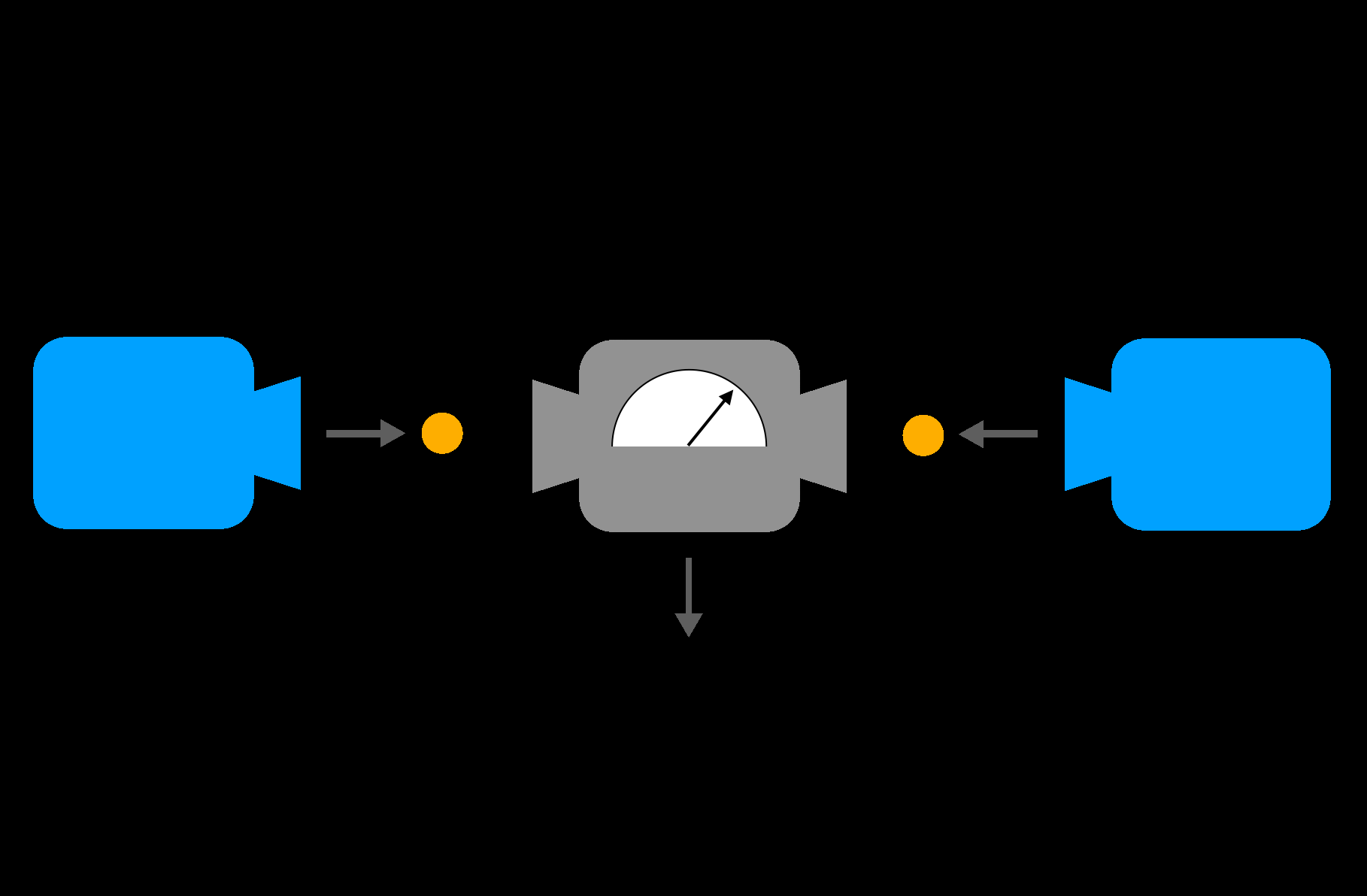
Fig 1: The scenario of comparing the capabilities of
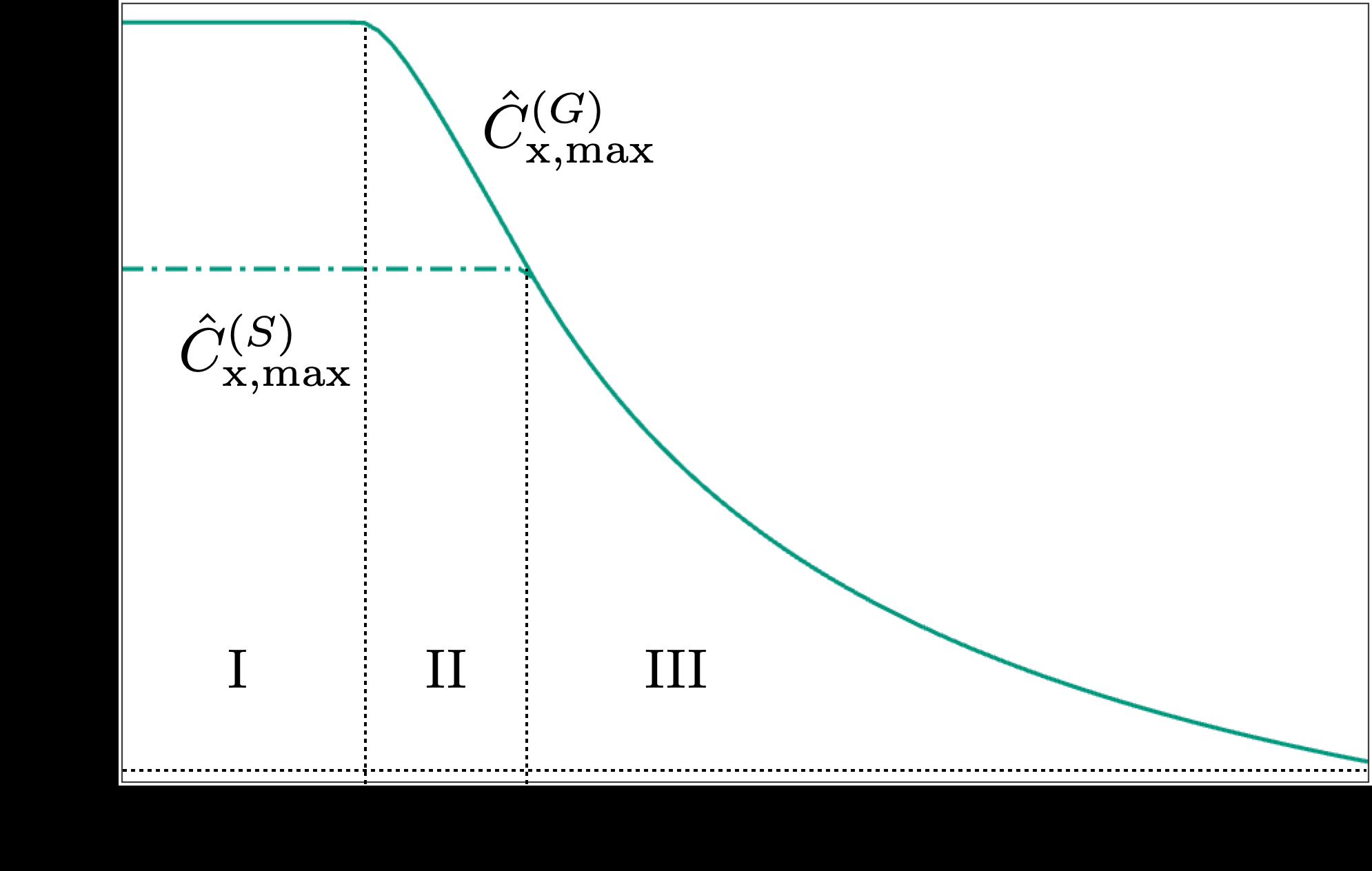
Fig 2: Given an outcome rate ηx, the certifiable MC
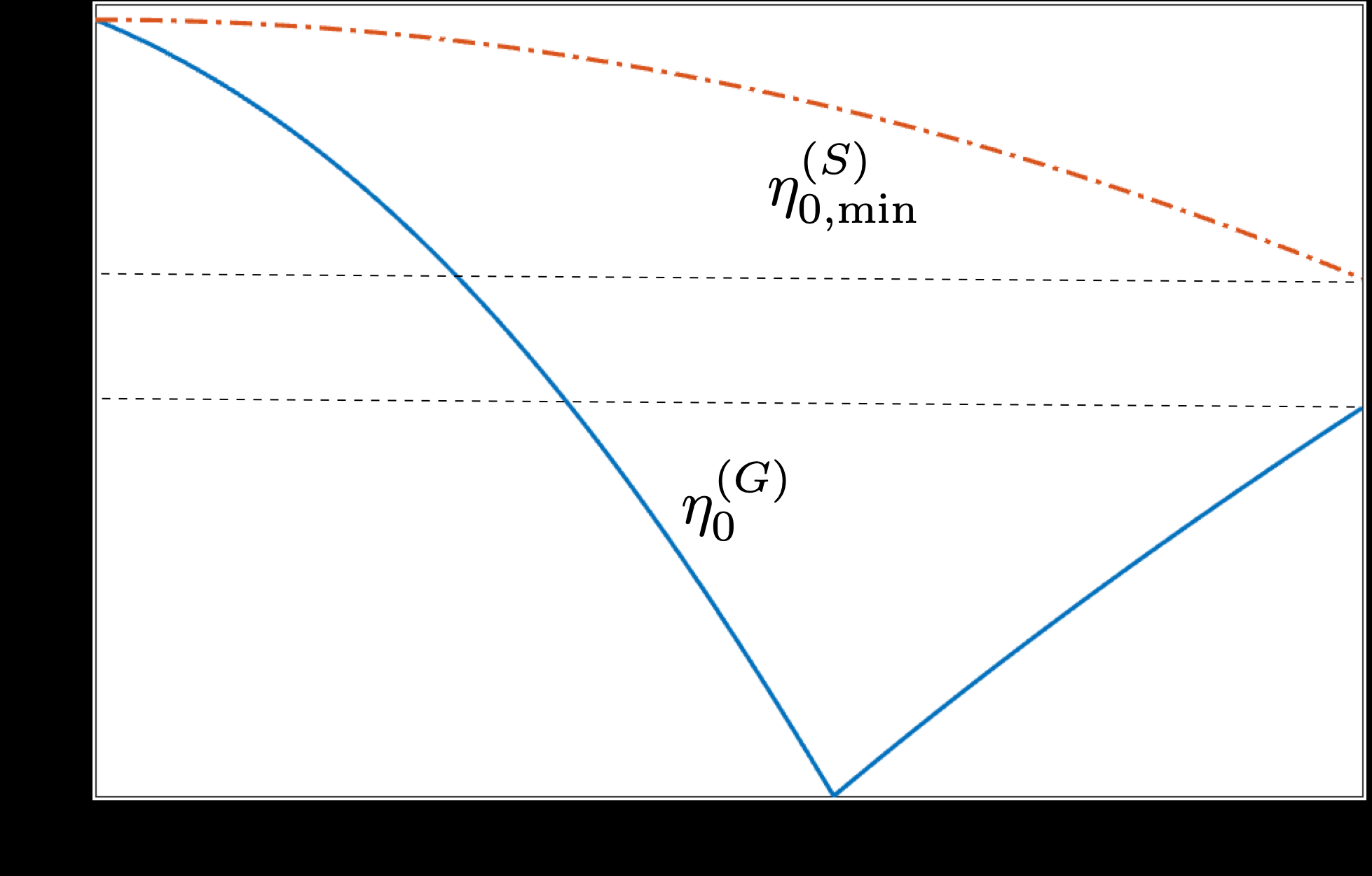
Fig 3: The rate of inconclusive outcomes η(G)
Limitations
- Certification requires outcome rates ηx to be below specific thresholds (e.g., 1/3) limiting applicability in high-efficiency scenarios.
- Framework demonstrated only analytically and numerically for specific two-qubit antiparallel ensembles; generalization to larger or higher-dimensional systems is not addressed.
- No experimental implementation or empirical validation is provided; results are theoretical and SDP-based computational proofs.
- Closed-form characterizations and SDP solutions may be difficult to scale or solve efficiently for more complex ensembles or measurement sets.
- Assumes trusted quantum state preparations; adversarial or imperfect state preparation not directly considered.
- Does not analyze explicit adversarial attacks or security guarantees beyond measurement certification in semi-device-independent setting.
Open questions / follow-ons
- Can the proposed semi-device-independent certification framework be extended to multipartite quantum systems or higher-dimensional state ensembles beyond two-qubit antiparallel states?
- How resilient is NLWE certification against imperfections in state preparation or adversarial quantum channels affecting the input states?
- What are efficient numerical or experimental protocols to implement and verify MCM-based NLWE certification in practical quantum hardware?
- Can NLWE certification be incorporated securely into quantum communication protocols to detect or mitigate adversarial quantum repeater attacks?
Why it matters for bot defense
For bot-defense and CAPTCHA practitioners working on quantum-resistant or quantum-inspired authentication, this paper’s framework provides a rigorous, noise-robust method for semi-device-independent certification of globally entangled quantum measurements even when true entanglement is absent (i.e., nonlocality without entanglement). This bridges theoretical quantum information phenomena and practical measurement scenarios with imperfect devices. While the direct application to CAPTCHA is indirect, understanding NLWE certification via maximum-confidence measurements advances the toolbox for designing cryptographic primitives or detection protocols based on subtle quantum measurement features. Their approach highlights how fine-grained measurement confidence statistics, rather than coarse outcomes, reveal non-classical behavior that cannot be simulated by local or separable operations, suggesting novel quantum-secured challenges or proofs-of-measurement relevant to trusted computing and authentication.
Additionally, the semi-device-independent nature of the certification means that devices with untrusted internal functioning can be verified based solely on output statistics and trusted state preparations, aligning with approaches in bot defense and fraud detection that require verification without full device trust. The robustness against noise and loss is essential for real-world deployment, where perfect quantum devices are unavailable. Practitioners might consider similar confidence-based certification metrics or SDP-based optimization paradigms to detect bot-like behavior or verify measurement authenticity in emerging quantum or hybrid classical-quantum security frameworks.
Cite
@article{arxiv2606_13667,
  title={ Semi-Device-Independent Certification for Nonlocality without Entanglement },
  author={ Hanwool Lee and Joonwoo Bae },
  journal={arXiv preprint arXiv:2606.13667},
  year={ 2026 },
  url={https://arxiv.org/abs/2606.13667}
}