
Search for High-Frequency Gravitational Waves via Geomagnetic Conversion with Radio Telescopes
Source: arXiv:2606.13642 · Published 2026-06-11 · By Hongliang Tian, Lei Wu, Xiaolong Yang, Qiang Yuan, Bin Zhu
TL;DR
This paper presents the first search for high-frequency gravitational waves (HFGWs) in the 1 GHz to 1 THz range using geomagnetic conversion detected by radio telescopes. The method leverages the inverse Gertsenshtein effect, whereby gravitational waves interacting with Earth's geomagnetic field convert partially into electromagnetic waves. Archival data from the Very Large Array (VLA) and the Atacama Large Millimeter/submillimeter Array (ALMA) were analyzed to search for excess diffuse emission consistent with this mechanism. No significant excess was found, allowing the authors to set new upper limits on the characteristic strain of HFGWs at up to hc ≲ 10^{-18}, improving previous bounds by up to three orders of magnitude across nearly continuous frequency coverage from 1 GHz to 1 THz. These constraints surpass earlier results from astrophysical magnetic field limits and laboratory experiments, opening new parameter space for exotic gravitational wave sources such as boson stars, primordial black holes, and cosmic strings. The work pioneers a planetary-scale detector approach, combining precise geomagnetic field models (IGRF-14) with wideband radio observations and sets the stage for next-generation facilities like the Square Kilometre Array (SKA) to improve sensitivity and frequency coverage further.
Key findings
- Upper limits on characteristic strain hc reach as low as ≲ 10^{-18} across 1 GHz to 1 THz frequency band.
- Constraints improve upon previous bounds by up to three orders of magnitude, especially in the 1–50 GHz band.
- No statistically significant electromagnetic signals from HFGW conversion detected in 185 archival observations (17 from VLA, 180 from ALMA).
- Typical gravitational-to-electromagnetic wave conversion probabilities in geomagnetic field range from 10^{-34} to 10^{-33}.
- Wide frequency coverage achieved by combining VLA (1–50 GHz) and ALMA (35–1000 GHz) data enables near-continuous strain constraints.
- Gaps in 50–90 GHz band due to atmospheric absorption by molecular oxygen and ALMA instrumental limitations.
- Average conversion probability calculated by integrating local geomagnetic tangential field using IGRF-14 model and coordinate transformations (ECEF to ENU).
- Future SKA observations expected to improve strain sensitivity by ~an order of magnitude and extend frequency coverage down to 50 MHz.
Threat model
The adversary corresponds to hypothetical exotic astrophysical or cosmological sources emitting a stochastic, isotropic, unpolarized spectrum of high-frequency gravitational waves. They are assumed to produce gravitational-wave strains at levels below current direct detection limits, interacting extremely weakly with matter and electromagnetic fields. The detection method presumes the Earth’s magnetic field as a natural converter with negligible interference or masking by other electromagnetic sources. Adversaries cannot produce correlated noise mimicking gravitational wave conversion signals that would bypass astrophysical source masking and radio data calibration.
Methodology — deep read
The study targets detection of high-frequency gravitational waves via their conversion to electromagnetic radiation in Earth's geomagnetic field through the inverse Gertsenshtein effect. The threat model assumes an isotropic, unpolarized stochastic HFGW background with unknown sources expected to have extremely weak coupling to matter and electromagnetic fields.
Data provenance involved archival observations from two premier radio facilities: the VLA covering 1–50 GHz and ALMA covering 35–1000 GHz. In total, 185 datasets were selected based on integration time and field of view (17 VLA, 180 ALMA). The data were calibrated manually using CASA (v6.4.1.12) with standard flagging for radio frequency interference and calibration procedures including ionospheric corrections. Compact and extended astrophysical sources were masked using PyBDSF to isolate diffuse residual emission potentially from gravitational wave conversion.
The core algorithm relies on modeling the conversion probability P(Ω) along lines of sight using the well-characterized Earth geomagnetic field described by the International Geomagnetic Reference Field (IGRF-14) model. This model provides spherical harmonic coefficients updated up to 2025 and forecasts beyond. The geomagnetic field vector is transformed from the Earth-Centered Earth-Fixed (ECEF) coordinate frame to the local East-North-Up (ENU) frame centered at each telescope site to compute the tangential component Bt perpendicular to the gravitational wave propagation direction. The conversion probability integral (Eq. 1) accumulates over a line-of-sight distance up to 10 Earth radii, capturing ~99% of the effect.
The expected electromagnetic flux density from gravitational wave conversion is related to the gravitational-wave energy density via I_γ = π f h_c^2 / κ^2 ⋅ P̄, where the average P̄ accounts for integration over telescope pointing trajectories and observation durations, discretized into 50 time points. The characteristic strain h_c upper limits are derived by comparing observational flux density upper limits, obtained from noise floors of residual maps, to the theoretical predictions.
The evaluation protocol involved scanning multiple archival observations to find any diffuse signals above noise. Since none were found, 95% confidence level upper limits were set on h_c frequency dependently from 1 GHz to 1 THz. These limits were compared to existing astrophysical constraints from neutron stars, the Crab pulsar, cosmic magnetic fields, and cosmological bounds like Big Bang Nucleosynthesis. The study comprehensively addresses systematic uncertainties including geomagnetic field modeling, ionospheric plasma effects below 10 GHz, and atmospheric absorption in the 50–90 GHz band.
Data products including processed residual maps and observation logs have been publicly released for reproducibility. The paper provides detailed derivations of the theoretical framework, coordinate transforms, and data processing steps, presenting an end-to-end pipeline from theory to archival radio data analysis and resulting strain limits at unprecedented frequencies.
Technical innovations
- Utilization of Earth's geomagnetic field as a planetary-scale converter for detecting HFGWs via the inverse Gertsenshtein effect.
- Combination of wideband archival radio observations from VLA and ALMA to achieve near-continuous frequency coverage from 1 GHz to 1 THz for HFGW searches.
- Detailed integration of time-dependent geomagnetic field modeling (IGRF-14) with coordinate transformations for precise calculation of directional conversion probabilities.
- Implementation of a novel data analysis pipeline masking astrophysical sources and isolating diffuse residual signals to set tight upper limits on HFGW-induced electromagnetic flux.
Datasets
- VLA archival observations — 17 datasets spanning 1–50 GHz — NRAO Data Archive
- ALMA archival observations — 180 datasets spanning 35–1000 GHz — ALMA Science Archive
Baselines vs proposed
- Galactic neutron star constraints on hc: ~3 orders of magnitude weaker than proposed limits in 1–50 GHz band
- Crab pulsar constraints on hc: weaker and limited to discrete narrow frequency bands compared to continuous coverage of this study
- Cosmic magnetic field limits on hc: subject to large astrophysical uncertainties and less stringent than geomagnetic conversion limits
- Big Bang Nucleosynthesis bound: current limits remain above this cosmological boundary
Figures from the paper
Figures are reproduced from the source paper for academic discussion. Original copyright: the paper authors. See arXiv:2606.13642.
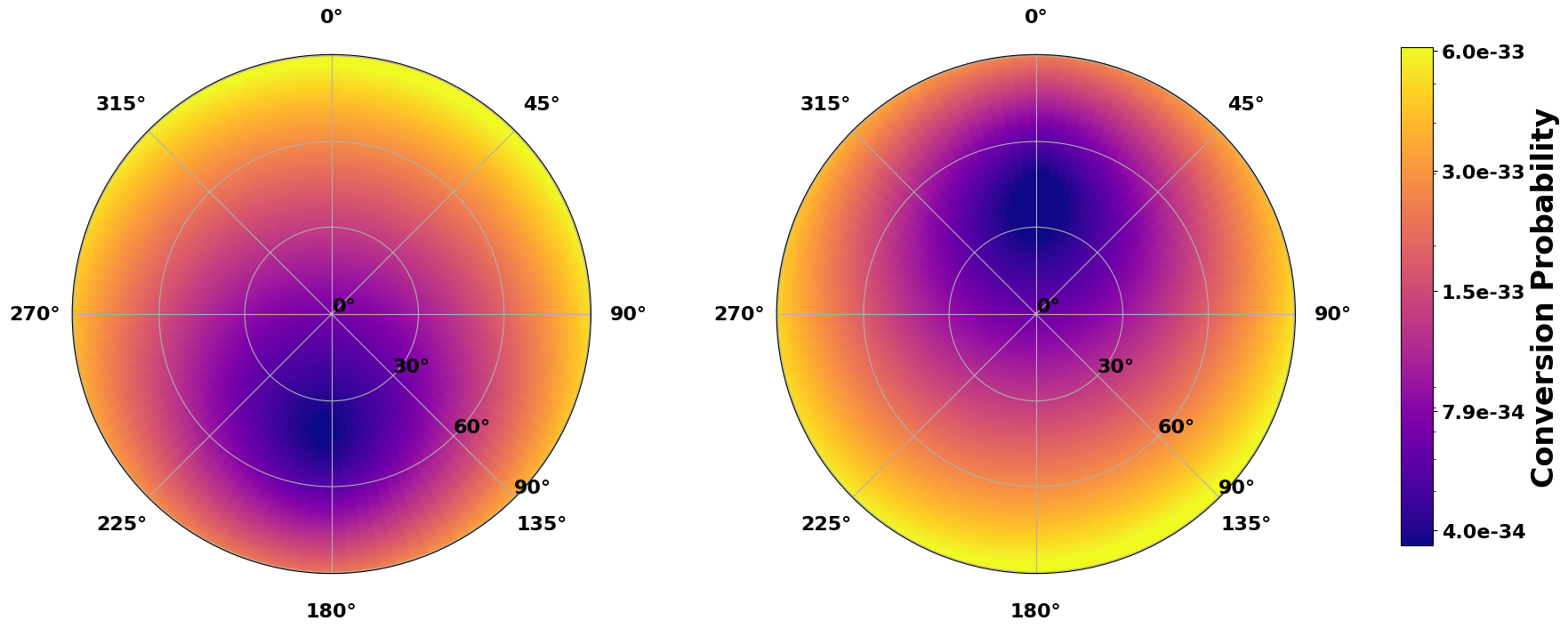
Fig 1: All-sky maps of the gravitational-wave conversion
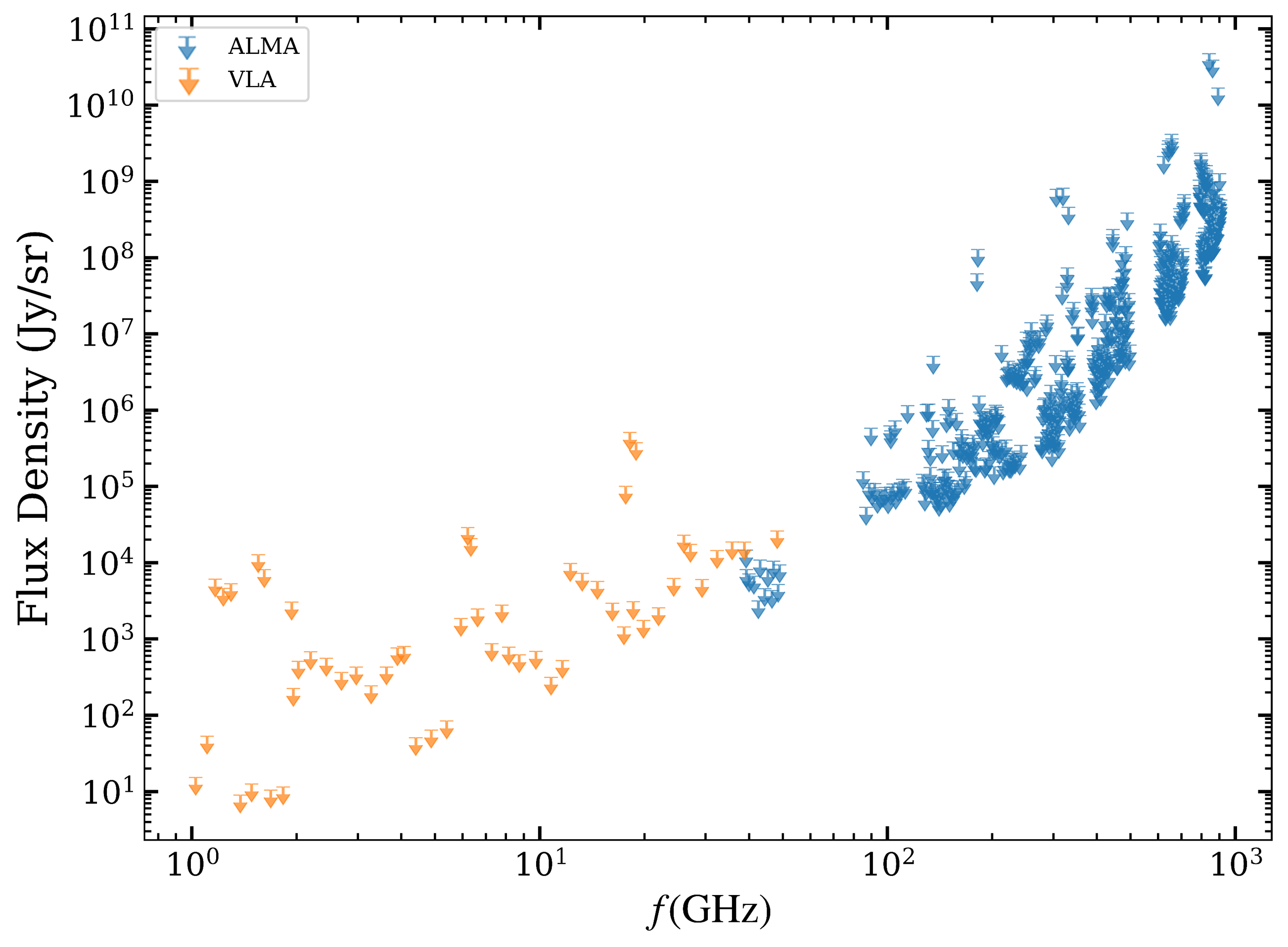
Fig 2: Upper limits on the flux density per unit solid angle
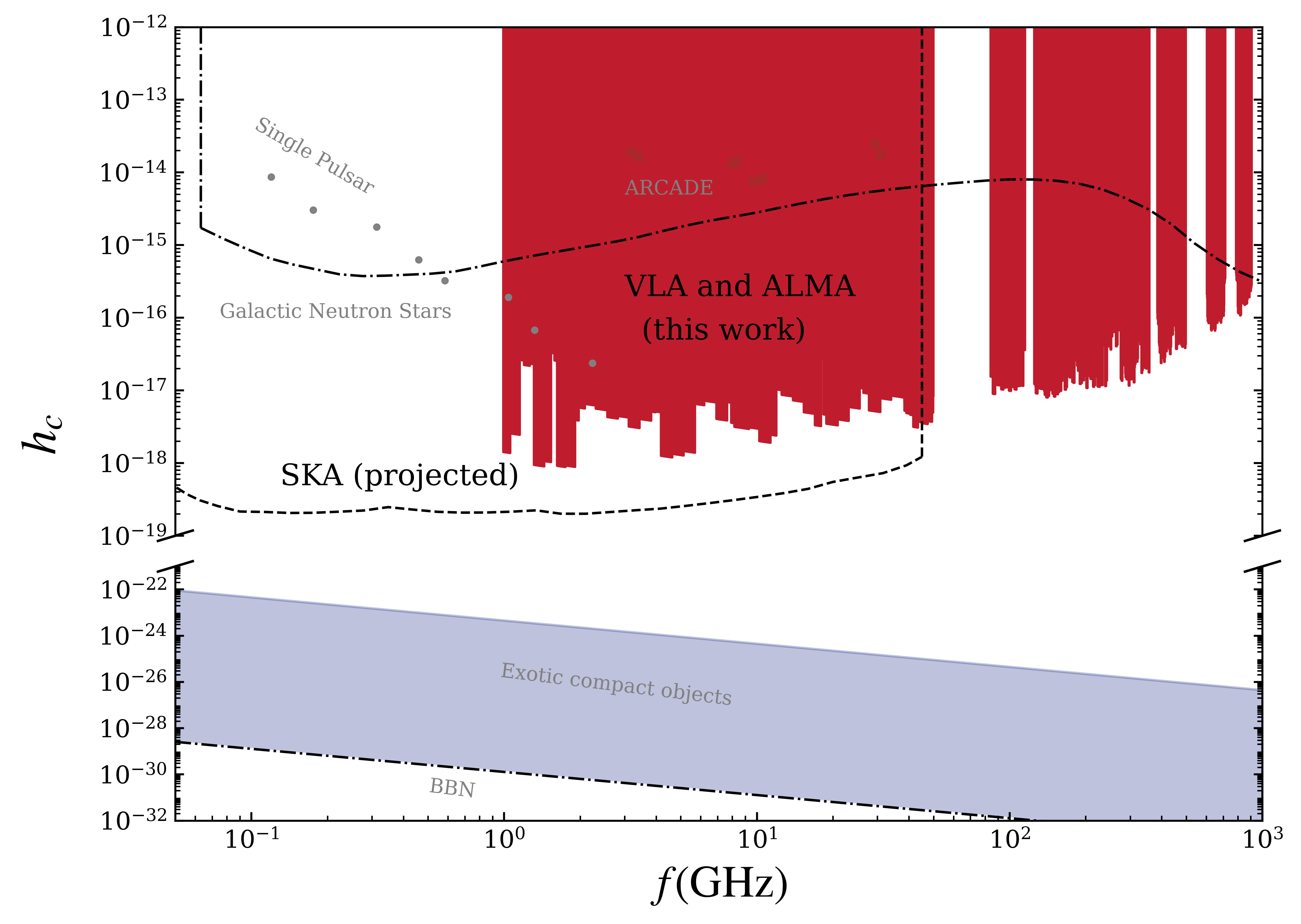
Fig 3: 95% C.L. upper limits on the characteristic strain
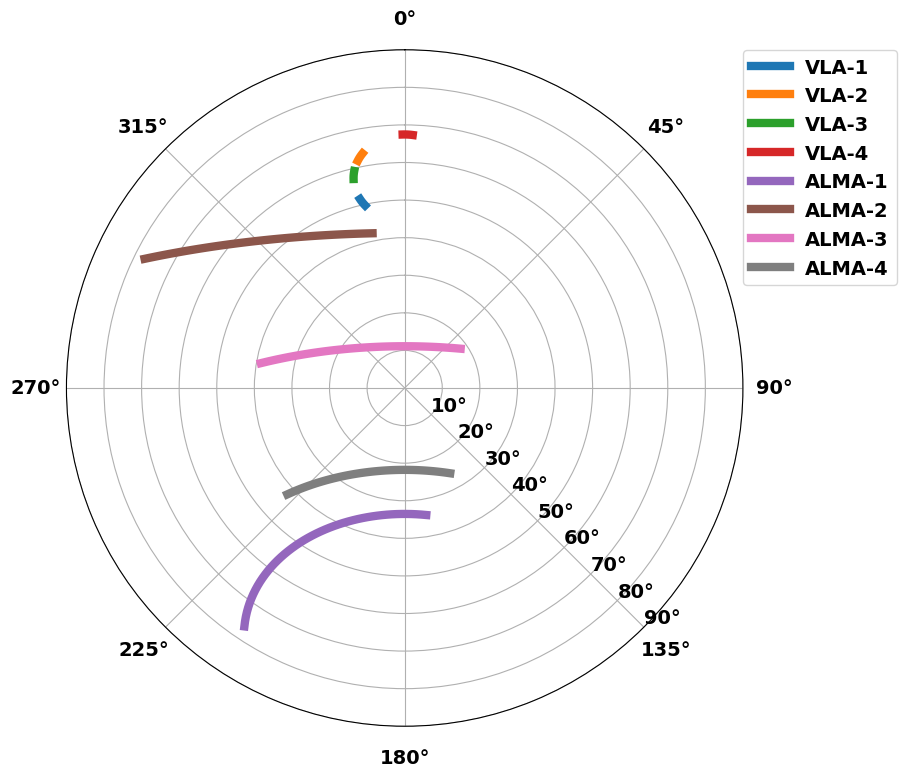
Fig 4 (page 8).
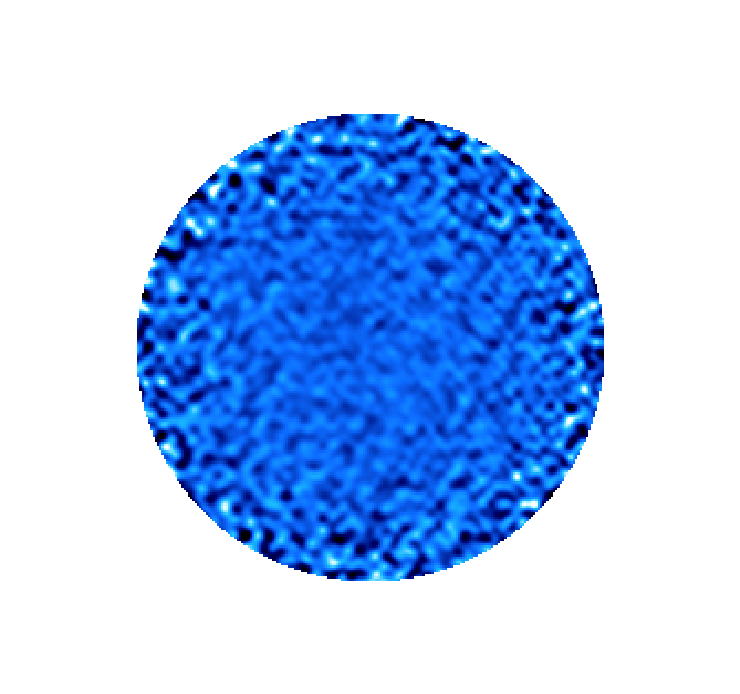
Fig 5 (page 9).
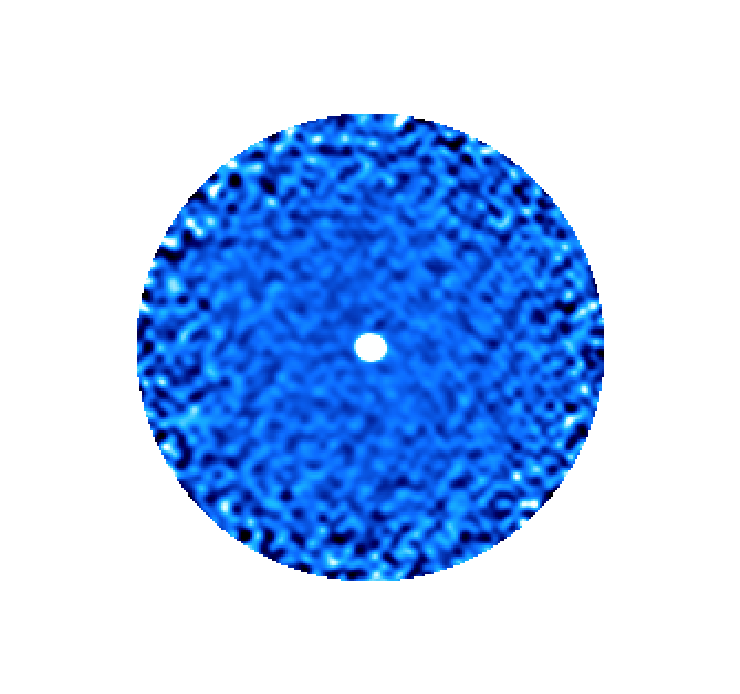
Fig 6 (page 9).
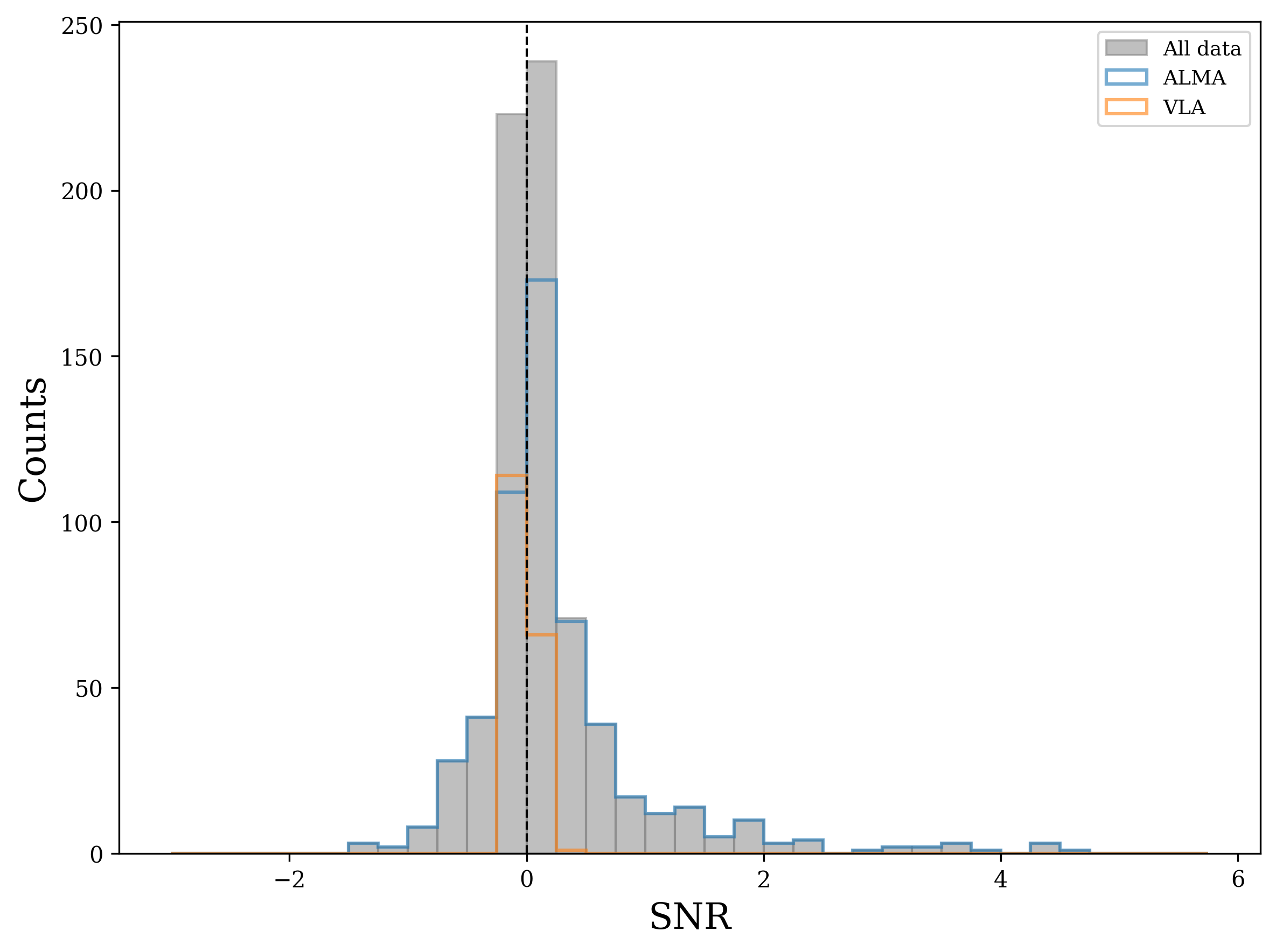
Fig 7 (page 10).
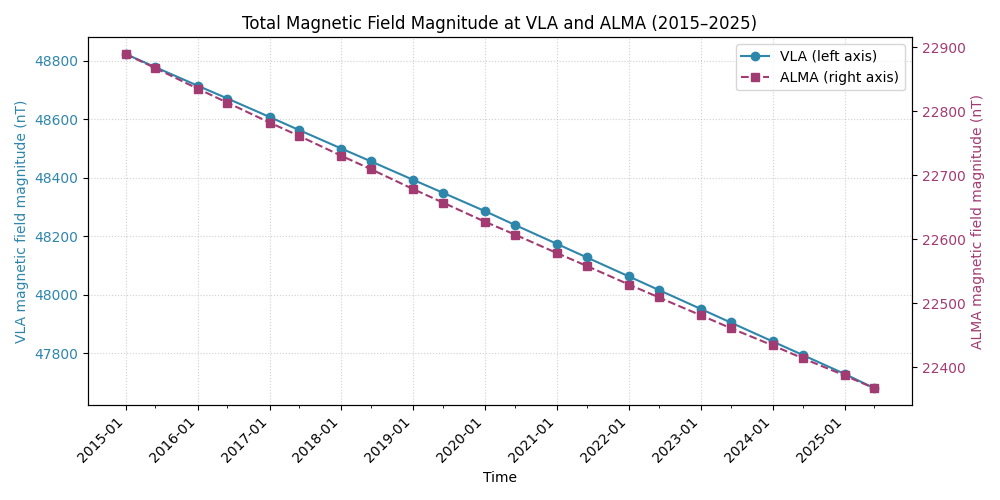
Fig 8 (page 13).
Limitations
- No HFGW signal detected; results are upper limits rather than direct detection.
- Sensitivity limited by atmospheric absorption in 50–90 GHz range and instrumental band gaps in ALMA during observational epochs.
- Ionospheric plasma effects cause partial decoherence below ~10 GHz, limiting sensitivity at low frequencies.
- Assumption of isotropic, unpolarized gravitational-wave background may not cover all realistic source models.
- Geomagnetic field modeling uncertainties, though mitigated by IGRF-14, could affect conversion probability calculations.
- No explicit adversarial or injection tests performed to assess robustness against noise artifacts or systematics.
Open questions / follow-ons
- How would anisotropic or polarized high-frequency gravitational wave backgrounds affect detection sensitivity and conversion probability modeling?
- Can future radio arrays like SKA implement real-time HFGW searches leveraging geomagnetic conversion with improved integration times and lower noise?
- What are the implications of ionospheric variability and deeper atmospheric effects on conversion coherency and detection robustness at frequencies below 10 GHz?
- Could multi-site observations combining northern and southern hemisphere arrays reduce directional blind spots caused by geomagnetic field geometry?
Why it matters for bot defense
While this work is primarily in gravitational wave astrophysics and radio astronomy, the techniques of signal conversion modeling, noise floor characterization, and statistical upper limit setting have conceptual parallels in bot defense and CAPTCHA evaluation. Specifically, the method of isolating faint, diffuse signals from dominant structured sources after masking is analogous to separating legitimate user behavior from bot patterns in complex datasets. The detailed integration of environmental models (geomagnetic field) to modulate expected signal signatures may inspire analogous contextual modeling in behavioral biometrics or interaction patterns. However, direct application to CAPTCHA or bot defense systems is limited by the domain difference in physical phenomena versus user interaction data.
Security and ML practitioners can nevertheless consider the paper’s rigorous approach to deriving well-justified upper bounds on rare event signals within noisy data, informing how to properly quantify detection sensitivity and false positive rates in adversarial or noisy environments. The multi-instrument synergy and coordinate frame transformations highlight the benefits of combining diverse data sources and reference frames when modeling complex detection problems, an insight potentially translatable to sensor fusion approaches in bot detection systems.
Cite
@article{arxiv2606_13642,
  title={ Search for High-Frequency Gravitational Waves via Geomagnetic Conversion with Radio Telescopes },
  author={ Hongliang Tian and Lei Wu and Xiaolong Yang and Qiang Yuan and Bin Zhu },
  journal={arXiv preprint arXiv:2606.13642},
  year={ 2026 },
  url={https://arxiv.org/abs/2606.13642}
}