
Reasoning as Pattern Matching: Shared Mechanisms in Human and LLM Everyday Reasoning
Source: arXiv:2606.13607 · Published 2026-06-11 · By Zach Studdiford, Gary Lupyan
TL;DR
This paper investigates whether human everyday causal reasoning and reasoning by large language models (LLMs) rely on abstract structured world models or instead emerge from a form of context-sensitive pattern matching. The authors design a novel evaluation probing humans and 25 LLMs on common-sense causal inference tasks centered on everyday scenarios involving spatial relations, object states, and actions. They observe remarkably similar patterns of graded accuracy and failure modes across humans and models, where small changes to prompt content or format cause disproportionate drops in reasoning accuracy. This challenges the presumption that humans reason via stable, compositional causal representations. Through detailed interpretability analyses, the authors isolate specific LLM attention heads causally responsible for model outputs, finding these heads execute pattern-matching computations highly sensitive to superficial prompt variations irrelevant to the causal structure. These attention head activations also predict individual differences in human reasoning errors on related stimuli, suggesting a shared mechanistic basis. The results argue that both human and LLM everyday causal reasoning behave more like flexible, content-driven pattern matching than idealized abstract world models.
Key findings
- Human reasoning accuracy on everyday causal inference tasks is far below ceiling (mean 0.71, SD 0.21) and varies widely across categories.
- Proprietary frontier LLMs like Deepseek-R1 and GPT-5.2 outperform humans in accuracy (Deepseek-R1 µ=0.90; GPT-5.2 µ=0.87; both p<0.001) but responses are less aligned with human error patterns.
- Open-source model gemma-3-27b best aligns with human reasoning patterns (category-level accuracy correlation r=0.84, p=0.001) but lower absolute accuracy (µ=0.39–0.55 depending on category).
- Both humans and LLMs show graded performance: minor prompt content or framing changes induce substantial drops in accuracy (e.g. state-follows vs. state-nonfollows accuracy Δ~0.15–0.3).
- Human errors are moderately consistent on retest (test-retest correlation r=0.60, p<0.001) indicating systematic error patterns rather than guessing.
- Interpretability analyses identify a subset of causally important LLM attention heads whose activations respond more strongly to non-critical (ostensibly irrelevant) content substitutions than to critical content substitutions.
- The activation states of these LLM pattern-matching heads significantly predict human item-level reasoning performance and error patterns, beyond other factors like n-gram frequency or model surprisal scores.
- LLM and human reasoning errors similarly depend on prompt content details, indicating neither fully abstract compositional processing nor perfect role-filler independence.
Methodology — deep read
The authors test the hypothesis that humans and LLMs rely on either structured world models with abstract compositional representations or on pattern-matching mechanisms sensitive to specific content cues. They design a causal reasoning benchmark consisting of everyday scenarios involving simple causal relations, such as spatial relations (egocentric/geocentric), object state changes, and action effects. Example prompts include variants like “The soup is on the stove. Ali turns on the stove. The soup gets [warmer/colder].” Scenarios test both direction: inferring effects/outcomes from causes (target framing) and causes from observed outcomes (context framing).
Humans (n=142) and 25 LLMs including proprietary and open-source models are evaluated. Human participants answer forced-choice likelihood questions for prompts. LLMs’ next-token logits are measured, with accuracy operationalized as the normalized logit difference between the correct and incorrect completions. Prompt sets focus on diverse categories, e.g., geocentric-near/distant, egocentric-near/distant, relative positions, and varying state-following or non-following transitions.
Behavioral data analyses assess overall accuracy, category and item-level correlations between humans and models, and consistency via a retest with a second human group (n=70) focusing on error reliability.
For mechanistic insights, the authors apply causal intervention techniques on LLMs (gemma-3-27b and others), systematically ablating and patching activations of individual attention heads to identify those most responsible for model output changes (either correcting or inducing errors). They perform activation patching experiments swapping critical vs non-critical content representations in prompts to assess sensitivity of these key heads to content that is either essential or irrelevant to the causal inference.
Statistical methods include mixed-effects models for analyzing accuracy dependencies on prompt format and category, correlation analyses for human-LLM alignment, and regression controlling for factors like prompt length and model surprisal. Parameter importance is assessed using causal effect magnitudes on outputs. Despite thorough analyses, some procedural details such as hyperparameters for causal probing and exact sample sizes per prompt category are in supplementary sections or appendices.
The methodology is comprehensive, combining behavioral evaluation with model interpretability to produce a convergent picture. A concrete example is the state-follows prompt about soup warming on a stove, where minor wording changes to the prompt state induce large accuracy drops in both humans and models and correspond to changes in key attention head activations identified via causal patching.
Technical innovations
- Design of a rigorous causal reasoning benchmark aligned for parallel evaluation of humans and LLMs across diverse everyday scenarios requiring common-sense inference.
- Use of causal intervention and activation patching on LLM attention heads to isolate subnetworks responsible for reasoning errors and prediction alignment with humans.
- Novel finding that causally important attention heads respond more strongly to variations in non-critical prompt content than to critical content, revealing a pattern-matching mechanism.
- Demonstration that internal LLM activation states predict graded human reasoning accuracy and systematic errors on matched prompts, linking mechanistic LLM features to cognitive behavior.
Datasets
- Human causal reasoning benchmark — 142 participants + 70 retest participants — proprietary
- 25 LLMs evaluated including gemma-3-27b, Deepseek-R1, GPT-5.2, GPT-4.1
Baselines vs proposed
- Human participants: mean accuracy = 0.71 (SD 0.21)
- Deepseek-R1: accuracy = 0.90 vs human 0.71 (p < 0.001)
- GPT-5.2: accuracy = 0.87 vs human 0.71 (p < 0.001)
- Gemma-3-27b: accuracy lower (~0.39 to 0.55 by category) but human alignment correlation r=0.84 (p=0.001)
- State-follows vs state-nonfollows prompts accuracy human drop ~0.16; gemma-3-27b drop ~0.32
- Patch experiments: perturbing non-critical content changes model logits more than perturbing critical content across all categories
Figures from the paper
Figures are reproduced from the source paper for academic discussion. Original copyright: the paper authors. See arXiv:2606.13607.
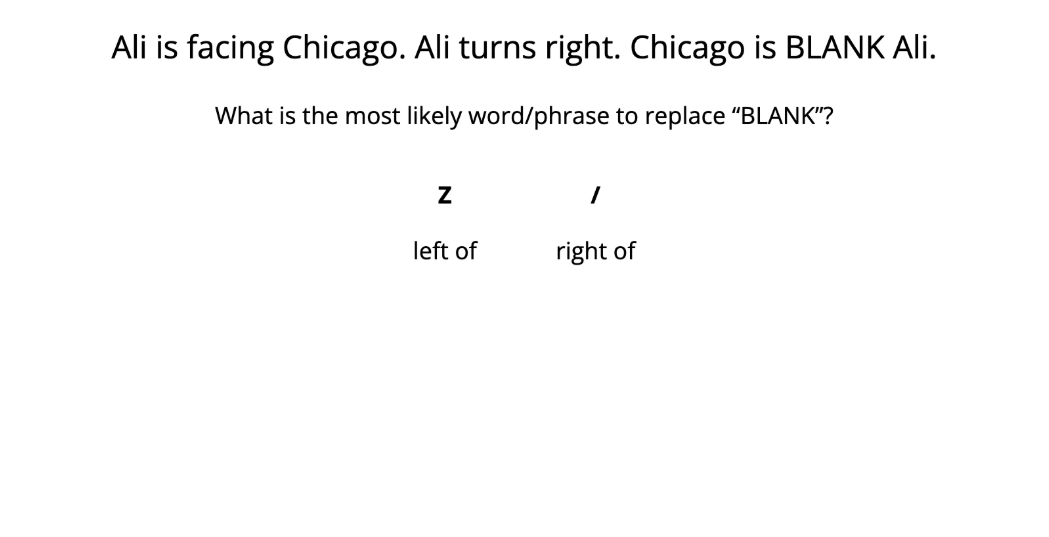
Fig 7: Human evaluation trial sequence. Participants are first presented with the prompt and asked
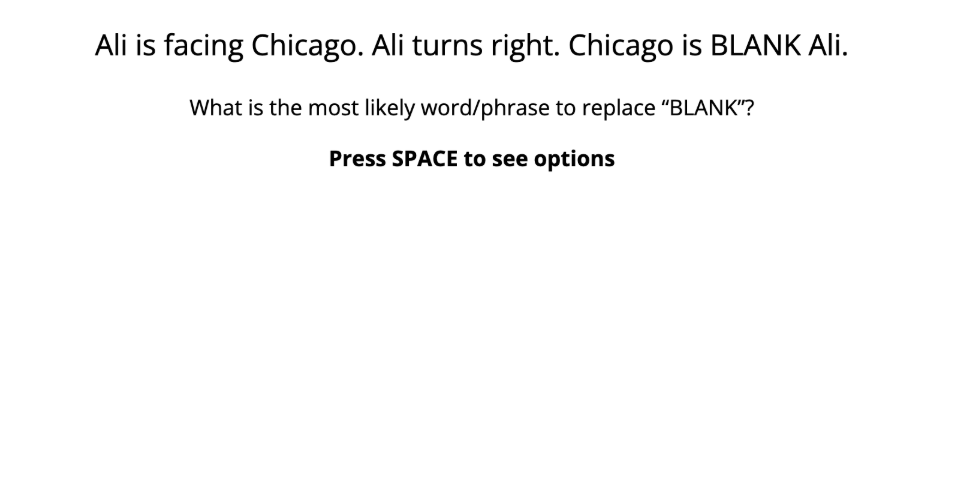
Fig 8: Consistency between first and second responses for a given subject, separated by category. X-axis
Limitations
- Human sample size moderate (n=142) but may not capture full cognitive diversity.
- LLM behavioral analysis focuses mainly on open-source gemma-3-27b and a few proprietary models; generalization to all LLMs uncertain.
- Causal interpretability limited to attention head patching; other architectural components like MLP layers not extensively analyzed.
- The benchmark tests everyday causal relations, leaving open question if more abstract or complex forms of reasoning follow similar patterns.
- Some procedural details like exact hyperparameters for patching or statistical controls are in supplementary sections, limiting independent reproducibility.
- The study does not evaluate adversarial or out-of-distribution causal reasoning tasks to assess robustness of pattern-matching mechanisms.
Open questions / follow-ons
- To what extent do these pattern-matching mechanisms extend to more abstract or multi-step reasoning tasks beyond everyday causal scenarios?
- Can interventions or training techniques encourage LLMs to develop more stable, compositional world models that reduce surface-level content sensitivity?
- Do different attention head circuits specialize in different types of semantic or relational information within causal reasoning?
- How do neurocognitive mechanisms underlying human causal reasoning mechanistically produce similar graded pattern matching effects observed here?
Why it matters for bot defense
For bot-defense and CAPTCHA practitioners, these findings emphasize that both humans and LLMs rely heavily on context-dependent pattern matching rather than stable abstract causal models when performing everyday reasoning tasks. This fragility to small content changes suggests that CAPTCHAs based on causal reasoning or common-sense knowledge may exhibit unpredictable failure modes or similarities across humans and sophisticated bots. Understanding that high-level reasoning performance might derive from similar pattern-matching mechanisms allows for better interpretation of bot responses and error clustering. It also suggests potential avenues for designing CAPTCHAs that exploit subtle content sensitivities or prompt distortions that confuse LLM-based bots while maintaining human solvability. Researchers should be cautious about assuming perfect humanlike reasoning in LLMs or complete abstraction in humans, as both show graded and surface-dependent errors in practice.
Cite
@article{arxiv2606_13607,
  title={ Reasoning as Pattern Matching: Shared Mechanisms in Human and LLM Everyday Reasoning },
  author={ Zach Studdiford and Gary Lupyan },
  journal={arXiv preprint arXiv:2606.13607},
  year={ 2026 },
  url={https://arxiv.org/abs/2606.13607}
}