
Improving Robotic Generalist Policies via Flow Reversal Steering
Source: arXiv:2606.13675 · Published 2026-06-11 · By Andy Tang, William Chen, Andrew Wagenmaker, Chelsea Finn, Sergey Levine
TL;DR
This paper addresses the challenge of effectively guiding robotic generalist policies—specifically flow matching vision-language-action models—toward semantically meaningful behaviors on novel or difficult tasks where direct policy commands or zero-shot control may fail. The authors introduce Flow Reversal Steering (FRS), a novel method that takes coarse and suboptimal but semantically reasonable reference actions (e.g., directional suggestions from humans or vision-language models) and maps them through the flow matching policy in reverse to identify latent noise inputs that correspond to better in-distribution action modes. By denoising these noise vectors, FRS produces precise, feasible robotic actions closely aligned with the semantic intent while staying consistent with the generalist's learned behavioral prior. This method facilitates converting high-level, imprecise commands into fine-grained robot motions without retraining or costly exploration.
The authors evaluate FRS extensively in both simulated (LIBERO benchmark) and real-world robot manipulation tasks, demonstrating multiple benefits. Zero-shot use of FRS for steering with coarse vision-language guidance yields substantial absolute task success boosts (up to 95%) over the base generalist and outperforms prior steering baselines including partial noising and sample-rank. The noises and actions generated by FRS can be distilled into auxiliary noise policies via behavioral cloning (DSBC), substantially improving learning efficiency—achieving effective policies in under a minute of training on limited rollouts. Furthermore, FRS data enables sample-efficient bootstrapped reinforcement learning (DSRL + FRS) that improves on tasks where standard RL fails, providing a strong learning signal by guiding exploration toward semantically meaningful behaviors. Real-world robot experiments corroborate these results, showing large gains from human-guided FRS trajectories distilled with DSBC and used to bootstrap RL. Overall, FRS provides a practical and effective approach to leveraging semantic reasoners and generalist priors for faster adaptation and improved robotic control.
Key findings
- Zero-shot FRS improves success rates on 11 out of 42 hard LIBERO tasks by at least 10% absolute where base policy ≤2% success.
- Direct execution of coarse VLM actions yields lower performance compared to FRS, confirming the need for semantic grounding via flow reversal (Fig. 5).
- FRS outperforms previous flow policy steering baselines: partial noising improves 4 hard tasks, sample-and-rank 3, while FRS improves 11.
- DSBC trained on FRS noise trajectories matches zero-shot FRS task success and improves over standard behavioral cloning by up to 60% absolute in real-world tasks (Fig. 6, 8).
- DSBC policies train quickly: under 1 minute and 1 GB GPU memory, using ~10-18 rollouts per task.
- DSRL + FRS (reinforcement learning bootstrapped with FRS trajectories) achieves significantly faster learning and over 30% absolute higher final success rates compared to standard DSRL on 15 LIBERO tasks (Fig. 7 left).
- On very challenging tasks where base VLA success is near zero, DSRL + FRS with a single FRS successful rollout still achieves over 30% final success, while naive DSRL plateaus around 30% (Fig. 7 right).
- Human-guided FRS in the real world boosts average success by 60% with just 10 successful trajectories distilled via DSBC, while standard BC fails with same data scale (Fig. 8).
Threat model
n/a — This work does not focus on adversarial or malicious threat models but on improving robotic policy adaptability guided by semantic reasoners like humans or vision-language models. It assumes cooperative interaction rather than active adversarial interference.
Methodology — deep read
The paper proposes Flow Reversal Steering (FRS) targeting flow matching robotic generalist policies (VLAs) trained via behavioral cloning on large datasets and using flow velocity fields to deterministically map noise inputs (a0) to robot actions (a1).
Threat model: The method assumes a semantic reasoner (human or vision-language model) that can output coarse but reasonable action directions, but cannot produce precise low-level robot controls. The adversary and security aspects are not the focus.
Data and environment: The main evaluation is on LIBERO, a large-scale simulated manipulation benchmark with 90 tasks, and the DROID real-world robot platform with 6 diverse cluttered tasks. The authors use pretrained flow VLAs (π0.5 variants) trained on disjoint splits from the evaluation tasks to simulate out-of-distribution zero-shot settings.
Algorithm: FRS leverages the deterministic nature of flow matching models, which define an ODE mapping noise a0 to action a1 via velocity field vθ. FRS runs the ODE backward using Euler integration to map a coarse reference action a1 (e.g., a directional action chunk emitted by a human or VLM reasoner) to a corresponding noise vector ˆa0. Passing ˆa0 forward through the learned denoising flow yields a refined action ˆa1 close to a1 but biased towards in-prior actions from the generalist.
The key novelty is using flow reversal to exactly invert the flow model to find noise codes corresponding to semantically-guided but coarse reference actions. This contrasts with prior partial-noising heuristics which interpolate noise, losing semantic info. FRS deterministically identifies latent noise as a way to steer the generalist.
Training regimes: Using FRS, three modes of improvement are proposed:
- Zero-shot online steering: Reasoners provide directional actions each step, passed through FRS to produce robot commands at inference time.
- Diffusion Steering via Behavioral Cloning (DSBC): The noise-action pairs (o, ˆa0) from FRS rollouts are treated as expert data and used to train small auxiliary noise policies with supervised maximum likelihood BC.
- Reinforcement Learning bootstrapped with FRS (DSRL + FRS): RL in noise action space is initialized with FRS rollouts to seed the replay buffer and regularized with an auxiliary BC loss on FRS successes, improving sample efficiency and final performance when exploring otherwise impossible tasks.
Evaluation protocol: The authors run comprehensive zero-shot evaluations of FRS vs base VLA and prior steering methods on 42 hard LIBERO tasks where the base VLA gets ≤40% success. They also train DSBC with tens of successful FRS trajectories and compare against standard BC. RL experiments run SAC with and without FRS data on 15 and 10 task subsets from LIBERO-90. Real robot tasks measure success gains from human-guided FRS and DSBC on 6 manipulation tasks.
They analyze quantitative success rates, number of improved tasks by >10%, training time, data efficiency, and task-specific examples. Qualitative analyses show FRS steers actions consistently toward semantically reasonable modes in cluttered scenes.
Reproducibility: Code and pretrained VLAs are publicly referenced (openpi, Gemini-ER-1.6 VLM). Exact model hyperparameters and datasets are detailed in appendices. The process does not require retraining VLAs, only running backward ODE integration on them. DSBC training is fast and efficient.
Example: For a given coarse action suggesting “move right toward toaster,” FRS integrates flow velocity backward to estimate the noise vector that would generate an in-prior action near this direction. Forward denoising then yields an improved fine-grained motion, e.g., reaching for bread on the plate rather than simply moving blindly right. This action is executed or used to collect trajectories for BC or RL training, improving performance on tasks that raw policy or direct VLM instructions fail at.
Technical innovations
- Introduce Flow Reversal Steering (FRS), a method that inverts a flow matching policy's denoising ODE to map coarse reference actions into latent noise codes, enabling precise, in-distribution action generation.
- Demonstrate that flow reversal deterministic inversion outperforms prior partial-noising steering heuristics by reliably finding noise vectors corresponding to semantically-meaningful actions.
- Propose Diffusion Steering via Behavioral Cloning (DSBC), training an auxiliary noise policy supervised on FRS noise-action pairs to rapidly learn task-specific behaviors without reinforcement learning.
- Integrate FRS with reinforcement learning (DSRL + FRS) by using FRS rollouts as prior data and adding BC regularization to improve sample efficiency and learning on difficult tasks where base policies almost never succeed.
Datasets
- LIBERO — 90 robotic manipulation tasks — open simulated benchmark
- DROID — Real-world diverse manipulation tasks — experimental testbed
Baselines vs proposed
- Base VLA policy: success ≤ 2% on 11 hard tasks vs Zero-shot FRS: ≥ 10% absolute success increase
- Partial noising steering: improves 4 hard tasks vs FRS: improves 11 hard tasks on LIBERO
- Sample-and-rank steering: improves 3 hard tasks vs FRS: improves 11 hard tasks
- Standard behavioral cloning on FRS data vs DSBC: DSBC yields up to 60% absolute success gain in real-world manipulation
- Standard DSRL reinforcement learning on 15 LIBERO tasks vs DSRL + FRS: up to 30% higher final success and faster convergence
- On 10 difficult LIBERO tasks with near-zero base success, naive DSRL reaches ~30% final success vs DSRL + FRS reaches >60%
Figures from the paper
Figures are reproduced from the source paper for academic discussion. Original copyright: the paper authors. See arXiv:2606.13675.
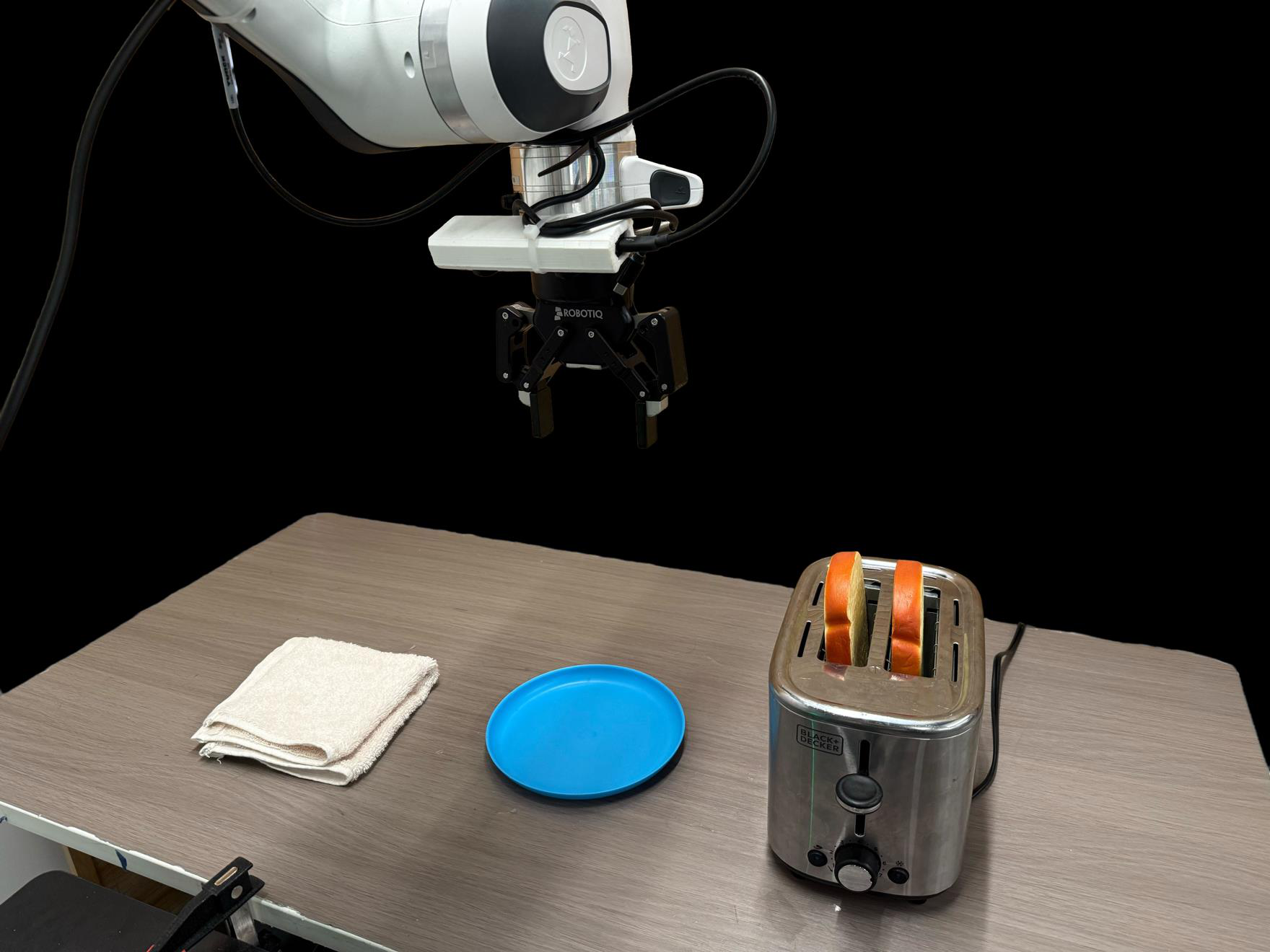
Fig 1: Flow Reversal Steering (FRS) uses semantic reasonings from humans or VLMs to steer generalist flow
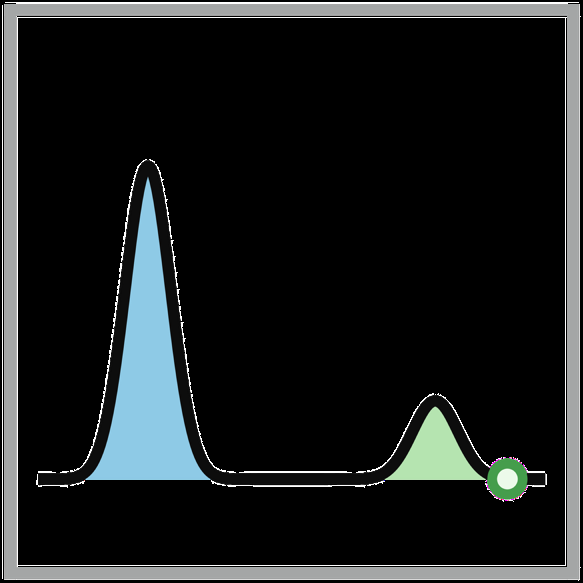
Fig 2 (page 1).
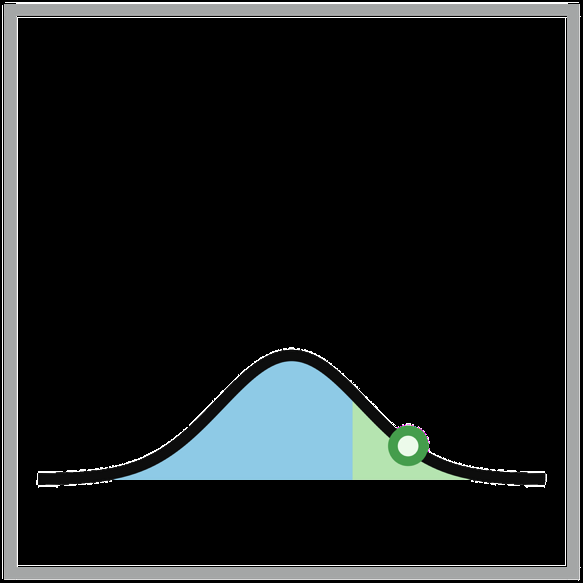
Fig 3 (page 1).
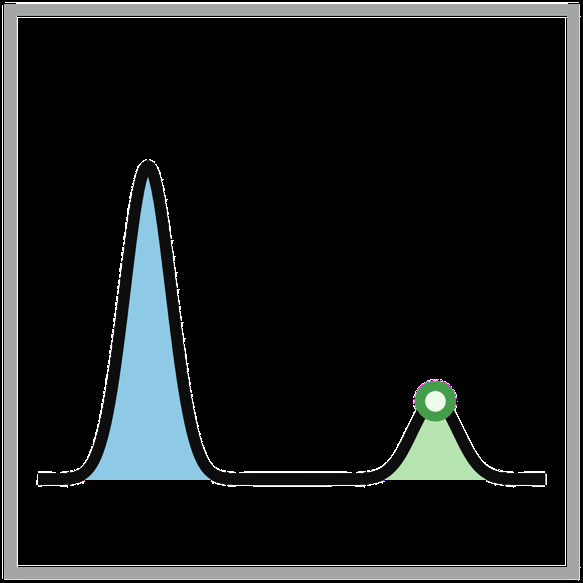
Fig 4 (page 1).
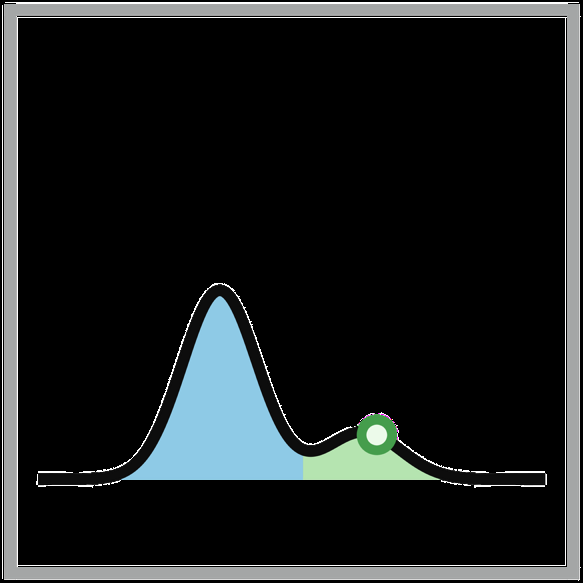
Fig 5 (page 1).
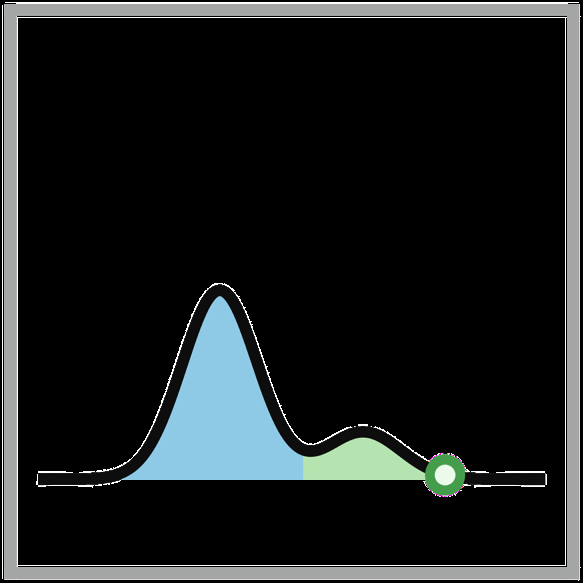
Fig 6 (page 1).
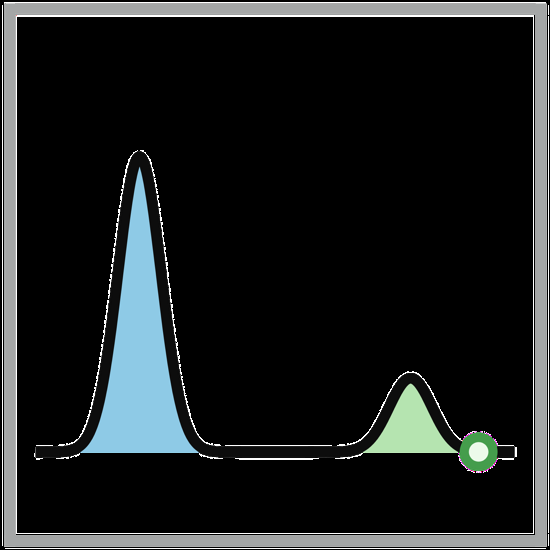
Fig 2: Overview of FRS. (1) A human or VLM semantically reasons about the novel task to determine a
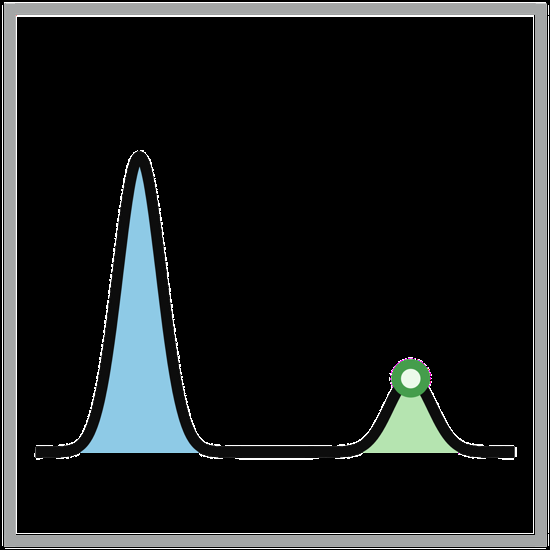
Fig 3: Illustrative examples of FRS with π0.5 in LIBERO. (a) Solid arrows are directional reference actions,
Limitations
- FRS depends on having reasonably accurate coarse reference actions; if semantic guidance is poor or very imprecise, steering quality may degrade.
- Flow reversal only approximately reconstructs reference actions due to numerical integration errors and finite steps, hence cannot perfectly guarantee action fidelity.
- Evaluation is mostly on VLAs trained with flow matching; applicability to other architectures (e.g., stochastic diffusion with DDPM sampling) is suggested but not fully tested.
- Reinforcement learning experiments rely on relatively small auxiliary noise policies rather than tuning full VLAs end-to-end, which may limit ultimate performance.
- FRS assumes access to pretrained generalist policies; generating such models requires large-scale robotic datasets and compute beyond typical practitioners.
- Real-world robotic validation is limited to a small set of tasks and scenarios; further testing in more diverse and safety-critical settings is needed.
Open questions / follow-ons
- How to extend flow reversal steering to policies parameterized by stochastic diffusion samplers (e.g., DDPM) beyond deterministic flow matching?
- Can FRS incorporate uncertainty or confidence estimates from semantic reasoners to dynamically weight steering influence?
- How does FRS perform under noisy or incorrect semantic guidance, and can robustness be improved?
- Can the method be scaled to very long-horizon, multi-stage tasks involving hierarchical steering or multi-agent coordination?
Why it matters for bot defense
For bot-defense and CAPTCHA practitioners, Flow Reversal Steering (FRS) illustrates how coarse, high-level semantic commands can be reliably grounded into fine-grained, in-prior actions using pretrained generalist policies by inverting flow models. This concept parallels difficulties in translating ambiguous or imprecise inputs (e.g., human guidance or vision-language outputs) into concrete behavioral outputs in complex systems.
In the CAPTCHA or bot-defense context, understanding methods like FRS can inspire approaches for steering or constraining AI-driven agents or bots based on high-level semantic signals while ensuring realistic and in-distribution behavioral patterns, potentially helping distinguish between legitimate human intent and anomalous automated behaviors. Moreover, the precise inversion of generative policies could provide fine control or tuning mechanisms for behavior generation or detection in multi-modal interactive environments.
Cite
@article{arxiv2606_13675,
  title={ Improving Robotic Generalist Policies via Flow Reversal Steering },
  author={ Andy Tang and William Chen and Andrew Wagenmaker and Chelsea Finn and Sergey Levine },
  journal={arXiv preprint arXiv:2606.13675},
  year={ 2026 },
  url={https://arxiv.org/abs/2606.13675}
}