
Shaping the horizontal branch: The role of envelope mass in the evolution of stripped core-helium-burning stars
Source: arXiv:2606.12242 · Published 2026-06-10 · By Eduardo Arancibia-Rojas, Mónica Zorotovic, Maja Vučković, Alexey Bobrick, Alex Durán-Reyes
TL;DR
This paper investigates how the residual hydrogen-envelope mass (M_env) and the timing of envelope stripping affect the evolution and observed properties of stripped core-helium-burning stars, particularly those along the horizontal branch (HB). Using the MESA stellar evolution code, the authors model stars with initial masses below ~6 M_sun at two metallicities (Z = 0.02 and Z = 0.004) that lose their hydrogen envelopes on the first giant branch (FGB). Two limiting cases for the timing of envelope removal are explored: at the FGB tip and at the minimum core mass for helium ignition. The study systematically varies M_env to map its effects on the star's effective temperature, core mass growth, lifetime during core-He burning, and subsequent evolution through or avoidance of the thermally pulsing asymptotic giant branch (TPAGB).
The main findings confirm that increasing the residual envelope mass reduces effective temperature along the HB and changes the post-He-burning evolutionary path. Thin envelopes (<~0.02 M_sun) lead to hot subdwarfs undergoing AGB-manqué evolution, while thicker envelopes (up to ~0.3 M_sun for intermediate-mass progenitors) allow ascent to the TPAGB phase. Early stripping triggers late hot helium flashes that explain the hottest blue hook stars. Intermediate-mass progenitors with partial envelope stripping produce extended, inflated pre-HB phases matching observations of stripped stars in Be binaries. The resulting evolutionary tracks unify degenerate and non-degenerate helium ignition channels and provide mass thresholds for envelope retention to predict HB morphology and post-HB evolution.
Key findings
- The effective temperature along the horizontal branch decreases as the residual hydrogen-envelope mass (M_env) increases.
- Maximum M_env required to avoid evolution through the thermally pulsing asymptotic giant branch (TPAGB) ranges from ~0.05 M_sun for low-mass progenitors to ~0.3 M_sun for intermediate-mass progenitors.
- Low-mass progenitors (M_ZAMS ≲ 1.8 M_sun) have strongly degenerate helium cores and show minimal envelope mass loss post-stripping.
- Early envelope removal triggers late hot helium flashes, naturally explaining the hottest blue hook stars with effective temperatures ~29,000–35,000 K.
- For intermediate-mass progenitors (2–4 M_sun), partial envelope stripping fuels prolonged hydrogen shell-burning that grows the helium core and shortens the hot subdwarf phase.
- Models with M_env < 0.01–0.02 M_sun undergo AGB-manqué evolution powered mainly by helium shell-burning after core helium exhaustion.
- Stars with M_env between ~0.02 and 0.05 M_sun undergo early asymptotic giant branch (EAGB) evolution with shell burning oscillations and do not reach the TPAGB.
- Most massive progenitors (> 5 M_sun) become very hot and luminous but have very short hot subdwarf lifetimes, making them rare observationally.
Threat model
n/a - This is an astrophysical stellar evolution study with no adversarial or security threat model.
Methodology — deep read
The authors use the Modules for Experiments in Stellar Astrophysics (MESA) code to perform detailed 1D stellar evolution simulations focusing on the phase after substantial envelope stripping on the first giant branch (FGB). The threat model is astrophysical rather than adversarial, focusing on how internal stellar physics and mass loss shape observable phases.
They simulate stars with initial masses from 0.8 to 6 M_sun, chosen to sample progenitors that ignite helium under degenerate and non-degenerate conditions. Two metallicities are considered (Z=0.02 representing typical Population I, and Z=0.004 thick-disc populations). Envelope stripping is imposed artificially at two points: (i) at the FGB tip corresponding to the maximum core mass for helium ignition, and (ii) earlier along the FGB when the core mass just reaches the minimum for helium ignition. This enables study of timing effects.
Envelope mass M_env retained after stripping is systematically varied starting from 0.005 M_sun, increasing in steps of 0.01 M_sun until stars evolve to red clump temperatures (~4000–5000 K). The relax_mass MESA module is used for rapid envelope removal, controlling M_env precisely. Mass loss prescriptions include Reimers with η=0.5 on the giant branch, and Vassiliadis & Wood (1993) on the asymptotic giant branch to preserve thermal pulses.
Convection is modeled with mixing-length theory (α_MLT=1.8), Schwarzschild criterion with predictive mixing, and exponential overshooting during main sequence and core helium burning (f_ov=0.016). Hot subdwarf phases are identified by central helium abundance from 0.98 to 10^-4 and nuclear energy output dominated by helium burning, excluding phases where hydrogen shell burning dominates.
The training regime is simulation-based rather than machine learning: evolutionary calculations track luminosity, temperature, radius, envelope and core masses from stripping through helium burning to white dwarf cooling and TPAGB. Multiple progenitor masses and metallicities form a grid of models.
Evaluation focuses on plotting HR and Kiel diagrams, time evolution of structural parameters, and identifying boundaries in M_env and core mass that separate evolutionary outcomes like AGB-manqué, early AGB, or TPAGB. Models compare early vs late stripping to understand how timing affects envelope mass retention and hot subdwarf lifetimes. The calculated tracks are publicly released for population synthesis.
One illustrative example is a 1.5 M_sun star stripped at the FGB tip with M_env=0.01 M_sun undergoing brief envelope readjustment, several off-center helium flashes, and settling onto a hot subdwarf locus, before evolving through an AGB-manqué phase to the white dwarf cooling track. Increasing M_env leads to evolution through early or thermally pulsing AGB phases.
Reproducibility details: code used is MESA r15140. The envelope stripping is imposed with relax_mass in the star module for computational efficiency instead of binary evolution modules which are more costly. The authors reference previous models (Arancibia-Rojas et al 2024) for calibration. The exact code and tracks are publicly available to facilitate use in binary and population studies. The stellar evolution simulations are deterministic given inputs, so the main variability comes from progenitor mass, metallicity, strip timing and M_env.
Technical innovations
- Systematic modeling of stripped core-helium-burning stars across a wide progenitor mass range (0.8–6 M_sun) covering both degenerate and non-degenerate helium ignition channels within a unified framework.
- Exploration of two extreme timing cases for envelope stripping (at FGB tip versus minimum core mass for He ignition) to isolate effects of stripping timing on stellar evolution.
- Identification and quantification of critical residual hydrogen envelope mass thresholds dictating subsequent evolutionary paths including avoidance of TPAGB and emergence of blue hook stars.
- Inclusion of core overshooting during core helium burning phase to accurately model growth of convective core and its impact on envelope mass retention and post-HB evolution.
Datasets
- Simulated stellar evolution tracks from MESA for initial masses 0.8–6 M_sun, metallicities Z=0.02 and Z=0.004, with systematic variation of residual hydrogen envelope mass after stripping.
Baselines vs proposed
- FGB-tip stripping at Z=0.02, MZAMS=1.5 M_sun: M_env=0.01 M_sun leads to AGB-manqué phase; M_env=0.03 M_sun results in early AGB evolution; M_env=0.06 M_sun produces TPAGB phase.
- Early stripping at minimum He ignition core mass for MZAMS=1.5 M_sun requires significantly larger envelopes (~0.10–0.11 M_sun) to reach similar post-HB phases compared to FGB-tip stripping.
- Low-mass progenitors (MZAMS<1.8 M_sun) retain nearly fixed M_env after stripping; intermediate-mass stars (MZAMS 2–4 M_sun) reduce M_env substantially during prolonged pre-hot-subdwarf hydrogen-burning phase.
- Models show a consistent trend in the Kiel diagram where only the thinnest envelopes (M_env ≲ 0.02 M_sun) reach canonical sdB/sdOB temperature-surface gravity ranges for low-mass progenitors.
Figures from the paper
Figures are reproduced from the source paper for academic discussion. Original copyright: the paper authors. See arXiv:2606.12242.
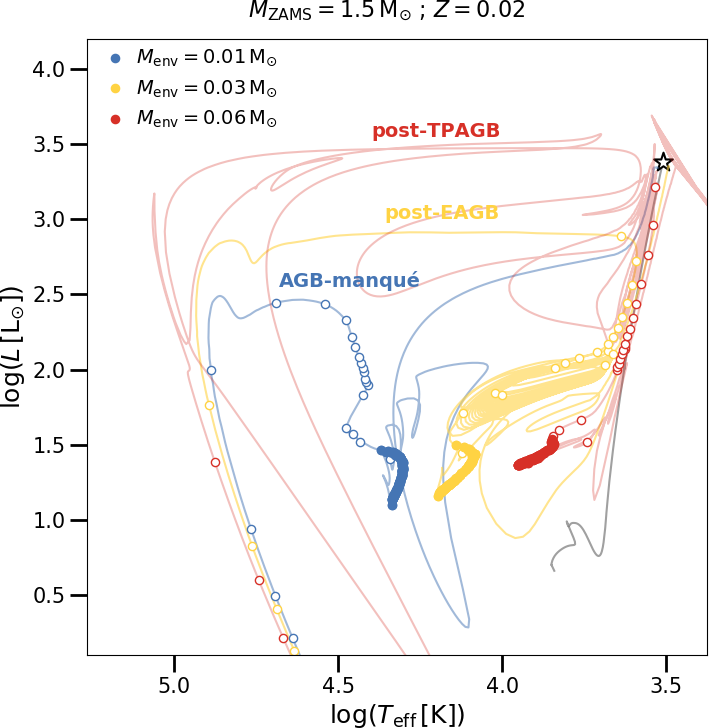
Fig 1: shows the evolutionary tracks in the HR diagram for a
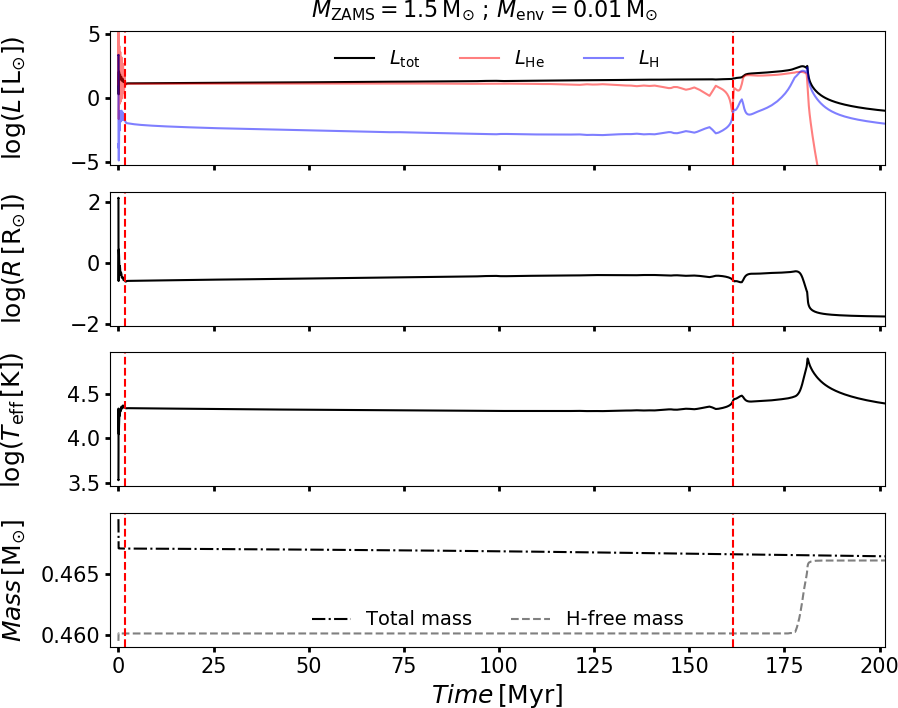
Fig 2: Evolutionary track of a star with an initial mass of 1.5 M⊙
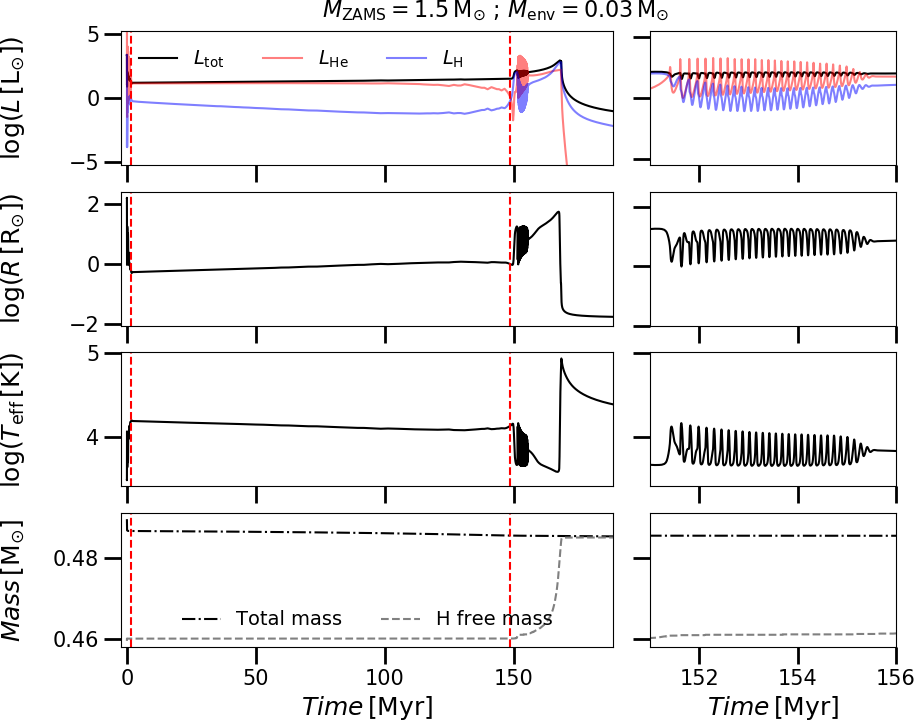
Fig 3: Left: same as in Fig. 2 but for Menv = 0.03 M⊙. Right: zoomed-
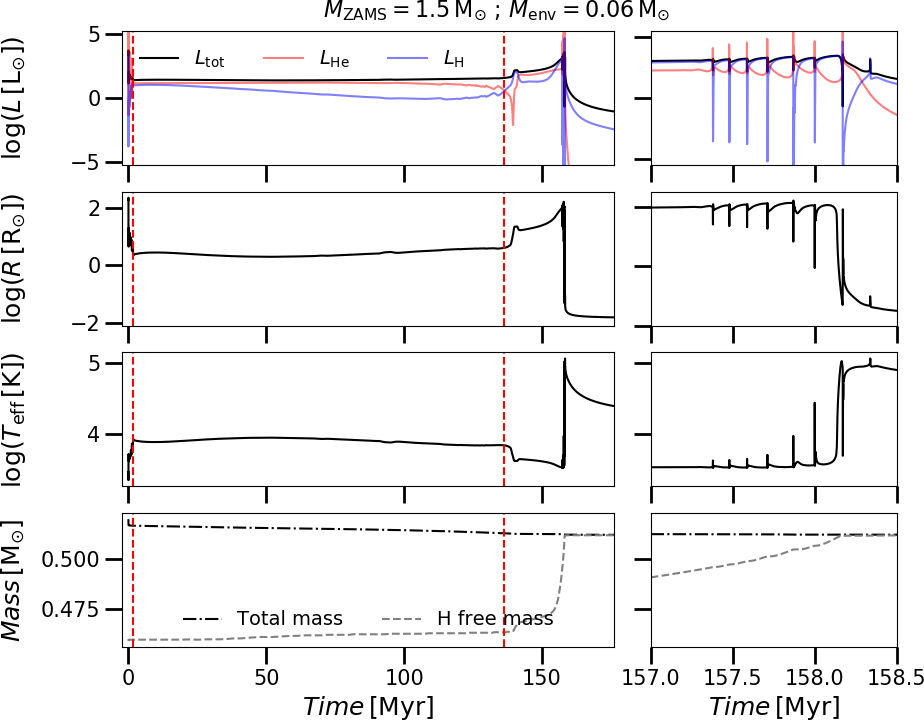
Fig 4: Left: same as in Fig. 2 but for Menv = 0.06 M⊙. Right: zoomed-in
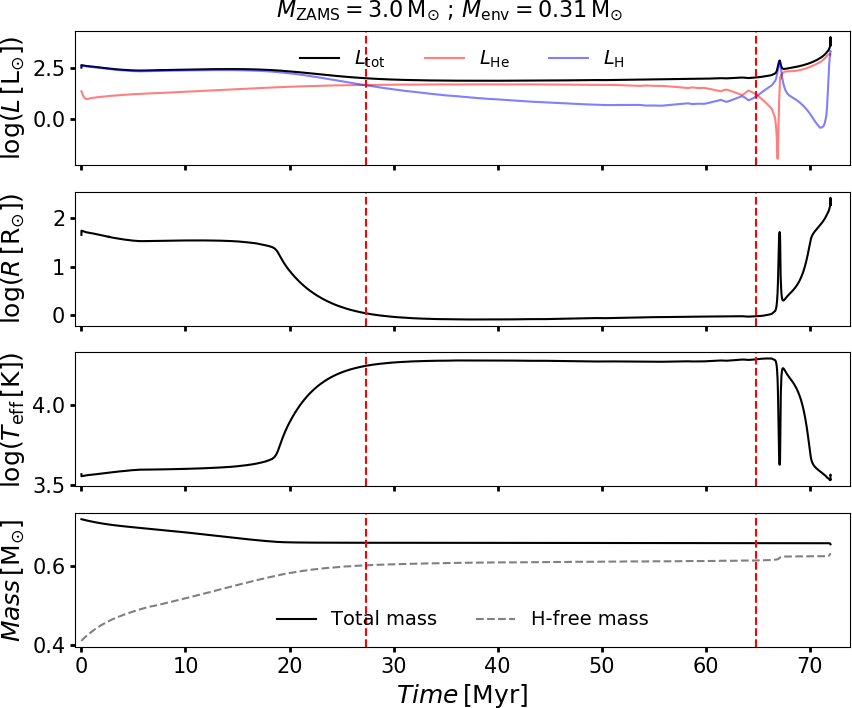
Fig 5: Same as in Fig. 2, but for MZAMS = 3 M⊙and Menv = 0.31 M⊙,
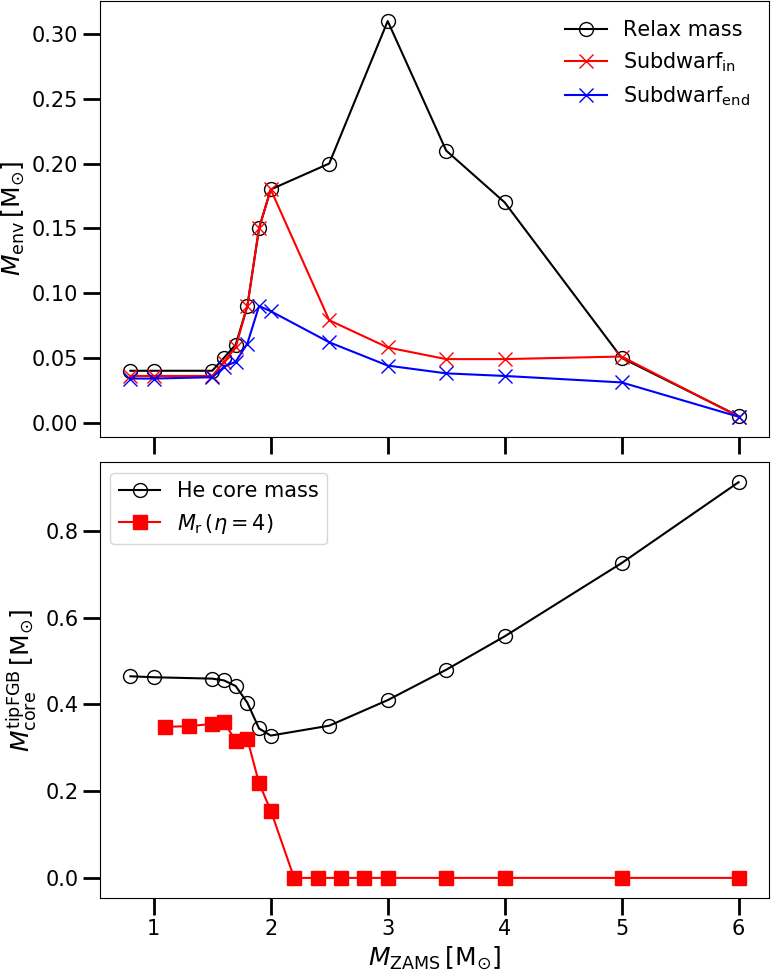
Fig 6: Top panel: critical envelope mass required to reach the TPAGB
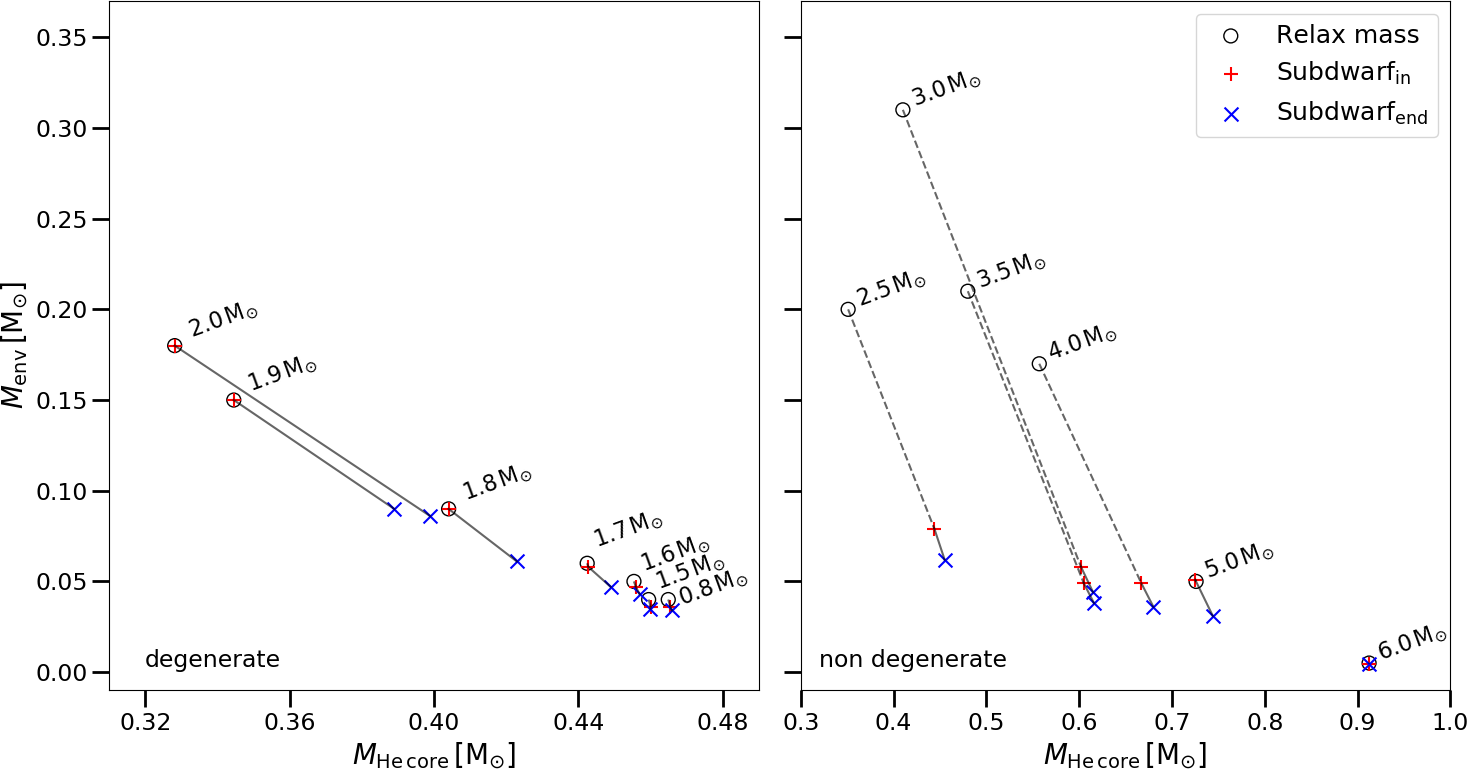
Fig 7: Evolution in the Menv–MHe,core plane for the first models that reach the TPAGB phase for different ZAMS masses (labelled at the beginning
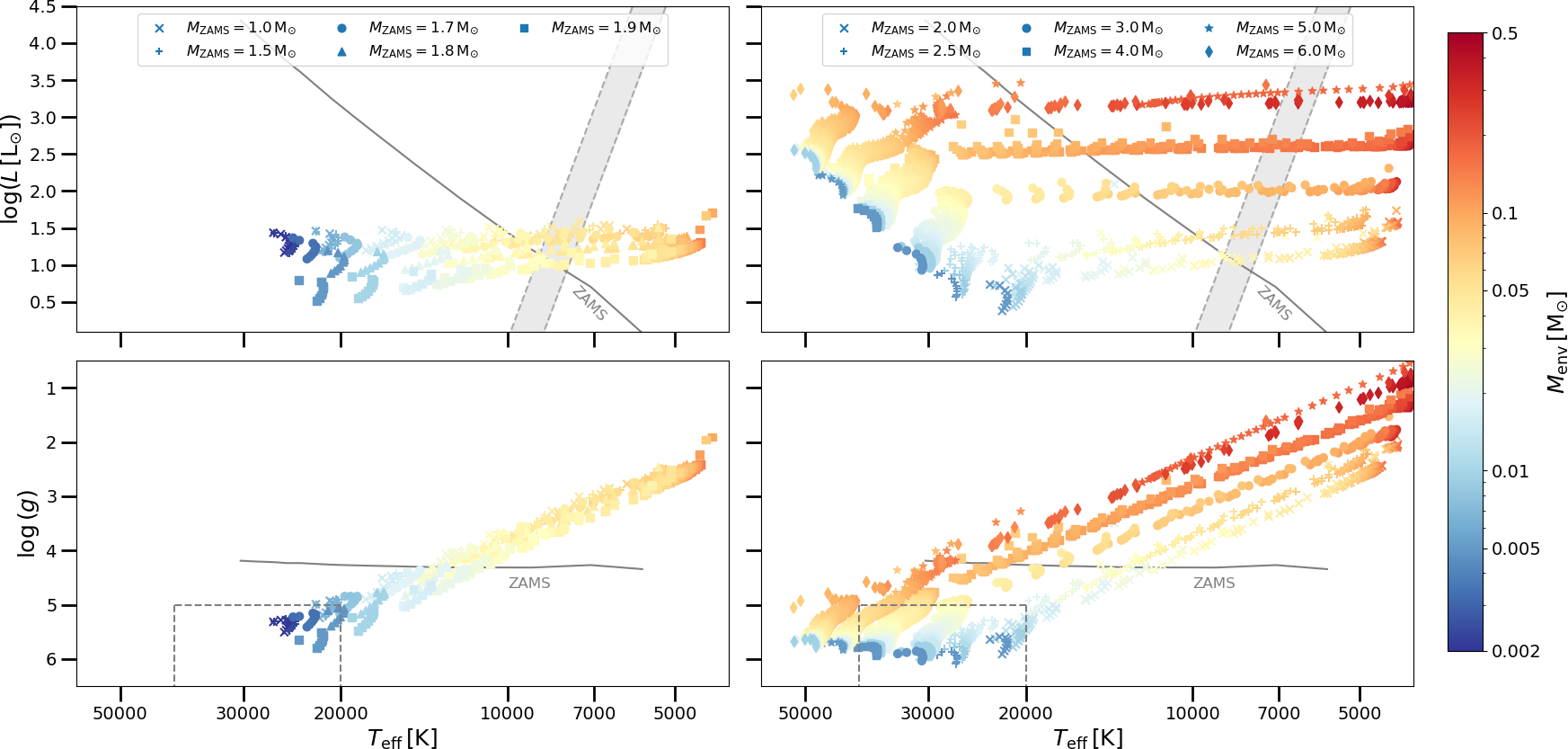
Fig 8: Location of our models during the hot subdwarf phase (as defined in Sect. 2) in the HR (top) and Kiel (bottom) diagrams. Left and right
Limitations
- The envelope stripping procedure uses idealized rapid mass removal (relax_mass in MESA) rather than self-consistent binary interaction simulations, so detailed orbital dynamics and mass transfer histories are not modeled.
- No direct observational comparisons or constraints beyond inferred consistency with hot subdwarf and blue hook phenomenology; spectroscopic data is not modeled explicitly.
- Models assume 1D stellar evolution physics and standard prescriptions for convection, overshooting, and mass loss which may not capture complex 3D or pulsation-driven effects.
- Metallicity range is limited to two values (Z=0.02 and Z=0.004) which may not capture full diversity of populations like metal-poor globular clusters.
- The impact of rotation, magnetic fields, or detailed diffusion processes on envelope retention and evolution are not explicitly included.
- The late hot flash scenario is thoroughly studied primarily for degenerate core progenitors; behavior for other cases may require further probing.
Open questions / follow-ons
- How do binary interaction histories and orbital parameters affect the timing and mass of envelope stripping more realistically than imposed relax_mass procedures?
- What is the impact of metallicity variations beyond Z=0.02 and Z=0.004 on the critical envelope mass thresholds and HB morphology?
- How do rotation, magnetic fields, and element diffusion modulate envelope retention, helium ignition, and post-HB tracks?
- Can detailed spectroscopic modeling of synthetic spectra from these evolutionary tracks improve classification and interpretation of observed hot subdwarf and blue hook populations?
Why it matters for bot defense
While this work addresses stellar evolution and astrophysics, its implications guide understanding of the physical origins and distributions of hot subdwarf and blue hook stars, which inform population synthesis models frequently used in binary star simulations. For bot-defense and CAPTCHA practitioners, the paper’s methodology of systematically isolating and varying physical parameters to understand outcome distributions can serve as an analogy for rigorous parameter sensitivity analyses in complex systems. The approach of defining precise evolutionary phase criteria (e.g., hot subdwarf phase by central helium abundance and nuclear energy dominance) parallels how strict classification boundaries are needed to separate signal from noise or bots from humans. Though astrophysical at core, the work exemplifies comprehensive modeling linking inputs (mass, timing, metallicity) to outputs (luminosity, temperature, lifetime) which is conceptually useful in designing defenses relying on evolutionary or temporal behavioral patterns.
Cite
@article{arxiv2606_12242,
  title={ Shaping the horizontal branch: The role of envelope mass in the evolution of stripped core-helium-burning stars },
  author={ Eduardo Arancibia-Rojas and Mónica Zorotovic and Maja Vučković and Alexey Bobrick and Alex Durán-Reyes },
  journal={arXiv preprint arXiv:2606.12242},
  year={ 2026 },
  url={https://arxiv.org/abs/2606.12242}
}