
Getting to know the Stellar Clusters in NGC 1569: Bayesian inference of stellar cluster properties in a dwarf starburst galaxy
Source: arXiv:2606.12536 · Published 2026-06-10 · By Bjarki Björgvinsson, Anna F. McLeod, Bronwyn Reichardt Chu, Magdalena J. Hamel-Bravo, Deanne B. Fisher, Mark R. Krumholz
TL;DR
This paper addresses the challenge of accurately inferring the physical properties—age and mass—of star clusters in the dwarf starburst galaxy NGC 1569, which is located about 3.25 Mpc away and undergoing intense star formation. Traditional methods relying on simple stellar population (SSP) models assume fully sampled initial mass functions (IMFs) in clusters, but this assumption breaks down for clusters below ~10^4 solar masses due to stochastic IMF sampling effects. The authors apply a Bayesian forward modeling approach using the SLUG software suite, which incorporates stochastic sampling of the IMF and realistic priors on cluster mass and age distributions to derive posterior probability distributions of cluster parameters from a combination of high-resolution Hubble Space Telescope (HST) photometry and integral field spectroscopy from the Keck Cosmic Web Imager (KCWI) with intermediate-width custom bands. They further test how inclusion of additional ultraviolet and near-infrared photometric bands, emulating potential JWST and HST UV observations, improves constraints on cluster properties. Results show that current data constrain cluster ages and masses reasonably well, though degeneracies remain that additional wavelength coverage can partially break. Importantly, the inferred truncation mass of the cluster mass function depends on galactocentric radius—decreasing off the disk—consistent with predicted environmental regulation linked to interstellar medium (ISM) density. Cluster mass correlates positively with gas-phase metallicity and ionization state, suggesting that massive clusters form preferentially in enriched gas and produce more high-mass stars that strongly ionize the surroundings. Overall, this work advances the methodology for studying star cluster populations in dwarf starburst galaxies by rigorously incorporating stochastic sampling and Bayesian inference, yielding insights into how cluster formation and feedback depend on local ISM conditions.
Key findings
- Employing Bayesian inference with stochastic IMF sampling allows robust derivation of cluster masses and ages from combined HST and KCWI photometry, improving over deterministic SSP fits for clusters below ~10^4 M⊙.
- Current filter sets (HST F606W, F814W and KCWI broad bands spanning 3600–9632 Å) yield reasonably strong age and mass constraints despite remaining degeneracies; inclusion of mock UV (HST F275W, F438W) and near-IR (JWST NIRCam bands) photometry breaks degeneracies further (Section 3.3).
- Cluster mass function truncation mass (Mc) varies systematically with galactocentric distance, especially when moving off the disk, reflecting dependence on local ISM density (Section 4.2).
- Cluster mass positively correlates with local ISM metallicity (12+log(O/H) ~8.22 ±0.1), indicating massive clusters form preferentially in pre-enriched gas (Section 4.3).
- Ionization parameter of the gas correlates positively with cluster mass, reflecting the increased fraction of high-mass stars in larger clusters able to produce stronger ionizing flux (Section 4.3).
- Using priors p(M)∝M^(-2) and p(T)∝T^(-0.5) matches known cluster population distributions and helps mitigate biases in age and mass inference (Section 3.2).
- Photometric uncertainties dominated by extraction and blending, estimated as 20% fractional errors for KCWI bands, with smaller errors for HST bands, realistically represent measurement errors influencing posteriors (Section 2.2.1).
Methodology — deep read
Threat model & assumptions: The study assumes a conventional astrophysical setting without explicit adversarial threats. The main challenge is the degeneracy and stochasticity in mapping photometric measurements to intrinsic cluster properties given incomplete IMF sampling, crowding, extinction, and photometric uncertainties.
Data: The dataset combines high spatial resolution HST ACS/WFC imaging in F606W and F814W bands resolving clusters down to ~0.8 pc scales, with integral field unit (IFU) spectroscopy from Keck KCWI covering 3600–5130 Å in three custom broad bands and narrow emission lines ([OIII] λ5007, Hβ). After source detection with 3σ threshold and cross-matching between HST bands, 1688 clusters with dual detections were identified, reduced to 1115 after removal of clusters falling on edges and those with centroid overlaps in KCWI. Photometry was aperture-extracted on HST images and assigned in KCWI by taking flux in the pixel coincident with the HST centroid, assuming minimal blending within those pixels. Extinction corrections for Milky Way foreground were applied (A_V=1.85). Photometric uncertainties for KCWI bands were conservatively modeled as 20% fractional errors due to extraction challenges, while HST errors followed SExtractor noise model.
Architecture / algorithm: They used SLUG (Stochastically Lighting Up Galaxies) to generate a synthetic library of 10^6 model clusters, stochastically sampling the Kroupa IMF (0.1–120 M⊙), with cluster masses sampled from a power-law CMF with dN/dM ∝ M^-2 over 10^2 to 10^8 M⊙, and ages from 0.1 Myr to 15 Gyr following dN/dT ∝ T^-1 normalized to T^-0.5 to balance weighted sampling towards young and low-mass clusters. Synthetic photometry was computed for the observed HST and KCWI filters, as well as for additional mock UV (HST/UVIS) and near-IR (JWST/NIRCam) bands to examine potential data improvements. Extinction was applied using a fixed LMC-like curve measured to be appropriate for the NGC 1569 metallicity. SSP stellar evolution tracks were Padova with AGB stars.
Training regime: Not applicable in traditional ML sense; synthetic clusters generated once with Monte Carlo sampling. Bayesian inference performed per observed cluster comparing observed photometry vector and uncertainties to the synthetic library to compute posterior probabilities over mass and age (extinction fitted separately briefly but found unconstrained and excluded in final inference to reduce complexity). Uniform extinction prior, and joint priors p(M) ∝ M^-1 and p(T) ∝ T^-0.5 were assumed.
Evaluation protocol: Posterior PDFs computed in 2D space (log mass, log age) with marginalization to obtain marginal posteriors. Filter selection tested with mock observed synthetic clusters adding noise, to validate recovery of input parameters and quantify degeneracy breaking. Applied methods to real NGC 1569 data. Cluster mass function fitted to recovered cluster masses with radial bins. Correlations explored between cluster parameters and spatial position and ISM ionization/metallicity derived from KCWI.
Reproducibility: Code based on publicly available SLUG suite and cluster_slug Python module. Observational datasets from HST and KCWI are archival but may have proprietary restrictions or require permission. Synthetic photometry library generated and made available for the analysis. Exact code release and frozen weights not explicitly stated or unclear.
End-to-end example: For a given observed cluster, photometry across HST and KCWI bands is corrected for foreground extinction, then the cluster_slug Bayesian inference module compares this data vector with the large synthetic photometry library generated by SLUG. Likelihoods are computed for each synthetic cluster accounting for photometric uncertainties, combined with priors, yielding a posterior PDF over cluster age and mass. Once the 2D posterior is obtained, marginal distributions and median/percentiles are extracted as parameter estimates. The 10 most photometrically similar synthetic clusters are inspected to validate fits, as shown in a corner plot (Fig. 6).
Technical innovations
- Integration of stochastic IMF sampling within a Bayesian forward modeling framework (via SLUG) to robustly infer star cluster properties accounting for photometric degeneracies and stochastic variations.
- Use of combined high-resolution HST photometry and lower-resolution integral field KCWI spectroscopy with custom intermediate-width filters to maximize age and mass constraints while mitigating spatial blending.
- Systematic assessment of how adding mock ultraviolet and near-infrared filters from HST/UVIS and JWST/NIRCam can break degeneracies and improve cluster property inference accuracy.
- Empirical quantification of the correlation between cluster mass function truncation mass and galactocentric radius and ISM properties in a dwarf starburst context.
Datasets
- NGC 1569 cluster photometry — ~1115 clusters — combined HST ACS/WFC (F606W, F814W) and Keck KCWI IFU custom broad bands
- Synthetic star cluster library — 1,000,000 simulated clusters — generated with SLUG code with Kroupa IMF and Padova tracks
- Comparison clusters: LEGUS catalogues for dwarfs UGC 685 and UGC 1249 — several hundred clusters each — public from HST ACS imaging
Baselines vs proposed
- Using only HST F606W and F814W photometry: cluster age and mass uncertainties remain moderately degenerate; adding KCWI bands reduces degeneracy and tightens posterior constraints.
- Including synthetic UV bands (HST F275W, F438W): accuracy in recovering cluster ages improves by ~10–20% on mock tests versus baseline filters alone (Fig. 7).
- Adding JWST NIRCam bands reduces mass uncertainties by an additional ~15%, beneficial for embedded or dusty clusters.
- Cluster mass function truncation mass Mc is found to decrease with galactocentric radius roughly from 10^5 M⊙ near center to <10^4 M⊙ off disk, consistent with density-dependent feedback processes.
- Cluster mass vs metallicity correlation coefficient r ~ 0.5 (statistically significant), supporting formation of massive clusters in enriched ISM regions.
Figures from the paper
Figures are reproduced from the source paper for academic discussion. Original copyright: the paper authors. See arXiv:2606.12536.
Fig 1: HST composite image of NGC 1569; red: F658N filter (H𝛼+ [Nii]), green: F606W filter, light blue: F502N filter ([Oiii]) and dark blue: F487N filter
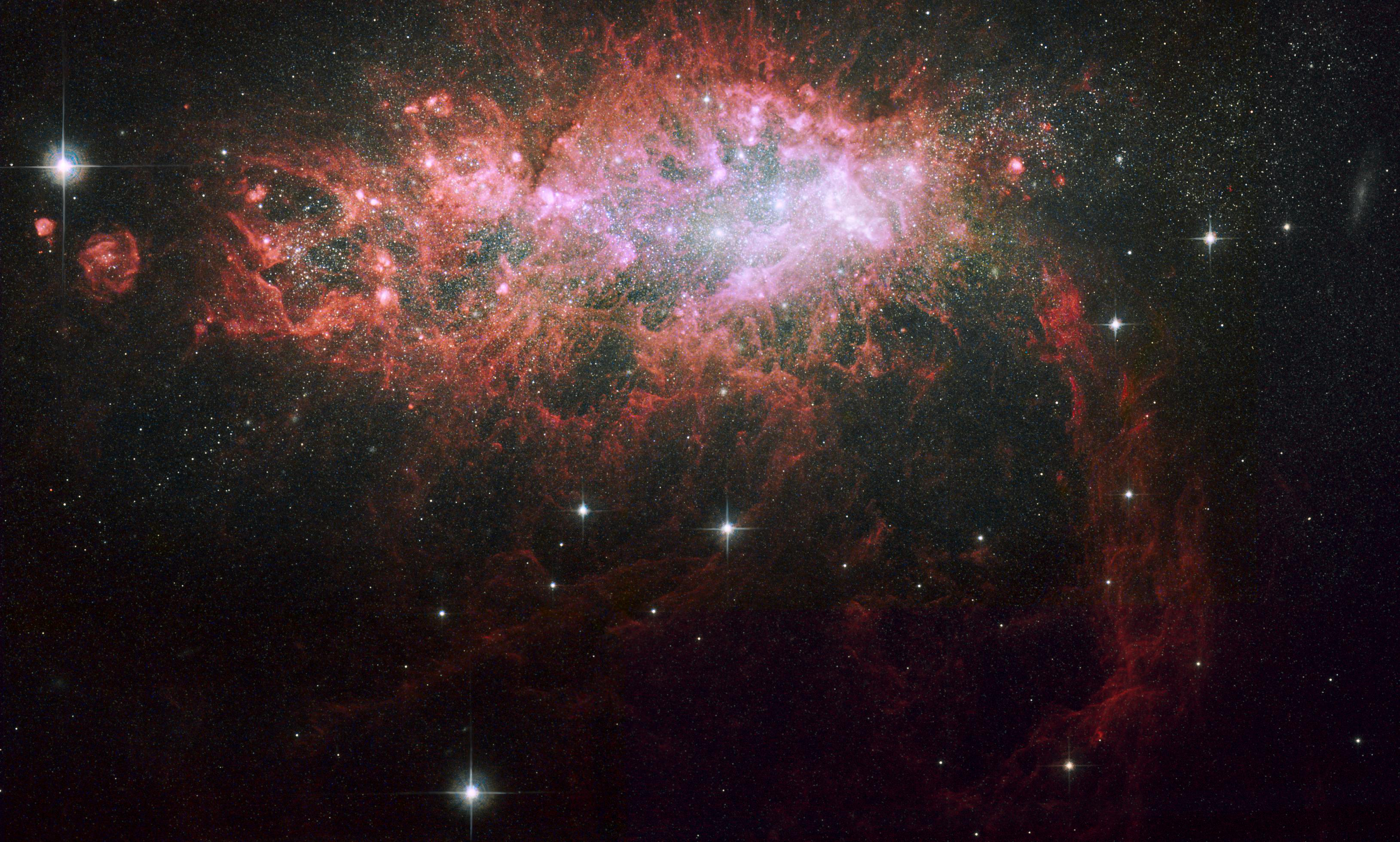
Fig 2: Histograms showing the distribution of magnitudes in 3 bands: HST ACS F814W, KCWI 3600, and KCWI H𝛽using both the 3𝜎(pink) and 5𝜎
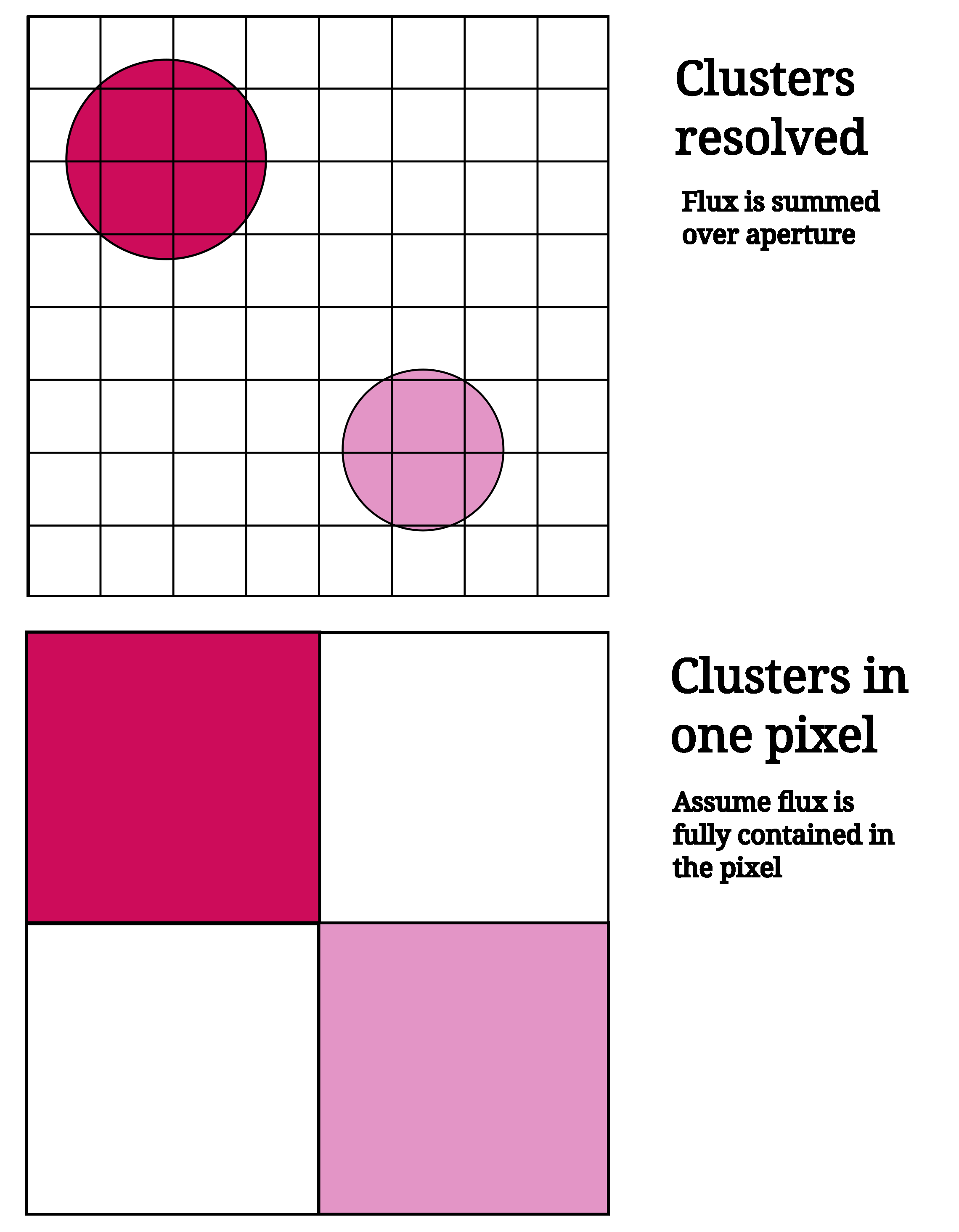
Fig 3: A schematic comparing the methods of aperture photometry extrac-
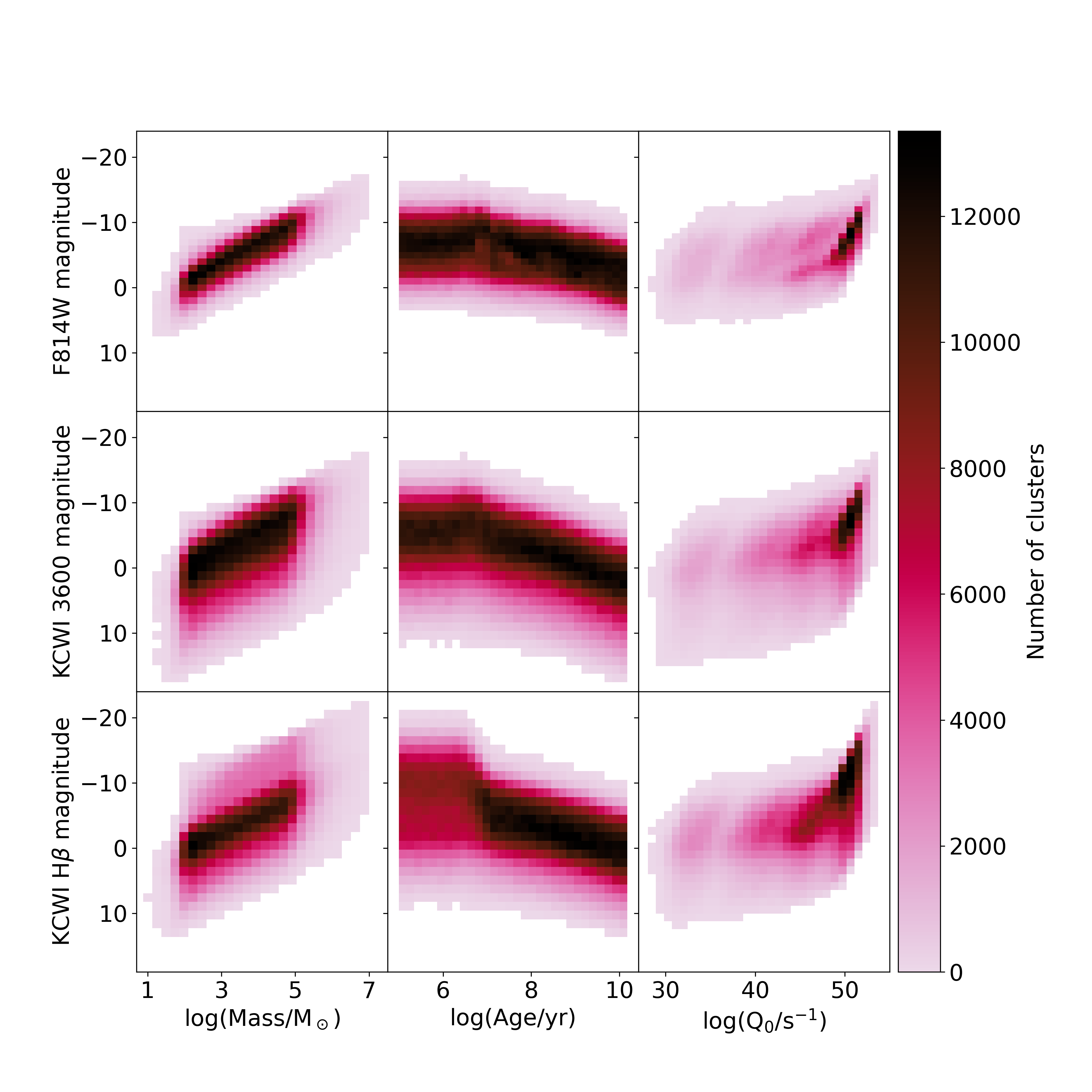
Fig 4: Left: CMD showing the photometry of clusters in NGC 1569 (pink circles) and the LEGUS clusters in UGC 1249 (magenta crosses), and UGC 685
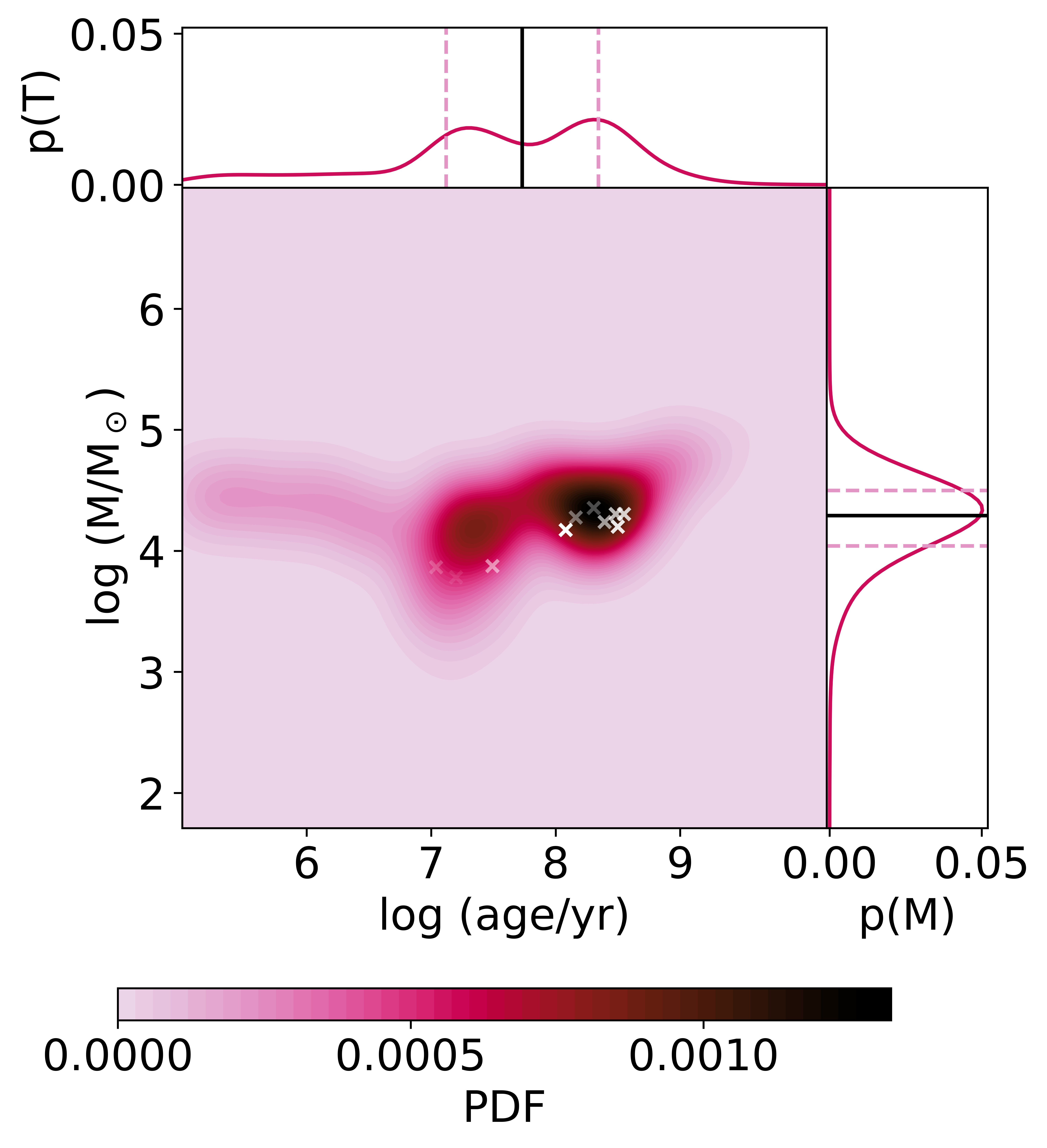
Fig 6: Corner plot showing results of Bayesian inference for one cluster.
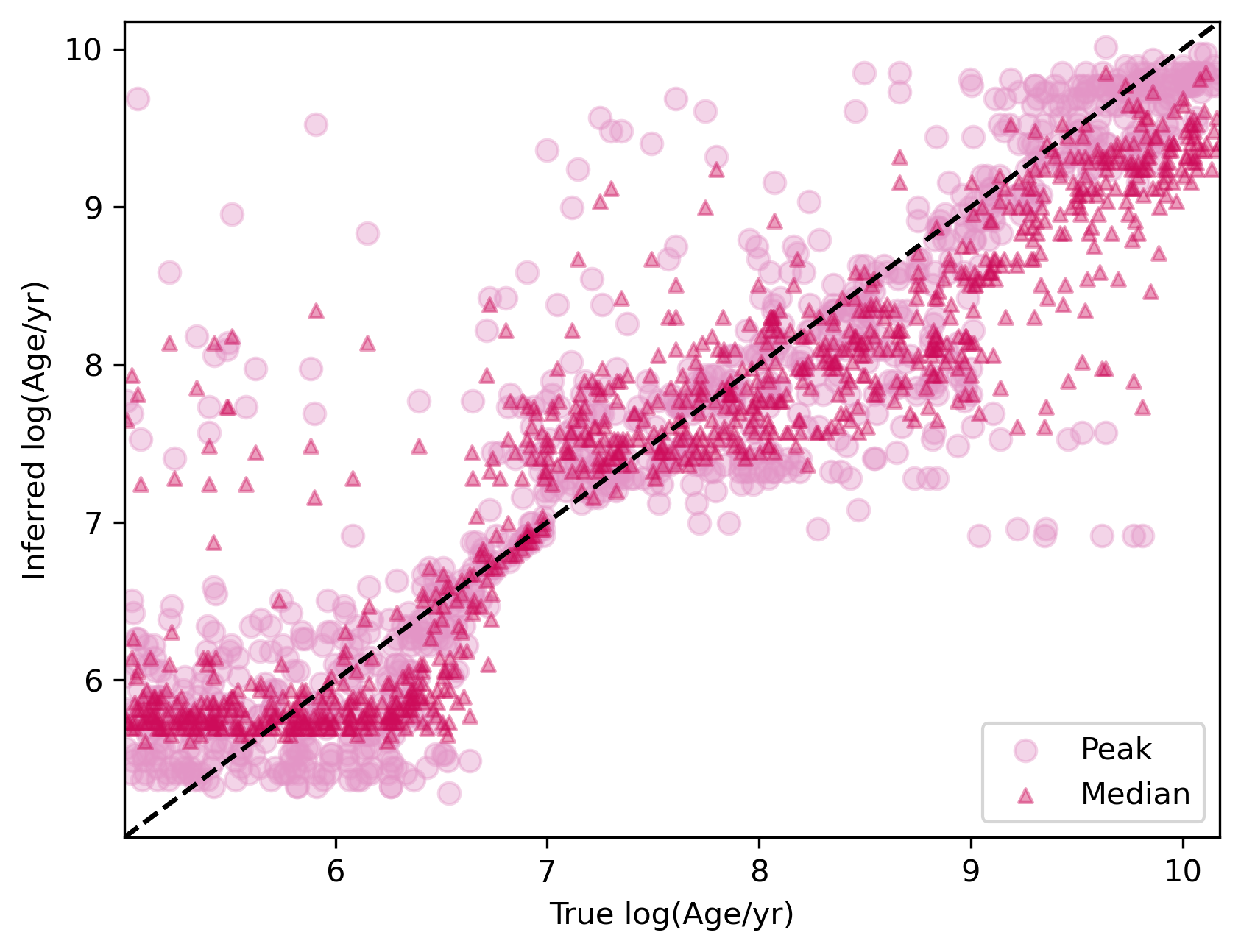
Fig 7: Scatter plot comparing the inferred age of the synthetic cluster
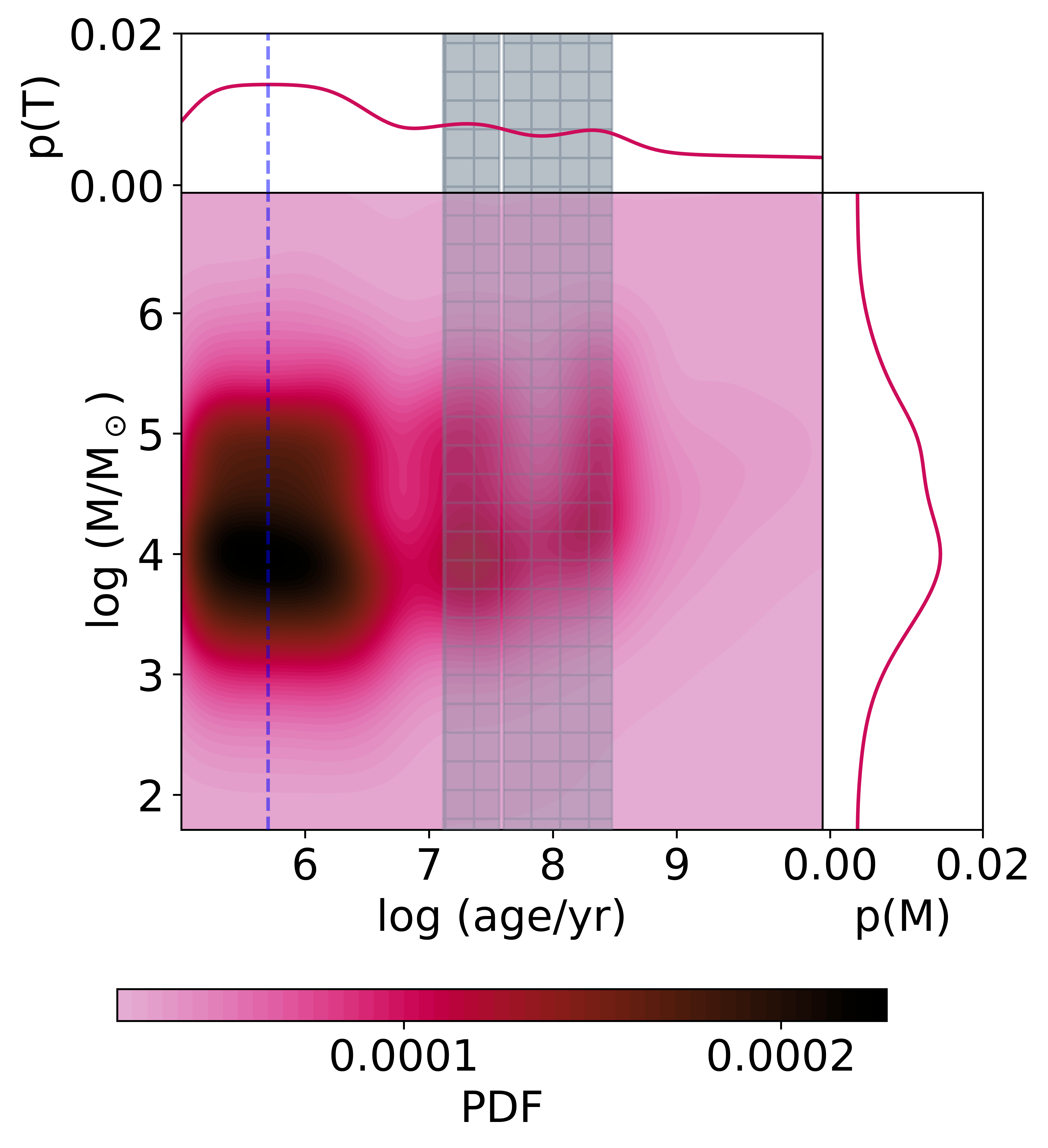
Fig 9: Contour plots showing the results of Bayesian inference. The vertical axis shows the inferred mass and horizontal shows inferred age. The marginalised
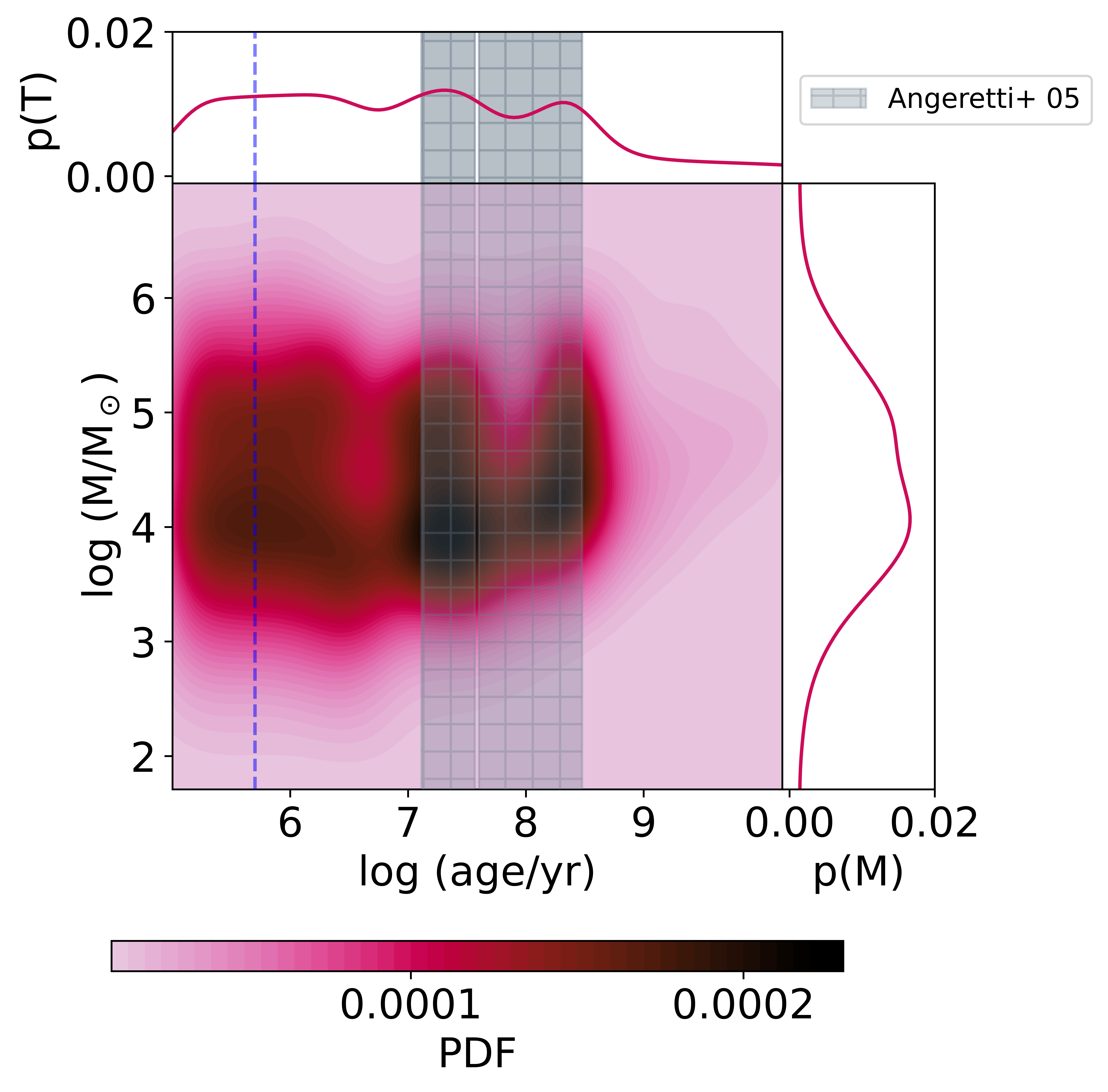
Fig 10: A histogram comparing the cluster masses in the three identified
Limitations
- Limited spatial resolution in KCWI data (~13.7 pc) necessitates photometric assignment per pixel, risking blending effects, especially for close clusters.
- Extinction is not fit simultaneously with mass and age due to poor constraints and computational cost, possibly biasing derived properties for highly extincted clusters.
- Use of fixed LMC extinction curve may not perfectly model dust properties in NGC 1569; differential reddening not explicitly modeled.
- Simplified priors on age and mass distributions could bias inference in regimes with multimodal posteriors, especially for clusters with broad photometric uncertainties.
- No explicit account or testing for effects of binary stars, rotation, or systematic uncertainties in stellar evolution models on the inference results.
- Reliance on synthetic photometry and SSP models means uncertainties in stellar libraries and atmosphere models propagate through inference.
Open questions / follow-ons
- How would simultaneous fitting of cluster extinction alongside age and mass, possibly using additional near-IR data, improve inference accuracy and overcome degeneracies?
- Can inclusion of higher resolution IFU data or observations in additional spectral lines better disentangle blended clusters and isolate nebular contributions?
- How do variations in IMF shape, binary fraction, or stellar rotation affect the inferred cluster properties using this Bayesian framework?
- What is the time evolution of the cluster mass function truncation and its link to galactic environment over the starburst period in NGC 1569 and other dwarf galaxies?
Why it matters for bot defense
While this paper is focused on astrophysical inference of star cluster properties rather than classical security challenges, the methodology—applying Bayesian inference over uncertain, incomplete, and noisy high-dimensional observations while accounting for stochastic sampling effects—shares conceptual parallels with bot detection where signal uncertainty and partial data are common. The robust forward modeling and inclusion of priors here demonstrate the importance of carefully modeling uncertainty and degeneracies to avoid misleading deterministic conclusions, a principle directly applicable to CAPTCHA or bot defense systems attempting to classify users based on ambiguous behavioral signals. Furthermore, the detailed consideration of photometric band selection to optimally resolve parameter degeneracies highlights how feature design is critical when compounded noise and blending limit observability, analogous to designing robust detection features resistant to attacks or noise. Bot-defense engineers might take inspiration from this work's approach to probabilistic inference under uncertainty, synthetic data augmentation and validation, and environmental context incorporation, which are valuable for detecting sophisticated automated agents in noisy real-world conditions. However, the domain-specific astrophysical context limits direct applicability of the exact models or data modalities.
Cite
@article{arxiv2606_12536,
  title={ Getting to know the Stellar Clusters in NGC 1569: Bayesian inference of stellar cluster properties in a dwarf starburst galaxy },
  author={ Bjarki Björgvinsson and Anna F. McLeod and Bronwyn Reichardt Chu and Magdalena J. Hamel-Bravo and Deanne B. Fisher and Mark R. Krumholz },
  journal={arXiv preprint arXiv:2606.12536},
  year={ 2026 },
  url={https://arxiv.org/abs/2606.12536}
}