
Spatially heterogeneous power-law attenuation with multiple relaxation mechanisms for ultrasound modeling
Source: arXiv:2606.11103 · Published 2026-06-09 · By Masashi Sode, Gianmarco Pinton
TL;DR
This paper addresses the challenge of accurately modeling spatially heterogeneous power-law frequency-dependent attenuation in biological tissues for ultrasound simulations. Prior models, including Fullwave 2, achieved less than 5% attenuation error for homogeneous tissue types but required manual tuning of relaxation parameters (α0, y) limiting practical tissue library construction and preventing spatially varying exponent modeling. The authors introduce Fullwave 2.5, an automated calibration framework employing derivative-free Nelder-Mead optimization to systematically fit multi-relaxation parameters across 1328 (α0, y) tissue combinations spanning a broad physiological range. They extend this framework to enable spatial heterogeneity in both attenuation magnitude α0(x) and power-law exponent y(x), with stability ensured via convolutional perfectly matched layer (C-PML) boundary conditions with matching relaxation formulations. Validation against analytical solutions across 1–20 MHz demonstrated mean attenuation errors below 3% and dispersion errors around 1.1 ± 0.8 m/s for y = 0.7–1.4, as well as low boundary reflections below −50 dB for y ≤ 1.5. Two-layer heterogeneous muscle/fat/liver phantom simulations showed per-layer accuracy under 2.5% normalized error. A 3D abdominal simulation based on the Visible Human dataset showed stable time-domain ultrasound propagation with voxel-scale spatially varying power-law attenuation. The open-source multi-GPU Fullwave 2.5 platform therefore delivers a flexible, practical toolchain for patient-specific modeling, quantitative imaging, therapeutic planning, and inverse problems in ultrasound.
Key findings
- Fullwave 2.5 achieves mean attenuation errors below 3% over 1–20 MHz for the full tissue parameter range α0 = 0.0022–1.0 dB/(MHz^y cm), y = 0.4–2.0.
- Dispersion errors measured as phase velocity deviations are 1.1 ± 0.8 m/s across clinically relevant exponent range y = 0.7–1.4.
- Boundary reflections measured via C-PML are below −50 dB for tissue exponents y ≤ 1.5, demonstrating stable absorbing boundaries.
- Automated Nelder-Mead optimization across 1328 (α0, y) pairs generates calibrated relaxation parameters in ~10 hours on a 32-core CPU, replacing laborious manual grid search.
- Two-layer heterogeneous muscle/fat/liver simulation yields per-layer normalized attenuation errors under 2.5%, validating spatial heterogeneity modeling.
- 3D abdominal ultrasound simulations with voxel-level spatially varying α0(x) and y(x) demonstrate stable ultrasound wave propagation in realistic anatomy.
- Fullwave 2.5 supports multi-GPU CUDA execution, enabling large-scale 3D simulations with eighth-order spatial and fourth-order temporal accuracy.
- Optimization comparison found Nelder-Mead outperformed gradient-based and other derivative-free algorithms by 2-3 orders of magnitude in objective function minimization.
Threat model
Not a security-focused paper. The adversary in ultrasound simulation context might be inaccurate modeling due to heterogeneous and dispersive tissue properties. The work assumes prior knowledge of tissue characteristics α0(x) and y(x) maps to simulate wave propagation faithfully, with the goal to minimize simulation errors from attenuation and dispersion mismatches.
Methodology — deep read
The authors consider the problem of modeling spatially heterogeneous power-law attenuation α(x,f) = α0(x)f^{y(x)} in ultrasound wave propagation through biological soft tissues, where both the amplitude coefficient α0 and frequency exponent y vary at sub-wavelength spatial scales. The threat model is the need for accurate, causal, memory-friendly time-domain ultrasound simulations suitable for heterogeneous tissue libraries without manual parameter tuning.
They start from the multiple relaxation framework previously implemented in Fullwave 2, which models attenuation and dispersion via a set of Debye relaxation mechanisms incorporated into staggered-grid finite-difference time-domain (FDTD) simulations with convolutional perfectly matched layer (C-PML) boundaries. The model uses modified pressure-velocity equations with complex coordinate stretching operators, augmented by auxiliary relaxation variables updated recursively at each time step per relaxation mechanism.
The challenge addressed is selecting relaxation parameters (κ, d, α per mechanism and spatial direction) that approximate the target complex wavenumber k(ω) consistent with the power-law attenuation and Kramers-Krönig dispersion over 1–20 MHz range for arbitrary α0, y inputs with spatial heterogeneity. Manually tuning these parameters for each (α0, y) pair is prohibitively slow and impractical.
To automate this, they develop a derivative-free optimization framework using the Nelder-Mead simplex method to minimize a complex wavenumber mismatch objective J(k_GT, k_pred) = mean squared error between normalized real and imaginary parts of the analytical complex wavenumber (from physics-based power-law and Kramers-Krönig relations) and the predicted relaxation model wavenumber. The objective weighs attenuation and dispersion terms with adaptive parameter w selected for each tissue parameter pair by evaluating a discrete set of weights and choosing the best attenuation fit.
They optimize over two relaxation mechanisms (N=2) per relaxation operator direction (∇1 and ∇2), resulting in 10 parameters, with logarithmic and linear parameter transformations and physically motivated parameter bounds that ensure passivity and causality. Optimization is done for 1328 (α0, y) pairs spanning the physiological soft tissue parameter ranges (α0 = 0.0022 to 1.0 dB/(MHz^y cm), y = 0.4 to 2.0).
Following parameter selection, the calibrated relaxation parameters form look-up tables used in multi-GPU CUDA-accelerated FDTD simulations with 8th-order spatial and 4th-order temporal accuracy at 16 points per wavelength and CFL=0.2. Simulation domains for validation include homogeneous attenuation measurements via plane wave propagation, heterogeneous two-layer muscle/fat/liver models, and a 3D abdominal model from the Visible Human dataset. Simulated attenuation coefficient, dispersion phase velocity, and reflection coefficients are measured per frequency, with metrics including normalized root mean square error (NRMSE) and absolute phase velocity error.
Validation shows good agreement with analytical solutions with <3% attenuation error and ~1 m/s dispersion error in core exponent range. Boundary reflections remain low. The two-layer heterogeneous tests confirm accurate per-layer attenuation prediction despite reflection effects. The 3D heterogeneous case demonstrates stable propagation with voxel-level spatially varying attenuation and exponent maps. All code, parameter tables, and test data are publicly released for reproducibility and further research. Overall, the methodology tightly integrates physics-based modeling, automated optimization, high-order FDTD simulation, and multi-GPU acceleration to realize practical ultrasound simulation with spatially heterogeneous power-law attenuation.
Technical innovations
- Automated derivative-free Nelder-Mead optimization framework systematically calibrates two relaxation mechanism parameters across 1328 (α0, y) tissue parameter combinations, replacing manual tuning.
- Extension of multiple relaxation FDTD modeling to support spatially heterogeneous power-law exponents y(x), enabling realistic smooth tissue heterogeneity modeling.
- Use of complex wavenumber mismatch objective function normalized separately for real and imaginary parts, with adaptive weighting to prioritize attenuation fitting while maintaining causal dispersion accuracy.
- Integration of relaxation parameterized attenuation into convolutional perfectly matched layers (C-PML) sharing the same relaxation formulation for stable, low-reflection boundary conditions.
- Multi-GPU CUDA-accelerated FDTD simulation with eighth-order spatial and fourth-order temporal accuracy optimized for heterogeneous power-law attenuation modeling at high spatial resolution.
Datasets
- Visible Human abdominal CT-derived voxel-level tissue parameter maps used for 3D heterogeneous ultrasound simulation, size not explicitly stated, public source.
- Synthetic 2-layer muscle/fat/liver heterogeneous phantoms constructed with typical literature acoustic properties for validation.
Baselines vs proposed
- Fullwave 2 manual parameter tuning: attenuation error < 5% on select fixed tissue types vs Fullwave 2.5 automated optimization: attenuation error < 3% over broad 1328 tissue combinations.
- Nelder-Mead optimization: objective function minimum 2–3 orders of magnitude better than gradient-based Adam and other derivative-free methods in parameter fitting.
- Boundary reflection coefficient: Fullwave 2.5 C-PML boundaries achieve < −50 dB at tissue exponents y ≤ 1.5 compared to unspecified prior boundary stability.
Figures from the paper
Figures are reproduced from the source paper for academic discussion. Original copyright: the paper authors. See arXiv:2606.11103.

Fig 2: Simulation domain for attenuation coefficient, dispersion measurements, and reflection coefficient measure-

Fig 2 (page 8).
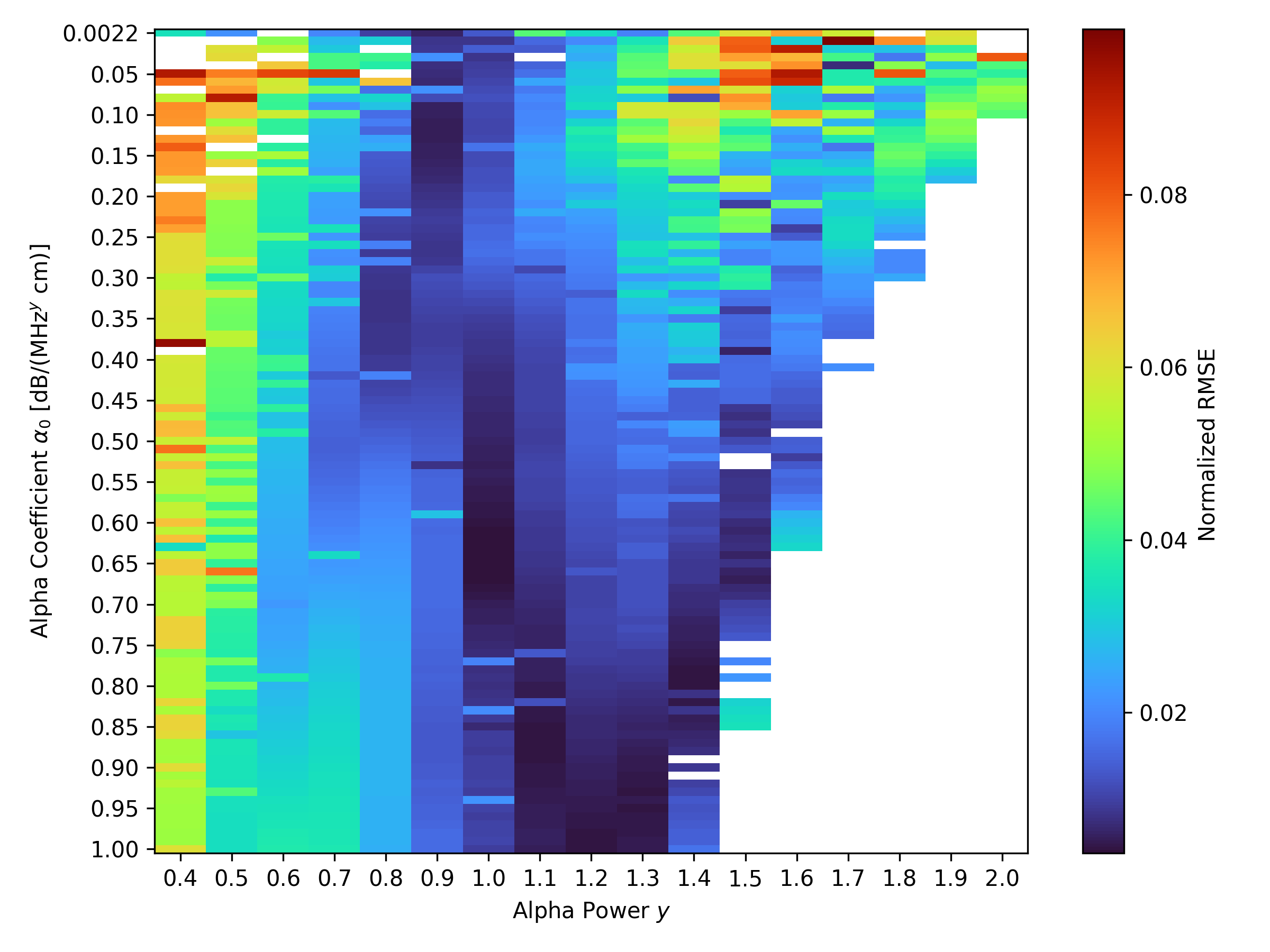
Fig 3: Comparison between the simulated and theoretical attenuation strength for different attenuation coefficients
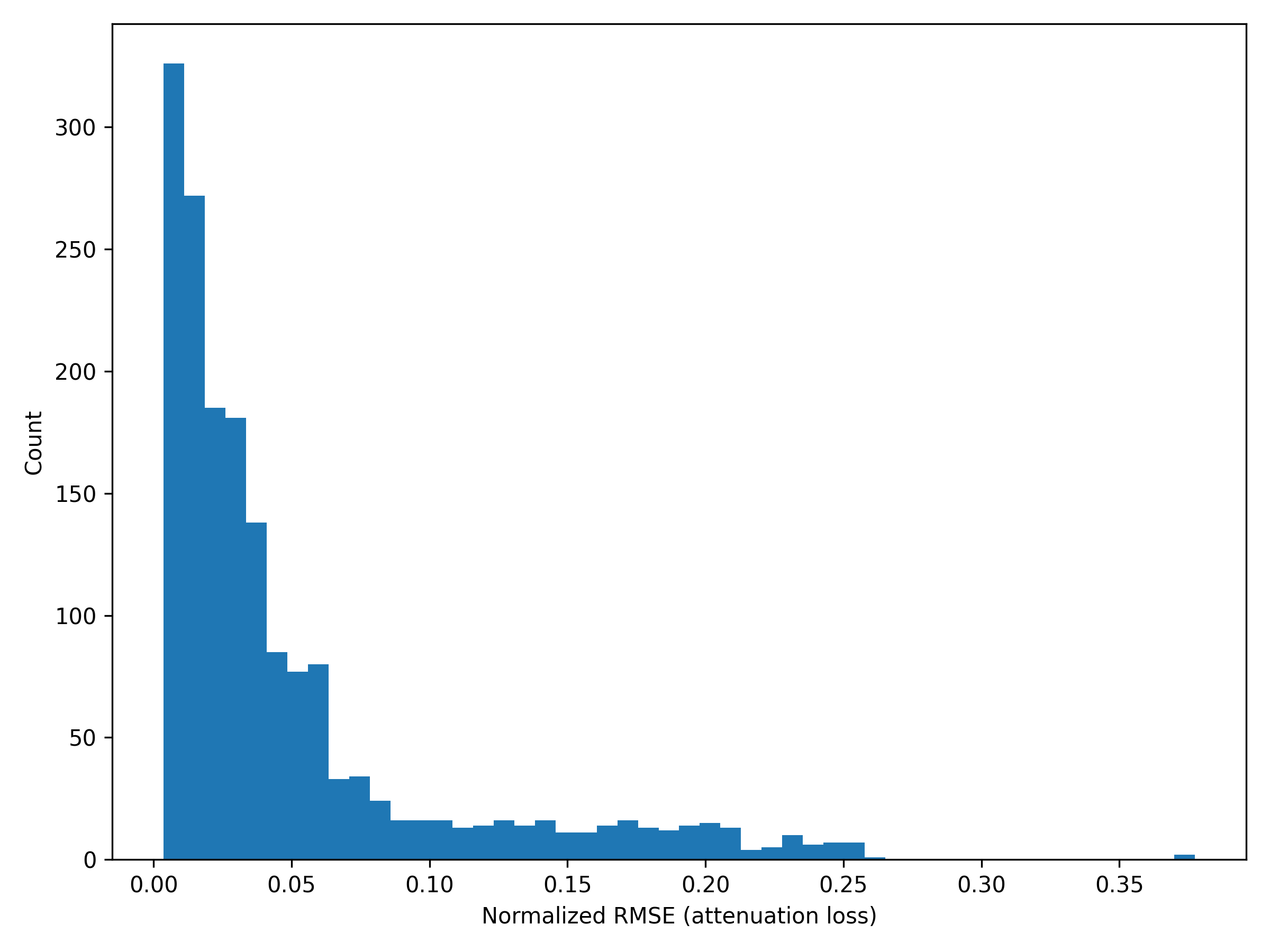
Fig 4: (a) Normalized RMSE between the simulated and theoretical attenuation coefficients across the full optimiza-
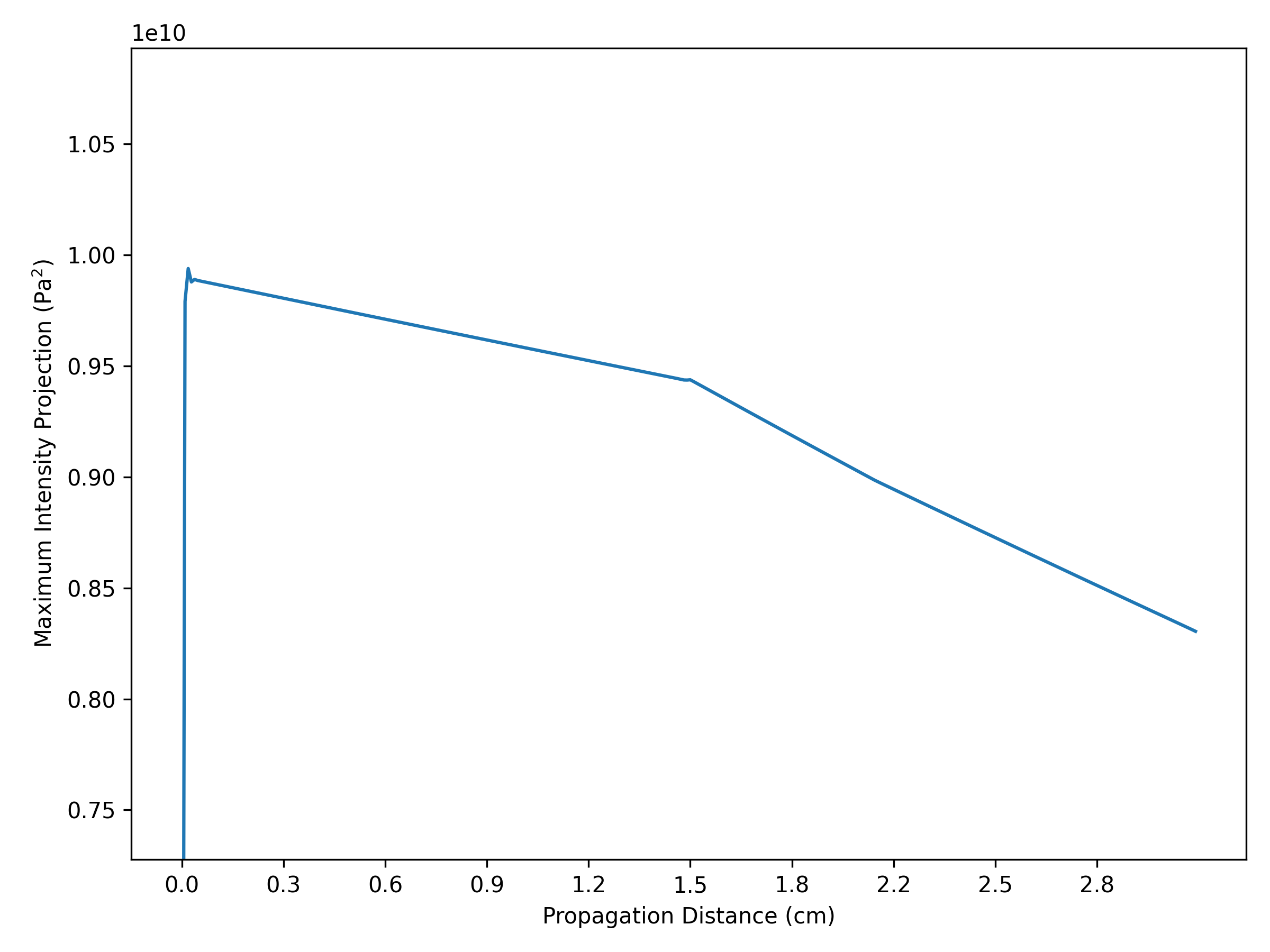
Fig 5: Comparison between the simulated and theoretical dispersion for different attenuation coefficients and ex-
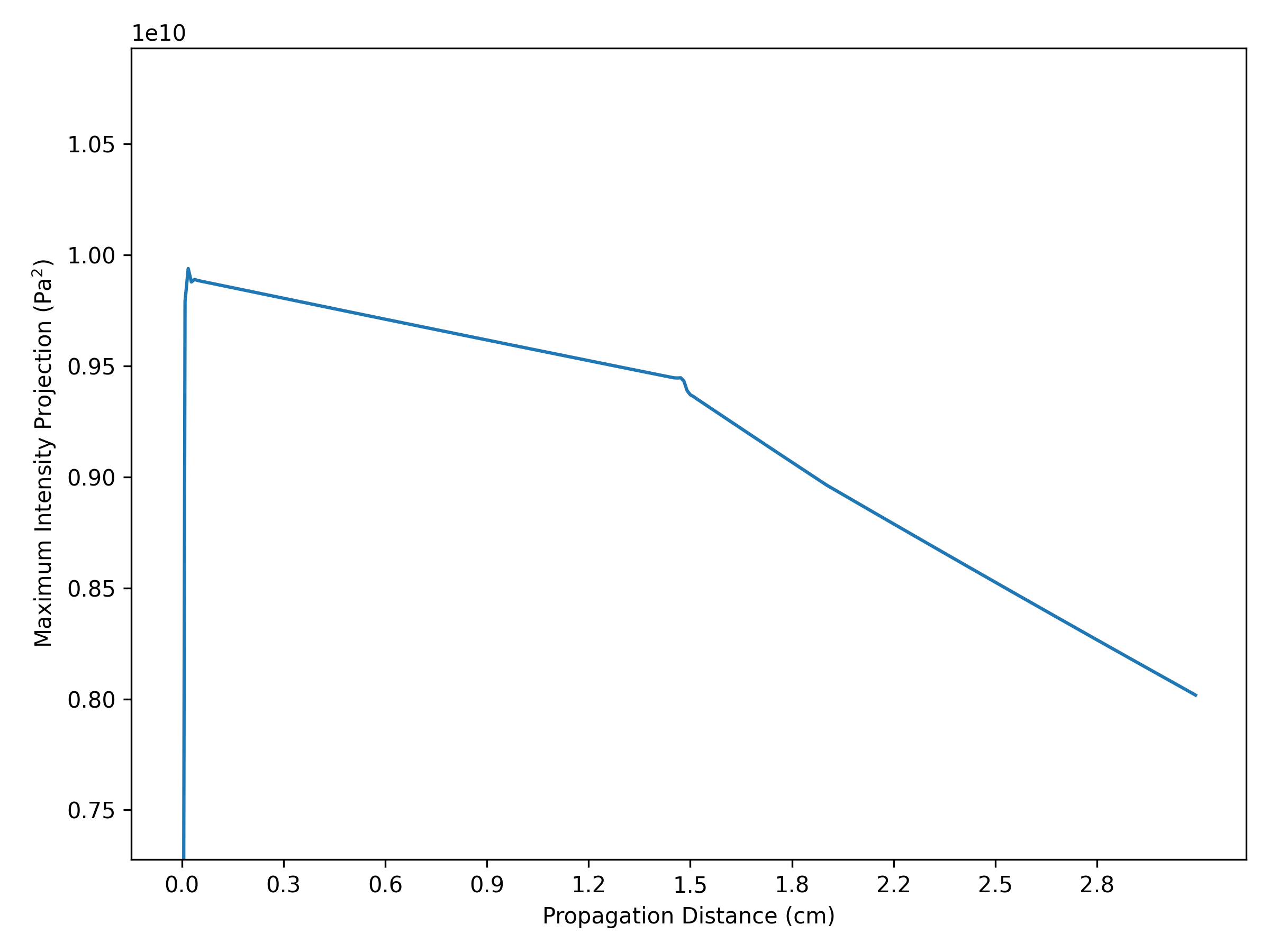
Fig 6: Maximum intensity projection (MIP) at the center axis of the simulation domain when the wave propagates
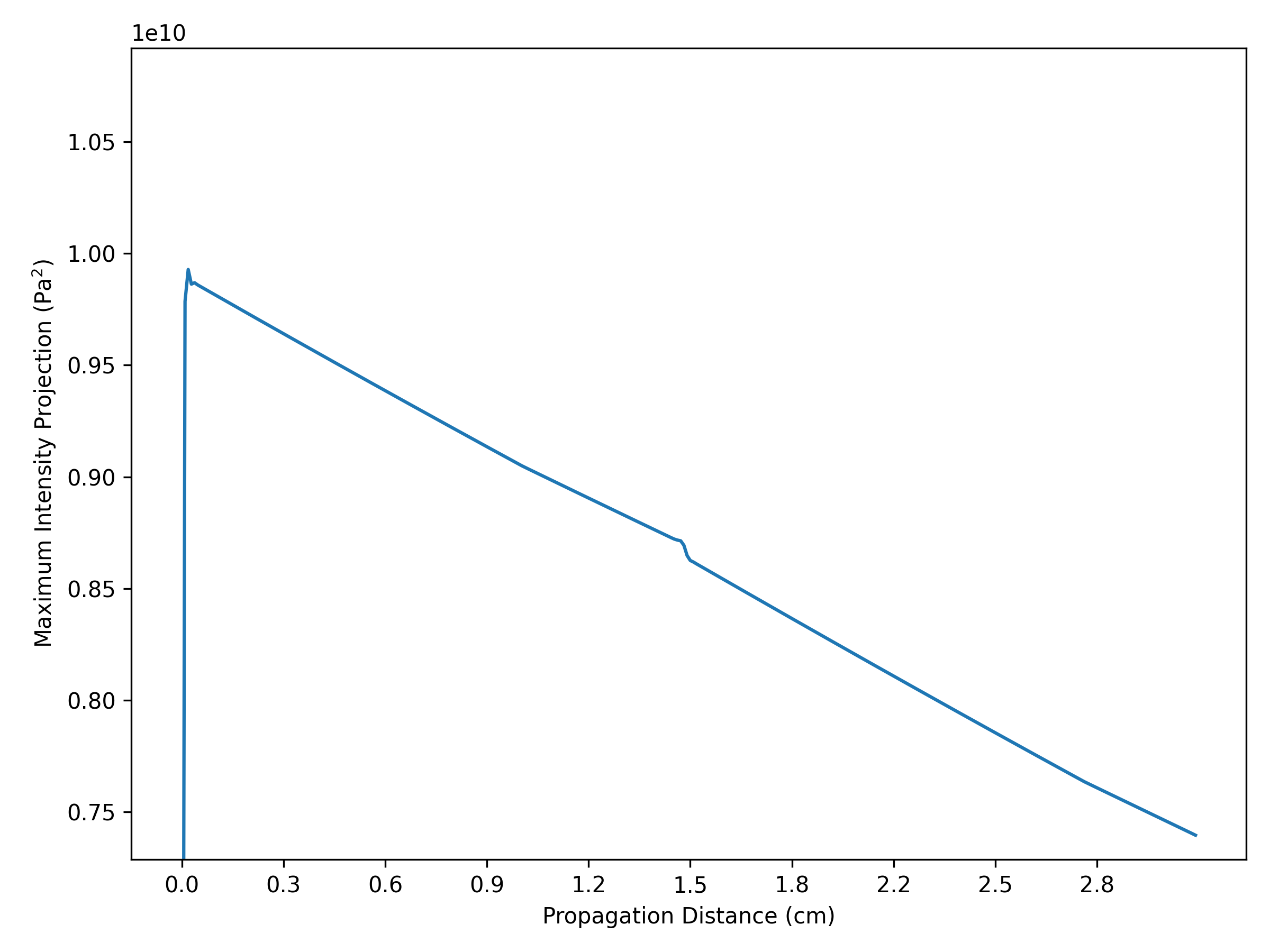
Fig 7: The input heterogeneous medium to demonstrate the simulation of heterogeneous power-law attenuation. It
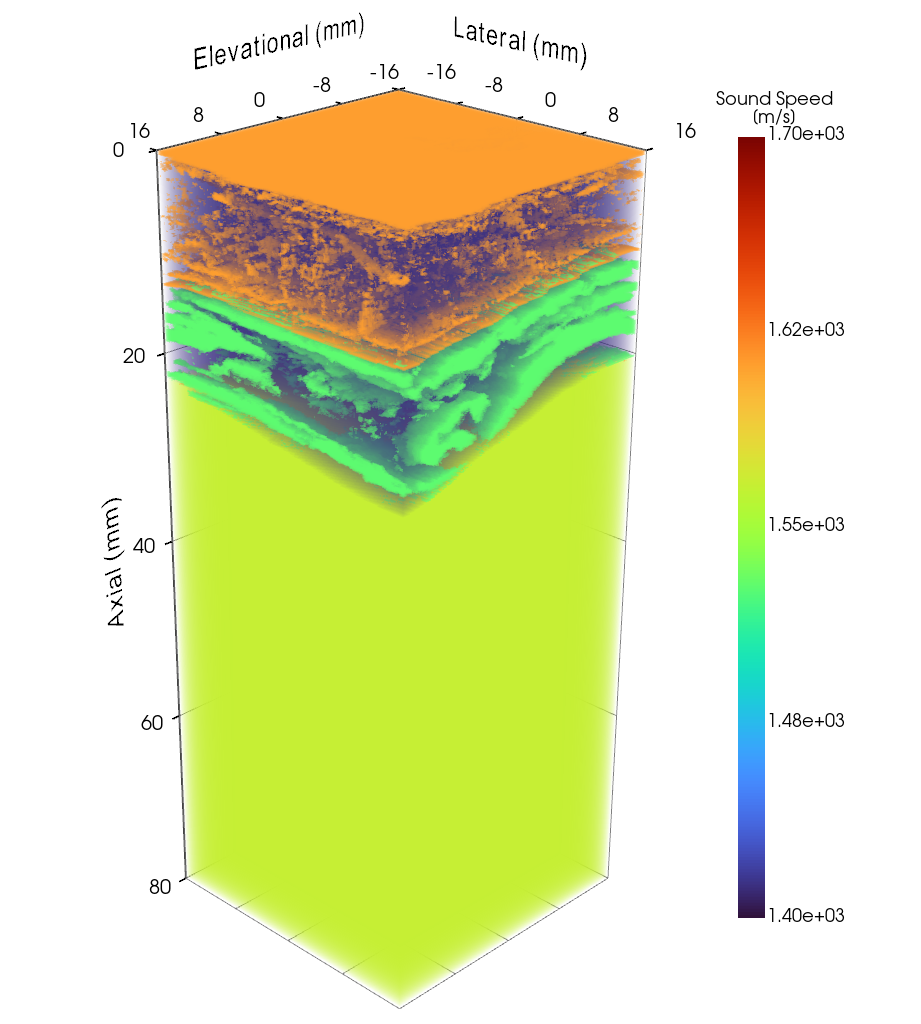
Fig 8: The wave propagation in the abdominal wall and liver model with heterogeneous power-law attenuation.
Limitations
- Optimization and validation limited to 1–20 MHz frequency band; behavior outside band not characterized.
- Dispersion error tolerance chosen heuristically; impact on downstream imaging or therapy accuracy not quantified.
- Two-layer heterogeneous validation limited to planar interfaces; more complex tissue geometries and transitions need evaluation.
- High computational cost of initial 10-hour optimization pipeline may limit on-the-fly parameter updates for novel tissues or pathologies.
- No adversarial robustness or in vivo experimental validation presented; methods rely on analytic targets and synthetic phantoms.
- Power-law exponent range capped at 0.4–2.0; tissues or pathology potentially exhibiting exponents outside this range are unsupported.
Open questions / follow-ons
- How does the Fullwave 2.5 framework perform under in vivo conditions with complex anatomical, vascular, and pathological heterogeneities?
- Can the optimization framework be extended to more than two relaxation mechanisms to improve broadband accuracy or represent more complex viscoelastic behavior?
- What are the impacts of small errors in dispersion and attenuation modeling on downstream clinical quantitative ultrasound metrics or therapy dose estimations?
- How well does the method scale with increasing frequency beyond 20 MHz or lower-frequency clinical ultrasound bands?
Why it matters for bot defense
While this paper is primarily focused on accurate physical simulation of ultrasound wave propagation through heterogeneous tissues, its technical methodology highlights key general principles applicable to bot-defense and CAPTCHA domains. The use of automated derivative-free optimization to fit complex parameterized models across large combinatorial parameter grids shows how to efficiently calibrate intricate system components without manual tuning. Modeling spatial heterogeneity with parameter lookup tables and multi-GPU acceleration demonstrates scalable simulation of high-dimensional, spatially varying processes. The careful definition of objective functions that balance multiple competing criteria (attenuation and dispersion) illustrates the importance of weighting terms appropriately in optimization frameworks. Although not related to bot-defense directly, practitioners can draw inspiration on combining physics-informed modeling with advanced optimization and scalable computation to tackle complex heterogeneous environments or distributions encountered in security challenges. The open-source nature of Fullwave 2.5 sets a precedent for releasing reproducing artifacts to foster community verification, parallel to transparency goals in bot detection research. Thus, while no direct CAPTCHA or bot-defensive mechanism is proposed, the paper’s methodology and validation rigor exemplify robust model calibration and scalable simulation useful for research engineers in defensive system design.
Cite
@article{arxiv2606_11103,
  title={ Spatially heterogeneous power-law attenuation with multiple relaxation mechanisms for ultrasound modeling },
  author={ Masashi Sode and Gianmarco Pinton },
  journal={arXiv preprint arXiv:2606.11103},
  year={ 2026 },
  url={https://arxiv.org/abs/2606.11103}
}