
Pre-Fault Voltage Discrimination and Time-Domain Protection for Distribution Networks with Inverter-Based Resources
Source: arXiv:2606.11135 · Published 2026-06-09 · By Junyuan Zhao, François Bouffard, Géza Joós
TL;DR
This paper addresses the challenge of fault detection in distribution networks increasingly penetrated by inverter-based resources (IBRs), which produce low short-circuit fault currents that undermine traditional phasor-based overcurrent protection schemes such as ANSI 51. To overcome this, the authors propose a pre-fault voltage discrimination (PVD) strategy combined with time-domain protection principles leveraging traveling wave (TW) phenomena. PVD detects faults by first identifying discontinuities in voltage derivatives to capture the first traveling wave arrival, independent of TW amplitude. Then it uses the ratio of the TW amplitude to pre-fault voltage (TWPV) to discriminate faults from normal switching events and transformer inrush. The resulting algorithm improves fault detection speed while maintaining security and dependability.
The authors validate their approach using offline electromagnetic transient simulations on a modified IEEE 34 node test feeder with embedded IBRs, followed by controller hardware-in-the-loop (C-HIL) real-time simulations on an islanded microgrid with an IBR. Results show that faults with moderate to high TWPV trigger very fast detection within tens of microseconds, significantly quicker than conventional overcurrent supervision (which detects faults within one cycle). Transformer inrush and switching events are reliably excluded via a nonlinear SSE fitting test and threshold checks. The method therefore offers a practical, interpretable, and robust time-domain protection algorithm tailored for distribution grids dominated by IBRs.
Key findings
- Proposed PVD strategy detects faults by first identifying voltage rate-of-change (dV/dt) spikes rather than relying solely on TW amplitude, allowing dependable detection even under low TW amplitudes caused by low fault currents from IBRs.
- Faults with traveling wave to pre-fault voltage ratio (TWPV) ≥ 1 trigger immediate trip signals (TF) within tens of microseconds (e.g., FT2 fault detected in 0.036 ms), significantly faster than backup overcurrent supervision which detects within 8.5–13 ms (Table IV).
- Faults initiating near zero pre-fault voltage (e.g., FT1 at 0°) are detected by backup overcurrent supervision within one cycle but bypass TW detection.
- The nonlinear least squares SSE fitting test of measured current waveform distinguishes transformer inrush from faults, with high SSE for inrush cases (e.g., SW5 PV transformer energization) leading to blocking of fault trip.
- Simulation on the modified IEEE 34 node feeder with two PV inverters (750 kW and 500 kW) with saturable transformer models demonstrated full security against switching events SW1–SW8 and dependability on all tested fault types FT1–FT6 and variations.
- Using a 1 MHz sampling rate in offline EMTP simulations and a 90.9 kHz sampling rate in C-HIL real-time tests, the algorithm consistently detected fault TW wavefronts reliably without filters or wavelet transforms.
- Algorithm’s adaptive delays and threshold criteria (η1=5, η2=0.1, η3=2, SSE threshold = 80% minimum inrush SSE) effectively balance security and speed in distribution settings with deep IBR penetration.
Threat model
The threat model considers faults occurring in distribution networks with deep inverter-based resource penetration, resulting in low short-circuit currents that challenge classical overcurrent detection. The adversary is modeled as fault events and confusing switching operations (including transformer energization) that produce traveling waves and transients possibly misidentified as faults. Attackers cannot manipulate measurement channels or the relay logic; rather, the goal is to reliably detect genuine faults while maintaining security against normal but transient events.
Methodology — deep read
The paper’s methodology unfolds as follows:
Threat Model & Assumptions: The work assumes a distribution network with IBRs delivering substantially reduced short-circuit fault currents, rendering traditional overcurrent protection insufficient. The adversary is conceptualized as fault events and normal switching disturbances such as transformer energization. Detection must reliably discriminate faults from these false positives without requiring detailed network parameter knowledge.
Data & Test System: Simulations use a modified IEEE 34 node test feeder (24.9 kV), representative of a real Arizona distribution system, augmented with two grid-connected inverter-based photovoltaic units (750 kW and 500 kW) operating in voltage control mode. Transformer models with saturation characteristics test inrush handling. Load is unbalanced and includes spot and distributed loads. Simulation sampling rate is 1 MHz, typical of transmission time-domain relay applications. Faults with varying resistances, inception angles, and locations are tested alongside switching events (feeder and PV transformer energization/de-energization).
Algorithm Design & Architecture: The core innovation is the Pre-Fault Voltage Discrimination (PVD) strategy implementing a three-step time-domain fault detection algorithm:
- Step I: Detect traveling waves by thresholding the instantaneous voltage difference dV(t) = V(t) - V(t-1) against the maximum historical steady-state |dVmin| scaled by η1. This captures abrupt waveform discontinuities independent of amplitude.
- Step II: Upon TW detection, compute TW amplitude VTW within a short window and calculate TWPV = |VTW|/|V(t-1)|. Detect faults if polarity condition (VTWV(t-1) ≤ ϵ < 0), amplitude ratio (TWPV ≥ 1), and pre-fault voltage magnitude threshold (|V(t-1)| ≥ η2|Vmax|) hold, triggering immediate trip.
- Step III: For cases triggering TW detection but not Step II trip, conduct nonlinear least squares fitting of current measurements to a linear RL circuit model over one-third of a cycle. High sum of squared errors (SSE) implies nonlinear transformer inrush, blocking trip; low SSE triggers trip.
- Overcurrent supervision acts as a backup, initiating trip if current exceeds η3Imax, with additional SSE-based discrimination and delay.
Training & Parameter Setting: This is an analytical and software simulation study, not a trained machine learning model. Parameters η1=5, η2=0.10, η3=2, and SSE threshold (set to 80% minimum SSE during transformer energization) are empirically chosen from simulation tuning.
Evaluation Protocol:
- Offline EMTP simulations with 1 MHz sampling test various fault types and switching events, recording detection elements signaling and timings.
- Detection time is measured from fault inception to trip element activation, with fast TW-based detection (<0.04 ms) compared against overcurrent backup (typically 8–13 ms).
- Security is evaluated by confirming no false trips on normal feeder and PV transformer switching events.
- C-HIL real-time simulations with a 90.9 kHz sampling on an islanded microgrid including IBR validate algorithm response in hardware-realistic conditions.
Reproducibility & Resources:
- The test feeder is publicly known (IEEE 34 Node Test Feeder).
- Simulation software is commercial EMTP; code and parameters seem not publicly released.
- Simulation details and parameter values are explicitly documented.
Example end-to-end workflow (e.g. fault FT2): At fault inception, dV/dt exceeds threshold (Step I triggers TW detection), VTW amplitude computed and compared to pre-fault voltage confirming TWPV≥1 and polarity condition, leading to immediate trip signal within tens of microseconds. Nonlinear SSE test confirms event is not inrush. Overcurrent supervision remains as fallback if needed. This same workflow excludes switching events by failing Step II or Step III checks.
Technical innovations
- Introduction of Pre-Fault Voltage Discrimination (PVD) strategy leveraging voltage derivative discontinuities for traveling wave detection independently of TW amplitude.
- Use of the ratio of traveling wave amplitude to pre-fault voltage (TWPV) as an adaptive criterion to discriminate faults from switching events and inrush.
- Novel nonlinear SSE fitting method comparing measured current to a linear RL response model to quickly distinguish transformer inrush transients from faults in the time domain.
- Unified three-stage fault evolution conceptualization (initial TW, reflection combined transients, steady state) guiding detection algorithm design specific to distribution networks with IBRs.
Datasets
- Modified IEEE 34 Node Test Feeder — ~34 nodes — Publicly available standard distribution test feeder
- Simulated fault and switching event waveform data — Synthetic data from EMTP simulations and C-HIL real-time tests — Not publicly released
Baselines vs proposed
- Amplitude-based traveling wave detection [11]: detection latency > tens of microseconds but compromised dependability when TW magnitudes are low; proposed PVD detects faults with TWPV≥1 within 0.036–0.04 ms.
- Overcurrent supervision (ANSI 51 backup): fault detection latency 8.5–13.2 ms (Table IV) vs proposed PVD with detection in tens of microseconds for strong TW faults.
- Switching event blocking methods based on harmonic content analysis require longer windows and are less reliable; proposed nonlinear SSE fitting discriminates in one-third cycle window.
Figures from the paper
Figures are reproduced from the source paper for academic discussion. Original copyright: the paper authors. See arXiv:2606.11135.

Fig 2: Modified IEEE 34 node test feeder.

Fig 3: Detection of (a) fault cases (b) switching events.
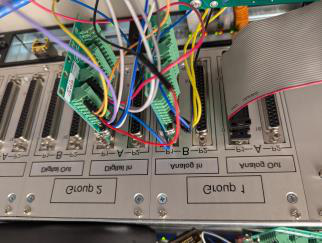
Fig 9: SSE values for relevant fault cases and normal switching events in
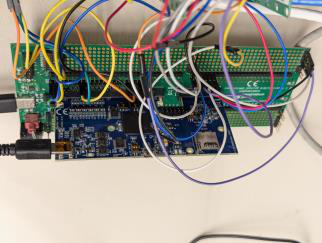
Fig 10: Microgrid for C-HIL RTS.
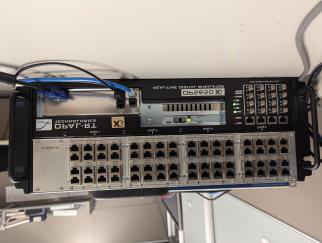
Fig 11: C-HIL testing platform.
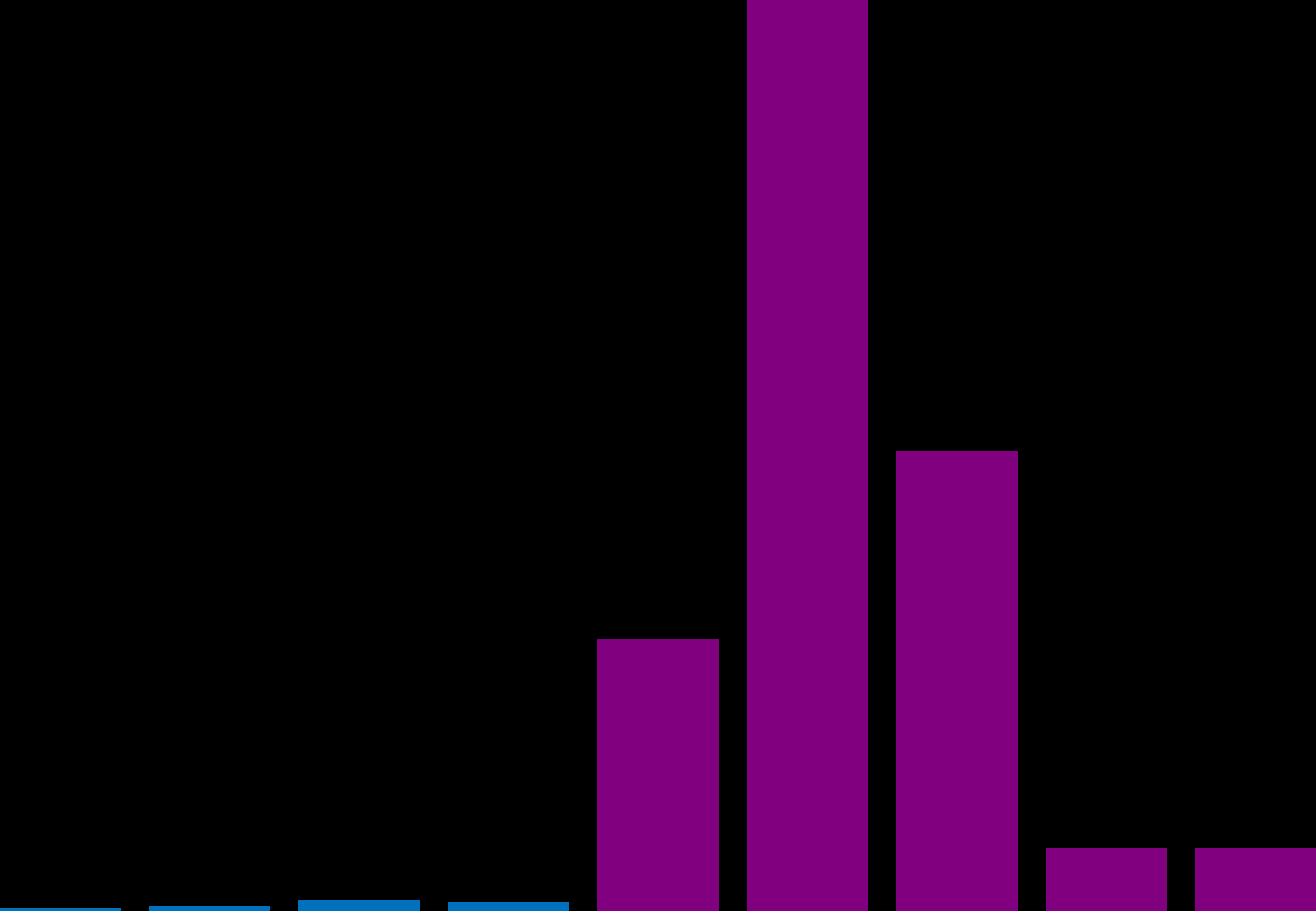
Fig 12: C-HIL results for an AG fault with a 45◦inception angle.

Fig 13: Zoom in of V (t), VT W and TW2 around the 45◦AG fault
Limitations
- Simulations rely on cable models and EMTP parameters that may not capture all real-world distribution complexities such as unmodeled noise or sensor errors.
- Transformer core saturation models used may not generalize to all transformer designs affecting robustness of inrush discrimination.
- Overcurrent supervision backup is less effective or slower under extremely low fault currents initiating near zero voltage angle.
- No explicit adversarial or malicious attack scenarios (e.g., stealthy faults, deliberate switching mimics) evaluated.
- Algorithm parameter tuning (thresholds η1, η2, η3, SSEth) may require adjustment per network, limiting out-of-the-box applicability.
- Real-time C-HIL validation done on a simplified islanded microgrid, so large-scale network response and scalability remain to be proven.
Open questions / follow-ons
- How the PVD strategy performs under adverse noise, measurement errors, or communications delays in practical deployment.
- Extension of PVD concept to networks with even higher inverter penetration and advanced inverter control modes such as grid-following vs grid-forming variations.
- Adaptation and tuning of detection thresholds for heterogeneous distribution feeders spanning diverse geographies and component aging.
- Integration of machine learning-based classifiers with the interpretable PVD approach for improved adaptability and generalization.
Why it matters for bot defense
Though not directly related to bot-defense or CAPTCHA, this work’s approach to discriminating between legitimate transient events and fault conditions using adaptive, interpretable signal processing and derivative-based detection principles has conceptual parallels in security anomaly detection. The decomposition of signal events into stages and the multi-level filtering to improve detection speed without undermining security exemplify strategies valuable to CAPTCHA systems aiming to separate human input irregularities from automated or malicious bot behaviors. Practitioners of bot-defense could see value in how measurement baselines, derivative thresholds, and ratio metrics are combined for robust differentiation amidst noisy, low-amplitude signals—a challenge analogous to weak bot signals in network traffic. Careful design of thresholds and fallback logic here mirrors layered security principle critical in CAPTCHA and bot-detection pipelines.
Cite
@article{arxiv2606_11135,
  title={ Pre-Fault Voltage Discrimination and Time-Domain Protection for Distribution Networks with Inverter-Based Resources },
  author={ Junyuan Zhao and François Bouffard and Géza Joós },
  journal={arXiv preprint arXiv:2606.11135},
  year={ 2026 },
  url={https://arxiv.org/abs/2606.11135}
}